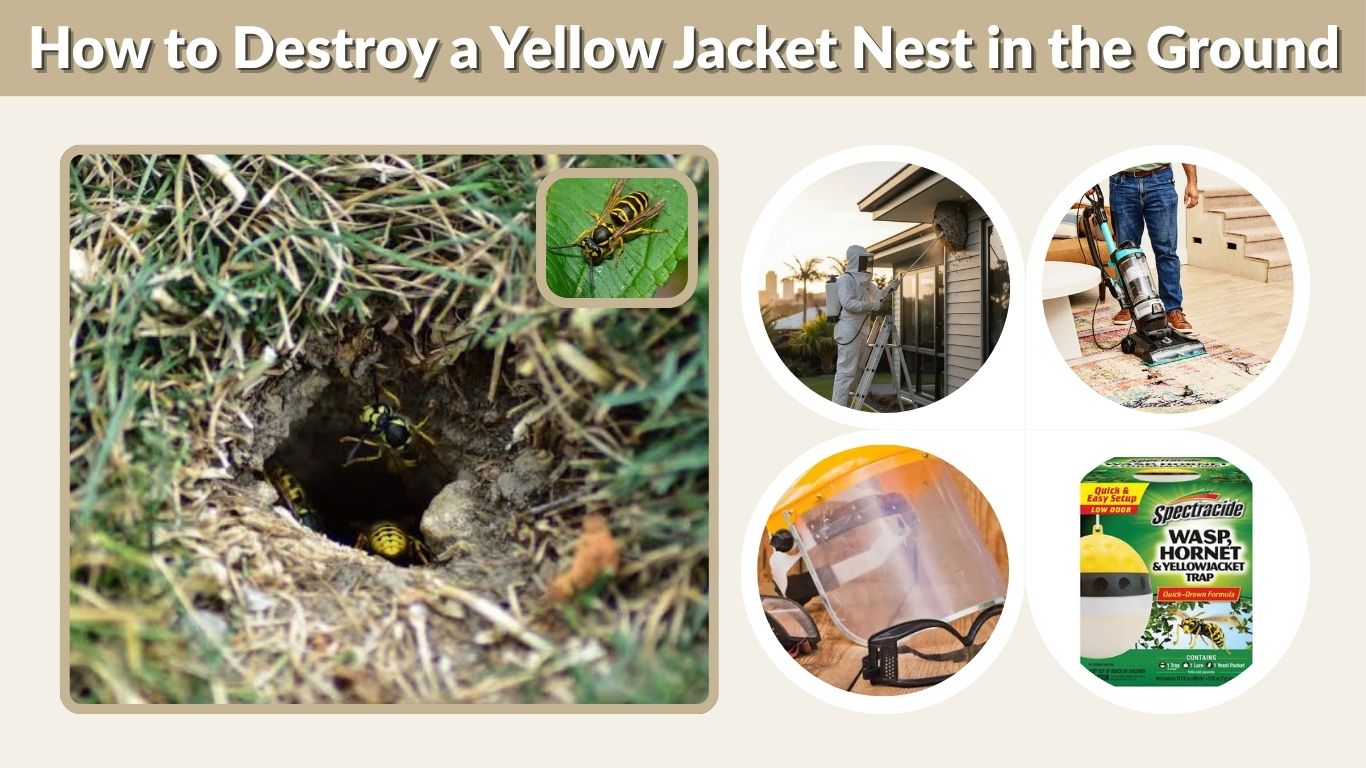
An underground yellow jacket nest can become dangerous when it is near a walkway, lawn, play area, doorway, or garden. Yellow jackets aggressively defend their colony and can sting repeatedly, so nest treatment requires careful planning. The safest option is hiring a licensed pest-control professional, particularly when the colony is large or anyone nearby has a sting allergy. When treating a manageable nest yourself, identify it correctly, work during low activity, wear protective clothing, and use only a pesticide specifically labeled for ground-nesting yellow jackets.
Confirm That It Is a Yellow Jacket Nest
Before attempting removal, make sure the insects are yellow jackets rather than beneficial ground-nesting bees. Several bee species use soil burrows but are generally less defensive and may require no control.
Signs of an Underground Yellow Jacket Colony
Look for these characteristics from a safe distance:
- Numerous black-and-yellow wasps entering one opening
- A steady stream of insects flying along the same route
- A small entrance in a lawn, garden bed, bank, or foundation edge
- Smooth-bodied insects rather than fuzzy bees
- Increased defensive activity when people approach the hole
Yellow jackets commonly build large paper nests inside underground cavities, including abandoned rodent burrows. Many workers may use a single small entrance that gives little indication of the colony’s true size.
Do Not Mark the Hole Up Close
Observe the flight pattern during daylight, but remain several yards away and out of the direct flight path. Mark the general location using a distant object such as a flag, chair, or landscape feature.
Do not push a stick into the entrance, mow over it, dig around it, or throw objects at it. Disturbing an underground colony may cause a coordinated defensive attack.
Should the Nest Be Destroyed?
Not every colony requires immediate treatment. Yellow jackets prey on caterpillars, flies, and other insects, so a nest in an unused part of a large property may be left undisturbed.
When Leaving It Alone May Be Safer
Consider avoiding the area when the nest is:
- Far from people and pets
- Away from paths, doors, and work areas
- Unlikely to be disturbed by mowing
- Near the end of its active season
In regions with freezing winters, annual colonies usually die when sustained cold weather arrives. Leaving an isolated nest until then avoids pesticide use and the immediate risk of approaching it.
When Removal Is Appropriate
Treatment may be necessary when the opening is close to:
- A home entrance
- A frequently used lawn
- Children’s play equipment
- A garden or outdoor work area
- Pet enclosures
- A public pathway
Colonies near recreational areas present an ongoing sting risk because yellow jackets aggressively protect their nest.
When to Call a Professional
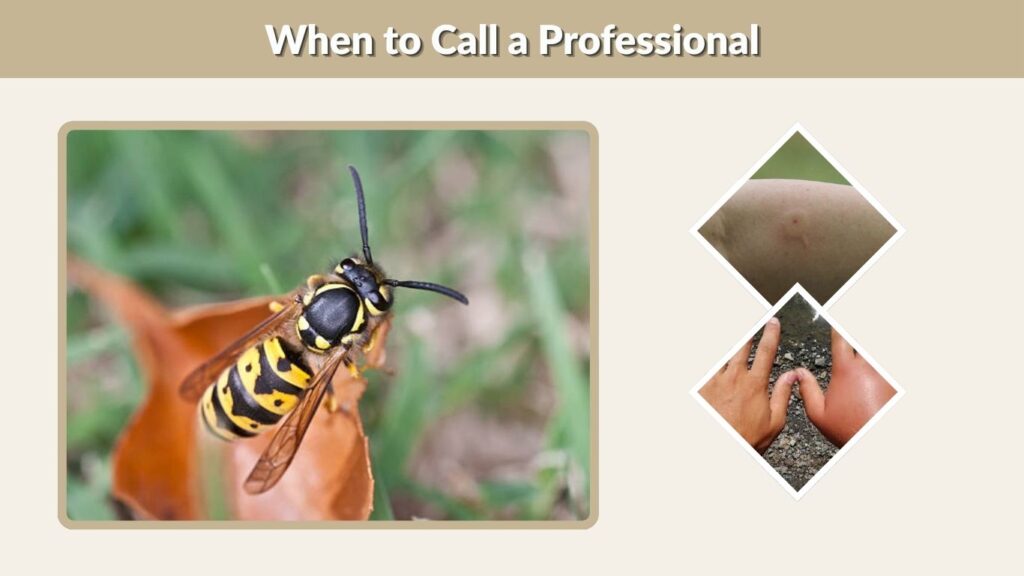
Ground nests can contain many defensive workers, while their underground layout makes the colony difficult to reach. Professional assistance is the safest choice whenever the risk cannot be controlled.
Do Not Attempt DIY Removal When
Hire a licensed pest-management professional when:
- You or someone nearby has a known sting allergy
- The nest is close to a school, business, or busy public space
- The entrance is beside a doorway or narrow escape route
- Yellow jackets are entering a wall, foundation, or building
- You cannot clearly identify every entrance
- The colony appears unusually active or large
- You lack suitable protective clothing
- Previous treatment has made the insects more defensive
The University of Minnesota specifically advises people with sting allergies not to manage nests themselves. Hidden nests in walls and structural cavities are also best handled professionally because incorrect treatment can drive yellow jackets toward indoor spaces.
How to Eliminate a Ground Nest Safely
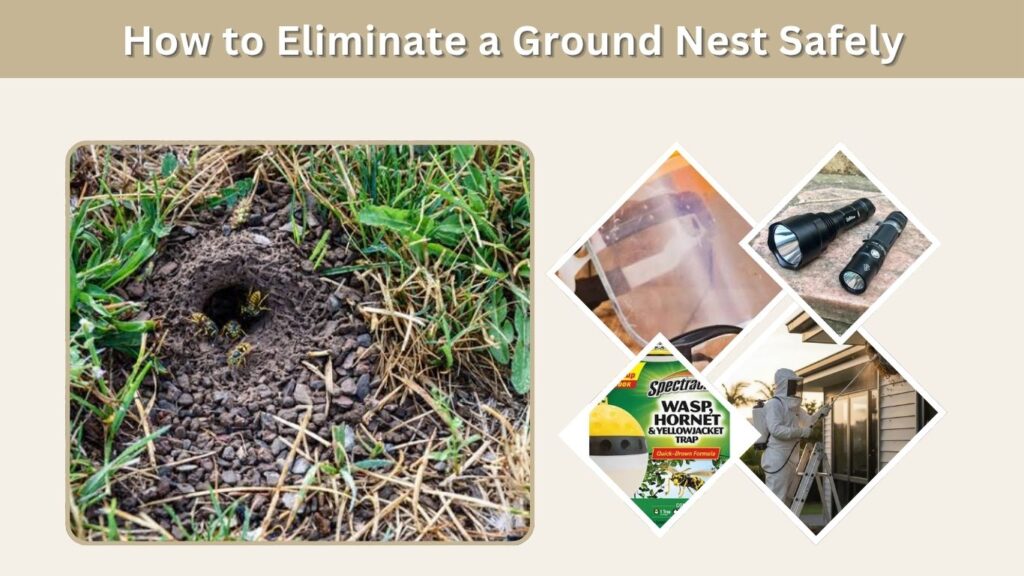
For a straightforward outdoor ground nest, insecticidal dust is commonly recommended because workers carry dust particles farther into the colony when they enter and leave. Always follow the product label; pesticide products and legal uses differ by country and region.
Supplies You May Need
Prepare everything before approaching:
- Insecticide dust labeled for yellow jacket ground nests
- The applicator specified on the label
- Long trousers and a long-sleeved shirt
- Closed shoes or boots
- Thick gloves
- Eye and face protection
- A clear, unobstructed retreat route
- A flashlight used only when necessary
Keep children and pets indoors and away from the treatment area.
1. Read the Entire Label
Confirm that the product label permits treatment of yellow jackets in underground outdoor nests. Follow its application rate, protective-equipment requirements, environmental restrictions, and re-entry instructions exactly.
Do not assume that a general flying-insect pesticide can be poured into the ground. The treatment site and intended pest must appear on the label; pesticide labels are legally binding directions.
2. Treat During Low Activity
Approach during late evening or early morning, when most workers are inside and yellow jackets are less active. Cooler, calm conditions generally reduce the number flying outside the nest.
Wear long clothing and secure openings around the wrists, ankles, neck, and waist. Socks may be pulled over trouser cuffs to reduce access beneath clothing.
3. Apply Labeled Insecticidal Dust
Following the label, place the specified amount of dust into and immediately around the nest entrance. Do not stand directly over the hole. Remain positioned so you can retreat without crossing the insects’ flight path.
Insecticidal dust is generally more effective than pouring liquid pesticide into an underground opening because liquid may fail to reach the actual nest chamber. Dust can adhere to returning workers and be carried inside over the following days.
4. Leave the Area Immediately
Once the application is complete, move calmly along your predetermined escape route. Do not remain nearby to watch the entrance.
If the colony becomes active, protect your face and enter a building or vehicle. The National Park Service recommends moving away while covering sensitive facial areas rather than swatting at attacking insects.
5. Check From a Distance
Observe the entrance from well away during daylight the following day. Do not approach merely because activity appears reduced.
If yellow jackets are still regularly entering and leaving, repeat treatment only when the label allows it. Extension guidance recommends reassessing after approximately one day and retreating when activity continues.
6. Close the Hole After Activity Stops
Do not plug the entrance immediately after applying pesticide. Trapped survivors may excavate another route, and you may lose the ability to monitor the colony.
After you are confident that no activity remains, fill the abandoned opening with soil and repair the surrounding lawn. Continue watching the area in case another entrance becomes active.
Methods You Should Never Use
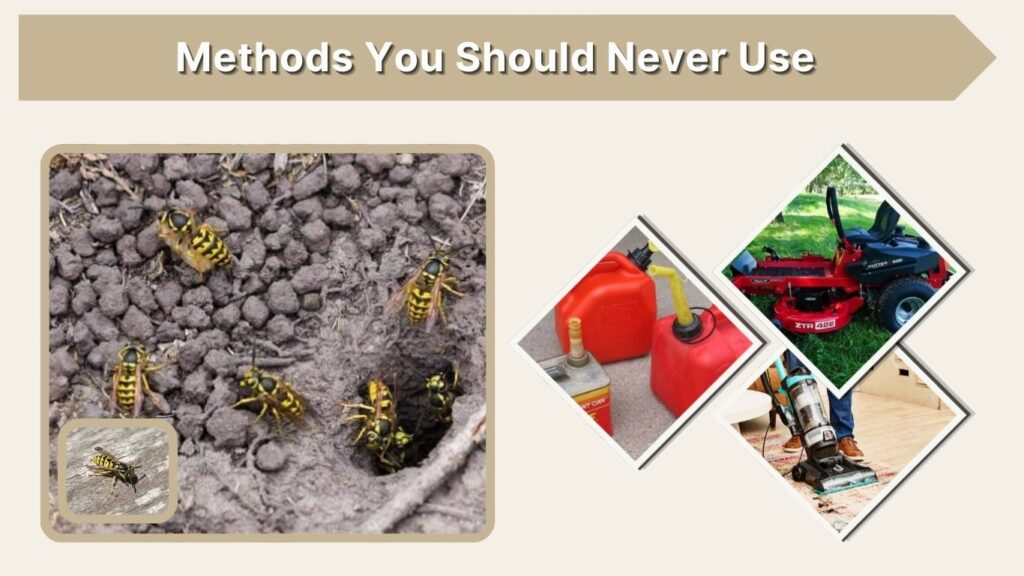
Dangerous home remedies can cause fires, chemical contamination, serious burns, or mass attacks without reliably reaching the colony.
Avoid These Removal Attempts
Never use:
- Gasoline, kerosene, diesel, or other fuels
- Fire, fireworks, or smoke
- Bleach, ammonia, or mixed household chemicals
- A lawn mower over the entrance
- Vacuuming without professional equipment
- Digging up an active nest
- Blocking the entrance before killing the colony
- Repeatedly spraying individual flying workers
Spraying individual foragers does not eliminate the colony and increases the chance of being stung. Oregon State University also cautions that attempting to spray a nest carries a real risk of receiving multiple stings.
Treatment Options Compared
| Method | Can destroy the colony? | Main concern |
| Professional treatment | Yes | Costs more but minimizes personal exposure |
| Labeled insecticidal dust | Often | Requires approaching the entrance |
| Aerosol spray | Unreliable underground | May not reach the chamber |
| Yellow jacket traps | Usually not | Reduce foragers but do not remove the nest |
| Pouring liquid into the hole | Often unreliable | May not reach the hidden colony |
| Gasoline or fire | Never appropriate | Fire, poisoning, and environmental hazards |
Traps may reduce the number of yellow jackets foraging around food or garbage, but they are not a dependable method for destroying an established underground colony.
What to Do After a Sting
Move away from the nest immediately. Yellow jackets do not leave a barbed stinger behind and may sting repeatedly. Clean the affected area and monitor for symptoms beyond normal localized pain, redness, itching, and swelling.
Difficulty breathing, throat or facial swelling, faintness, widespread hives, or other systemic symptoms may indicate anaphylaxis and require emergency medical attention. People with known severe allergies should follow their prescribed emergency plan and carry their epinephrine device.
If pesticide contacts the skin or eyes, follow the product label. EPA guidance recommends removing contaminated clothing and washing exposed skin with soap and water; affected eyes should be gently rinsed with clean running water for at least 15 minutes.
FAQs
What is the best way to destroy a yellow jacket nest underground?
The safest method is professional pest control. For a manageable outdoor nest, extension guidance commonly recommends applying an insecticidal dust specifically labeled for ground-nesting yellow jackets during late evening or early morning. Follow every label direction and reassess the nest from a distance the next day.
Can I pour boiling water into the nest?
Boiling water is not recommended. It may not reach the underground chamber, can cause severe burns, and requires standing dangerously close to the entrance. A labeled nest treatment or professional removal offers a more controlled approach with a better chance of reaching the colony.
Should I cover the nest entrance at night?
Do not cover an active entrance. Surviving yellow jackets may dig another exit, and blocking the opening prevents you from monitoring activity. Treat the colony first and close the hole only after you are confident that all activity has stopped.
How long does it take to eliminate the nest?
Activity may decrease within a day, but an insecticidal dust can require several days to spread through the underground colony. Observe only from a safe distance. If regular traffic continues, repeat treatment according to the product label or contact a professional.
Will yellow jackets return to the same ground nest?
Yellow jacket colonies are generally annual in climates with cold winters, and abandoned nests usually are not reused as functioning colonies. However, a new queen may choose another suitable cavity nearby. Fill abandoned holes and address rodent burrows or structural gaps that could provide future nesting sites.