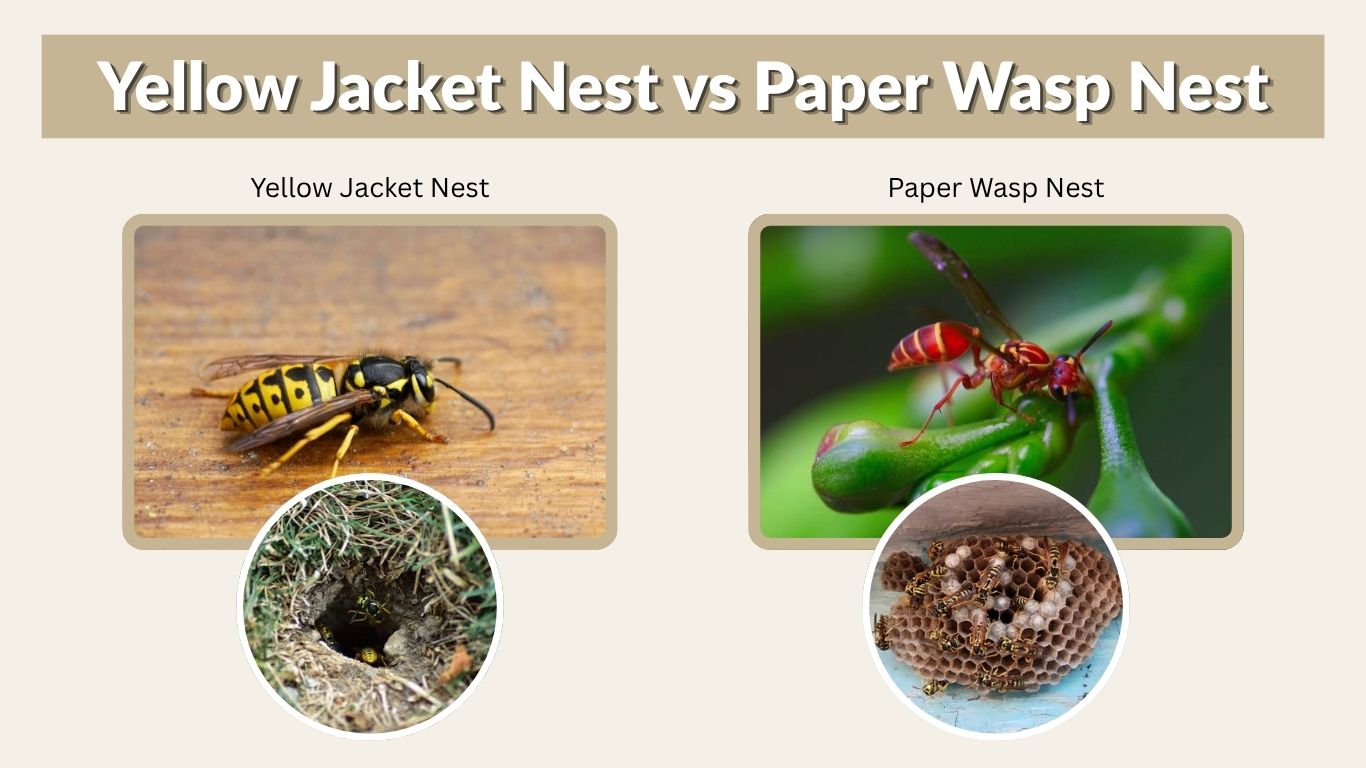
A paper wasp nest usually looks like a small, upside-down umbrella with uncovered hexagonal cells. A yellow jacket nest is typically enclosed by a layered paper covering and hidden underground, inside a wall, or within another protected cavity. Although both insects make nests from chewed wood fibers, their nest structure, location, colony behavior, and potential danger are noticeably different. Learning these signs can help you identify the wasps without approaching closely or accidentally disturbing an active colony.
Yellow Jacket Nest vs Paper Wasp Nest at a Glance
The easiest feature to examine is whether the comb is exposed. Paper wasps produce a single open comb that is usually visible from below. Yellow jackets construct multiple comb layers protected by an outer paper envelope, although the entire nest may remain hidden underground or inside a structure.
| Feature | Yellow Jacket Nest | Paper Wasp Nest |
| Overall shape | Rounded, enclosed or hidden | Umbrella-shaped open comb |
| Outer covering | Usually has a layered paper envelope | No enclosing envelope |
| Cells | Hidden inside the nest | Clearly visible from below |
| Common location | Ground, wall void, siding, attic or hollow tree | Eaves, porch ceilings, railings or branches |
| Typical colony size | Often relatively large | Usually smaller |
| Defensive behavior | Strong colony defense | Usually less defensive away from the nest |
| Nest entrance | One or more small openings | Entire comb remains exposed |
| Reused next year | Normally no | Normally no |
What Does a Yellow Jacket Nest Look Like?
Yellow jacket nests are often difficult to see because many species use underground burrows or enclosed cavities. The visible clue may be only a stream of workers repeatedly entering a small hole in the soil, foundation, siding, roof edge or wall.
Shape and Construction
A developed yellow jacket nest contains layers of horizontal comb surrounded by a gray or tan paper envelope. The envelope protects the developing larvae and helps regulate conditions inside the colony. Yellow jackets create the material by chewing weathered wood fibers and mixing them with saliva.
People sometimes uncover an underground nest and discover a rounded, layered paper structure larger than expected. However, digging into the ground to inspect it is extremely dangerous because the colony may respond with numerous defensive workers.
Common Nesting Locations
Typical yellow jacket nesting sites include:
- Abandoned animal burrows
- Holes in lawns and gardens
- Spaces under porches or decks
- Wall and ceiling voids
- Gaps behind exterior siding
- Attics and roof cavities
- Hollow trees or logs
- Cracks in stone walls
Yellow jackets commonly nest underground, but they can also establish colonies in buildings, trees and other enclosed above-ground locations.
Activity Around the Entrance
An underground colony often produces regular traffic through one obvious opening. Workers fly quickly in and out, sometimes following a consistent flight path. Unlike solitary ground wasps, which maintain separate individual holes, social yellow jackets share one organized colony.
Do not stand over the entrance, mow nearby or place an object into the hole. Vibrations and sudden disturbances may trigger defensive behavior.
What Does a Paper Wasp Nest Look Like?
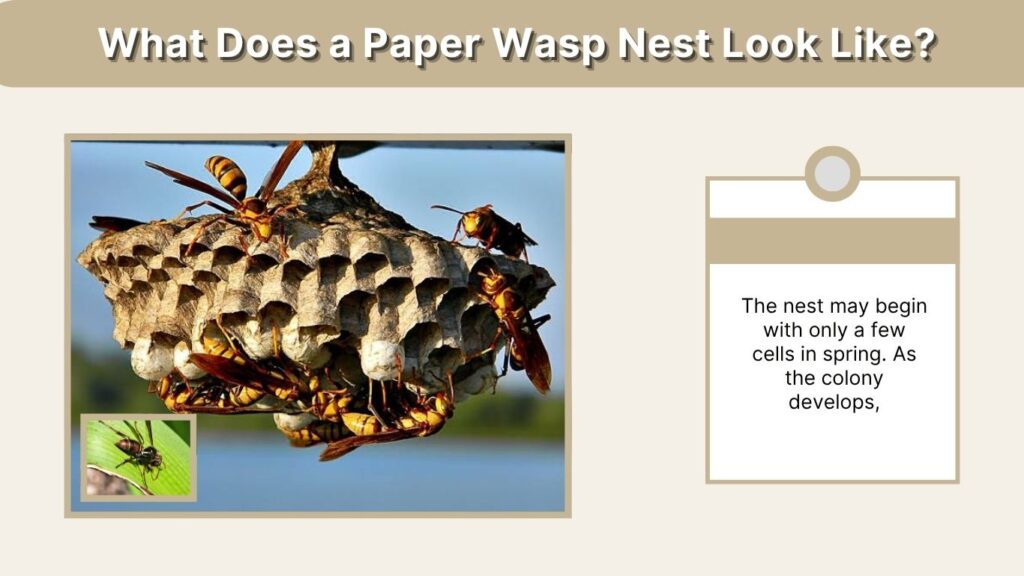
Paper wasp nests are generally much easier to recognize. They consist of a single comb attached to a surface by a narrow stalk. Because there is no exterior envelope, the hexagonal cells and developing larvae may be visible from underneath.
Open Umbrella Shape
A paper wasp nest resembles a small upside-down umbrella or an open honeycomb. Its exposed cells distinguish it from the enclosed paper nests built by yellow jackets and aerial yellowjackets.
The nest may begin with only a few cells in spring. As the colony develops, workers add more cells around the edges. Even a mature paper wasp nest normally remains open rather than gaining a surrounding shell.
Common Nesting Locations
Paper wasps prefer sheltered above-ground surfaces such as:
- Roof eaves
- Porch ceilings
- Window frames
- Deck railings
- Fence posts
- Tree branches
- Outdoor furniture
- Barbecue grills
- Mailboxes
- Sheds and play structures
Their nests commonly occur beneath overhangs and in other locations protected from heavy rain and direct disturbance.
Visible Wasps on the Comb
Adult paper wasps often stand directly on the open nest. Their bodies are slender, with narrow waists and long legs that may hang down during flight. Most are brown, reddish or black with varying yellow markings, although appearance differs among species.
Differences in Nest Location
Location provides an important identification clue, but it should not be used alone. Yellow jackets can occasionally build above ground, while paper wasps may use concealed but open-sided spaces such as grills or boxes.
| Location | More Likely Insect | What to Look For |
| Hole in a lawn | Yellow jacket | Repeated traffic through one entrance |
| Inside a wall | Yellow jacket | Wasps entering through a crack |
| Behind siding | Yellow jacket | Busy exterior access point |
| Under an open eave | Paper wasp | Visible umbrella-shaped comb |
| Under a deck railing | Paper wasp | Exposed cells attached by a stalk |
| Large enclosed paper nest | Aerial yellowjacket or hornet | Complete outer envelope |
| Inside a grill or mailbox | Paper wasp | Small open comb in a sheltered space |
Yellow Jacket Nest vs Paper Wasp Nest in Siding
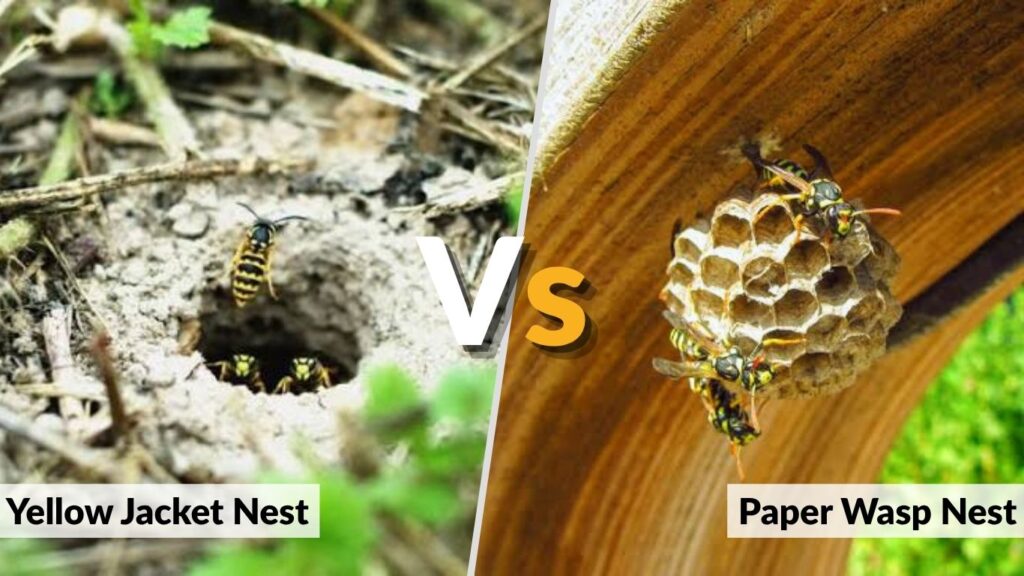
Wasps entering behind siding are more likely to be yellow jackets when they disappear through a small gap and no open comb is visible. The actual colony may be located several feet from the entrance inside insulation, a wall void or another structural cavity. Yellow jackets commonly use protected spaces that resemble their natural underground nesting sites.
Paper wasps can attach an open nest beneath a loose section of siding, but the comb is normally positioned in an accessible space rather than deep inside a sealed wall.
Never immediately plug an active entrance. Trapping yellow jackets inside may cause them to search for another exit, potentially leading them into the house. Hidden structural nests are best inspected and treated by a qualified pest-control professional.
Paper Wasp vs Yellow Jacket Identification
Looking at the insects from a safe distance can support nest identification. Avoid approaching simply to examine body markings because both species can defend their colonies.
| Identification Feature | Yellow Jacket | Paper Wasp |
| Body shape | Compact and robust | Long and slender |
| Waist | Shorter-looking waist | Very narrow waist |
| Legs during flight | Usually held closer to the body | Often visibly dangling |
| Common coloration | Bright black and yellow | Brown, red or black with yellow |
| Antennae | Often dark | Some species have orange tips |
| Feeding behavior | Frequently visits meat, waste and sweet drinks | Often searches plants for caterpillars |
| Nest defense | Usually more intense | Typically moderate unless the nest is approached |
European paper wasps can be confused with yellow jackets because both may have strong black-and-yellow patterns. European paper wasps are generally more slender and have orange-tipped antennae, while yellow jackets tend to have shorter, more compact bodies and entirely dark antennae.
Which Nest Is More Dangerous?
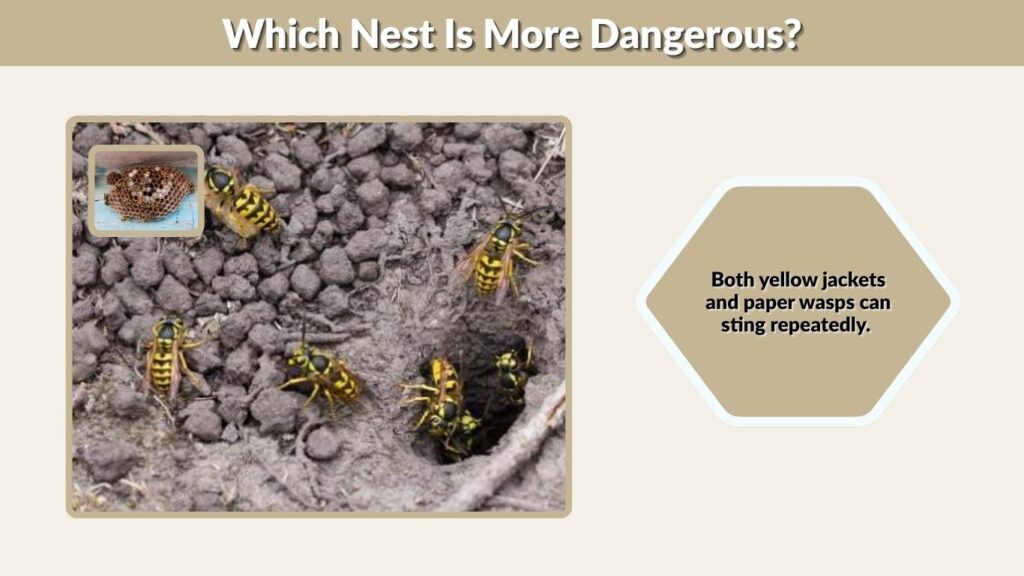
Both yellow jackets and paper wasps can sting repeatedly. However, yellow jacket colonies are generally more likely to create serious conflicts because their nests can contain many workers, remain hidden and be disturbed accidentally during mowing, gardening or building maintenance.
Yellow Jacket Nest Risk
Yellow jackets may vigorously defend the area surrounding their colony. Underground nests are especially hazardous because people may step on them or run lawn equipment over the entrance without seeing the nest. Workers also become common around outdoor food, garbage and sugary drinks.
Large colonies, hidden structural nests and nests beside busy areas should be handled professionally.
Paper Wasp Nest Risk
Paper wasps are usually less confrontational when they are away from their nest. They may sting when the comb is touched, shaken or closely approached. A nest beside a frequently used door, porch, play area or work surface can therefore remain a meaningful safety concern.
Should You Remove the Nest?
A small nest in a remote location may be left undisturbed because both groups prey on other insects. Paper wasps are particularly useful predators of caterpillars, while yellow jackets hunt or scavenge various insect foods for their larvae.
Removal may be appropriate when the nest is:
- Near a doorway or walkway
- Beside children’s play equipment
- Inside an occupied structure
- Close to someone with a severe sting allergy
- Likely to be disturbed by mowing or repairs
- Under furniture or another frequently used object
- Producing wasps inside the house
Do not use fire, gasoline or boiling water. Never attempt to remove a large nest while standing on a ladder. Exposed nests may sometimes be manageable when small, but cavity nests and large colonies require greater precautions and often professional treatment.
FAQs
Do yellow jackets build paper nests?
Yes. Yellow jackets chew wood fibers and combine them with saliva to create paper. Their combs are normally enclosed within a layered envelope, although an underground or structural location may prevent you from seeing the paper nest itself.
Do paper wasps build nests underground?
Paper wasps generally construct open combs above ground under eaves, branches and other protected surfaces. Wasps repeatedly entering a shared underground opening are more likely to be yellow jackets, although several solitary wasp species also dig individual ground nests.
Are paper wasps the same as yellow jackets?
No. Both belong to the wasp family Vespidae, but they represent different groups. Paper wasps are usually slender and build exposed umbrella-shaped combs. Yellow jackets have more compact bodies and commonly build enclosed nests underground or inside cavities.
Which nest has exposed hexagonal cells?
A paper wasp nest has clearly exposed hexagonal cells. Yellow jacket nests also contain hexagonal cells, but these combs are protected inside an outer envelope or hidden within the ground, a wall or another enclosed space.
Do yellow jackets and paper wasps reuse old nests?
Their colonies are normally annual in temperate regions, and old nests are not usually reused the following year. New queens establish new colonies in spring, although they may choose locations close to previous nesting sites.