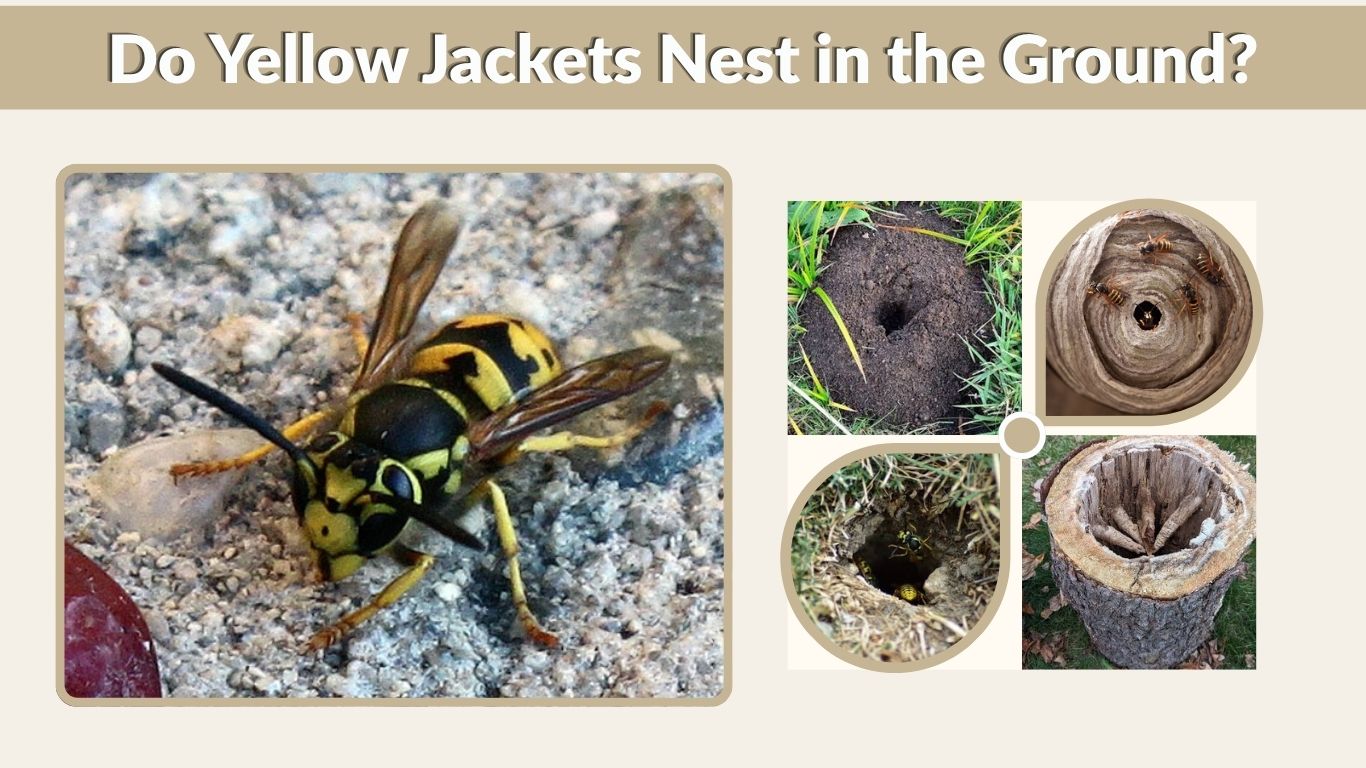
Yes, many yellow jacket species build nests in the ground, commonly inside abandoned rodent burrows and other protected soil cavities. The visible entrance may be only a small hole, while a much larger paper nest remains concealed below the surface. However, not every yellow jacket nests underground; some use hollow trees, wall voids, attics, landscape timbers, or exposed aerial locations. Recognizing the entrance early can help you avoid accidental encounters, repeated stings, and dangerous attempts to dig out the colony.
Why Do Yellow Jackets Nest in the Ground?
Underground cavities give yellow jackets protection from wind, rain, temperature changes, and many predators. Instead of digging an entire tunnel system from nothing, a queen often selects an existing space and constructs a paper nest inside it. As workers emerge, they enlarge the cavity and expand the colony throughout summer.
Abandoned Animal Burrows
Eastern and other ground-nesting yellow jackets frequently occupy burrows previously made by mice, moles, or other small mammals. The original hole provides a ready-made entrance and protected chamber.
The wasps may remove soil as the paper nest grows, but most of the structure remains hidden. This is why a modest opening can lead to a colony containing hundreds or even thousands of individuals by late summer.
Other Underground Cavities
A nest may also develop:
- Beneath tree roots
- Inside hollow stumps
- Along creek banks
- Under landscaping materials
- Beside patios or foundations
- Beneath lawns and garden beds
- Inside gaps around buried debris
Quiet, protected places that experience little disturbance are especially attractive to a queen searching for a spring nesting site.
Why Lawns Are Common Locations
Lawns often contain abandoned rodent holes, gaps around roots, and dry cavities that are difficult to notice. A colony may remain hidden until someone walks nearby or passes a lawn mower over the entrance.
Vibrations from mowing and other equipment can trigger nest defense, particularly when the colony is large. Yellow jackets can sting repeatedly and may attack in numbers when their underground nest is disturbed.
What Does a Ground Yellow Jacket Nest Look Like?
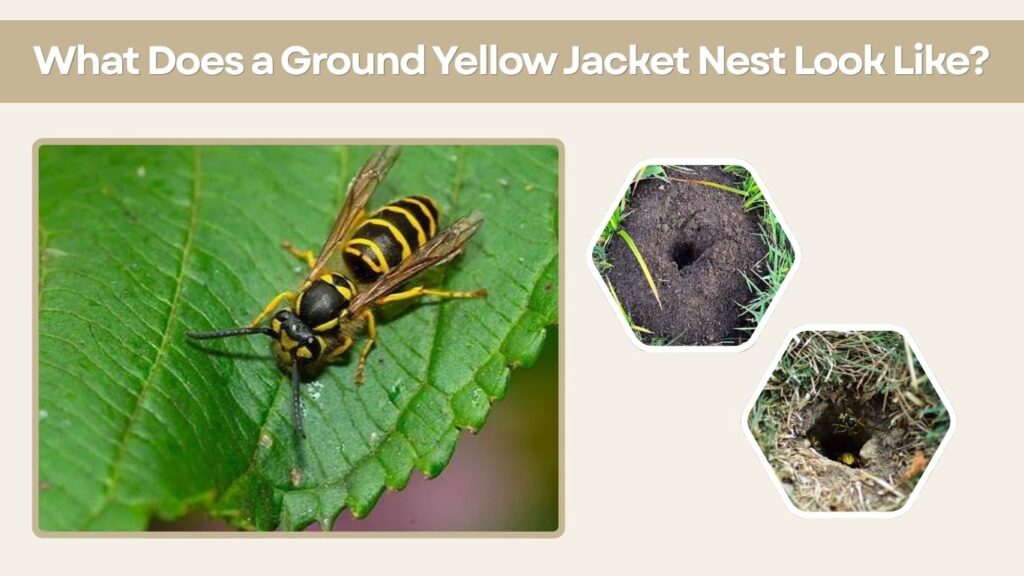
The paper nest itself is normally invisible unless the ground is excavated, which should never be attempted while the colony is active. Identification therefore depends on the entrance and the insects’ behavior. The strongest sign is repeated traffic as numerous smooth-bodied wasps enter and leave the same opening.
Signs Around the Entrance
Look from a safe distance for:
- A small opening in soil, grass, or mulch
- Numerous wasps using one main entrance
- Fast, direct flights into and out of the hole
- Black-and-yellow insects with smooth bodies
- Guard wasps hovering near the opening
- Increasing activity during warm daylight hours
Unlike many ground-nesting bees, yellow jackets usually do not create a group of separate individual burrows. One busy entrance leading to a social colony is an important warning sign.
What the Hidden Nest Looks Like
Yellow jackets chew weathered wood and combine the fibers with saliva to produce a paper-like material. Inside the cavity, the nest consists of horizontal combs containing hexagonal brood cells. These combs are stacked in tiers and enclosed within several protective paper layers.
| Nest feature | Typical appearance |
| Surface entrance | Small hole with repeated wasp traffic |
| Main nest | Hidden inside a protected cavity |
| Material | Gray, tan, or brown paper-like pulp |
| Interior | Multiple tiers of hexagonal cells |
| Activity | Greatest during warm summer days |
| Defensiveness | High when the entrance is approached |
How Deep Do Yellow Jackets Nest in the Ground?
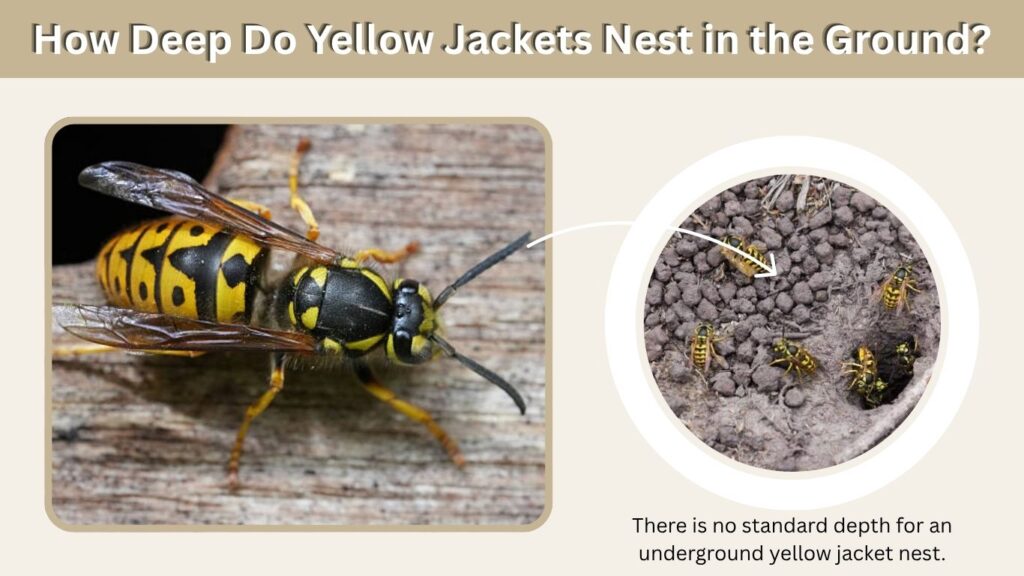
There is no standard depth for an underground yellow jacket nest. Its position depends mainly on the size and shape of the existing cavity selected by the queen. The entrance may descend, curve sideways, or connect to a chamber located away from the visible hole.
Why Depth Varies
The colony normally adapts an abandoned burrow rather than constructing a predictable vertical tunnel. A nest may be close to the surface beneath a thin covering of soil, while another may occupy a deeper or wider animal burrow.
Because the paper combs can sit to one side of the entrance, pouring a substance into the opening may fail to reach the colony. Digging to locate it is even more dangerous because vibrations and exposed combs can provoke a large defensive response.
Can a Nest Have More Than One Entrance?
Some colonies appear to have only one entrance, but an underground cavity may contain another exit or hidden opening. Watch the surrounding area from a distance before assuming that the most obvious hole is the only one.
Never block an active entrance. Trapped workers may excavate another route, and the blocked hole prevents you from monitoring whether the colony remains active.
Do All Yellow Jackets Build Nests Underground?
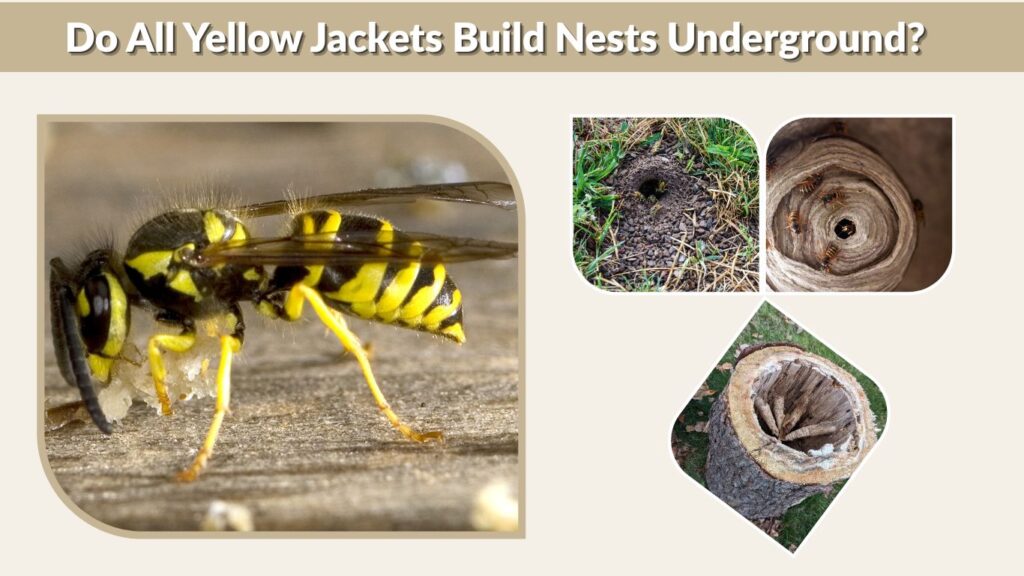
No. Nesting habits differ among species. Many Vespula yellow jackets choose concealed underground cavities, while other species build aboveground nests. The German yellow jacket also commonly occupies wall voids, attics, crawl spaces, and other structural cavities.
Common Yellow Jacket Nesting Locations
Yellow jackets may establish colonies:
- In abandoned rodent burrows
- Inside hollow logs or trees
- Beneath thick vegetation
- Within wall and ceiling voids
- Inside attics and crawl spaces
- Under siding or landscape timbers
- In shrubs or trees
An insect entering a wall gap should not automatically be treated like a ground nest. Applying pesticide to the exterior opening can sometimes cause surviving wasps to move farther into the building. Hidden structural colonies are best handled professionally.
Are Yellow Jackets Bees?
Yellow jackets are social wasps, not bees. They generally have smooth, shiny bodies, narrow waists, and clearly defined yellow or pale markings. Bees tend to appear hairier because their bodies are adapted for collecting pollen.
Both can nest underground, so identification should be based on appearance, social activity, and entrance pattern rather than location alone.
How Long Do Ground Nests Remain Active?
In cold and temperate regions, yellow jacket colonies are annual. A fertilized queen begins a new colony in spring, workers increase during summer, and the population generally reaches its greatest size in late summer or early fall.
Seasonal Nest Cycle
Spring: An overwintered queen selects a cavity, constructs the first cells, lays eggs, and raises the initial workers.
Summer: Workers take over foraging, larval care, defense, and nest expansion. The queen remains inside and continues producing eggs.
Late summer and fall: The colony reaches its largest size and produces new males and queens. Defensive activity and encounters around human food often increase.
Winter: In climates with hard freezes, the old queen, workers, and males die. Newly mated queens leave the colony and overwinter separately in protected locations. The old nest is normally not reused the following year.
What Should You Do About a Ground Nest?
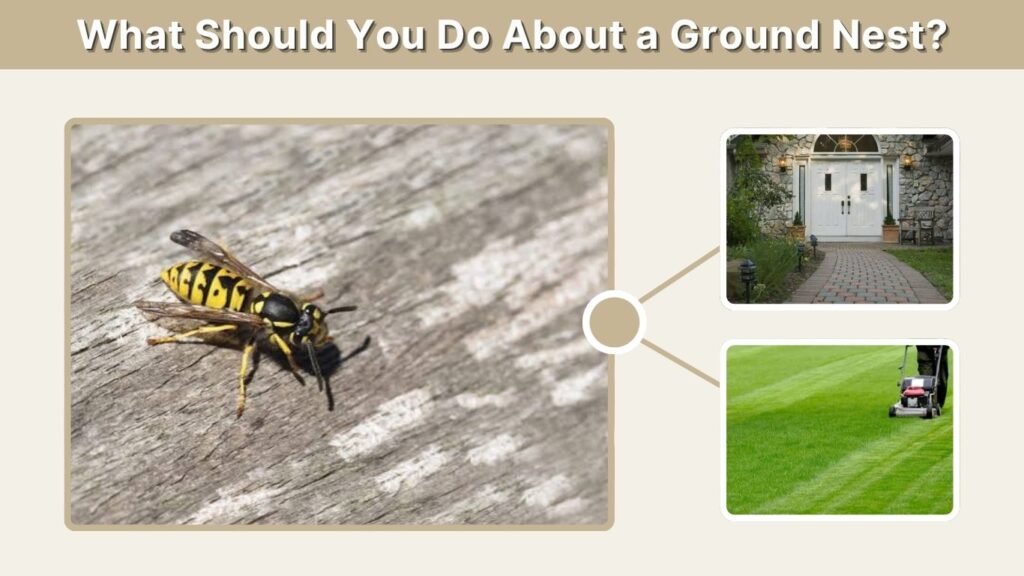
A nest in an unused corner of a property may not require immediate removal. Yellow jackets prey on flies, caterpillars, and other insects, so an isolated colony can provide ecological benefits. The safest response may be marking the area and avoiding it until cold weather ends the colony.
When Removal May Be Necessary
Consider professional control when the nest is near:
- A doorway or walkway
- A frequently mowed lawn
- A children’s play area
- A garden or outdoor workplace
- A pet enclosure
- A school or public space
- Someone with a sting allergy
Do not attempt removal yourself when you are allergic to stings, cannot identify the entrances, or cannot approach without blocking your escape route. Underground nests can be highly defensive, and disturbing one may result in multiple stings.
Avoid Dangerous Home Remedies
Do not dig up the nest or use gasoline, fire, bleach, boiling water, or household chemical mixtures. These methods can cause burns, fires, soil contamination, and mass attacks without reliably reaching the colony.
Use only a product specifically labeled for yellow jacket nest treatment and follow its directions exactly, or hire a licensed pest-control professional.
FAQs
Do yellow jackets always nest in the ground?
No. Many species commonly use underground cavities, but others establish nests in hollow trees, logs, shrubs, attics, walls, and other protected spaces. The German yellow jacket frequently uses buildings, while certain yellow jacket relatives construct exposed aerial paper nests.
Why do yellow jackets make nests underground?
The ground provides a protected cavity with relatively stable conditions. Queens commonly use abandoned mammal burrows instead of excavating an entire nest site. The colony then builds and enlarges its enclosed paper combs inside that existing space.
What does a yellow jacket ground entrance look like?
It usually appears as a small hole in a lawn, garden bed, bank, or landscaped area. The most reliable clue is a steady stream of smooth black-and-yellow wasps repeatedly entering and leaving the same opening during daylight.
Do underground yellow jacket nests die in winter?
In climates with freezing winters, the workers, males, and old queens usually die when a sustained cold arrives. Newly mated queens leave the nest and overwinter elsewhere. Each surviving queen normally begins a new colony at a different site in spring.
Should I fill a yellow jacket nest hole?
Do not fill an entrance while the colony is active. Surviving workers may create another exit and become more defensive. The opening can be filled after treatment or cold weather has ended the colony and no wasp traffic has been observed for several days.