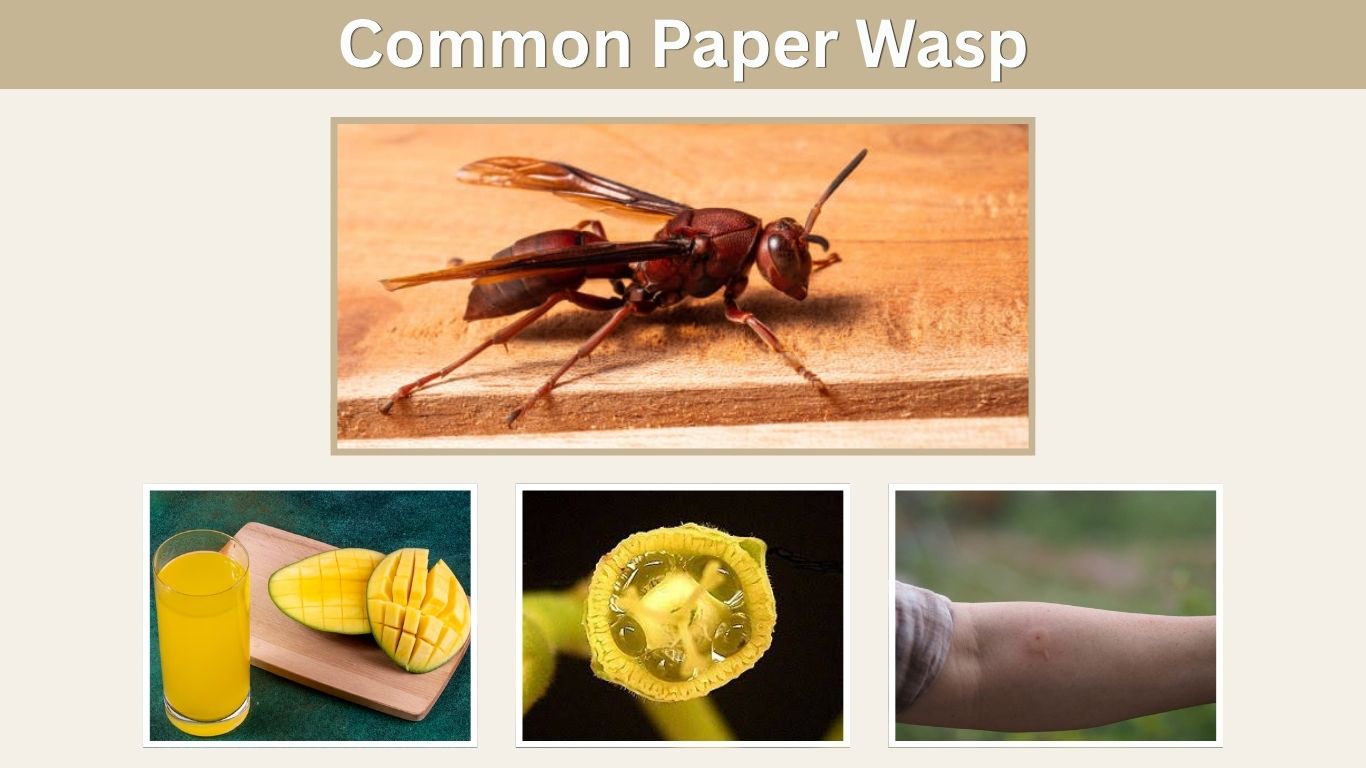
The common paper wasp is a slender social wasp recognized by its dangling legs and exposed, umbrella-shaped nest. However, the name does not identify the same species everywhere. In North America, it often refers to common native Polistes species such as the northern paper wasp, Polistes fuscatus. In Australia, “Common Paperwasp” is an established name for Polistes humilis. Both are beneficial predators but can deliver painful stings when their colonies are disturbed.
Common Paper Wasp Facts
| Feature | Description |
| Scientific name | Varies by region |
| North American example | Polistes fuscatus |
| Australian common paper wasp | Polistes humilis |
| Family | Vespidae |
| Body length | Approximately ½–1 inch |
| Diet | Nectar and other sugary liquids |
| Larval food | Caterpillars and other insects |
| Nest | Open paper comb with visible cells |
| Temperament | Defensive mainly near the nest |
| Sting | Painful; females can sting repeatedly |
Which Species Is the Common Paper Wasp?
Common names vary between countries, so location is important when identifying a common paper wasp.
North American Common Paper Wasps
North America has more than 20 species of Polistes. The northern paper wasp, Polistes fuscatus, is a widespread native species and is sometimes described informally as the common brown paper wasp or common paper wasp. It occurs around woodlands, gardens, farms, and buildings.
Color varies considerably. Individuals may be reddish-brown, dark brown, black, or marked with yellow. This variation makes color alone unreliable for species-level identification.
Australian Common Paper Wasp
In Australia, the name Common Paperwasp commonly refers to Polistes humilis. It has a narrow orange-brown body, darker abdominal markings, a yellow face, long legs, and a body length reaching about 2 centimeters.
The species is native to southeastern mainland Australia and inhabits urban areas, forests, and woodlands. It was introduced beyond its original range, including Western Australia, where paper wasps are now commonly encountered around Perth.
How to Identify a Common Paper Wasp
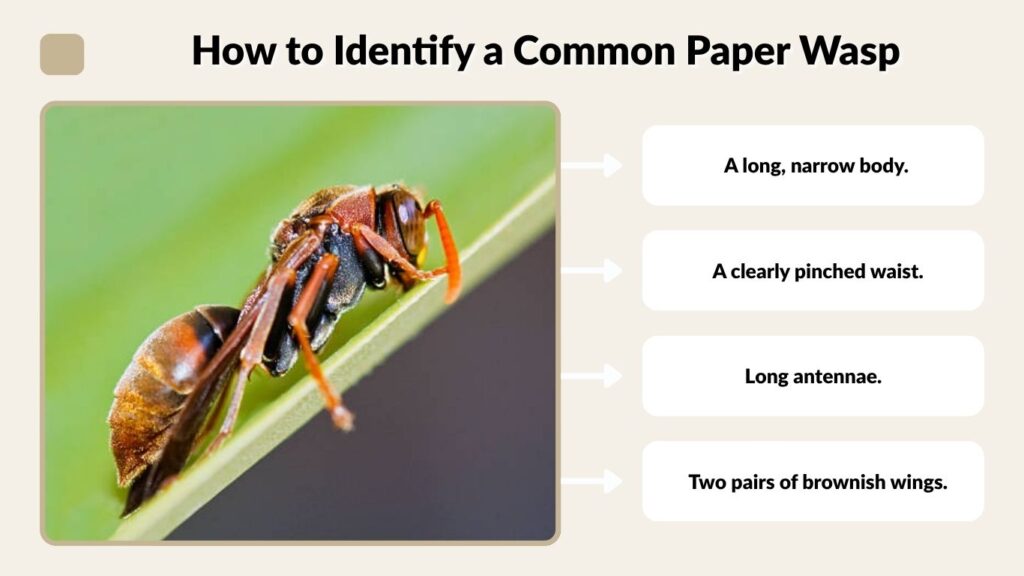
Paper wasps have a distinctive slender appearance that separates them from the stockier yellowjackets and European wasps.
Identification Features
Look for:
- A long, narrow body
- A clearly pinched waist
- Long antennae
- Two pairs of brownish wings
- Wings folded lengthwise at rest
- Long legs hanging beneath the body in flight
- Brown, red, black, orange, or yellow markings
- Body measuring approximately ½–1 inch
Paper wasps are often seen landing on weathered wood, where they scrape fibers for nest construction. They may also visit flowers, ponds, dripping taps, and other water sources.
What Does a Common Paper Wasp Nest Look Like?
A common paper wasp nest resembles a small upside-down umbrella. It contains one exposed comb made from adjoining hexagonal cells.
The nest usually has:
- Visible downward-facing cells
- No complete outer paper covering
- A gray, tan, or brown color
- One narrow attachment stalk
- A rounded or irregular comb
- Adult wasps standing directly on the cells
Paper wasps construct the nest by scraping wood fibers, chewing them, and combining them with saliva. The mixture dries into a lightweight paper-like material.
Common Nesting Places
Nests are frequently attached beneath:
- Roof eaves
- Porch ceilings
- Deck railings
- Tree branches
- Sheds and garages
- Outdoor furniture
- Window ledges
- Mailboxes
- Utility boxes
- Pipes and sheltered equipment
Paper wasps typically build above ground. Wasps repeatedly entering a soil hole are more likely to be yellowjackets or another ground-nesting species.
What Do Common Paper Wasps Eat?
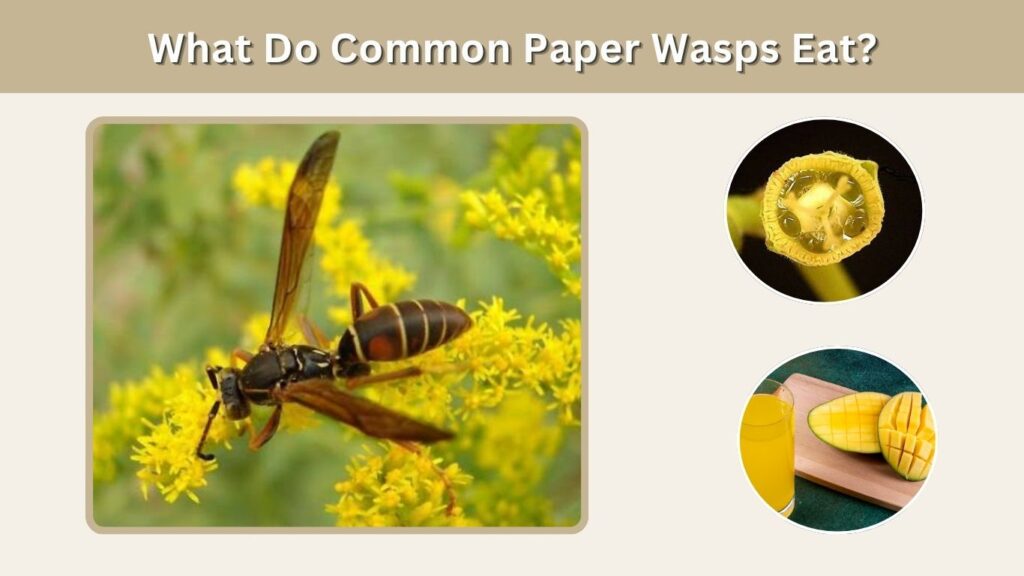
Adult paper wasps primarily consume nectar and other sugary liquids. They visit flowers and may contribute to pollination as they move between plants.
Developing larvae require protein. Adult workers capture caterpillars and other soft-bodied insects, chew them into small pieces, and carry the food back to the nest. This predatory behavior makes paper wasps useful in gardens, where they help reduce populations of leaf-eating pests.
Larvae may provide adults with nutrient-rich secretions in exchange for food, helping support the colony’s social feeding system.
Common Paper Wasp Life Cycle
Paper wasps live in seasonal colonies organized around a reproductive female.
Spring Nest Founding
A fertilized female emerges from a protected overwintering site during spring. She chooses a sheltered location, builds the first cells, lays eggs, and feeds the developing larvae without worker assistance.
Several females may initially cooperate, but one usually becomes the dominant egg-laying queen.
Summer Colony Growth
The first adult daughters become workers. They gather wood fibers, enlarge the nest, collect food, care for larvae, and defend the colony. The queen gradually concentrates on egg production.
As the workforce grows, the nest expands around its outer edges.
Fall and Winter
Later in the season, colonies produce males and reproductive females. After mating, the new females find protected locations in which to overwinter.
In temperate regions, workers, males, and the founding queen die when cold weather arrives. The abandoned nest is generally not reused, although another queen may build nearby the following year.
Do Common Paper Wasps Sting?
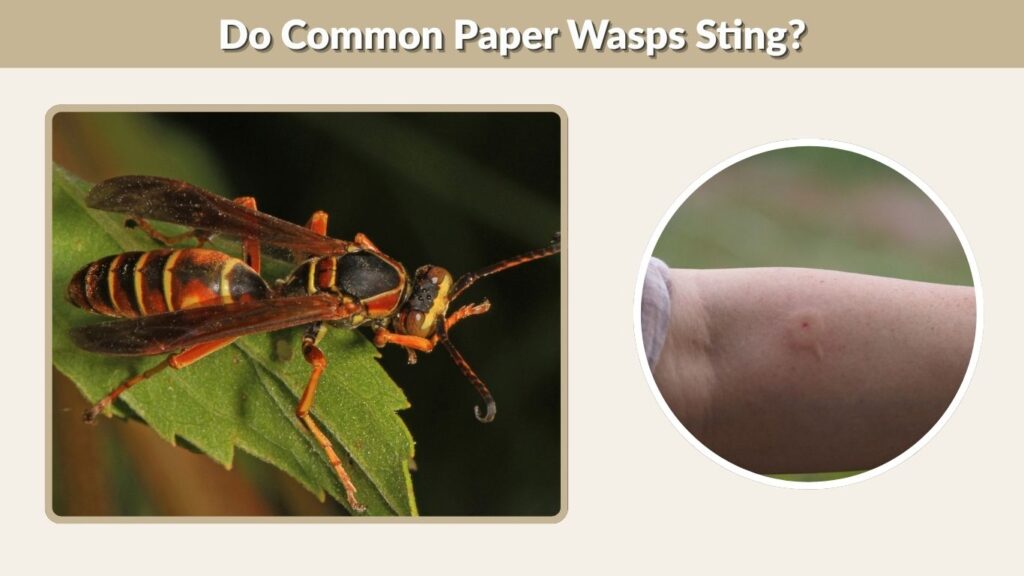
Female paper wasps have stingers and can sting repeatedly because their stingers usually remain attached to their bodies. Males cannot sting.
Paper wasps are not normally aggressive while feeding away from the colony. Defensive behavior is most likely when someone:
- Touches or strikes the nest
- Trims a branch supporting the colony
- Opens equipment containing a hidden nest
- Traps a wasp inside clothing
- Attempts to remove the comb
- Creates vibration near the nest
Australian Museum guidance describes paper wasps as primarily aggressive when defending their nest. Their sting is painful, and multiple stings or an allergic reaction can be medically serious.
Treating a Paper Wasp Sting
Move away from the colony before treating the sting. Wash the area with soap and water, then apply a cloth-wrapped cold pack for 10–20 minutes. Remove rings or tight jewelry before swelling increases.
Seek emergency medical help for:
- Trouble breathing
- Swelling of the tongue, lips, face, or throat
- Widespread hives
- Severe dizziness
- Fainting or collapse
- Repeated vomiting
- Numerous stings
A person with a prescribed epinephrine injector should follow their emergency treatment plan immediately.
Common Wasp vs Paper Wasp
The “common wasp” and the “common paper wasp” are not the same insect. In Britain and much of Europe, common wasp refers to Vespula vulgaris.
| Feature | Common paper wasp | Common wasp |
| Genus | Polistes | Vespula |
| Body shape | Long and slender | Shorter and stockier |
| Legs during flight | Often hang downward | Held close to the body |
| Nest structure | One exposed comb | Enclosed, layered nest |
| Typical nest site | Eaves, branches, structures | Soil, walls, roofs, cavities |
| Colony size | Usually relatively small | May become very large |
| Behavior | Mainly defensive near nest | Often more defensive and persistent |
Should a Common Paper Wasp Nest Be Removed?
A nest away from doors, paths, play areas, and outdoor seating can usually remain undisturbed. Paper wasps provide natural control of caterpillars and other garden insects.
Professional removal is safer when the nest:
- Is beside a frequently used entrance
- Requires a ladder to reach
- Is hidden inside a wall or roof
- Contains many active wasps
- Is near children or pets
- Threatens someone with a sting allergy
Never burn, strike, flood, or cover an active nest. These actions can provoke multiple defensive wasps.
FAQs
Are common paper wasps aggressive?
They are not generally aggressive while foraging away from the colony. However, workers may defend their nest when it is touched, shaken, approached closely, or exposed to vibration. Keeping a safe distance prevents most conflicts.
Where do common paper wasps build nests?
They usually build beneath eaves, branches, porch ceilings, railings, sheds, furniture, pipes, and other protected surfaces. Their exposed comb requires some shelter from heavy rain and strong wind.
Are common paper wasps beneficial?
Yes. Adults feed on nectar, while workers capture caterpillars and other insects for their larvae. This hunting behavior can reduce populations of plant-damaging pests in gardens and agricultural areas.
Are common paper wasps found in Perth?
Paper wasps are common around Perth and other parts of Western Australia. The Australian paper wasp, Polistes humilis, was introduced to Western Australia from the eastern states and now occurs around gardens and buildings.
Is the common paper wasp the same as Polistes fuscatus?
Not everywhere. Polistes fuscatus is properly known as the northern paper wasp in North America, although it may be called a common paper wasp informally. In Australia, Common Paperwasp usually refers to Polistes humilis.