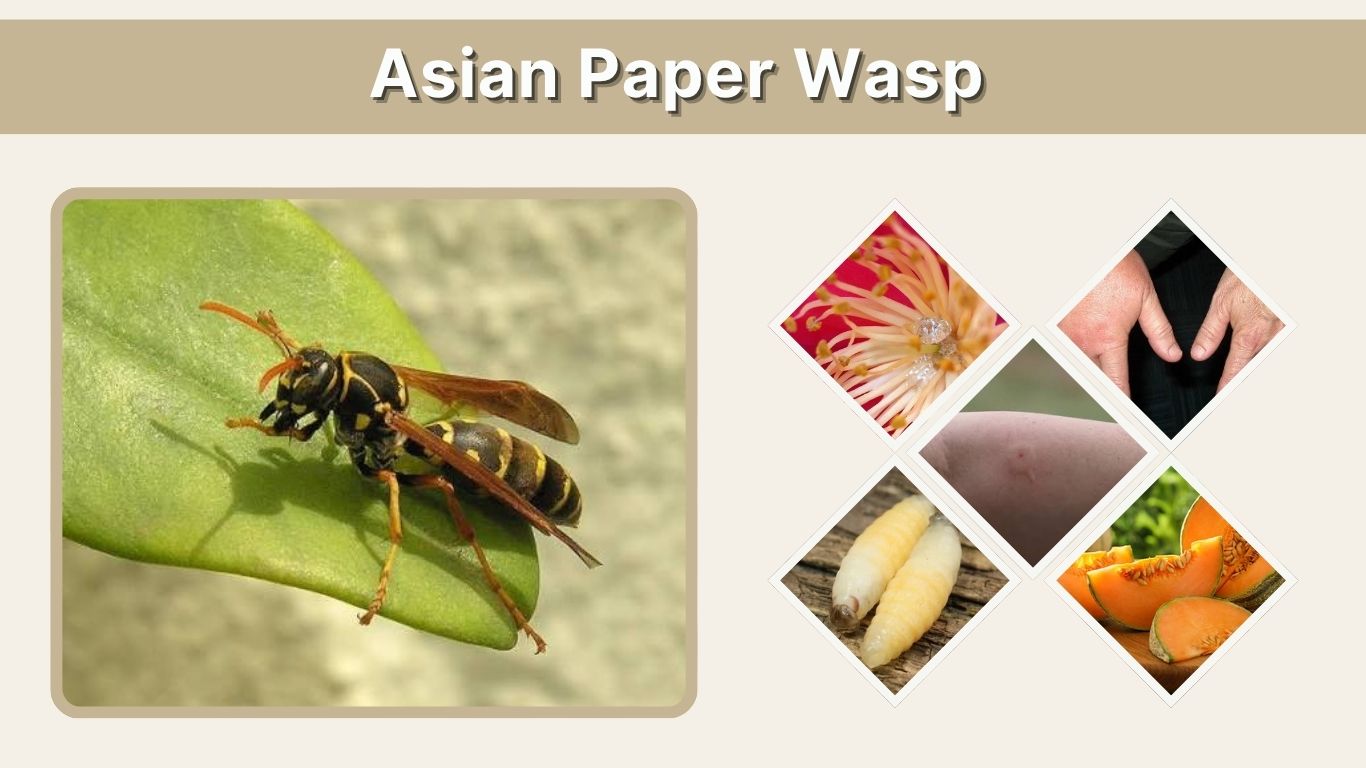
The Asian paper wasp is a slender black-and-yellow social wasp commonly identified as Polistes chinensis or, in New Zealand and parts of Australia, Polistes chinensis antennalis. It builds exposed paper nests beneath eaves, branches, fences, and outdoor structures. Although it hunts caterpillars and can benefit gardens, introduced populations may compete with native insects and other nectar-feeding wildlife. Asian paper wasps can also deliver repeated painful stings when their nest is disturbed.
Asian Paper Wasp Quick Facts
Asian paper wasps are smaller and more slender than most hornets. Their long legs hang beneath the body during flight, while their exposed, umbrella-shaped nests distinguish them from wasps that build enclosed or underground colonies.
| Feature | Description |
| Scientific name | Polistes chinensis |
| Common subspecies | P. chinensis antennalis |
| Family | Vespidae |
| Adult length | Commonly 12–15 mm |
| Main colors | Black and bright yellow |
| Legs | Yellowish, tan, or orange |
| Nest | Open paper comb attached by a stalk |
| Adult diet | Nectar, honeydew, fruit, and other sugary liquids |
| Larval food | Chewed caterpillars and other insects |
| Sting | Painful; females may sting repeatedly |
New Zealand identification guidance describes adults as medium-sized wasps measuring approximately 12–15 mm. Some regional sources use a broader size range because queens and individuals from different populations vary.
Asian Paper Wasp Identification
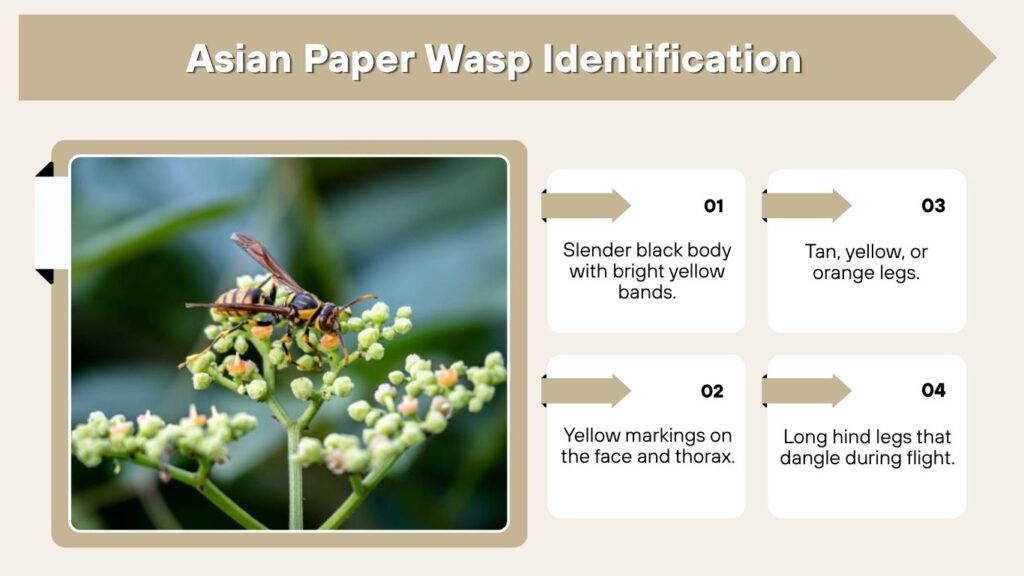
The Asian paper wasp has a narrow waist, elongated body, long antennae, and long legs. It looks more delicate than a yellowjacket or hornet, although its bright black-and-yellow pattern may initially cause confusion.
Key Identification Features
- Slender black body with bright yellow bands
- Yellow markings on the face and thorax
- Tan, yellow, or orange legs
- Long hind legs that dangle during flight
- Brownish or amber-colored wings
- Narrow waist between the thorax and abdomen
- Long antennae
- Body usually around 12–15 mm long
Asian paper wasps generally appear darker and more slender than European wasps. In Australia, they can be separated from many native paper wasps by their brighter yellow-and-black pattern; native species are often reddish or dull brown.
What Does an Asian Paper Wasp Nest Look Like?
The nest is an exposed cluster of hexagonal cells made from chewed plant or wood fibres mixed with saliva. It resembles a small upside-down umbrella and is attached to the surface by a short central stalk.
Common Nesting Locations
Asian paper wasps may build nests:
- Beneath house eaves
- Under decks and porches
- Inside sheds and carports
- Beneath outdoor furniture
- On fences and railings
- Among shrubs and small trees
- Inside sheltered pipes or equipment
- Beneath ledges and roof overhangs
The nest does not have the outer envelope found around many hornet and yellowjacket nests. Eggs, larvae, pupal caps, and adult wasps may therefore be visible within or on the open cells. Nests are often about 80 mm across but can reach approximately 200 mm.
Why Do Some Paper Wasp Nests Glow Green?
Researchers discovered that the silk cocoon caps of several Asian Polistes species fluoresce strongly under ultraviolet light. The silk membranes can emit a bright green or greenish-yellow glow, although the biological purpose remains uncertain. The study examined several Asian paper wasp species, so the effect should not automatically be assumed to occur equally in every Polistes chinensis nest.
Asian Paper Wasp Life Cycle
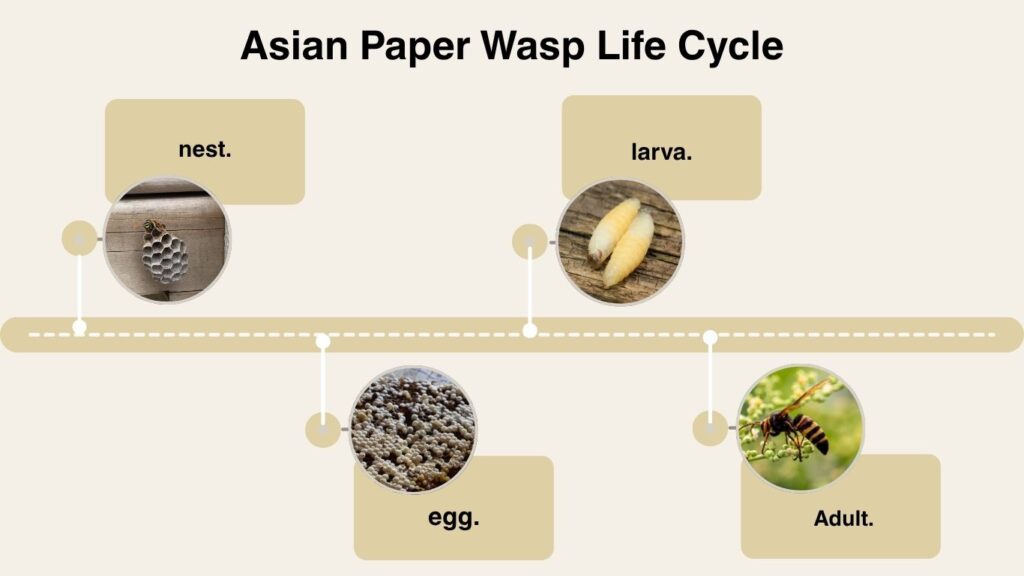
Asian paper wasps live in seasonal colonies. A fertilized queen survives the colder period in a protected location and begins a new nest when warm spring conditions return.
Queen and Early Nest
The queen initially works alone. She builds the first cells, lays eggs, captures prey, and feeds the developing larvae. The first adult daughters become workers and gradually take over nest construction, foraging, brood care, and defense.
Queens and workers may look extremely similar. Their roles and behaviour are often more useful than body size for separating them.
Growing Colony
The colony enlarges through spring and summer as workers add cells and care for new larvae. A paper wasp nest normally remains much smaller than a mature yellowjacket colony, but even a modest nest may contain enough females to deliver numerous stings.
Later in the season, the colony produces males and future queens. After mating, the new queens find protected sites in which to overwinter. Workers, males, and the founding queen generally die as colder weather arrives, and abandoned nests are not normally reused.
What Do Asian Paper Wasps Eat?
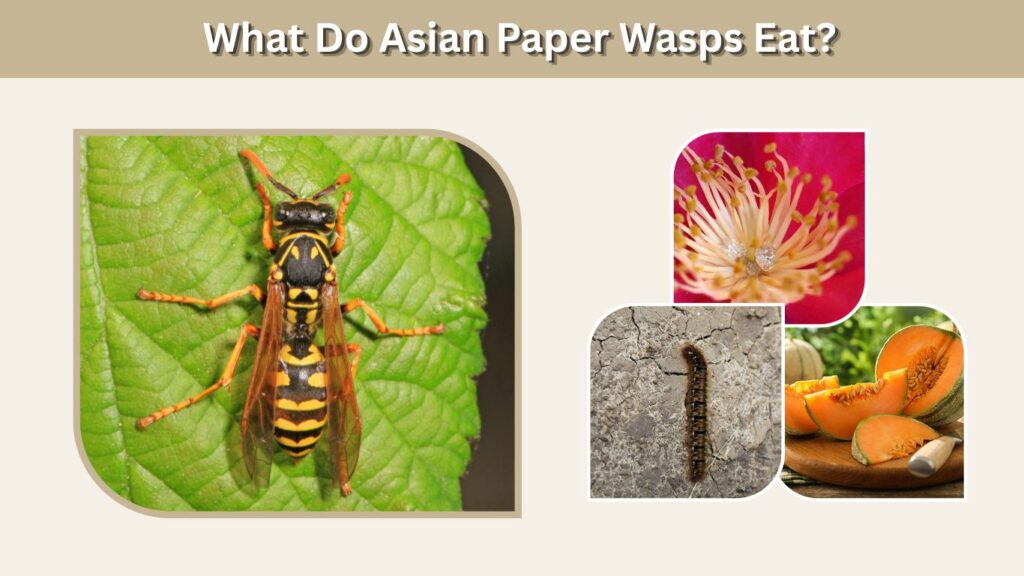
Adult Asian paper wasps obtain energy from nectar, honeydew, ripe fruit, and other sugary liquids. Workers also hunt caterpillars and other soft-bodied insects, which they chew into food for their developing larvae.
This predatory behaviour can reduce some garden pests. However, where the species has been introduced, intensive predation may also reduce native caterpillars, butterflies, and other insects. Asian paper wasps can compete with native insects, birds, and honeybees for nectar or honeydew.
Asian Paper Wasps in New Zealand
Asian paper wasps originated in East Asia and were accidentally introduced to New Zealand during the late 1970s. They are particularly familiar in warmer northern areas, although records now extend as far south as Otago.
New Zealand treats introduced social wasps as pests because they prey on native invertebrates, compete for food, build nests around human structures, and create a stinging hazard. Three introduced paper-wasp species are now present in the country.
Asian Paper Wasps in Australia
Asian paper wasps are established in parts of southeastern Australia, including the Australian Capital Territory. Canberra authorities identify them as an introduced species that competes with local insects and the native Australian paper wasp. They commonly place nests on buildings, trees, and bushes.
They should not be confused with the Australian paper wasp, Polistes humilis. The Australian species is usually reddish or amber-brown, while the Asian paper wasp has a more contrasting black-and-yellow body.
Do Asian Paper Wasps Sting?
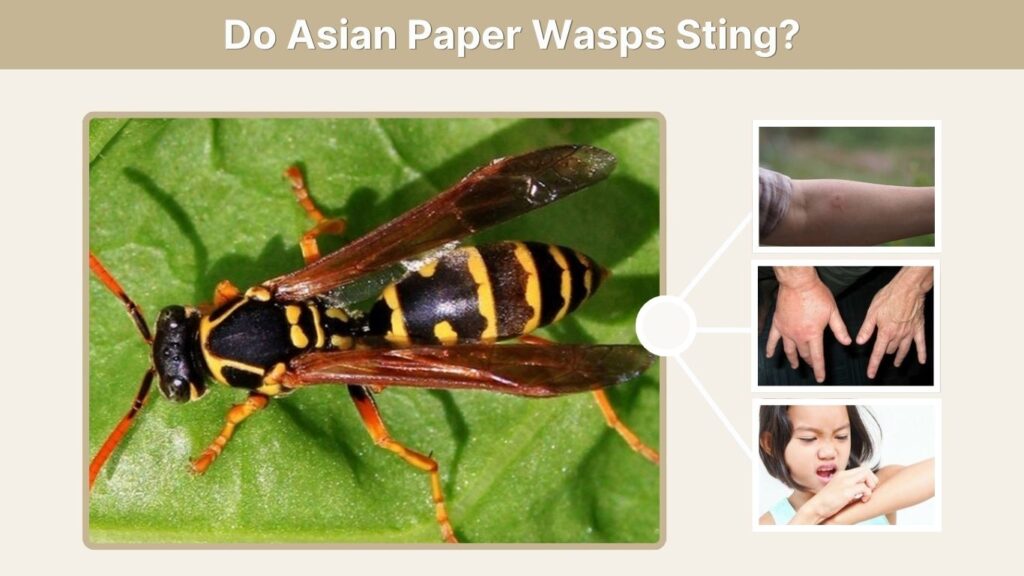
Female Asian paper wasps can sting. They have smooth stingers and may sting more than once because the stinger is not normally left in the skin. Males cannot sting.
They are generally less aggressive than yellowjackets when foraging away from the nest. However, workers may attack when someone touches the nest, cuts the supporting branch, moves nearby equipment, or creates strong vibration.
Asian Paper Wasp Sting Treatment
A typical sting causes immediate pain, redness, itching, and localized swelling. Wash the area with soap and water and apply an ice pack wrapped in cloth for approximately 15 minutes. Suitable pain relief or an antihistamine may help when used according to its label and medical advice.
Call emergency services for difficulty breathing, tongue or throat swelling, wheezing, persistent coughing, severe dizziness, collapse, or other signs of anaphylaxis. Medical assessment is also advisable for numerous stings or a sting affecting the mouth, eye, face, or neck.
How to Get Rid of an Asian Paper Wasp Nest
A nest far from doors, paths, children, or frequently used areas may be left alone temporarily because paper wasps hunt garden pests. Removal is more appropriate when the nest creates a regular risk of accidental disturbance.
Safe Control Steps
- Keep people and pets away from the nest.
- Do not hit, burn, hose, or knock down an active nest.
- Arrange professional removal for a large or difficult-to-reach colony.
- Treat only with a product legally labelled for wasp nests.
- Follow every distance, clothing, ventilation, and re-entry instruction.
- Remove the inactive nest and clean the attachment area afterward.
Regional pest guidance recommends treating nests around dusk, when most workers have returned, but professional pest control is safer—especially for anyone with a sting allergy or for nests in roofs, walls, or confined spaces.
Do Baits and Traps Work?
General wasp traps may catch individual foragers but usually do not remove the queen, larvae, or entire colony. Based on available control guidance, direct treatment of an identified nest is generally more dependable than relying on a homemade Asian paper wasp bait. Never place improvised poisoned food where children, pets, bees, or wildlife could reach it.
Asian Paper Wasp vs Asian Giant Hornet
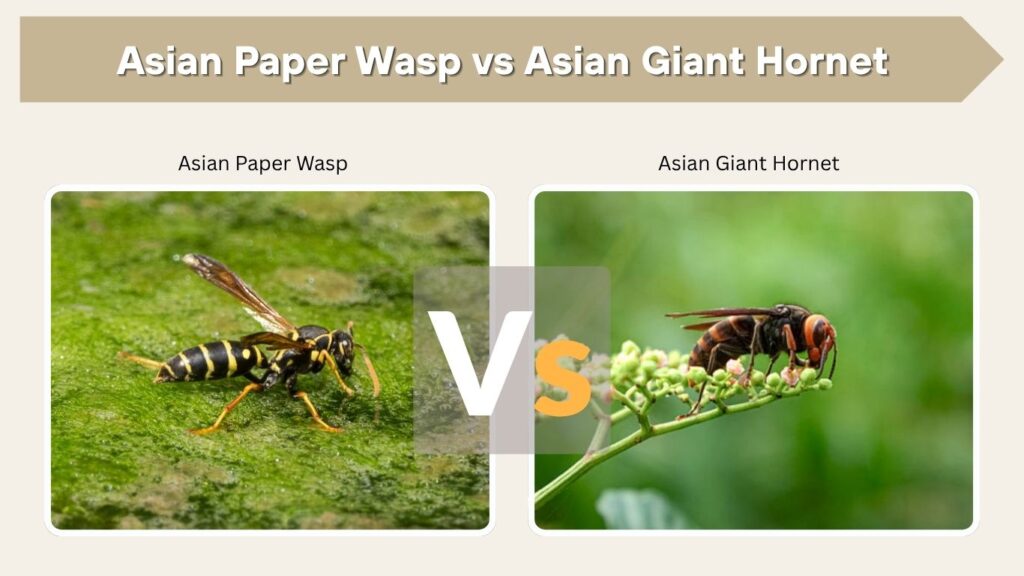
| Feature | Asian Paper Wasp | Northern Giant Hornet |
| Body shape | Slender with narrow waist | Very large and stocky |
| Typical size | About 12–15 mm | Can approach 2 inches |
| Legs in flight | Often hang downward | Held more closely beneath body |
| Nest | Small, exposed paper comb | Usually concealed in a cavity |
| Colony | Comparatively small | Larger hornet colony |
| Main colors | Black and yellow | Orange head with dark-banded body |
Paper wasps are far smaller and more slender than northern giant hornets, formerly called Asian giant hornets. A small open comb beneath an eave or branch strongly suggests a paper wasp rather than a giant hornet colony.
FAQs
Are Asian paper wasps poisonous?
They are venomous rather than poisonous. Female wasps inject venom through a stinger. Most stings cause a localized reaction, but sensitive individuals can develop serious anaphylaxis.
Are Asian paper wasps found in the UK?
The Asian paper wasp should not be confused with the yellow-legged hornet currently monitored in the UK. They are different species with different body patterns and nests. Asian paper wasps are chiefly associated with Asia and introduced populations in New Zealand and southeastern Australia.
Is an Asian paper wasp nest dangerous?
The structure itself is harmless, but females guarding it may sting repeatedly. Risk increases when a nest is beside a doorway, play area, path, garden tool, or frequently moved object.
Will Asian paper wasps return to the same nest?
An abandoned paper nest is normally not reused. However, overwintered queens may establish a fresh colony in the same sheltered location the following spring.
Should I kill Asian paper wasps?
Wasps foraging away from people do not always need to be killed. Control is most justified for introduced populations causing ecological problems or nests that create a genuine safety risk near occupied areas.