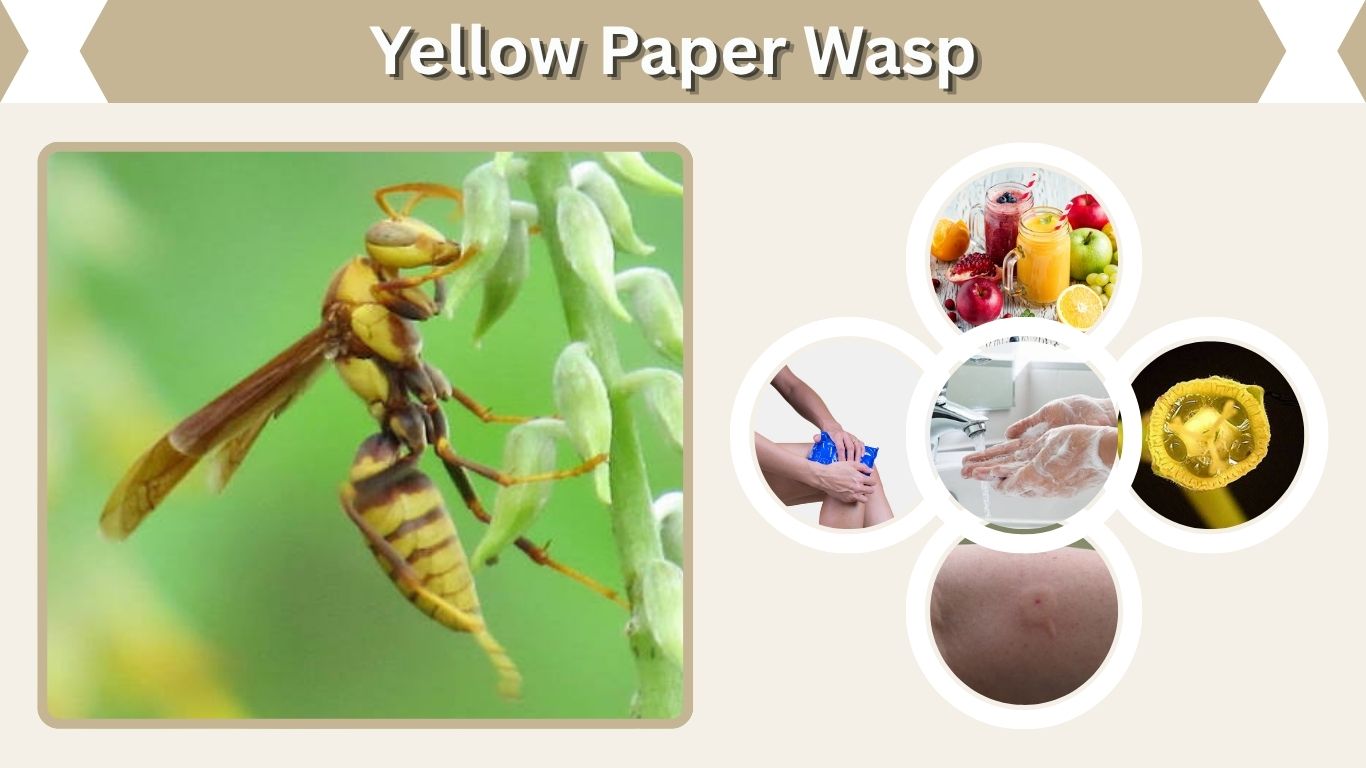
The yellow paper wasp is a slender social wasp that constructs an exposed, umbrella-shaped nest from chewed plant fibers. In the southwestern United States, the name commonly refers to Polistes flavus, a yellow or golden-orange species found in areas such as Arizona and western Texas. However, other black-and-yellow paper wasps may receive the same informal name. Yellow paper wasps help control caterpillars and other garden pests but can deliver painful, repeated stings when their nest is threatened.
Yellow Paper Wasp Facts
| Feature | Description |
| Scientific name | Commonly Polistes flavus in the southwestern US |
| Family | Vespidae |
| Body shape | Slender with a narrow waist |
| Color | Golden yellow, orange-yellow, or yellow with brown markings |
| Nest | Open paper comb with visible cells |
| Diet | Nectar and other sugary liquids |
| Larval food | Caterpillars and other soft-bodied insects |
| Temperament | Usually calm away from its nest |
| Sting | Painful; females may sting repeatedly |
| Active season | Spring through fall |
Texas A&M Extension identifies Polistes flavus as the yellow paper wasp and documents it in western Texas and southern Arizona. Paper wasps as a group vary considerably in color, so location and nest structure are often more useful than color alone.
How to Identify a Yellow Paper Wasp
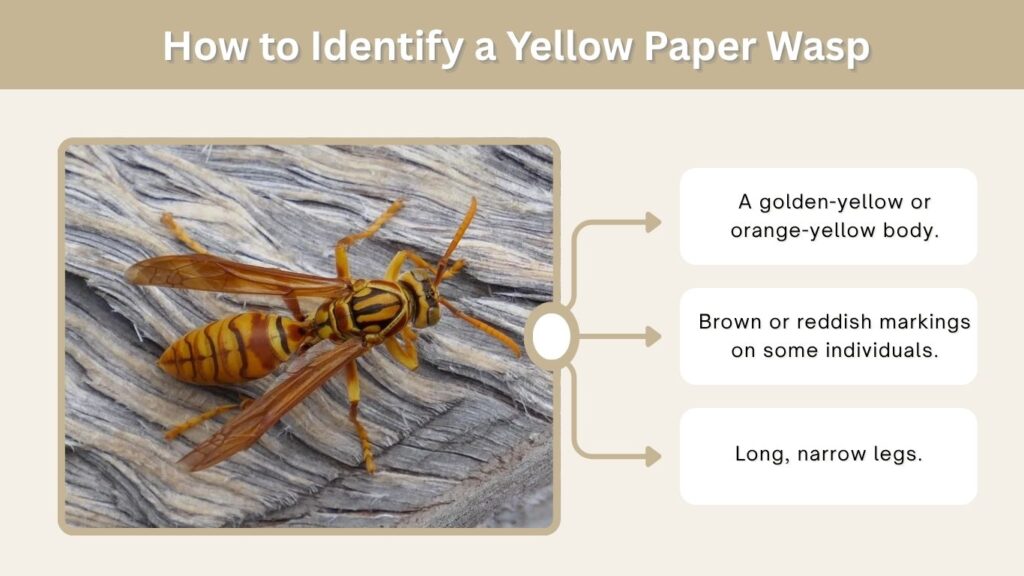
A yellow paper wasp has the narrow body and long legs typical of the genus Polistes. It looks noticeably slimmer than a yellowjacket.
Identification Features
Look for:
- A golden-yellow or orange-yellow body
- Brown or reddish markings on some individuals
- Long, narrow legs
- A strongly pinched waist
- Long antennae
- Dark or smoky wings
- Legs hanging beneath the body during flight
- An exposed nest with visible hexagonal cells
The exact appearance varies. The European paper wasp, Polistes dominula, is black and yellow and is frequently mistaken for a yellowjacket. It can be separated by its thinner waist, longer body, orange-tipped antennae, and trailing legs during flight.
Yellow Paper Wasp vs Yellowjacket
Yellow paper wasps and yellowjackets belong to the same wasp family, but they are not the same insects.
| Feature | Yellow paper wasp | Yellowjacket |
| Body | Long and slender | Short and compact |
| Waist | Narrow and obvious | Shorter and less delicate |
| Legs in flight | Hang downward | Held close to the body |
| Nest | One exposed comb | Enclosed, layered paper nest |
| Common nest site | Eaves, branches, sheds | Ground, walls, attics, cavities |
| Food behavior | Hunts insects; visits flowers | Some species scavenge around food |
| Colony defense | Mainly defensive near nest | Often more defensive |
| Colony size | Usually relatively small | May contain hundreds or thousands |
Paper wasp nests have no outer paper envelope. Yellowjacket nests usually contain multiple combs surrounded by a covering and are commonly hidden underground or inside structural spaces.
What Does a Yellow Paper Wasp Nest Look Like?
The nest resembles a small upside-down umbrella. It consists of one open comb attached to a branch, ceiling, or other surface by a narrow stalk.
Common nest features include:
- Clearly visible hexagonal cells
- A gray, tan, or brown paper texture
- Downward-facing openings
- No protective outer shell
- White silk caps over some developing pupae
- Adult wasps standing directly on the comb
Workers make the paper by scraping fibers from weathered wood and dry plant stems. They chew the fibers, mix them with saliva, and shape the resulting pulp into cells.
Common Nesting Locations
Yellow paper wasps may build beneath:
- Roof eaves
- Porch ceilings
- Deck railings
- Tree branches
- Sheds and garages
- Outdoor furniture
- Window ledges
- Utility boxes
- Pipes and sheltered equipment
Typical paper wasps do not build underground colonies. Wasps repeatedly entering a hole in the soil are more likely to be yellowjackets or solitary ground-nesting wasps.
What Do Yellow Paper Wasps Eat?
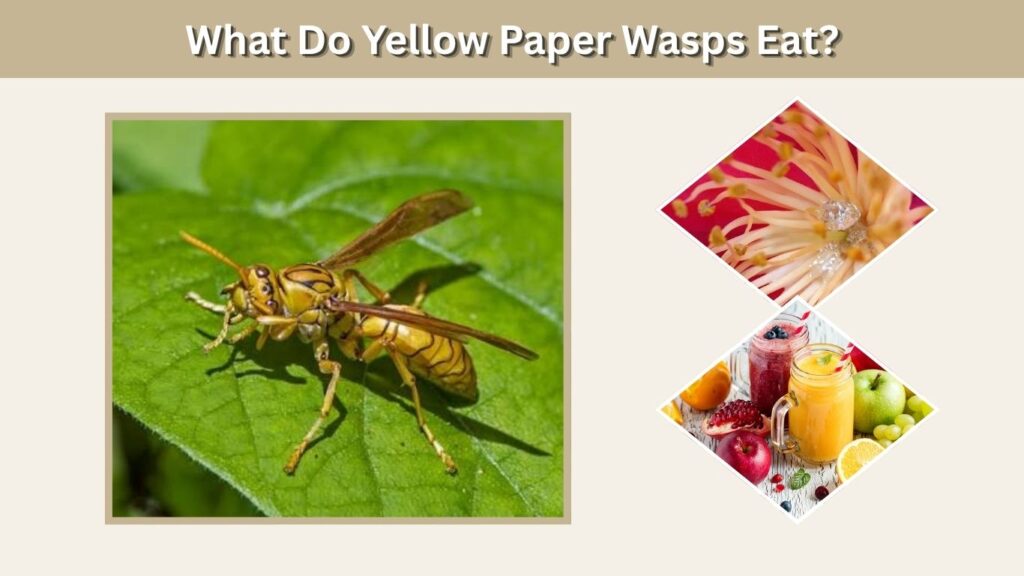
Adult paper wasps obtain energy from nectar, flower fluids, fruit juices, honeydew, and other sugary substances. They may provide some pollination while visiting flowers.
Their larvae require protein. Workers hunt caterpillars, flies, beetle larvae, and other soft-bodied insects. They chew the prey into small portions and carry it back to the nest. This makes paper wasps useful predators of several garden and agricultural pests.
Yellow Paper Wasp Life Cycle
A fertilized queen survives winter in a protected location and becomes active in spring. She begins a small nest, lays eggs, catches food, and raises the first brood alone.
Her first adult daughters became workers. They enlarge the comb, collect food, feed larvae, and defend the colony while the queen concentrates on laying eggs.
Later in the year, the colony produces males and future queens. After mating, the new queens seek protected overwintering sites. In temperate climates, workers, males, and the founding queen die when cold weather arrives. The abandoned nest is usually not reused the following year.
Do Yellow Paper Wasps Sting?
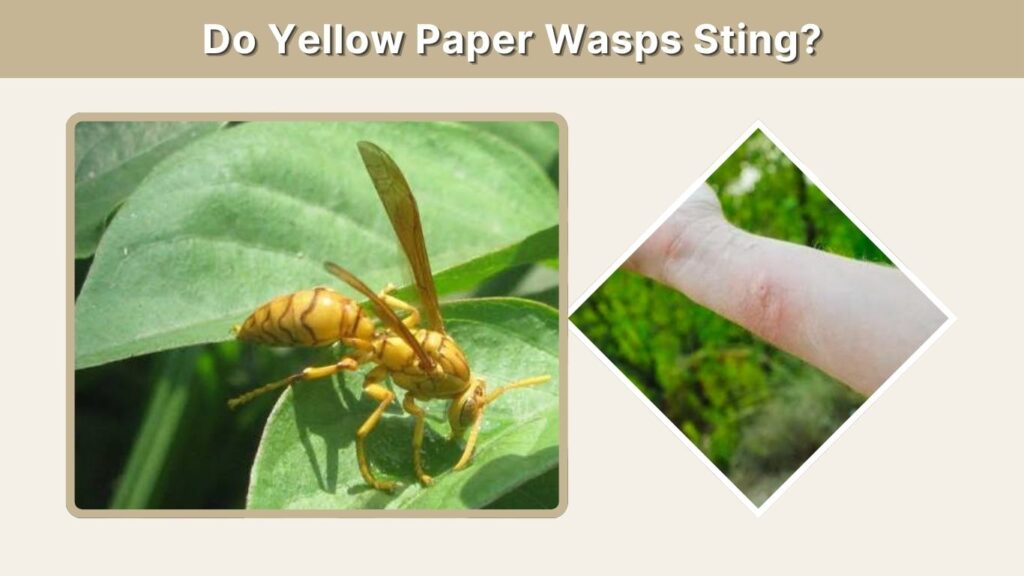
Female yellow paper wasps can sting. Males do not have functional stingers.
Paper wasps are generally not aggressive while visiting flowers or hunting away from the colony. Most stings occur when someone:
- Touches or shakes the nest
- Trims vegetation containing a colony
- Opens equipment with a hidden nest
- Traps a wasp inside clothing
- Attempts to remove the nest
- Creates vibration near the comb
Their relatively smooth stingers normally remain attached, allowing them to sting repeatedly. Paper wasps may also use their mandibles defensively, but the painful venom is delivered through the sting rather than a bite.
What Does the Sting Feel Like?
A sting commonly causes immediate sharp or burning pain followed by redness, tenderness, itching, and localized swelling. There is no dependable universal pain-index score for every species described as a yellow paper wasp. Pain varies according to species, sting location, venom dose, and individual sensitivity.
Most local reactions improve with basic first aid. However, any wasp sting can cause a serious allergic reaction in a susceptible person.
Yellow Paper Wasp Sting Treatment
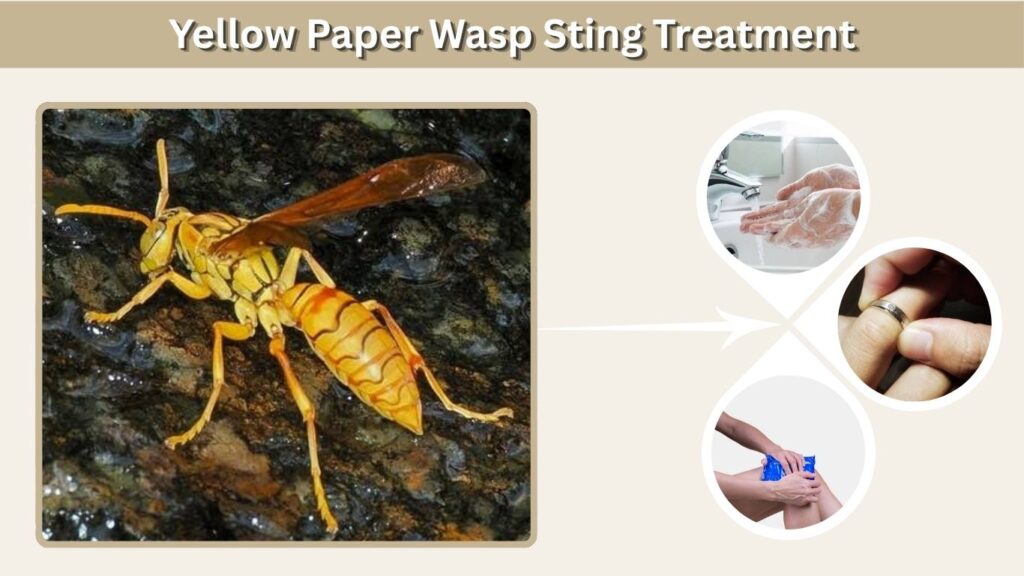
Move away from the nest before treating the sting because other colony members may respond defensively.
For a mild reaction:
- Wash the area with soap and water.
- Remove rings or tight jewelry before swelling increases.
- Apply a cloth-wrapped cold pack for 10–20 minutes.
- Elevate the affected arm or leg when possible.
- Avoid scratching the area.
- Use suitable nonprescription pain or anti-itch treatment according to its label.
Seek emergency help for breathing difficulty, throat or facial swelling, widespread hives, severe dizziness, fainting, confusion, or repeated vomiting. A person with prescribed epinephrine should use it immediately according to their emergency plan and still obtain emergency medical treatment.
Are Yellow Paper Wasps Dangerous?
They are not normally dangerous when observed from a reasonable distance. Risk increases around an active colony because several females may defend it simultaneously.
An out-of-the-way nest can often remain because the wasps control plant-eating insects. Consider removal when the nest is beside a doorway, play area, outdoor seating space, or another frequently used location.
Professional removal is safest when:
- Someone nearby has a sting allergy
- The nest requires a ladder to reach
- The colony is large or highly active
- Wasps are entering a wall or roof
- The insects cannot be identified confidently
- There is no safe retreat route
Do not burn, flood, strike, or cover an active nest. These methods may provoke the colony and cause multiple stings. Penn State Extension advises weighing the sting risk of treatment against leaving a harmless, out-of-the-way colony undisturbed.
How to Prevent Yellow Paper Wasp Nests
Inspect eaves, sheds, railings, outdoor furniture, utility boxes, and sheltered equipment during spring. Early nests are smaller and easier for a professional to manage.
Additional prevention measures include:
- Sealing cracks around siding and eaves
- Repairing screens and damaged soffits
- Closing gaps leading into sheds or attics
- Checking stored outdoor equipment
- Keeping doors and windows properly fitted
- Removing abandoned nests after confirming they are inactive
Never seal an opening while wasps are actively entering it. Closing an active structural entrance may force the colony to search for another route, possibly into the building.
FAQs
What is the scientific name of the yellow paper wasp?
In the southwestern United States, the name commonly refers to Polistes flavus. However, “yellow paper wasp” may also be applied informally to other yellow-marked Polistes species. Location and clear photographs are needed for reliable species identification.
Are yellow paper wasps aggressive?
They are generally calm while feeding or hunting away from the colony. They become defensive when their nest is touched, shaken, approached closely, or exposed to vibration. Avoiding the immediate nesting area prevents most confrontations.
Is a yellow paper wasp a yellowjacket?
No. A paper wasp is slimmer, flies with its long legs hanging down, and builds an uncovered comb. A yellowjacket is more compact and normally builds a covered, layered nest underground or inside a protected cavity.
Is a yellow paper wasp sting dangerous?
Most single stings cause temporary pain, redness, itching, and swelling. The sting can become dangerous when it triggers anaphylaxis, occurs inside the mouth or throat, or involves numerous wasps. Breathing trouble or facial swelling requires emergency care.
Should I remove a yellow paper wasp nest?
Leave it alone when it is far from people and unlikely to be disturbed. Consider professional removal when it is near doors, paths, children, pets, outdoor seating, or someone with a serious sting allergy.