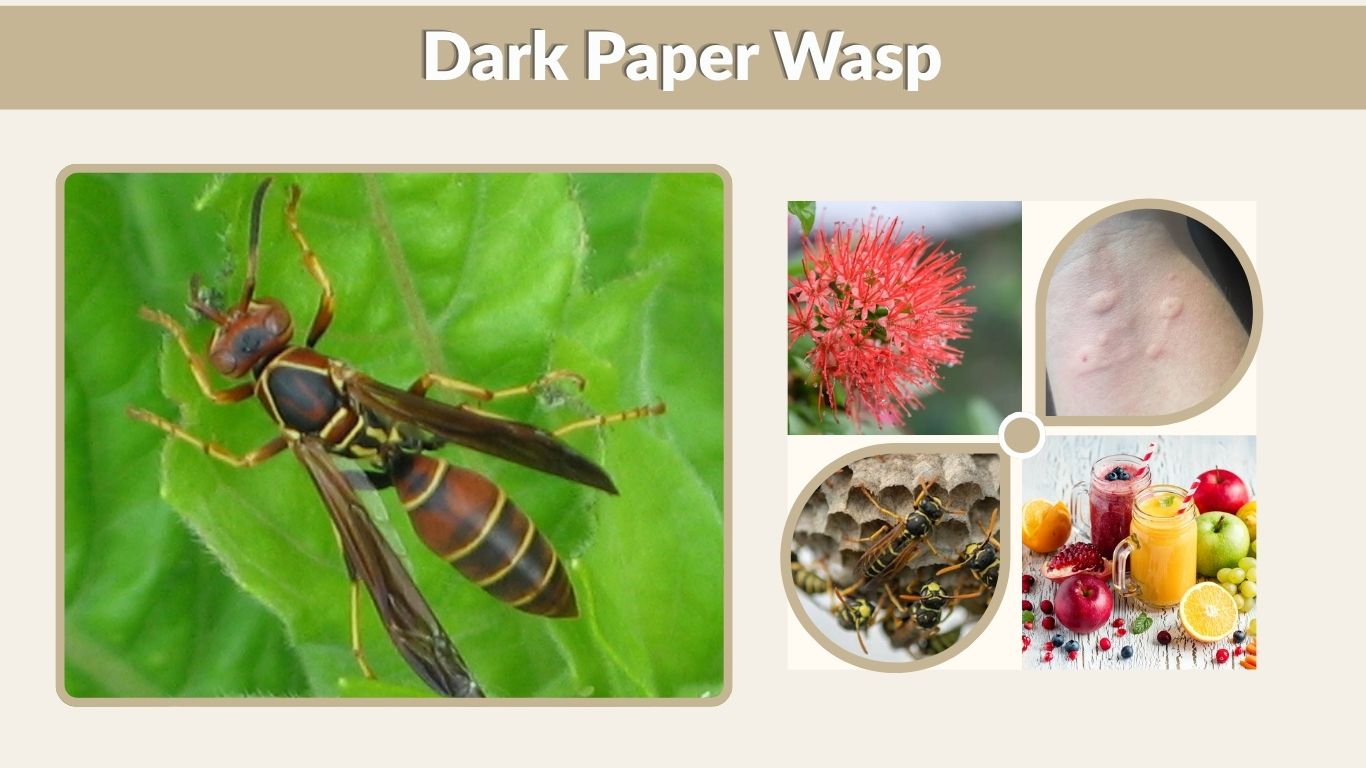
The dark paper wasp is a slender, long-legged wasp commonly found around gardens, woodland edges, sheds, porches, and houses. It builds a small umbrella-shaped paper nest beneath sheltered surfaces. Although capable of delivering a painful sting, it usually avoids people unless its nest is disturbed. Dark paper wasps are also beneficial predators that remove caterpillars and other plant-feeding insects from gardens.
What Is a Dark Paper Wasp?
“Dark paper wasp” usually refers to Polistes fuscatus, a species also called the northern paper wasp or common paper wasp. It belongs to the family Vespidae and is native to eastern North America, occurring from southern Canada through much of the eastern United States.
| Feature | Description |
| Scientific name | Polistes fuscatus |
| Other common name | Northern paper wasp |
| Family | Vespidae |
| Size | About 5/8–3/4 inch long |
| Color | Dark brown, reddish brown, or black with yellow markings |
| Nest type | Open, umbrella-shaped paper comb |
| Diet | Nectar, fruit juices, caterpillars, and other insects |
| Temperament | Usually calm away from its nest |
Paper wasps are recognizable by their narrow waists, relatively smooth bodies, long legs, and slender wings. Their legs often hang beneath them while they fly.
Dark Paper Wasp Identification
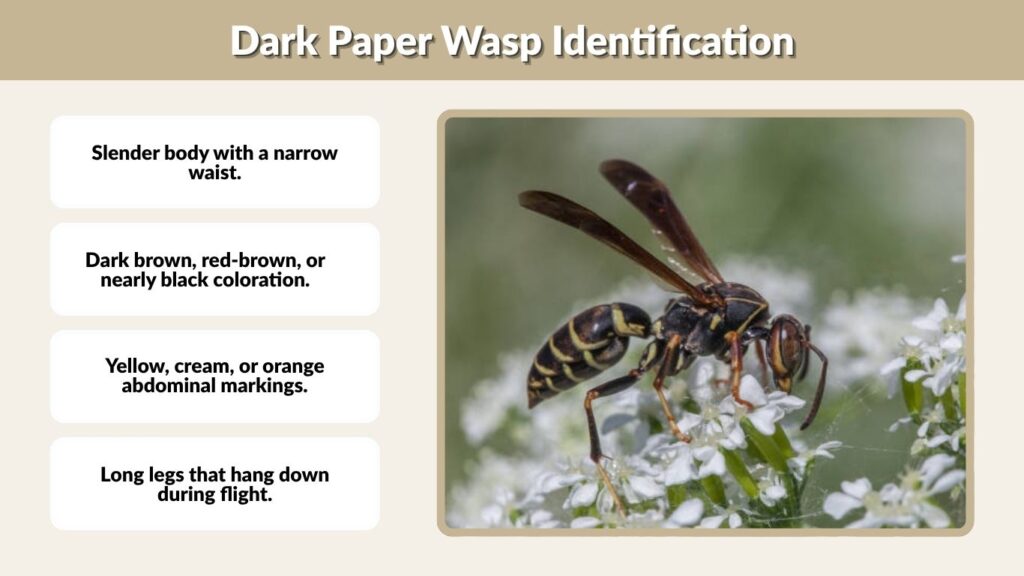
Dark paper wasps vary considerably in color. Some are almost black with narrow yellow abdominal bands, while others are dark reddish brown with orange, ivory, or yellow markings. Because of this variation, identification should not be based on color alone.
Key Identification Features
- Slender body with a narrow waist
- Dark brown, red-brown, or nearly black coloration
- Yellow, cream, or orange abdominal markings
- Long legs that hang down during flight
- Wings folded lengthwise over the back when resting
- Long antennae
- Smooth body with relatively little hair
- Length of approximately 5/8–3/4 inch
Males usually have longer antennae with noticeably curled tips and more yellow on the face. Females have straighter antennae and possess the stinger used for hunting and nest defense.
Dark Brown and Dark Red Paper Wasps
A dark brown or dark red paper wasp may still be Polistes fuscatus because this species has numerous color forms. However, other native species, including red paper wasps such as Polistes carolina, can look similar. Location, facial markings, antenna color, and abdominal patterns may be needed for reliable species identification.
Dark Paper Wasp Nest
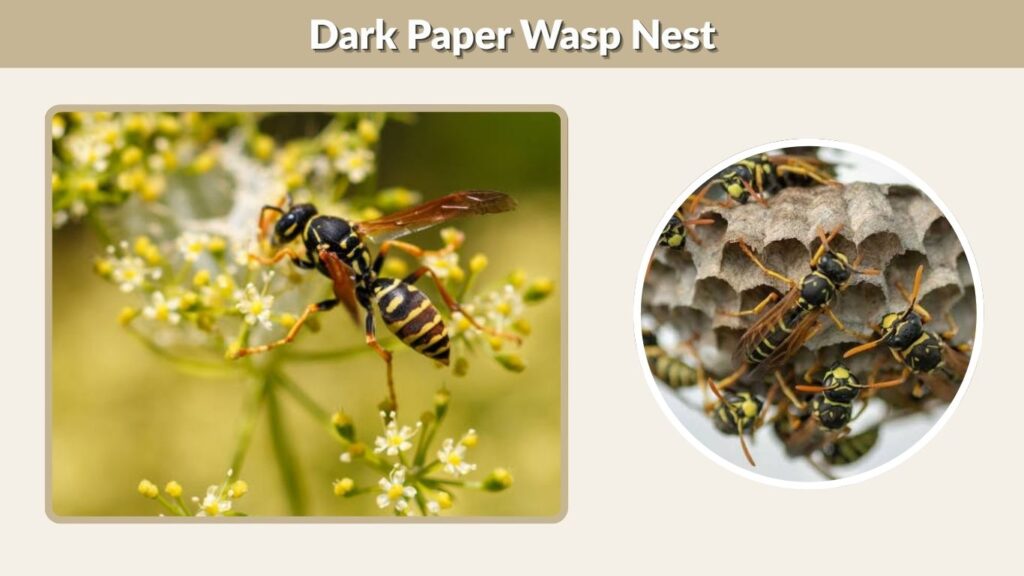
The dark paper wasp builds the exposed, single-layer nest characteristic of Polistes wasps. The nest is created from weathered wood fibers that the wasps chew and mix with saliva, producing a gray or brown paper-like material.
What Does the Nest Look Like?
A dark paper wasp nest resembles a small upside-down umbrella. It consists of one open comb containing visible hexagonal cells. Unlike a hornet or yellowjacket nest, it does not have a protective paper envelope covering the comb.
The nest hangs from a short central stalk and is usually only a few inches across. Colonies commonly remain relatively small, although a mature nest can contain several dozen wasps.
Common Nesting Locations
Dark paper wasps often attach their nests beneath protected horizontal surfaces, including:
- Roof eaves
- Porch ceilings
- Deck railings
- Window and door frames
- Shed or barn rafters
- Attics and garages
- Mailboxes
- Birdhouses
- Tree branches
- Dense shrubs
Sheltered locations protect the exposed comb from heavy rain and direct sunlight. A nest that is high above normal activity can often remain undisturbed until the colony naturally ends.
Dark Paper Wasp Life Cycle
A fertilized female survives winter in a protected site such as a hollow tree, woodpile, wall opening, attic, or another sheltered cavity. She becomes active during warm spring weather and begins constructing a small nest.
The queen lays eggs inside the open cells and feeds the developing larvae with chewed insects. The first adult daughters become workers, taking over hunting, feeding, nest construction, and defense while the queen concentrates on egg laying.
The colony grows during summer. New queens and males are produced later in the season. After mating, young queens find protected overwintering sites, while the workers, males, and original queen eventually die as freezing weather arrives. The old nest is abandoned and is not reused the following year.
What Do Dark Paper Wasps Eat?
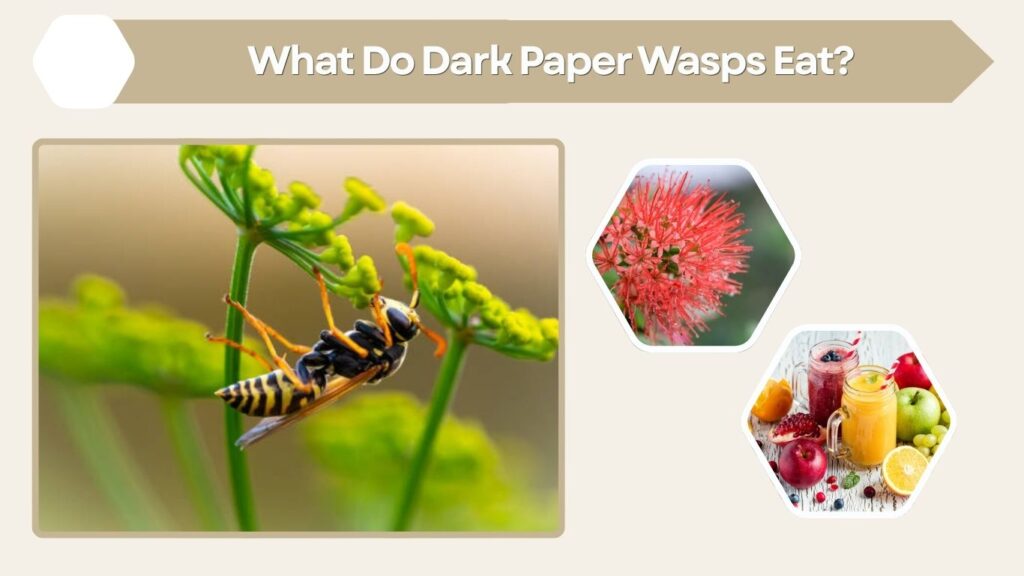
Adult paper wasps consume sugary liquids, including flower nectar, honeydew, and juices from ripe or overripe fruit. Their visits to flowers can contribute to pollination, although they are not as efficient at carrying pollen as hairy bees.
What Do They Feed Their Larvae?
Workers hunt soft-bodied insects and spiders to feed the colony’s larvae. Caterpillars are especially important prey. A worker captures a caterpillar, chews it into a soft mass, and carries portions back to the nest.
This hunting behavior makes dark paper wasps beneficial around vegetable gardens, fruit plants, and ornamental landscapes. They can help control hornworms, cabbageworms, webworms, flies, and beetle larvae.
Dark Paper Wasp Sting
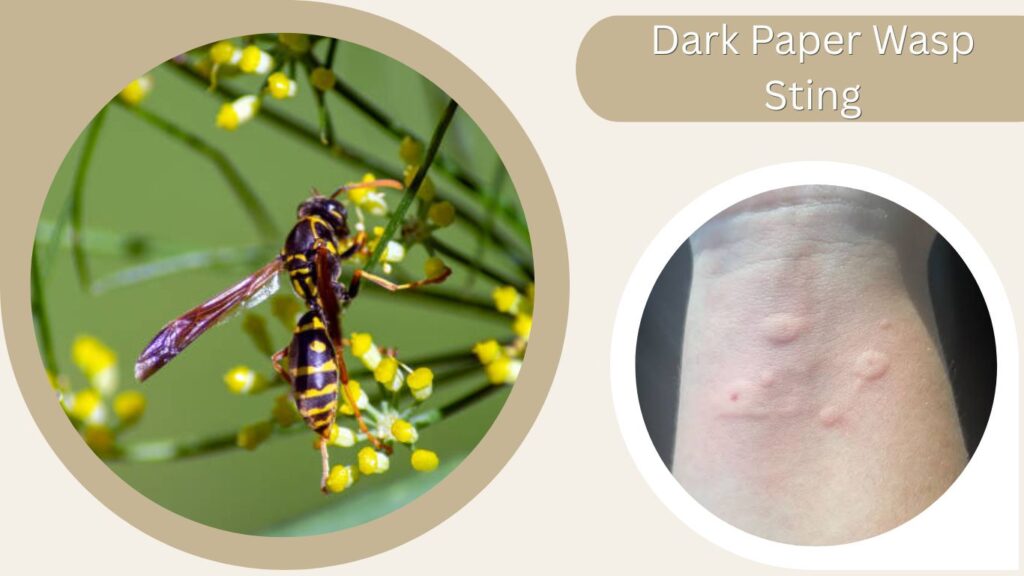
Female dark paper wasps can sting repeatedly because their stingers do not normally remain embedded in the skin. They are generally less defensive than yellowjackets and hornets, especially while searching for food away from the nest. Stings are most likely when someone touches the nest, blocks the flight path, swats a wasp, or causes strong vibration nearby.
Common Sting Symptoms
A normal local reaction may include immediate pain, burning, redness, itching, and swelling around the sting. For a mild reaction, wash the area and apply a cold compress. An over-the-counter antihistamine, hydrocortisone cream, or calamine lotion may help, provided it is safe for the person to use.
Seek emergency help for trouble breathing, facial or throat swelling, widespread hives, dizziness, fainting, vomiting, or a weak and rapid pulse. These can indicate anaphylaxis, a potentially life-threatening allergic reaction.
Can Paper Wasps See in the Dark?
Dark paper wasps are primarily active during daylight. Their eyes can function under relatively dim conditions, but they are not specialized for true nocturnal activity. Research comparing wasps shows that nocturnal species possess stronger low-light visual adaptations than daytime Polistes paper wasps.
Most members of a colony remain on or near the nest after dark. Working near a nest at night is still risky because vibration, bright light, or direct contact may disturb resting wasps.
Are Dark Paper Wasps Native?
The dark or northern paper wasp is a native North American species. It is particularly widespread across eastern North America and occurs in states such as Ohio, Pennsylvania, Maryland, New Jersey, Georgia, and surrounding regions.
It may occur alongside the invasive European paper wasp, Polistes dominula. European paper wasps are generally more boldly patterned in black and yellow and have mostly orange antennae. Dark paper wasps are usually browner, more variable, and less similar to yellowjackets.
Should You Remove a Dark Paper Wasp Nest?
A nest in an isolated tree, unused shed corner, or high roofline can usually be left alone. Paper wasps provide natural pest control, and the colony will not reuse the nest in the following year.
Removal may be appropriate when a nest is beside a doorway, play area, frequently used deck, or another location where accidental contact is likely. Large nests, difficult locations, and homes occupied by people with sting allergies should be handled by a qualified pest-control professional.
Never strike, spray with water, burn, or block an active nest. These actions can provoke multiple defensive wasps.
FAQs
Are dark paper wasps aggressive?
They are not normally aggressive while feeding or flying away from their colony. However, they may defend their nest if someone approaches closely, causes vibration, or touches the supporting structure. Maintaining distance is usually enough to prevent conflict.
How painful is a dark paper wasp sting?
The sting can cause immediate sharp or burning pain followed by redness and localized swelling. The intensity varies among individuals. People allergic to wasp venom may experience a serious systemic reaction requiring emergency treatment.
Do dark paper wasps make nests inside walls?
They normally prefer exposed combs beneath sheltered surfaces. However, queens may enter wall voids, attics, or buildings while searching for protected overwintering sites. Paper wasps can occasionally establish nests near openings or inside accessible structural spaces.
Are dark paper wasps beneficial?
Yes. They capture caterpillars, flies, beetle larvae, and other insects to feed their young. Their hunting can reduce populations of several garden pests, and adults also visit flowers for nectar.
Do dark paper wasps reuse old nests?
No. The colony abandons its nest at the end of the season, and surviving queens build new nests the following spring. An empty nest can be removed after consistently cold weather confirms that it is inactive.