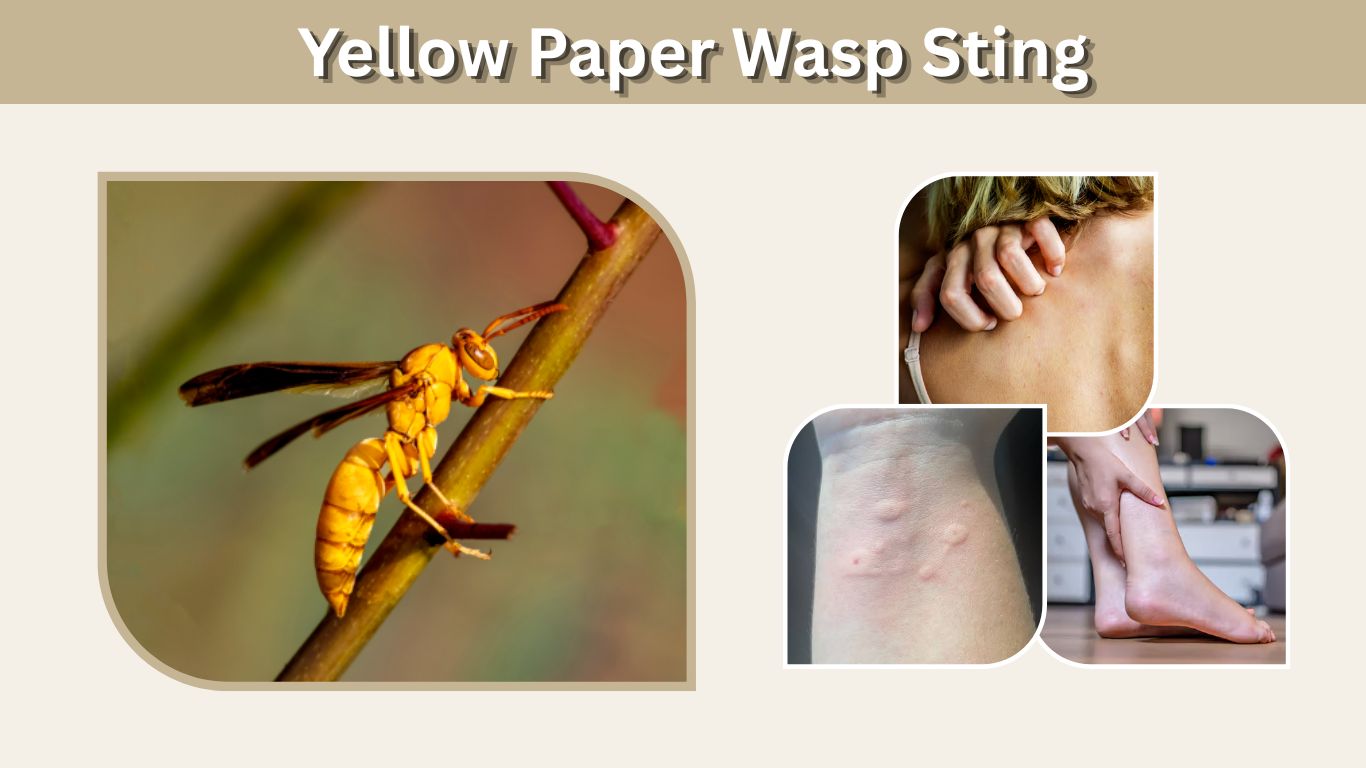
A yellow paper wasp sting can produce immediate burning pain, redness, itching, and swelling. Most reactions remain limited to the area surrounding the sting and improve with basic home care. However, paper-wasp venom can cause a severe allergic reaction in susceptible people. Yellow paper wasps can also sting repeatedly, especially when someone touches or disturbs their exposed, umbrella-shaped nest.
What Is a Yellow Paper Wasp?
“Yellow paper wasp” is a broad common name rather than one universally recognized species. In North America, it often describes the yellow-and-black European paper wasp, Polistes dominula. The Yellow Oriental or Indian yellow paper wasp usually refers to Polistes olivaceus, a species found naturally in India and parts of East Asia.
Paper wasps have slender bodies, narrow waists, and long legs that hang beneath them in flight. Their nests contain one exposed layer of hexagonal cells without the outer paper covering found on most yellowjacket nests.
Do Yellow Paper Wasps Sting?
Female paper wasps can sting when they feel threatened. They are usually less confrontational while gathering nectar or hunting insects, but workers may defend a nest if someone approaches too closely, causes vibration, blocks their flight path, or touches the supporting structure. European paper-wasp stings occur most often when a concealed nest is accidentally disturbed.
Unlike honey bees, paper wasps have smooth stingers that generally do not remain embedded in human skin. A wasp can therefore sting more than once during the same encounter.
Yellow Paper Wasp Sting Symptoms
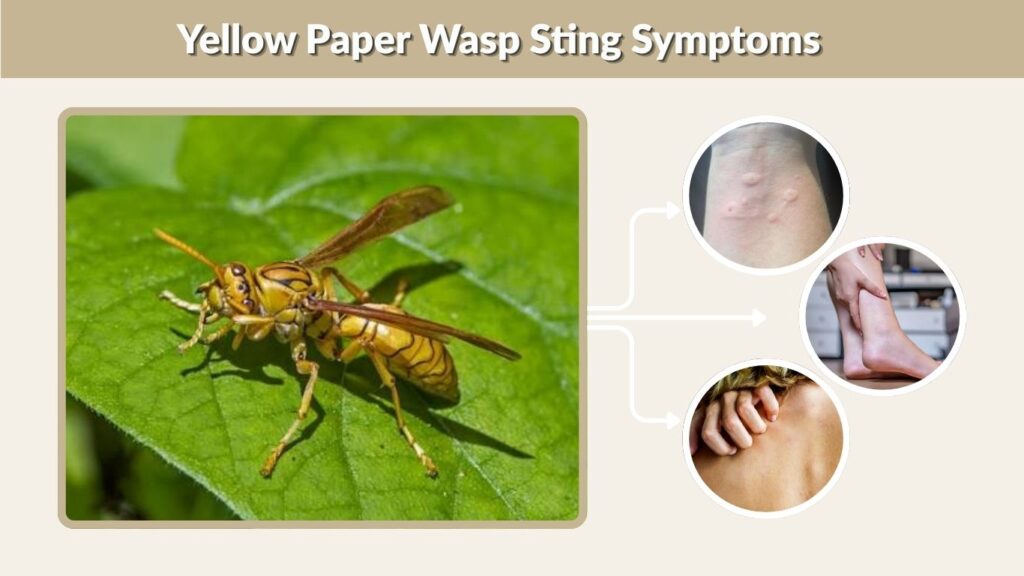
The severity of a sting depends on where the person was stung, how many stings occurred, and whether the person is allergic to wasp venom.
Normal Local Reaction
A typical local reaction may cause:
- Sudden burning or sharp pain
- A small red or raised mark
- Itching and tenderness
- Warmth around the sting
- Mild to moderate swelling
Most mild reactions can be managed at home. Pain and irritation often begin improving within a day or two, although larger local swelling may last several days.
Large Local Reaction
Some people develop swelling that extends well beyond the puncture site. For example, a sting on one finger might cause much of the hand to swell. A large local reaction can be uncomfortable and may continue for several days, but it does not necessarily mean the person is experiencing anaphylaxis. Medical advice is appropriate when swelling continues worsening or interferes with normal movement.
Severe Allergic Reaction
Anaphylaxis is a medical emergency. Call the local emergency number immediately when a person develops one or more of these symptoms:
- Trouble breathing, swallowing, or speaking
- Wheezing or throat tightness
- Swelling of the tongue, lips, face, or throat
- Widespread hives or flushed skin
- Dizziness, fainting, or confusion
- A weak and rapid pulse
- Vomiting, diarrhea, or severe abdominal symptoms
Anaphylaxis can develop within minutes. Do not wait to see whether symptoms disappear, and do not rely on an antihistamine alone to treat a severe reaction. Use a prescribed epinephrine autoinjector promptly when available and seek emergency care even if symptoms begin improving.
Yellow Paper Wasp Sting Treatment
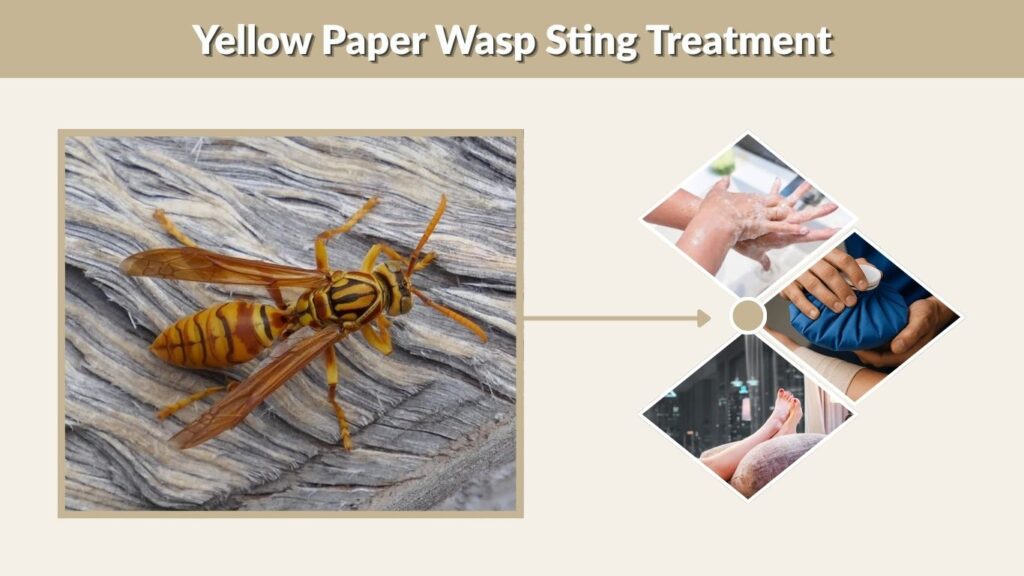
Most uncomplicated stings can be treated using simple first-aid measures. The first step is to move away from the wasps and their nest to prevent additional stings.
Immediate First Aid
- Move to safety. Walk calmly away from the nest or activity area.
- Check the skin. Paper wasps rarely leave a stinger, but remove one promptly when present because the insect may have been misidentified.
- Wash the area. Gently clean it with soap and water.
- Apply a cold compress. Hold a cold, damp cloth or wrapped ice pack against the skin for 10–20 minutes.
- Elevate the limb. Raising an affected hand, arm, foot, or leg may reduce swelling.
Relieving Pain and Itching
Calamine lotion or 0.5–1% hydrocortisone cream may help reduce itching. A nonprescription oral antihistamine may also be useful, provided it is safe for the person to take. An over-the-counter pain reliever can be used according to its label directions. Avoid scratching because broken skin may become infected.
Consult a healthcare professional when pain or swelling continues worsening, the sting appears infected, symptoms make you feel generally unwell, or the sting occurred inside the mouth or near the eye. Multiple stings also deserve prompt medical attention, especially in children, older adults, or people with existing medical conditions.
Paper Wasp vs Yellowjacket Sting
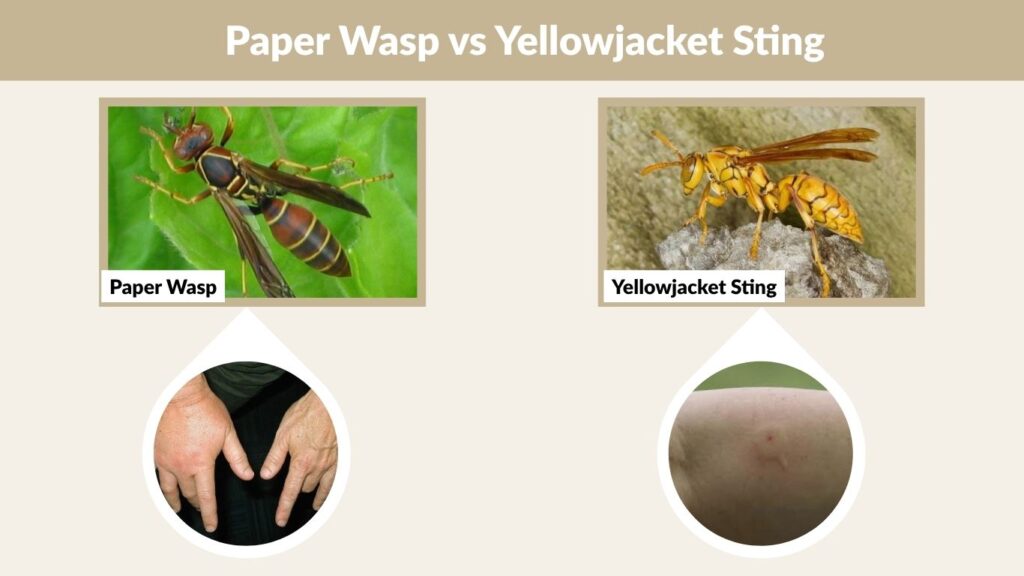
Paper wasps and yellowjackets are social wasps that can sting repeatedly. However, the likelihood and perceived pain of a sting cannot be predicted perfectly from the insect’s common name.
| Feature | Paper wasp | Yellowjacket |
| Body shape | Slender with long legs | Shorter and more compact |
| Typical nest | Exposed single comb | Covered nest in a cavity or underground |
| Behavior around people | Usually defensive near the nest | Often more defensive, especially later in the season |
| Number of stings | Can sting repeatedly | Can sting repeatedly |
| Typical pain | Burning or sharp | Burning or sharp |
| Allergy risk | Can cause anaphylaxis | Can cause anaphylaxis |
Paper wasps are generally less likely to sting away from their nest. Some yellowjacket species become more defensive during late summer and fall and may come into conflict with people around food, drinks, or garbage.
Which Sting Is Worse?
There is no dependable winner for every person or species. Pain varies according to the wasp species, sting location, venom dose, and individual sensitivity.
The Schmidt sting pain index runs from 1 to 4 and is based on entomologist Justin Schmidt’s personal experiences. In a published selection of the index, the paper wasp Polistes versicolor is rated 1.5, while the western yellowjacket Vespula pensylvanica is rated 2. These ratings should not be applied to every paper wasp or yellowjacket species, and they do not measure allergy risk.
Does a Yellow Paper Wasp Sting Have Benefits?
A paper-wasp sting provides no recognized health benefit to the person who is stung. Claims that the venom improves immunity or treats illness are not a reason to expose someone intentionally to a sting.
The wasps themselves are beneficial in gardens. Adults hunt caterpillars, flies, and other insects to feed their larvae, helping reduce some plant pests. Their ecological value comes from predation and flower visitation—not from stinging humans.
How to Prevent Yellow Paper Wasp Stings
Check roof eaves, railings, sheds, outdoor furniture, play equipment, and other sheltered surfaces for exposed combs. Avoid swatting individual wasps, striking a nest, or spraying it with water. Keep food and sweet drinks covered outdoors, wear shoes in areas with wasp activity, and teach children not to touch nests.
An isolated nest that does not threaten people can often remain in place. A nest beside a doorway, play area, or frequently used deck may require professional removal, particularly when someone nearby has a known venom allergy.
FAQs
How long does a yellow paper wasp sting hurt?
Strong burning pain is usually most noticeable immediately after the sting and then gradually decreases. Tenderness, redness, and itching may continue for one or two days. Larger local reactions can produce swelling for several days and occasionally as long as a week.
Does a yellow paper wasp leave its stinger behind?
Usually not. Paper wasps have smooth stingers that allow them to withdraw the stinger and use it again. A visible stinger may suggest a honey bee caused the sting, although it should still be removed promptly regardless of the insect’s identity.
Is a paper-wasp sting worse than a yellowjacket sting?
Either sting can be painful. Certain yellowjackets rank slightly higher than some paper wasps on the Schmidt pain index, but the result varies by species and individual experience. Both can cause dangerous allergic reactions, regardless of their pain rating.
When should I see a doctor after a paper-wasp sting?
Seek medical advice for worsening swelling, infection signs, persistent illness, multiple stings, or a sting near the eye or inside the mouth. Trouble breathing, facial or throat swelling, fainting, widespread hives, or vomiting requires immediate emergency treatment.
Are Indian yellow paper-wasp stings dangerous?
The Indian or Yellow Oriental paper wasp, Polistes olivaceus, can deliver a painful venomous sting. Most reactions are localized, but any wasp sting can cause anaphylaxis in an allergic person. Treat the symptoms rather than assuming the risk from the species name alone.