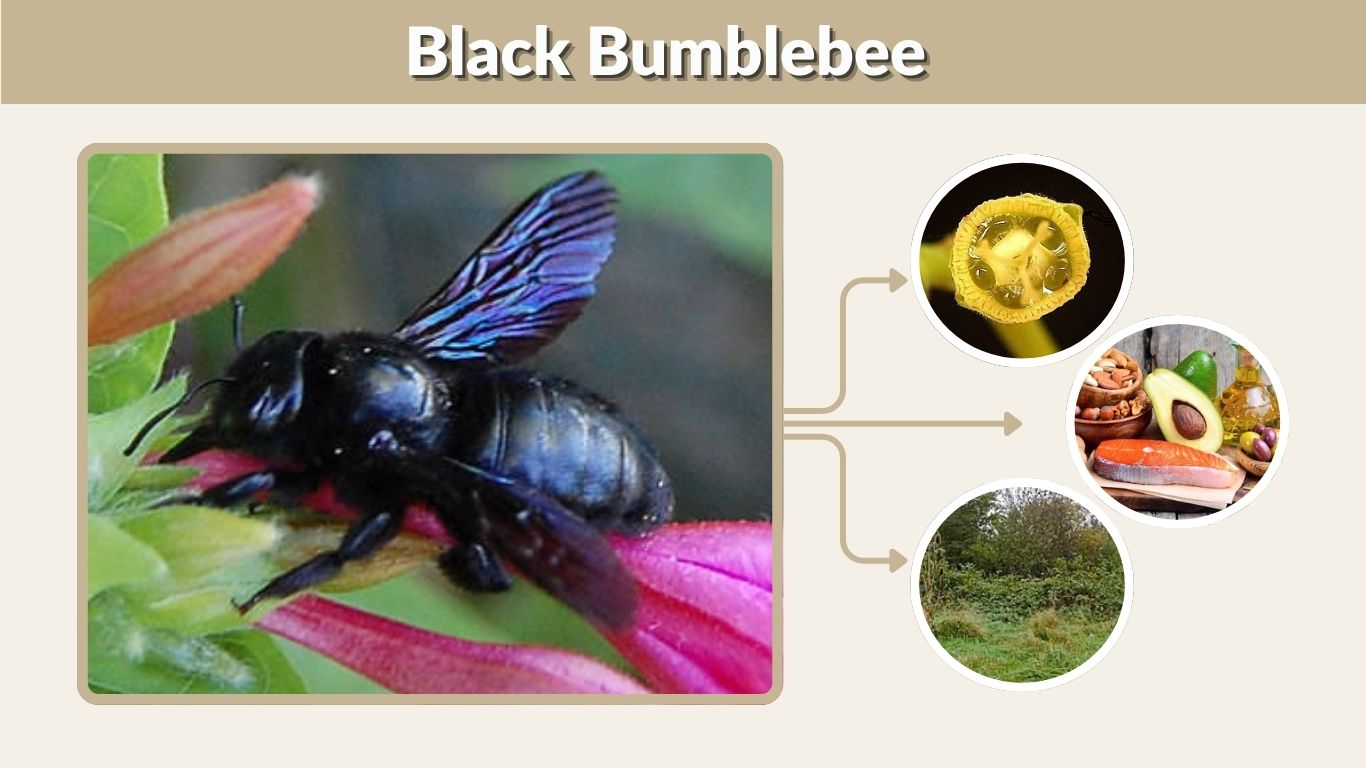
A black bumblebee can be striking to see, especially when it appears almost completely dark or has only a few yellow, white, orange, or red markings. However, “black bumblebee” is not the name of one specific species. Several bumblebees have predominantly black bodies, while carpenter bees and other large insects are often mistaken for them. Knowing the differences in body shape, hair, markings, nesting habits, and behavior can help you identify a large black bumblebee safely and accurately.
What Is a Black Bumblebee?
The term black bumblebee usually describes a bumblebee with mostly black hairs or a very dark overall appearance. Bumblebees belong to the genus Bombus and are generally thick-bodied, fuzzy insects adapted for collecting pollen and nectar.
Depending on the species, a dark bumblebee may have yellow, white, orange, red, or gray markings on its abdomen.
Common Features
- Body: Thick, rounded, and heavily covered with hair
- Color: Primarily black with possible yellow, white, red, or orange markings
- Size: Usually around 0.4–1 inch, depending on species and caste
- Wings: Transparent to slightly smoky
- Legs: Females have specialized structures for carrying pollen
- Flight: Strong and sometimes noisy
- Activity: Frequently seen visiting flowering plants
Queens are typically larger than workers, which can explain sightings of an unusually big or giant black bumblebee.
Is an All-Black Bumblebee Really a Bumblebee?
An all-black bee is not necessarily a bumblebee. One of the insects most frequently mistaken for a huge black bumblebee is the carpenter bee.
Carpenter bees and bumblebees can be similar in size, but their bodies reveal important differences.
Black Bee vs Bumblebee
- Bumblebee: Usually has a fuzzy abdomen
- Carpenter bee: Often has a smooth, shiny abdomen
- Bumblebee nest: Usually underground or in existing cavities
- Carpenter bee nest: Usually tunneled into wood
- Bumblebee: Often patterned with bands of colored hair
- Carpenter bee: May appear almost completely black
If you notice a large black shiny bee hovering near wooden fences, decks, rafters, or siding, it may be a carpenter bee rather than a black bumblebee.
Why Some Bumblebees Look Completely Black
Color patterns vary greatly between bumblebee species, sexes, geographic populations, and individuals. Dark hair can dominate the body, making yellow or pale markings difficult to notice from a distance.
Lighting also matters. A bee that looks all black while flying may reveal yellow, white, or reddish hairs when viewed closely.
Black and Yellow Bumblebee
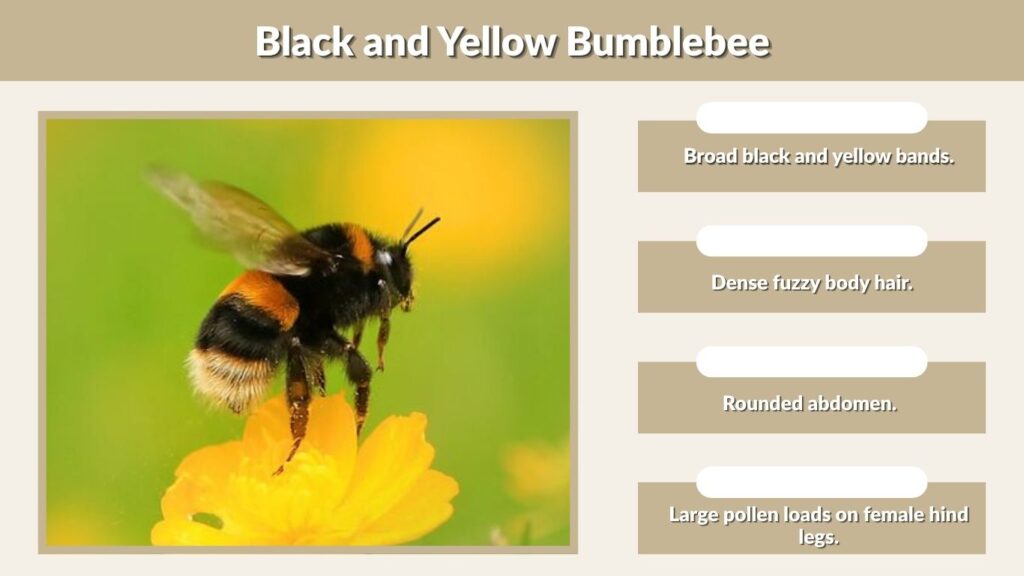
The classic black and yellow bumblebee pattern occurs in numerous species. Yellow bands can appear on the thorax, abdomen, or both, and the arrangement of these markings is often important for identification.
Large black and yellow bumblebees are especially common around flower-rich gardens and meadows.
Identification Features
- Broad black and yellow bands
- Dense fuzzy body hair
- Rounded abdomen
- Large pollen loads on female hind legs
- Slow to moderately fast flight between flowers
- Strong buzzing sound near blossoms
Color alone is not sufficient for exact species identification because several bumblebees share similar patterns.
Black-Tailed Bumblebee
The black-tailed bumblebee is another pattern frequently noticed by gardeners. In these bees, the end of the abdomen is predominantly black rather than white, orange, or red.
Some species have a yellow thoracic band combined with an otherwise mostly dark body.
Bumblebee With a Black Bottom
A bumblebee with a black bottom can belong to several different species. Look at the entire color pattern rather than only the tail.
Important features include the number and position of yellow bands, thorax coloration, facial hair, and whether the abdomen has a white or orange tip.
Photographing the bee from above can make identification easier.
Black and White Bumblebee
A black and white bumblebee typically has a dark body combined with a pale or white tail. Several bumblebee species have this contrasting appearance.
From a distance, pale yellow hair may also appear white, particularly in bright sunlight.
Black Bumblebee With White Tail
White-tailed bumblebees often have yellow bands toward the front of the body and a noticeably pale abdominal tip. Queens are much larger than workers and may be mistaken for giant black bumblebees during spring.
These queens are often seen flying close to the ground while searching for suitable nesting sites.
Black Bumblebees With Other Colors
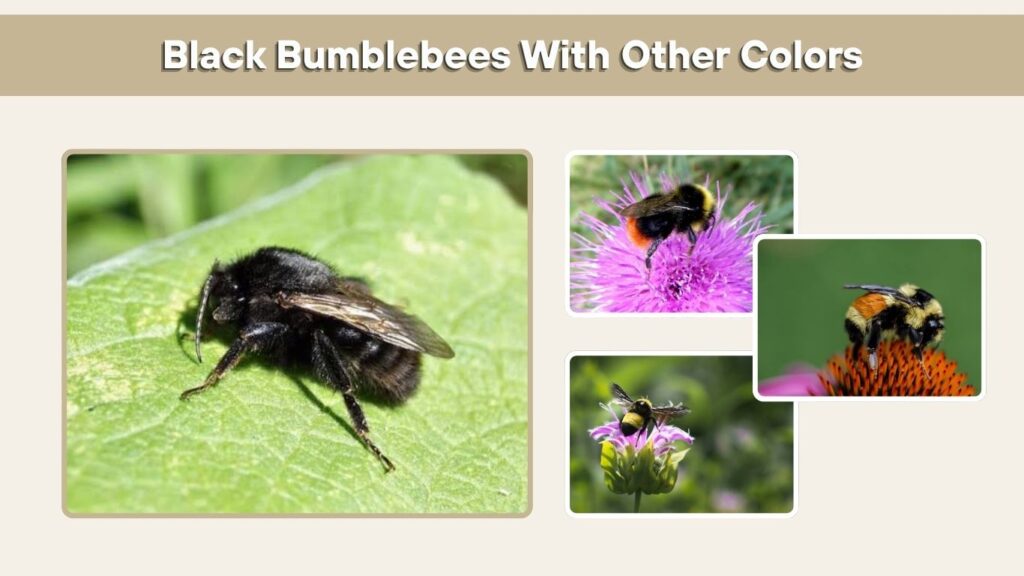
Bumblebee markings extend well beyond black, yellow, and white. Identifying the position of each color can considerably narrow down the possibilities.
Black and Red Bumblebee
Some species have predominantly black bodies with red or reddish-orange hairs toward the end of the abdomen. These bright tail colors can be very noticeable in flight.
Black Bumblebee With Orange Bottom
An orange-bottomed black bumblebee may be a naturally orange-tailed species rather than an unusual color variation. The orange hairs are normally concentrated near the final abdominal segments.
Black and Gold Bumblebee
Black and gold coloration often results from deep yellow or golden hairs contrasting with dark body regions. Freshly emerged individuals may look particularly bright.
Black and Blue Bumblebee
True blue coloration is uncommon among bumblebees. Dark hairs can sometimes reflect blue or violet tones under certain lighting. Metallic blue-black insects are more likely to be another kind of bee or wasp.
Large, Big, and Giant Black Bumblebees
People frequently report seeing a giant black bumblebee, but the insect may simply be a queen.
Bumblebee colonies include queens, female workers, and males. Queens are substantially larger because they are responsible for founding colonies and producing eggs.
Why Is the Bumblebee So Large?
A very large individual may be:
- A bumblebee queen
- A large worker of a naturally big species
- A male bumblebee
- A carpenter bee mistaken for a bumblebee
Queens are especially noticeable in spring when they emerge from overwintering sites and begin searching for nest locations.
Black Bumblebee Habitat and Nest
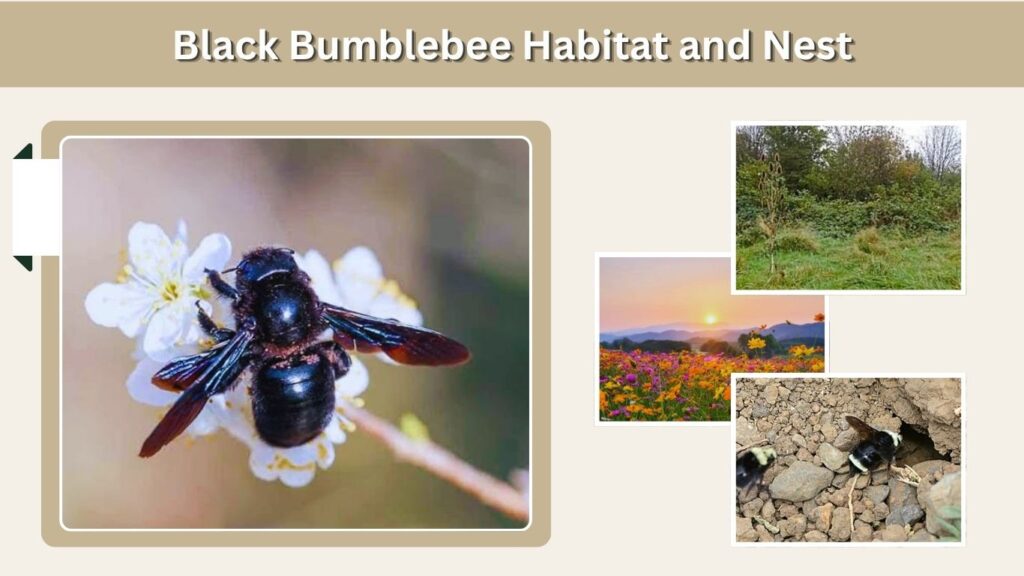
Bumblebees occur in gardens, fields, grasslands, farms, woodland edges, and urban environments wherever suitable flowers and nesting locations are available.
Many species nest underground in abandoned rodent burrows, while others use cavities beneath sheds, inside compost piles, or within dense vegetation.
Black Bumblebee Nest
A bumblebee nest usually contains waxy cells, stored pollen, nectar, larvae, and developing adults. Colony size varies by species.
Unlike honey bees, most bumblebee colonies last for only one season. The old queen, workers, and males eventually die, while newly produced queens leave to overwinter.
Never block an active nest entrance because trapped bees may search for another way out.
Are Black Bumblebees Aggressive?
Most bumblebees are relatively calm when feeding on flowers. They usually sting only when handled, trapped, stepped on, or when their nest is threatened.
Workers and queens can sting. Male bumblebees cannot.
Black Bumblebee Sting
A black bumblebee sting typically causes:
- Immediate sharp pain
- Redness
- Local swelling
- Itching or tenderness
- Temporary warmth around the sting
Unlike honey bees, bumblebees have smoother stingers and can potentially sting more than once.
Do Black Bumblebees Bite?
Bumblebees have mandibles and can use them for tasks around the nest, but their sting is the primary concern when defending themselves. Reports of a “black bumblebee bite” are often actually describing a sting.
Anyone experiencing severe breathing difficulty, facial or throat swelling, dizziness, or widespread allergic symptoms after a sting should seek urgent medical attention.
Black Bumblebees in California, Texas, Arizona, and Utah
Black or mostly black bumblebees occur across many parts of North America, but the species present vary by location.
California
California supports numerous bumblebee species with combinations of black, yellow, orange, and white markings. Large carpenter bees can also create confusion because several appear almost entirely black.
Texas
Black bumblebees in Texas are frequently seen around gardens, native wildflowers, agricultural landscapes, and open fields. Large carpenter bees are also common and may be mistaken for bumblebees.
Arizona and Utah
Dry western regions can support several bumblebee species, particularly in mountain meadows, gardens, riparian areas, and places with concentrated flowering plants.
Exact identification requires more than location alone because several species can overlap geographically.
What Do Black Bumblebees Eat?
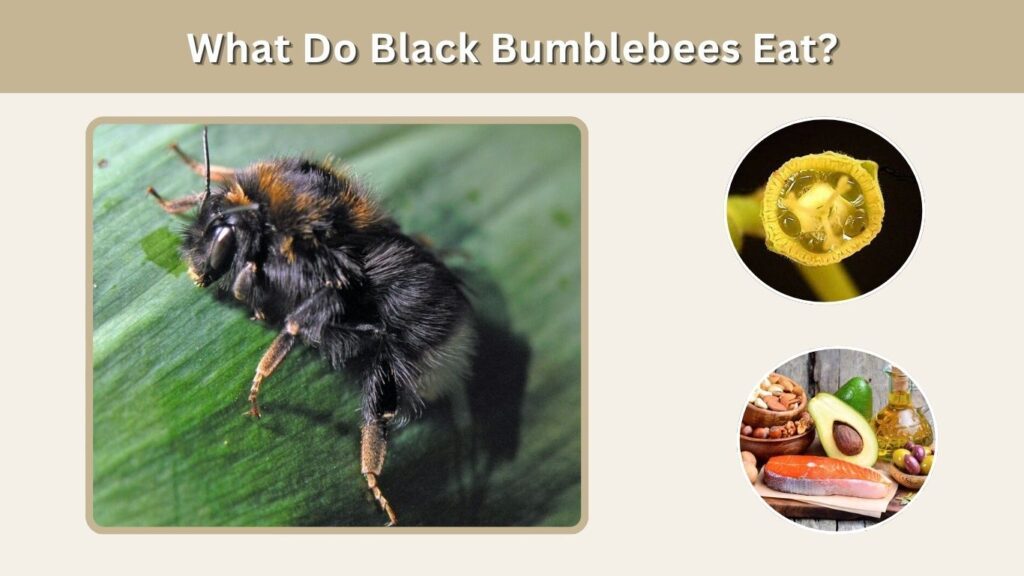
Adult bumblebees depend primarily on nectar and pollen from flowers. Nectar supplies carbohydrates for energy, while pollen provides proteins, fats, minerals, and other nutrients needed for developing larvae.
They visit numerous flowering plants and can be important pollinators of wildflowers, fruits, and vegetables.
Their ability to perform buzz pollination is especially useful for certain plants whose pollen is released when the flower is vibrated.
FAQs
Are All-Black Bumblebees Rare?
Not necessarily. Several bees can appear nearly or entirely black, although some sightings are actually carpenter bees. Checking whether the abdomen is hairy or smooth can help distinguish them.
Does a Black Bumblebee Have a Stinger?
Female bumblebees, including queens and workers, have stingers. Male bumblebees do not. Females generally sting only when they feel threatened or are defending a nest.
What Is a Huge Black Bumblebee?
A huge black bumblebee may be a queen, which is naturally larger than workers. It could also be a large carpenter bee, especially if the abdomen appears smooth and shiny.
Why Does a Bumblebee Have Black Wings?
Bumblebee wings may appear dark because of pigmentation, viewing angle, lighting, age, or wear. Some species naturally have noticeably smoky wings.
Are Black Bumblebees Beneficial?
Yes. Bumblebees are valuable pollinators of wild and cultivated plants. Their pollination activity supports seed and fruit production and contributes to healthy plant communities and agricultural systems.