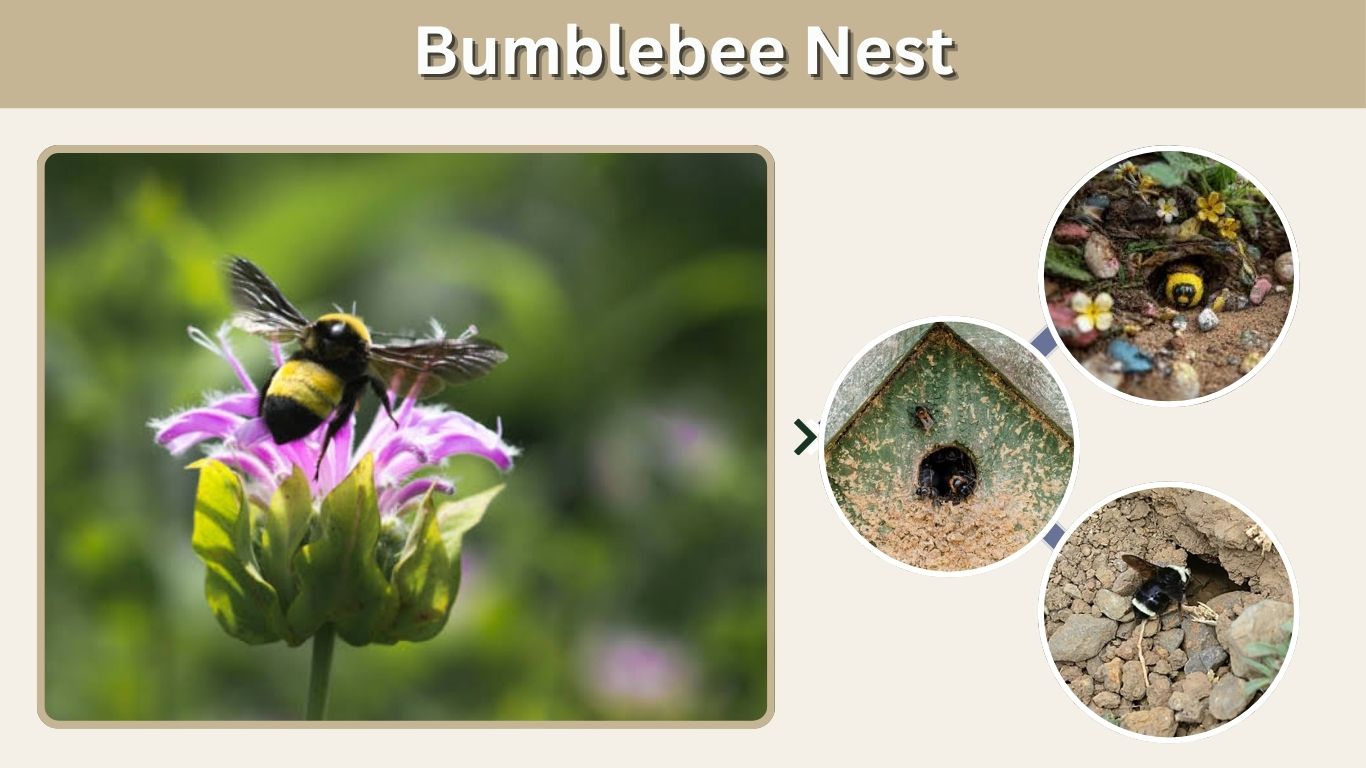
A bumblebee nest can appear in the ground, beneath a shed, inside a wall cavity, in a bird box, or even within an old compost pile. Unlike honey bees, bumblebees usually create relatively small, seasonal colonies that disappear naturally after one breeding season. Because these fuzzy pollinators are generally beneficial and rarely aggressive away from their nest, leaving an undisturbed colony alone is often the best option. Knowing what a bumblebee nest looks like and where to find one helps you respond safely.
What Does a Bumblebee Nest Look Like?
Bumblebee nests look very different from the neat hanging combs people often associate with bees. Their nests are usually hidden inside an existing cavity and contain irregular clusters of wax cells, pollen stores, nectar pots, larvae, and adult bees.
Bumblebee Nest Identification
- Usually concealed rather than exposed
- Contains irregular, rounded wax cells
- May contain small wax pots filled with nectar
- Often surrounded by grass, leaves, insulation, or other nesting material
- Has one or several small entrance openings
- Workers repeatedly fly in and out during daylight
- May produce a noticeable buzzing sound when approached closely
The nest itself may only occupy a relatively small space even when many bees are entering the same opening.
Where Do Bumblebees Nest?
Different bumblebee species prefer different nesting locations. Many choose sheltered spaces that already contain soft material, allowing the queen to establish a colony without constructing an elaborate structure.
Common Bumblebee Nest Locations
- Abandoned rodent burrows
- Holes beneath patios or concrete steps
- Spaces underneath decks
- Under sheds and other structures
- Thick grass or vegetation
- Compost bins and compost piles
- Birdhouses and nest boxes
- Hollow trees
- Wall cavities
- Roof or attic spaces
- Garages and outbuildings
Finding repeated bee traffic entering one particular hole is usually the easiest way to locate a colony.
Bumblebee Nest in the Ground
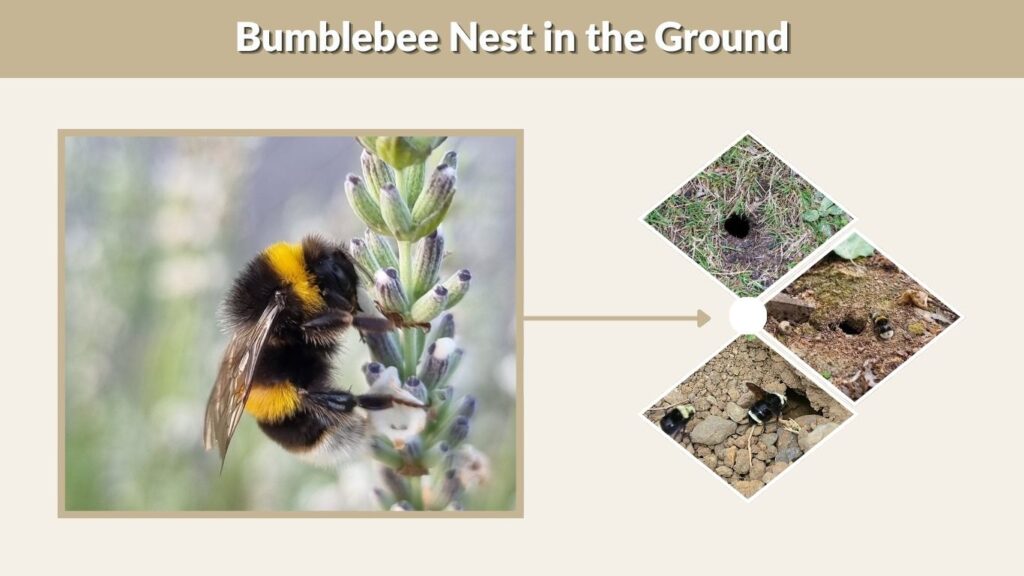
An underground bumblebee nest is one of the most common types. Queens frequently take over abandoned mouse or vole burrows rather than digging a new underground chamber themselves.
What a Ground Nest Looks Like
A ground bumblebee nest may be surprisingly difficult to see. Usually, only a small hole in the soil is visible. Bumblebees may enter beneath grass, leaves, stones, roots, or landscaping materials.
The strongest clue is repeated traffic. Watch from several feet away and observe whether multiple fuzzy bees enter and leave the same location.
Avoid standing directly over the opening or disturbing the surrounding soil because workers may defend the colony.
Bumblebee Nest in a House or Wall
Occasionally, bumblebees establish colonies within structures. Wall cavities, roof spaces, attics, garages, and sheds can provide warm, protected nesting environments.
Bumblebee Nest in a Wall
A nest in a wall is usually detected because bees repeatedly disappear through a crack around siding, vents, roof edges, pipes, or other openings.
You may also hear faint buzzing from inside the wall during periods of high activity.
Do not immediately seal the entrance of an active colony. Trapping bees inside can cause them to search for another exit, potentially bringing them farther into the building.
Bumblebee Nest in Roof or Attic
Some bumblebees use roof insulation, abandoned animal nests, or other soft material in attics and roof spaces. Tree bumblebees are particularly known for using above-ground cavities such as bird boxes and building spaces.
If bees are entering living areas or the nest is difficult to access safely, contact an experienced bee professional or pest-management specialist.
Bumblebee Nest in a Bird Box
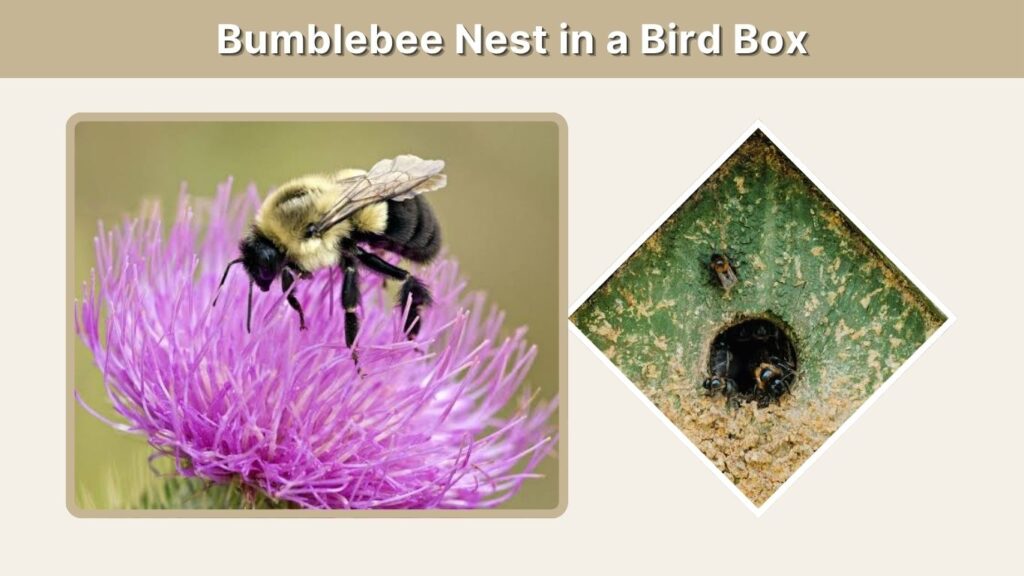
Birdhouses can provide almost ideal nesting cavities for some bumblebees. An unused bird nest often contains feathers, grass, and soft material that a queen can use.
A bumblebee nest in a bird box may produce considerable activity during the colony’s peak.
Males may sometimes hover around the entrance while waiting for newly emerging queens. This can look intimidating, but hovering males cannot sting.
How Big Is a Bumblebee Nest?
Bumblebee colonies are generally much smaller than honey bee colonies. Their exact size varies considerably among species and with environmental conditions.
Bumblebee Nest Size
- Small colonies may contain only a few dozen workers
- Larger colonies can contain several hundred individuals
- The physical nest is usually much smaller than a honey bee hive
- Colony numbers typically peak during summer
- New queens and males appear later in the colony cycle
Even when many bees are visible outside, the colony may still occupy only a modest underground or enclosed space.
How Long Does a Bumblebee Nest Last?
Most bumblebee nests are temporary and last for only one season.
A queen emerges from hibernation in spring, finds a nesting site, and produces her first workers. The colony then expands through spring and summer.
Bumblebee Nest Lifecycle
- Spring: Queen establishes the nest and lays eggs.
- Early summer: The first workers begin collecting pollen and nectar.
- Summer: Colony grows and activity increases.
- Late summer or fall: New queens and males are produced.
- End of season: Workers, males, and the old queen die.
- Winter: Newly mated queens hibernate elsewhere.
The old nest is normally abandoned and is rarely reused by another bumblebee colony the following year.
How Many Bees Are in a Bumblebee Nest?
Colony size depends on species, food availability, weather, and the age of the colony. Many nests support around 50–200 workers, although certain species can develop larger colonies.
A nest containing only a few workers early in the year may grow substantially during summer.
Seeing many bees around an entrance does not necessarily mean thousands of individuals are inside, as would sometimes occur in a honey bee colony.
Are Bumblebee Nests Dangerous?
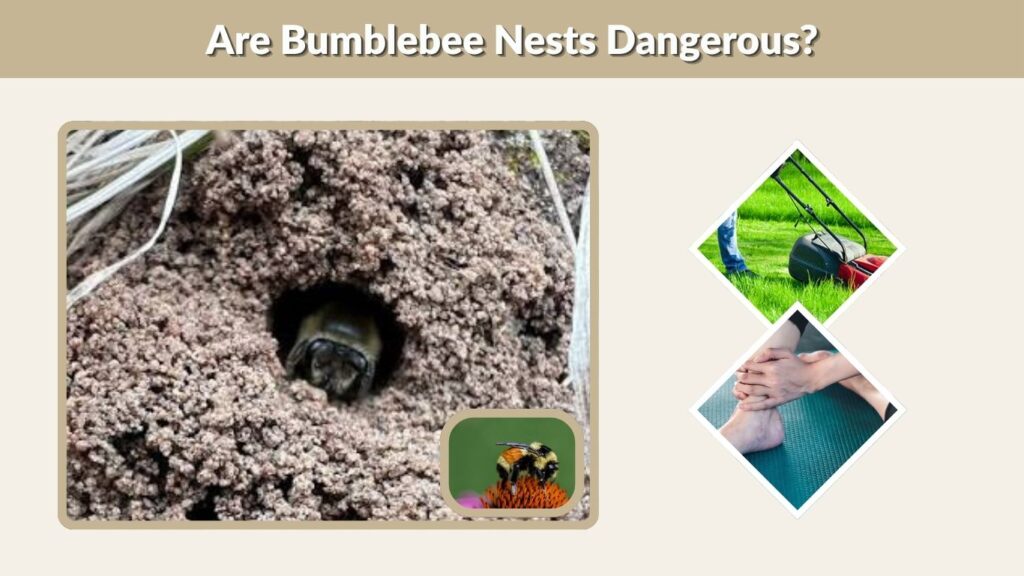
Bumblebees are usually gentle while feeding on flowers, but females can sting when their nest is threatened.
Workers and queens are capable of stinging more than once because their stingers do not normally remain embedded in human skin.
When Bumblebees May Become Defensive
- Stepping directly on an underground nest
- Digging around its entrance
- Mowing or trimming directly over the colony
- Moving a nest box containing bees
- Allowing pets to investigate the entrance
- Repeatedly blocking their flight path
Giving the colony space greatly reduces the likelihood of being stung.
How to Find a Bumblebee Nest
If you suspect a nest is nearby, observation is safer than digging or searching through vegetation.
Choose a sunny period when bees are active and watch individual workers after they leave flowers. Returning bees often fly directly toward their nest.
Signs of a Nearby Nest
- Repeated bees following the same flight route
- Bees disappearing into one soil opening
- Regular traffic beneath a deck or shed
- Bees entering a wall crack
- Buzzing around an occupied bird box
- Workers carrying visible pollen toward the entrance
Keep children and pets away while determining the location.
Bumblebee Nest vs Honey Bee Nest
Bumblebee and honey bee colonies differ significantly in both structure and size.
Main Differences
- Bumblebees: Usually nest in existing cavities
- Honey bees: Construct organized vertical wax combs
- Bumblebee colonies: Usually contain dozens to hundreds
- Honey bee colonies: May contain tens of thousands
- Bumblebee nest: Typically survives one season
- Honey bee colony: Can survive for multiple years
- Bumblebee wax cells: Irregularly arranged
- Honey bee comb: Organized into repeating hexagonal cells
These differences can help determine which type of bee is occupying a structure.
Bumblebee Nest Removal
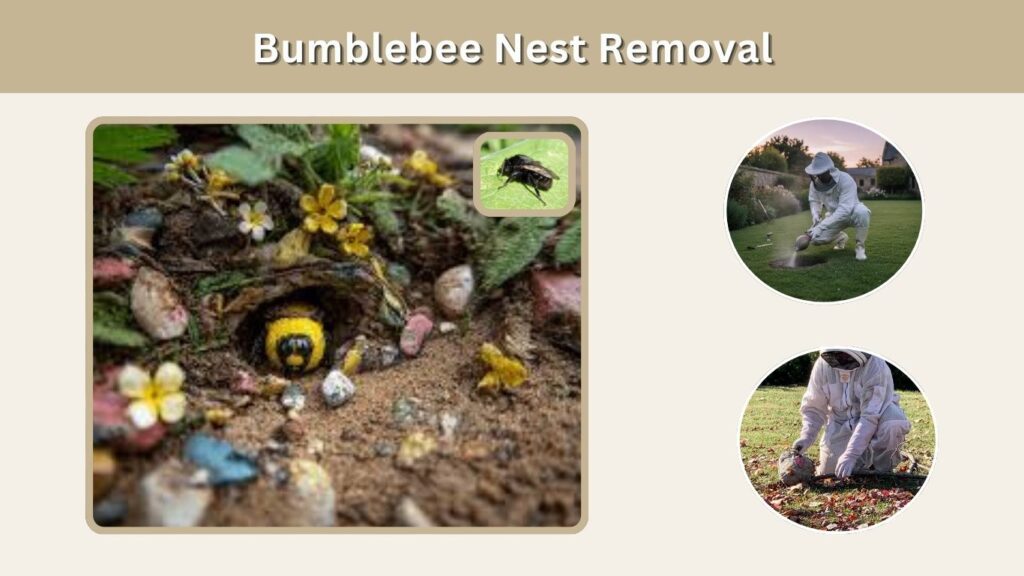
Most nests do not need removal. If the colony is located in a quiet corner of a garden or beneath an area that people rarely use, allowing it to complete its natural lifecycle is often the simplest approach.
Because the nest dies naturally at the end of the season, many situations resolve without intervention.
When Removal May Be Necessary
Removal may be considered when:
- Bees are repeatedly entering living spaces
- The nest is next to a frequently used doorway
- Someone nearby has a serious bee-sting allergy
- Construction will disturb the colony
- Children or pets cannot avoid the nesting area
Rather than attempting to destroy or move an active colony yourself, contact a local bee specialist or qualified pest professional who can determine whether relocation is practical.
Moving an established underground or structural nest is difficult because the brood, queen, workers, and nest materials must remain together.
Bumblebee Nest Boxes
A bumblebee nesting box attempts to provide queens with a protected artificial cavity. Results are unpredictable because queens can be selective about nesting locations.
Good Nest Box Features
- Weather protection
- Small entrance
- Dry interior
- Good ventilation
- Soft nesting material
- Placement away from frequent disturbance
- Protection from excessive direct sunlight
A box placed near flowers and natural habitat may occasionally attract a queen, but simply providing natural nesting areas in a wildlife-friendly garden can be equally valuable.
FAQs
Do Bumblebees Nest Underground?
Yes. Many species commonly use abandoned rodent burrows and other existing underground cavities.
Do Bumblebee Queens Leave the Nest?
Yes. Founding queens initially leave the nest to collect food. Once workers become established, the queen generally spends more time inside laying eggs.
Can You Move a Bumblebee Nest?
It can sometimes be relocated, but moving an active colony is difficult and may harm the queen or brood. Professional assistance is preferable when relocation is necessary.
Do Bumblebee Nests Smell?
Healthy nests usually do not produce a strong smell noticeable from a distance. Odors may occur if nesting material becomes damp or deteriorates.
Will Bumblebees Return to the Same Nest Next Year?
Usually not. Bumblebee colonies die at the end of their seasonal cycle, and newly mated queens overwinter elsewhere before establishing new nests the following year.