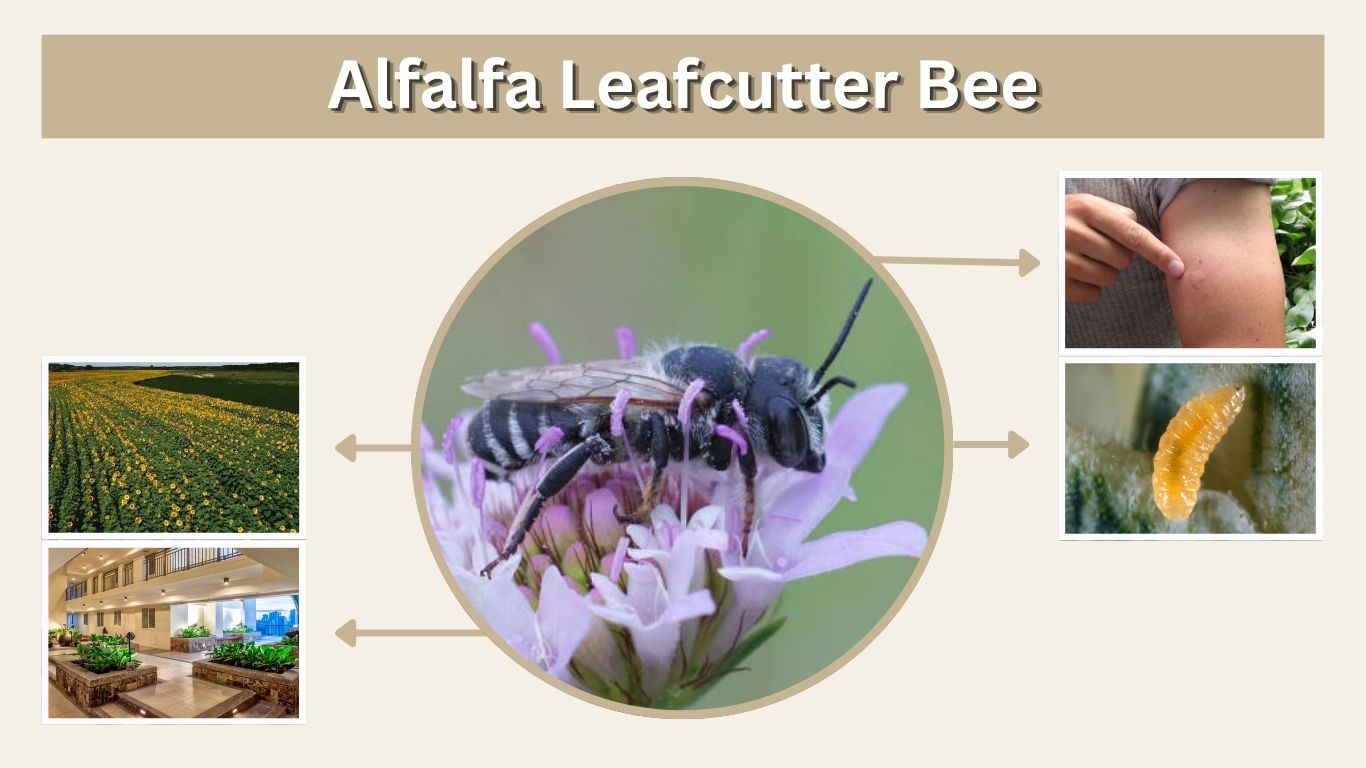
The alfalfa leafcutter bee is a small solitary bee widely used for pollinating alfalfa seed crops. Unlike honey bees, these bees do not live in large colonies or produce harvestable honey. Each female builds her own nest, cuts circular pieces from leaves, and uses them to create individual brood cells. Their efficient pollination behavior makes them especially valuable in agricultural areas where strong alfalfa seed production is needed.
What Is an Alfalfa Leafcutter Bee?
The alfalfa leafcutter bee is best known for its ability to pollinate alfalfa flowers efficiently. Its scientific name is Megachile rotundata, and it belongs to the leafcutter bee family, Megachilidae.
Alfalfa Leafcutter Bee Identification
Typical characteristics include:
- Small, compact body
- Usually about 5–9 mm long
- Dark gray to black coloration
- Light bands of hair across the abdomen
- Females carry pollen on hairs beneath the abdomen
- Strong jaws used to cut pieces from leaves
- Fast, purposeful flight between flowers and nest sites
Females are especially easy to recognize when the underside of the abdomen is covered with yellow or orange pollen.
Alfalfa Leafcutter Bee Scientific Name
The scientific name of the alfalfa leafcutter bee is Megachile rotundata.
It is one of the best-known managed solitary bees in agriculture because of its importance in seed production.
Why Are Alfalfa Leafcutter Bees Important?
Alfalfa flowers have a specialized mechanism that can make pollination difficult for some insects. Leafcutter bees are particularly effective because they readily trigger the flower while collecting nectar and pollen.
Alfalfa Leafcutter Bees and Pollination
When a female visits an alfalfa flower, the flower’s reproductive structure springs upward and transfers pollen.
Leafcutter bees tolerate this mechanism well and continue visiting large numbers of flowers.
This makes them useful for:
- Alfalfa seed fields
- Clover
- Certain fruit crops
- Vegetable seed production
- Wildflowers
- Garden plants
A managed population can significantly increase pollination efficiency in suitable agricultural conditions.
Alfalfa Leafcutter Bee Life Cycle
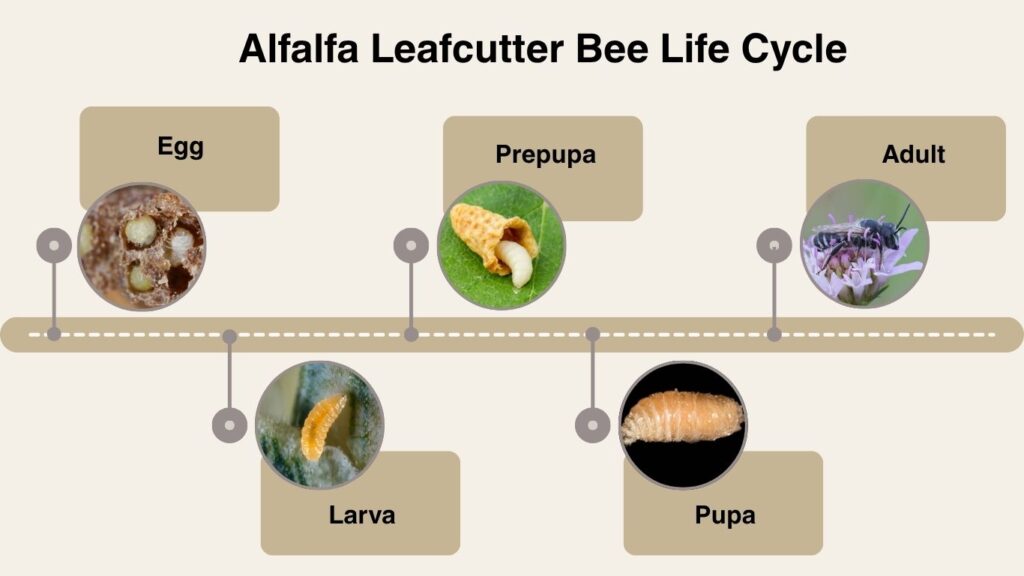
The life cycle begins when an adult female finds a suitable nesting cavity and starts building brood cells.
Main Life Cycle Stages
The stages include:
- Egg: Laid inside a leaf-lined cell.
- Larva: Feeds on stored pollen and nectar.
- Prepupa: Becomes dormant inside the completed cell.
- Pupa: Develops into the adult form.
- Adult: Emerges and begins mating and nesting.
In many managed systems, the bees spend the winter as prepupae inside their leaf cells.
Do Alfalfa Leafcutter Bees Die After Mating?
Males do not die immediately after mating in the same way a honey bee drone may die after mating with a queen.
Male leafcutter bees may mate more than once during their short adult lives. Females also continue living after mating and spend much of their remaining life building nests and provisioning brood cells.
How Do Alfalfa Leafcutter Bees Make Their Nests?
Females do not build wax combs. Instead, they use pieces of leaves to construct individual cells inside narrow cavities.
Alfalfa Leafcutter Bee Nest
A female searches for a tunnel or hole of an appropriate diameter. She then cuts pieces from soft leaves and carries them back to the nest.
Inside, she creates a series of cells.
Each cell contains:
- Leaf pieces forming the walls
- A ball of pollen and nectar
- One egg
- Additional leaf material sealing the cell
The female continues building cells until the cavity is filled.
Alfalfa Leafcutter Bee Houses and Huts
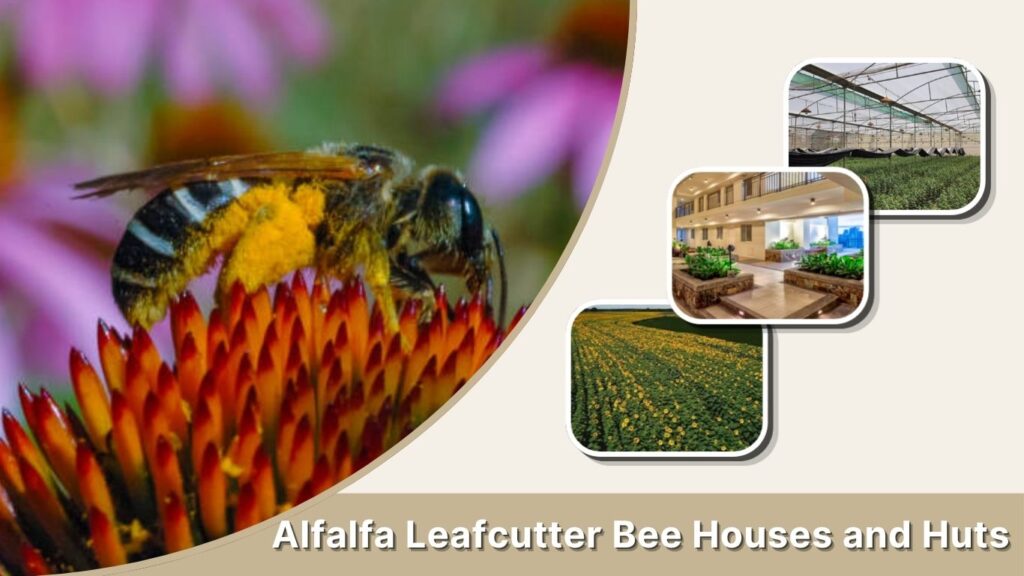
Commercial operations often provide artificial nesting structures to attract and manage large numbers of bees.
Alfalfa Leafcutter Bee House
A bee house may contain blocks or boards filled with hundreds or thousands of narrow nesting holes.
Good nesting structures should be:
- Dry
- Protected from heavy rain
- Well ventilated
- Positioned near flowering crops
- Protected from excessive heat
- Easy to clean and manage
Commercial bee shelters are often much larger than small backyard bee hotels.
What Are Alfalfa Leafcutter Bee Huts?
Bee huts are shelters containing nesting boards or blocks.
They provide protection from weather and help concentrate bees near the crop being pollinated.
Farmers may distribute several shelters around large alfalfa fields so bees do not have to travel far between nests and flowers.
Alfalfa Leafcutter Bee Incubation
Managed leafcutter bees can be held under controlled conditions so adults emerge close to the beginning of crop flowering.
How Incubation Works
Overwintered bee cells are gradually warmed to encourage development.
Temperature and timing are important because growers want adult emergence to coincide with alfalfa bloom.
If bees emerge too early, there may not be enough food available. If they emerge too late, important flowering periods may be missed.
Successful incubation therefore depends on careful monitoring and management.
Alfalfa Leafcutter Bee Management
Managing these bees is different from managing honey bees because leafcutters are solitary.
Each female reproduces independently even when thousands of bees share the same nesting shelter.
Important Management Practices
Good management commonly includes:
- Providing suitable nesting boards
- Protecting nests from moisture
- Controlling parasites and diseases
- Monitoring adult emergence
- Coordinating emergence with flowering
- Providing abundant nearby flowers
- Cleaning nesting equipment
- Protecting bees from inappropriate pesticide exposure
Regular monitoring is especially important in commercial operations because diseases or parasitoids can spread through densely packed nest cells.
What Are Alfalfa Leafcutter Bee Cell Breakers?
In managed systems, leaf-lined brood cells may need to be separated from nesting materials after the season.
Purpose of Cell Breakers
Cell-breaking equipment is designed to separate individual bee cells from nesting boards or nesting material.
Once separated, cells can be:
- Inspected
- Cleaned
- Stored
- Sorted
- Prepared for incubation
This process allows commercial growers to manage large quantities of dormant bees efficiently.
Where Did Alfalfa Leafcutter Bees Originate?
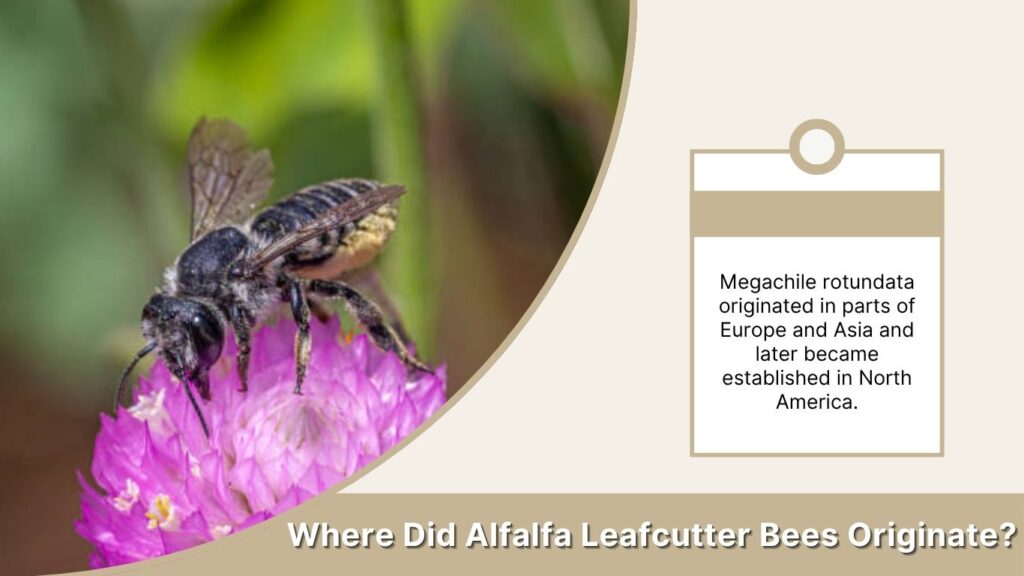
The alfalfa leafcutter bee is not native to North America.
Alfalfa Leafcutter Bee Origin
Megachile rotundata originated in parts of Europe and Asia and later became established in North America.
After farmers recognized its usefulness as an alfalfa pollinator, managed populations became important in major seed-producing regions.
Today, it is especially associated with commercial alfalfa seed production in western North America.
Alfalfa Leafcutter Bees in Western Canada
Western Canada has a long history of managing leafcutter bees for alfalfa seed production.
Why They Work Well There
Regions with suitable summer conditions can provide:
- Large alfalfa fields
- Strong seasonal flowering
- Dry nesting environments
- Established commercial management systems
Producers often carefully manage incubation, nesting shelters, cell storage, and disease prevention from year to year.
Do Alfalfa Leafcutter Bees Make Honey?
No. Alfalfa leafcutter bees do not produce harvestable honey.
What Do They Do With Nectar?
Females collect nectar and pollen to create food provisions for their larvae.
Each brood cell receives enough stored food for one developing bee.
Because leafcutter bees are solitary and do not maintain large colonies through winter, they have no need to produce large honey reserves.
Are Alfalfa Leafcutter Bees Aggressive?
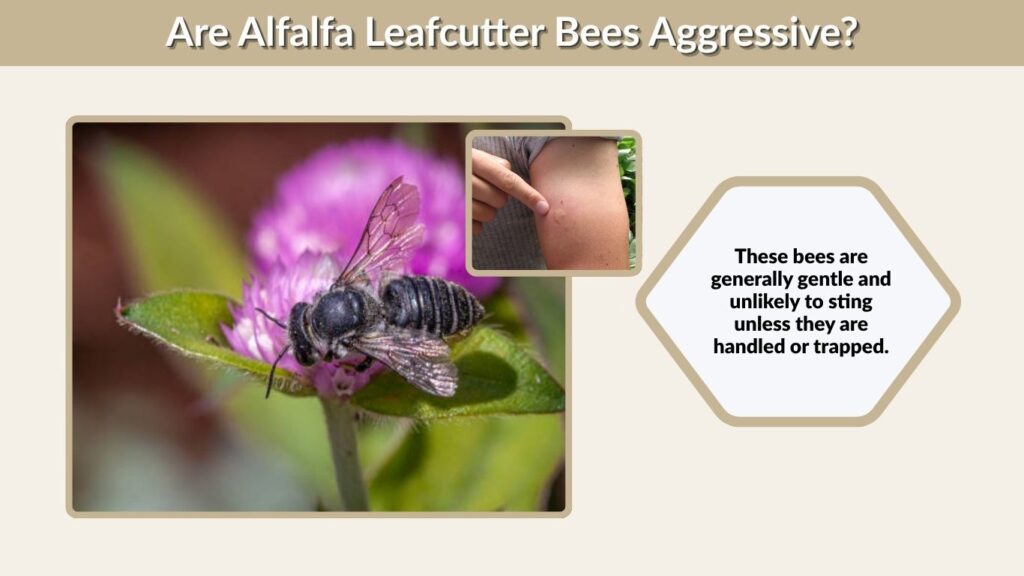
These bees are generally gentle and unlikely to sting unless they are handled or trapped.
Can Alfalfa Leafcutter Bees Sting?
Females are capable of stinging, but stings are uncommon.
Males cannot sting.
Their behavior is usually focused on:
- Collecting pollen
- Gathering nectar
- Cutting leaves
- Building nests
- Reproducing
People can often work near active nesting shelters without experiencing the defensive behavior associated with some social bees.
Alfalfa Leafcutter Bees for Pollination
The strongest reason for managing these bees is their effectiveness on alfalfa.
Why Farmers Use Them
Leafcutter bees:
- Work efficiently on alfalfa flowers
- Carry pollen directly on the underside of their abdomen
- Tend to stay near provided nesting shelters
- Can be managed in large numbers
- Do not require large social colonies
- Can be synchronized with crop bloom
These traits make them one of the most important managed solitary pollinators in agriculture.
FAQs
What Is the Scientific Name of the Alfalfa Leafcutter Bee?
Its scientific name is Megachile rotundata. It is a solitary leafcutter bee commonly managed for alfalfa seed pollination.
Do Alfalfa Leafcutter Bees Make Honey?
No. They collect nectar and pollen for individual larvae but do not produce or store harvestable honey.
Where Do Alfalfa Leafcutter Bees Nest?
They nest in narrow natural or artificial cavities. Managed populations commonly use nesting boards placed inside protective bee shelters.
Why Do Alfalfa Leafcutter Bees Cut Leaves?
Females cut pieces from leaves and use them to build and seal brood cells inside their nests. The leaf pieces are construction material rather than food.
Are Alfalfa Leafcutter Bees Good Pollinators?
Yes. They are especially effective at pollinating alfalfa and are widely managed in commercial seed-production systems.