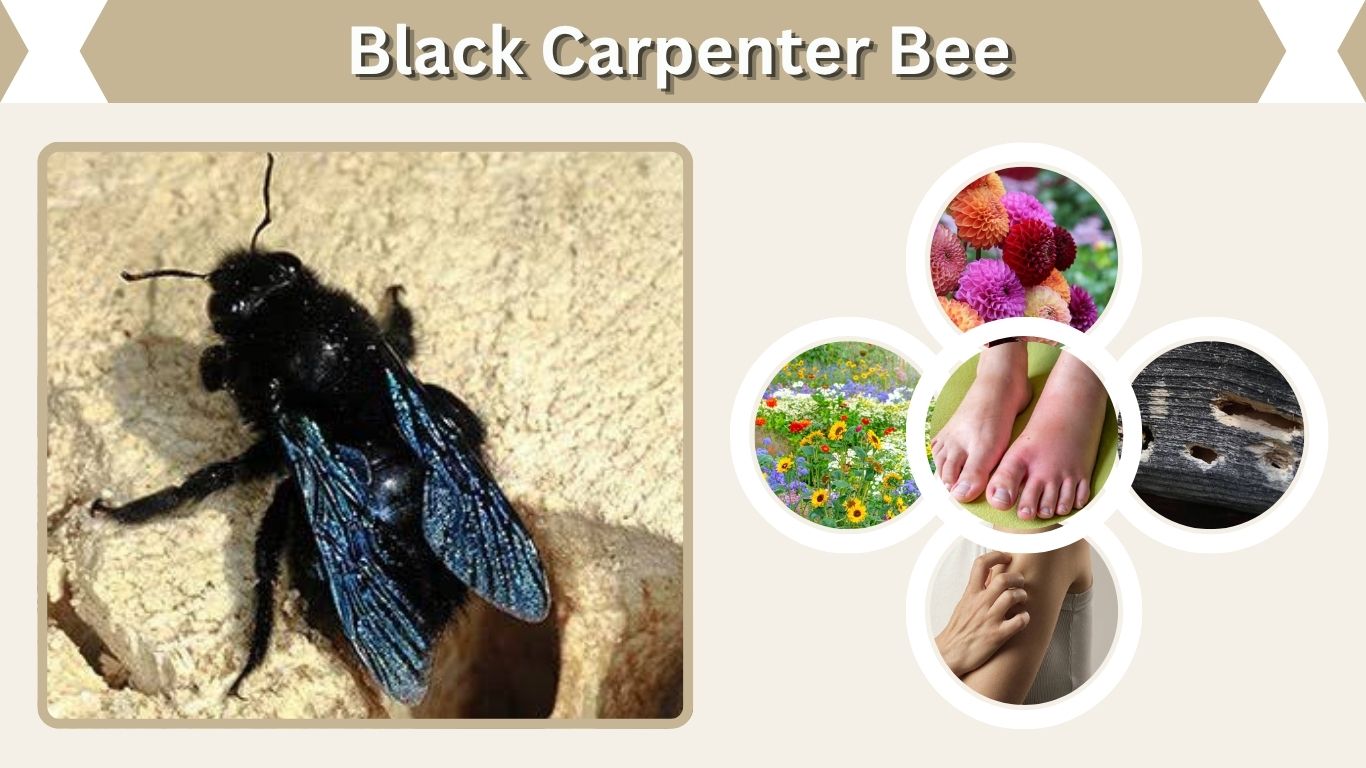
The black carpenter bee is a large, dark-colored bee best known for its shiny abdomen and habit of nesting inside wood. These bees are often mistaken for bumblebees because of their impressive size and loud flight, but carpenter bees have several distinctive features. Although they can appear intimidating, they are generally not aggressive, and males cannot sting. Black carpenter bees are also valuable pollinators, though repeated nesting in wooden structures may occasionally cause damage.
What Is a Black Carpenter Bee?
“Black carpenter bee” is a general name people use for several dark-colored species in the genus Xylocopa. These bees occur in many parts of the world, and their exact appearance varies by species and sex.
Black Carpenter Bee Identification
Look for these characteristics:
- Large, robust body
- Mostly black or very dark coloration
- Smooth, shiny abdomen
- Dark wings that may appear blue or violet in sunlight
- Strong, rapid flight
- Approximately ½ to more than 1 inch long, depending on species
- Females often have darker faces than males
- Frequently seen around wooden structures and flowering plants
The shiny abdomen is one of the easiest ways to distinguish carpenter bees from many bumblebees.
How Big Is a Black Carpenter Bee?
Black carpenter bees are among the larger bees people commonly encounter. Their noticeable size is one reason they are sometimes described as giant black flying bugs.
Black Carpenter Bee Size
Many carpenter bees measure roughly ½ to 1 inch long, although some tropical species can grow larger.
Their broad thorax and powerful wings can make them appear even bigger in flight.
The exact size depends on:
- Species
- Sex
- Geographic location
- Nutrition during larval development
A large black bee hovering near a deck, fence, porch, or flowering shrub may very well be a carpenter bee.
Black Carpenter Bee vs Bumblebee
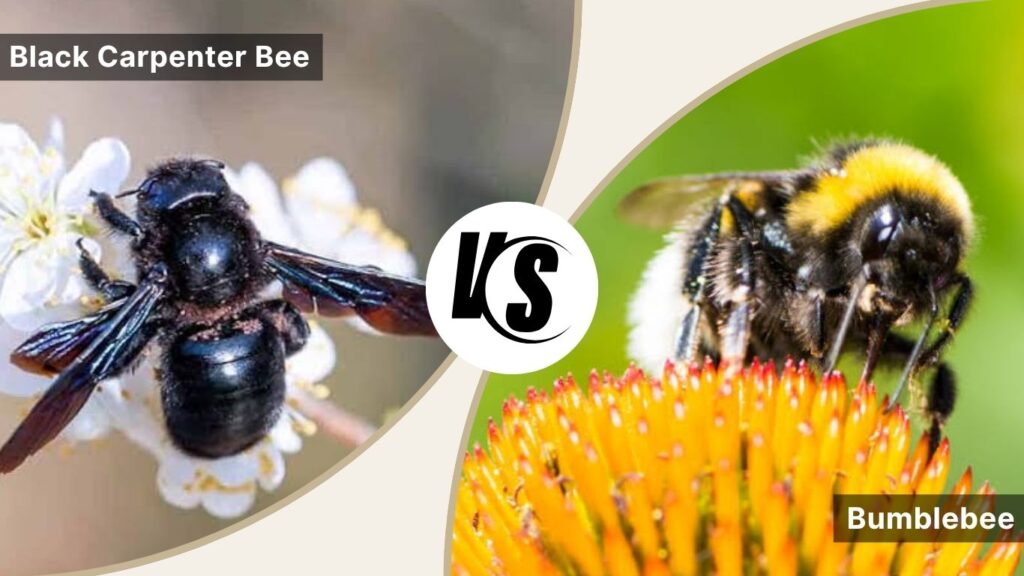
Black carpenter bees and bumblebees are frequently confused because both are large, heavy-bodied pollinators.
How to Tell Them Apart
Carpenter bees generally have:
- A shiny or relatively hairless abdomen
- A large black body
- Solitary nesting habits
- Nests excavated inside wood
Bumblebees usually have:
- A noticeably hairy abdomen
- Black-and-yellow or other contrasting markings
- Social colonies
- Nests in cavities, underground spaces, or abandoned animal burrows
Some carpenter bees have yellow markings, so body color alone is not always enough for identification.
Are Black Carpenter Bees Dangerous?
Black carpenter bees look intimidating, especially when they hover close to people. However, they are generally considered defensive rather than aggressive.
Are Black Carpenter Bees Aggressive?
Males are often the bees responsible for territorial hovering.
They may:
- Fly toward people
- Hover near faces
- Chase other insects
- Patrol around nesting areas
Despite this behavior, male carpenter bees cannot sting.
Females can sting, but they usually do so only when trapped, handled, or seriously threatened.
Do Black Carpenter Bees Sting?
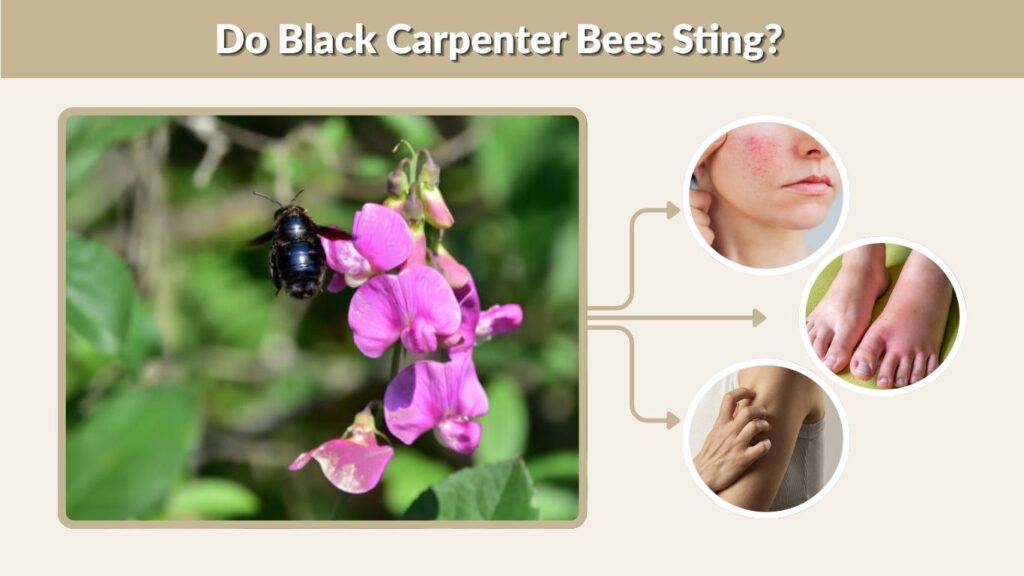
Yes, female carpenter bees have functional stingers. Males do not.
Black Carpenter Bee Sting
A female sting can cause:
- Immediate pain
- Redness
- Mild swelling
- Itching
- Tenderness around the site
Most reactions remain localized and improve with basic care.
Carpenter bees are unlikely to sting simply because you walk near their nest. The risk increases if someone attempts to grab or crush a female.
Black Carpenter Bee Sting Treatment
For a mild reaction:
- Wash the area with soap and water.
- Apply a cold compress.
- Avoid scratching.
- Use an appropriate over-the-counter treatment if needed and according to its directions.
Seek urgent medical care if a sting causes difficulty breathing, swelling of the tongue or throat, faintness, or other signs of a serious allergic reaction.
Do Black Carpenter Bees Bite?
Carpenter bees have strong mandibles used for chewing wood and manipulating nesting material, but they do not normally bite humans as a defensive behavior.
Why They Chew Wood
Female carpenter bees use their jaws to excavate tunnels in suitable wooden surfaces.
They are not eating the wood.
The wood is removed to create a protected space where the female can lay eggs and provide food for developing larvae.
Where Do Black Carpenter Bees Nest?
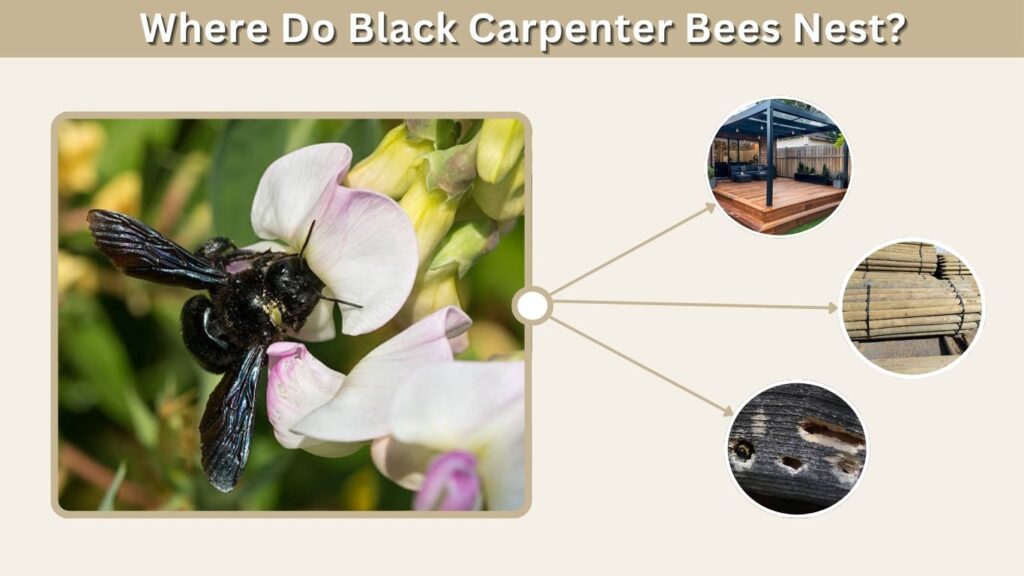
Unlike honey bees, carpenter bees do not usually construct large communal hives.
Most species are solitary or only loosely social.
Black Carpenter Bee Nest
Females often choose:
- Decks
- Fence posts
- Roof eaves
- Wooden siding
- Fascia boards
- Porch railings
- Pergolas
- Dead branches
- Untreated lumber
A nest entrance usually appears as a clean, round hole in the wood.
Inside, the female creates a tunnel with individual brood chambers for her offspring.
Do Black Carpenter Bees Have Hives?
Carpenter bees do not make traditional hives like honey bees.
A female usually creates her own nesting tunnel, although several females may sometimes nest near one another when suitable wood is available.
What Is Inside a Carpenter Bee Nest?
Inside the tunnel, a female constructs separate brood cells.
Each cell typically contains:
- One egg
- A supply of pollen
- Nectar or pollen provisions
- A partition separating it from the next chamber
The larva develops inside the protected cell before eventually emerging as an adult.
Male vs Female Black Carpenter Bee
The differences between males and females can help explain carpenter bee behavior around a nest.
Female Black Carpenter Bee
Females:
- Build and maintain nest tunnels
- Collect pollen
- Provision developing larvae
- Have functional stingers
- Often have darker facial markings
Females are usually more focused on nesting and foraging than confronting people.
Male Black Carpenter Bee
Males:
- Patrol nesting territories
- Hover around people and other insects
- May appear aggressive
- Cannot sting
- Sometimes have lighter facial markings, depending on species
A carpenter bee repeatedly hovering in front of you near a wooden structure is often a male defending territory.
Valley Carpenter Bee: Why Are Some Black?
The Valley carpenter bee is especially interesting because males and females look dramatically different.
Black Valley Carpenter Bee
Female Valley carpenter bees are typically large and mostly black.
Males, by contrast, are often golden or yellowish.
This strong sexual difference can make people mistakenly think they are seeing two unrelated bee species.
Valley carpenter bees occur mainly in western North America, including areas of California and the southwestern United States.
Black Violet Carpenter Bee
Some carpenter bees have dark bodies with blue, purple, or violet reflections on their wings.
Why Do They Look Violet?
Their wings can reflect light in different ways, producing:
- Blue
- Purple
- Violet
- Metallic-black tones
The violet carpenter bee is a well-known example found across parts of Europe and Asia.
Its glossy black body and purple-tinted wings make it one of the most distinctive carpenter bees.
What Do Black Carpenter Bees Eat?
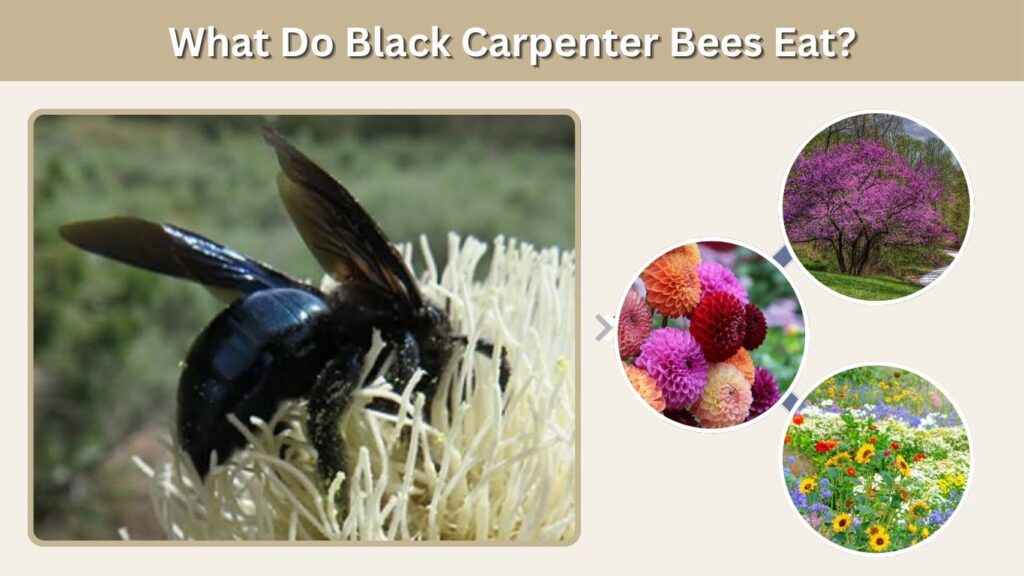
Adult carpenter bees feed primarily on nectar and pollen from flowers.
Carpenter Bee Diet
They commonly visit:
- Garden flowers
- Wildflowers
- Flowering trees
- Shrubs
- Agricultural crops
Carpenter bees are powerful pollinators.
Some species can perform buzz pollination, vibrating flowers to release pollen that is otherwise difficult to access.
They do not normally produce harvestable honey like honey bees.
Can Black Carpenter Bees Damage Wood?
A single carpenter bee tunnel usually causes limited structural damage. Problems become more significant when the same wood is reused by bees year after year.
Signs of Carpenter Bee Activity
Watch for:
- Round holes in exposed wood
- Coarse sawdust beneath holes
- Yellowish or brown staining near entrances
- Bees repeatedly entering the same hole
- Multiple holes close together
Repeated tunneling can weaken trim boards, railings, or other wooden components over time.
Painting or sealing exposed wood can make it less attractive for future nesting.
Are Black Carpenter Bees Good Pollinators?
Yes. Despite their reputation for drilling holes in wood, carpenter bees play an important ecological role.
Why Carpenter Bees Are Beneficial
They help pollinate:
- Native wildflowers
- Garden plants
- Trees and shrubs
- Agricultural crops
Their large bodies allow them to carry substantial amounts of pollen between flowers.
When their nests are not causing structural problems, leaving carpenter bees undisturbed can benefit the surrounding ecosystem.
FAQs
Are All Black Carpenter Bees Female?
No. Both sexes can appear dark in some species. However, certain species, such as the Valley carpenter bee, have black females and much lighter-colored males.
Do Black Carpenter Bees Make Honey?
No. Carpenter bees collect nectar and pollen for themselves and their offspring, but they do not produce large stores of honey like honey bees.
Are Black Carpenter Bees Rare?
Not necessarily. Their abundance depends on the species and geographic region. Some are common wherever suitable nesting wood and flowering plants are available.
Why Is a Black Carpenter Bee Hovering Around Me?
A hovering bee is often a territorial male. Males may investigate people near their nesting area, but they cannot sting.
What Is the Big Black Flying Bug That Looks Like a Bee?
A large black flying insect with a shiny abdomen may be a carpenter bee. Bumblebees are similar in size but generally have hairier abdomens and often display yellow or orange markings.