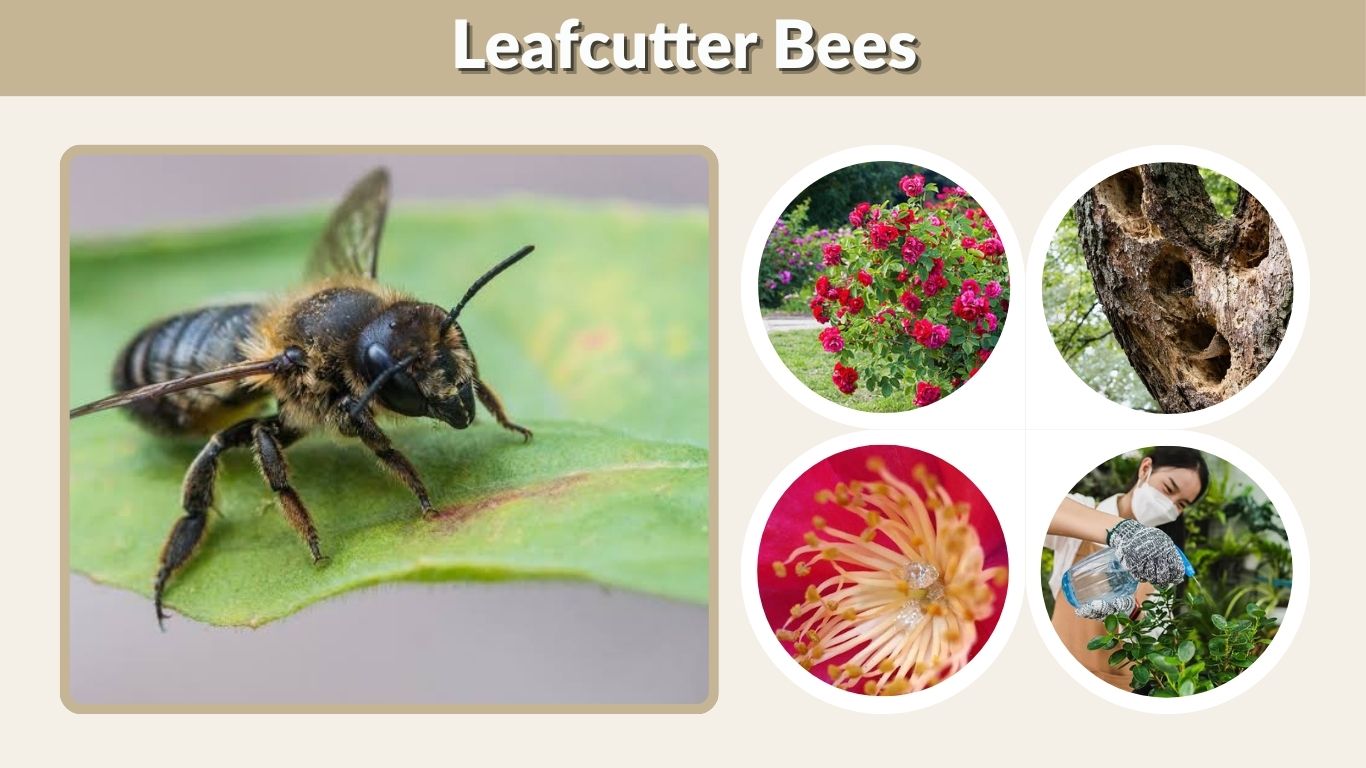
Leafcutter bees are solitary bees best known for cutting neat, circular or oval pieces from leaves. Instead of eating these leaf sections, females carry them back to their nests and use them to build individual cells for their young. Leafcutter bees are important pollinators and are usually beneficial in gardens, farms, and natural areas. They rarely act aggressively toward people and do not form large honey-producing colonies. This guide explains what leafcutter bees look like, where they nest, why they cut leaves, whether they sting, and how to attract them.
What Are Leafcutter Bees?
Leafcutter bees belong mainly to the genus Megachile. They are part of a large group of solitary bees found across many regions of the world.
Unlike honey bees, leafcutter bees do not live in colonies controlled by a queen. Each female generally builds and provisions her own nest.
Leafcutter Bee Identification
Leafcutter bees commonly have:
- Compact, robust bodies
- Dark brown or black coloration
- Pale bands or hairs on some species
- Strong jaws for cutting leaves
- Hairy undersides on females
- A body usually smaller than or similar in size to a honey bee
Female leafcutter bees often carry pollen on specialized hairs beneath the abdomen rather than on pollen baskets located on the hind legs.
This can make the underside of a pollen-carrying female look bright yellow, orange, or cream.
Why Do Leafcutter Bees Cut Leaves?
One of the easiest signs of leafcutter bee activity is a plant with nearly perfect semicircular cuts along the edges of its leaves.
The bees are not eating these pieces.
What Do Leafcutter Bees Do With Leaves?
Female bees use cut leaves to construct nest cells.
A female typically:
- Finds a suitable leaf.
- Cuts a circular or oval section.
- Carries the piece beneath her body.
- Flies back to her nesting cavity.
- Uses the leaf to form part of a chamber.
- Adds pollen and nectar.
- Lays an egg.
- Seals the chamber with more leaf material.
She repeats the process until the nesting cavity contains several individual cells.
Do Leafcutter Bees Kill Plants?
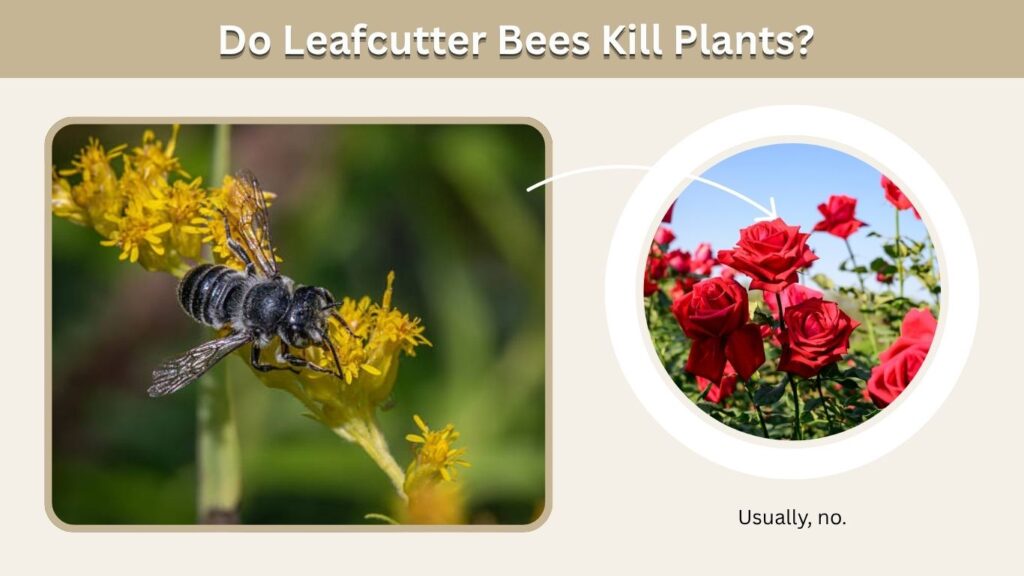
Usually, no.
The leaf damage may look dramatic, especially on ornamental plants, but it is normally cosmetic.
Healthy plants can generally tolerate the removal of small sections of leaves without serious harm.
Plants Commonly Used for Leaf Material
Leafcutter bees may cut pieces from:
- Roses
- Redbud trees
- Lilacs
- Bougainvillea
- Beans
- Wisteria
- Other broad-leaved plants
Roses are particularly noticeable because their leaves often show very clean semicircular cuts.
Spraying the plants simply because of leaf cutting is usually unnecessary, especially because the bees provide valuable pollination.
Are Leafcutter Bees Beneficial?
Yes. Leafcutter bees are excellent pollinators.
As females move rapidly between flowers collecting pollen and nectar, pollen is transferred between blossoms.
Benefits of Leafcutter Bees
They can help pollinate:
- Vegetables
- Fruit crops
- Wildflowers
- Garden flowers
- Seed crops
- Alfalfa
Some leafcutter bees are commercially managed specifically because of their pollination abilities.
The alfalfa leafcutter bee is especially important in seed-producing alfalfa fields.
Do Leafcutter Bees Sting?
Female leafcutter bees are capable of stinging, but they are generally very reluctant to sting humans.
They are solitary and do not have a large colony or honey supply to defend.
Most will attempt to escape rather than attack.
When Might a Leafcutter Bee Sting?
A sting is more likely if the bee is:
- Squeezed
- Trapped against the skin
- Handled roughly
- Accidentally stepped on
Their sting is often described as relatively mild compared with defensive social bees or wasps.
Male leafcutter bees cannot sting.
Are Leafcutter Bees Dangerous?
Leafcutter bees are not generally considered dangerous.
They normally ignore people while collecting pollen or nesting.
They also do not create the same defensive swarms associated with some social bees.
People with known serious bee-sting allergies should still avoid handling them because an allergic reaction is possible from any bee capable of stinging.
Where Do Leafcutter Bees Nest?
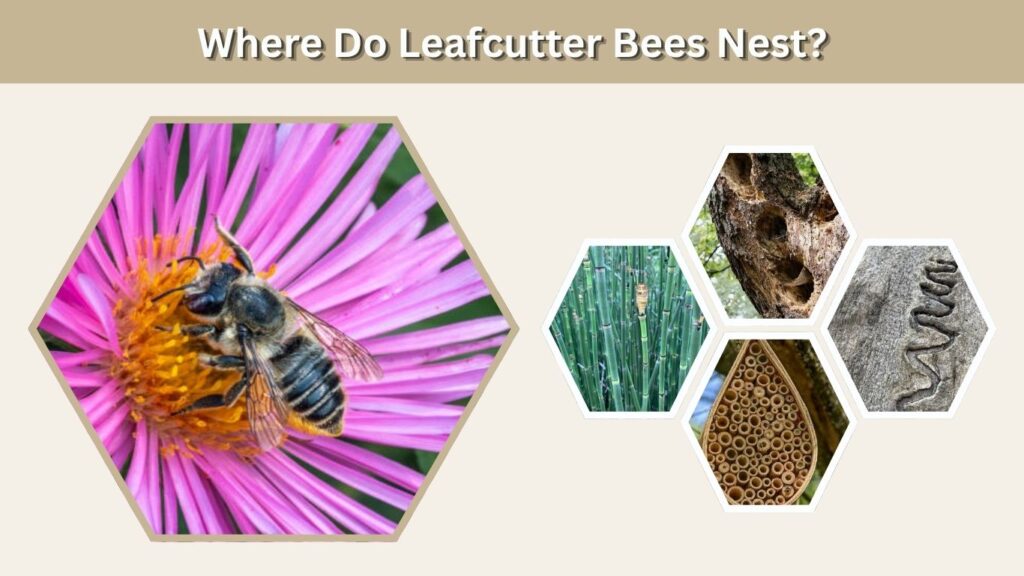
Most leafcutter bees are cavity nesters.
They seek existing narrow holes rather than excavating large underground colonies.
Common Nesting Locations
They may nest in:
- Hollow plant stems
- Holes in dead wood
- Beetle tunnels
- Small gaps in timber
- Bee hotels
- Nesting blocks
- Cracks around structures
- Hollow reeds
A female may use the same nesting location for several cells while remaining independent from other females.
Several females may sometimes nest close together when suitable cavities are abundant, but each female still manages her own nest.
Are Leafcutter Bees Solitary?
Yes.
Leafcutter bees are primarily solitary bees.
Each female mates, finds a nesting cavity, collects leaf material, gathers food, and lays her own eggs.
There is no worker caste supporting a queen like there is in a honey bee colony.
This independent lifestyle also helps explain why they are usually less defensive around their nests.
What Do Leafcutter Bees Eat?
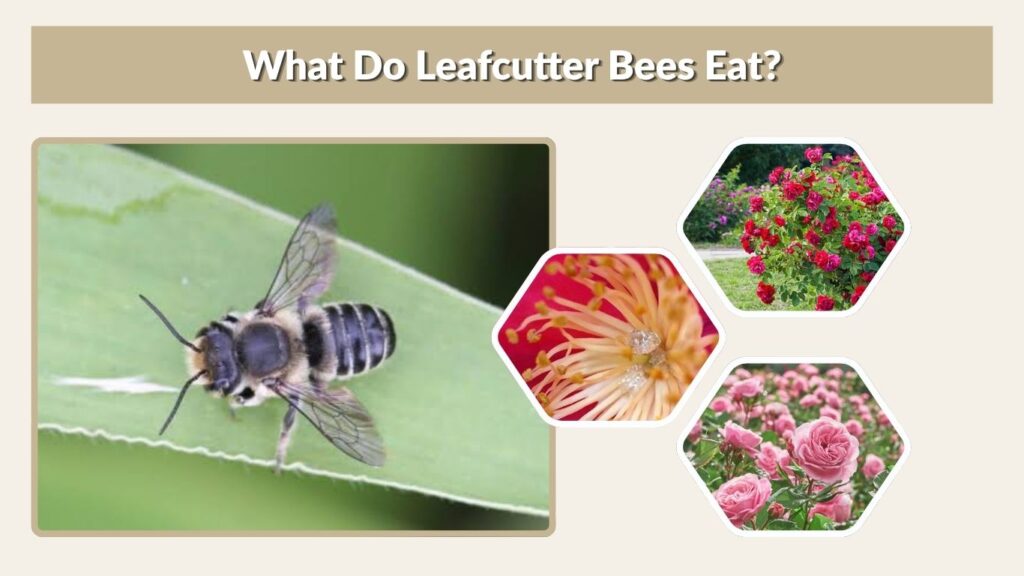
Adult leafcutter bees feed primarily on nectar for energy.
Females also collect pollen, which is mixed with nectar to create food for developing larvae.
Larval Food
Before laying an egg, the female places a pollen-and-nectar provision inside each leaf-lined cell.
When the larva hatches, it consumes this stored food.
The mother does not continuously feed the developing larva after sealing the cell.
Do Leafcutter Bees Make Honey?
No. Leafcutter bees do not produce harvestable honey.
Honey bees store large amounts of honey because an entire colony must survive periods when flowers are unavailable.
Leafcutter bees live independently and supply each developing offspring with a limited amount of pollen and nectar.
They therefore do not build honeycombs or maintain honey stores.
Leafcutter Bees vs Honey Bees
Leafcutter bees and honey bees are both valuable pollinators, but their lifestyles are very different.
Leafcutter Bees
Leafcutter bees:
- Are solitary
- Use leaves to build nest cells
- Do not produce honey
- Carry pollen primarily beneath the abdomen
- Usually nest in small cavities
- Rarely defend their nests aggressively
Honey Bees
Honey bees:
- Live in large social colonies
- Have queens, workers, and drones
- Build wax combs
- Produce and store honey
- Carry pollen mainly on their hind legs
- Cooperatively defend the hive
Both groups can be valuable in gardens and agriculture.
Leafcutter Bees vs Mason Bees
Leafcutter and mason bees are both solitary cavity-nesting bees, but they use different construction materials.
Leafcutter bees mainly use pieces of leaves to separate and line nest cells.
Mason bees generally use mud.
Seasonal Differences
Many mason bees are especially active during spring.
Leafcutter bees often become more noticeable later in spring and through summer.
Having nesting sites suitable for both groups can provide pollination across a longer flowering season.
When Do Leafcutter Bees Emerge?
Emergence varies with species, climate, and temperature.
Many leafcutter bees emerge during warm weather when flowers and suitable leaves are readily available.
Some species spend winter as mature larvae or prepupae inside sealed nest cells before completing development and emerging when conditions improve.
Commercially managed leafcutter bees may be stored and released to coordinate emergence with crop flowering.
How Long Do Leafcutter Bees Live?
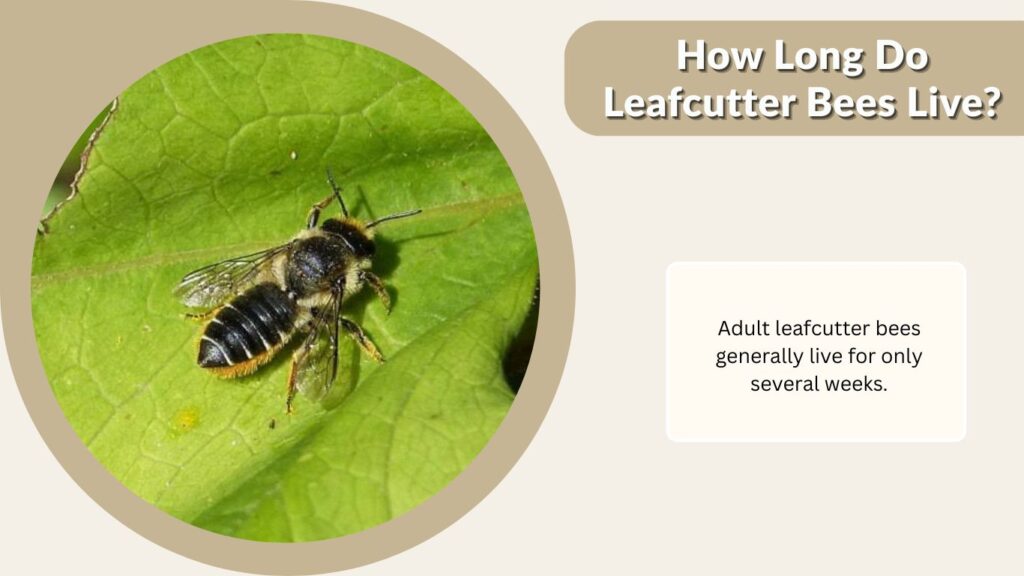
Adult leafcutter bees generally live for only several weeks.
During this short adult stage, females have a demanding schedule that includes:
- Mating
- Finding nest cavities
- Cutting leaves
- Collecting pollen
- Gathering nectar
- Building nest cells
- Laying eggs
Most of the life cycle is spent developing inside the protected nest rather than flying as an adult bee.
How to Attract Leafcutter Bees
Gardeners can encourage leafcutter bees by providing flowers, nesting cavities, and a pesticide-conscious environment.
Ways to Attract Them
Consider:
- Growing native flowering plants
- Providing flowers throughout summer
- Installing properly designed bee nesting blocks
- Leaving some hollow stems in the garden
- Providing untreated wood with suitable nesting cavities
- Avoiding unnecessary insecticides
- Allowing minor leaf damage on roses and other plants
A sunny, sheltered location can make artificial nesting sites more attractive.
Bee houses should also be maintained and cleaned appropriately to reduce parasites, mold, and disease buildup.
Leafcutter Bee Houses
A bee house can provide nesting cavities for solitary bees.
The holes or tubes should be smooth and deep enough for a female to construct several cells.
Good nesting materials can include removable reeds, paper tubes, or properly designed nesting blocks.
Avoid poorly maintained bee hotels that accumulate old nesting material year after year, since overcrowding can encourage parasites and disease.
How to Get Rid of Leafcutter Bees
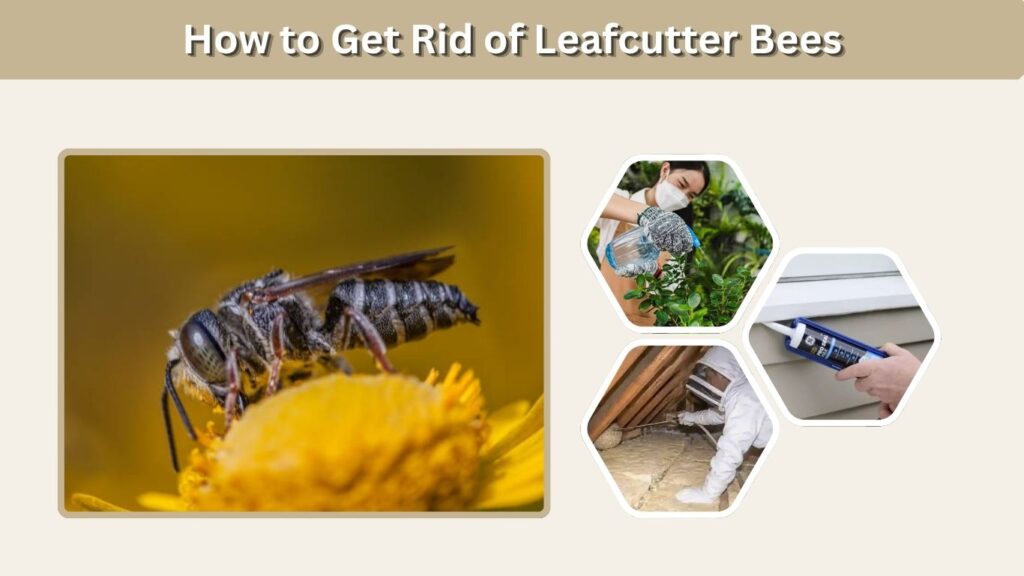
In most cases, removal is unnecessary.
Leafcutter bees are beneficial, non-destructive pollinators, and leaf damage is generally cosmetic.
If bees are nesting in an inconvenient location, it is often better to prevent access after the adults have finished using the nest rather than killing them.
Safer Management Options
You can:
- Seal unused cracks after the nesting season
- Provide alternative bee houses
- Protect especially valuable plants with physical barriers
- Avoid disturbing active nests
- Reduce exposed nesting cavities in structures
Avoid broad pesticide treatments unless there is a genuine pest-management reason.
Leafcutter Bees in Texas, Florida, and Other States
Leafcutter bees occur across much of North America.
Different species can be found in states including:
- Texas
- Florida
- California
- Arizona
- Colorado
- Oregon
- Washington
Species composition and seasonal activity vary by climate and local habitat.
Warm regions may support longer periods of activity because flowers remain available for more of the year.
FAQs
Are leafcutter bees good for the garden?
Yes. They are valuable pollinators, and the small pieces they remove from leaves rarely cause serious plant damage.
Do leafcutter bees sting people?
Females can sting but rarely do so unless trapped or handled. Males cannot sting.
Where do leafcutter bees make their nests?
They usually nest in narrow existing cavities such as hollow stems, holes in wood, beetle tunnels, and artificial bee houses.
Why are leafcutter bees cutting my rose leaves?
They use pieces of leaves to line and separate individual nesting cells for their offspring. They do not eat the leaf pieces.
Do leafcutter bees produce honey?
No. They collect nectar and pollen for themselves and their larvae but do not maintain honey stores like honey bees.