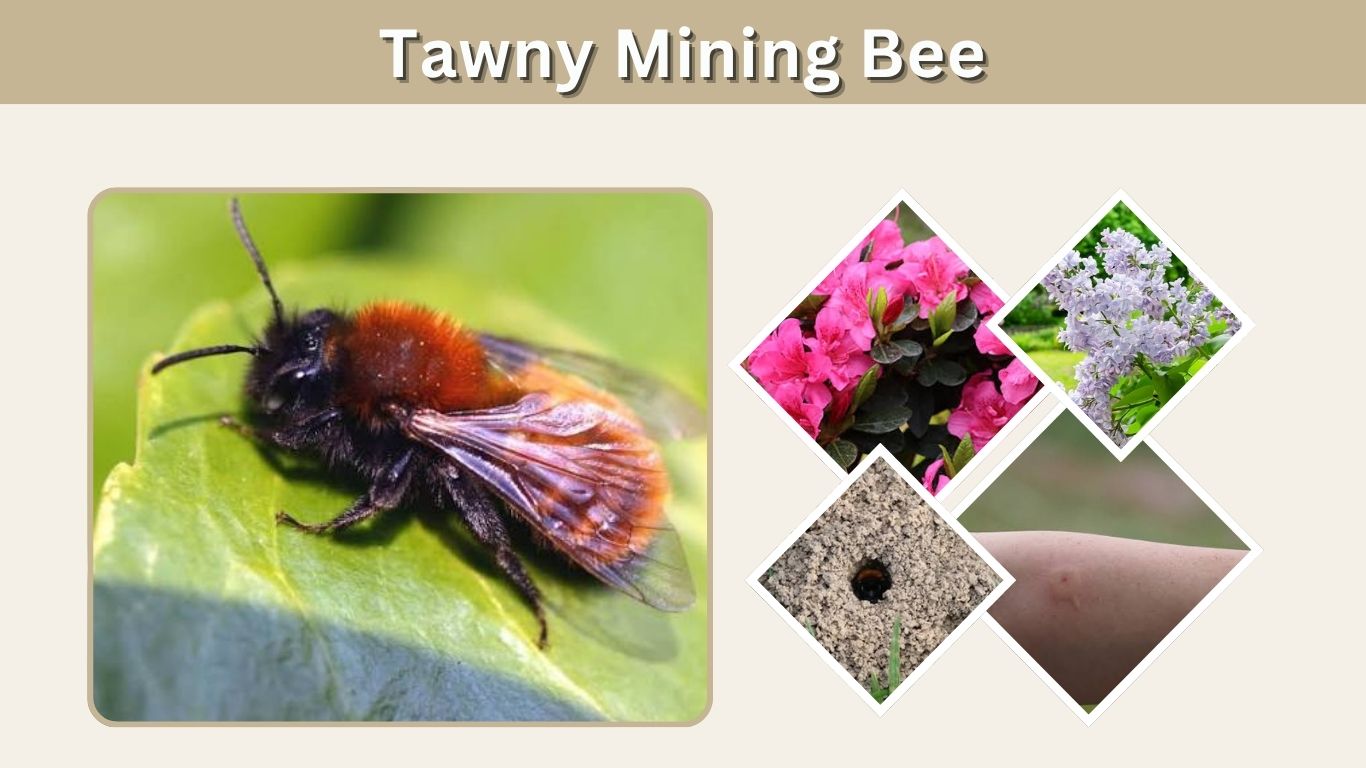
The tawny mining bee (Andrena fulva) is a distinctive spring bee recognized by the female’s bright orange-red coat and dark head and legs. These solitary ground-nesting bees commonly appear in gardens, lawns, parks, orchards, and other grassy habitats. Small volcano-shaped soil mounds often reveal their underground nests. Despite sometimes nesting close together, tawny mining bees do not form colonies like honey bees. They are peaceful, valuable pollinators that visit many spring flowers and fruit trees and rarely cause problems for homeowners.
What Is a Tawny Mining Bee?
The tawny mining bee is a solitary bee belonging to the mining bee genus Andrena. It is one of the most recognizable spring-flying mining bees, particularly because females have striking reddish-orange hair. The species commonly appears when fruit trees and many spring flowers are blooming. Adults are usually active from late March or April into May or June, depending on local conditions.
Tawny Mining Bee Identification
Key features include:
- Scientific name: Andrena fulva
- Female with dense orange or reddish hair across the upper body
- Black hair on the head, sides, and legs
- Compact, furry bee-like appearance
- Female reaching roughly 9–15 mm depending on the individual
- Male smaller and generally browner and less distinctive
- Strong hind-leg hairs used to transport pollen
- Usually observed close to the ground during spring
Females are much easier to identify than males because of their distinctive orange-red coat.
Tawny Mining Bee Habitat and Distribution
Tawny mining bees favor open places with flowers nearby and soil suitable for digging. They can thrive surprisingly well around people and are regularly found in urban and suburban gardens. Suitable nesting habitat combined with abundant spring flowers is more important than having an entirely wild landscape, which explains why lawns and parks can support noticeable populations.
Where Do Tawny Mining Bees Live?
Typical habitats include:
- Residential gardens
- Short lawns
- Parks
- Orchards
- Grasslands
- Pastures
- Farmland margins
- Mown banks
- Open woodland
- Flowerbeds
They are widespread across much of Britain, particularly England and Wales. Records have also expanded into parts of Scotland, while the species has a more restricted recorded distribution in Ireland.
Tawny Mining Bee Nest
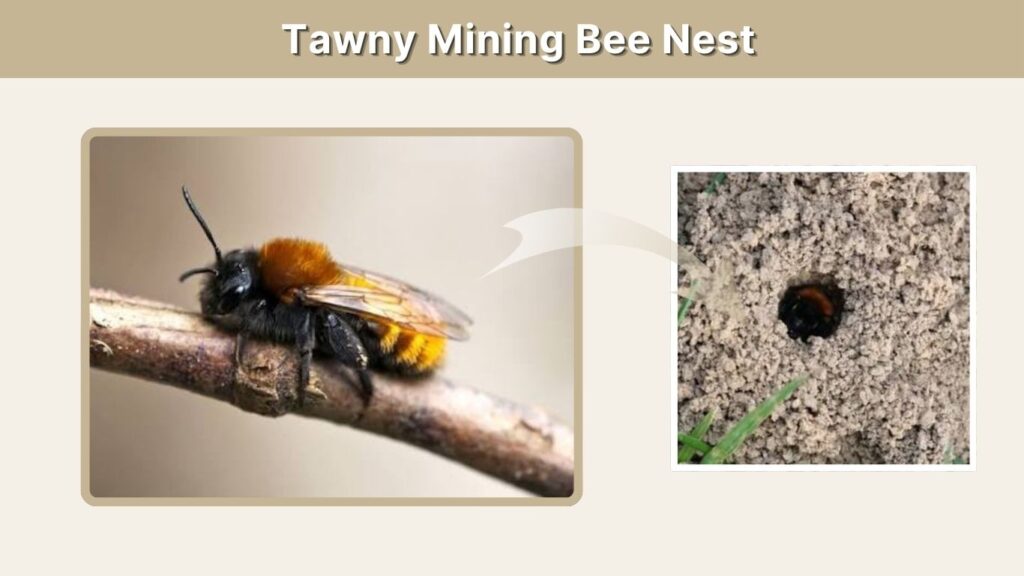
As its name suggests, the tawny mining bee digs into soil. Each female creates and manages her own underground nest rather than sharing a communal hive. However, many females may choose the same favorable patch of lawn, creating numerous entrances close together. This can make them look like a social colony even though every female is independently raising her offspring.
What Does a Tawny Mining Bee Nest Look Like?
Look for:
- A small hole in the ground
- Loose excavated soil surrounding the entrance
- A miniature volcano-shaped mound
- Nest entrances in short grass or bare soil
- Several separate nests clustered in one area
The central burrow extends underground and branches into individual brood cells. Each cell is provisioned with pollen and nectar before the female lays an egg inside. A nest commonly contains several cells.
Do Tawny Mining Bees Damage Lawns?
Their nests generally do not seriously damage lawns.
The little soil mounds can appear noticeable for a short period in spring, but they usually disappear naturally. Because the bees are useful pollinators and their excavation is minor, there is rarely a good reason to destroy the nests.
Even when dozens of holes appear in a lawn, they represent separate solitary nests rather than one destructive underground colony.
Do Tawny Mining Bees Sting?
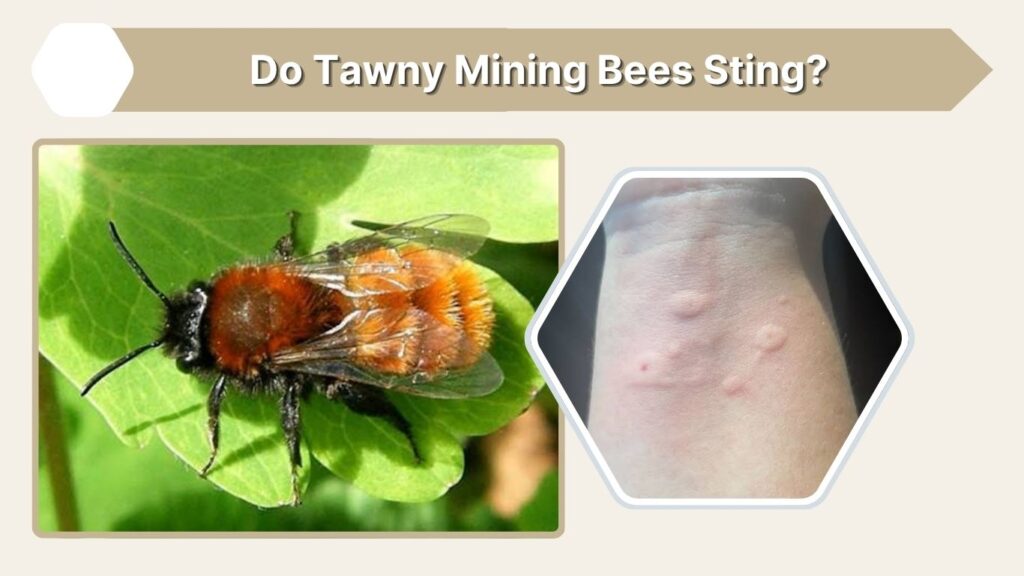
Tawny mining bees are extremely peaceful. They do not aggressively defend their nesting sites because they do not have a large colony, queen, or communal food reserve to protect. People can often walk close to active nesting areas without being attacked.
Can Tawny Mining Bees Sting Humans?
Females possess a sting, as female bees generally do, but tawny mining bees are exceptionally reluctant to use it against people. Buglife describes them as harmless and notes that they do not pose a meaningful stinging threat around gardens.
A female’s normal response to disturbance is to fly away or return to her burrow rather than attack.
Males cannot sting.
It is still sensible not to squeeze or deliberately handle any bee, particularly if you have a serious allergy to bee stings.
Tawny Mining Bee Life Cycle
The tawny mining bee generally has one generation each year. Adults emerge during spring, mate, and begin nesting while flowers provide abundant pollen and nectar. The adult activity period is relatively short, but the developing generation spends much longer protected underground before emerging during the following spring.
From Egg to Adult
The basic life cycle includes:
- Adults emerge in spring.
- Males search for females and mating occurs.
- Females excavate underground nests.
- Each female gathers pollen and nectar.
- Food is placed inside individual brood cells.
- An egg is laid in each provisioned cell.
- Larvae hatch and consume the stored food.
- Development continues underground.
- The immature bee spends winter protected inside the nest.
- Adults emerge the following spring.
This cycle allows the species to synchronize adult activity with spring flowering.
What Do Tawny Mining Bees Eat?
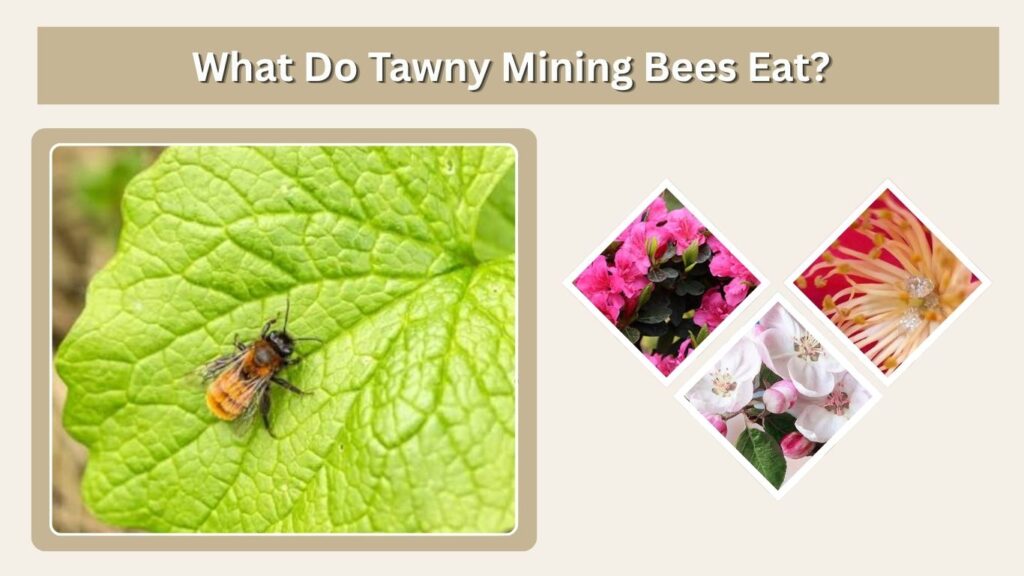
Adult tawny mining bees obtain energy from flower nectar, while females gather pollen to provision their offspring. They visit a broad variety of herbs, shrubs, trees, and garden flowers instead of relying on only one plant species.
Flowers Tawny Mining Bees Visit
They may forage from:
- Apple blossom
- Pear blossom
- Cherry blossom
- Dandelions
- Spring-flowering shrubs
- Other garden and wildflowers
- Agricultural flowering crops
Their active season overlaps particularly well with the flowering of many fruit trees, making them useful spring pollinators.
The pollen gathered by a female is carried back to her nest and placed inside the underground brood cells as food for developing larvae.
Male vs Female Tawny Mining Bee
Male and female tawny mining bees look considerably different. The spectacular orange-colored bee most people photograph is usually a female.
Female Tawny Mining Bee
Females have dense, bright reddish or orange hair over the upper body, contrasting strongly with black hair on the head and legs. They are also the individuals seen excavating holes and transporting pollen.
Male Tawny Mining Bee
Males are smaller and browner, making them considerably harder to distinguish from males of other Andrena species.
They do not excavate nests, collect food for larvae, or participate in raising offspring. Their main role during their short adult lives is finding females and mating.
Are Tawny Mining Bees Beneficial?
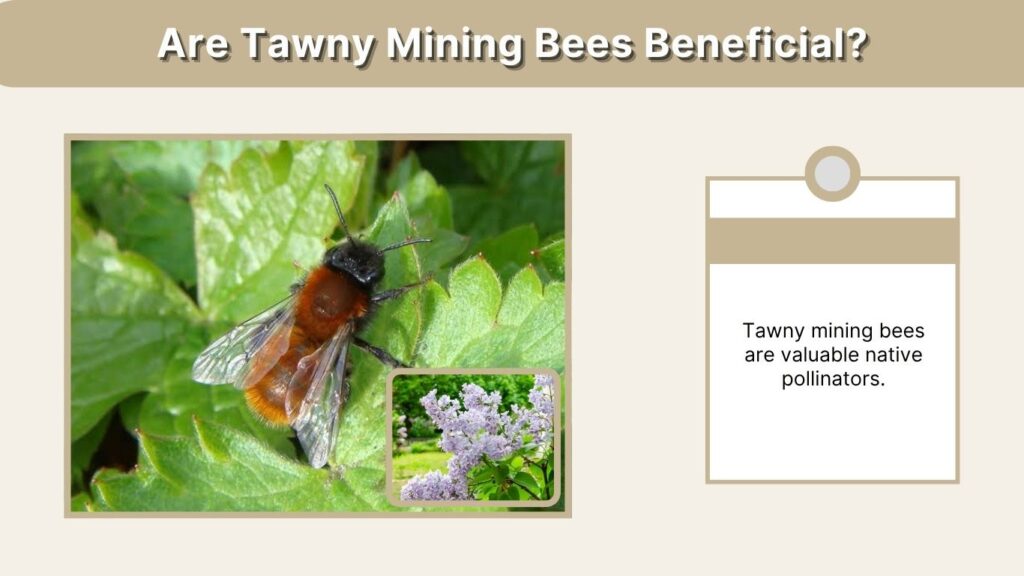
Tawny mining bees are valuable native pollinators. Their spring activity means they visit flowers during an important period for fruit trees, garden plants, and wildflowers.
Unlike honey bees, they do not produce honey or maintain permanent colonies.
Their value comes from repeatedly carrying pollen from flower to flower while gathering resources for their nests. Gardens containing a variety of pesticide-free spring flowers can provide important feeding habitat.
Their presence—and even a collection of small nesting mounds—is generally something to encourage rather than eliminate.
How to Get Rid of Tawny Mining Bees
In most situations, removing tawny mining bees is unnecessary. They are temporary spring visitors, do not damage structures, and pose very little stinging risk.
If they are nesting in an inconvenient section of lawn, allowing their short nesting season to finish is usually the simplest approach.
Safer Ways to Manage the Area
Instead of insecticides:
- Avoid disturbing active nest entrances.
- Give the nesting patch some space during spring.
- Keep children and pets from digging directly into nests.
- Wait until nesting activity naturally ends.
- Maintain thicker vegetation later if you want the location to become less attractive for future nesting.
Avoid spraying active nesting aggregations simply because small soil mounds have appeared. These bees provide considerably more benefit through pollination than harm through nesting.
FAQs
Do tawny mining bees sting?
Females technically possess a sting but are extremely reluctant to sting and are considered harmless around gardens. Males cannot sting.
Where do tawny mining bees nest?
They usually excavate nests in soil, particularly lawns, parks, gardens, short turf, banks, orchards, and other open grassy locations.
What does a tawny mining bee look like?
Females have striking orange-red hair covering much of the upper body, combined with a darker head and black legs. Males are smaller and much browner.
When do tawny mining bees appear?
They are spring bees, typically flying from late March or April through May and sometimes into mid-June.
Should I remove tawny mining bee nests?
Usually not. The nests cause little lawn damage, the bees are valuable pollinators, and adults are active for only a relatively short period each year.