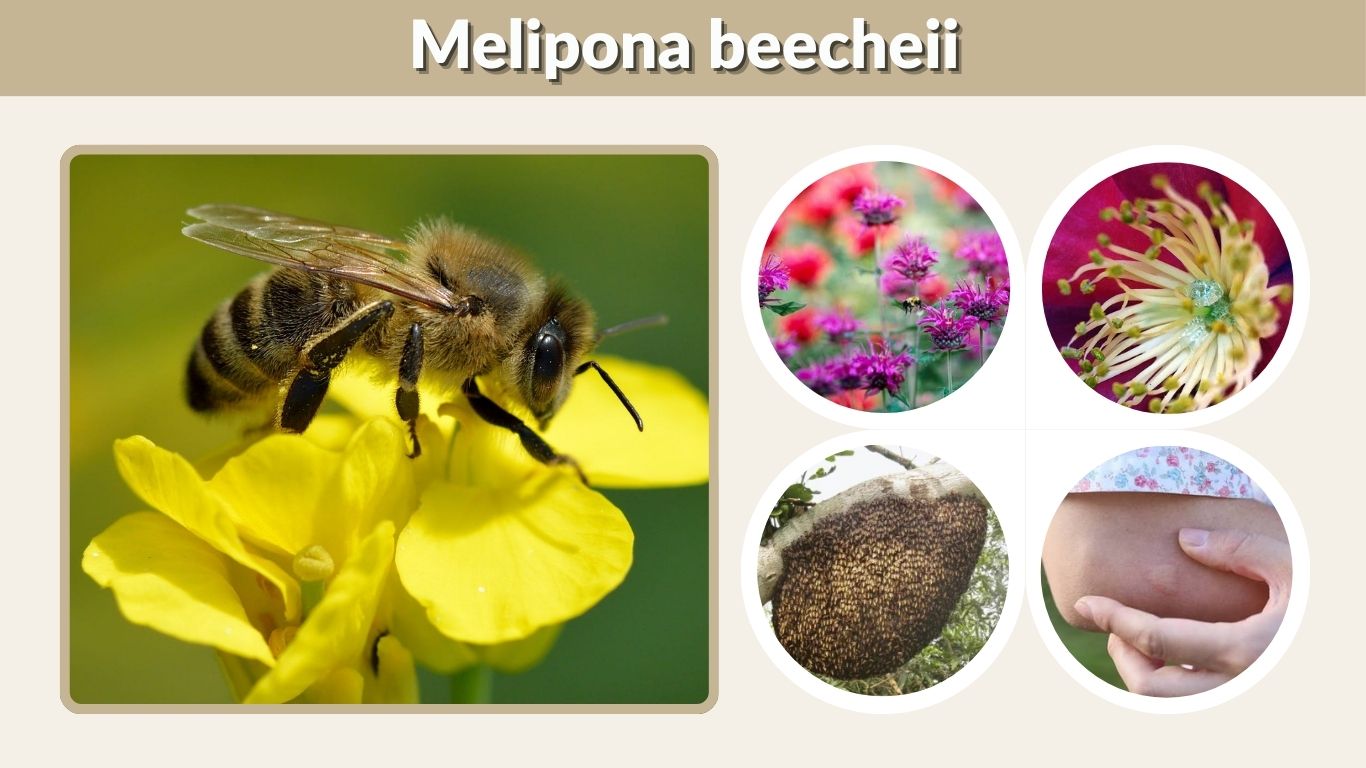
Melipona beecheii is a tropical stingless bee famous for its honey and its long relationship with Maya communities of Mexico and Central America. Often called the Mayan stingless bee or xunaan-kab, it forms permanent social colonies containing a queen, workers, and males. Unlike European honey bees, these bees store honey and pollen in rounded wax-resin pots rather than conventional hexagonal honeycombs. Their pollination, distinctive honey, traditional beekeeping, and dependence on tropical forests make Melipona beecheii both culturally and ecologically important.
What is Melipona beecheii?
Melipona beecheii is a highly social bee belonging to the family Apidae and tribe Meliponini. Members of this group are commonly called stingless bees because their sting apparatus is reduced and cannot function like that of a honey bee. Colonies live for many years and depend on workers continually gathering pollen, nectar, plant resins, and other materials.
Melipona beecheii Characteristics
Important identification features include:
- Scientific name: Melipona beecheii
- Order: Hymenoptera
- Family: Apidae
- Tribe: Meliponini
- Body: Robust and bee-like
- Color: Brown to golden-brown with lighter markings
- Wings: Transparent to lightly tinted
- Lifestyle: Eusocial
- Defense: No functional sting
- Food: Nectar and pollen
- Nest location: Usually cavities in trees
The bees may superficially resemble small honey bees, but their behavior, nest construction, food-storage system, and stingless biology are quite different.
Melipona beecheii Size
Workers are roughly around 1 cm long, although body dimensions vary among individuals and populations. Research on Cuban colonies reported worker forewings averaging approximately 7.4 mm in length.
Queens, workers, and males are not separated by the dramatic size differences seen in some other social insects.
Where Does Melipona Beecheii Live?
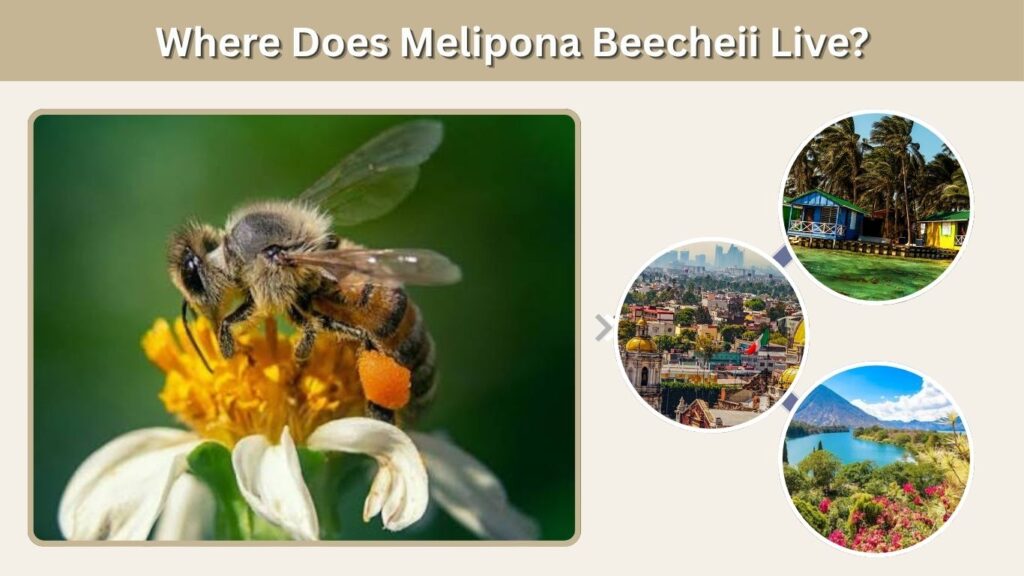
This bee is adapted to tropical environments. Its native continental range includes Mexico and parts of Central America, and it is especially famous from the Yucatán Peninsula. It also occurs in Costa Rica, where it is among the stingless bee species traditionally maintained by meliponiculturists.
Distribution
Melipona beecheii is associated with areas including:
- Mexico
- Belize
- Guatemala
- El Salvador
- Nicaragua
- Costa Rica
The species also occurs in Cuba, although historical research suggests its Antillean presence probably resulted from human introduction rather than a naturally native island population.
Melipona beecheii in Costa Rica
Costa Rica has a rich diversity of native stingless bees. Melipona beecheii and Tetragonisca angustula are among the species particularly associated with traditional meliponiculture there.
Natural nests require suitable cavities, while managed colonies may be transferred to wooden hives designed for stingless bees.
Melipona beecheii Nest and Hive
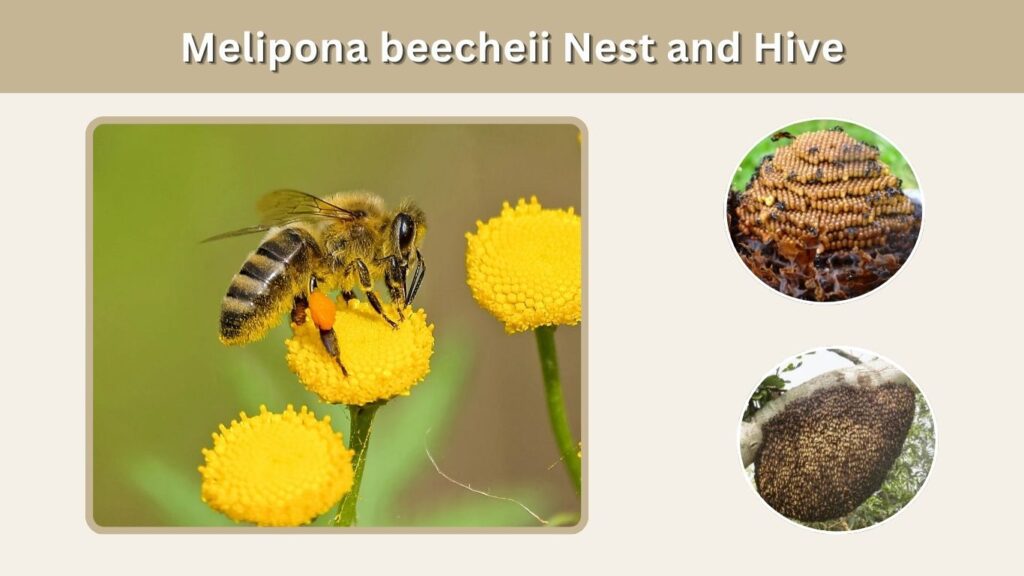
Wild colonies typically occupy cavities in living trees. Inside, their architecture looks very different from an ordinary honey-bee hive. The brood occupies specialized combs, while pollen and honey are placed in separate storage pots surrounding or lying beyond the brood area.
What Does the Nest Look Like?
A typical nest contains:
- A protected entrance
- Brood chamber
- Horizontal brood combs
- Wax-resin coverings around brood
- Pollen-storage pots
- Honey-storage pots
- Resinous structural material
- A queen and worker population
The bees use cerumen, a mixture containing wax and plant resins, as an important nest-building material.
Honey Pots
Unlike Apis mellifera, Melipona beecheii does not store honey in the familiar vertical hexagonal comb used by commercial honey bees.
Instead, workers construct rounded or pot-shaped storage structures. Pollen tends to be stored closer to the brood, with honey often occupying pots farther from the central brood area.
Melipona beecheii Honey
Melipona honey has been valued in Mesoamerica for centuries and has a particularly strong connection with Maya culture. It continues to attract scientific and commercial interest because its composition differs from ordinary Apis mellifera honey.
What Is Melipona Honey Like?
Research shows that stingless bee honey generally contains more moisture than conventional honey-bee honey. Melipona beecheii honey can also have relatively high acidity, and composition varies according to floral source, location, season, and colony.
Its characteristics can include:
- Relatively high moisture
- Noticeable acidity
- Sweet and tart flavor
- Variable floral aromas
- Thinner consistency than many conventional honeys
- Naturally occurring microorganisms associated with fermentation
Because of its higher water content, its storage characteristics differ from conventional honey.
Traditional Uses of the Honey
Maya communities have historically valued Melipona beecheii honey not only as food but also in traditional practices. Scientific research has investigated its chemical, microbiological, antioxidant, and antibacterial properties, but traditional medicinal use should not be treated as proof that the honey can cure specific diseases.
Melipona beecheii Beekeeping
The keeping of stingless bees is called meliponiculture. In the Yucatán Peninsula, Maya people maintained Melipona beecheii long before European honey bees arrived in the Americas. Traditional colonies were commonly housed in hollow logs.
Traditional Maya Beekeeping
Traditional hive management centers on protecting a complete colony rather than simply collecting wild honey.
Beekeepers may maintain colonies in horizontal hollow logs or modern boxes. Colonies need abundant flowering plants, protection from excessive disturbance, suitable temperature, and adequate food reserves.
Because each colony produces considerably less honey than a typical managed Apis mellifera colony, harvesting must leave sufficient resources for the bees themselves.
Why Conservation Matters
Traditional M. beecheii beekeeping has declined considerably in parts of the Yucatán. Earlier research documented a major reduction in traditionally maintained colonies and identified factors such as deforestation, hurricanes, changing beekeeping practices, and reduced transfer of traditional knowledge as concerns.
Conserving flowering forests and experienced meliponiculturists therefore benefits both the bees and the cultural tradition surrounding them.
What Do Melipona Beecheii Bees Eat?
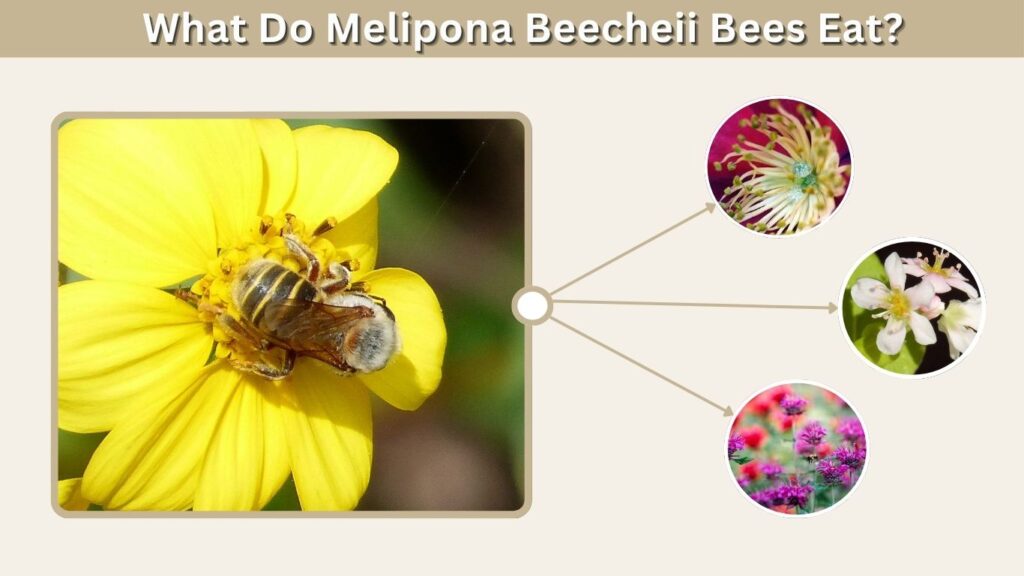
Workers obtain carbohydrates from flower nectar and protein and other nutrients from pollen. Because an entire colony depends on available vegetation, diverse flowering landscapes are essential.
Nectar and Pollen
Workers collect:
- Flower nectar
- Pollen
- Plant resins
- Water
- Other materials required by the colony
A long-term study of colonies in Quintana Roo examined numerous pollen types stored by M. beecheii, demonstrating how strongly colonies depend on the surrounding plant community.
Importance as Pollinators
While gathering pollen and nectar, workers transfer pollen between flowers. Stingless bees are important components of tropical pollinator communities and support both wild vegetation and agricultural systems.
Can Melipona beecheii Sting?
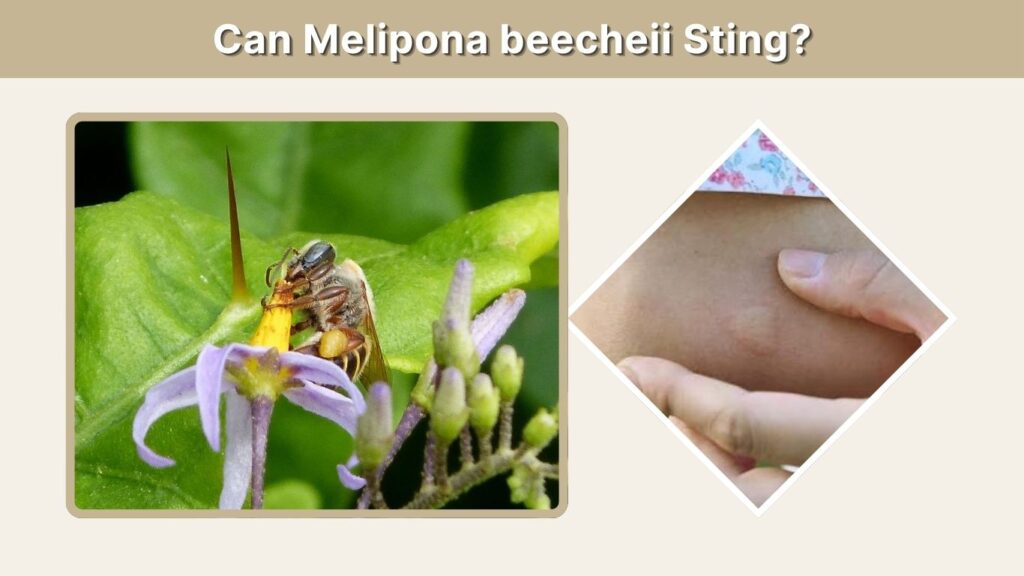
Despite being called a stingless bee, Melipona beecheii is not literally missing every anatomical remnant of a sting. The sting apparatus is reduced to the point that it cannot be used like the defensive sting of a honey bee.
Are They Dangerous to Humans?
They are generally much less hazardous around people than strongly defensive stinging bees.
Colonies can still defend themselves through behaviors such as using their mandibles, guarding entrances, or responding to disturbance. They should therefore be handled gently rather than treated as completely defenseless insects.
Their lack of an effective sting is one reason traditional meliponiculture can be practiced close to homes.
Melipona beecheii Colony Life
A colony functions as an organized social unit. Workers maintain the nest, gather resources, tend developing brood, and defend the colony. The reproductive queen lays eggs, while males primarily participate in reproduction.
Queen, Workers and Males
The colony contains:
- Queen: Primary egg-laying female
- Workers: Female bees responsible for most colony tasks
- Males: Reproductive individuals
Developing brood occurs in sealed cells supplied with food before the egg develops. This differs from honey bees, whose larvae are fed progressively by nurse workers.
New Colonies
Stingless bee colonies do not reproduce exactly like honey-bee swarms. Establishing a new nest is a gradual process involving workers and reproductive individuals.
This slower colony reproduction means careless destruction or removal of wild nests can have long-lasting effects on local populations.
Can Melipona beecheii Live in Florida or Arizona?
Melipona beecheii is fundamentally a tropical species. Successfully maintaining a colony outside its established range involves far more than providing a hive box because temperature, forage availability, humidity, pathogens, regulations, and genetics all matter.
Arizona
Arizona’s hot but frequently very dry climate and cold winter conditions in some areas are substantially different from the humid and seasonally tropical environments occupied by many natural populations. Outdoor survival should therefore not be assumed simply because the species tolerates heat.
Florida
Parts of Florida are climatically closer to tropical conditions, but Melipona beecheii is not a bee that should simply be imported and released.
Moving live bees across borders or regions can involve agricultural and wildlife regulations and can introduce diseases or genetically inappropriate populations. Keeping locally native pollinators is usually the more ecologically responsible approach.
FAQs
What is Melipona beecheii?
Melipona beecheii is a eusocial stingless bee native to Mexico and parts of Central America. It is especially associated with traditional Maya meliponiculture.
Does Melipona beecheii produce honey?
Yes. Colonies store honey in wax-and-resin pots rather than conventional honey-bee comb. The honey generally has higher moisture and acidity than typical Apis mellifera honey.
What is Melipona beecheii called in Maya culture?
One widely used Maya name is xunaan-kab or related spellings, referring to this culturally important native stingless bee.
Where does Melipona beecheii build its nest?
Wild colonies commonly establish nests inside cavities in living trees. Managed colonies can be kept in traditional hollow logs or specialized wooden hive boxes.
Can you buy Melipona beecheii?
Availability depends on location and local regulations. Because live-bee movement can affect native populations and spread pests or diseases, colonies should only be obtained legally from responsible local meliponiculturists rather than transported casually across regions.