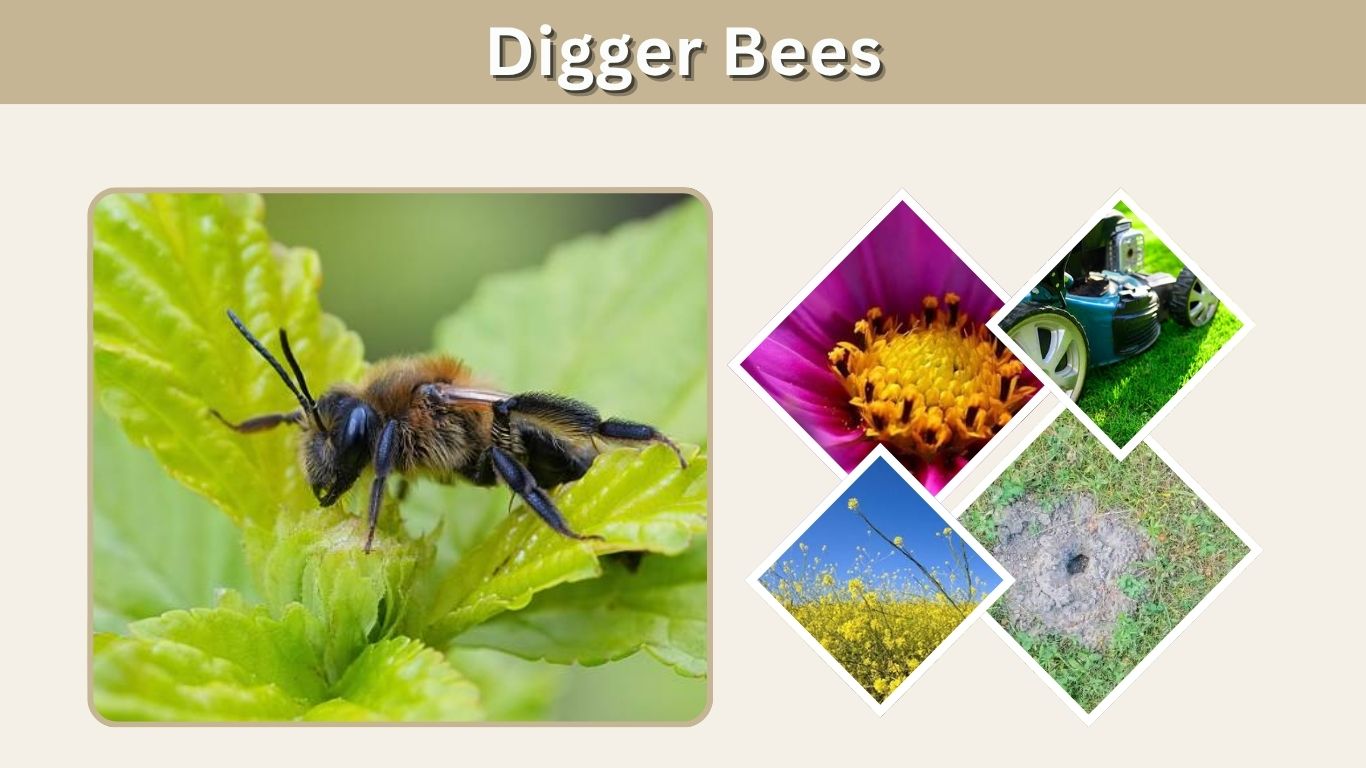
Digger bees are solitary, ground-nesting bees known for excavating small burrows in lawns, gardens, sandy soil, and other open ground. The name is commonly applied to species in the genus Anthophora and sometimes more broadly to other solitary mining bees. Although dozens of bees may appear together in one area, each female usually maintains her own nest rather than living in a social colony. Digger bees are valuable pollinators, rarely aggressive, and generally cause little damage, so control is often unnecessary.
What Are Digger Bees?
Digger bees get their name from the way females use their legs and mouthparts to excavate nesting tunnels. Many Anthophora species belong to the family Apidae, the same broad bee family that contains honey bees and bumble bees.
Most are solitary or sometimes communal rather than truly social. Several females may nest close together when a patch of soil has ideal conditions, creating what looks like a colony even though each female raises her own offspring.
Digger Bee Identification
Depending on the species, digger bees may have:
- Robust, hairy bodies
- Gray, brown, black, or yellowish coloration
- Pale abdominal bands
- Clear wings
- Large eyes
- Hairy hind legs for carrying pollen
- Fast, low-flying behavior
- A somewhat bumblebee-like appearance
Anthophora digger bees range roughly from 10–21 mm in length, although size varies among species. Some commonly encountered species can approach about three-quarters of an inch.
Digger Bee Nests and Holes
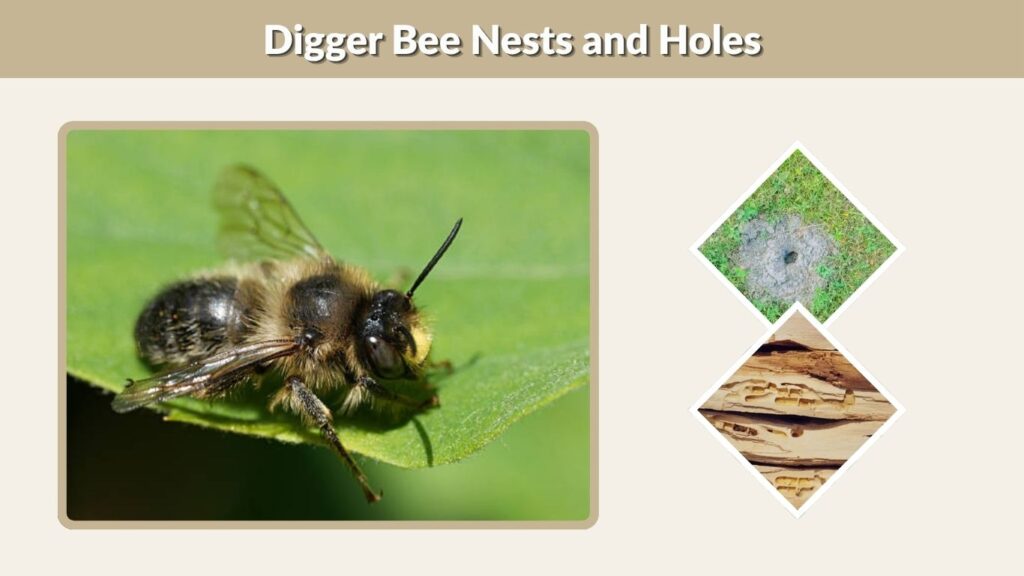
Most digger bees build nests underground. Females choose exposed or sparsely vegetated soil and excavate tunnels leading to individual brood cells.
Each brood cell receives pollen and nectar before an egg is deposited inside.
What Do Digger Bee Holes Look Like?
Common signs include:
- Small round openings in soil
- Loose piles of excavated dirt
- Several holes concentrated in one area
- Bees entering and leaving individual holes
- Bees hovering a few inches above the ground
- Small mud structures around some entrances
Some Anthophora species build noticeable chimney-like collars of mud around their nest entrances.
Lawns containing many holes may look as though they contain one enormous underground bee colony. In reality, many solitary females may simply have selected the same favorable patch of ground.
Why Are So Many Bees Nesting Together?
Suitable nesting soil can be limited.
A dry, sunny area with appropriate soil texture may attract dozens or even hundreds of females. Each female still controls her own burrow.
These nest aggregations can return in subsequent seasons if the habitat remains favorable.
Do Digger Bees Sting?
Female digger bees are physically capable of stinging, but they are generally reluctant to do so.
They do not have a large communal nest filled with workers and stored honey to defend, which makes them much less defensive than social yellowjackets or some other stinging insects.
Are Digger Bees Dangerous?
Usually, no.
Digger bees:
- Are normally non-aggressive
- Rarely sting unless handled or trapped
- Do not aggressively defend large colonies
- Usually ignore people walking nearby
- Have males that cannot sting
University of Maryland Extension notes that solitary ground-nesting bees are very unlikely to sting and are primarily focused on nesting and collecting food.
People with serious bee-sting allergies should still avoid unnecessary contact with any unidentified bee.
What Do Digger Bees Eat?
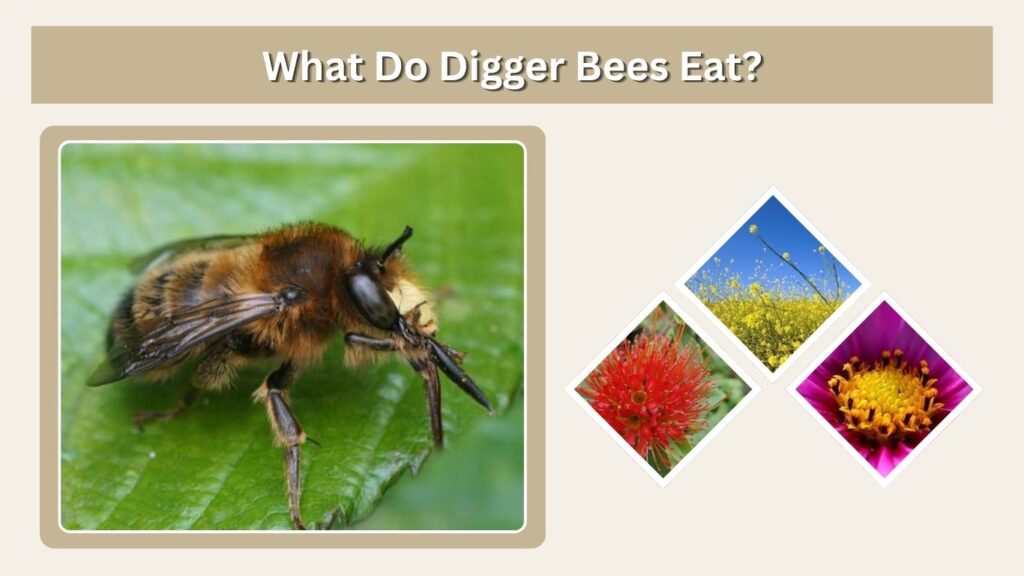
Adult digger bees feed primarily on nectar, while females collect pollen and nectar to provision their offspring.
Their hairy bodies and specialized pollen-carrying hairs make them effective pollinators.
Digger Bee Diet
Their food consists mainly of:
- Flower nectar
- Pollen
- Stored pollen-and-nectar provisions as larvae
Many Anthophora species visit a broad range of flowering plants. Some are capable of buzz pollination, making them effective pollinators of plants such as tomatoes and peppers.
Do Digger Bees Make Honey?
No. Digger bees do not produce harvestable honey like honey bees.
A female gathers nectar and pollen for individual offspring, but she does not maintain a large honey-storage system or social hive.
Digger Bee Life Cycle
The life cycle consists of egg, larva, pupa, and adult. Most of the bee’s development happens unseen beneath the ground.
From Egg to Adult
The general process is:
- A female excavates a burrow.
- She constructs brood cells.
- Pollen and nectar are placed inside each cell.
- She lays an egg on the food supply.
- The larva hatches and consumes the stored food.
- The immature bee develops underground.
- Adults eventually emerge to mate and repeat the cycle.
In many ground-nesting solitary bees, adults are conspicuous for only a short period each year. University of Maryland notes that large nesting aggregations may remain active for only about two to four weeks, depending on the species.
This explains why a lawn can suddenly appear full of bees and then become quiet again a few weeks later.
Are Digger Bees Good for Gardens?
Yes. In most situations, digger bees should be considered beneficial.
They pollinate wildflowers, garden plants, fruit-producing plants, and crops while causing little lasting damage to lawns.
Benefits of Digger Bees
They provide several ecological benefits:
- Pollinate flowering plants
- Support fruit and seed production
- Increase native pollinator diversity
- Provide food for other wildlife
- Require little intervention from homeowners
Their digging may produce temporary soil piles, but these usually weather away without causing significant turf damage.
How to Get Rid of Digger Bees
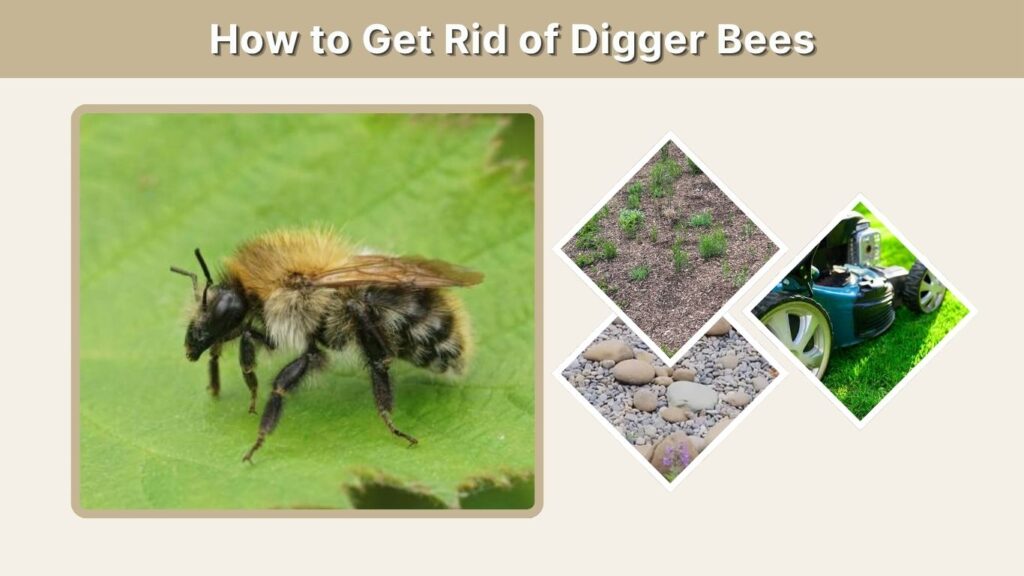
Because these bees are valuable pollinators and rarely dangerous, leaving them alone is generally the preferred option.
When nests occur beside children’s play spaces, heavily traveled paths, or another problematic location, modifying the habitat is usually preferable to applying insecticide.
Natural Digger Bee Control
Try these approaches:
- Increase vegetation over bare soil.
- Maintain healthy, dense turf.
- Avoid leaving large areas of exposed nesting soil.
- Water very dry nesting areas when appropriate for the landscape.
- Restrict access to the area during the short active season.
- Allow the adults to finish nesting before altering the site.
Ground-nesting bees often favor exposed, well-drained soil. Making that site less attractive can discourage future nesting without killing the bees.
Should You Use Insecticide?
Usually not.
University of Maryland Extension recommends avoiding pesticides for these beneficial ground-nesting pollinators because their nesting activity is temporary and the bees pose little threat to people or pets.
Before attempting control, confirm that you actually have solitary digger bees rather than yellowjackets.
Digger Bees vs Ground-Nesting Wasps
Not every insect digging a hole in the lawn is a digger bee. Cicada killers and other solitary wasps also excavate burrows.
How to Tell Them Apart
Digger bees:
- Usually hairy
- Collect pollen
- Feed young pollen and nectar
- Often resemble bumblebees
- Important flower pollinators
Digger wasps:
- Often less densely hairy
- Hunt insects or spiders
- Provision their larvae with animal prey
- May be considerably larger
For example, some digger wasps hunt beetle grubs underground and provide them as food for their developing larvae.
Both groups are generally solitary and far less defensive than social yellowjackets.
Green, Silver and Other Digger Bees
“Digger bee” is not a single species. Different regions have different ground-nesting bees, which explains searches for green, silver, gold, white-banded, African, Australian, and other digger bees.
Where Are Digger Bees Found?
Ground-nesting solitary bees occur across much of the world.
In North America, they are found from California and Arizona to Florida, New Jersey, New York, Michigan, Washington, and many other states.
Their appearance varies substantially between species, so color alone should not be used for identification.
Some other bees loosely called digger or mining bees belong to completely different genera or families.
Digger Bees and Blister Beetles
An interesting relationship can occur between solitary ground-nesting bees and certain blister beetles.
Some blister beetle larvae use bees as transportation to reach nests, where they consume provisions or bee offspring. This highly specialized relationship demonstrates that underground bee nests support their own small ecological communities.
It is not something homeowners normally need to control.
FAQs
What do digger bees look like?
Many Anthophora digger bees are robust, hairy bees approximately 10–21 mm long. They may be gray, brown, black, or banded and can resemble small bumblebees.
Do digger bees sting humans?
Females can sting but rarely do unless directly handled or threatened. Males cannot sting. Digger bees are generally considered non-aggressive.
Why are digger bees making holes in my lawn?
Females excavate underground burrows where they create brood cells and raise their offspring. Suitable patches of dry or exposed soil can attract many females at once.
Should I get rid of digger bees?
Usually not. They are beneficial pollinators, their above-ground activity is often brief, and they rarely sting. Control is mainly worth considering when nests create a genuine safety or access problem.
Do digger bees live in colonies?
Most are solitary. Many females can nest very close together, creating a large aggregation, but each female generally maintains her own nest rather than functioning as part of a honey bee-like colony.