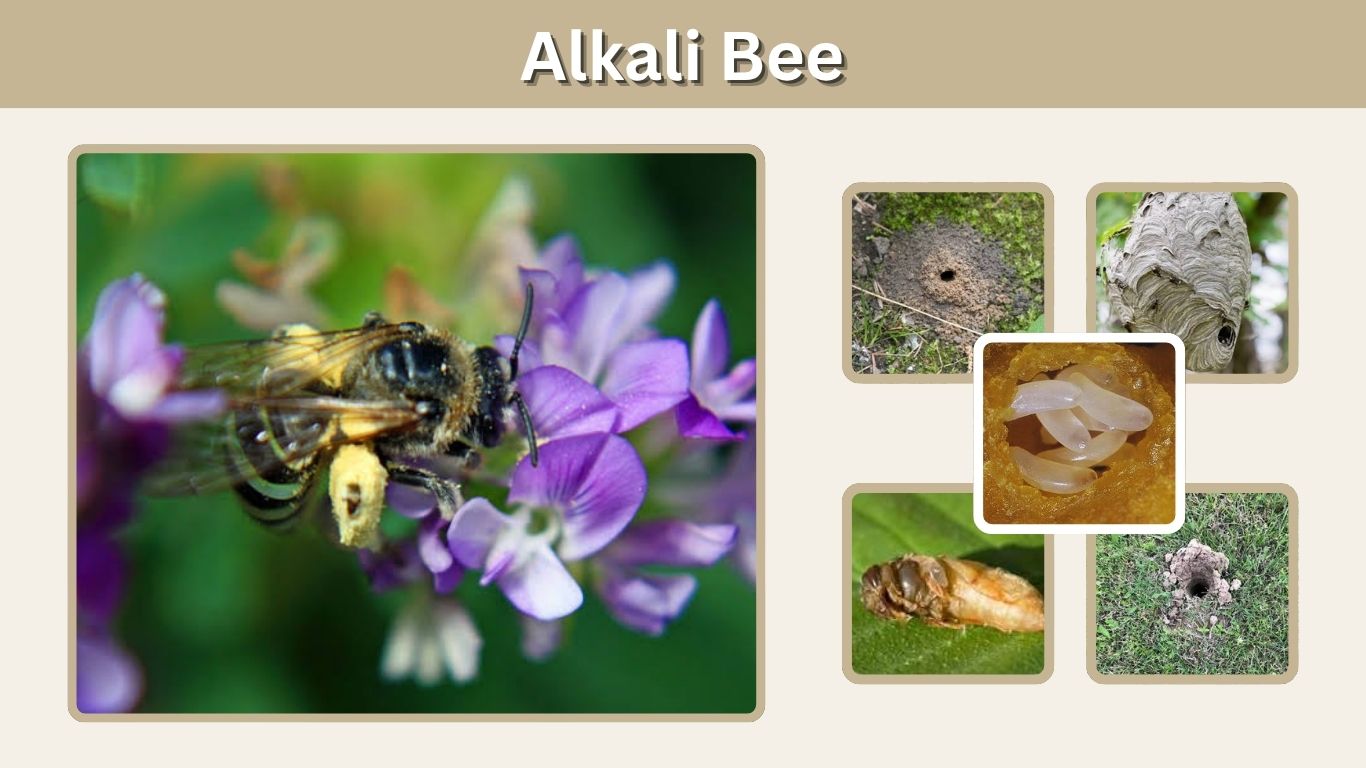
The alkali bee is a solitary ground-nesting bee best known for its remarkable ability to pollinate alfalfa. Scientifically called Nomia melanderi, this native North American bee often nests in huge aggregations where thousands or even millions of individual females occupy the same favorable patch of salty, moist soil. Alkali bees are especially important in agricultural areas of the western United States. Although large nesting beds can look intimidating, these bees are generally nonaggressive and spend most of their time collecting pollen and nectar.
What Is an Alkali Bee?
The alkali bee belongs to the family Halictidae, a diverse group often called sweat bees. Unlike honey bees, alkali bees do not live in colonies with queens and workers. Each female builds and provisions her own underground nest.
However, many females may nest extremely close together when soil conditions are suitable, creating impressive communal nesting areas known as alkali bee beds.
Alkali Bee Classification
- Common name: Alkali bee
- Scientific name: Nomia melanderi
- Family: Halictidae
- Order: Hymenoptera
- Type: Solitary ground-nesting bee
- Native range: Western North America
- Important crop: Alfalfa
The term “alkali” refers to the type of soil these bees commonly use for nesting, not the chemical nature of their sting.
What Does an Alkali Bee Look Like?
Alkali bees are medium-sized and somewhat similar in size to honey bees. Their appearance, however, is noticeably different when viewed closely.
The abdomen has striking metallic green, bronze, yellowish, or pearly bands. The thorax is usually darker and covered with hairs that help collect pollen.
Females have specialized hairs on their hind legs for carrying pollen back to underground nests.
Where Do Alkali Bees Live?
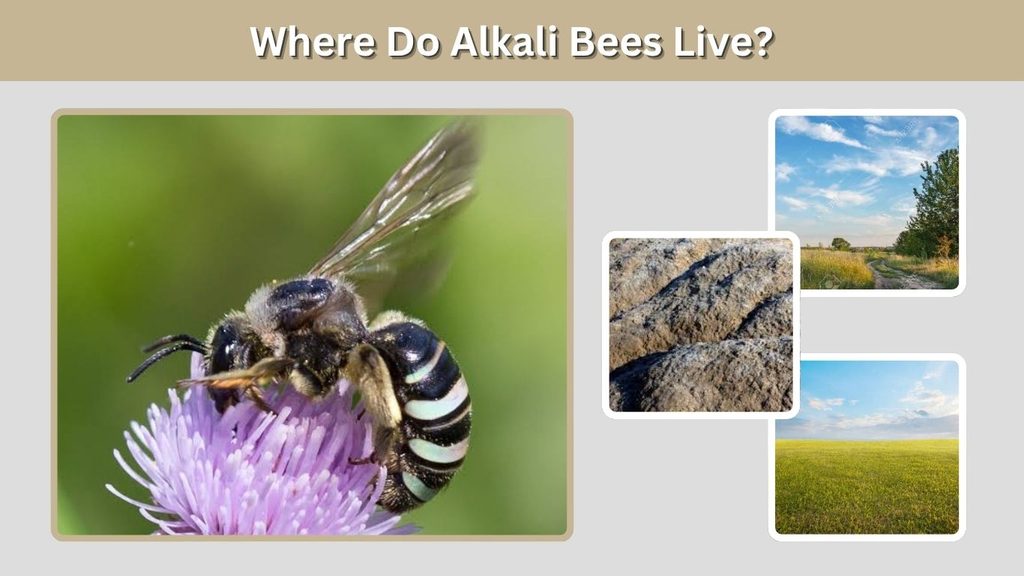
Alkali bees are native to western North America and are strongly associated with dry agricultural regions where suitable soils occur. They are particularly famous in areas where alfalfa is grown for seed.
Unlike many ground-nesting bees that prefer completely dry soil, alkali bees need a specific balance of moisture and drainage below the surface.
Alkali Bee Habitat
Suitable habitat generally contains:
- Salty or alkaline soil
- Open, sunny ground
- Sparse vegetation
- Moist soil below the surface
- Good drainage
- Nearby flowering plants
- Large areas protected from deep disturbance
Their dependence on these specialized soil conditions explains why exceptionally large nesting populations can occur in particular locations year after year.
Alkali Bees in Nevada
Alkali bees occur in Nevada and other western states where irrigation agriculture and naturally saline soils create favorable habitat.
They have attracted attention because farmers can sometimes manage nesting areas specifically to support bee populations for crop pollination.
Nevada research and agricultural experiments have also contributed to understanding how soil moisture, salinity, irrigation, and nesting conditions affect these unusual native bees.
Alkali Bees in the Walla Walla Valley
The Walla Walla region of Washington is particularly famous for managed alkali bee populations.
Farmers there have maintained large nesting beds near alfalfa seed fields. These sites demonstrate how a native solitary bee can become an extremely valuable agricultural pollinator without being domesticated in the same way as honey bees.
Alkali Bee Nests and Nesting Beds
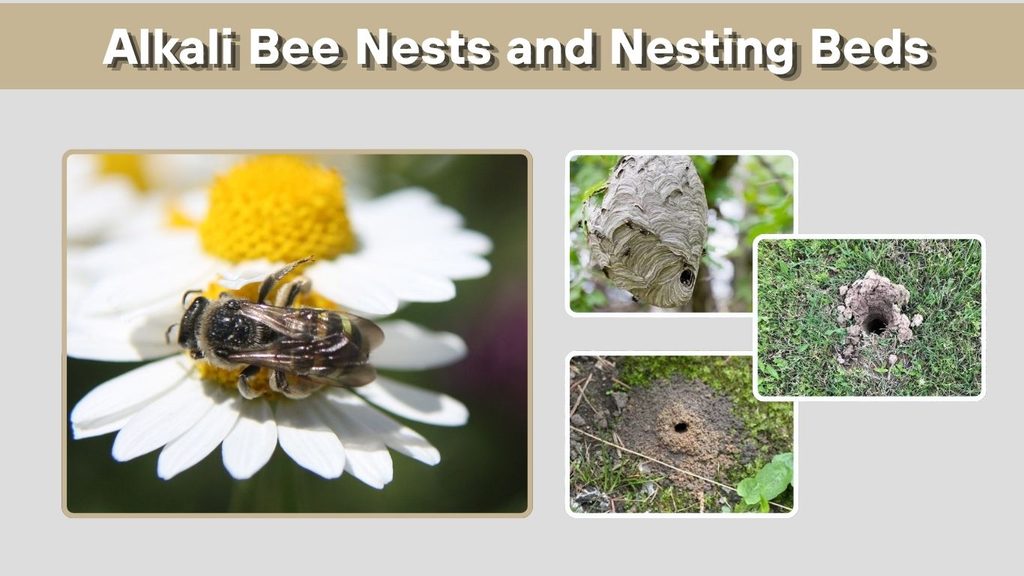
Alkali bees spend much of their lives underground. Each female excavates her own tunnel and constructs brood cells where her offspring develop.
Although the bees are solitary, suitable nesting sites can become extremely crowded. From above, an active nesting bed may contain thousands of tiny holes and constant bee activity.
What Does an Alkali Bee Nest Look Like?
Typical nesting signs include:
- Small round holes in exposed soil
- Numerous entrances located close together
- Bees flying just above the ground
- Females repeatedly entering individual holes
- Bare or sparsely vegetated salty soil
- Heavy activity during warm sunny weather
The underground nest can extend well beneath the soil surface and contains separate cells for developing offspring.
How Does a Female Build a Nest?
A female digs a vertical or angled tunnel and creates individual brood chambers.
She then visits flowers to collect pollen and nectar. The food is carried underground and formed into provisions inside each cell.
An egg is placed with the food supply, and the cell is eventually sealed. The female repeats the process to produce several offspring.
What Is an Alkali Bee Bed?
An alkali bee bed is a large area of soil managed or naturally suited for nesting.
Farmers may maintain the appropriate combination of soil salinity, water level, drainage, and bare ground so bees continue using the location.
Some established beds can support extraordinarily dense populations and may remain productive for many years when properly managed.
Alkali Bees and Alfalfa Pollination
Alkali bees are especially valued because they are highly effective pollinators of alfalfa grown for seed. Producing good alfalfa seed requires insects that can efficiently trigger the flower’s specialized pollination mechanism.
Alkali bees readily perform this task while collecting pollen.
Why Are Alkali Bees Good Alfalfa Pollinators?
Alfalfa flowers have a mechanism that releases the reproductive structures when a visiting insect applies pressure in the correct location.
This process is commonly called “tripping” the flower.
Alkali bees tolerate this action and continue visiting large numbers of blossoms. As pollen accumulates on their bodies, they transfer it between flowers.
Their advantages include:
- Strong attraction to alfalfa
- Efficient pollen collection
- Frequent flower visitation
- Excellent flower-tripping behavior
- Activity close to nesting areas
- Large populations in managed bee beds
These characteristics make them particularly valuable in alfalfa seed-growing regions.
Alkali Bee vs Honey Bee for Alfalfa
Honey bees can pollinate alfalfa, but workers sometimes learn to collect nectar without triggering the flower mechanism.
Alkali bees are generally more willing to trip alfalfa flowers while foraging for pollen.
Honey bees also live in managed social colonies and can be transported between crops. Alkali bees cannot simply be moved around in conventional hives because they depend on established underground nesting sites.
Do Alkali Bees Make Honey?
Alkali bees collect nectar, but they do not make harvestable honey.
Their behavior differs greatly from that of honey bees. Honey bee colonies store large quantities of concentrated nectar to sustain thousands of individuals through periods when flowers are unavailable.
Female alkali bees instead use nectar and pollen to provision individual brood cells.
What Do Alkali Bees Eat?
Adult alkali bees obtain energy primarily from flower nectar.
Females also collect pollen to feed their offspring. Alfalfa is especially important in agricultural environments, although adults may visit other flowering plants when available.
Larvae do not leave their underground cells to forage. Instead, they consume the pollen and nectar provisions placed there by their mothers.
Alkali Bee Life Cycle
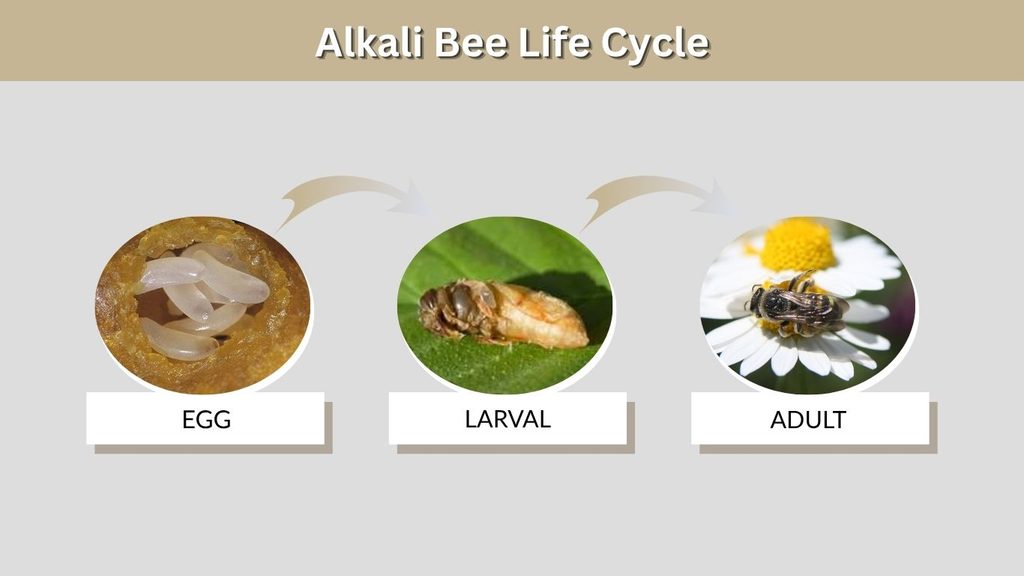
Alkali bees undergo complete metamorphosis through egg, larva, pupa, and adult stages. Most of the life cycle takes place underground, so people generally notice only the relatively brief period when adults emerge and forage above ground.
In many areas, there is one main generation each year.
Egg and Larval Development
A female lays an egg inside a provisioned brood cell.
After hatching, the larva feeds on the stored pollen and nectar. It grows through several developmental stages while remaining protected underground.
Development eventually slows as the immature bee prepares to survive until conditions are appropriate for adult emergence.
Adult Emergence
Adults generally emerge during warm weather when suitable flowers, especially alfalfa, are available.
Males often emerge before females and wait near nesting areas for potential mates.
After mating, females begin excavating nests and collecting pollen. The reproductive cycle continues until adult activity declines later in the season.
Do Alkali Bees Sting?
Female alkali bees possess stingers, so they are physically capable of stinging. However, they are generally considered mild-tempered and are much less defensive than social insects that protect a shared colony.
Males do not have functional stingers.
Are Alkali Bees Aggressive?
Alkali bees are usually not aggressive toward people.
Even very large nesting aggregations can often be approached without provoking a coordinated attack. Because each female is responsible only for her own nest, there is no worker force defending an entire colony.
A female may sting if trapped, squeezed, stepped on, or directly handled.
Is an Alkali Bee Sting Acidic or Alkaline?
The name “alkali bee” sometimes causes confusion about its venom. The name comes from its association with alkaline or saline nesting soils.
Bee venom is a complex mixture of biologically active compounds, so describing a sting simply as “acid” or “alkali” is misleading. Household acid-base neutralization should not be relied upon as sting treatment.
For an ordinary local reaction, washing the area and using a cold compress can help. Severe allergic symptoms following any bee sting require urgent medical attention.
Alkali Bee Adaptations
Alkali bees have evolved several traits that allow them to thrive in open western landscapes and agricultural areas.
Their ability to exploit specialized nesting soil reduces competition with some other ground-nesting bees, while their close association with flowering crops provides abundant food.
Important Adaptations
- Ability to nest in salty soils
- Strong digging behavior
- Efficient pollen-carrying hairs
- Effective alfalfa flower tripping
- Seasonal emergence matching flowering periods
- Tolerance of dense nesting aggregations
- Underground development that protects immature bees
These adaptations help explain why large populations can develop in well-maintained nesting beds.
Threats to Alkali Bees
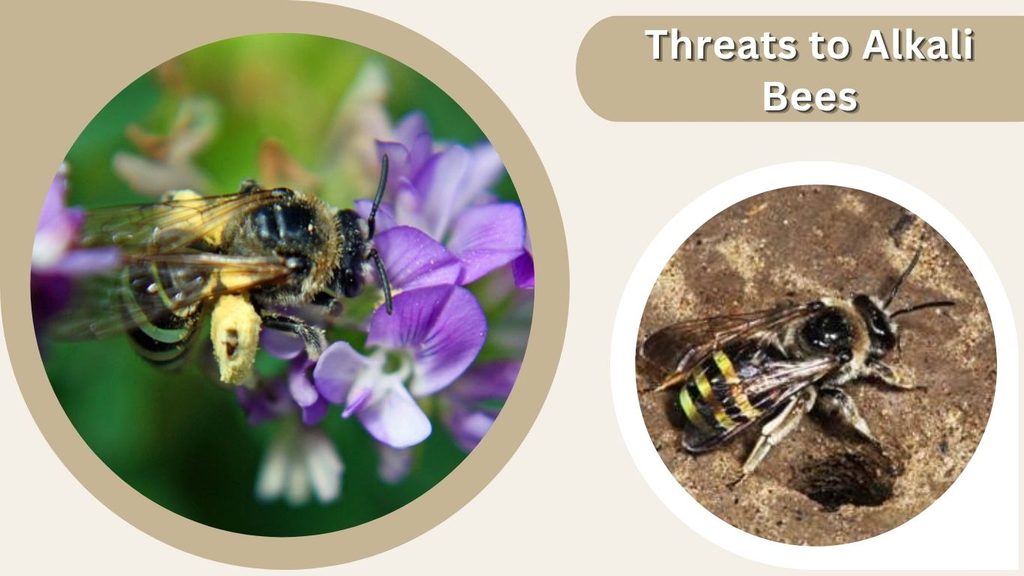
Despite their agricultural importance, alkali bees can be vulnerable because so many individuals may depend on a relatively small nesting area.
Damage to one major nesting bed can therefore affect pollination across surrounding fields.
Major Threats
Potential problems include:
- Destruction of nesting soil
- Deep tillage
- Poor irrigation management
- Flooding
- Loss of flowering resources
- Insecticide exposure
- Excessive vegetation covering nest sites
- Changes in soil drainage
- Agricultural development
Protecting established beds can be far easier than attempting to create a new population from scratch.
Why Alkali Bees Are Important
Alkali bees demonstrate how native insects can provide enormous agricultural benefits. Their relationship with alfalfa has led farmers to actively conserve and manage habitat for a wild bee rather than relying exclusively on managed honey bees.
A healthy alkali bee population can provide pollination across surrounding alfalfa fields while also contributing to native pollinator diversity.
Their huge communal nesting sites are particularly remarkable because they consist not of one giant colony, but thousands of independent females living side by side.
FAQs
What is the scientific name of the alkali bee?
The scientific name is Nomia melanderi. It belongs to the bee family Halictidae.
Where do alkali bees live?
They occur primarily in western North America, especially in areas containing suitable saline or alkaline soils and nearby flowering plants.
Do alkali bees sting people?
Females can sting but are generally nonaggressive. Males cannot sting. Most people can walk near a nesting bed without being attacked.
Do alkali bees make honey?
No. They collect nectar and pollen to provision individual underground brood cells rather than producing large communal honey stores.
Why are alkali bees important for alfalfa?
They efficiently trip and pollinate alfalfa flowers while collecting pollen, making them extremely valuable for commercial alfalfa seed production.