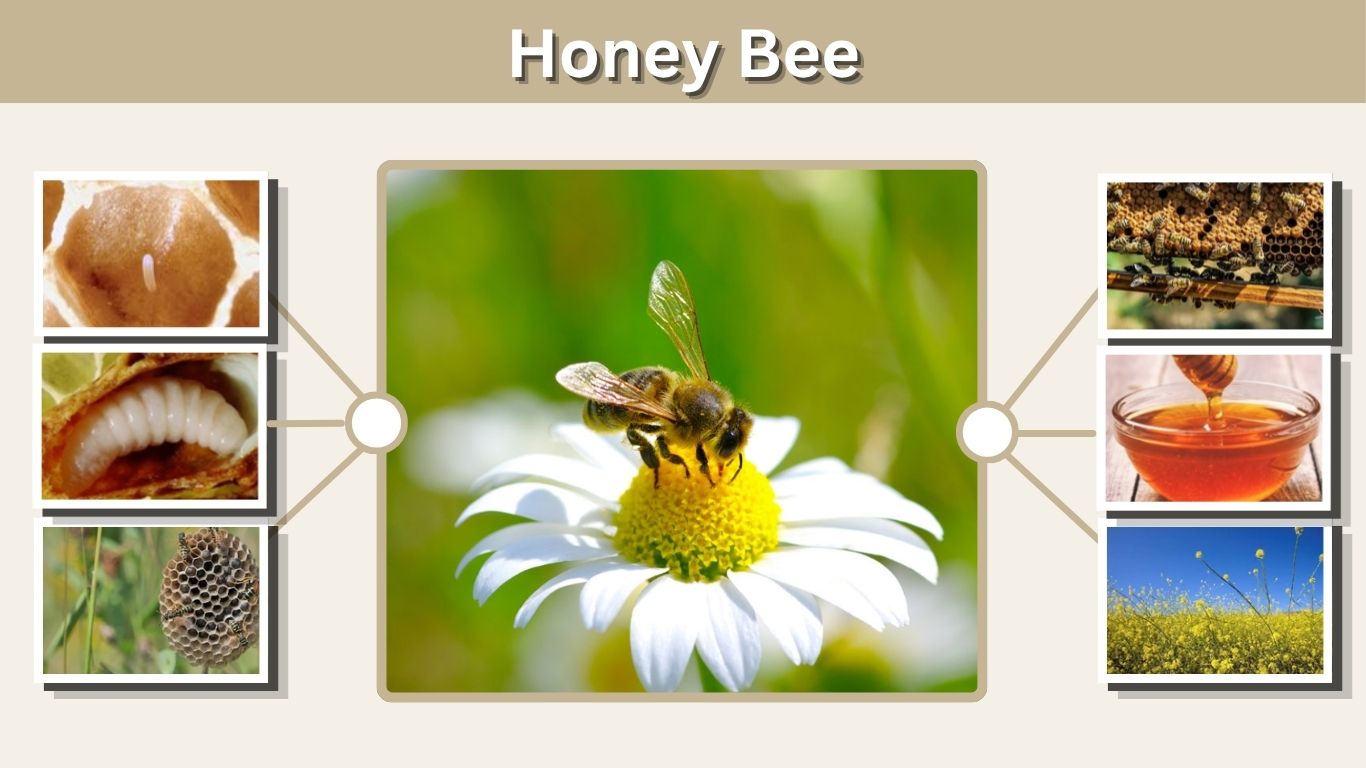
Honey bees are among the world’s most important pollinating insects. They live in highly organized colonies containing a queen, thousands of female workers, and seasonal male drones. While honey bees are famous for producing honey and beeswax, their greatest ecological and agricultural importance comes from moving pollen between flowers. The western honey bee, Apis mellifera, is the species most familiar to beekeepers around the world. Understanding honey bee identification, colony structure, life cycle, lifespan, nesting behavior, and stings can help explain why these remarkable insects are so successful.
What Is a Honey Bee?
Honey bees are social insects belonging to the genus Apis. Unlike solitary bees, they form permanent colonies in which individuals cooperate to raise young, gather food, defend the nest, and maintain suitable conditions inside the hive.
The best-known species is the western honey bee, which has been transported far beyond its original native range because of beekeeping.
Honey Bee Scientific Name
The scientific name of the western honey bee is Apis mellifera. It is also commonly called the European honey bee.
Its basic classification includes:
- Common name: Honey bee
- Scientific name: Apis mellifera
- Family: Apidae
- Order: Hymenoptera
- Genus: Apis
- Type: Social bee
Other species of honey bees occur naturally in Asia, including the giant honey bee and Asian honey bee.
What Does a Honey Bee Look Like?
Honey bees are relatively small insects with hairy bodies and alternating brown, golden, or dark abdominal bands.
Adults have two pairs of wings, six legs, large compound eyes, and segmented antennae. Worker bees also possess structures on their hind legs that help them transport pollen.
Typical identification features include:
- Golden-brown or dark body
- Hair covering the thorax
- Banded abdomen
- Two pairs of transparent wings
- Elbowed antennae
- Six legs
- Pollen baskets on worker hind legs
Their hairy bodies make honey bees excellent pollen carriers.
Honey Bee Hive and Colony Structure
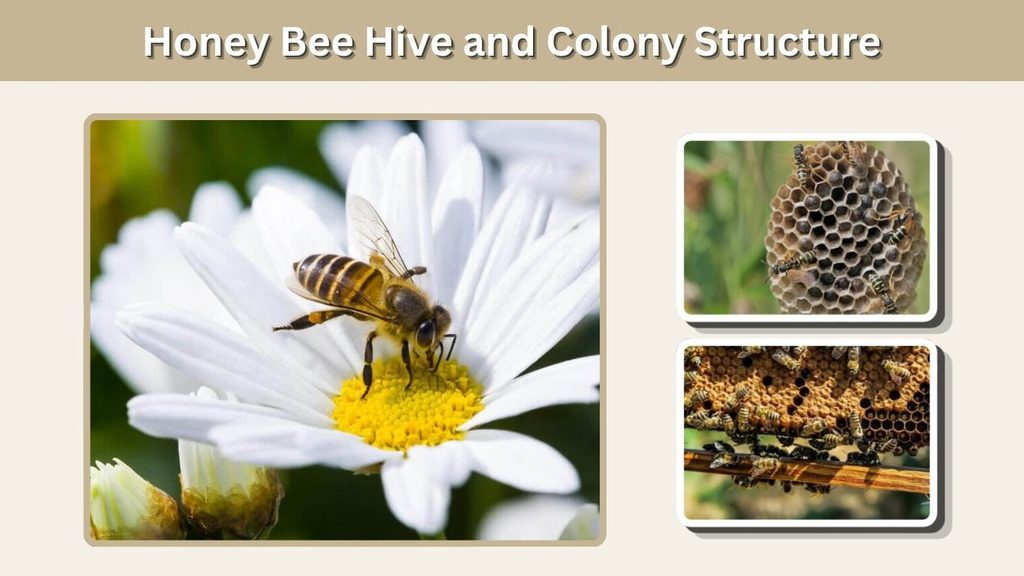
A honey bee hive is far more than a place where bees store honey. It functions as a highly organized society where different individuals perform specialized jobs. A healthy colony may contain tens of thousands of bees during periods of peak activity.
Every colony normally contains three adult castes: the queen, workers, and drones.
Queen Honey Bee
The queen is the primary reproductive female in the colony.
After successful mating, she may lay large numbers of eggs during periods when the colony is expanding. Workers surround and feed her while chemical signals produced by the queen help regulate colony behavior.
Most healthy colonies normally contain one actively laying queen.
Worker Honey Bees
Workers are female bees but usually do not reproduce.
They perform nearly every major job in the hive, including cleaning cells, feeding larvae, producing wax, guarding entrances, regulating hive temperature, collecting water, and gathering nectar and pollen.
Their duties often change as they age.
Drone Honey Bees
Drones are male honey bees.
Their primary biological role is to mate with queens from other colonies. They do not collect pollen, produce wax, or possess functional stingers.
Colonies tend to produce drones when reproductive conditions are favorable.
Honey Bee Life Cycle
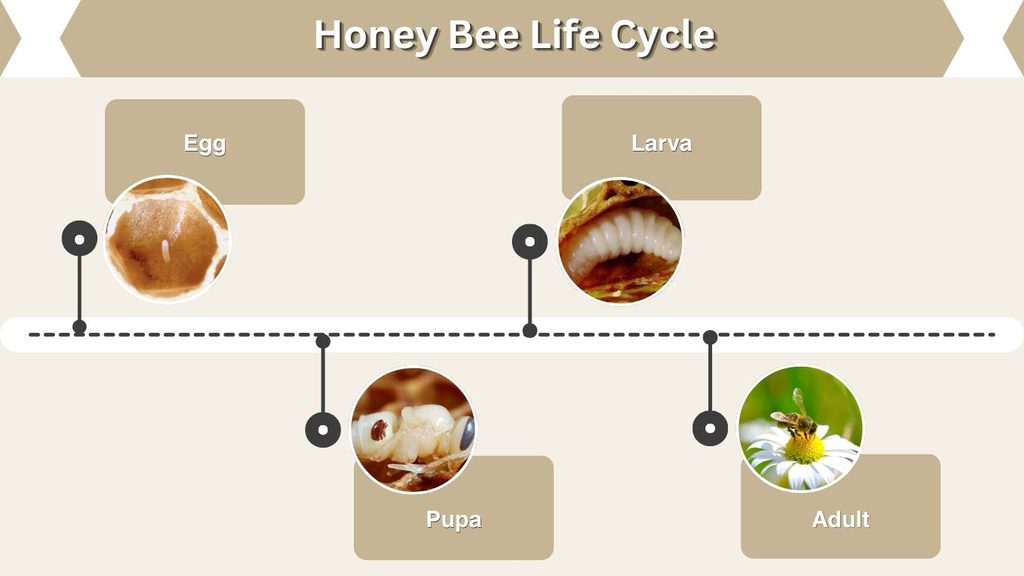
Honey bees undergo complete metamorphosis. Every bee begins as an egg before developing through larval and pupal stages and finally emerging as an adult.
Although queens, workers, and drones share the same general developmental pattern, nutrition and genetics determine what type of adult emerges.
Four Stages of the Honey Bee Life Cycle
- Egg: The queen places an egg inside a wax cell.
- Larva: The egg hatches into a small white larva that is fed by workers.
- Pupa: Workers cap the cell, and major physical transformation occurs inside.
- Adult: A fully developed bee eventually chews through the cell covering and emerges.
This entire development occurs inside the protective environment of the hive.
How Does a Queen Develop?
Queens and workers both develop from fertilized eggs, but their diets differ.
Larvae selected to become queens receive abundant royal jelly throughout their development. This nutritional difference influences reproductive development and allows the queen to become fertile.
Queen cells are also much larger and differently shaped than ordinary worker cells.
How Long Does a Honey Bee Live?
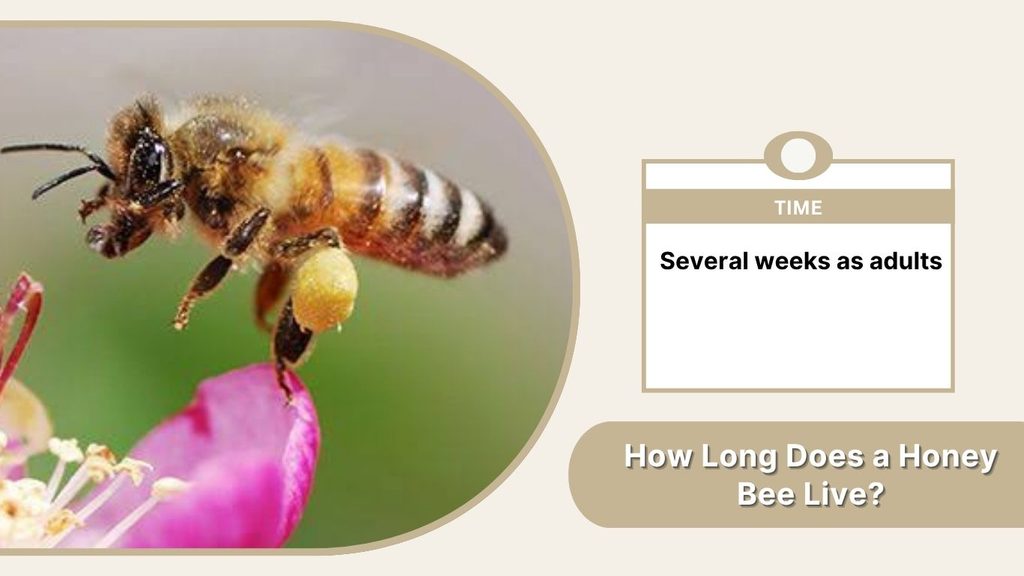
Honey bee lifespan depends heavily on caste, season, workload, and environmental conditions.
Workers born during active foraging periods generally have shorter lives because flying and food collection are physically demanding. Workers produced before winter may survive considerably longer because they spend less time foraging.
Worker Bee Lifespan
Summer workers often survive only several weeks as adults.
During their short lives, they may progress from indoor hive duties to increasingly demanding outdoor tasks. Foraging is particularly risky because workers face predators, weather, exhaustion, and navigation hazards.
Winter workers can survive for several months.
Queen Bee Lifespan
A queen can live far longer than an individual worker.
Some queens survive for several years, although their reproductive performance may decline with age. Beekeepers sometimes replace aging queens when egg production or colony performance decreases.
Drone Lifespan
Drones generally live for several weeks or months, depending on season.
A drone that successfully mates dies shortly afterward. In climates with cold winters, colonies may also remove remaining drones when food becomes limited because they do not contribute to winter foraging.
What Do Honey Bees Eat?
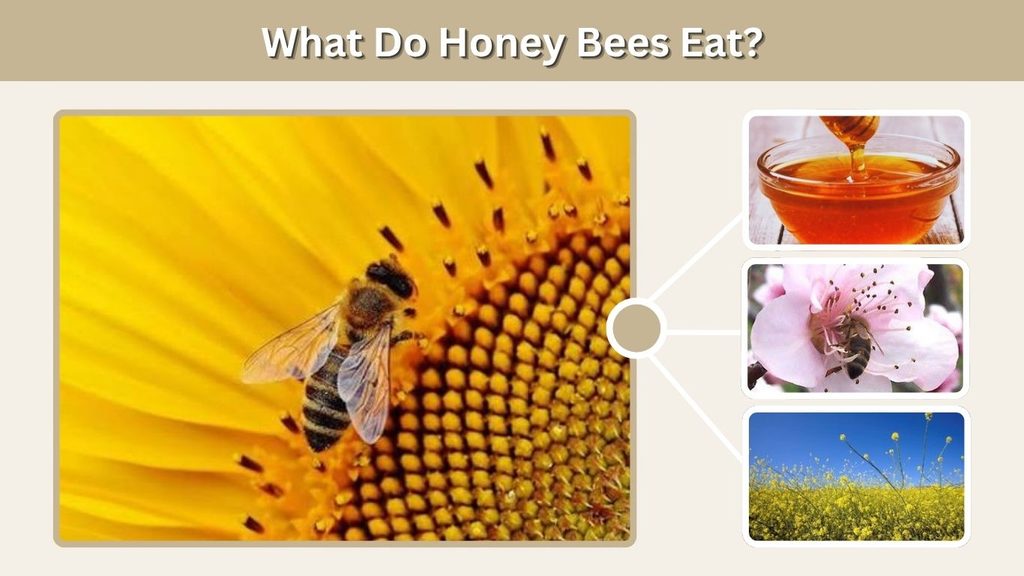
Honey bee colonies depend primarily on nectar and pollen from flowers.
Nectar supplies carbohydrates for energy, while pollen provides protein, fats, vitamins, minerals, and other nutrients needed particularly for developing young bees.
Main Honey Bee Foods
Honey bees commonly consume:
- Flower nectar
- Honey
- Pollen
- Bee bread
- Royal jelly during certain developmental stages
- Water
Worker bees process and store food so the colony can survive when flowering plants are unavailable.
Is Honey Bee Honey Vomit?
Calling honey “bee vomit” is an oversimplification.
A foraging worker collects nectar into a specialized storage organ often called the honey stomach or crop. The nectar is transferred between bees and modified with enzymes before being deposited into honeycomb cells.
Bees then reduce its water content until it becomes concentrated honey.
The process is specialized food collection and processing rather than ordinary digestion followed by vomiting.
Honey Bee Pollination
Honey bees visit flowers to collect nectar and pollen. During these visits, pollen grains become attached to their hairy bodies.
When the bee moves to another flower of the same species, some pollen can reach the reproductive structures, enabling fertilization and seed or fruit development.
Why Honey Bees Are Important
Honey bees contribute to agriculture by visiting many flowering crops.
Their importance includes:
- Pollinating fruit trees
- Pollinating vegetables and seed crops
- Supporting plant reproduction
- Producing honey
- Producing beeswax
- Supporting commercial agriculture
- Providing food for other organisms
However, honey bees are only one part of the pollinator community. Bumble bees, mining bees, mason bees, squash bees, butterflies, flies, and many other insects also contribute to pollination.
Honey Bee Swarms
A swarm occurs when a colony reproduces by dividing.
Usually, the old queen leaves the original hive accompanied by thousands of workers. The swarm may temporarily gather on a tree branch, fence, wall, or another surface while scout bees search for a permanent nesting cavity.
Is a Honey Bee Swarm Dangerous?
A swarm can look frightening, but swarming honey bees are often less defensive than bees protecting an established hive.
They are primarily focused on locating a new home rather than defending stored honey and brood.
However, people should avoid touching or disturbing a swarm. A local beekeeper or experienced bee-removal professional may be able to relocate it safely.
Honey Bee Nest
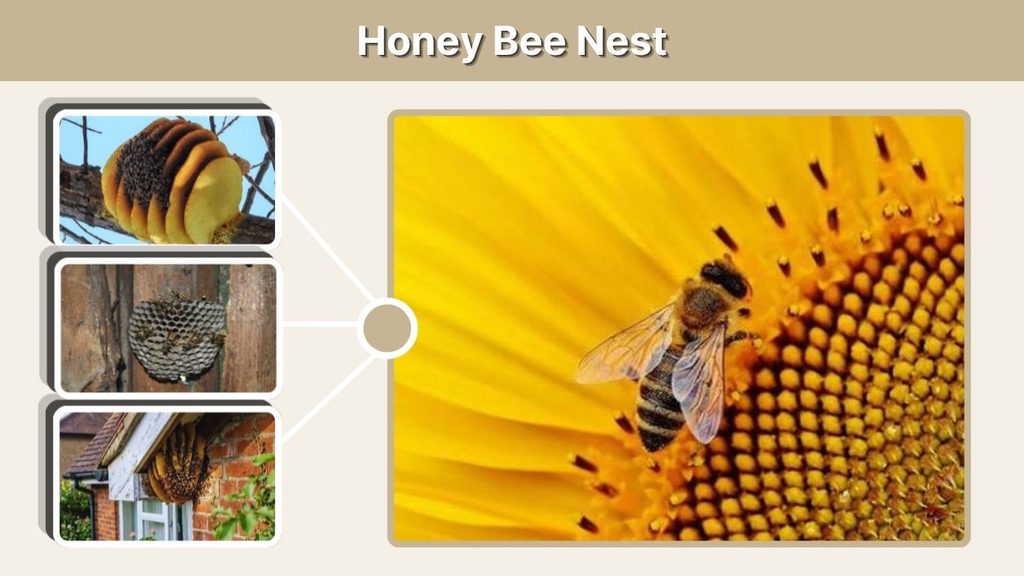
In nature, western honey bees commonly establish colonies inside protected cavities.
Tree hollows are traditional nest sites, although colonies may also occupy wall voids, chimneys, roof spaces, and other human-made structures.
What Is Inside a Honey Bee Nest?
An established nest can contain:
- Wax honeycomb
- Honey storage cells
- Pollen stores
- Eggs
- Larvae
- Pupae
- Queen cells
- Worker bees
- Drones
- A queen
Honeycomb consists of repeating hexagonal wax cells used both for raising young and storing food.
Honey Bee Sting
Worker honey bees possess barbed stingers used primarily for colony defense.
When a worker stings human skin, the barbed stinger can become lodged and tear away from the bee as it flies off. Because the venom apparatus can continue delivering venom briefly, removing the stinger quickly is useful.
What Happens After a Honey Bee Sting?
A typical local reaction can include pain, redness, itching, and swelling around the sting site.
Basic care may include washing the area and applying a cold compress.
Severe reactions involving breathing difficulty, widespread swelling, dizziness, or other signs of anaphylaxis require immediate emergency medical attention.
Honey Bee vs Bumble Bee
Honey bees and bumble bees are both important pollinators, but they differ considerably in appearance and lifestyle.
Major Differences
- Honey bees: Slender and usually golden-brown.
- Bumble bees: Larger and noticeably fuzzier.
- Honey bees: Form large perennial colonies.
- Bumble bees: Usually form smaller annual colonies.
- Honey bees: Store substantial quantities of honey.
- Bumble bees: Store comparatively little food.
- Honey bees: Worker stingers are strongly barbed.
- Bumble bees: Females can generally sting repeatedly.
Both groups are beneficial insects and should usually be left undisturbed when they are not creating a safety problem.
Interesting Honey Bee Facts
Honey bee colonies display complex communication, cooperative behavior, temperature control, food storage, and navigation abilities.
Their success depends not on a single bee but on thousands of individuals performing coordinated tasks.
Quick Facts
- Honey bees communicate food locations using dances.
- A colony usually has one reproductive queen.
- Worker bees are female.
- Drones are male.
- Honeycomb is made from beeswax.
- Workers use nectar to produce honey.
- Honey bees undergo complete metamorphosis.
- Queens may live for several years.
- Workers can regulate hive temperature collectively.
- A swarm is a natural form of colony reproduction.
FAQs
What is the scientific name of the honey bee?
The western honey bee’s scientific name is Apis mellifera. It is also commonly called the European honey bee.
How long does a honey bee live?
Summer workers commonly live only several weeks, while winter workers can survive for several months. Queens may live for several years.
Do honey bees die after they sting?
Worker honey bees frequently die after stinging people because their barbed stingers become lodged in elastic skin and tear away from the abdomen.
How many bees live in a honey bee hive?
Colony size varies with season, climate, food availability, and colony health. Strong colonies can contain tens of thousands of individual bees during peak seasons.
What is the difference between a honey bee and a bumble bee?
Honey bees are generally smaller and less furry, live in larger perennial colonies, and store substantial honey. Bumble bees are larger, hairier, and typically form smaller colonies that last for one season.