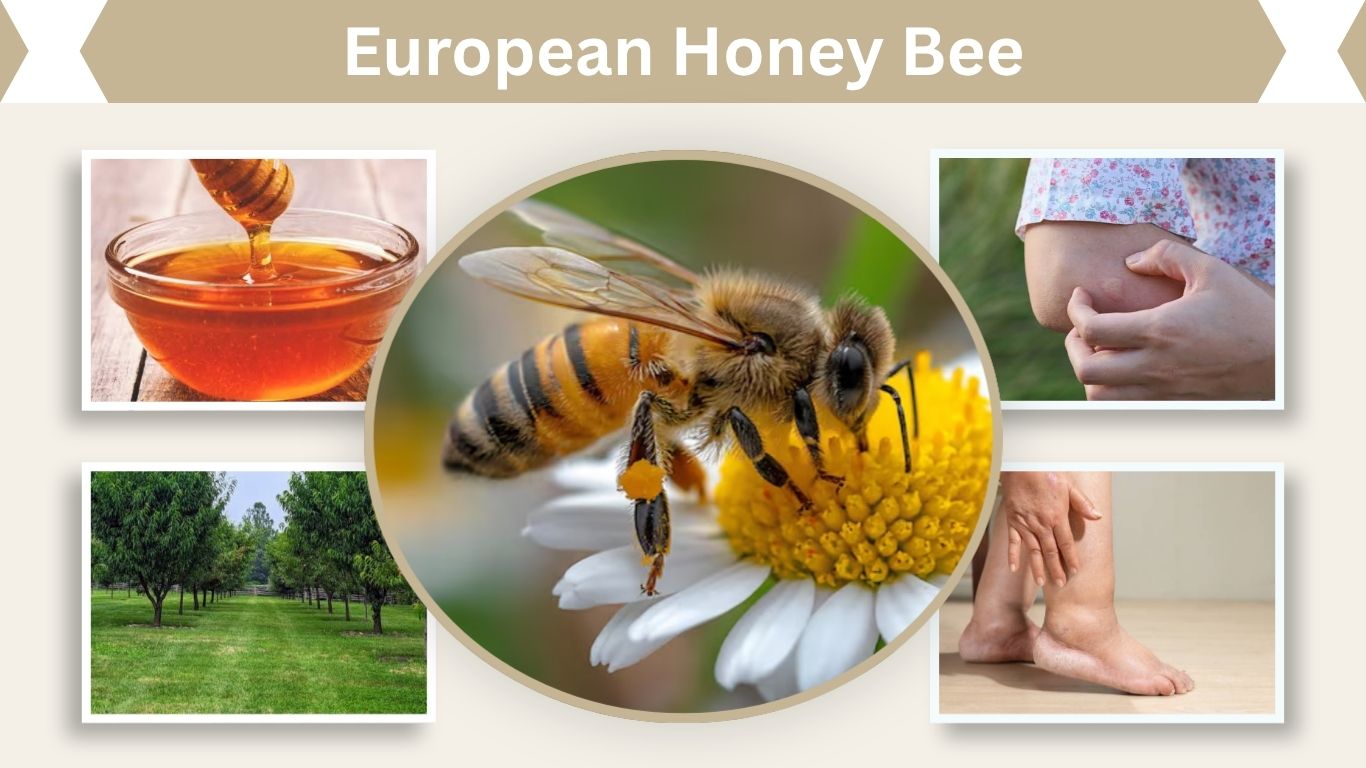
The European honey bee (Apis mellifera), also called the western honey bee, is one of the most familiar and economically important bee species in the world. It lives in highly organized colonies containing a queen, female workers, and male drones. European honey bees collect nectar and pollen, produce honey and beeswax, and pollinate many crops and wildflowers. Although they are usually calm while foraging, workers can sting when threatened. Their communication, social structure, nesting behavior, and adaptability have made them central to modern beekeeping.
European Honey Bee Identification
European honey bees are medium-sized insects with hairy bodies and alternating dark and golden-brown abdominal bands. Their appearance varies among subspecies, but they generally have a fuzzy thorax, two pairs of wings, six legs, and bent antennae. They are usually less brightly colored and less smooth-bodied than many wasps.
Scientific Name and Classification
The scientific name of the European honey bee is Apis mellifera.
Its classification includes:
- Kingdom: Animalia
- Class: Insecta
- Order: Hymenoptera
- Family: Apidae
- Genus: Apis
- Species: Apis mellifera
The terms European honey bee and western honey bee generally refer to the same species.
European Honey Bee Size
Worker European honey bees are commonly around 12–15 mm long. Queens are larger and have noticeably longer abdomens, while drones have broader bodies and very large eyes.
The body is covered with fine hairs that help collect pollen. Female workers also have specialized pollen baskets on their hind legs.
Queen, Worker and Drone Honey Bees
A European honey bee colony functions as a highly organized social unit. Each caste has a different role. The queen is responsible for reproduction, workers perform most hive duties, and drones are males whose primary purpose is mating with queens.
European Honey Bee Queen
A healthy colony normally contains one queen. She is larger than workers and can lay more than 1,000 eggs per day during periods of strong colony growth.
Her main roles are:
- Laying eggs
- Producing colony-regulating pheromones
- Maintaining reproductive continuity
- Helping coordinate colony behavior chemically
A queen may live for several years.
European Honey Bee Workers and Drones
Workers are female bees that carry out nearly every task in the colony.
Their duties include:
- Cleaning cells
- Feeding larvae
- Producing wax
- Building comb
- Guarding the hive
- Cooling and ventilating the nest
- Collecting pollen and nectar
- Bringing water to the colony
Drones are male bees. They do not have stingers and do not gather nectar or pollen. Their main function is mating with virgin queens.
European Honey Bee Habitat and Nest
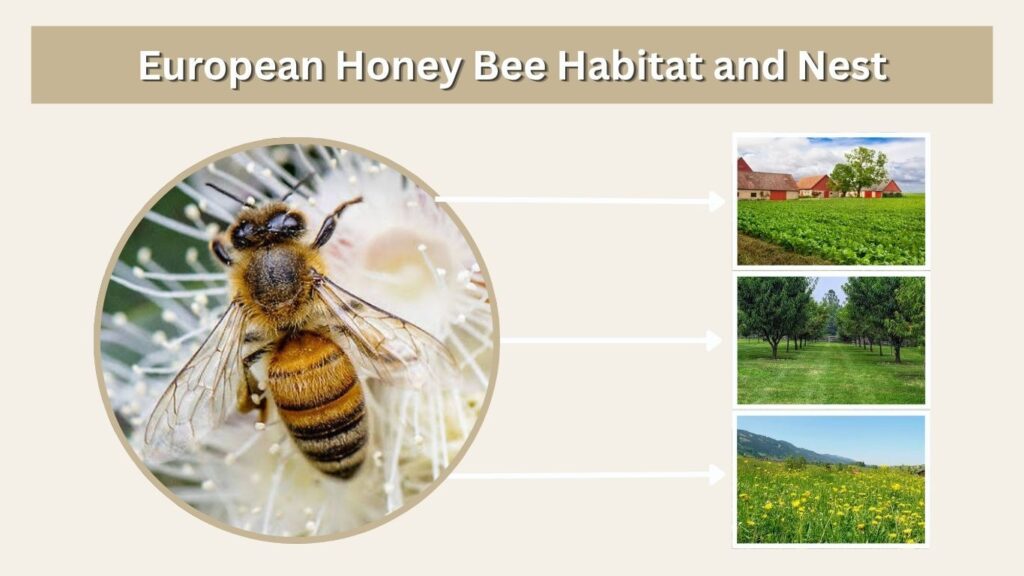
European honey bees originated across Europe, Africa, and western Asia but have been introduced to many other parts of the world. Today they occur throughout much of North and South America, Australia, and other regions where managed or feral populations have become established.
Where Do European Honey Bees Live?
They can live in many environments, including:
- Agricultural areas
- Orchards
- Meadows
- Forest edges
- Gardens
- Urban neighborhoods
- Grasslands
- Woodlands
They need access to flowering plants, water, and a protected nesting cavity.
European Honey Bee Hive
Wild colonies often use hollow trees, rock cavities, wall voids, or other enclosed spaces.
Inside the nest, workers build wax honeycomb containing hexagonal cells. These cells are used to store honey and pollen and to raise developing bees.
Managed colonies live in artificial hives designed to allow beekeepers to inspect frames, harvest honey, and monitor colony health.
European Honey Bee Diet
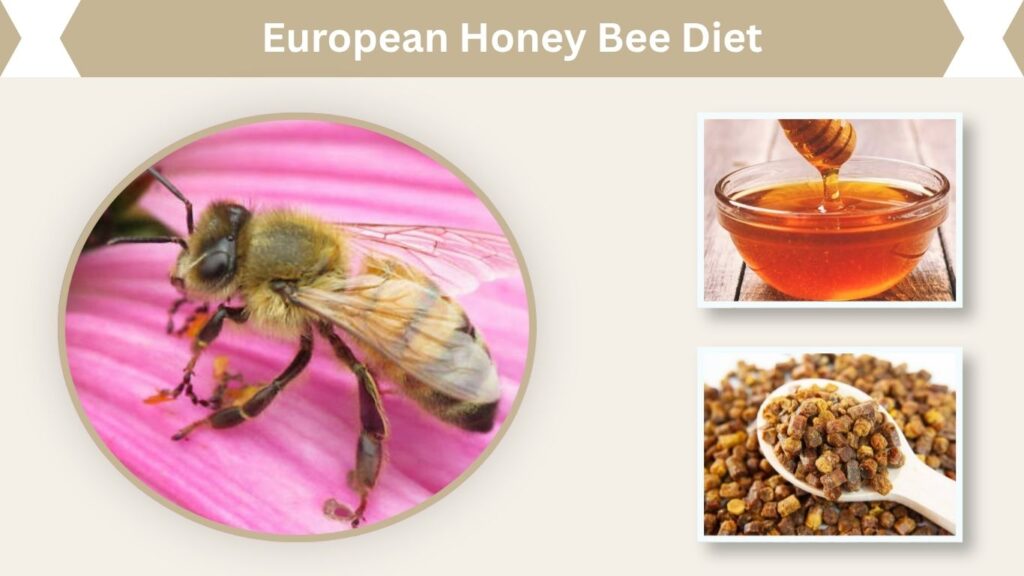
European honey bees rely almost completely on flowering plants. Nectar provides carbohydrates, while pollen supplies protein, fats, vitamins, and minerals. Their ability to transport pollen between flowers also makes them important agricultural pollinators.
What Do European Honey Bees Eat?
Their diet includes:
- Nectar
- Honey
- Pollen
- Bee bread
- Royal jelly
- Water
Workers collect nectar and return it to the hive, where it is processed and stored as honey.
Pollen is carried back in pollen baskets located on the hind legs.
European Honey Bee Life Cycle
European honey bees undergo complete metamorphosis. Their development includes egg, larva, pupa, and adult stages. The amount of time required depends on whether the bee develops into a queen, worker, or drone.
Development From Egg to Adult
The queen lays eggs individually inside wax cells.
Development generally takes about:
- Queen: 16 days
- Worker: 21 days
- Drone: 24 days
Larvae are cared for by nurse bees and receive specialized food. Queen larvae receive abundant royal jelly throughout their development.
European Honey Bee Lifespan
Worker lifespan varies by season. Summer workers often live only several weeks because demanding foraging activities cause rapid wear.
Winter workers can live several months because they perform less intense outdoor activity.
Queens may survive several years, while drones typically live for several weeks or months unless they mate, after which they die.
European Honey Bee Sting
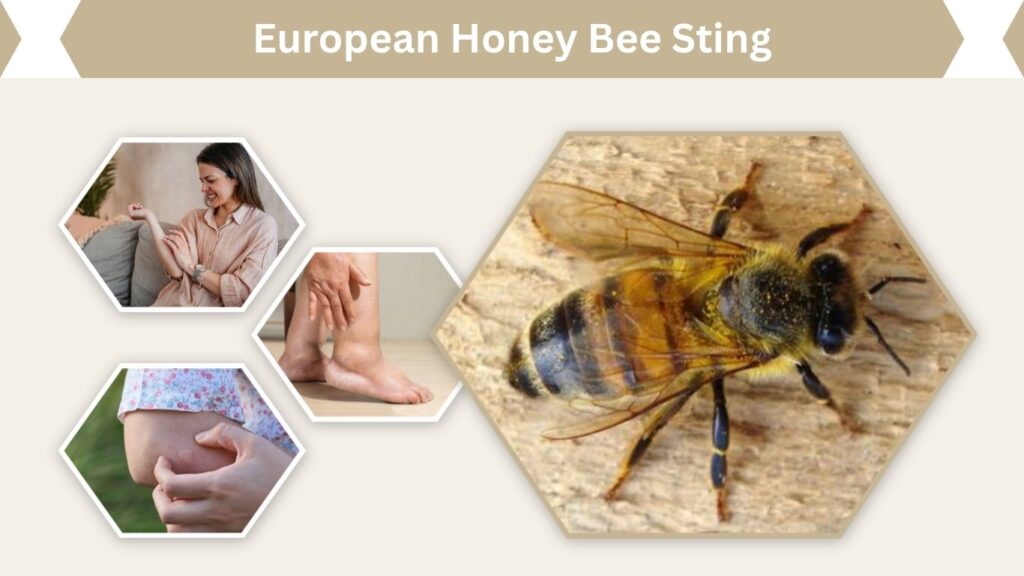
Female workers have a barbed stinger attached to a venom apparatus. They usually sting defensively when they feel threatened or when their colony is disturbed.
What Happens When a European Honey Bee Stings?
A worker’s barbed stinger often becomes embedded in human skin. When the bee pulls away, the stinger and associated venom structures may remain behind.
A typical sting can cause:
- Sharp pain
- Redness
- Swelling
- Itching
- Temporary tenderness
Most localized reactions improve without serious complications.
Are European Honey Bees Dangerous?
European honey bees are not usually aggressive while collecting nectar from flowers. Defensive behavior increases near their nest.
Multiple stings can be dangerous, and individuals with severe venom allergies may experience anaphylaxis. Large colonies should therefore be handled carefully, especially if located close to homes or public areas.
Africanized Honey Bee vs European Honey Bee
Africanized honey bees are descended from crosses involving African and European honey bee lineages. They look very similar to typical European honey bees, so behavior is usually more useful than appearance for distinguishing them.
Main Differences
Africanized honey bee colonies generally:
- React more quickly to disturbance
- Send out more defensive workers
- Pursue threats farther from the nest
- Swarm and reproduce more frequently
- Can use smaller nesting cavities
Their venom is not dramatically more toxic per sting than that of European honey bees. The greater danger comes mainly from their tendency to deliver many more stings during defensive attacks.
European Honey Bee vs Asian Honey Bee
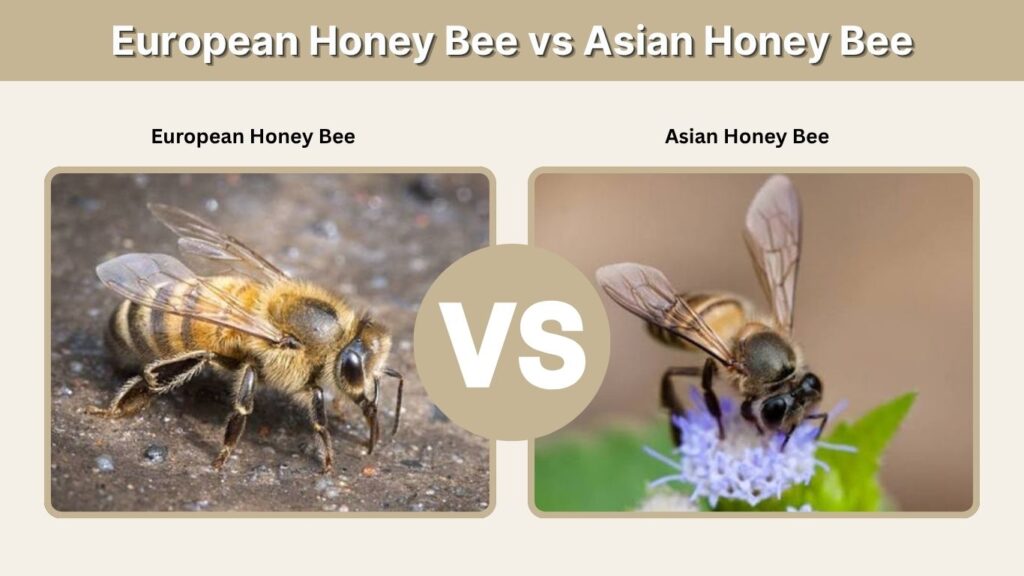
The European honey bee is Apis mellifera, while the Asian or eastern honey bee is typically Apis cerana. Both are social honey-producing bees, but they evolved in different geographic regions.
Key Differences
European honey bees generally form large colonies and are widely used in commercial agriculture.
Asian honey bees are native to much of Asia and have evolved defenses against regional parasites and predators. Some populations, for example, can use specialized group-defense behaviors against hornets.
Both species make honey, build comb, and communicate with other colony members.
European Honey Bee in Australia
European honey bees were introduced to Australia during European settlement and later became widespread in both managed and feral populations.
They now play an important role in agricultural pollination, but feral honey bees can also compete with native animals for flowers and nesting cavities.
Are European Honey Bees Invasive?
Whether they are considered invasive depends on the region and ecological context.
Outside their native range, European honey bees may compete with native bees and other pollinators for nectar, pollen, or nesting resources. At the same time, managed colonies are economically important for crop pollination and honey production.
Their ecological impact therefore differs between agricultural systems and natural habitats.
European Dark Honey Bee
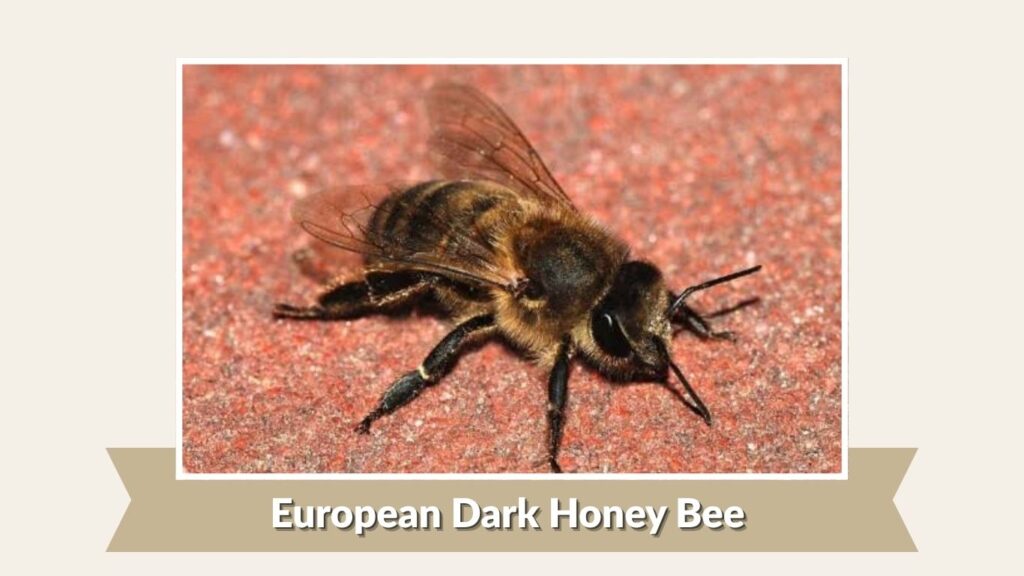
The European dark bee, Apis mellifera mellifera, is a subspecies of the European honey bee. It historically occurred across parts of western and northern Europe.
European Dark Bee Characteristics
It is generally:
- Dark brown to nearly black
- Relatively stocky
- Adapted to cooler climates
- Capable of surviving long winters
- Less yellow than some commonly managed honey bee strains
It is still used and conserved by beekeepers in parts of Europe.
European Honey Bee Predators and Threats
European honey bees face both natural predators and serious colony health challenges. Individual bees can be captured by spiders, birds, hornets, and other insects, while entire colonies may be weakened by disease or parasites.
Major Threats
Important pressures include:
- Varroa mites
- Viruses
- Bacterial and fungal diseases
- Poor nutrition
- Pesticide exposure
- Habitat loss
- Extreme weather
- Predatory hornets in some regions
European hornets may capture individual honey bees, although healthy colonies can often tolerate limited predation.
FAQs
What is the scientific name of the European honey bee?
The scientific name is Apis mellifera. It is also commonly called the western honey bee.
Is the European honey bee the same as the western honey bee?
Yes. Both names generally refer to Apis mellifera.
How big is a European honey bee?
Workers are usually around 12–15 mm long. Queens are larger, while drones have broader bodies and noticeably larger eyes.
Do European honey bees sting?
Female workers can sting when threatened or when defending the colony. Male drones do not have stingers.
Are European honey bees endangered?
The species as a whole is not considered close to extinction because it is extensively managed around the world. However, individual wild and managed populations can suffer major losses from parasites, disease, pesticides, poor nutrition, and environmental change.