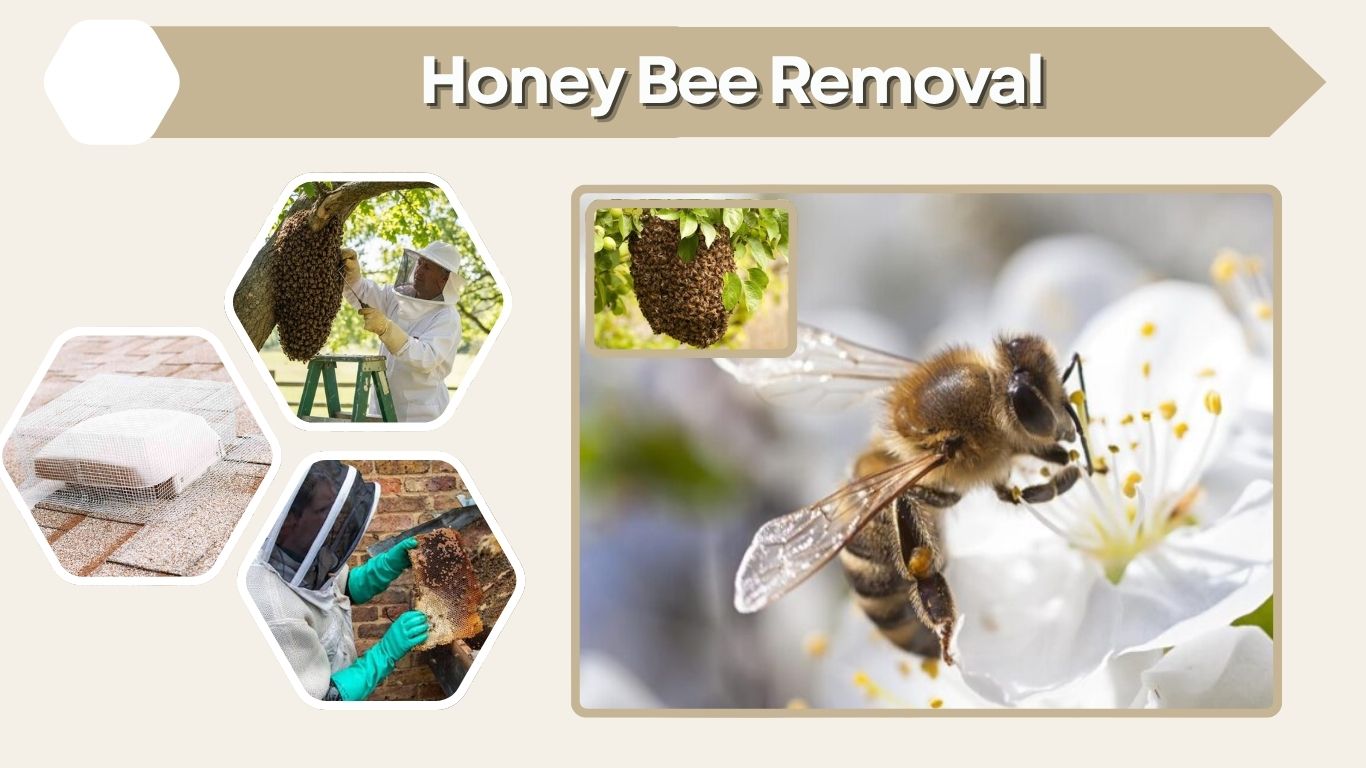
Honey bee removal becomes necessary when a swarm or established colony settles too close to people, inside a wall, roof, chimney, tree cavity, or another part of a home. Because honey bees are valuable pollinators, live relocation is usually preferable when practical. A temporary swarm on a branch is very different from an established hive containing honeycomb, brood, and stored honey. The safest approach is to identify the situation first, keep people and pets away, and contact an experienced beekeeper or professional bee-removal specialist rather than disturbing the colony yourself.
How to Remove Honey Bees Safely
The first step in removing honey bees is determining whether you have a temporary swarm or an established colony.
A swarm is usually a dense cluster of bees hanging from a branch, fence, wall, or other exposed surface. An established colony generally has bees repeatedly entering and leaving a cavity.
Before Attempting Honey Bee Removal
Look for these signs:
- A dense cluster of exposed bees
- Bees entering a hole in a wall or roof
- Continuous traffic at one entrance
- Visible honeycomb
- Bees entering a hollow tree
- Buzzing coming from a wall
- Honey or wax appearing indoors
If bees are inside a structure, professional assessment is especially important.
Honey Bee Swarm Removal
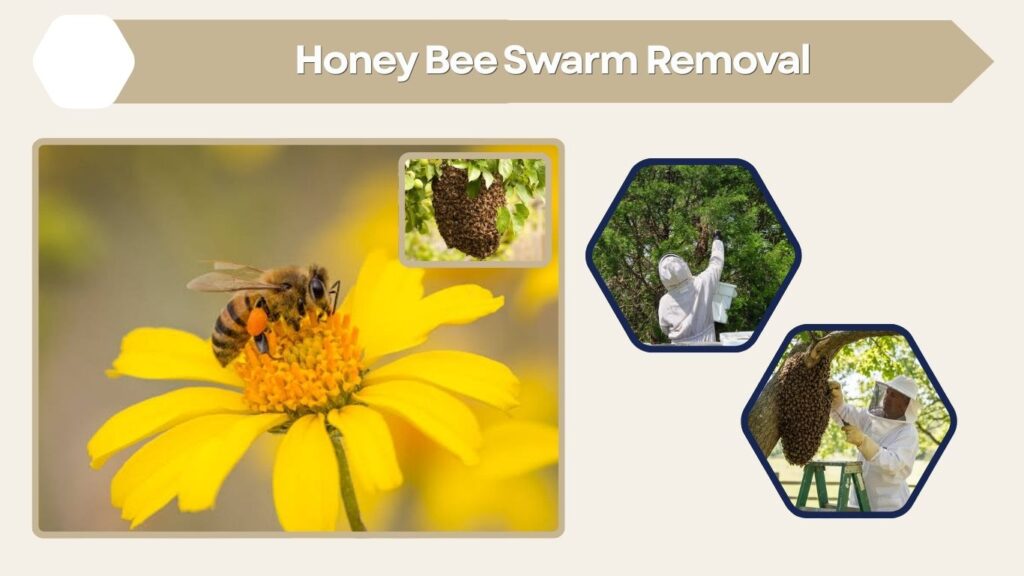
A honey bee swarm forms when part of an existing colony leaves with a queen to establish a new home.
While searching for a permanent nest site, thousands of bees may temporarily cluster on a tree, fence, mailbox, wall, or other object.
Are Honey Bee Swarms Dangerous?
Honey bee swarms are generally less defensive than established colonies because they do not yet have brood and honey stores to protect. However, they can still sting if disturbed.
University extension guidance recommends keeping people and pets away and avoiding attempts to spray, knock down, or disturb the cluster.
How Long Will a Swarm Stay?
A swarm may remain in one location for several hours or a few days while scout bees search for a permanent home.
If it is located safely away from people, it may leave without intervention. However, contacting a beekeeper quickly can prevent the swarm from moving into a wall or other difficult location.
Beekeeper Honey Bee Removal
Calling a beekeeper is often one of the best options for an exposed honey bee swarm.
Experienced beekeepers may collect the bees and relocate them into a managed hive.
What a Beekeeper Can Do
Depending on the situation, a beekeeper may:
- Identify whether the insects are honey bees
- Capture an accessible swarm
- Relocate the colony
- Remove exposed comb
- Recommend a structural-removal specialist
- Advise how to prevent another colony from entering
Not every beekeeper performs structural removals, so a colony inside a wall may require a specialist experienced in both bees and building construction.
Free Honey Bee Removal Near Me
Some beekeepers collect accessible swarms for free because they can add the bees to their apiary.
However, free honey bee removal is not guaranteed.
When Removal May Be Free
Free or low-cost removal is more likely when:
- The swarm is exposed.
- It is easy to reach.
- No building needs to be opened.
- The beekeeper is nearby.
- The bees can easily be transferred to a hive.
Cornell recommends contacting more than one local swarm catcher and discussing any possible fee before the visit.
When You Will Probably Pay
Charges are more likely when bees are:
- Inside walls
- High on a roof
- Inside a chimney
- Behind siding
- In an attic
- Difficult to access
- Surrounded by extensive comb
Complex structural removal can require many hours of work and may involve both a beekeeper and a carpenter.
Honey Bee Hive Removal
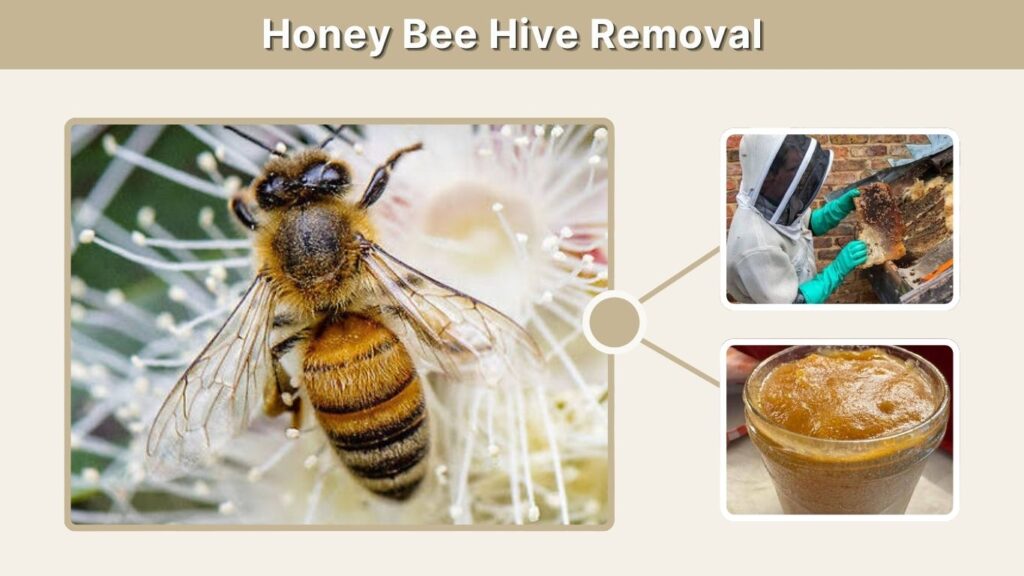
An established honey bee hive is much more complicated than a temporary swarm.
Once bees build comb, the site may contain brood, wax, pollen, and substantial quantities of honey. Removing only the adult bees does not completely solve the problem.
Why the Honeycomb Must Be Removed
Comb left inside a wall can:
- Leak honey
- Attract ants and other insects
- Attract rodents
- Produce odors
- Damage drywall
- Attract future swarms
Penn State Extension emphasizes that nesting material should be removed because residual comb and honey can create additional problems and attract future bees.
How to Remove Honey Bees From a Wall
Honey bee removal from a wall should usually be handled professionally.
A specialist may need to determine the location of the colony, open part of the structure, remove the bees and comb, clean the cavity, and then repair and seal the opening.
Do Not Simply Seal the Entrance
Never seal an active colony inside a wall.
Bees may search for another escape route and potentially enter living spaces. Honey and comb will also remain inside the structure.
Penn State specifically warns against sealing a live honey bee colony inside a wall.
What Professional Wall Removal Involves
A complete removal may include:
- Locating the colony.
- Safely opening the cavity.
- Removing or relocating the bees.
- Cutting out honeycomb.
- Cleaning honey and wax residue.
- Repairing the structure.
- Sealing potential future entry points.
Because structural work is involved, an experienced bee-removal professional is the better choice.
Honey Bee Removal From a Tree
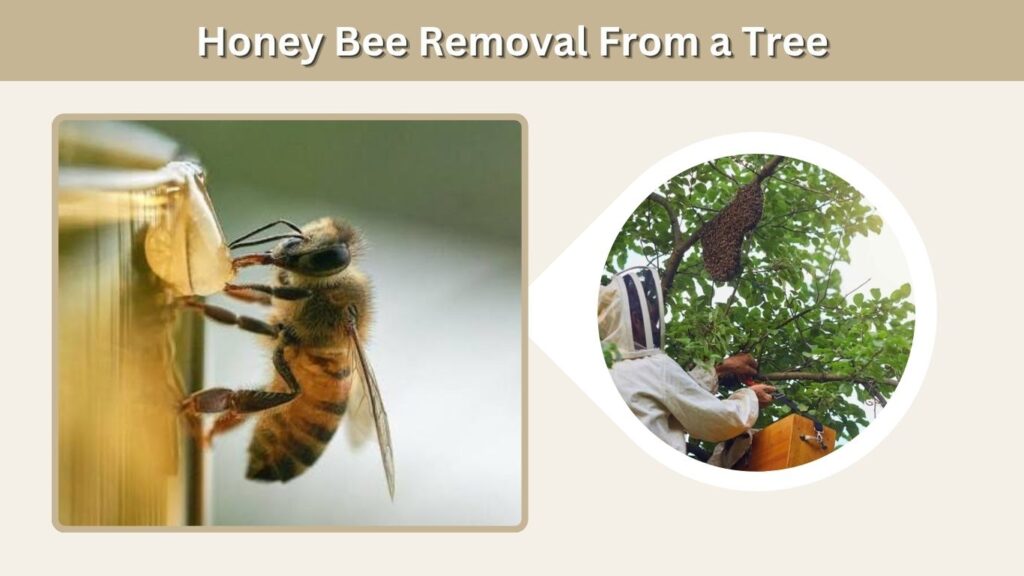
Bees clustered on an exposed tree branch are often a temporary swarm rather than an established hive.
If the bees form a hanging cluster without visible comb, keep your distance and contact a swarm-catching beekeeper.
Bees Inside a Hollow Tree
A colony living inside a tree cavity is different.
If the colony does not create a hazard, removal may not always be necessary. However, removal should be considered if the tree is:
- Near a doorway
- Beside a playground
- Near a walkway
- Close to livestock
- In a high-traffic yard
- Likely to require tree work
Removing an established colony from inside a tree can be much more difficult than capturing an exposed swarm.
Humane Honey Bee Removal
Humane honey bee removal generally means capturing and relocating a healthy colony rather than destroying it.
Professional live removal can preserve the queen, workers, and brood and transfer them into a managed hive.
UF/IFAS describes swarm capture, swarm trapping, and established-colony removal as major forms of live bee removal.
Why Live Removal Is Preferred
Honey bees contribute to pollination, so preserving viable colonies is desirable when it can be done safely.
However, human safety remains the priority. Aggressive colonies, inaccessible nests, structural hazards, or local regulations may affect the available options.
DIY Honey Bee Removal: Is It Safe?
A homeowner should generally avoid attempting to dismantle an established colony.
Opening a hive can expose you to hundreds or thousands of defensive bees.
Avoid These DIY Actions
Do not:
- Knock down an active hive.
- Block an active entrance.
- Cut open an occupied wall without experience.
- Spray a swarm just to make it leave.
- Burn or smoke bees out of a structure.
- Handle comb without protective equipment and training.
For an accessible temporary swarm, leaving it undisturbed while contacting a beekeeper is generally much safer.
Honey Bee Removal Spray
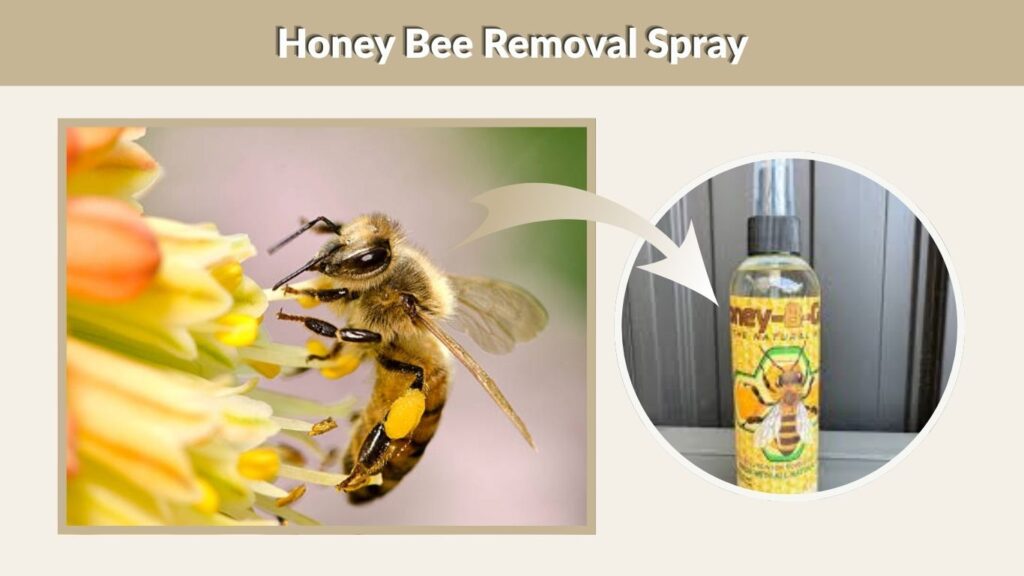
Using an insecticide is not the same as removing a colony.
Killing bees inside a wall can leave large quantities of honey, wax, brood, and dead bees behind. These materials can produce odors, leaks, and secondary pest problems.
If pesticide treatment is genuinely necessary, use an appropriately licensed pest-control professional and follow applicable local regulations.
Never consume honey from a colony that has been treated with pesticide.
Honey Bee Removal Cost
The cost of honey bee removal varies significantly because every colony is different.
Factors Affecting Cost
Prices can depend on:
- Swarm vs. established hive
- Colony size
- Accessibility
- Height
- Wall or roof removal
- Amount of honeycomb
- Structural repairs
- Travel distance
- Need for specialized equipment
- Local labor rates
An exposed swarm may be inexpensive or occasionally free, while an established colony inside a building can become a major structural-removal project. Mississippi State Extension notes that complicated wall removals can become expensive because both bee-removal and construction skills may be required.
How to Prevent Honey Bees From Returning

Once the colony and comb are completely removed, the former nesting cavity should be cleaned and properly sealed.
Prevention Tips
- Seal gaps around siding.
- Repair holes in walls.
- Screen appropriate vents.
- Repair damaged soffits.
- Seal openings around pipes.
- Check roof edges.
- Repair cracks around windows.
- Remove residual wax and comb.
- Inspect previously occupied cavities.
UGA Extension recommends sealing potential entry sites such as siding gaps, knot holes, and openings around utilities before another swarm occupies them.
When to Call a Honey Bee Removal Specialist
Professional assistance is particularly important when:
- Bees are inside a wall.
- The colony is in a roof or attic.
- The swarm is high above the ground.
- Someone nearby has a serious sting allergy.
- Bees are behaving defensively.
- Large amounts of comb are present.
- Structural demolition is required.
- You are unsure whether the insects are honey bees.
Accurate identification is useful because yellowjackets, wasps, bumble bees, and other insects require different management.
FAQs
What is the best way to remove honey bees?
For an exposed swarm, contact a local beekeeper or swarm-removal specialist. Established colonies inside structures generally require professional removal of both the bees and comb.
Can I get honey bee removal for free?
Sometimes. Beekeepers may collect accessible swarms for free, but structural hive removal usually involves labor and therefore often costs money.
How do I remove honey bees from a wall?
Wall colonies normally require professional removal. The cavity may need to be opened so the bees, comb, brood, and honey can all be removed before repairs are completed.
Should I seal a honey bee hive entrance?
No. Do not seal an active colony inside a wall or other structure because bees may find another route into the building and the comb will remain behind.
Will a honey bee swarm leave on its own?
Often, yes. A temporary swarm may stay for only several hours or a few days while scout bees locate a permanent nest. If the swarm is in a risky location, contact an experienced beekeeper for removal.