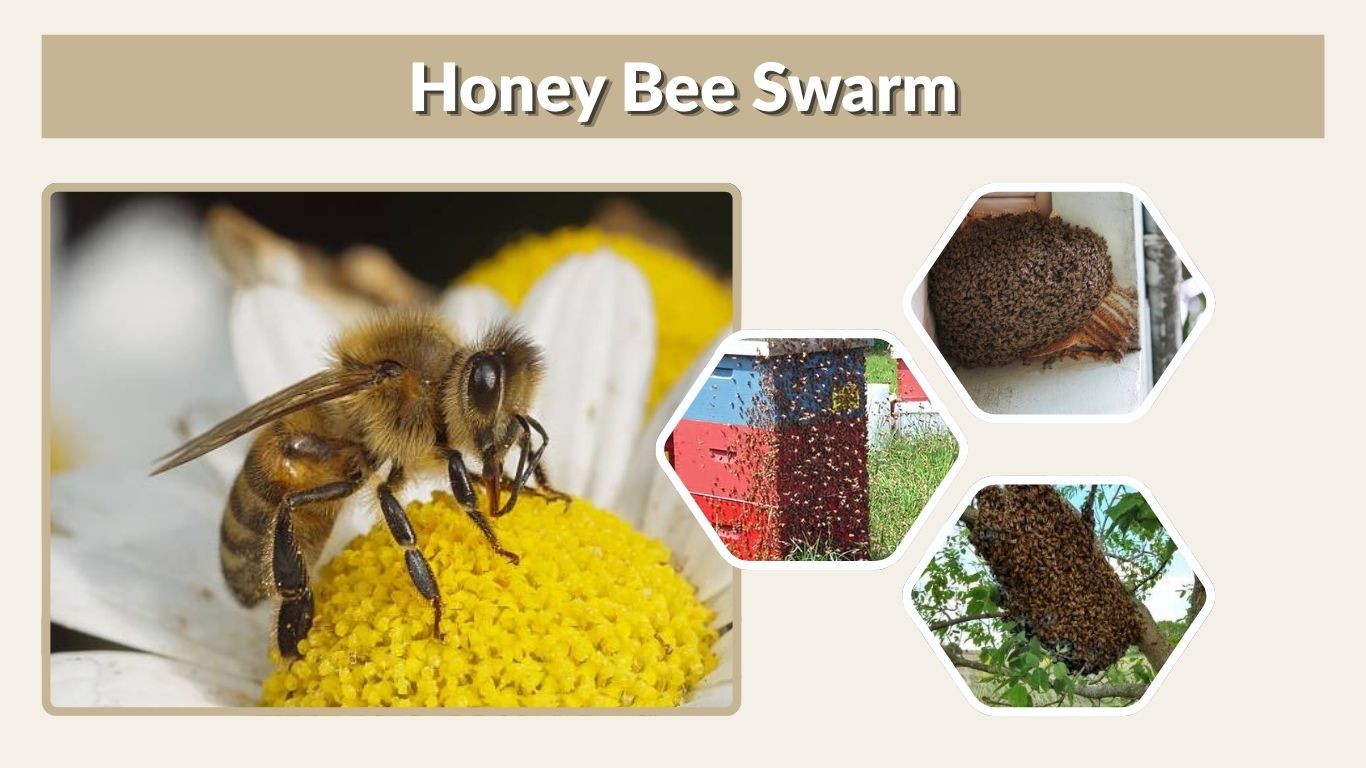
A honey bee swarm can look alarming when hundreds or thousands of bees suddenly gather on a tree, fence, wall, or other surface. However, swarming is a normal part of honey bee reproduction rather than an attack. A colony divides, with the old queen and many workers leaving to search for a new nest site. The temporary cluster may remain for only a few hours or several days. Understanding swarm behavior, season, removal, swarm cells, traps, and safe capture can help homeowners and beekeepers respond correctly.
What Is a Honey Bee Swarm?
A honey bee swarm forms when part of an established colony leaves its original hive to establish another colony. The departing group normally includes the old queen and a large number of worker bees.
Before moving permanently into a new cavity, the swarm often gathers temporarily on a tree branch, shrub, fence, building, or other object while scout bees search for a suitable home.
What Does a Honey Bee Swarm Look Like?
A typical swarm resembles a dense, hanging mass of bees. It may be round, oval, elongated, or roughly shaped like a football depending on the surface.
The cluster can contain several hundred to several thousand bees. Individual bees may fly around the outside while most remain packed together around the queen.
A swarm differs from an established hive because there is usually no permanent comb during this temporary stage.
Why Do Honey Bees Swarm?
Swarming is essentially reproduction at the colony level. One colony divides into two populations so that a new colony can become established elsewhere.
Increasing colony population, limited space, abundant resources, queen age, and congestion can contribute to swarm preparation. Worker bees also begin raising replacement queens before the old queen leaves.
Honey Bee Swarm Behavior
Before leaving, workers reduce feeding of the old queen, helping her become light enough to fly. Once the swarm departs, bees may initially travel only a short distance.
They gather around the queen while scout bees explore potential nesting cavities. Once scouts collectively settle on a suitable site, the cluster breaks apart and flies to the new location.
Although a flying cloud of thousands of bees looks dramatic, swarms are generally less defensive than established colonies because they are temporarily without a nest, brood, or stored honey to protect. They can still sting if disturbed, so keeping a safe distance is sensible.
Honey Bee Swarm Season
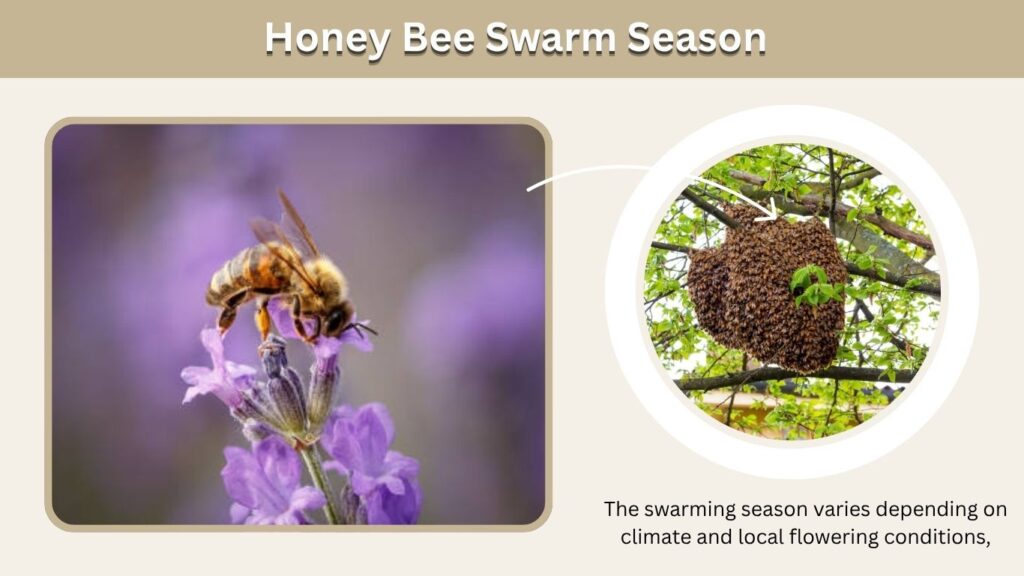
Swarm season varies with climate and local flowering conditions, but it most commonly occurs during spring and early summer, when colonies rapidly increase in population.
In some areas, swarm activity peaks during May and June, with additional activity possible later in summer. Utah State University notes that colonies can technically swarm at other times during the active beekeeping season as well.
Can Honey Bees Swarm in September?
Yes. A September swarm is possible, especially in warm climates or where late nectar flows support strong colony growth. However, late swarms face more challenges because they have less time to establish comb, build population, and store sufficient food before winter.
Swarm timing should therefore be interpreted according to local climate rather than a single calendar date.
What Are Honey Bee Swarm Cells?
Honey bee swarm cells are specialized queen cells created when a colony prepares to divide. They are larger than ordinary worker cells and typically look elongated and peanut-shaped.
Swarm cells commonly appear near the lower edges of brood frames, although their exact position can vary. Their presence can be an important warning that a strong colony is preparing to swarm.
Do Swarm Cells Always Mean Bees Will Swarm?
They indicate a significant risk, but hive management still matters. Simply cutting out swarm cells may not solve the underlying problem because the colony can build additional queen cells.
Addressing congestion, colony structure, available space, and other swarming triggers is generally more effective than repeatedly destroying cells.
What to Do With a Honey Bee Swarm
If you discover a swarm hanging peacefully on a tree or other outdoor object, avoid spraying, shaking, striking, or otherwise disturbing it.
Keep children and pets away and give the bees space. Many temporary swarms move on naturally once scouts select a new nest site. Clusters may remain from an hour to a few days.
If the swarm is in a hazardous location or you want it relocated, contact an experienced beekeeper or honey bee removal professional.
Honey Bee Swarm Removal
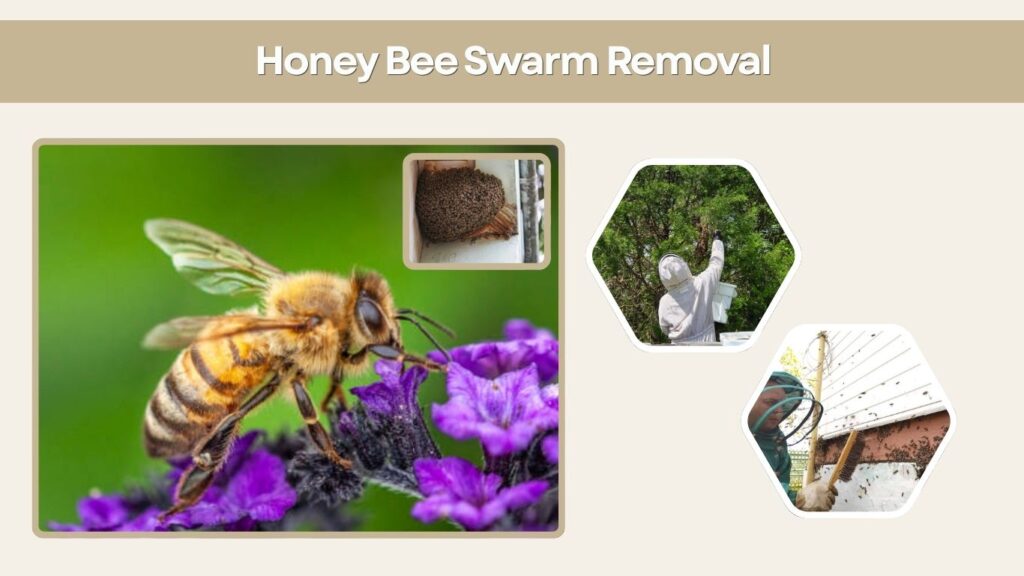
Swarm removal is generally easier than removing an established colony because a temporary swarm has not yet built a substantial comb inside a wall or other structure.
An experienced beekeeper may collect an accessible swarm and install it in a hive. Penn State notes that reachable swarms can sometimes be shaken into a suitable container and moved to prepared hive equipment.
Honey Bee Swarm on a House
A swarm sitting temporarily on the exterior of a house may move on. However, if bees begin entering a wall cavity, soffit, chimney, or other opening, the situation may be transitioning from a swarm into an established colony.
Once bees settle inside a structural cavity and start making comb, removal becomes substantially more complicated. Early professional assessment can therefore prevent a simple swarm from becoming a structural bee problem.
How to Catch a Honey Bee Swarm
Swarm capture is primarily appropriate for experienced beekeepers with protective equipment and prepared hive boxes.
The goal is to collect the queen along with as many workers as possible. When the queen enters the receiving box, other bees are often drawn toward her and the colony begins gathering around the new location. Utah State University illustrates this behavior in captured swarms moving into hive equipment.
Anyone without beekeeping experience should generally have an experienced beekeeper perform the collection, particularly when the swarm is high above the ground, inside a structure, unusually defensive, or difficult to access.
Honey Bee Swarm Traps and Swarm Boxes
A honey bee swarm trap, sometimes called a bait hive or swarm box, is an empty nesting container placed where scouting bees may discover it.
Beekeepers use swarm traps to increase their chances of capturing colonies searching for new homes. Location, cavity design, entrance characteristics, previous bee odors, and attractants can influence whether scouts investigate a box.
Honey Bee Swarm Attractant and Lure
One commonly used swarm attractant is lemongrass oil. Utah State University notes that lemongrass oil mimics aspects of honey bee Nasonov pheromone and can attract exploratory bees when used in a bait hive or swarm trap.
Commercial swarm lures are another convenient option. Regardless of lure type, more attractant is not necessarily better. A bait hive still needs to be an acceptable nesting site for the colony.
Honey Bee Swarm Trap Plans
A basic swarm trap is essentially a weather-resistant enclosed cavity with an entrance and enough internal space to interest scout bees.
For beekeepers, practical considerations include secure construction, ease of mounting, internal volume, accessibility for later removal, and the ability to transfer captured bees into standard hive equipment.
A trap should also be inspected frequently during swarm season. Once occupied, the captured colony should be managed rather than left forgotten inside a temporary trap.
How to Prevent a Honey Bee Swarm

For beekeepers, completely eliminating swarming is difficult because it is natural reproductive behavior. Management instead focuses on reducing the conditions that encourage it.
Useful approaches include providing additional hive space before the colony becomes crowded, monitoring queen cells, preventing the brood area from becoming excessively congested, and splitting very strong colonies when appropriate. Oregon State University specifically recommends early spring and spring colony splits among its swarm-management strategies.
For homeowners without managed hives, prevention means sealing potential nesting cavities before bees move into them.
Will a Honey Bee Swarm Move On?
Often, yes.
Temporary honey bee swarms commonly remain clustered while scouts evaluate new homes and then leave once a suitable site is chosen. This may happen within hours, although some clusters remain for several days.
If bees begin entering a building cavity repeatedly or start constructing exposed comb, they may be establishing a permanent colony instead of continuing their search.
FAQs
Are Honey Bee Swarms Dangerous?
Most swarms are relatively calm because the bees have no established nest to defend. However, they can still sting, so avoid handling or disturbing the cluster and keep children and pets away.
What Should I Do if a Honey Bee Swarm Is in My Tree?
Leave it undisturbed and contact a local beekeeper if you want it collected. Many tree swarms are temporary and may depart naturally once scout bees locate a suitable nesting site.
How Long Will a Honey Bee Swarm Stay?
A swarm may remain for only an hour or for several days. Weather conditions and how quickly scout bees locate a satisfactory cavity affect the duration.
What Is the Best Honey Bee Swarm Attractant?
Lemongrass oil is commonly used in swarm traps because its scent can mimic aspects of honey bee orientation pheromones. Commercial swarm lures are another option.
Can You Remove a Honey Bee Swarm Without Killing It?
Yes. Accessible swarms can often be collected by experienced beekeepers and transferred into hive equipment, allowing the colony to continue living in a managed location.