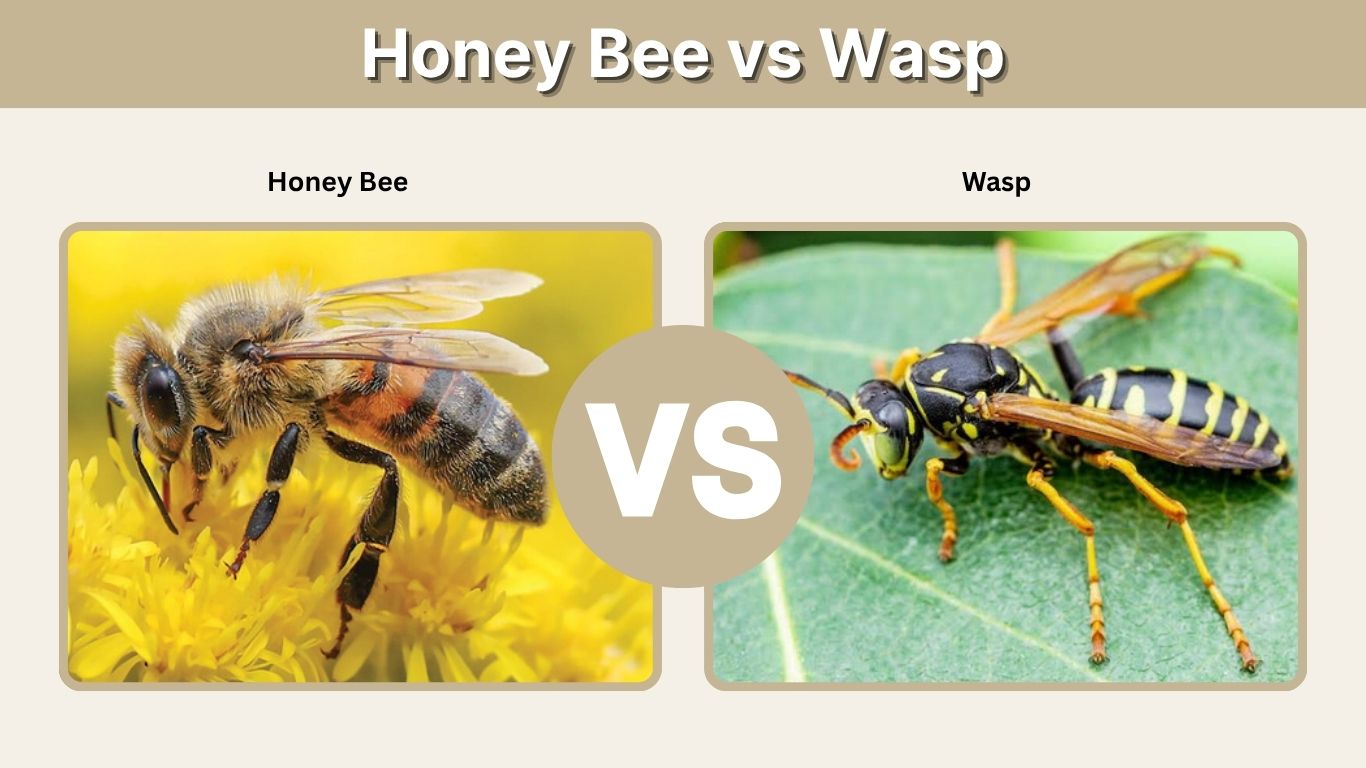
A honey bee vs wasp comparison becomes much easier once you look beyond their yellow-and-black coloring. Honey bees are fuzzy, thick-bodied insects that collect pollen and nectar and build wax combs. Wasps generally have smoother bodies, narrower waists, and a more predatory lifestyle, although many also visit flowers. Their nests, diets, behavior, and stinging abilities differ as well. Honey bee workers normally sting mammals only once because their barbed stinger can become lodged in the skin, while many wasps can sting repeatedly. Here are the main differences you should know.
Honey Bee vs Wasp: Quick Comparison
Honey bees and wasps belong to the same broad insect order, Hymenoptera, but they have evolved different lifestyles. Honey bees are highly specialized for gathering pollen and nectar, while many wasps hunt other insects or collect food for their larvae. Social wasps can also become strongly defensive around their nests.
| Feature | Honey Bee | Wasp |
| Body | Fuzzy and compact | Usually smooth and slender |
| Waist | Relatively thick | Often narrow |
| Color | Golden-brown with dark bands | Often yellow, black, red, or brown |
| Diet | Nectar and pollen | Nectar plus insects or other foods |
| Nest material | Wax | Often paper or mud |
| Stings | Worker usually stings mammals once | Many species can sting repeatedly |
| Pollination | Highly important | Many species also pollinate |
| Behavior | Usually focused on flowers | Often predatory or scavenging |
What Does a Honey Bee Look Like?
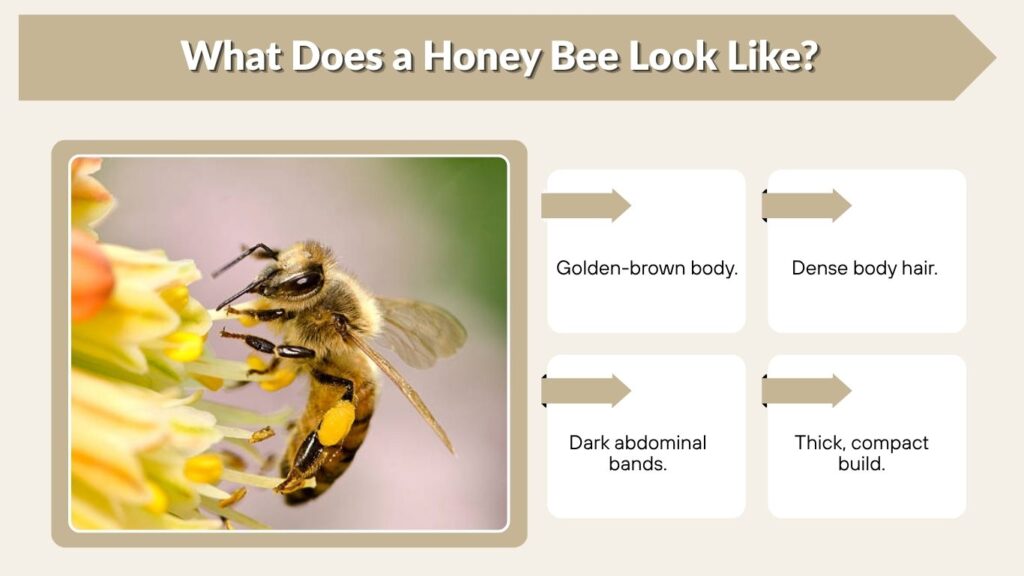
The western honey bee, Apis mellifera, is typically around half an inch long and has a fuzzy appearance. The thorax is particularly hairy, and parts of the hind legs are specialized for carrying pollen.
Honey bees usually appear golden brown rather than bright yellow.
Honey Bee Identification
Common characteristics include:
- Golden-brown body
- Dark abdominal bands
- Dense body hair
- Thick, compact build
- Hairy legs
- Pollen baskets on the hind legs
- Relatively thick connection between thorax and abdomen
Honey bees are most often noticed around flowers, flowering trees, gardens, water sources, and managed hives.
What Does a Wasp Look Like?
“Wasp” describes a very large and diverse group of insects, so there is no single appearance that applies to every species.
However, familiar social wasps such as paper wasps and yellow jackets generally have smoother bodies than honey bees and more obvious narrow waists.
Typical Wasp Identification
Many common wasps have:
- Smooth or lightly hairy bodies
- Narrow waists
- Long legs
- Yellow-and-black, reddish, or brown markings
- Sleek body shape
- Strong jaws
- Little visible pollen-carrying hair
Some species resemble bees closely, so color alone should not be used for identification.
Honey Bee vs Wasp Size
Honey bees are usually approximately 1/2 inch long. Wasp sizes vary considerably depending on species.
Some small wasps are considerably smaller than honey bees, while large paper wasps, hornets, or solitary hunting wasps can be much larger.
Is Size a Reliable Difference?
Not by itself.
A better identification method combines:
- Body hair
- Waist shape
- Color pattern
- Leg length
- Nest type
- Behavior
A fuzzy insect repeatedly visiting flowers is much more likely to be a bee than a smooth, narrow-waisted insect hunting caterpillars.
Honey Bee Nest vs Wasp Nest
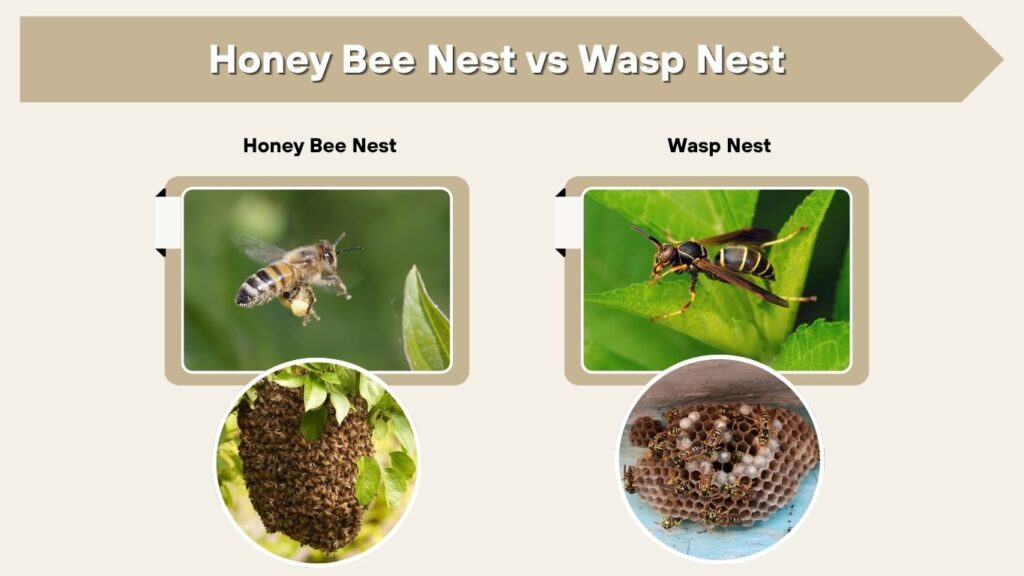
Nest construction provides one of the clearest differences between honey bees and social wasps.
Honey bees build wax comb, while many familiar social wasps build nests from processed wood fibers that form a paper-like material.
Honey Bee Nest
Honey bee colonies may live in:
- Managed beehives
- Hollow trees
- Wall cavities
- Roof spaces
- Other protected cavities
Inside the cavity, bees construct vertical wax combs containing brood, pollen, and honey.
Wasp Nest
Wasp nests vary greatly.
Paper wasps often create exposed umbrella-shaped combs beneath eaves or branches. Yellow jackets and hornets construct paper nests that may occur underground, inside wall voids, or above ground.
Some solitary wasps use mud, wood tunnels, or underground burrows instead of paper nests.
Honey Bee vs Wasp Diet
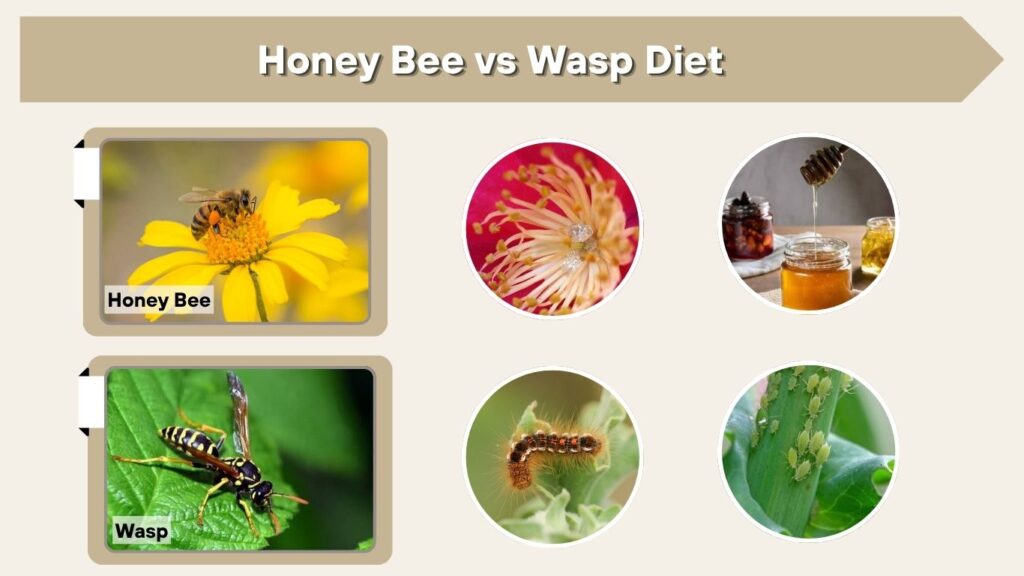
Honey bees are herbivorous feeders that depend heavily on flowers.
Workers collect:
- Nectar
- Pollen
- Water
Nectar provides carbohydrates, while pollen provides protein and other nutrients.
What Do Wasps Eat?
Many adult wasps drink nectar and other sugary liquids, but their larvae often receive animal prey.
Depending on species, wasps may capture:
- Caterpillars
- Aphids
- Flies
- Spiders
- Other insects
This predatory behavior makes many wasps beneficial in gardens because they help suppress plant-feeding pests.
Honey Bee vs Wasp Behavior
Honey bees away from their hive are usually focused on collecting food and generally avoid unnecessary conflict.
Social wasps can also be relatively calm away from their nests, but colonies may respond strongly when disturbed.
Which Is More Aggressive?
It depends on species and circumstances.
A honey bee colony can defend its hive vigorously. Similarly, yellow jackets, hornets, and paper wasps can defend their nests when threatened.
The safest rule is to avoid disturbing any active bee or wasp colony.
Honey Bee Sting vs Wasp Sting
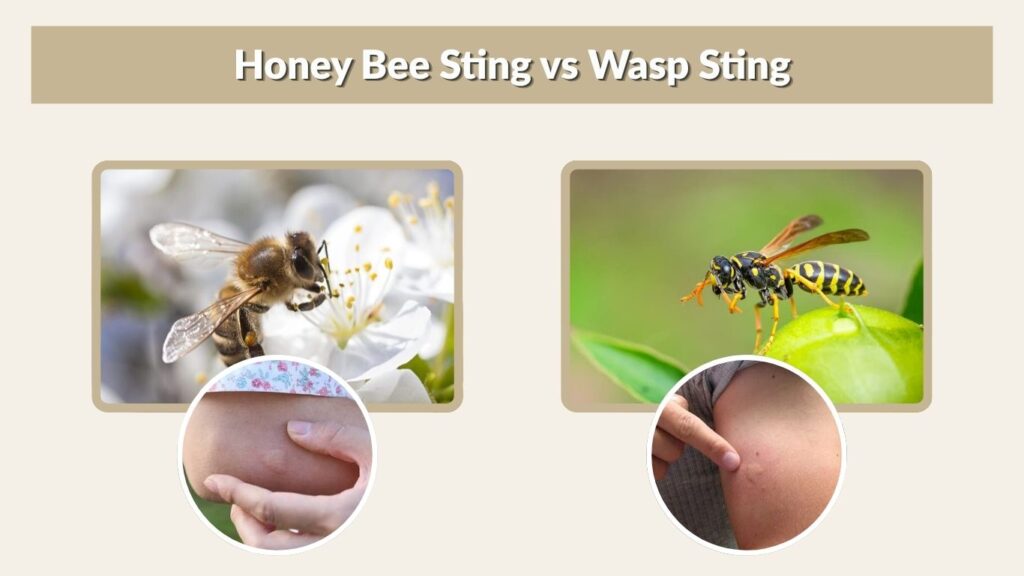
Both honey bees and wasps inject venom through a stinger, and both can cause immediate pain, redness, swelling, and itching.
The key difference is the design of the stinger.
Honey Bee Stinger
A worker honey bee has a strongly barbed stinger.
When it stings thick mammalian skin, the stinger may remain embedded. As the bee flies away, the stinger apparatus is torn from its body, and the worker later dies.
If a honey bee stinger remains in the skin, remove it as quickly as practical.
Wasp Stinger
Many wasps have relatively smooth stingers that can be withdrawn after a sting.
This allows an individual wasp to potentially sting multiple times.
Honey Bee Venom vs Wasp Venom
Honey bee and wasp venoms are not identical. Each contains a mixture of biologically active compounds capable of causing pain and inflammation.
A person may also develop an allergic reaction to venom.
Signs of a Serious Reaction
Emergency symptoms can include:
- Difficulty breathing
- Swelling of the lips, tongue, mouth, or throat
- Widespread hives
- Difficulty swallowing
- Dizziness or fainting
- Severe weakness
Anaphylaxis can become life-threatening quickly and requires emergency medical care.
Honey Bee vs Paper Wasp
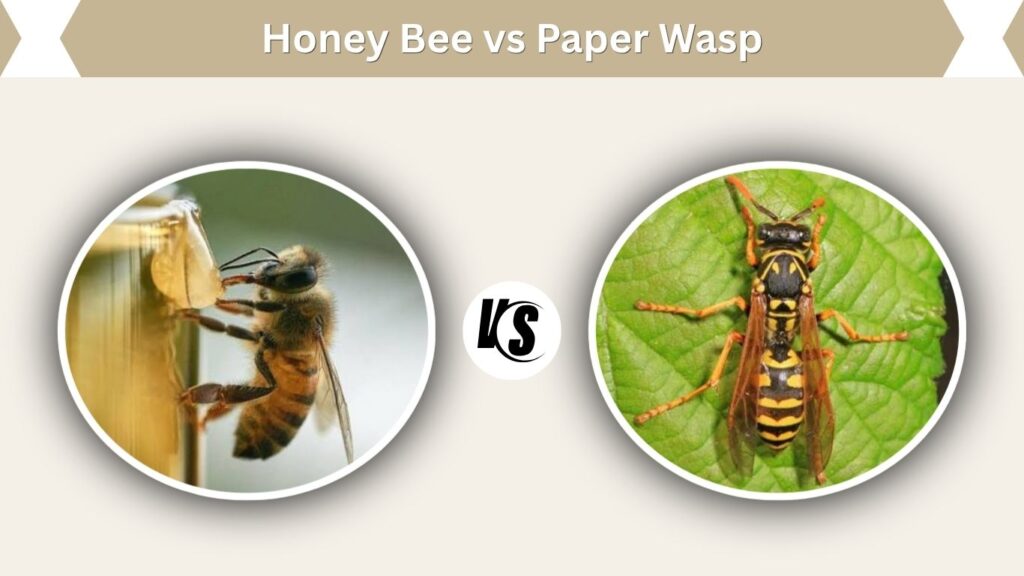
Paper wasps are among the insects most often compared with honey bees.
Honey Bee
- Fuzzy body
- Thick build
- Golden-brown coloration
- Collects pollen and nectar
- Builds wax comb
- Worker usually stings a mammal only once
Paper Wasp
- Smooth, slender body
- Narrow waist
- Long legs
- Often yellow, brown, red, or black
- Hunts insects
- Builds exposed paper comb
- Can sting repeatedly
Paper wasps often build nests beneath roof edges, railings, sheds, and other sheltered surfaces.
Honey Bee vs Yellow Jacket vs Wasp
A yellow jacket is a type of wasp, not a bee.
Yellow jackets generally have smooth, sharply patterned yellow-and-black bodies and often build nests underground or inside cavities.
Honey bees are fuzzier and usually brownish-gold.
Simple Identification
Honey bee: fuzzy pollinator.
Yellow jacket: smooth yellow-and-black social wasp.
Paper wasp: slender, long-legged wasp with exposed paper nests.
This distinction is important because management approaches differ.
Honey Bee vs Wasp vs Hornet
Hornets are also wasps.
The term generally refers to certain larger social wasps. They have the same basic wasp-like body structure: relatively smooth bodies, narrow waists, strong jaws, and reusable stingers.
Main Difference
A honey bee is a bee.
A yellow jacket is a wasp.
A hornet is also a wasp.
“Wasp” is therefore the broader category that includes several familiar stinging insects.
Bumble Bee vs Honey Bee vs Wasp
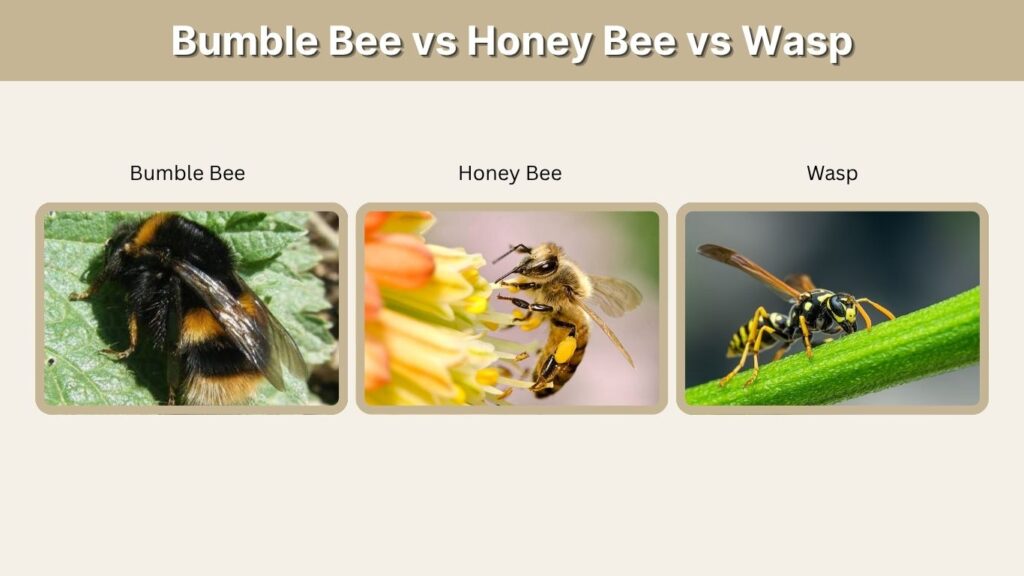
Bumble bees are usually easy to separate from wasps because they are extremely fuzzy and thick-bodied.
Bumble Bee
- Large and very fuzzy
- Rounded body
- Strong pollinator
- Feeds on pollen and nectar
Honey Bee
- Smaller than most bumble bees
- Moderately fuzzy
- Golden brown
- Lives in large perennial colonies
Wasp
- Usually smoother
- Narrower waist
- Often more elongated
- Many species hunt other insects
Do Wasps Pollinate Like Honey Bees?
Honey bees are highly effective pollinators because workers deliberately collect pollen and repeatedly visit flowers.
Wasps are better known as predators, but many species also visit flowers for nectar and can transfer pollen in the process. They therefore contribute to pollination as well as pest control.
Which Is More Useful: Honey Bee or Wasp?
Both groups provide ecological benefits.
Honey bees contribute significantly to pollination and honey production. Wasps help control populations of caterpillars, aphids, flies, and other insects, and many also pollinate flowers.
It is therefore inaccurate to consider honey bees “good” and all wasps “bad.”
FAQs
How can you tell a honey bee from a wasp?
Honey bees usually have fuzzy, thick bodies and golden-brown coloring. Most familiar wasps have smoother bodies, narrower waists, and more sharply defined markings.
Which hurts more, a honey bee sting or a wasp sting?
Both can be painful, and individual reactions vary. One practical difference is that many wasps can sting repeatedly, while a worker honey bee generally stings a mammal only once.
What is the difference between a honey bee nest and a wasp nest?
Honey bees construct wax combs. Many social wasps build paper-like nests from chewed wood fibers.
Are yellow jackets wasps or bees?
Yellow jackets are wasps, not bees.
Do wasps make honey?
Most wasps do not produce or store honey like honey bees. Their feeding and colony biology are different, although a few specialized wasp species outside the typical household groups can produce small amounts of honey.