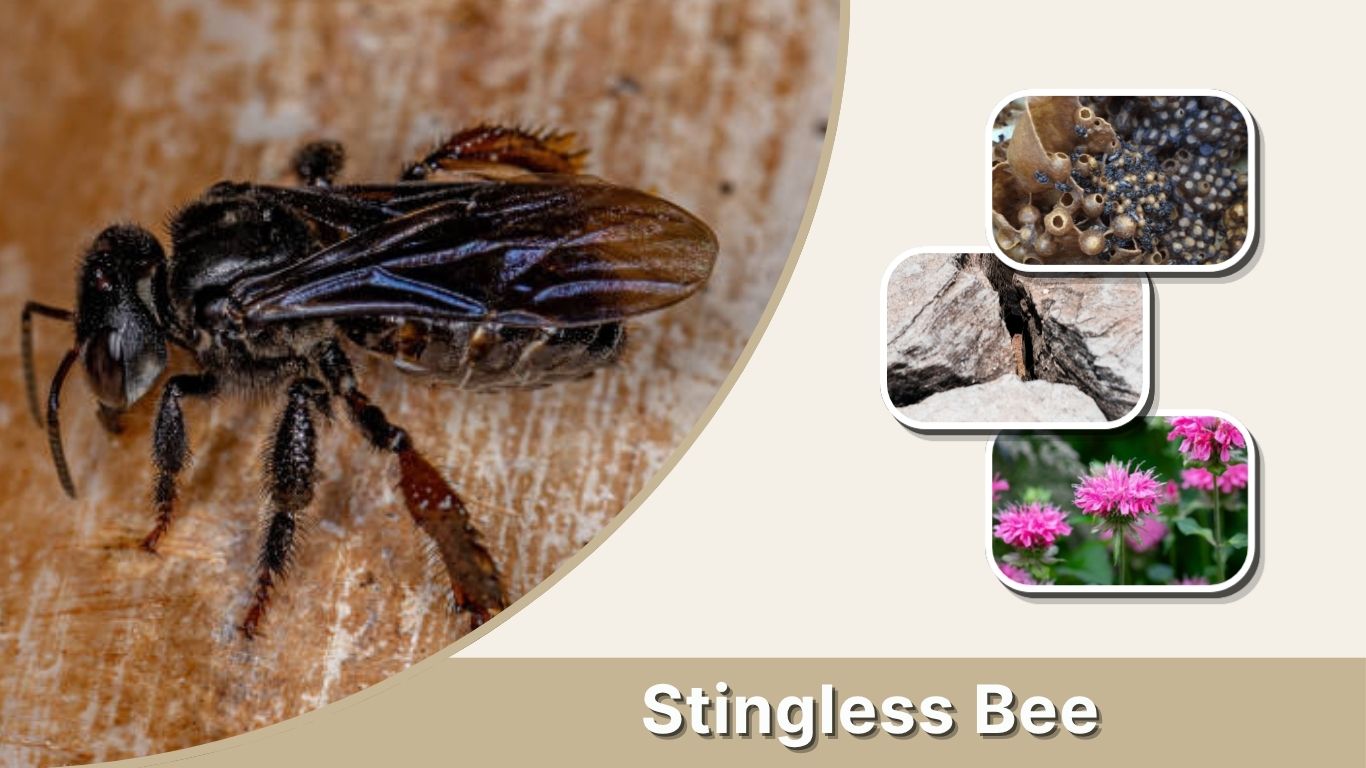
The stingless bee is a highly social tropical bee belonging to the tribe Meliponini. Unlike familiar honey bees, these bees have a greatly reduced, nonfunctional sting, although some species can defend themselves by biting. Stingless bees live in colonies with queens and workers, collect pollen and nectar, pollinate wild and cultivated plants, and produce distinctive honey stored in small wax-and-resin pots. With more than 600 described living species, stingless bees occur throughout tropical and subtropical regions worldwide and are increasingly kept for pollination and honey production.
What Is a Stingless Bee?
Stingless bees are relatives of honey bees and bumble bees within the family Apidae. Scientists place them in the tribe Meliponini, which currently contains about 605 described living species in 45 genera. They are primarily distributed through warm tropical and subtropical environments and form permanent social colonies containing a reproductive queen and large numbers of workers.
Stingless Bee Identification
- Usually much smaller than European honey bees
- Often black, dark brown, or metallic in color
- Possess a reduced, nonfunctional sting
- Workers have pollen-carrying structures on their hind legs
- Live in organized social colonies
- Collect nectar, pollen, and plant resins
- Size varies considerably among species
- Often nest inside enclosed cavities
Stingless Bee Size
Size varies widely because “stingless bee” describes hundreds of species rather than one insect. Many are only a few millimeters long.
For example, the Australian Sugarbag Bee, Tetragonula carbonaria, measures approximately 4–5 mm. Other members of Meliponini may be noticeably larger or smaller.
Trigona Stingless Bees
Trigona is one important genus within the stingless bee group. These tropical American bees are known for strong colony-defense behavior despite being unable to sting.
Some Trigona species have sharp mandibles and can deliver surprisingly noticeable bites when their nest is threatened. This demonstrates why “stingless” does not always mean completely defenseless.
Stingless Bee Habitat and Distribution
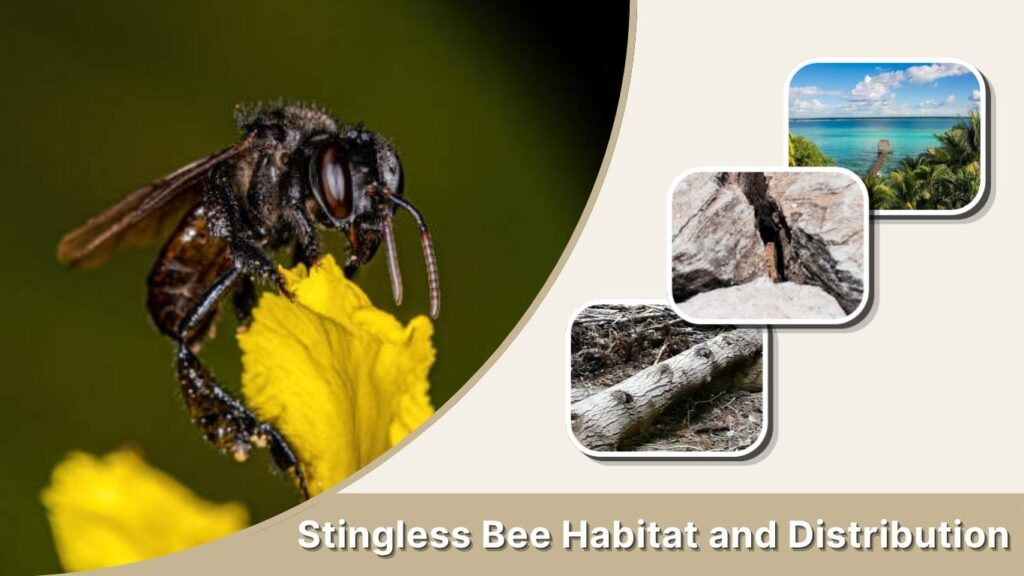
Stingless bees are primarily insects of tropical and subtropical climates. Different species occur in Central and South America, Mexico, Africa, Southeast Asia, India, Malaysia, Indonesia, and Australia. Colonies can contain anywhere from hundreds to many thousands of individuals, depending on the species and environmental conditions.
Where Do Stingless Bees Live?
Wild colonies commonly establish nests in tree cavities, hollow branches, rock crevices, and other protected spaces.
Some species also occupy cavities in buildings. Their nests incorporate wax and large amounts of collected plant resin, which provides both structural material and defense against predators and parasites.
Nest entrances vary greatly. Some are simple holes, while others form elaborate resin tubes.
Australian Stingless Bees
Australia has several native social stingless bees, including Tetragonula and Austroplebeia species.
Tetragonula carbonaria, often called the Sugarbag Bee, occurs along coastal Queensland into southern New South Wales. Its colonies can contain several thousand individuals and are famous for their striking spiral-shaped brood structures.
Australian stingless bees are increasingly maintained in wooden hive boxes, particularly for conservation, garden pollination, and small-scale honey production.
Stingless Bee Hive and Colony
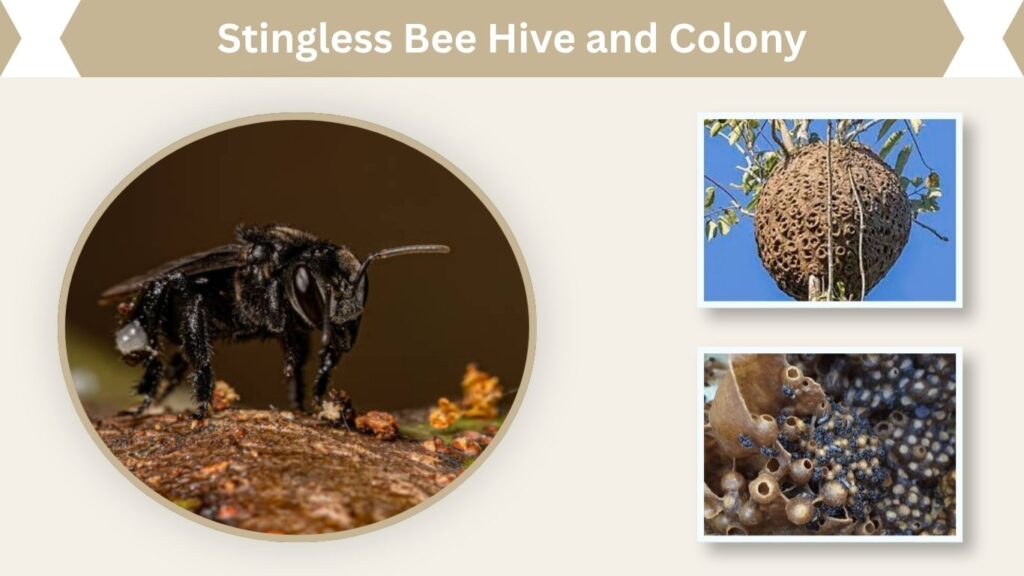
A stingless bee hive functions as a permanent social colony rather than a temporary seasonal nest. The interior differs considerably from a standard honey-bee hive. Instead of storing everything in familiar hexagonal combs, many stingless bees keep honey and pollen in rounded pots constructed from wax mixed with plant resin.
Stingless Bee Hive Structure
A colony generally contains brood areas surrounded by food-storage structures.
Workers collect resin from plants and combine it with wax to produce building material often called cerumen. Resin can also form nest barriers and defensive structures that deter ants and other invaders.
Tetragonula carbonaria is especially famous for producing a spiral brood arrangement, while related species may construct more irregular comb structures.
Stingless Bee Queen
The queen is primarily responsible for reproduction. Workers prepare brood cells with food before the queen lays an egg into each cell.
After egg laying, workers seal the brood cell, and the developing bee completes its immature stages inside. Australian Museum observations of T. carbonaria describe workers provisioning cells with pollen and nectar before the queen deposits an egg.
Stingless Bee Honey
Stingless bee honey is one of the best-known products of these insects. It is sometimes called pot honey because it is stored in rounded pots rather than conventional honey-bee comb cells. Its flavor may be sweet, acidic, fruity, or slightly fermented depending on bee species, flowers, geography, moisture, and storage conditions.
How Is It Different From Normal Honey?
Compared with typical Apis mellifera honey, stingless bee honey commonly has higher moisture and acidity, although its composition varies substantially among species and locations.
A recent scientific review found wide variation in moisture, sugars, acidity, antioxidants, phenolic compounds, and other characteristics. This variability means one bottle of stingless bee honey should not automatically be assumed to have the same composition as another.
Potential Stingless Bee Honey Benefits
Research has found promising properties, including:
- Antimicrobial activity in laboratory studies
- Antioxidant compounds
- Phenolic and flavonoid compounds
- Potential anti-inflammatory activity
- Nutritional carbohydrates
- Traditional medicinal uses in several cultures
However, much of the evidence involves laboratory, animal, or early-stage research. Claims that stingless bee honey can treat diabetes, cancer, infections, or other medical conditions are not established simply because laboratory studies show biological activity.
How to Consume Stingless Bee Honey
Stingless bee honey can be eaten as a food, used as a sweetener, or added to drinks and meals.
It is still a sugar-rich food, so moderation is sensible. People managing diabetes or another condition requiring controlled carbohydrate intake should not assume that stingless bee honey is automatically safer than ordinary honey.
Stingless Bee Honey for Eyes and Eye Drops
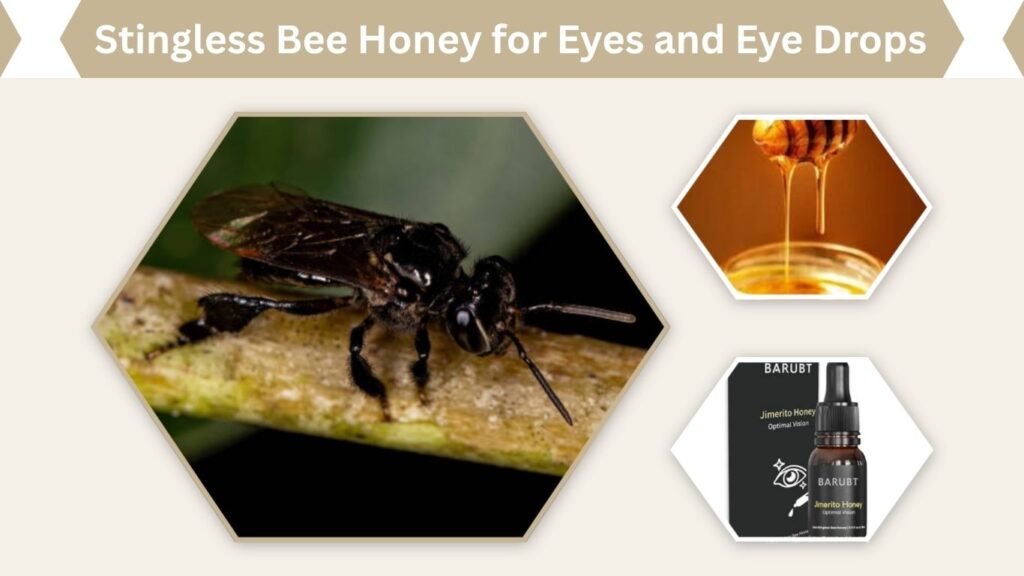
Searches for stingless bee honey eye drops are common because honey has a history of traditional eye use. Some experimental research has investigated this idea, but the evidence requires careful interpretation.
Does Stingless Bee Honey Help the Eyes?
One study tested crude stingless bee honey against experimentally induced bacterial conjunctivitis in guinea pigs, with promising results. That was an animal experiment, not proof that putting raw stingless bee honey into human eyes is safe or effective.
Other clinical research has evaluated specially prepared sterile honey-based ophthalmic formulations, but these products are very different from ordinary bottled honey.
Should You Put Raw Stingless Bee Honey in Your Eyes?
No. Do not put food-grade or raw honey directly into your eyes.
The FDA states that products used in the eye must be sterile because eye drops bypass important natural defenses. It specifically warns about unapproved ophthalmic products containing honey.
There is also a published case of serious corneal infection following topical use of natural honey.
For redness, infection, pain, blurred vision, or another eye problem, use appropriately approved products and seek medical advice rather than making homemade honey eye drops.
Can a Stingless Bee Bite or Sting?
The name can create the impression that these bees have no defensive abilities. Their sting apparatus is greatly reduced and generally nonfunctional, but colonies have evolved several other ways of protecting queens, broods, honey, and pollen.
Do Stingless Bees Sting?
Stingless bees generally cannot deliver a functional sting like a honey bee.
Australian Tetragonula, for example, is considered stingless and harmless in normal interactions.
Do Stingless Bees Bite?
Some do.
Defensive strategies across the group include biting, hiding, entering hair, and using sticky resin against attackers. Certain Trigona species have toothed mandibles and can produce painful bites when vigorously defending their colonies.
Therefore, a hive should still be treated respectfully even though the bees cannot sting.
Stingless Bees and Pollination
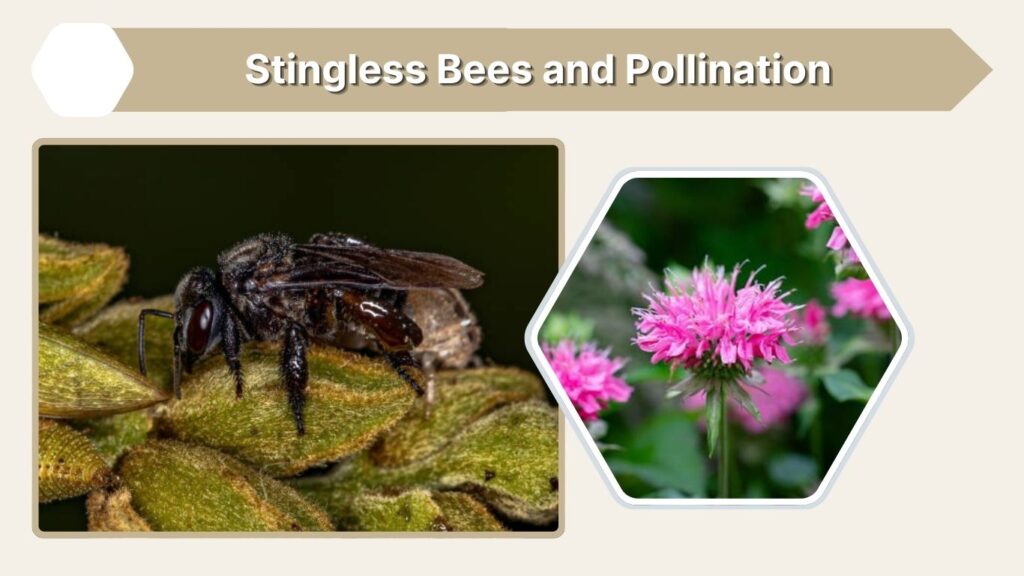
Stingless bees are ecologically important because workers constantly travel between flowers while collecting nectar and pollen. In doing so, they transfer pollen and contribute to reproduction in both wild vegetation and agricultural crops.
Why Are Stingless Bees Important?
Their importance includes pollinating native plants, supporting tropical ecosystems, contributing to crop production, and producing honey, pollen, propolis, and resin-based products.
They are increasingly managed specifically for agricultural pollination. A major biological review notes their growing use for agricultural purposes in tropical regions.
In Australia, CSIRO also highlights native stingless bees as useful pollinators of native vegetation and fruit crops.
FAQs
Stingless bees combine complex social behavior with unusual nest architecture, valuable pollination services, and distinctive pot honey. Their enormous species diversity also means that characteristics such as size, temperament, hive shape, honey production, and geographic range can differ significantly from one species to another.
Are stingless bees actually stingless?
Yes. Their sting apparatus is reduced and generally nonfunctional. However, some species defend themselves by biting or using sticky plant resin.
What does stingless bee honey taste like?
It commonly has a sweet but noticeably tangy or acidic flavor. Taste varies according to bee species, floral source, location, and storage conditions.
Is stingless bee honey better than normal honey?
Neither can universally be called “better.” Stingless bee honey differs in moisture, acidity, sugar composition, and bioactive compounds, but these characteristics vary considerably among samples.
How much honey does a stingless bee hive produce?
Production varies greatly by species, colony strength, climate, and available flowers. Stingless bee colonies generally produce substantially less harvestable honey than conventional European honey-bee colonies, which contributes to its rarity and higher value.
Can stingless bees be kept at home?
Yes, suitable species can be maintained in purpose-built hive boxes in warm regions. They are popular with some gardeners and beekeepers for pollination, conservation, and limited honey production. The species should always be appropriate to the local climate and region.