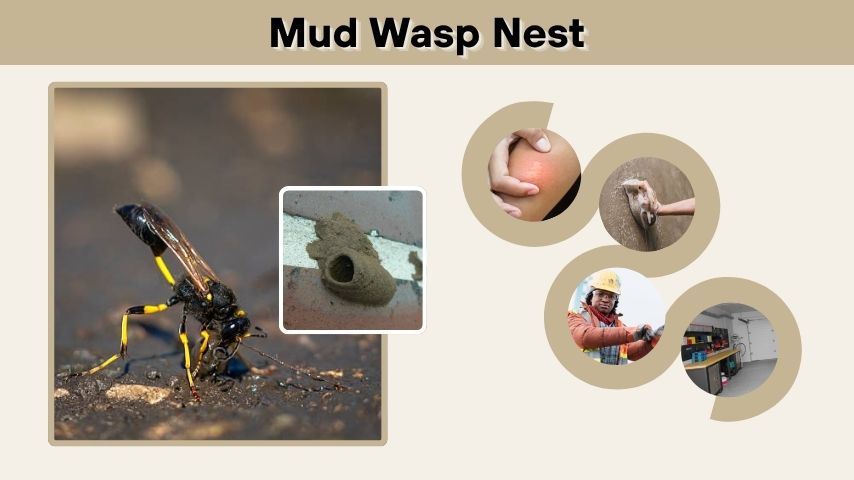
A mud wasp nest is a hard, dried mud structure usually built by mud dauber wasps. These nests are often found on walls, porches, garages, sheds, attics, and house siding. Many people notice them because they look like dirt tubes, mud clumps, or small pots stuck to a surface. This guide explains what a mud wasp nest is, what it looks like, where it appears, why spiders may be inside, and when removal should be handled carefully.
What Is a Mud Wasp Nest?
A mud wasp nest is a nest made from wet mud that a wasp collects and shapes into small cells. Once the mud dries, it becomes firm and sticks to sheltered surfaces. Most mud wasp nests are built by solitary wasps called mud daubers, not large aggressive colonies like yellowjackets or hornets.
Mud Wasp Nest Definition
A mud wasp nest is a protective structure made from mud. The female wasp uses it to lay eggs and store food for her young. Each mud cell may hold an egg and prey, often spiders, for the developing larva to eat after it hatches.
Are Mud Wasps and Mud Daubers the Same?
Many people use the name “mud wasp” for wasps that build mud nests. The more common name is mud dauber. Mud daubers are usually solitary wasps, meaning they do not live in large colonies like many paper wasps, hornets, or yellowjackets.
What Wasp Makes a Mud Nest?
Several types of wasps can make mud nests. Common examples include black and yellow mud daubers, blue mud daubers, and organ pipe mud daubers. The exact species can vary by region, but their nests are usually made from dried mud and placed in protected areas.
What Does a Mud Wasp Nest Look Like?
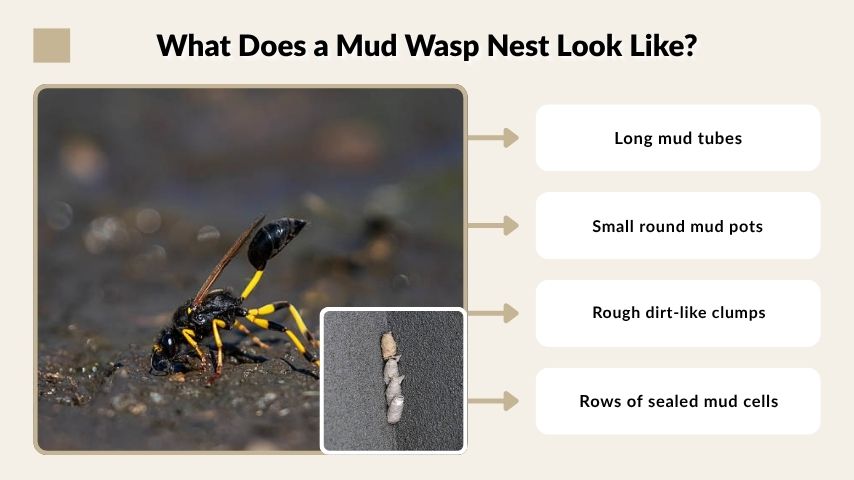
A mud wasp nest usually looks like dried mud attached to a wall, ceiling, beam, or other sheltered surface. It may be brown, gray, or tan depending on the soil used. Some nests look neat and tube-like, while others look rough, lumpy, or like a patch of dirt stuck to the house.
Common Mud Wasp Nest Shapes
Mud wasp nests can appear in several shapes, including:
- Long mud tubes
- Small round mud pots
- Rough dirt-like clumps
- Rows of sealed mud cells
- Mud patches on walls or ceilings
- Pipe-like lines built side by side
These shapes depend on the wasp species and where the nest is built. Organ pipe mud daubers often make long tube-like nests, while other mud daubers may create smaller cell clusters.
Mud Dauber Wasp Nest Pictures and Identification
In pictures, mud dauber nests often look like dried clay or dirt stuck to a surface. They do not look papery like paper wasp nests. A mud dauber nest may have small sealed chambers, broken openings, or rough edges if it is old or already used.
Mud Wasp Nest vs Paper Wasp Nest
A mud wasp nest is made from mud, while a paper wasp nest is made from chewed wood fibers mixed with saliva. Paper wasp nests often show open comb cells and have a papery texture. Mud wasp nests are harder, heavier-looking, and more like dried soil.
Where Do Mud Wasps Build Nests?
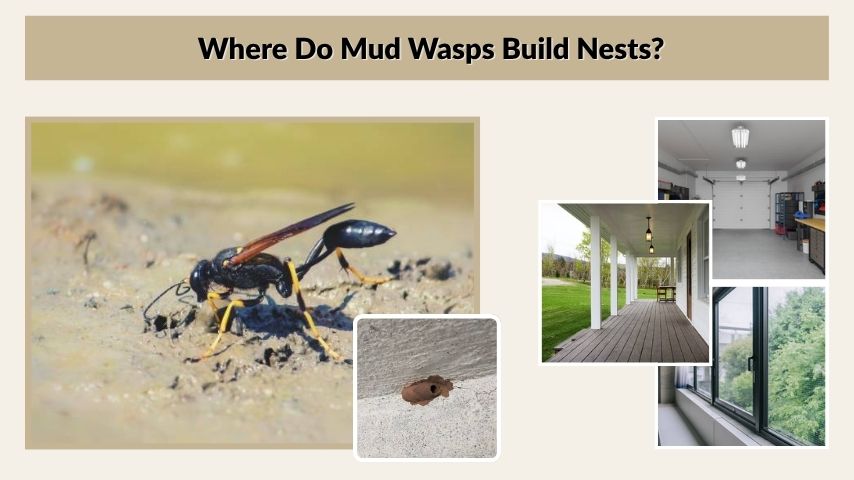
Mud wasps prefer quiet, sheltered places where rain and strong wind will not easily damage the nest. They often build near homes because buildings provide dry corners, shade, and protected surfaces. You may find mud nests on exterior walls, porch ceilings, garages, sheds, barns, attics, and around windows or roof edges.
Common Places to Find Mud Wasp Nests
Mud wasp nests are often found in places such as:
- Porch ceilings
- Garage walls
- Shed corners
- Attic beams
- House siding
- Brick walls
- Stucco surfaces
- Window frames
- Roof eaves
- Barns and outdoor storage areas
These areas give the wasp a dry surface and protection from weather. Nests are especially common in places that are not cleaned or disturbed often.
Mud Wasp Nest on Wall
A mud wasp nest on a wall may look like a dried dirt mark at first. On siding, brick, stucco, or painted walls, it can stand out because of its rough texture. If the nest is old and inactive, it may be easier to remove. If wasps are flying nearby, it should be treated carefully.
Mud Wasp Nest in House
Mud wasps may build inside garages, sheds, attics, or rarely inside living spaces if they find an opening. A mud wasp nest in the house should be checked carefully before removal. If the nest is active or hard to reach, professional pest control is the safer option.
Why Are There Spiders in a Mud Wasp Nest?
Finding spiders in a mud wasp nest can be surprising, but it is a normal part of the mud dauber life cycle. Female mud daubers hunt spiders, place them inside mud cells, lay eggs, and seal the cells. The spiders become food for the young wasps after they hatch.
Mud Dauber Wasp Nest Spiders
Mud daubers are known for catching spiders. They do not store spiders for themselves. Instead, the female wasp places spiders inside the nest so her larvae will have fresh food. This is one reason broken mud nests sometimes contain spider remains.
Are the Spiders Dead or Alive?
The spiders inside a mud wasp nest are often paralyzed rather than immediately dead. The wasp stings the spider to stop it from moving, then seals it inside the mud cell. When the wasp larva hatches, it feeds on the stored spiders.
Should You Break Open a Mud Wasp Nest?
Breaking open a mud wasp nest is not always a good idea. It may release dried mud, spider remains, larvae, stains, or even disturb an active wasp. If you need to remove it, it is better to check whether it is active first and use careful removal steps.
Are Mud Wasp Nests Dangerous?
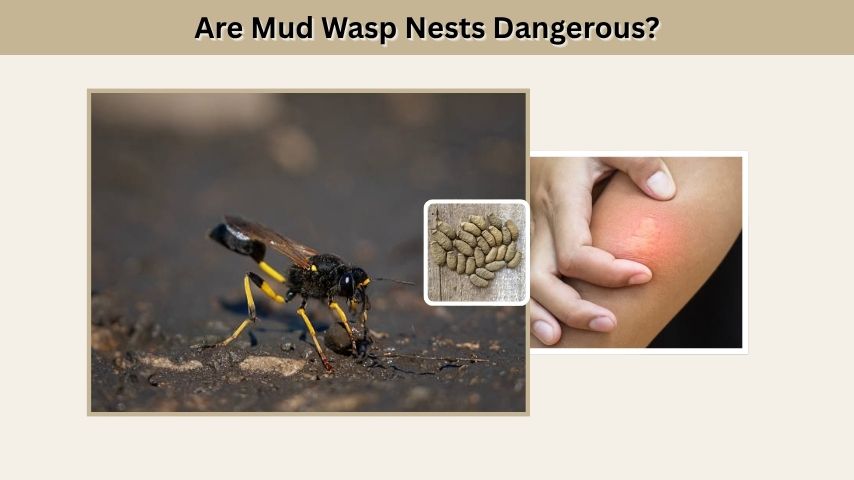
Mud wasp nests are usually less dangerous than nests made by social wasps, but they should still be treated with care. Mud daubers are generally solitary and not highly aggressive. However, they can sting if handled, trapped, or threatened. The risk is higher when the nest is active, indoors, hard to reach, or near children and pets.
Do Mud Wasps Sting?
Yes, mud wasps can sting, but they are not usually quick to attack. Mud daubers are much less defensive than yellowjackets or hornets because they do not protect a large colony. Most stings happen when someone tries to catch, crush, or disturb the wasp directly.
Are Mud Wasp Nests Dangerous to People?
The nest itself is not usually dangerous, especially if it is old and abandoned. The main concern is the wasp activity around it. People with wasp sting allergies should not try to remove any active nest. Even a mild-looking mud nest should be handled carefully if wasps are flying in and out.
When Should You Call Pest Control?
You should consider calling pest control if:
- The nest is active.
- The nest is inside your home.
- The nest is high or hard to reach.
- You are allergic to wasp stings.
- There are many wasps nearby.
- You are unsure what type of wasp it is.
- The nest is in a risky place near children or pets.
How to Remove a Mud Wasp Nest Safely
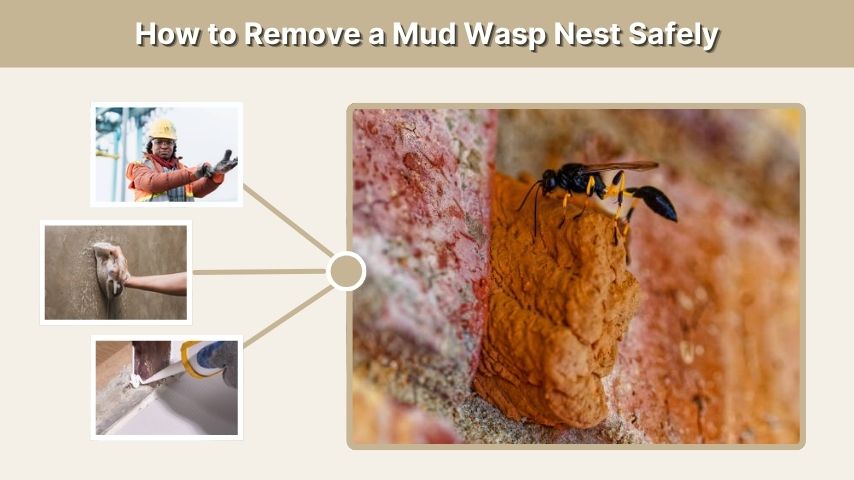
Removing a mud wasp nest depends on whether it is active or abandoned. Old nests are often easier to clean because the wasps have already left. Active nests need more caution. Before scraping or cleaning, watch from a safe distance to see whether wasps are entering, exiting, or adding fresh wet mud.
Before Removing a Mud Wasp Nest
Check the nest carefully before touching it. An active nest may have fresh-looking mud, sealed cells, or wasps flying close to it. If the nest is in a high place, inside a wall gap, or near regular human activity, do not take risks. A professional can identify the wasp and remove the nest more safely.
How to Remove an Old Mud Wasp Nest
If the nest is old and inactive, you can usually remove it with basic care:
- Wear gloves and eye protection.
- Place a cloth or bag below the nest to catch falling mud.
- Scrape the dried mud gently with a putty knife.
- Avoid digging into painted or delicate surfaces.
- Wash the area with mild soap and water.
- Dry the surface after cleaning.
- Seal cracks or gaps nearby.
How to Remove a Mud Wasp Nest from Stucco
Stucco needs extra care because rough scraping can damage the surface. Start by gently softening the dried mud with a damp cloth. Let the moisture loosen the nest, then scrape slowly with a plastic scraper. Avoid metal tools if they could chip the finish. After removal, rinse lightly and let the area dry.
How to Remove Mud Wasp Nest Stains
Mud nests can leave brown or gray stains after removal. Start with mild soap and water. For tougher stains, use a cleaner that is safe for the surface, such as siding, brick, stucco, or paint. Test a small hidden area first so the cleaner does not discolor or damage the wall.
How to Get Rid of Mud Wasps Around Your Home
Getting rid of mud wasps is not only about removing one nest. If the area stays attractive, new nests may appear again. Mud wasps like quiet, sheltered spaces with easy access to mud and prey. Cleaning old nests, closing entry points, and checking common nesting areas can reduce future problems.
Should You Kill Mud Wasps?
Killing mud wasps is not always necessary. Mud daubers are often helpful because they hunt spiders and are usually less aggressive than many other wasps. If the nest is outside, away from people, and not causing problems, leaving it alone may be the best choice. Removal is more reasonable when the nest is indoors or in a busy area.
How to Stop Mud Wasps from Building Nests
To reduce new mud wasp nests, you can:
- Remove abandoned nests.
- Seal cracks, gaps, and small openings.
- Install screens on vents and attic openings.
- Keep garage and shed doors closed when possible.
- Clean porch ceilings, eaves, and corners regularly.
- Reduce sheltered clutter in sheds and garages.
- Check walls and roof edges during warm seasons.
Do Mud Wasps Reuse Nests?
Some mud wasps may reuse old nests or build near places where nests existed before. Old mud cells can also attract other insects. Removing abandoned nests helps make the area less appealing. Regular inspection is useful because small new nests are easier to remove than large hardened ones.
Mud Dauber Nest vs Other Wasp Nests
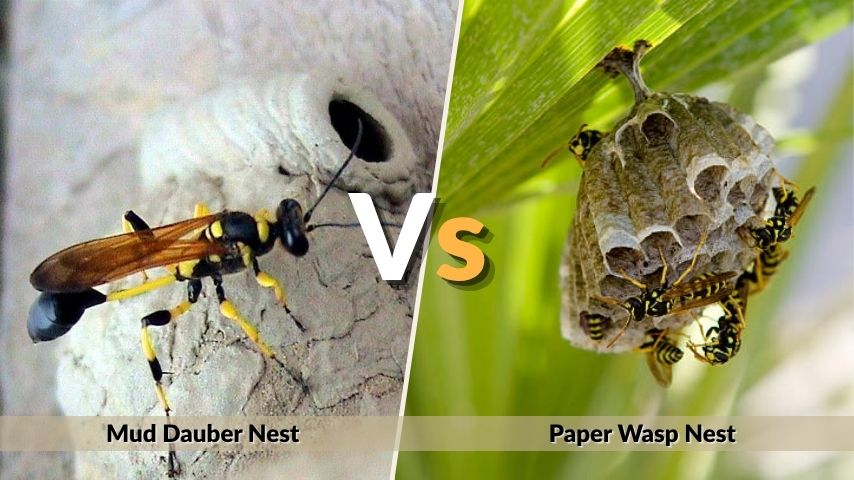
A mud dauber nest is different from many common wasp nests because it is made from mud and usually belongs to a solitary wasp. Other wasps, such as paper wasps, hornets, and yellowjackets, often build papery nests and may live in larger colonies. Correct identification matters because removal risk can be very different.
Mud Dauber Nest vs Paper Wasp Nest
A mud dauber nest is hard, muddy, and often tube-shaped or clumped. A paper wasp nest is lighter, papery, and may show open comb cells. Paper wasps are social and may defend their nest more actively. Mud daubers are usually solitary and less likely to swarm.
Mud Dauber Nest vs Yellowjacket Nest
Yellowjackets are usually more defensive than mud daubers. Their nests are often hidden underground, inside wall voids, or in enclosed spaces. If you think you have a ground nest or many wasps entering one hole, it may not be a mud dauber nest. Avoid disturbing it and consider professional help.
Mud Dauber Nest vs Hornet Nest
Hornet nests are usually larger and made from paper-like material. They may hang from trees, roof areas, or building edges. Hornets can be defensive near their nest, especially if the colony is large. A mud dauber nest is usually much smaller, harder, and made from dried soil.
FAQs
What does a mud wasp nest look like?
A mud wasp nest usually looks like dried mud stuck to a wall, ceiling, beam, or sheltered surface. It may appear as long tubes, small pots, rough clumps, or rows of sealed cells, depending on the wasp species.
What kind of wasp builds a mud nest?
Mud daubers are the most common wasps that build mud nests. These include black and yellow mud daubers, blue mud daubers, and organ pipe mud daubers. They collect wet mud, shape it into cells, and use it for their young.
Are mud wasp nests dangerous?
Mud wasp nests are usually less dangerous than nests from social wasps, but they still need caution. Mud daubers can sting if handled or threatened. Active nests, indoor nests, or nests near children and pets should be treated carefully.
Why are spiders inside a mud wasp nest?
Spiders are placed inside mud wasp nests as food for young wasps. Female mud daubers hunt and paralyze spiders, seal them inside mud cells, and lay eggs there. When the larvae hatch, they feed on the stored spiders.
How do you remove a mud wasp nest?
If the nest is old and inactive, wear gloves and eye protection, then gently scrape it off with a putty knife or plastic scraper. Clean the area with mild soap and water. Active, high, indoor, or uncertain nests should be handled by pest control.