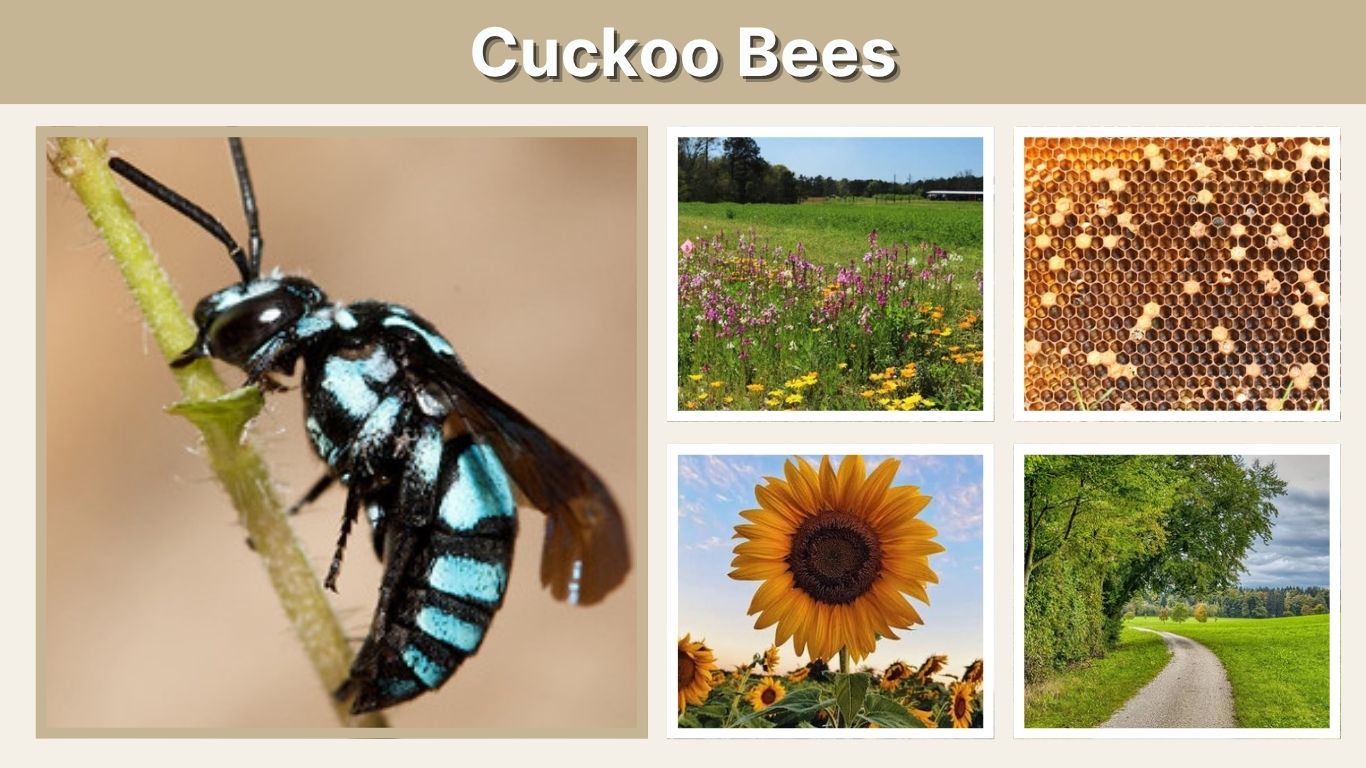
Cuckoo bees are unusual bees that reproduce by placing their eggs inside the nests of other bee species. Instead of building and provisioning nests, females rely on host bees to collect the pollen and nectar their larvae consume. This behavior resembles that of cuckoo birds and explains their common name. Cuckoo bees occur worldwide in many colors and sizes, from wasp-like nomad bees to brilliant blue Australian species. Although they exploit other bees, they are natural members of healthy pollinator communities.
What Is a Cuckoo Bee?
“Cuckoo bee” is a general term covering thousands of brood-parasitic or kleptoparasitic bee species. They have evolved in multiple bee families and do not form one single taxonomic group. Common examples include nomad bees, cuckoo bumble bees, sharp-tailed bees, and several parasites of mining, sweat, and oil-collecting bees.
Scientific Classification
Most cuckoo bees belong to one of these groups:
- Nomada: parasites of mining bees
- Sphecodes: parasites of sweat bees
- Coelioxys: parasites of leafcutter bees
- Epeolus: parasites of cellophane bees
- Triepeolus: parasites of long-horned and other ground-nesting bees
- Thyreus: parasites of blue-banded and related bees
- Epeoloides: parasites of Macropis oil bees
- Bombus subgenus Psithyrus: cuckoo bumble bees
Their family varies by group, although many belong to Apidae. Therefore, “cuckoo bee” is a reproductive strategy rather than one species or genus.
Cuckoo Bee Identification
Common identification features include:
- Limited or absent pollen-carrying hairs
- A relatively smooth or sparsely haired body
- Thick, strongly sculptured external armor
- Yellow, red, white, or blue markings
- A wasp-like shape in many species
- Pointed abdomen in some females
- Frequent activity around other bees’ nests
- No visible pollen load on the hind legs
Identification can be challenging because cuckoo bees often resemble wasps or their host bees. The appearance varies dramatically among groups.
How Do Cuckoo Bees Reproduce?
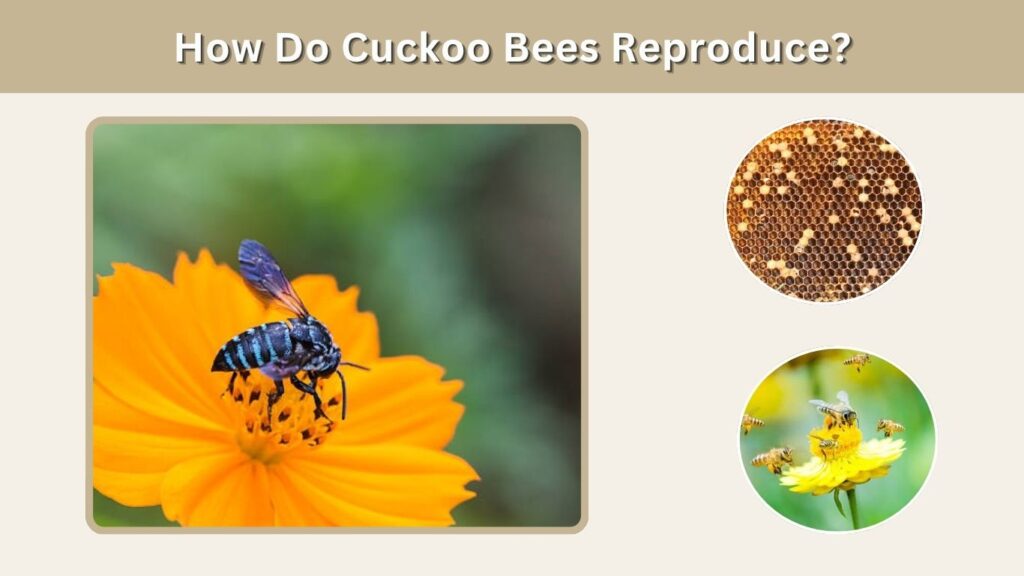
Most female cuckoo bees watch the nest entrances of appropriate host species. They enter while the nest owner is absent or distracted and deposit an egg inside a partly completed brood cell. The host then seals the cell, unaware that another bee’s offspring is developing inside.
Inside a Solitary Bee’s Nest
The general process follows these stages:
- A host female begins constructing a brood cell.
- She collects pollen and nectar for her offspring.
- The cuckoo bee locates and enters the nest.
- It lays an egg inside the cell.
- The host finishes and seals the chamber.
- The cuckoo larva hatches.
- It eliminates the host egg or young larva.
- It consumes the stored pollen and nectar.
- The adult cuckoo bee eventually emerges.
Some cuckoo larvae hatch with large, curved jaws used to destroy the competing host. These temporary jaws may change shape after the first larval stage.
Cuckoo Bumble Bee Reproduction
Cuckoo bumble bees use a different form of social parasitism. A female enters an established bumble bee colony and attempts to take control. She may dominate, injure, or kill the resident queen before laying her own eggs.
The host workers then gather food and raise the parasite’s offspring. Cuckoo bumble bees produce reproductive females and males but have no worker caste of their own. Their life cycle must be carefully timed so they enter a host colony after it has workers but before it becomes too powerful to capture.
Do Cuckoo Bees Build Nests?
Cuckoo bees generally do not construct or provision their own brood nests. Their survival depends on nests produced by particular host bees. However, adults still need safe resting places and may sleep on flowers, grasses, stems, or within sheltered vegetation.
Typical Host Nests
Depending on the species, a cuckoo bee may target:
- Underground mining bee burrows
- Cellophane-lined ground nests
- Leafcutter bee cavities
- Mason bee nests
- Oil-bee burrows
- Long-horned bee nests
- Sweat bee tunnels
- Established bumble bee colonies
Many cuckoo bees are closely associated with only one host genus or a small group of related species. They may disappear when their host populations decline.
Cuckoo Bee Habitat and Distribution
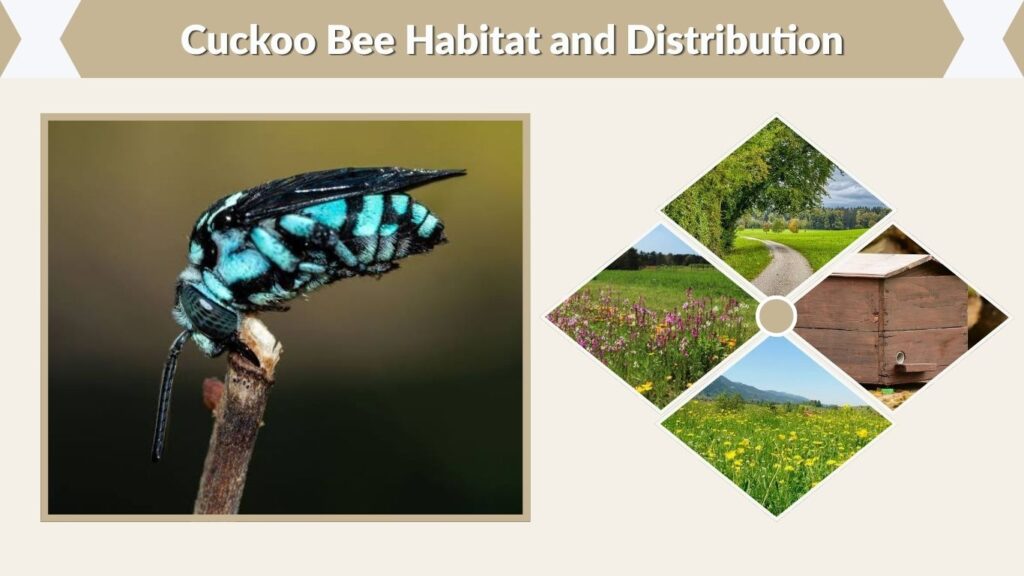
Cuckoo bees occur on every inhabited continent where suitable hosts are present. They inhabit forests, woodlands, meadows, deserts, coastal areas, farms, parks, and urban gardens. Some species are widespread, while others have extremely restricted distributions.
Where to Find Cuckoo Bees
They are most likely to be observed:
- Around aggregations of ground-nesting bees
- On flowers near host nesting sites
- Along sunny woodland edges
- In sandy or sparsely vegetated areas
- In native wildflower meadows
- Near dead wood containing cavity nests
- Around bumble bee nesting habitat
Cuckoo bees occur in California, Oregon, Connecticut, and many other parts of North America. Australia supports numerous brightly marked species, while Britain has nomad bees, cuckoo bumble bees, and other parasitic groups.
What Do Cuckoo Bees Eat?
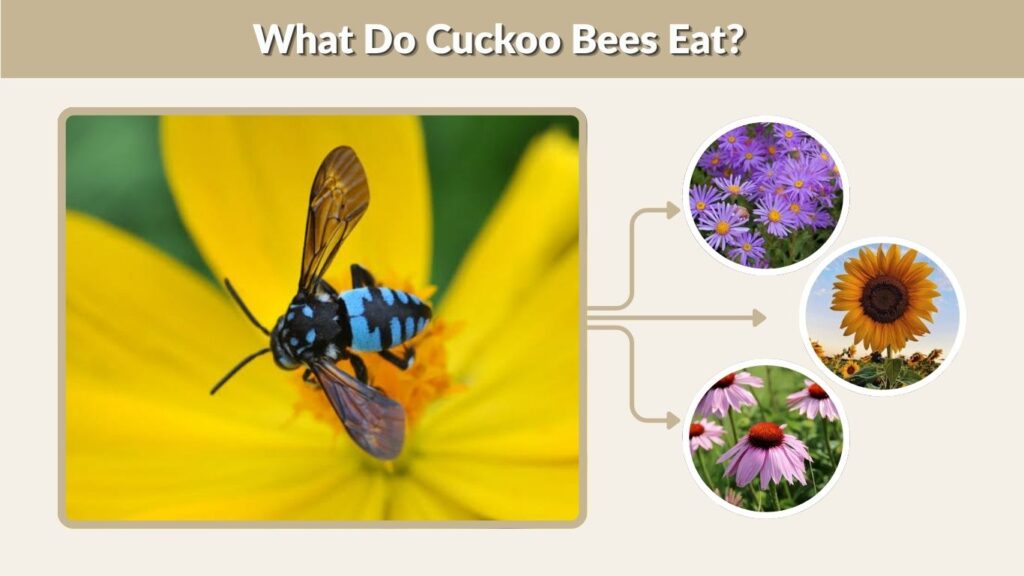
Adult cuckoo bees drink nectar for energy. Because females do not supply their offspring, they usually lack the thick pollen-carrying hairs found on nest-building bees.
The larvae consume pollen and nectar collected by the host. This stolen food explains the term “kleptoparasite,” meaning a parasite that takes another animal’s stored resources.
Do Cuckoo Bees Pollinate Flowers?
Adults visit flowers and may move pollen between blossoms accidentally. However, they generally collect less pollen than nest-building females and are not usually considered major pollinators.
Their greatest ecological importance comes from their relationships with other native bees. A diverse cuckoo bee community can indicate that the surrounding habitat supports sufficiently strong host populations.
Common Types of Cuckoo Bees
The cuckoo strategy has evolved repeatedly, producing bees with very different shapes, colors, hosts, and behaviors.
Neon Cuckoo Bee
The real neon cuckoo bee, Thyreus nitidulus, is an Australian native bee with brilliant blue patches against a black body. It is approximately 10–14 millimeters long and has brownish wings with a purple sheen.
Females target the nests of blue-banded bees. They lay eggs in prepared brood cells, and the cuckoo larvae consume the stored provisions. Neon cuckoo bees occur in urban areas, forests, woodlands, and heathlands across parts of Australia. The Australian Museum provides identification and life-cycle information.
Suckley’s Cuckoo Bumble Bee
Suckley’s cuckoo bumble bee, Bombus suckleyi, is a North American social parasite. It primarily depends on other bumble bee colonies, particularly those of the western bumble bee.
The species has declined considerably and remains far less common than its hosts. The U.S. Fish and Wildlife Service currently lists its federal status as “proposed endangered,” not finally listed endangered. U.S. Fish and Wildlife Service maintains the current regulatory status.
Variable Cuckoo Bumble Bee
The variable cuckoo bumble bee, Bombus variabilis, is a rare North American species associated primarily with American bumble bee colonies. Its appearance varies, but individuals commonly have yellow and black markings.
Macropis Cuckoo Bee
Epeoloides pilosula parasitizes Macropis oil bees. Because those host bees depend strongly on yellow loosestrife plants, the cuckoo bee indirectly relies on the same plants. Loss of the flower or host bee can therefore eliminate the parasite. The Xerces Society describes this unusually specialized relationship.
Cuckoo Leafcutter Bees
Bees in the genus Coelioxys typically parasitize leafcutter bee nests. Females often have a sharply pointed abdomen used to place eggs through or between pieces of nesting material.
Cuckoo Sweat Bees
Many Sphecodes species target sweet bee nests. Their black heads and thoraxes combined with reddish abdomens can make them resemble small wasps.
Cuckoo Bee vs. Wasp
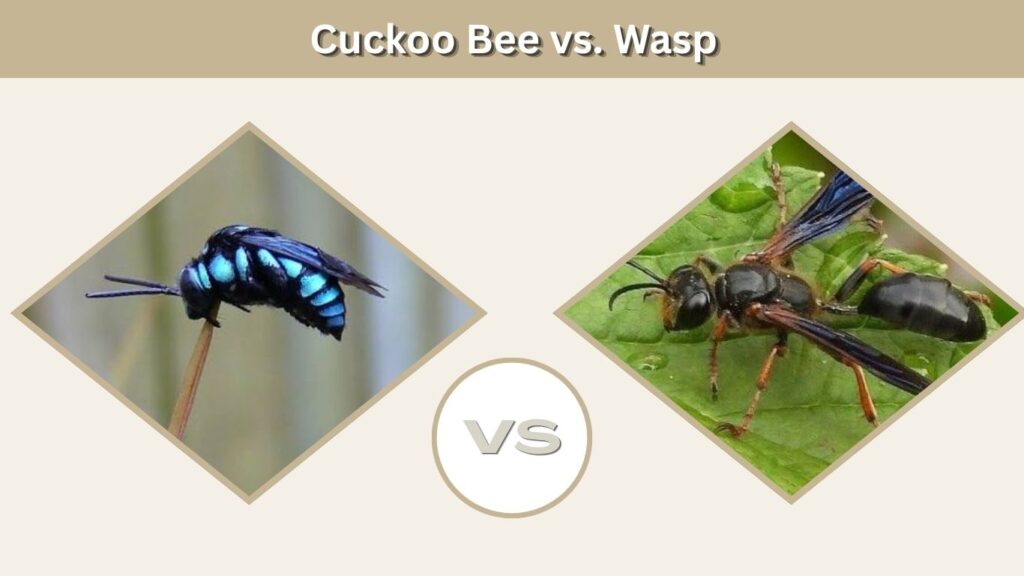
Cuckoo bees are frequently mistaken for wasps because many lack dense hair and have colorful, slender bodies.
| Feature | Cuckoo Bee | Typical Wasp |
| Antennae | Usually bee-like and segmented | Often longer or more visibly curved |
| Body hair | Sparse but usually branched | Generally smooth or lightly haired |
| Food | Adults primarily drink nectar | Diet may include nectar or prey |
| Larval behavior | Exploits another bee’s nest | Often receives prey or parasitizes insects |
| Body shape | Varies from robust to slender | Frequently has a narrow waist |
Color alone is unreliable. Some cuckoo bees resemble yellow jackets, which may discourage predators. However, not every resemblance represents a proven example of mimicry.
Do Cuckoo Bees Sting?
Female cuckoo bees can sting, but they are generally not aggressive toward people. They have no nest full of stored food or workers to defend, so encounters rarely result in stings. Males cannot sting.
Are Cuckoo Bees Dangerous?
Cuckoo bees are:
- Not poisonous
- Not naturally aggressive
- Unlikely to sting without physical restraint
- Not destructive to buildings
- Not interested in human food
- Natural parts of local ecosystems
Avoid handling them with bare hands. Anyone with a serious insect-venom allergy should use the same precautions followed around other bees and wasps.
Neon Cuckoo Bee in Minecraft ATM10
The Neon Cuckoo Bee in the Productive Bees mod is a game creature inspired by real cuckoo-bee behavior. It is not a biological species guide or an exact simulation of Thyreus nitidulus.
According to the Productive Bees documentation, a Neon Cuckoo Bee has a chance to emerge from a Blue Banded Bee’s nest whenever that bee returns with nectar. Players should provide the appropriate nest and flowers so the Blue Banded Bee can forage. Requirements can vary with the modpack version, so the in-game JEI information should also be checked.
FAQs
Why are they called cuckoo bees?
They are named after cuckoo birds because they place their offspring in nests prepared by other species.
Are cuckoo bees beneficial?
Yes. They are natural components of bee communities and can indicate healthy populations of host bees, although individual larvae kill or replace host offspring.
Where do cuckoo bees live?
They occupy many flower-rich habitats worldwide, but each species must live near the particular host bee it parasitizes.
Can cuckoo bees sting humans?
Females can sting but rarely do so unless trapped or handled. Males lack functional stingers.
What is a blue cuckoo bee?
Several Australian Thyreus species have bright blue markings. The best-known example is the neon cuckoo bee, which parasitizes blue-banded bee nests.