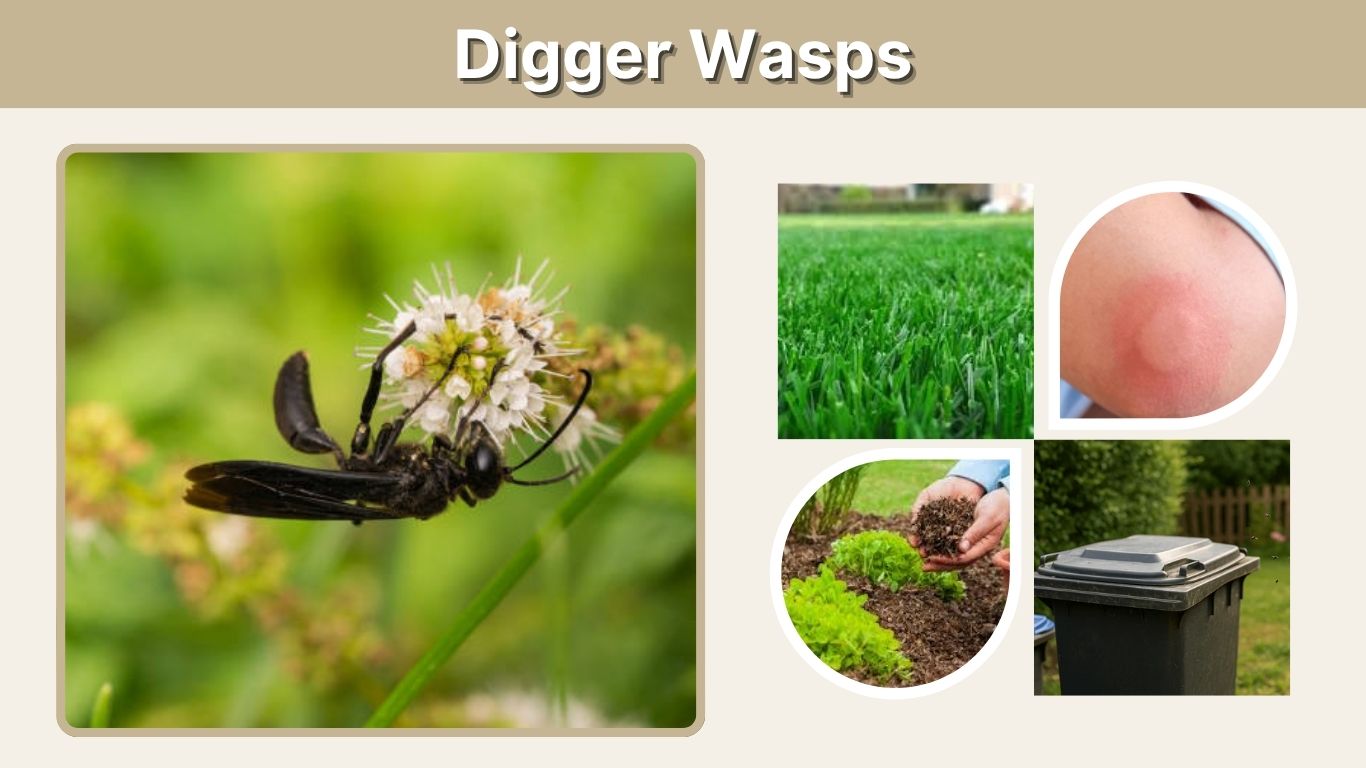
Digger wasps are ground-nesting wasps that often appear around lawns, gardens, sandy soil, and bare patches of ground. Many homeowners notice them because they dig small holes and fly close to the soil. Although their size and activity can look alarming, most digger wasps are solitary and not highly aggressive. Still, female digger wasps can sting if handled, stepped on, or disturbed. This guide explains what digger wasps are, what their nests look like, and whether they are dangerous.
What Is a Digger Wasp?
A digger wasp is a type of wasp that digs underground burrows for nesting. Many digger wasps are solitary, which means one female builds and cares for her own nest instead of living in a large colony. They often choose dry, sandy, or loose soil where digging is easy. Some species are also helpful because they hunt insects for their larvae.
Why Are They Called Digger Wasps?
They are called digger wasps because the females dig holes in the ground. These holes lead to underground tunnels or chambers where eggs are laid. The female may also place captured insects inside the nest so the young larvae have food after hatching.
Are Digger Wasps Solitary?
Most digger wasps are solitary. This means they do not usually share one large nest like yellow jackets or hornets. However, several females may nest close together if the soil is suitable. This can make a yard look busy even when each wasp is using its own separate burrow.
Are Digger Wasps Beneficial?
Digger wasps can be beneficial in gardens and yards. Many species hunt insects such as crickets, grasshoppers, flies, or other small prey. Adult digger wasps may also visit flowers for nectar. If their nests are away from people, pets, and walkways, they can often be left alone.
What Does a Digger Wasp Look Like?
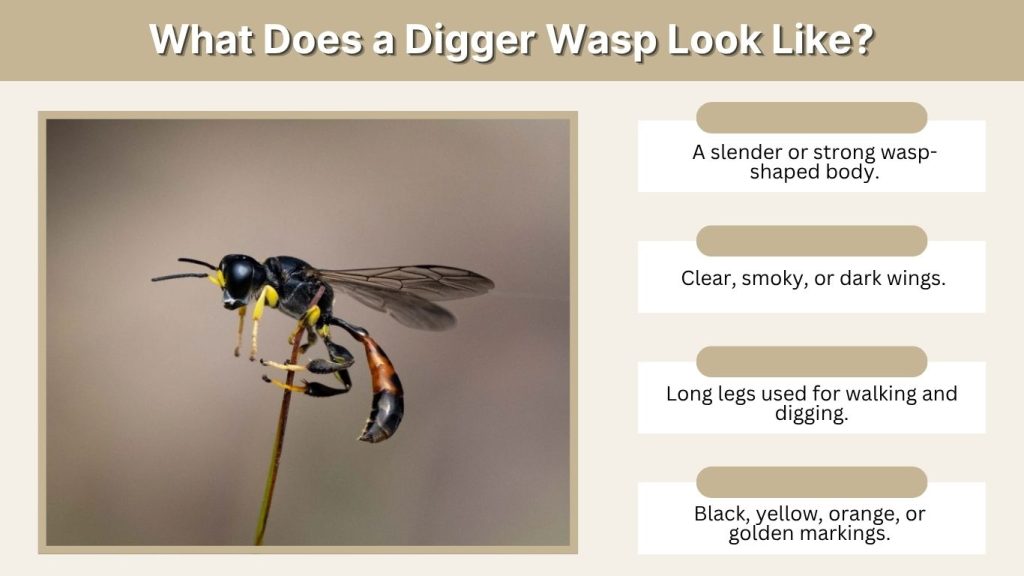
Digger wasps vary in size and color depending on the species. Some are black, some have yellow or white markings, and others may show orange or golden coloring. The great golden digger wasp is one of the most noticeable types because of its bright orange and black body. Their digging behavior is often the easiest way to identify them.
Common Digger Wasp Features
Digger wasps may have:
- A slender or strong wasp-shaped body
- Clear, smoky, or dark wings
- Long legs used for walking and digging
- Black, yellow, orange, or golden markings
- Fast movement close to the ground
- A habit of entering small holes in soil
Great Golden Digger Wasp
The great golden digger wasp is a large solitary wasp with eye-catching orange and black coloring. Its size can make people think it is dangerous, but it is usually not aggressive. Like other digger wasps, the female can sting, but stings are uncommon unless the wasp is handled or trapped.
Digger Wasp vs Ground Bee
Digger wasps and ground bees can look similar because both may nest in soil. Ground bees are often fuzzier and collect pollen, while digger wasps usually have smoother bodies and hunt insects for their larvae. Bees are more closely linked to pollination, while digger wasps are often insect hunters.
Digger Wasp Nest and Holes
A digger wasp nest is usually an underground burrow. The entrance often looks like a small hole in the ground with loose soil around it. These nests are common in sunny, dry, sandy, or thinly vegetated areas where the soil is easy to move. A single yard may have several holes if conditions are attractive.
What Does a Digger Wasp Nest Look Like?
A digger wasp nest usually looks like a small round opening in the soil. There may be a loose pile or fan of dirt around the entrance. The visible hole is only the entrance; the actual nest continues underground, where the female prepares space for eggs and food.
Why Are There Digger Wasp Holes in My Yard?
Digger wasp holes appear when females choose your yard as a nesting site. They often prefer bare patches, sandy soil, garden beds, dry lawns, or loose dirt near paths. These areas are easier to dig than thick grass or compact soil.
Are Multiple Holes a Colony?
Multiple holes do not always mean there is a colony. Many digger wasps are solitary, but several females may dig near each other when the location is suitable. However, if many wasps are entering one main hole and acting defensive, the nest may belong to yellow jackets rather than digger wasps.
Do Digger Wasps Sting?
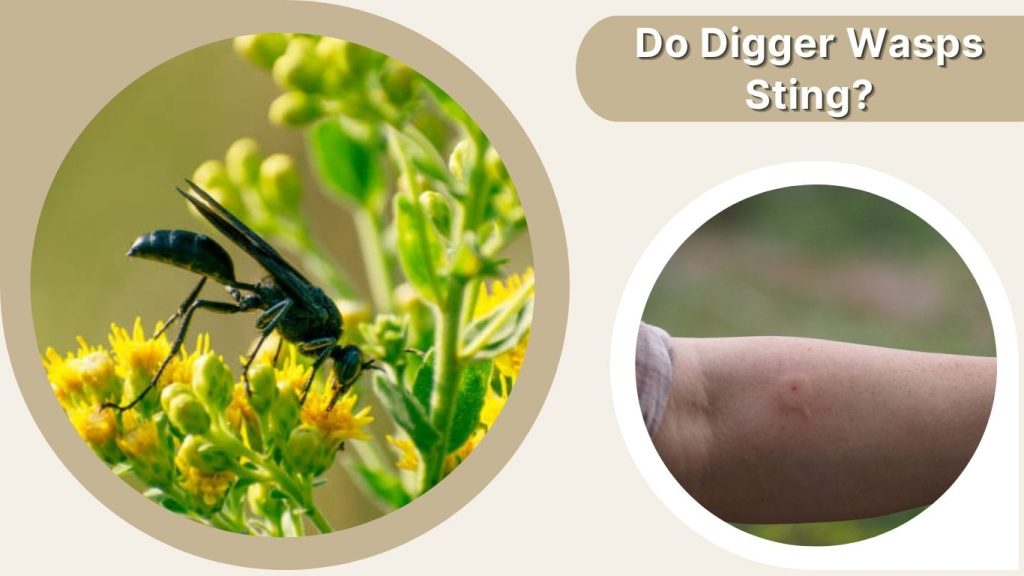
Digger wasps can sting, but they are usually not aggressive toward people. Female digger wasps have stingers, while males cannot sting. Most stings happen when a wasp is stepped on, grabbed, trapped in clothing, or disturbed near its nest. They are generally less defensive than social wasps because they do not protect a large colony.
Can Digger Wasps Sting Humans?
Yes, female digger wasps can sting humans. A sting may cause sharp pain, redness, swelling, itching, or tenderness. For most people, the reaction is mild and improves with simple care. However, people with wasp allergies should treat any sting seriously.
Great Golden Digger Wasp Sting
The great golden digger wasp can sting, but it is not known for being aggressive. It usually focuses on hunting, feeding, and nesting rather than bothering people. A sting is more likely if someone tries to catch it, press it, or disturb its nest directly.
Are Digger Wasps Aggressive?
Digger wasps are usually not aggressive. They may fly close to the ground and seem active, but this does not always mean they are attacking. Most are focused on digging nests or searching for prey. If left alone, they usually leave people alone too.
Digger Wasp Sting Symptoms and Treatment
A digger wasp sting can cause pain, redness, swelling, itching, and tenderness around the sting area. Most mild reactions can be managed at home, but allergic reactions need urgent medical help. If someone has trouble breathing, swelling of the face or throat, dizziness, chest tightness, or widespread hives, seek emergency care immediately.
Common Sting Symptoms
A mild digger wasp sting may cause:
- Sharp pain at the sting site
- Redness around the area
- Mild to moderate swelling
- Itching or warmth
- Tenderness when touched
- Soreness for several hours or longer
Basic Sting Treatment
For a mild digger wasp sting, move away from the nesting area first. Wash the sting with soap and water, then apply a cold compress to reduce swelling. Avoid scratching the area because this can irritate the skin. An antihistamine may help with itching, and pain relief medicine may help with discomfort if suitable.
When to Get Medical Help
Medical help is needed if symptoms spread beyond the sting area or become severe. Trouble breathing, swelling of the lips, tongue, face, or throat, dizziness, fainting, chest tightness, nausea, or widespread hives can be signs of a serious allergic reaction. People with known wasp allergies should follow their emergency plan.
How to Get Rid of Digger Wasps
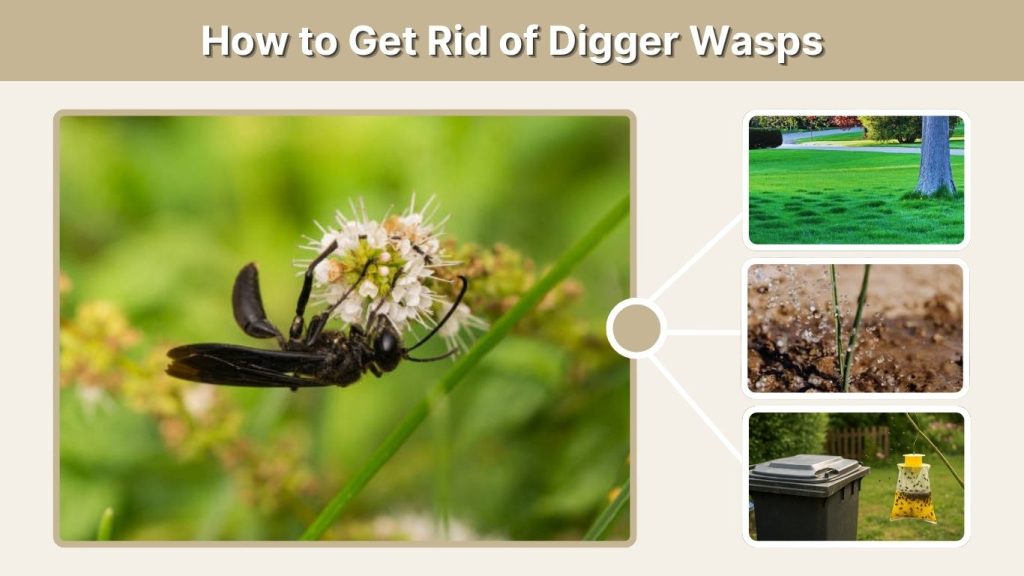
Digger wasp removal is not always necessary because many species are solitary and beneficial. They often help control insects and usually avoid people. However, control may be needed when nests are near doors, patios, walkways, play areas, or places where children and pets may step on the holes or disturb active females.
When Should You Leave Digger Wasps Alone?
You may not need to remove digger wasps if:
- The nest is far from people and pets
- No one nearby has a wasp allergy
- The holes are not in a play area
- The wasps are not entering the home
- The activity is seasonal and limited
- They are not acting like yellow jackets
Natural Ways to Discourage Digger Wasps
The best natural control is to make the ground less attractive for nesting. Digger wasps often prefer dry, bare, loose soil, so improving ground cover can reduce future activity.
Try these steps:
- Grow thicker grass in bare lawn patches
- Add mulch to exposed garden soil
- Water dry soil when appropriate
- Fill inactive holes after wasps leave
- Avoid loose sandy soil near play areas
- Keep trash sealed to reduce insect prey nearby
Should You Use Digger Wasp Spray or Dust?
Labeled wasp spray or insecticide dust may be used for some active nests, but it should be handled carefully. Always follow the product label and avoid treating unknown ground nests without proper identification. If the insects are actually yellow jackets, they may defend the nest aggressively. When in doubt, call a pest control professional.
Digger Wasp vs Yellow Jacket vs Cicada Killer
Many ground-nesting insects are mistaken for each other. This matters because their behavior and sting risk are different. Digger wasps are usually solitary and less aggressive, yellow jackets are social and more defensive, and cicada killers are large solitary wasps that dig burrows and hunt cicadas.
Digger Wasp vs Yellow Jacket
Yellow jackets often live in social colonies and may use underground cavities as nests. They can be very defensive if the nest is disturbed. Digger wasps usually build individual burrows and do not defend a large colony. If many wasps are entering one hole quickly, treat the area with caution.
Digger Wasp vs Cicada Killer
Cicada killers are large ground-nesting wasps that hunt cicadas. Their size can be intimidating, but they are usually not aggressive unless handled. Digger wasps may be smaller or medium-sized and may hunt insects such as crickets, flies, grasshoppers, or katydids, depending on the species.
Quick Comparison Table
| Feature | Digger Wasp | Yellow Jacket | Cicada Killer |
| Nest type | Ground burrow | Ground cavity or hidden nest | Ground burrow |
| Social behavior | Usually solitary | Social colony | Solitary |
| Aggression | Usually low | Often high near nest | Usually low |
| Sting risk | Possible | Higher near nest | Possible but uncommon |
| Main concern | Holes in yard | Defensive colony | Large size and soil mounds |
| Removal need | Only if high-risk | Often needed near people | Usually only if high-risk |
How to Prevent Digger Wasps From Nesting
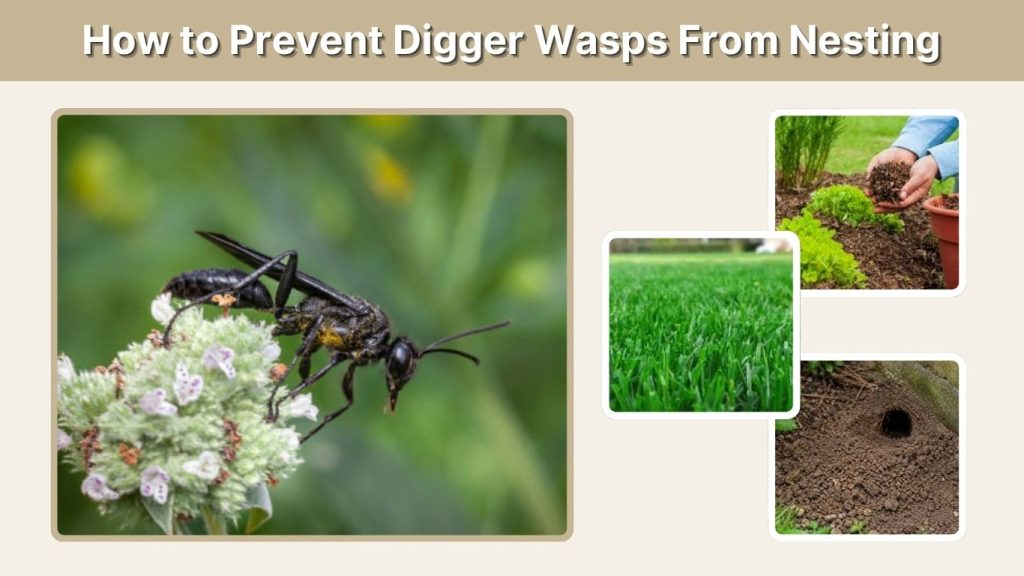
Preventing digger wasps is easier than removing active nests. The main goal is to reduce dry, bare, loose soil near people. Thick grass, mulch, groundcover, and regular yard care can make the area less attractive. Prevention is especially helpful near walkways, patios, gardens, playgrounds, and places where pets spend time.
Yard Prevention Tips
To reduce future digger wasp holes:
- Keep grass thick and healthy
- Cover bare soil with mulch or plants
- Fill old inactive burrows
- Avoid large dry sandy patches
- Keep outdoor trash sealed
- Reduce insect-attracting waste
- Inspect problem areas in warm months
Preventing Digger Wasps Near Play Areas
Play areas need extra care because children and pets may accidentally disturb nests. Keep bare soil covered, rake sandy areas regularly, and inspect the ground during warm months. If you see active wasps flying in and out of holes near a play area, keep children and pets away until the area is safe.
FAQs
Do digger wasps sting?
Yes, female digger wasps can sting, but they are usually not aggressive. Most stings happen when a wasp is stepped on, handled, trapped, or disturbed near its nest.
Can digger wasps sting humans?
Yes, they can sting humans. A mild sting may cause pain, redness, swelling, and itching. Severe allergic reactions need emergency medical care.
Are digger wasps aggressive?
Digger wasps are usually not aggressive. Most are solitary and do not defend large colonies like yellow jackets. They usually avoid people when left alone.
What does a digger wasp nest look like?
A digger wasp nest usually looks like a small hole in the ground with loose soil around the entrance. The actual nest continues underground.
How do you get rid of digger wasps?
Reduce bare soil, grow thicker grass, add mulch, fill inactive holes, and keep play areas covered or inspected. For active nests near people, professional pest control is safest.