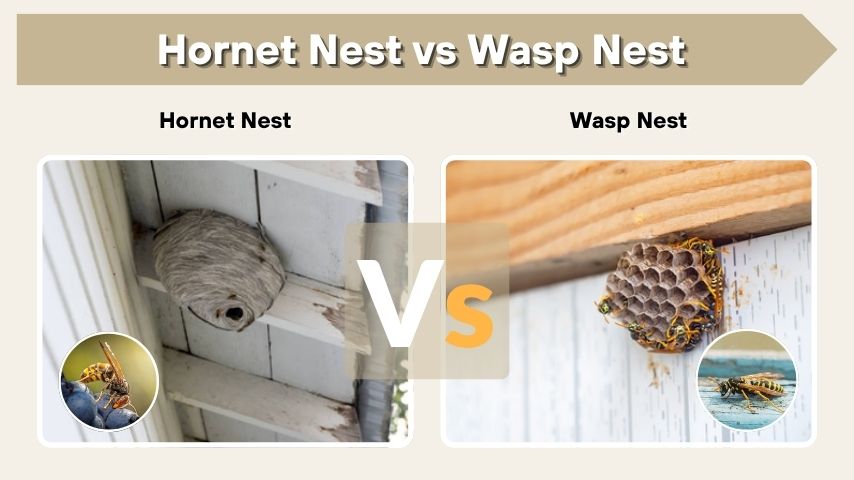
Hornet nests and wasp nests can look similar at first because both are often made from chewed wood fibers that dry into a gray, paper-like material. However, their shape, size, location, entrance style, and cell visibility can help you identify them. Knowing the difference matters because some nests are small and exposed, while others are hidden, large, or aggressive when disturbed. This guide explains how to compare hornet nests, paper wasp nests, yellow jacket nests, and bee hives safely.
Hornet Nest vs Wasp Nest: Quick Overview
A hornet nest is usually an enclosed paper structure with a rounded, oval, or football-like shape. A wasp nest can look different depending on the type of wasp. Paper wasps often build open comb nests, while yellow jackets may build hidden nests underground or inside walls. The easiest way to compare them is by looking at shape, location, and whether the cells are visible.
Main Differences Between Hornet and Wasp Nests
| Feature | Hornet Nest | Wasp Nest |
| Shape | Round, oval, or football-shaped | Open comb, hidden cavity, or paper nest |
| Outer covering | Usually enclosed | May be open or hidden |
| Cell visibility | Usually not visible from outside | Often visible in paper wasp nests |
| Common location | Trees, shrubs, rooflines, attics, sheds | Eaves, decks, ground holes, cracks, walls |
| Entrance | One main entrance hole | Open cells or a hidden entry point |
| Risk level | Often risky if disturbed | Depends on species and location |
What Does a Hornet Nest Look Like?
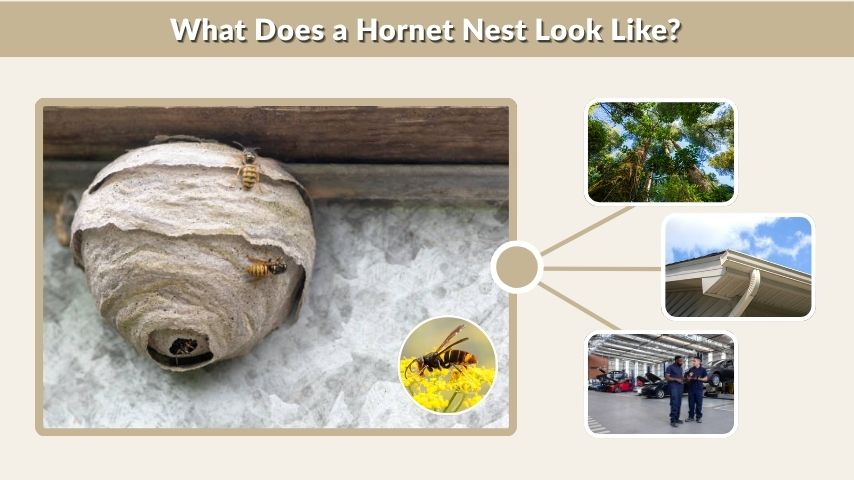
Hornet nests are usually easier to recognize when they are above ground and visible. They are often made of layers of gray or tan paper-like material. The outside may look smooth, striped, or slightly wrinkled. Unlike paper wasp nests, hornet nests usually hide the comb inside an outer shell, so you do not see the hexagonal cells unless the nest is broken.
Common Hornet Nest Features
Hornet nests often have a strong outer covering that protects the colony. Many are shaped like a ball, teardrop, or football. They can start small in spring and become much larger by late summer. Some nests hang from tree branches, while others appear under rooflines, inside sheds, or in attic spaces.
A typical hornet nest has one obvious entrance where insects fly in and out. If you see steady activity around a hole in an enclosed paper nest, it may be a hornet or bald-faced hornet nest. You should not stand close to the entrance because hornets may defend the nest if they feel threatened.
Where Hornets Usually Build Nests
Hornets prefer protected places where the colony can grow safely. Their nests may appear in natural areas or around homes.
Common hornet nest locations include:
- Tree branches and thick shrubs
- Roof overhangs and high corners
- Attics, barns, sheds, and garages
- Wall voids or covered structural spaces
- Fence lines, outdoor buildings, and wooded edges
What Does a Wasp Nest Look Like?
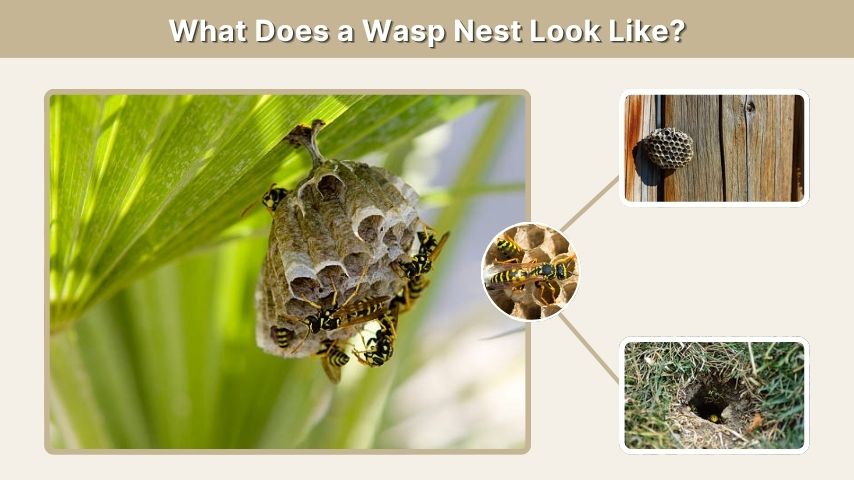
A wasp nest can have several appearances because “wasp” is a broad term. Paper wasps, yellow jackets, and hornets are often discussed together, but their nests are not always the same. Paper wasps usually build open nests with visible cells, while yellow jackets often build hidden nests. This is why location is just as important as appearance.
Paper Wasp Nest Appearance
A paper wasp nest is usually open and umbrella-shaped. You can often see the hexagonal cells from below. These nests are commonly attached by a small stalk to a protected surface. They are often found under eaves, porch ceilings, deck railings, fences, sheds, or outdoor furniture.
Paper wasp nests are usually smaller than mature hornet nests. Because they do not have a full outer shell, the comb is exposed. This makes paper wasp nests one of the easiest types to identify visually.
Yellow Jacket Nest Appearance
Yellow jacket nests are different from paper wasp nests. They are often hidden underground, inside wall voids, in tree cavities, under steps, or in cracks around buildings. Many people notice the insects before they notice the nest. The main clue is repeated traffic entering and leaving the same hole or gap.
A yellow jacket nest may be dangerous because the actual colony can be much larger than it appears from the outside. If the nest is in a wall, trailer crack, ground hole, or attic space, it is better to avoid disturbing the area.
Hornet Nest vs Paper Wasp Nest
This comparison is one of the easiest because the nest structures are very different. A hornet nest usually has an enclosed paper shell, while a paper wasp nest usually has open, visible cells. Hornet nests also tend to become larger and more rounded as the season continues. Paper wasp nests usually remain flatter and more exposed.
Bald-Faced Hornet Nest vs Paper Wasp Nest
A bald-faced hornet nest usually looks like a large gray paper ball or football. It has a covered outside layer and one main entrance hole. The comb is hidden inside. These nests are often found in trees, shrubs, or high building corners.
A paper wasp nest looks more like an open umbrella. It has no full outer shell, and the cells are visible. If you can clearly see the comb from below, it is more likely to be a paper wasp nest than a bald-faced hornet nest.
Wasp vs Hornet vs Yellow Jacket Nest
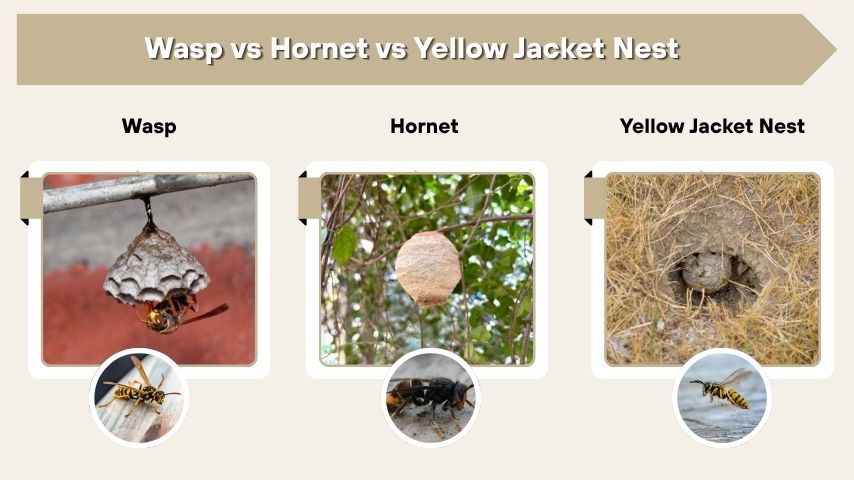
Many people use the words wasp, hornet, and yellow jacket interchangeably, but nest identification becomes easier when you separate them. Hornets usually build enclosed paper nests. Paper wasps usually build open comb nests. Yellow jackets often build hidden nests underground or inside structures. The insect’s flight path can also help reveal the nest location.
How to Identify Each Nest Type
Use these clues when comparing wasp, hornet, and yellow jacket nests:
- Hornet nest: enclosed, round or oval, usually above ground
- Paper wasp nest: open comb, visible cells, often under eaves
- Yellow jacket nest: hidden entrance, often in ground or wall voids
- Bald-faced hornet nest: large gray enclosed paper nest
- Ground nest: more likely yellow jackets or ground-nesting bees
Why Nest Location Matters
A nest under an eave with visible cells is usually not the same as a nest in a ground hole. A hidden nest inside a crack, siding gap, or wall void can contain many insects even if only a few are visible outside. Location helps you decide whether the nest is simple to identify or too risky to inspect closely.
Bee Nest vs Wasp Nest vs Hornet Nest
Bee nests and wasp nests are often confused, especially when insects are flying quickly near a hole or structure. Bees may use wax comb, soil tunnels, tree cavities, or wall spaces, depending on the species. Wasps and hornets usually make paper-like nests from chewed wood fibers. The material is one of the clearest differences.
Beehive vs Wasp Nest vs Hornet Nest
A honey bee hive is usually made of wax comb and may contain honey and brood. If honey bees are nesting inside a wall or tree, the comb is usually hidden. Bumble bees may nest in the ground or in old cavities. Solitary bees may use small holes in wood or soil.
A wasp or hornet nest usually has a papery texture. Paper wasps build exposed paper combs, while hornets build enclosed paper nests. Yellow jackets may also build paper nests, but they are often hidden underground or inside a structure.
Hornet or Wasp Nest in Ground, Cracks, or Walls
A nest in the ground, wall, crack, or trailer gap can be hard to identify from the outside. In many cases, people only see insects entering and leaving a small opening. That does not always mean the nest is small. Hidden nests can extend inside soil, insulation, wall spaces, or other protected cavities.
Nest in the Ground
If insects are flying in and out of a hole in the soil, the nest may belong to yellow jackets, ground-nesting bees, or another ground-nesting insect. Hornets and paper wasps are more commonly associated with above-ground nests, although identification should always be done carefully.
Do not pour water, block the hole, or dig around the entrance. Disturbing a ground nest can cause the insects to swarm defensively. Watch from a safe distance and note the size, color, and traffic pattern.
Nest in a Crack, Wall, or Trailer
If insects are entering a crack in a trailer, siding, roofline, brick gap, or wall, the nest may be hidden inside. This is more difficult than removing a visible paper wasp nest. Spraying the entrance without understanding the nest location can push insects deeper into the structure or into indoor spaces.
How to Identify a Nest Safely
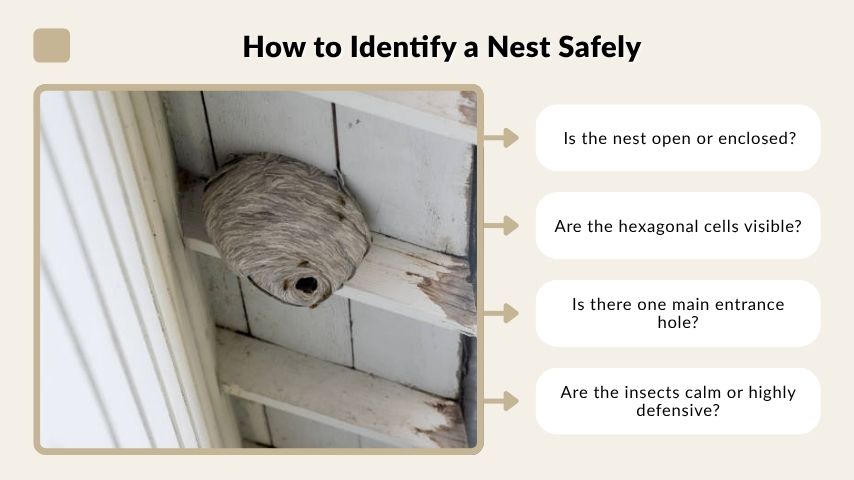
Safe identification is more important than getting close pictures. Many wasps and hornets defend their nests when they sense vibration, sudden movement, or direct disturbance. You should observe from a distance and never hit, shake, burn, flood, or block an active nest. If the nest is large or hidden, professional identification is the safest choice.
Safe Nest Identification Checklist
Before deciding what type of nest it is, look for basic signs from a safe distance.
Check these details:
- Is the nest open or enclosed?
- Are the hexagonal cells visible?
- Is the nest above ground, underground, or hidden?
- Is there one main entrance hole?
- Are insects entering a wall, crack, or soil opening?
- Is the nest near doors, children, pets, or walkways?
- Are the insects calm or highly defensive?
How to Remove a Hornet Nest vs Wasp Nest
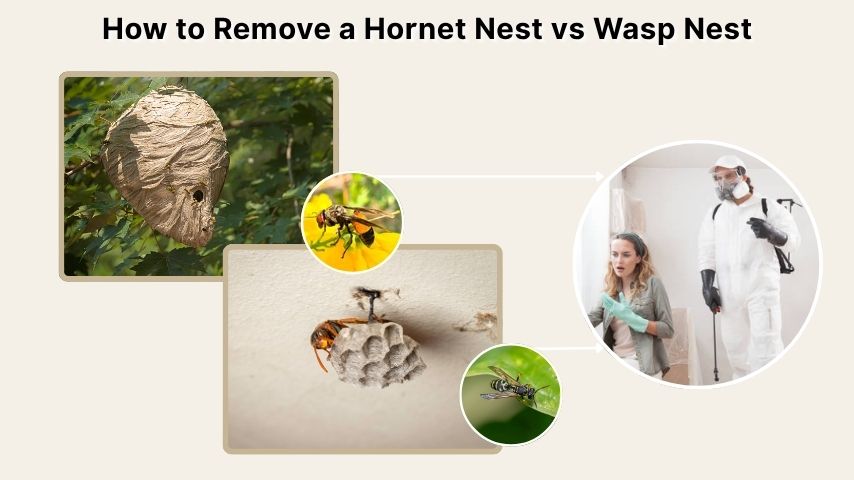
Removal depends on the nest type, size, location, and risk level. A small early-season paper wasp nest under an open eave is very different from a large hornet nest in a tree or a yellow jacket nest inside a wall. Large, hidden, high, or active nests should usually be handled by pest control professionals.
When You Should Call a Professional
Professional help is the safer choice when:
- The nest is large or difficult to reach
- The nest is underground or inside a wall
- The nest is near a doorway, school area, or walkway
- Someone nearby has a sting allergy
- You cannot identify the insect clearly
- The insects are very active or aggressive
- The nest is in a trailer, attic, shed, or roof space
Should Every Nest Be Removed?
Not every nest needs immediate removal. Wasps and hornets can help control other insects, and some nests are far enough away from people to leave alone. If the nest is in a low-traffic area and does not threaten people or pets, monitoring it from a distance may be enough.
However, nests near entrances, playgrounds, patios, outdoor workspaces, or pet areas should be taken seriously. The closer the nest is to daily activity, the higher the chance of accidental disturbance.
Common Mistakes When Comparing Nests
Mistakes are common because many people call every flying stinging insect a bee or every paper nest a hornet nest. Correct identification requires more than color alone. Nest shape, location, entrance style, and visible cells all matter. A careful comparison can prevent unsafe removal attempts and help you decide when expert help is needed.
Mistakes to Avoid
Avoid these common identification errors:
- Calling yellow jackets “bees”
- Assuming every paper nest is a hornet nest
- Ignoring hidden wall or ground activity
- Touching or shaking a nest to check if it is active
- Blocking the entrance hole
- Removing a large nest without protective knowledge
- Using pictures alone without considering location
FAQs
What is the main difference between a hornet nest and a wasp nest?
A hornet nest is usually enclosed with a paper-like outer shell, while a paper wasp nest is usually open with visible comb cells. However, “wasp nest” is a broad term and can include paper wasps, yellow jackets, and other related insects.
Is a paper wasp nest the same as a hornet nest?
No. A paper wasp nest is usually smaller, open, and umbrella-shaped with visible hexagonal cells. A hornet nest is usually larger, enclosed, and rounded or football-shaped. If the cells are clearly visible, it is more likely a paper wasp nest.
Do hornets or wasps build nests in the ground?
Yellow jackets commonly build nests in the ground, while paper wasps usually build open nests above ground. Hornets usually build enclosed nests above ground, such as in trees, shrubs, sheds, or rooflines. Ground nests should be observed carefully from a safe distance.
Are hornet nests more dangerous than wasp nests?
Hornet nests can be dangerous if disturbed, especially when they are large or close to people. Wasp nests can also be risky depending on the species and location. A hidden yellow jacket nest in a wall or ground hole may be just as dangerous as a hornet nest.
Should I remove a hornet or wasp nest myself?
Small, early paper wasp nests may sometimes be manageable, but large, hidden, underground, high, or highly active nests should be handled by professionals. If the nest is near children, pets, entrances, or someone with a sting allergy, professional removal is the safest option.