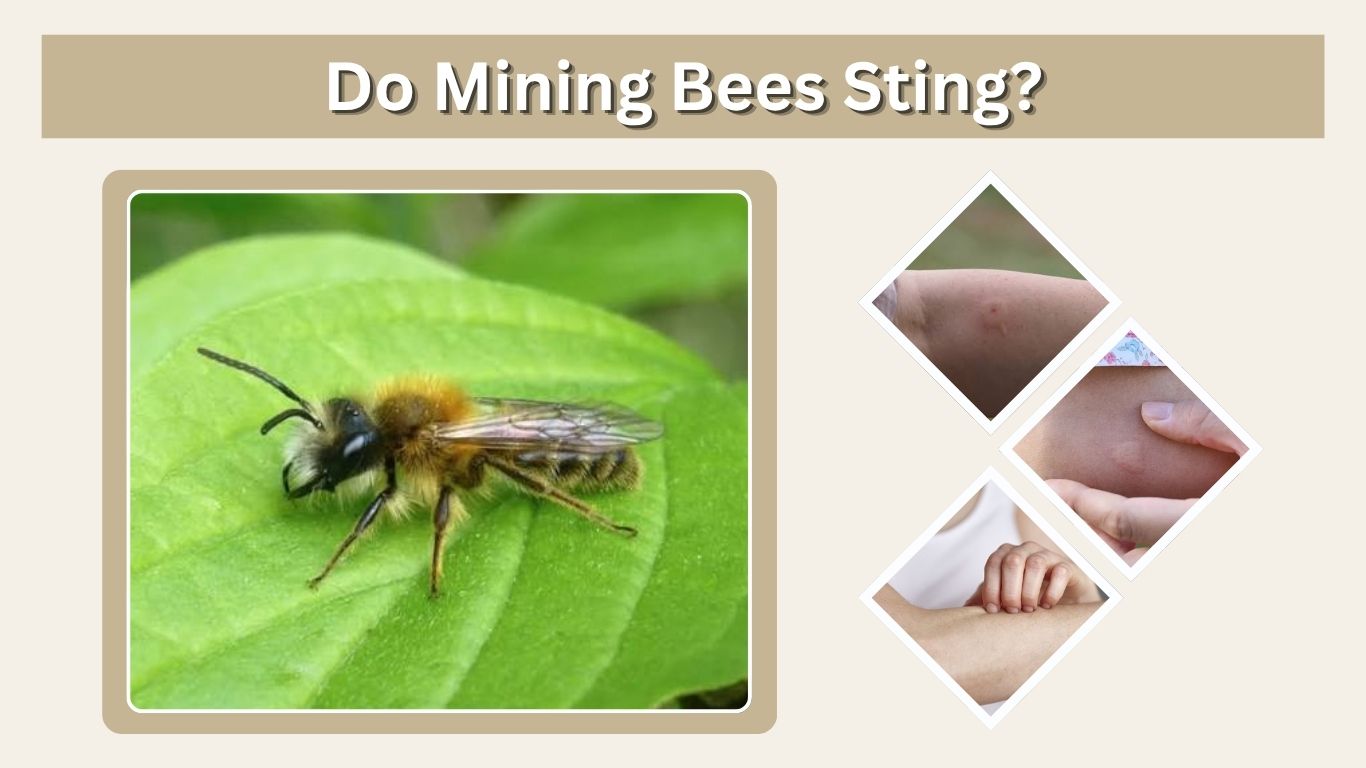
Mining bees can sting, but stings are extremely uncommon. Only females possess stingers, and they normally use them as a last defense when trapped, squeezed, stepped on, or handled. Males cannot sting at all. Unlike social bees, mining bees do not have a large colony or honey supply to defend, so they are generally calm around people and pets. Even when hundreds nest together in a lawn, they usually continue gathering pollen without attacking anyone nearby.
Can Mining Bees Sting People?
Female mining bees are physically capable of stinging, although many species have small stingers that may struggle to penetrate human skin. Those that can sting are reluctant to do so. A person can usually walk near an active nesting area without provoking defensive behavior.
Why Mining Bees Rarely Sting
Mining bees are solitary insects. Each female builds and provisions her own underground nest rather than cooperating in a colony with workers and a queen. Consequently, they do not launch group attacks or aggressively defend their nesting area.
A female is most likely to attempt a sting when she is:
- Caught inside clothing
- Squeezed in someone’s hand
- Stepped on with bare feet
- Trapped between skin and another object
- Handled or disturbed repeatedly
- Threatened while inside her burrow
Observing the bees, walking past their nests, or gardening nearby does not usually cause a sting.
Do Male Mining Bees Sting?
Male mining bees cannot sting. A bee’s stinger develops from the ovipositor, an egg-laying structure found only in females. Males may hover close to the ground while searching for mates, but this behavior is not aggressive.
Their low, rapid flights can look intimidating when many males gather over a nesting site. However, they are harmless and cannot defend themselves with a sting.
Will Mining Bees Chase People?
Mining bees do not normally chase people. Females concentrate on excavating nests and collecting pollen, while males patrol the area for potential mates. They lack the coordinated defensive behavior associated with honey bees, yellowjackets, and other social insects.
A bee might fly around someone wearing floral perfume or brightly colored clothing, but this is curiosity rather than an attack.
What Does a Mining Bee Sting Feel Like?
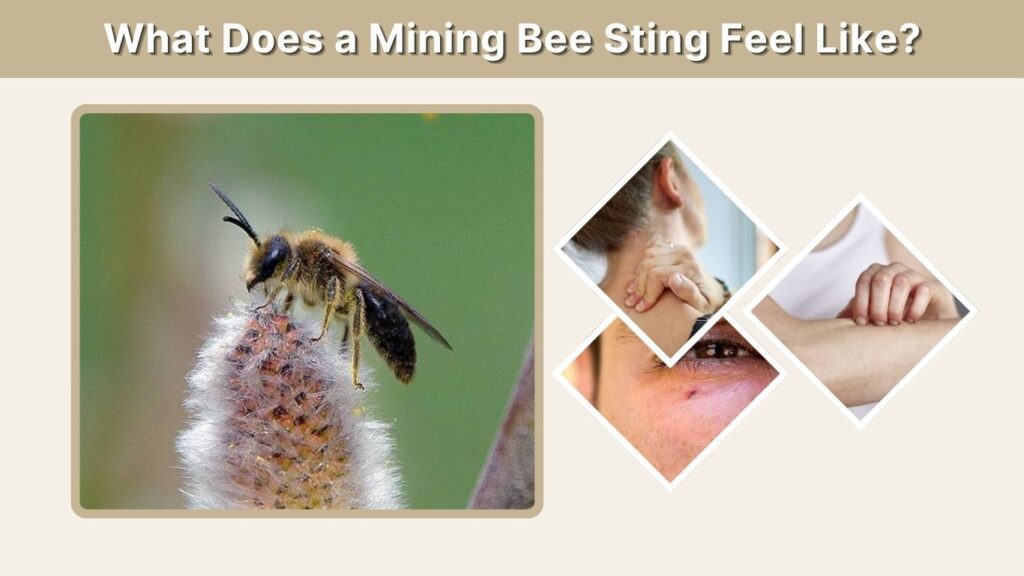
Because mining bee stings are rare, many people living beside their nests never experience one. If a sting does occur, it generally produces temporary discomfort similar to or milder than a typical bee sting. Individual reactions depend on the species, sting location, and the person’s sensitivity.
Common Sting Symptoms
A mild local reaction may include:
- Brief sharp or burning pain
- A small red mark
- Itching or tenderness
- Minor swelling around the sting
- Warmth at the affected area
These symptoms often begin improving within several hours, although mild redness or itching may last for a few days. Larger local swelling is possible in sensitive individuals.
Do Mining Bees Leave Their Stingers Behind?
Mining bees do not usually leave their stingers in human skin. Unlike a honey bee worker, a female mining bee generally has a stinger that can be withdrawn after use. Therefore, she would not ordinarily die simply because she stung someone.
Nevertheless, inspect the area after any suspected bee sting. The insect may have been a honey bee or another species rather than a mining bee.
Do Mining Bees Die After Stinging?
Mining bees generally do not die after stinging. The familiar one-sting-and-die behavior is mainly associated with worker honey bees whose strongly barbed stingers can become embedded in mammalian skin.
A mining bee may be capable of withdrawing her stinger. However, she is so unlikely to sting that repeated stings are not a normal concern.
Do Ashy and Tawny Mining Bees Sting?
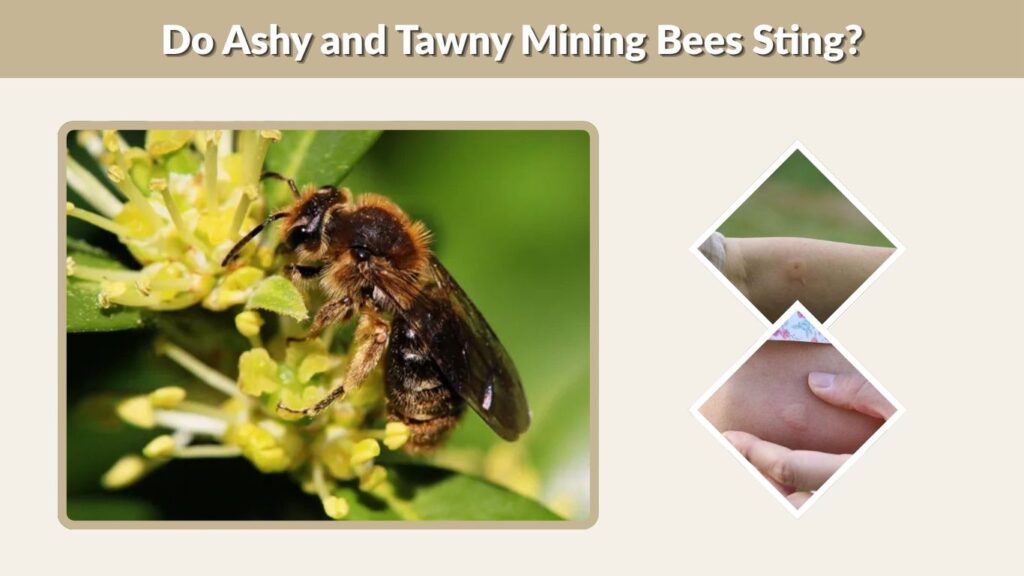
Ashy and tawny mining bees are two recognizable ground-nesting species found in the UK. Both can establish noticeable nesting aggregations in gardens and lawns, but neither is considered aggressive toward humans.
Can Ashy Mining Bees Sting?
Female ashy mining bees possess stingers and could potentially sting if trapped or handled roughly. In ordinary circumstances, they remain calm and avoid confrontation. Males cannot sting.
Ashy mining bees often nest close together in sunny lawns and short grass. Their numbers may appear threatening, but every female has a separate nest. They do not collectively defend the area.
Can Tawny Mining Bees Sting?
Female tawny mining bees are anatomically capable of stinging, but they are considered harmless because they are exceptionally reluctant to do it. Buglife describes tawny mining bees as harmless pollinators that do not need to be removed from lawns.
Tawny mining bee females have dense orange-brown hair, while males are smaller and less brightly colored. The little soil mounds around their entrances usually disappear naturally within a few weeks.
Are Mining Bees in the UK Dangerous?
UK mining bees are not considered dangerous to the general public. Britain has many species of Andrena, and most are peaceful solitary pollinators. They neither produce large stores of honey nor maintain defensive worker colonies.
People with a diagnosed insect-venom allergy should remain cautious around all bees because identifying a flying insect with certainty can be difficult.
Mining Bee Sting Treatment
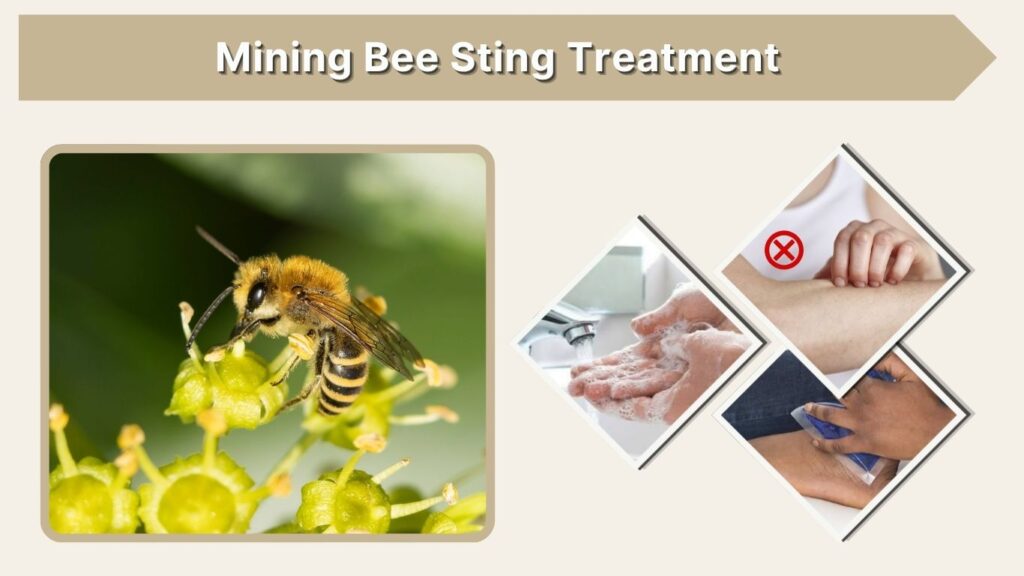
Most minor insect stings can be managed at home. First move away from the area to prevent another accidental encounter, especially if the insect has not been positively identified.
How to Treat a Mild Sting
Follow these basic steps:
- Check whether a stinger remains in the skin and remove it if visible.
- Wash the affected area gently with soap and water.
- Apply a cold compress wrapped in cloth to reduce pain and swelling.
- Keep the affected arm or leg raised when practical.
- Avoid scratching, as broken skin can become infected.
- Ask a pharmacist about suitable pain relief or antihistamines if needed.
Do not apply mud, fuel, bleach, vinegar, or other unproven substances. These can irritate the skin and increase the risk of infection.
When to Seek Medical Advice
Contact a medical professional if:
- Swelling continues to increase substantially
- Symptoms do not begin improving
- The area becomes increasingly painful, hot, or filled with pus
- You were stung inside the mouth, throat, or near an eye
- You received numerous stings
- You previously experienced a severe reaction to insect venom
- You are uncertain whether your symptoms are normal
A large local reaction is not always anaphylaxis, but it may still require medical assessment.
Signs of a Severe Allergic Reaction
Anaphylaxis is rare but requires immediate emergency treatment. Warning signs can include:
- Difficulty breathing or wheezing
- Swelling of the tongue, mouth, or throat
- Trouble swallowing
- Widespread raised or itchy hives
- Sudden dizziness or confusion
- Fainting or collapsing
- Pale, blue, or grey skin
- Rapid worsening of symptoms
Use a prescribed adrenaline auto-injector immediately and call your local emergency service. The NHS advises that anaphylaxis requires urgent hospital treatment, even if symptoms improve after adrenaline.
How to Avoid Mining Bee Stings
Mining bee nesting activity usually lasts only a few weeks. Simple precautions can prevent accidental contact without destroying these beneficial pollinators.
Safe Behavior Around Nests
- Wear shoes when crossing an active nesting area.
- Supervise young children near numerous nest entrances.
- Prevent pets from digging into burrows.
- Do not catch or hold mining bees.
- Avoid mowing directly over busy nests during peak activity.
- Mow during cooler periods when fewer bees are flying.
- Mark the nesting patch temporarily if it is near a walkway.
- Allow the bees to complete their short breeding season.
Pesticides are unnecessary and can kill other beneficial insects. Mining bee burrows do not normally damage lawns, foundations, wooden structures, or underground pipes.
FAQs
Can mining bees sting through clothing?
A female might sting through very thin material if trapped against the skin, but this is highly unlikely. Loose, protective clothing is sufficient around active nests.
Are mining bee stings painful?
A sting may cause brief pain, redness, and minor swelling. However, mining bee stings are uncommon and are often considered milder than stings from defensive social bees or wasps.
Can a mining bee sting more than once?
Potentially, yes. Mining bees generally do not have the strongly barbed stinger responsible for a worker honey bee’s death after stinging. However, they rarely sting even once.
Do mining bees sting dogs?
They are unlikely to sting dogs unless trapped in fur, stepped on, or disturbed while the dog digs at a nest. Keeping pets away from active burrows reduces the risk.
Should mining bee nests be removed?
Removal is usually unnecessary. The bees are peaceful seasonal pollinators, and their small soil mounds normally disappear naturally. Protect the area temporarily and allow their activity period to finish.