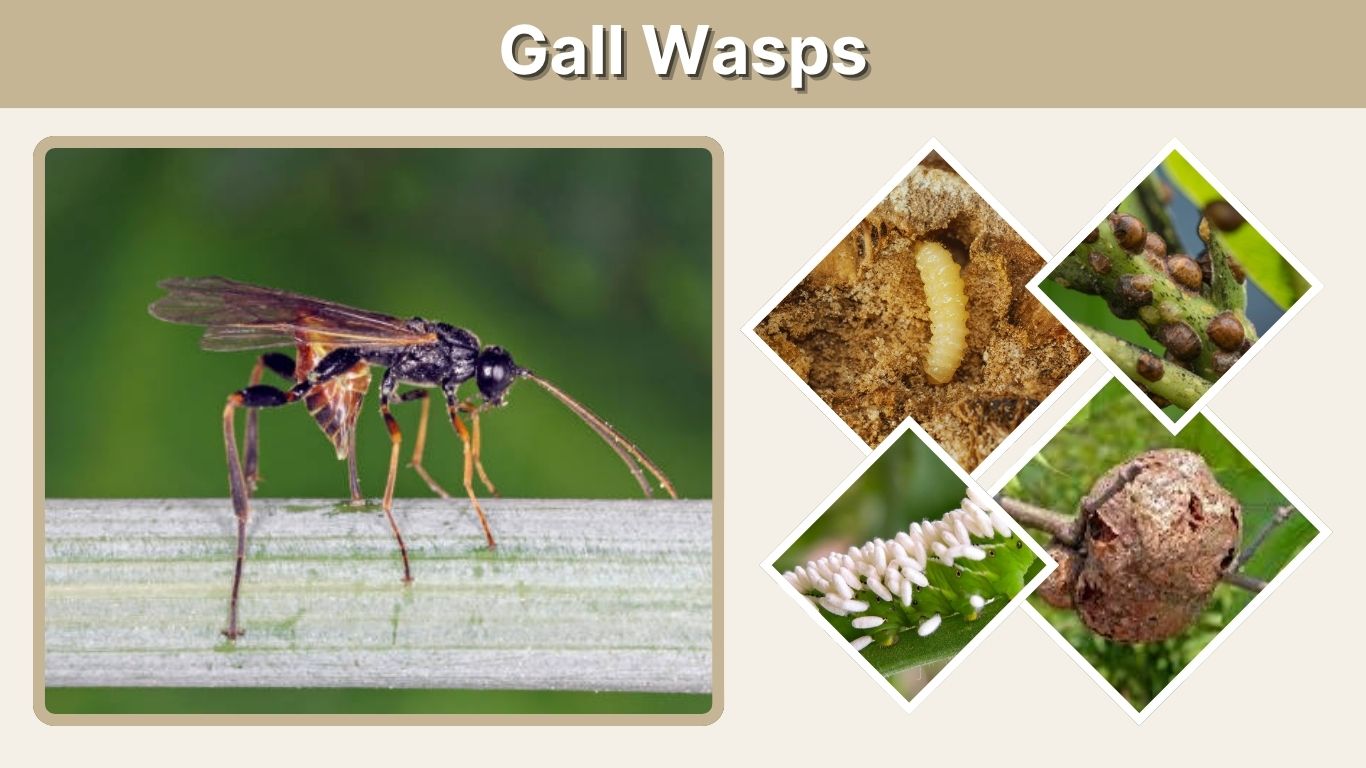
Gall wasps are tiny insects best known for creating unusual growths called galls on trees and plants. These strange formations can appear as balls, cones, fuzzy masses, or swollen stems, often alarming homeowners and gardeners. While gall wasps are commonly found on oak trees, they also affect roses, citrus trees, and other plants. Most species are harmless to people and cause little damage to healthy plants. Understanding how gall wasps live, reproduce, and interact with their host plants can help you identify and manage them effectively.
What Is a Gall Wasp?
Gall wasps belong to the Cynipidae family, a group of small insects capable of manipulating plant tissue to create protective structures known as galls. These insects spend much of their life cycle inside the galls they create, making them difficult to notice until the growths become visible on leaves, twigs, or acorns.
What Makes Gall Wasps Unique?
Unlike social wasps such as yellow jackets or hornets, gall wasps live solitary lives. Their most remarkable characteristic is their ability to influence plant growth, causing plants to form customized chambers where larvae can develop safely.
Common Characteristics of Gall Wasps
- Usually 1–5 mm in length
- Black, brown, or reddish in color
- Possess clear wings
- Live alone rather than in colonies
- Spend most of their life inside plant tissue
How Do Gall Wasps Create Galls?
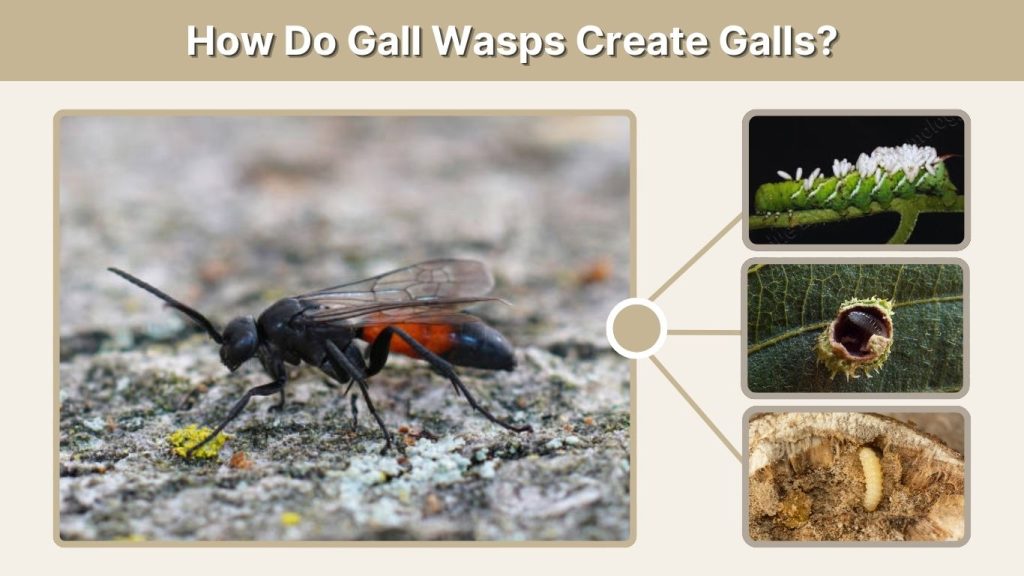
The formation of galls is one of nature’s most fascinating biological processes. Female gall wasps lay eggs inside young plant tissue and introduce chemicals that alter normal plant development. As the egg hatches, the surrounding plant tissue grows into a protective structure around the developing larva.
The Gall Formation Process
The creation of a gall typically follows several stages:
- A female wasp lays an egg inside plant tissue.
- Plant growth is chemically altered.
- Gall tissue begins forming around the larva.
- The larva feeds within the gall.
- An adult wasp emerges through a small exit hole.
Why Do Gall Wasps Need Galls?
Galls provide everything a developing larva requires. They offer protection from predators, shelter from weather conditions, and a continuous food source. Without a gall, the larva would be vulnerable to environmental threats and natural enemies.
Gall Wasp Life Cycle
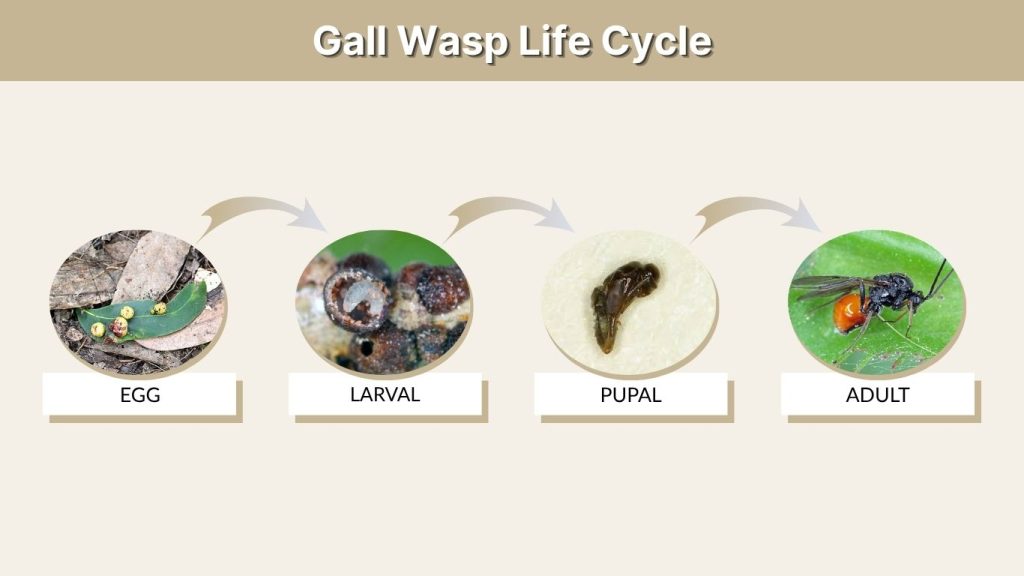
Gall wasps undergo a complex life cycle that often involves multiple generations. Some species alternate between sexual and asexual reproduction, producing different types of galls during each generation. This unique adaptation has fascinated scientists for decades.
Egg Stage
The life cycle begins when a female inserts eggs into leaves, buds, twigs, or acorns. Egg-laying typically occurs during periods of active plant growth.
Larval Development
After hatching, larvae remain inside the gall and feed on nutrient-rich plant cells. During this stage, the gall continues growing and provides protection for the developing insect.
Adult Emergence
When development is complete, the adult gall wasp chews its way out of the gall and searches for mates or suitable sites for laying eggs. Adult wasps generally live only a short time.
Common Types of Oak Gall Wasps
Oak trees host hundreds of gall wasp species, each producing distinctive galls. These structures vary greatly in size, shape, and appearance, making them useful for species identification.
Oak Apple Gall Wasp
The oak apple gall wasp creates large, round galls that resemble small apples. These galls often appear on leaves or twigs and are among the easiest to recognize.
Wool Sower Gall Wasp
This species forms fluffy white galls that resemble cotton balls attached to oak branches. The unusual appearance makes them one of the most recognizable oak galls.
Horned Oak Gall Wasp
Horned oak galls develop on twigs and feature horn-like projections extending from the surface. Heavy infestations can weaken branches over time.
Other Common Oak Gall Wasps
- Silk-button spangle gall wasp
- Oak marble gall wasp
- Oak artichoke gall wasp
- Gouty oak gall wasp
- Red cone gall wasp
Are Gall Wasps Harmful?
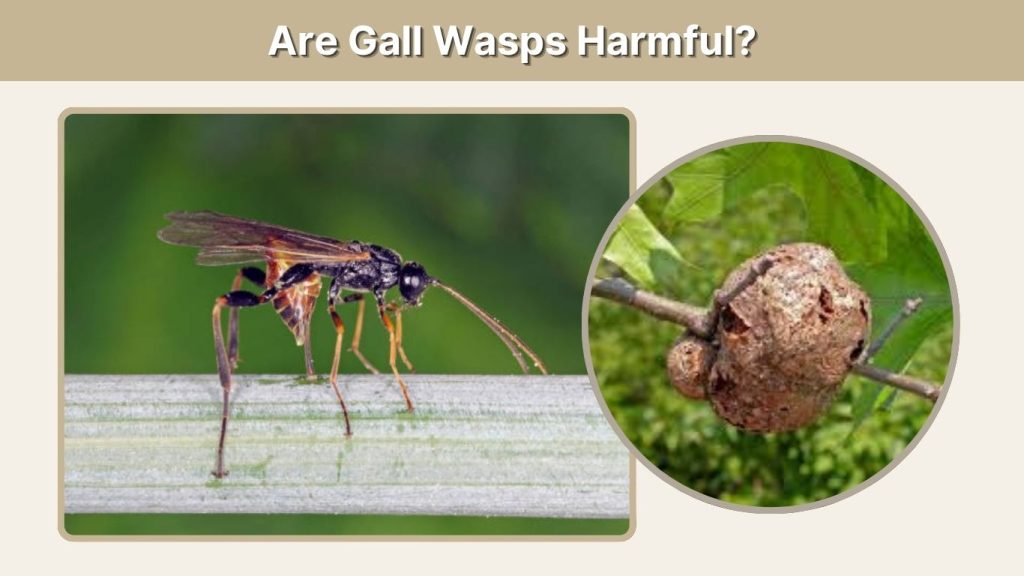
Many people worry when they discover unusual growths on their trees. Fortunately, most gall wasps are not considered serious pests. Healthy trees can typically tolerate a large number of galls without suffering significant damage.
Are Gall Wasps Dangerous to Humans?
Gall wasps are generally harmless to people. Unlike aggressive wasp species, they do not defend colonies or attack humans. Most species are incapable of stinging people and pose no direct health risk.
Effects on Trees
Most galls are cosmetic issues rather than serious threats. However, heavy infestations of twig-galling species may occasionally cause branch dieback, particularly in young or stressed trees. Healthy mature oaks rarely experience long-term damage from gall wasps.
Gall Wasps on Other Plants
Although oak trees are the most common hosts, gall wasps also affect a variety of other plants. Different species have evolved to target specific hosts, creating distinctive galls on stems, leaves, buds, and branches. Understanding these plant-specific gall wasps can help gardeners recognize infestations and determine whether management is necessary.
Citrus Gall Wasp
The citrus gall wasp is a significant pest in some citrus-growing regions. Females lay eggs in young shoots, causing swollen woody galls to develop along branches. Heavy infestations can reduce tree vigor and fruit production if left unmanaged.
Rose Gall Wasp
Rose gall wasps create unusual growths on rose stems and canes. These galls often appear as swollen, irregular masses. While they rarely kill established plants, severe infestations may weaken growth and reduce flowering.
Blueberry Stem Gall Wasp
This species targets blueberry plants and causes stem swellings that interfere with normal growth. Pruning affected stems is often the most effective management strategy.
Do Gall Wasps Sting?
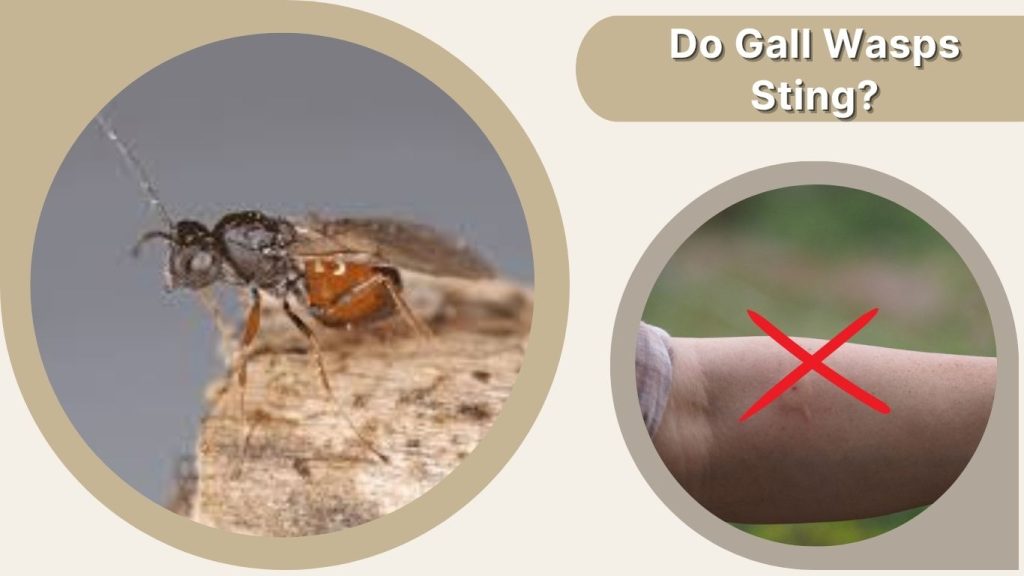
Many homeowners become concerned after discovering galls and wonder whether the insects inside can sting people. Fortunately, gall wasps are among the least threatening members of the wasp family.
Can Gall Wasps Sting Humans?
Most gall wasp species cannot sting humans. Although female gall wasps possess an egg-laying structure called an ovipositor, it is designed for inserting eggs into plant tissue rather than defending against threats.
Are Gall Wasps Dangerous?
Gall wasps are generally considered harmless. They do not build defensive colonies, aggressively protect nests, or swarm people. Their primary focus is reproduction and completing their life cycle within plant tissues.
Risks to Pets and Wildlife
Gall wasps pose little danger to pets, birds, or other wildlife. In fact, many animals benefit from their presence because gall wasps serve as a food source within local ecosystems.
Are Gall Wasps Beneficial or Bad?
Gall wasps are often misunderstood because of the unusual structures they create. While some gardeners view galls as signs of damage, these insects play valuable ecological roles.
Benefits of Gall Wasps
Gall wasps contribute to biodiversity in several ways:
- Provide food for birds and insects
- Support populations of beneficial parasitoid wasps
- Increase ecosystem diversity
- Create habitats for numerous small organisms
- Serve as part of natural food webs
When Gall Wasps Become a Problem
Despite their ecological value, gall wasps can occasionally become problematic. Large populations may affect the appearance of ornamental plants or stress young trees already weakened by drought, disease, or poor growing conditions.
In most cases, however, the damage remains largely cosmetic and does not require aggressive treatment.
Gall Wasp Control and Treatment
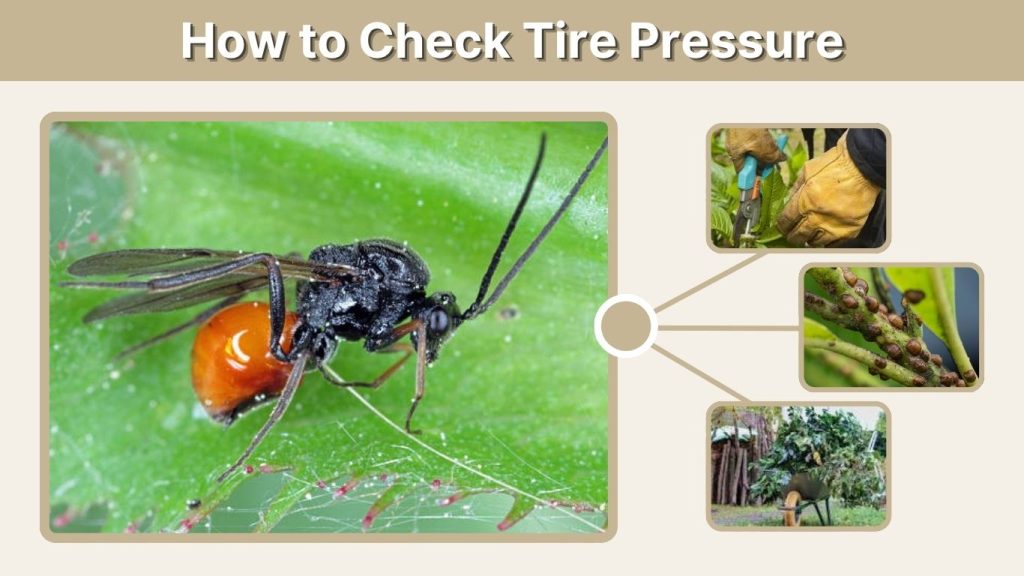
Gall wasp control is not always necessary. Because most infestations cause limited damage, management efforts should focus on maintaining overall plant health rather than eliminating every gall.
Pruning Affected Branches
Removing infested twigs before adult wasps emerge can help reduce future populations.
Best practices include:
- Prune during dormant seasons.
- Remove heavily infested branches.
- Dispose of pruned material properly.
- Avoid leaving infested branches near host plants.
Encouraging Natural Predators
Many insects naturally help control gall wasp populations.
Common natural enemies include:
- Parasitoid wasps
- Predatory beetles
- Spiders
- Birds
Maintaining a diverse landscape can encourage these beneficial species.
Chemical Control
Chemical treatments are rarely effective because larvae remain protected inside galls. By the time galls become visible, the insects are often already shielded from insecticides.
For this reason, chemical control is generally not recommended unless advised by a local agricultural specialist.
FAQs
Gall wasps generate many questions due to their unusual biology and the strange growths they produce. The following answers address some of the most common concerns.
What Are the Balls Growing on My Oak Tree?
These structures are likely oak galls created by gall wasps. Different species produce different shapes, sizes, and textures, ranging from smooth spheres to fuzzy or spiny growths.
Should I Remove Oak Galls?
Most oak galls do not require removal. If the tree is healthy and the infestation is minor, the galls can usually be left alone without causing significant harm.
Do Gall Wasps Build Nests?
No. Gall wasps do not build paper nests like yellow jackets or paper wasps. Instead, their larvae develop individually inside plant galls.
What Eats Gall Wasps?
Several organisms feed on gall wasps or their larvae, including birds, beetles, spiders, and specialized parasitoid wasps. These natural predators help keep populations balanced.