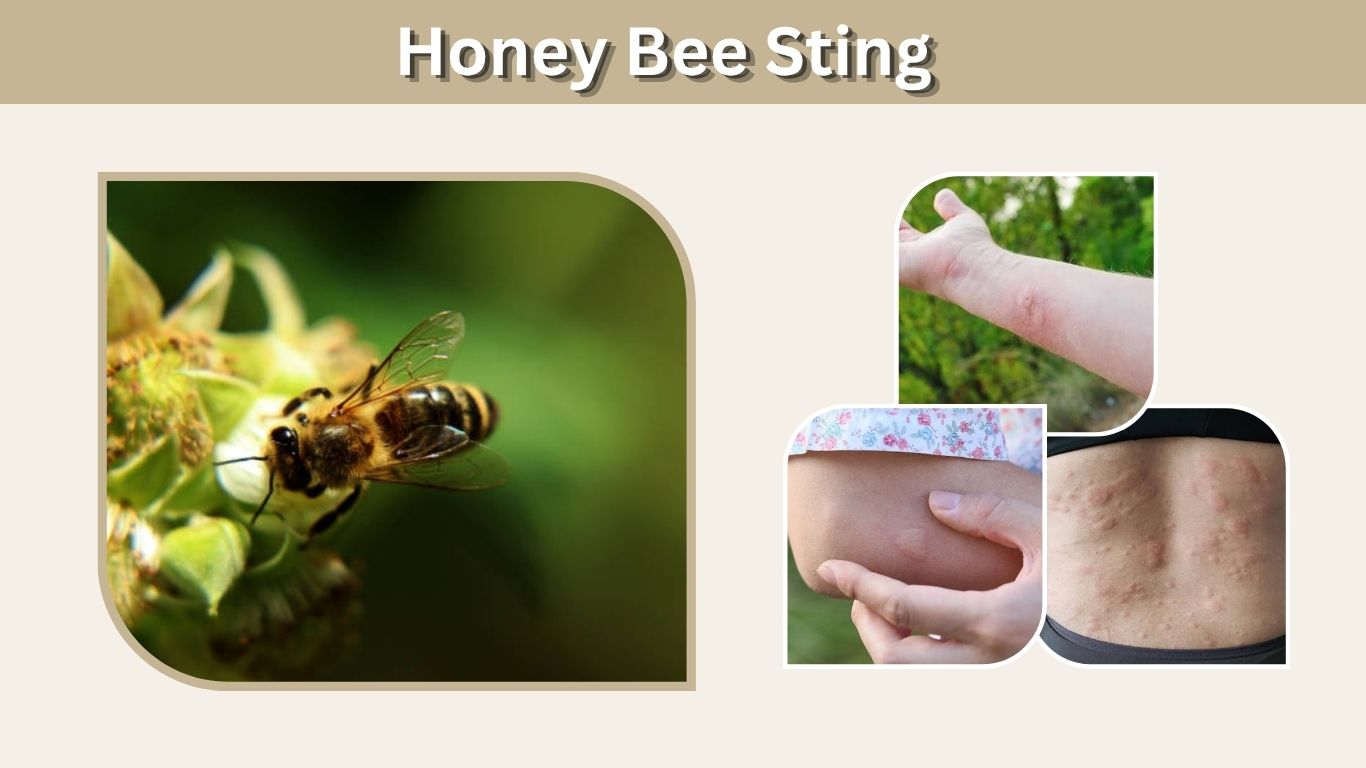
A honey bee sting can cause sudden sharp pain, redness, itching, and swelling where the bee’s stinger enters the skin. Unlike many wasps, a worker honey bee usually leaves its barbed stinger behind and dies after stinging. Most reactions are mild and improve with simple first aid, but some people develop large local reactions or serious allergies. Knowing how to remove the stinger, reduce swelling, recognize normal symptoms, and identify signs of anaphylaxis can help you respond safely after a honey bee sting.
What Happens When a Honey Bee Stings?
A worker honey bee has a barbed stinger connected to a venom sac. When it stings human skin, the barbs can become lodged in the tissue. As the bee pulls away, the stinger apparatus may remain behind and continue delivering venom briefly. This is why removing an embedded stinger promptly is one of the first steps after being stung.
Honey Bee Sting Symptoms
Common symptoms include:
- Immediate sharp or burning pain
- Redness around the sting site
- Small raised welt
- Mild to moderate swelling
- Itching
- Tenderness
- Warm feeling around the affected area
Most mild reactions remain concentrated around the sting site and gradually improve.
What Does a Honey Bee Sting Look Like?
A typical honey bee sting often appears as a small red, swollen bump. A tiny dark point or visible stinger may remain in the center.
Swelling can become more noticeable several hours later and may occasionally increase the following day. The appearance alone cannot always identify which insect caused a sting because wasp, hornet, and other bee stings can produce similar skin reactions.
Honey Bee Stinger in the Skin
Finding the stinger can help distinguish a worker honey bee sting from many wasp stings. Honey bees have strongly barbed stingers that commonly remain embedded in elastic human skin. The attached venom sac may continue contracting after the bee has flown away, making prompt removal useful.
How to Remove a Honey Bee Stinger
If you can see the stinger:
- Remove it as soon as possible.
- Scrape it sideways with a fingernail, card edge, or similar object, or grasp and pull it out quickly if that is faster.
- Avoid spending extra time worrying about the exact technique.
- Wash the area with soap and water afterward.
- Monitor the sting site for increasing symptoms.
The most important factor is getting the stinger out promptly.
What Does a Honey Bee Stinger Look Like?
A honey bee stinger is very small and can resemble a tiny dark splinter in the skin. Up close, it consists of the penetrating structures attached to a venom apparatus.
Because the stinger is so small, it can be difficult to see, especially when swelling begins quickly.
How to Treat a Honey Bee Sting
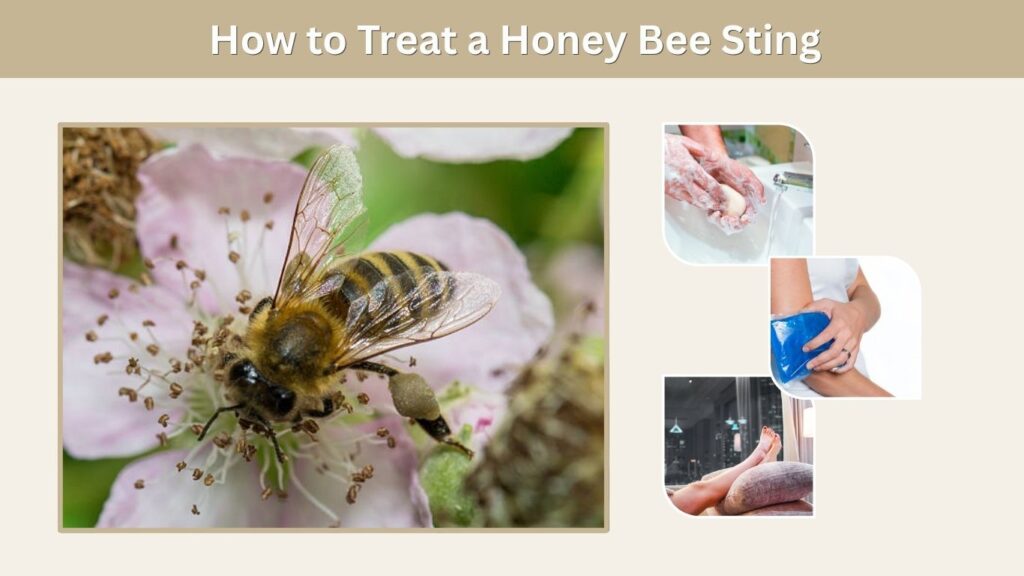
Most uncomplicated honey bee stings can be managed with basic home care. Treatment focuses on removing the stinger, decreasing pain and swelling, and avoiding additional irritation. Symptoms should be monitored carefully because an allergic reaction can develop rapidly in susceptible people.
Honey Bee Sting Treatment
For a mild sting:
- Remove the stinger promptly if present.
- Wash the area with soap and water.
- Apply a cold pack wrapped in cloth for about 10–20 minutes at a time.
- Elevate the affected arm or leg if swelling is significant.
- Avoid scratching the area.
- An appropriate over-the-counter pain reliever may help with discomfort.
- An appropriate oral antihistamine may help itching.
- Calamine lotion or hydrocortisone cream may help minor itching and irritation.
Always use medications according to their labels and individual medical guidance.
Honey Bee Sting Home Treatment
Cold treatment is one of the simplest ways to reduce swelling and discomfort. Place ice or a cold pack inside a cloth rather than directly against the skin.
Keep the sting area clean while it heals. Scratching can damage the skin and potentially increase the risk of infection.
Home treatment is appropriate only for mild reactions. Severe or rapidly spreading symptoms require medical attention.
Honey Bee Sting Swelling and Reactions
Not everyone reacts to honey bee venom in the same way. Some people develop only a tiny welt, while others experience substantial swelling around the sting site. Reaction severity can also differ from one sting to another.
Normal Local Reaction
A normal reaction usually causes pain, redness, itching, and swelling concentrated close to the sting.
Pain may improve within hours, although itching and swelling can remain for a day or several days. Swelling sometimes looks worse the next day before it begins to decline.
Large Local Reaction
Some people develop swelling extending well beyond the immediate sting site. For example, a sting on a finger might eventually cause much of the hand to swell.
A large local reaction can increase over the first one or two days and may take several days to resolve. Although uncomfortable, it is different from anaphylaxis because symptoms remain largely localized rather than affecting breathing, circulation, or multiple body systems.
Allergic Reaction to a Honey Bee Sting
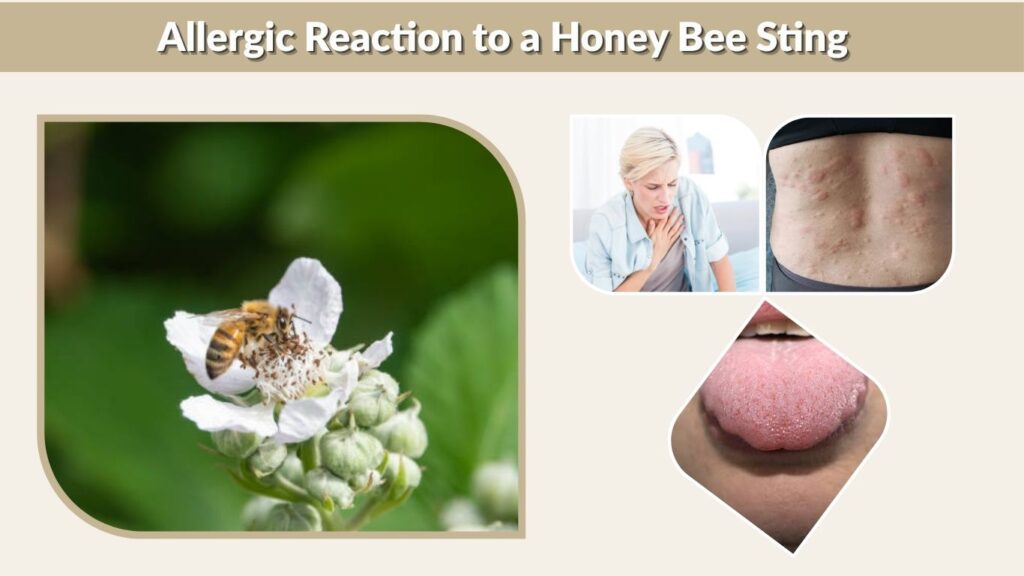
A severe allergic reaction to bee venom is known as anaphylaxis. It can occur quickly and is a medical emergency. A person’s previous sting reactions do not always predict exactly how a future sting will affect them.
Emergency Warning Signs
Seek emergency medical care immediately for symptoms such as:
- Difficulty breathing
- Wheezing
- Swelling of the tongue or throat
- Trouble swallowing
- Widespread hives
- Severe facial swelling
- Dizziness or fainting
- Weak or rapid pulse
- Confusion
- Repeated vomiting
- Sudden collapse
Someone who has been prescribed an epinephrine auto-injector should use it as directed and still seek emergency care.
When Else to Seek Medical Advice
Medical evaluation may also be appropriate for numerous simultaneous stings, a sting inside the mouth or throat, rapidly worsening swelling, persistent symptoms, or signs of infection such as increasing warmth, pus, or worsening redness after the initial reaction.
Young children, older adults, and people with known venom allergies may require additional caution.
How Long Does a Honey Bee Sting Last?
The initial burning or sharp pain is usually strongest immediately after the sting. Mild discomfort may then gradually decrease, while redness, itching, and swelling can last longer. The duration depends on the amount of venom, sting location, and individual immune response.
Typical Recovery
A mild sting may follow this pattern:
- Immediate pain during the first minutes
- Redness and swelling developing shortly afterward
- Itching lasting several hours or longer
- Swelling occasionally increasing the next day
- Gradual improvement over the following few days
A larger local reaction may require several days to settle completely.
Why Is My Bee Sting Swollen the Next Day?
Delayed swelling does not automatically indicate something dangerous. The body’s inflammatory response to venom can continue developing for many hours after the sting.
However, worsening redness accompanied by increasing pain, fever, drainage, or other unusual symptoms deserves medical evaluation.
Does a Honey Bee Die After Stinging?
Worker honey bees usually die after stinging humans because their barbed stinger becomes embedded in the skin. When the bee flies away, part of its abdominal tissue can be torn from its body along with the stinger apparatus.
Can a Honey Bee Sting More Than Once?
A worker honey bee normally cannot sting a person repeatedly after leaving its stinger behind.
This differs from many wasps and hornets, whose smoother stingers generally allow repeated stinging.
Queen honey bees have a different stinger structure and can sting more than once, although queens rarely sting people. They primarily use their stingers during conflicts with rival queens.
Honey Bee vs. Bumblebee and Wasp Stings
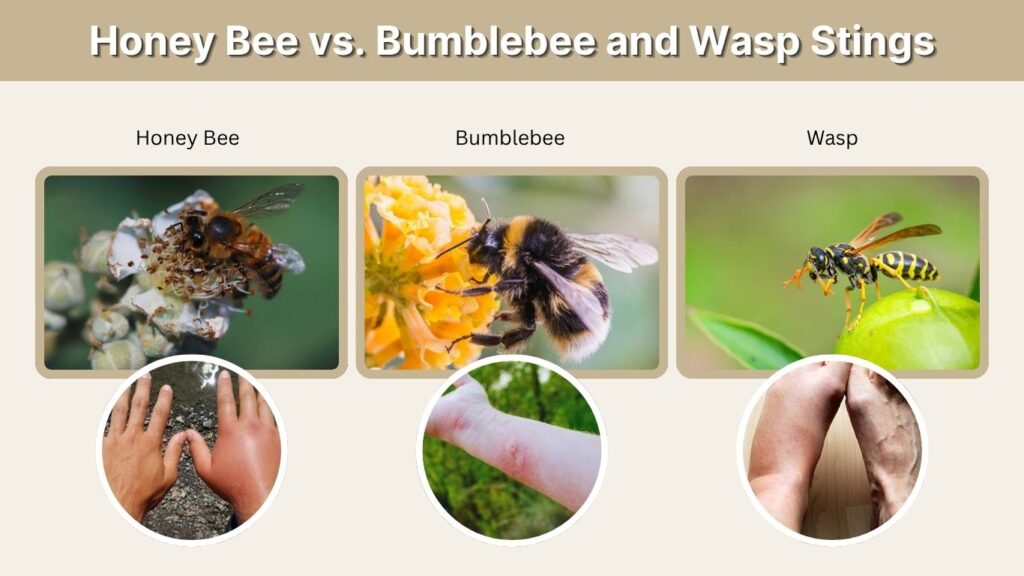
Honey bees, bumblebees, and wasps can all inject venom, but their stinging behavior differs. Identifying the insect can sometimes explain whether a stinger is likely to remain behind.
Main Differences
Honey bee:
- Worker usually stings once
- Barbed stinger often remains in human skin
- Bee normally dies afterward
Bumblebee:
- Stinger usually does not remain behind
- Female can potentially sting repeatedly
- Generally stings defensively
Wasp or yellow jacket:
- Can usually sting multiple times
- Stinger normally remains attached to the insect
- Some social species can be strongly defensive near nests
The severity of any sting depends heavily on individual sensitivity rather than simply the insect species.
Can Honey Help a Bee Sting?
Honey is sometimes promoted as a home remedy for bee stings, but it should not replace proven first aid. The priorities are removing the stinger, washing the skin, using a cold compress, and monitoring for allergic symptoms.
Should You Put Honey on a Bee Sting?
There is limited reason to rely on ordinary or Manuka honey as the primary treatment for an uncomplicated bee sting.
Applying sticky substances can also make the area difficult to keep clean. Standard first-aid measures are simpler and better established. Anyone experiencing a serious allergic reaction needs emergency medical treatment rather than home remedies.
How to Prevent Honey Bee Stings
Honey bees usually sting defensively rather than deliberately hunting people. Remaining calm around foraging bees and giving colonies plenty of space can significantly reduce the likelihood of being stung.
Bee Sting Prevention Tips
- Avoid swatting at bees.
- Move slowly if a bee approaches.
- Wear footwear outdoors.
- Avoid disturbing hives or swarms.
- Keep sweet drinks covered outdoors.
- Check cans and bottles before drinking.
- Avoid heavily scented products around active bees.
- Wear protective clothing when working with colonies.
- Contact an experienced beekeeper for honey bee swarms near buildings.
Honey bees are valuable pollinators, so unnecessary killing should be avoided whenever safe relocation or simple avoidance is possible.
FAQs
Do honey bees sting people?
Yes. Female worker honey bees can sting people when they feel threatened, become trapped against the skin, or defend their colony.
What should I do immediately after a honey bee sting?
Remove any visible stinger promptly, wash the skin, and apply a cold compress for 10–20 minutes. Monitor yourself for signs of a serious allergic reaction.
Why does a honey bee die after it stings?
The worker’s barbed stinger can become trapped in human skin. When the bee pulls away, the stinger apparatus and associated tissues may tear from its abdomen, eventually killing it.
How long does swelling from a honey bee sting last?
Mild swelling may last from several hours to a few days. Larger local reactions can increase during the first 24–48 hours and take several days to settle.
When is a honey bee sting dangerous?
A sting becomes an emergency when it causes difficulty breathing, throat or tongue swelling, widespread hives, dizziness, fainting, or other symptoms of anaphylaxis. Multiple stings or stings inside the mouth or throat can also require urgent medical care.