Mason wasps are solitary wasps often found around gardens, brick walls, wood holes, siding gaps, and small cavities near homes. Many people notice them because of their black, white-striped, red, or orange markings. The four-toothed mason wasp is one of the most commonly searched types. Although mason wasps can look intimidating, they are usually not aggressive. Female mason wasps can sting, but most stings happen only when they are handled, trapped, or directly disturbed near a nest.
What Is a Mason Wasp?
A mason wasp is a solitary wasp that often uses mud, cracks, holes, or small cavities to build a nest. Mason wasps are related to potter wasps and are different from social wasps like yellow jackets or bald-faced hornets. They do not usually live in large colonies, and many are helpful because they hunt insects for their larvae.
Mason Wasp Meaning
The name “mason wasp” comes from their nesting habits. Some species use mud like a mason uses building material. Others use existing holes in wood, walls, brick gaps, hollow stems, or old insect tunnels. They may seal nest chambers with mud after placing food and eggs inside.
Are Mason Wasps Solitary?
Most mason wasps are solitary. This means one female builds or uses a nest chamber for her young. They do not usually have a queen, workers, or a large colony to defend. Because of this, they are usually less aggressive than hornets or yellow jackets.
Are Mason Wasps Beneficial?
Mason wasps can be beneficial around gardens and landscapes. Many species hunt caterpillars or other soft-bodied insects to feed their larvae. Adults may also visit flowers for nectar. If they are nesting away from doors, windows, and busy areas, they can often be left alone.
What Does a Mason Wasp Look Like?
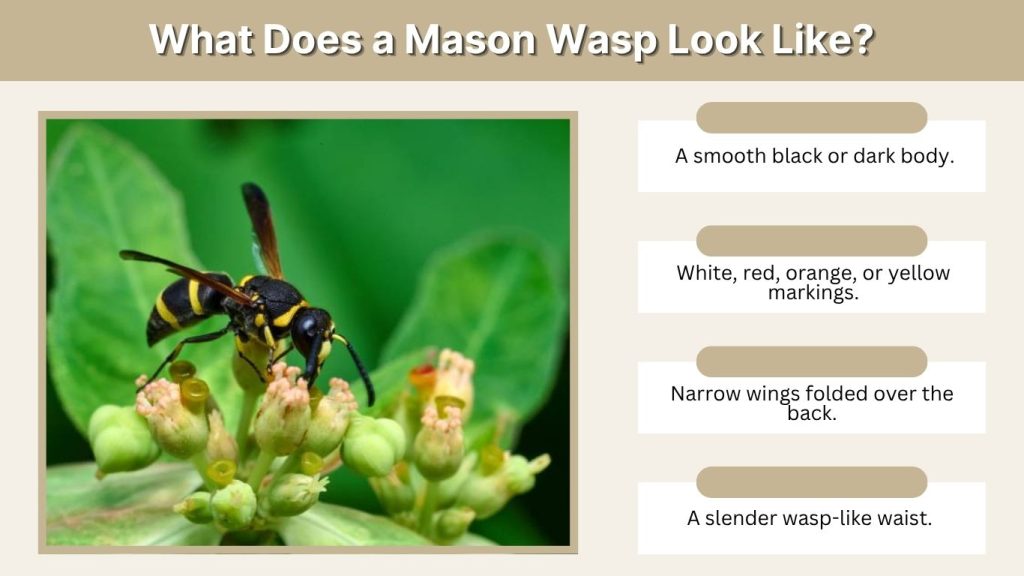
Mason wasps vary in size, color, and pattern depending on the species. Many have smooth wasp-like bodies with black, white, red, orange, or yellow markings. Some are small to medium-sized, while others look large enough to be mistaken for hornets. Color is useful, but nest type and behavior are also important for identification.
Common Mason Wasp Features
Mason wasps may have:
- A smooth black or dark body
- White, red, orange, or yellow markings
- Narrow wings folded over the back
- A slender wasp-like waist
- Fast movement around holes or cracks
- A habit of using mud or existing cavities
- Solitary behavior instead of colony activity
Black and White Mason Wasp
A black and white mason wasp may have pale stripes, spots, or bands on a dark body. Some people describe this insect as a white-striped black mason wasp or black mason wasp. These markings can make it look similar to a bald-faced hornet, but mason wasps are usually solitary and much less defensive.
Red and Black Mason Wasp
A red and black mason wasp may have a dark body with reddish or orange areas. These colors can look alarming, but color alone does not prove that the wasp is dangerous. Like other mason wasps, a female can sting, but she is unlikely to attack unless disturbed.
Four-Toothed Mason Wasp
The four-toothed mason wasp is a commonly noticed mason wasp. It is often searched as four toothed mason wasp, four-toothed mason wasp, or 4 toothed mason wasp. It may be seen around wood holes, old insect tunnels, garden areas, and small cavities. It is solitary and is not usually aggressive.
Mason Wasp Nest: Where They Build
A mason wasp nest is usually small and hidden in a hole, crack, hollow stem, wood opening, or mud cell. Unlike bald-faced hornets, mason wasps do not usually build a large hanging paper nest. Their nests may be easy to miss because they are often tucked into small spaces around walls, siding, masonry, or natural cavities.
What Does a Mason Wasp Nest Look Like?
A mason wasp nest may look like a sealed hole, a mud plug, a small mud cell, or a narrow cavity with mud partitions inside. The visible part may only be a small opening or a patch of dried mud. The actual nest chamber is often hidden inside the cavity.
Four-Toothed Mason Wasp Nest
A four-toothed mason wasp nest may be built in an existing hole or cavity. The female may use old beetle holes, wood gaps, hollow stems, or structural cracks. She places prey inside for the larvae and seals the chamber. This behavior is different from social wasps that build large shared nests.
Mason Wasp in House
A mason wasp may enter a house by accident through a window, door, vent, attic gap, or siding crack. Sometimes they appear indoors after emerging from a cavity near the structure. One wasp inside does not always mean there is a large nest, but repeated sightings should be checked.
Do Mason Wasps Sting?
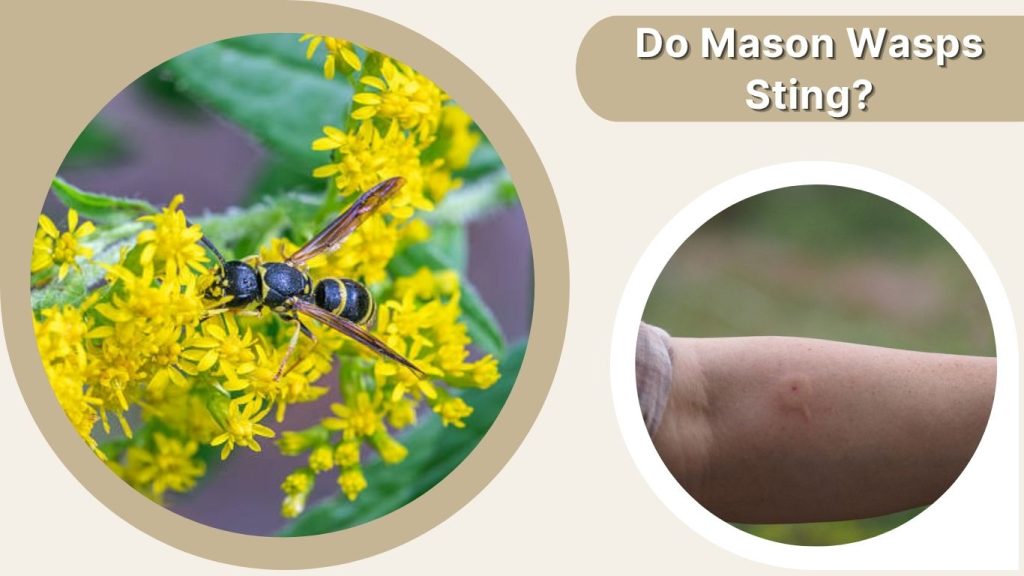
Mason wasps can sting, but they are usually not aggressive toward people. Female mason wasps have stingers, while males do not have true stingers. Most stings happen when someone presses, handles, traps, or directly disturbs the wasp. Since many mason wasps are solitary, they do not defend a large colony like hornets.
Does a Mason Wasp Sting?
Yes, a female mason wasp can sting. A mason wasp sting may cause sharp pain, redness, swelling, itching, or tenderness around the sting site. For most people, the reaction is mild. However, anyone with a wasp allergy should be careful around all stinging insects.
Four-Toothed Mason Wasp Sting
A four-toothed mason wasp can sting if it is female, but it is not known for being aggressive. It usually focuses on nesting and hunting prey. A sting is more likely if someone tries to catch it, crush it, or disturb its nest directly.
White-Striped Black Mason Wasp Sting
A white-striped black mason wasp can sting, but it usually avoids people. Its bold black and white coloring may make it look dangerous, yet behavior matters more than color. If it is flying near a hole or crack, avoid touching or blocking the nest area.
Are Mason Wasps Dangerous or Aggressive?
Mason wasps are usually not dangerous to humans. They are solitary insects and do not normally defend a large colony like yellow jackets or bald-faced hornets. However, female mason wasps can sting if they are handled, trapped, pressed, or directly disturbed. People with wasp allergies should be cautious around any stinging insect.
Are Mason Wasps Dangerous to Humans?
For most people, mason wasps are not a serious danger. They usually avoid people and focus on nesting, hunting insects, or feeding on nectar. The main risk is an accidental sting. A sting can be painful, but it is usually not life-threatening unless the person has an allergy.
Are Mason Wasps Aggressive?
Mason wasps are not usually aggressive. They may fly around holes, walls, flowers, or garden areas, but this behavior is not the same as attacking. They are usually looking for a nesting site or prey for their larvae. If left alone, they normally leave people alone too.
Are Four-Toothed Mason Wasps Dangerous?
A four-toothed mason wasp is usually not dangerous. Like other mason wasps, the female can sting, but it does not defend a big colony. It is more likely to sting only if handled or threatened. If one is nesting near a door, window, or patio, avoid blocking the nest entrance.
Mason Wasp Sting Treatment
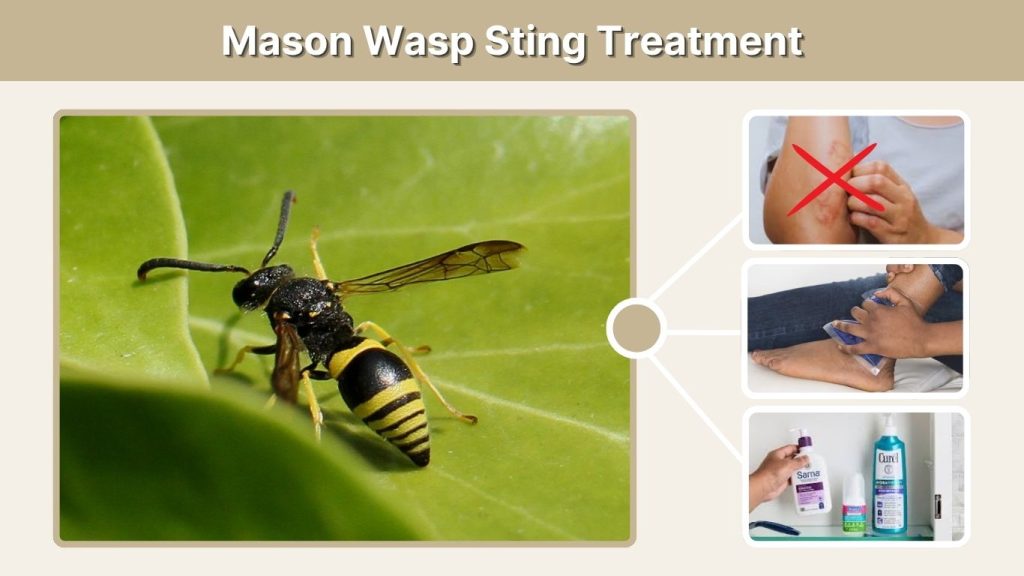
A mason wasp sting can cause sharp pain, redness, swelling, itching, warmth, or tenderness near the sting area. Most mild stings can be treated at home with basic first aid. Severe symptoms, such as trouble breathing, swelling of the face or throat, dizziness, chest tightness, or widespread hives, need emergency medical care.
Common Sting Symptoms
A mild mason wasp sting may cause:
- Sharp pain at the sting site
- Redness around the area
- Swelling or warmth
- Itching
- Tenderness when touched
- Mild soreness for several hours
- Skin irritation from scratching
Basic Sting Treatment
For a mild mason wasp sting:
- Move away from the wasp or nest
- Wash the sting area with soap and water
- Apply a cold pack to reduce swelling
- Avoid scratching the skin
- Use an antihistamine for itching if suitable
- Use pain relief medicine if needed
- Watch for signs of an allergic reaction
Mason Wasp Sting Pain Index
There is no widely used exact sting pain index rating for every mason wasp species. Pain can vary by species, sting location, and personal sensitivity. Most people describe a typical wasp sting as sharp and uncomfortable. If pain becomes severe or symptoms spread, medical advice is recommended.
How to Get Rid of Mason Wasps
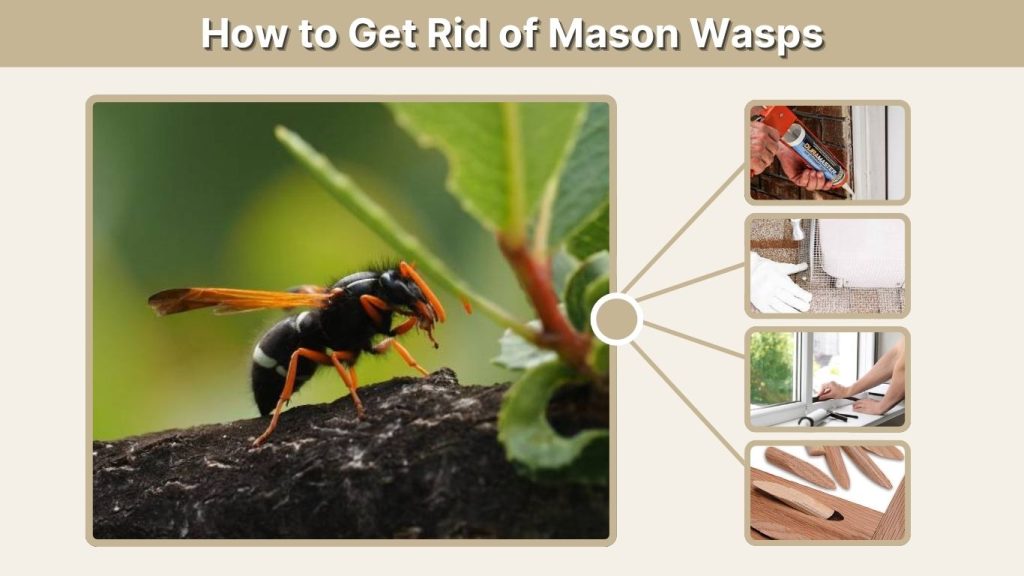
Mason wasp removal is not always needed because these wasps are usually solitary and beneficial. They may help reduce caterpillars and other insects in the yard. Control becomes important when mason wasps enter the house, nest near doors or windows, use siding gaps, or create concern for children, pets, or allergic people.
When Should You Leave Mason Wasps Alone?
You may not need to remove mason wasps if:
- The nest is outdoors and away from people
- No one nearby has a wasp allergy
- The wasps are not entering the house
- The nest is inactive
- They are not damaging the structure
- They are helping control garden pests
Natural Mason Wasp Control
The best control is to reduce nesting access after the wasps are no longer active. Do not seal an active nest while wasps are still inside, because they may find another way out or enter the home.
Helpful steps include:
- Seal cracks in siding, brick, and trim
- Repair gaps around windows and doors
- Use fine mesh over vents
- Remove inactive mud nests
- Cover unused holes in wood
- Keep screens in good condition
- Check small cavities near patios and sheds
Should You Use a Mason Jar Wasp Trap?
A mason jar wasp trap is a general homemade wasp trap, not a targeted mason wasp solution. It may catch some social wasps attracted to sweet liquids, but solitary mason wasps are not always interested. For mason wasps, sealing entry points and removing inactive nests usually works better than trapping.
Mason Wasp vs Bald-Faced Hornet and Other Lookalikes
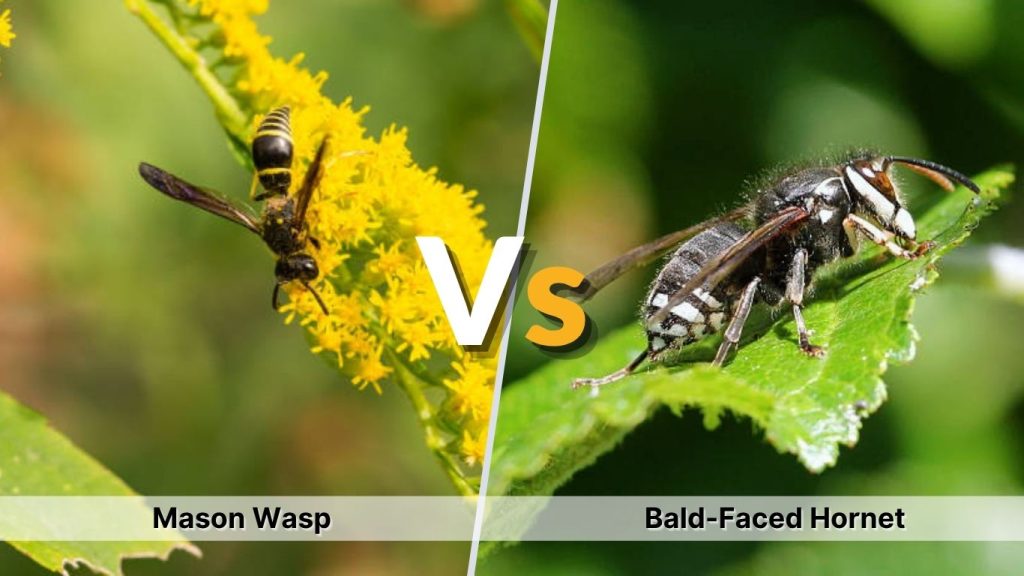
Mason wasps are often confused with bald-faced hornets, potter wasps, mud daubers, mason bees, and carpenter bees. Correct identification matters because behavior and risk are different. Bald-faced hornets are social and defensive, while mason wasps are usually solitary and less aggressive. Their nest type is often the best clue.
Mason Wasp vs Bald-Faced Hornet
A bald-faced hornet is a social wasp that often builds a large paper nest in trees, shrubs, or on buildings. It can be very defensive near its colony. A mason wasp is usually solitary and may use mud, cracks, or small cavities. It does not usually defend a large nest.
Mason Wasp vs Mason Bee
Mason bees are bees, not wasps. They are usually fuzzier and collect pollen for their young. Mason wasps have smoother bodies and usually hunt insects for their larvae. Both may use holes or cavities, but their diet and behavior are different.
Mason Wasp vs Potter Wasp
Mason wasps and potter wasps are closely related, and the names can overlap. Some potter wasps build small pot-shaped mud nests, while other mason wasps use existing cavities and seal them with mud. Both are usually solitary and much less aggressive than social wasps.
Mason Wasps by Location
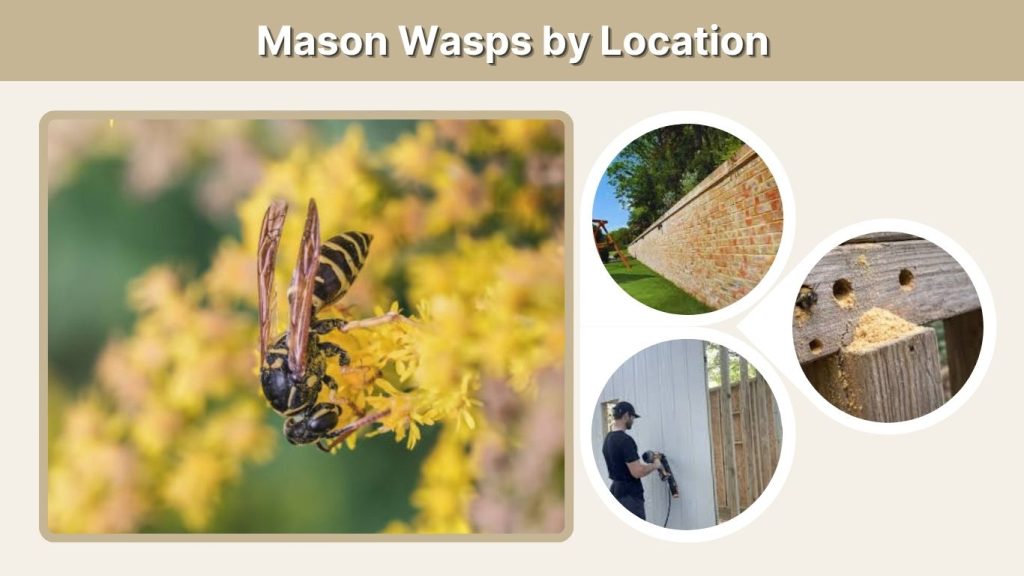
Mason wasps can be found in many regions, but exact species vary by location. Homeowners may notice them around gardens, brick walls, sheds, patios, wood holes, siding gaps, or natural cavities. Location-based searches are common because people want to know whether the wasp near their home is normal for their area.
Mason Wasps in the United States
Mason wasps may be found in states such as Michigan, Florida, Maryland, Massachusetts, Missouri, Ohio, and Texas. The exact type can vary, but many use cavities, mud, or structural gaps for nesting. Local climate and available nesting sites influence where they appear.
Mason Wasps in Australia and New Zealand
Mason wasps are also searched in Australia and New Zealand. In these regions, local species may differ from those in North America. Some may build mud nests, while others use cavities. If the nest is inside a home or high-traffic area, local pest advice may be helpful.
Four-Toothed Mason Wasp Habitat
The four-toothed mason wasp is often found around gardens, wooded edges, old insect holes, stems, and building gaps. It needs suitable cavities and prey insects for its larvae. If you see one repeatedly visiting the same hole, it may be using that space as a nest.
FAQs
Do mason wasps sting?
Yes, female mason wasps can sting, but they are usually not aggressive. Most stings happen when a wasp is handled, trapped, pressed, or directly disturbed near its nest.
Are mason wasps dangerous?
Mason wasps are usually not dangerous to most people. They can sting if provoked, but they do not normally defend large colonies like yellow jackets or hornets.
What does a mason wasp nest look like?
A mason wasp nest may look like a mud cell, a sealed hole, a plugged cavity, or a small crack filled with mud. Many nests are hidden inside existing openings.
How do you get rid of mason wasps?
Seal cracks after activity stops, remove inactive mud nests, repair screens, cover unused holes, and block entry points. Call pest control if wasps are entering the home.
Do mason wasps eat wood?
No, mason wasps do not eat wood like termites. Some may use existing holes in wood, but they do not chew and consume wood as a food source.