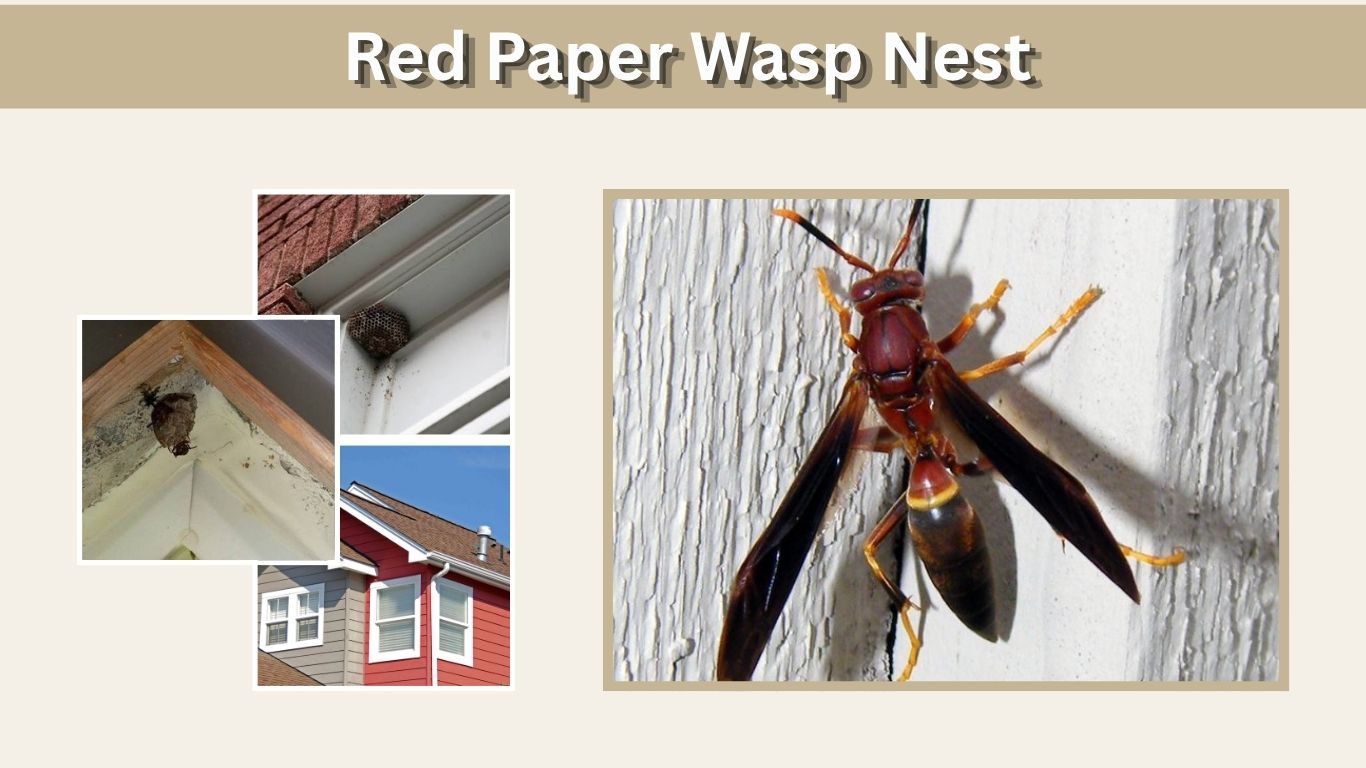
A red paper wasp nest is an open, umbrella-shaped comb made from chewed wood fibers. These nests commonly appear beneath roof eaves, porches, decks, sheds, and other rain-protected surfaces. Although red paper wasps help control caterpillars and other garden pests, they may defend a nest aggressively when people approach too closely. Understanding where they nest, how large colonies become, and when professional removal is necessary can reduce the risk of painful stings.
What Is a Red Paper Wasp Nest?
“Red paper wasp” most commonly refers to the Carolina paper wasp, Polistes carolina, although other reddish species may also be called red wasps in different regions. Regardless of the exact species, their nests have the exposed cells and single-comb construction typical of paper wasps.
| Nest feature | Description |
| Shape | Round or irregular umbrella-shaped comb |
| Material | Gray or brown paper-like pulp |
| Cells | Open, downward-facing hexagonal cells |
| Outer covering | None |
| Attachment | Short, narrow stalk |
| Typical location | Beneath a protected overhead surface |
| Active season | Spring through fall |
Red Paper Wasp Nest Identification
A red paper wasp nest usually has the following characteristics:
- One exposed layer of hexagonal cells
- No enclosed outer shell
- Gray, tan, or light-brown coloration
- A short stalk attaching it to a surface
- Eggs, larvae, or capped cells visible from below
- Adult reddish-brown wasps resting around the comb
- A shape resembling a small umbrella or showerhead
A red-and-black paper wasp nest does not look significantly different from the nest of a completely reddish individual. The wasps’ colors may vary, but their open-comb nest structure remains similar.
What Do Red Paper Wasps Make Their Nests From?
Red paper wasps collect fibers from weathered fences, dead branches, untreated lumber, and other exposed wood. They chew the fibers, mix them with saliva, and spread the resulting pulp into thin layers.
Once dry, this material becomes a lightweight but surprisingly durable paper comb. Unlike hornets, paper wasps do not build a complete envelope around the cells.
Where Do Red Paper Wasps Nest?
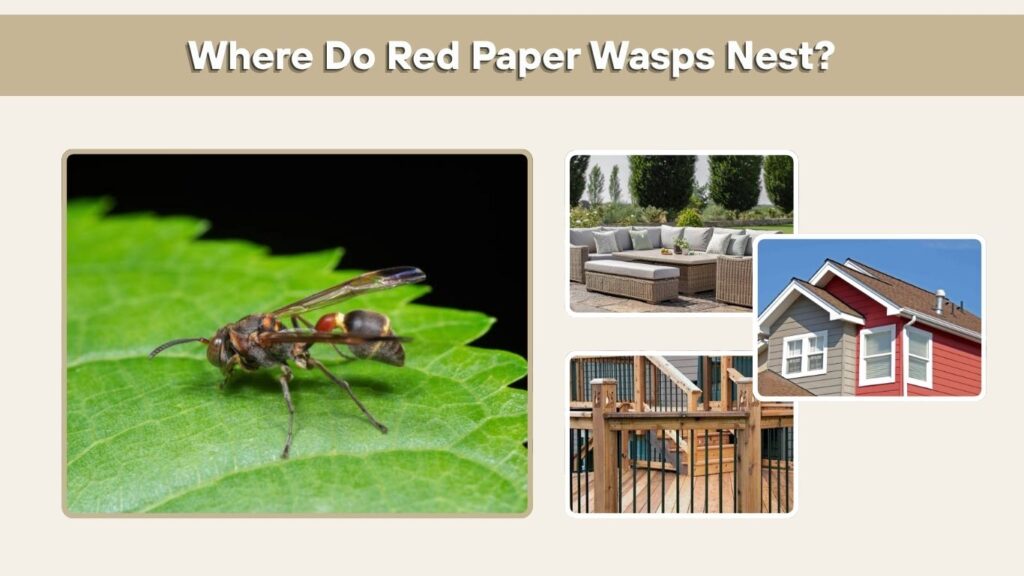
Red paper wasps generally choose sheltered locations protected from direct rain and strong wind. A queen begins the nest in spring and gradually adds cells as larvae develop and the colony grows.
Around homes, their nesting habits often bring them close to people. A nest may remain unnoticed until workers become active or someone looks beneath the structure where it is attached.
Common Nesting Locations
Red paper wasp nests are frequently found beneath:
- Roof eaves and gutters
- Porch and deck railings
- Outdoor stairs
- Window ledges
- Shed and barn roofs
- Patio furniture
- Playground equipment
- Mailboxes
- Barbecue grill covers
- Stored machinery
- Tree branches and dense shrubs
- Attic vents and wall openings
Some red paper wasps also build inside protected cavities. These hidden colonies can be more difficult to locate because only the wasps entering and leaving through a small opening may be visible.
Do Red Paper Wasps Nest in the Ground?
A red paper wasp nest in the ground is uncommon. Paper wasps normally suspend their open comb from an overhead surface rather than constructing underground colonies.
Wasps repeatedly entering a hole in soil are more likely to be yellowjackets or a type of ground-nesting solitary wasp. Do not approach the opening to investigate closely. Underground yellowjacket colonies can contain many workers and may respond defensively when the ground vibrates.
How Big Can Red Paper Wasp Nests Get?
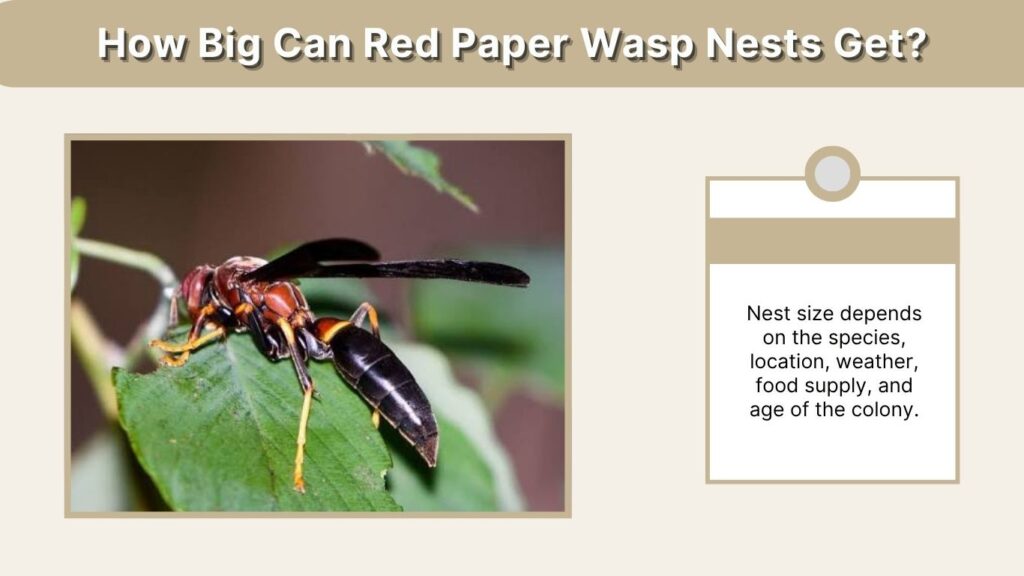
Nest size depends on the species, location, weather, food supply, and age of the colony. Early nests may contain fewer than ten cells and only one queen. By late summer, an established nest can reach approximately six inches or more across and support dozens of adult wasps.
How a Nest Grows
A mated queen emerges in spring and begins constructing the first few cells. She lays an egg in each cell and initially performs all nest-building, hunting, feeding, and defense duties herself.
After the first workers emerge, they take over much of the food collection and construction. The queen concentrates on laying eggs while the workers enlarge the comb. Consequently, a nest that appears harmless in spring may contain many defensive wasps later in summer.
What Happens to the Nest Over Winter?
Red paper wasp colonies normally last only one season. Cold weather kills the workers, males, and old queen. Newly mated queens leave the nest and overwinter in protected spaces such as beneath bark, inside cracks, or within buildings.
The empty nest is generally not reused the following year. Winter is therefore a suitable time to remove an abandoned comb after confirming that it contains no living wasps.
Are Red Paper Wasps Aggressive Away From the Nest?
A red paper wasp searching for nectar, wood fibers, or insect prey is generally less defensive than one guarding a colony. Away from the nest, it normally stings only when trapped, handled, stepped on, or pressed against clothing.
Behavior changes near the nest. Workers monitor movement around the colony and may fly toward a perceived threat. Vibrations, sudden movements, lawn equipment, thrown objects, and attempts to knock down the comb can provoke multiple defenders.
How Close Is Too Close?
There is no guaranteed safe distance because colony behavior and nest position vary. However, repeated circling, hovering near your face, wing flicking, or wasps flying directly toward you should be treated as warnings.
Move away slowly without swatting. Children and pets should be kept out of the area until the nest can be evaluated.
Paper wasps can sting repeatedly because their stingers do not usually remain lodged in the skin. A sting can cause immediate pain, redness, itching, and localized swelling. Severe breathing difficulty, facial swelling, dizziness, or widespread hives requires emergency medical attention.
Red Paper Wasp Nest Removal
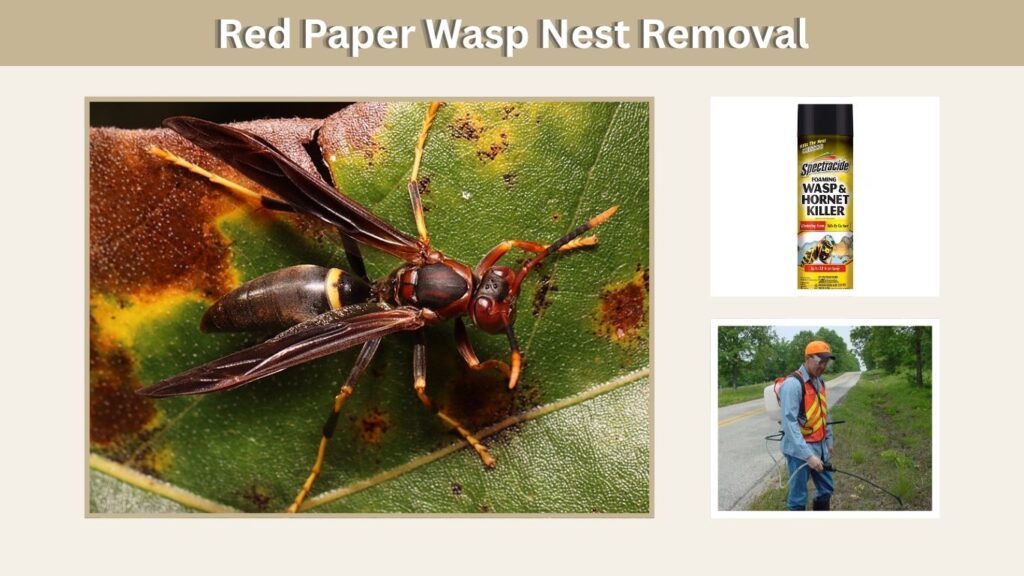
A nest does not automatically need to be destroyed. Paper wasps capture caterpillars and other soft-bodied pests to feed their larvae, making them beneficial predators around gardens.
A nest high in a tree or in an unused corner of a property can often remain undisturbed. Removal becomes more reasonable when the colony is beside a doorway, walkway, patio, play area, mailbox, or another frequently used location.
When to Call a Wasp Exterminator
Professional red paper wasp nest removal is the safest option when:
- The nest is large or highly active
- It is inside a wall, attic, roof, or vent
- Reaching it requires a ladder
- The nest is close to electrical equipment
- Several nests are present
- Wasps are entering living areas
- Someone nearby has a known sting allergy
- The colony has already attacked people or pets
- You cannot identify the wasp confidently
A professional can identify the nest, use an appropriate treatment, remove accessible comb material, and inspect the area for additional colonies.
Removing a Small Exposed Nest
Only consider handling a small, fully exposed nest when it can be reached safely from the ground and no one involved has a sting allergy.
Use only a product specifically labeled for wasp and hornet nests, and follow every direction on its label. Keep people and pets indoors, maintain the recommended treatment distance, and leave yourself a clear retreat path. Do not stand directly underneath the comb.
Never knock down an active nest with a stick, spray it with a garden hose, burn it, pour gasoline on it, or seal an active wall entrance. Sealing a wall opening may force surviving wasps farther into the building.
Once no activity remains, the abandoned comb can be scraped into a sealed bag. Wash or clean the attachment area when practical.
Preventing New Nests
Inspect sheltered areas regularly during spring, when nests are still small. Repair damaged screens, close gaps around vents, and seal cracks after confirming that no active colony is inside.
Store outdoor equipment properly and inspect grills, patio furniture, play structures, and sheds before using them after a long period. Reducing exposed, weathered wood may also make the property less attractive as a source of nest-building fibers.
FAQs
What does a red paper wasp nest look like?
It looks like a gray or brown umbrella-shaped comb with exposed hexagonal cells. The nest lacks the enclosed paper shell associated with hornets and hangs from a short stalk beneath a protected surface.
Where do red paper wasps usually build nests?
They commonly nest beneath eaves, porches, decks, sheds, railings, tree branches, outdoor furniture, and equipment. Some colonies occupy wall voids, attics, vents, and other hidden spaces.
How large can a red paper wasp nest become?
A mature nest may grow to six inches or more in diameter and contain dozens of adults. Size varies according to species, climate, location, food availability, and the colony’s age.
Are red paper wasps aggressive outside the nest?
They are usually less defensive when away from the colony. However, they may sting when trapped, grabbed, stepped on, or caught in clothing. Defensive behavior increases considerably near an active nest.
Will red paper wasps return to an old nest?
The colony normally dies when cold weather arrives, except for newly mated queens that overwinter elsewhere. Paper wasps generally build new nests in spring rather than reusing the previous year’s comb.