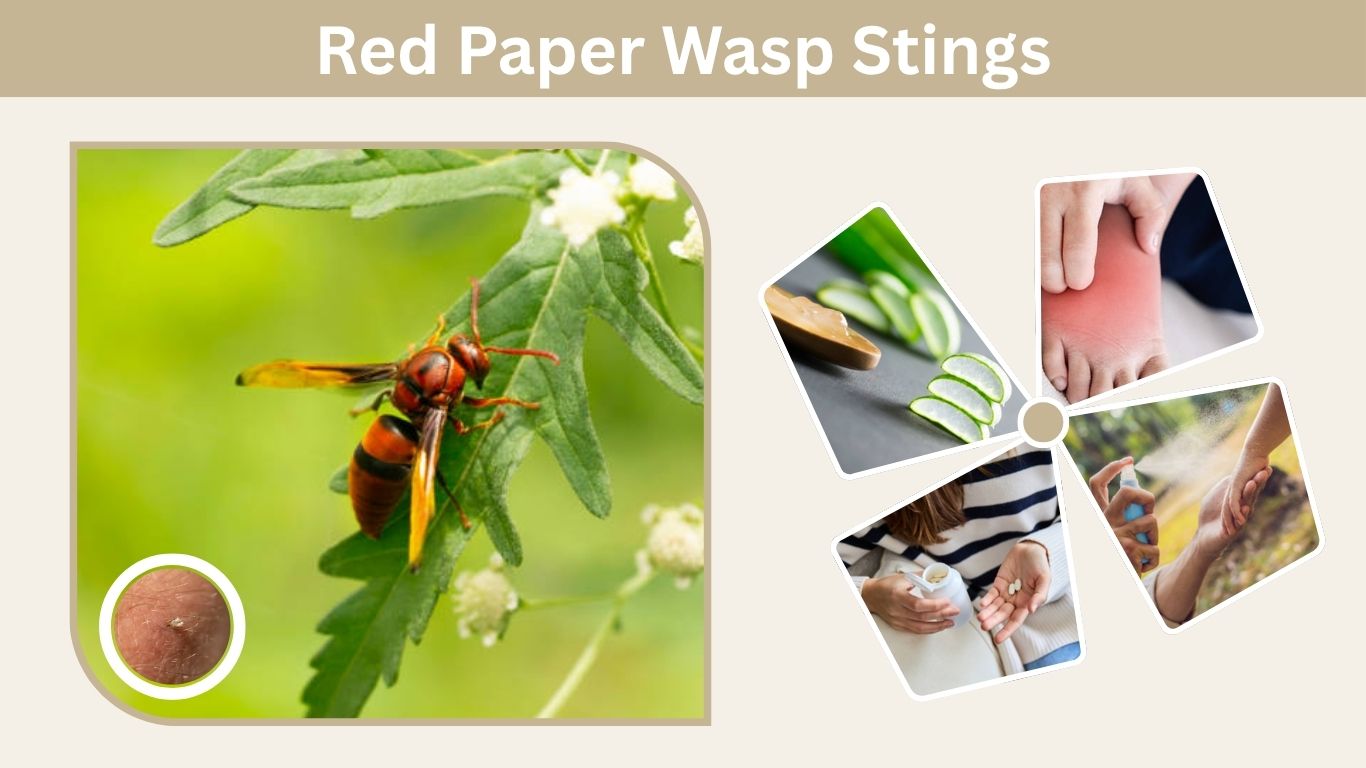
Red paper wasps are common across North America, known for their reddish bodies, slender waists, and papery nests. While they generally avoid humans, they will sting if threatened or if their nests are disturbed. Understanding their behavior, the pain of their sting, and proper treatment is crucial for both human and pet safety. This guide explores symptoms, reactions, and remedies for red paper wasp stings in detail.
Understanding Red Paper Wasps
Red paper wasps are social insects that build intricate paper-like nests in sheltered areas such as eaves, attics, and tree branches. They are territorial but not inherently aggressive unless provoked. Knowing their habits helps reduce sting incidents and promotes safe coexistence with these important pollinators.
Red Paper Wasp Characteristics
- Appearance: Reddish-brown body with yellow or black markings, slender waist, and long legs.
- Nesting: Builds umbrella-shaped nests made from chewed plant material mixed with saliva.
- Behavior: Non-aggressive unless defending the nest; can sting multiple times.
How They Interact With Humans
- Trigger for stings: Disturbing the nest, stepping on the wasp, or rapid movements near them.
- Avoidance: Typically fly away when not threatened.
- Confusion: Can be mistaken for yellow jackets or other wasps due to similar coloring.
Do red paper wasps sting?
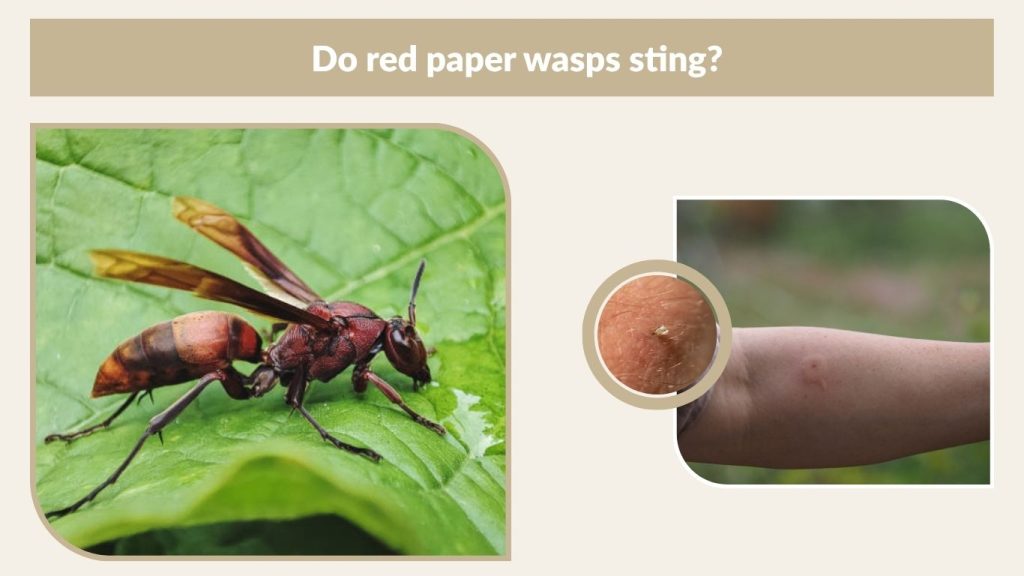
Red paper wasps have the ability to sting, and their sting is painful. They use this defense mechanism primarily to protect the colony. Knowing when and why stings occur can help you avoid unnecessary contact.
Reasons for Stinging
- Protecting their nests from perceived threats
- Disturbance by humans, pets, or nearby movement
Frequency of Stings
- Seasonal activity: Most active during late spring and summer
- Geographic hotspots: Common in southern and eastern U.S., including Tennessee and surrounding states
Red Paper Wasps Sting Pain and Pain Index
The pain of a red paper wasp sting is considered moderate to high on the Schmidt Pain Index. The initial sensation is sharp and burning, followed by lingering discomfort. Understanding pain levels helps individuals prepare for treatment and manage reactions effectively.
Red Paper Wasp Sting Pain Level
- Sharp, immediate burning sensation
- Pain peaks within the first few minutes
- Typically lasts 15–30 minutes, sometimes longer if allergic reactions occur
Comparison With Other Wasps
- Paper wasps: Painful but less intense than hornet stings
- Yellow jackets: More intense and localized
- Hornets: Highest pain index, often throbbing and longer-lasting
Red Paper Wasps Symptoms of a Sting
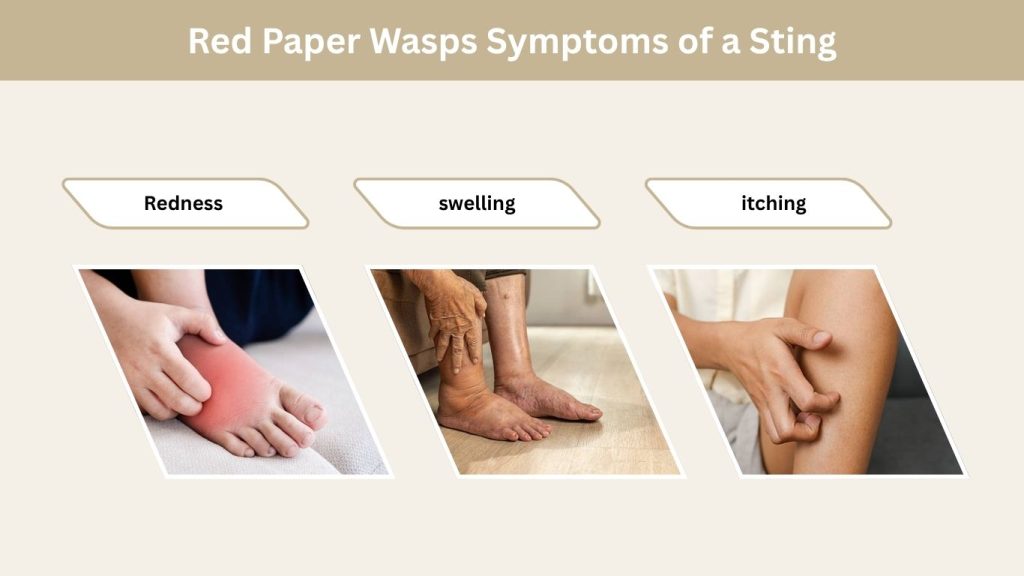
When stung by a red paper wasp, the body reacts with local and sometimes systemic symptoms. Early identification helps manage reactions and determine whether medical care is needed.
Local Symptoms
- Redness and swelling around the sting site
- Tenderness and itching for several hours
- Red streaks or lines may develop from inflammation
Systemic Symptoms
- Dizziness or nausea in sensitive individuals
- Allergic reactions: Hives, swelling beyond the sting site, or breathing difficulty
- Severe pain: Especially if stung multiple times
Red Paper Wasps Stings in Pets
Dogs and other pets are also vulnerable to red paper wasp stings. Their reactions can vary depending on size, age, and sensitivity. Pet owners should recognize warning signs to prevent serious health issues.
Signs a Dog is Stung
- Limping or favoring a paw
- Swelling at the sting site
- Excessive licking or biting at affected area
- Restlessness or unusual behavior
Veterinary Care
- Seek immediate help if multiple stings occur
- Antihistamines or other medications may be administered
- Severe reactions may require professional intervention
Identifying a Red Paper Wasp Sting
Knowing whether a sting is from a red paper wasp helps determine the proper care and treatment. Their stings have distinguishing features compared to other insects.
Stinger Detection
- Presence of stinger: Red paper wasps usually leave the stinger behind in the skin.
- Safe removal: Use a flat edge (credit card) to scrape it out to avoid further venom injection.
- Avoid squeezing: Can release more venom and worsen swelling.
Visual Indicators
- Red-headed paper wasp vs others: Look for reddish body and dark markings.
- Swelling patterns: Localized puffiness and redness at the sting site.
- Multiple stings: Can lead to wider areas of irritation and more intense pain.
Red Paper Wasps Sting First Aid and Home Remedies
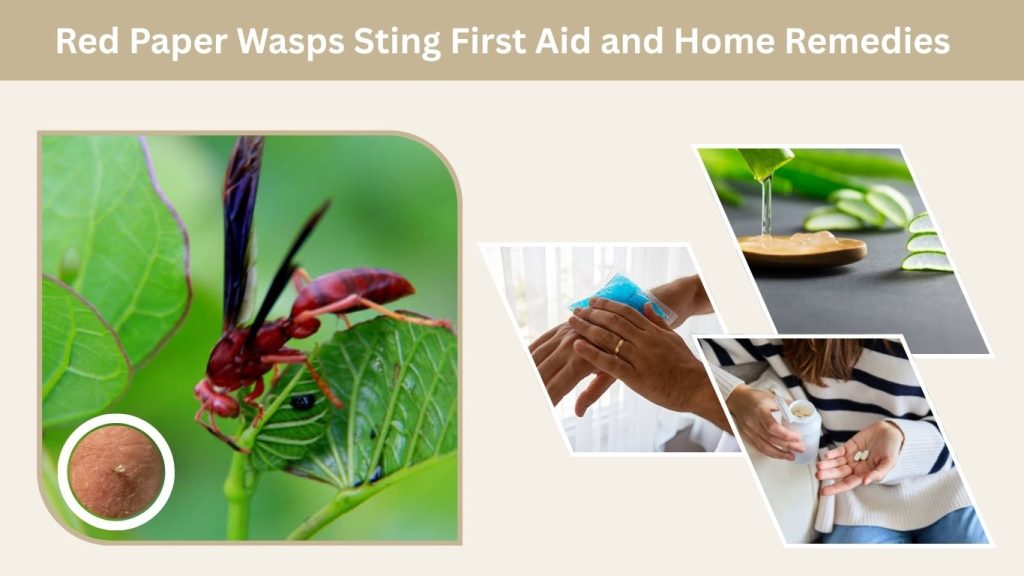
Immediate care after a sting reduces pain, swelling, and risk of infection. Several home remedies are effective for minor reactions.
Immediate Actions
- Clean the area: Use soap and water to prevent infection.
- Cold compress: Apply ice or a cool cloth for 10–15 minutes to reduce swelling and pain.
- Avoid scratching: Scratching can worsen inflammation and cause infection.
Home Remedies
- Baking soda paste: Mix with water and apply to neutralize venom.
- Aloe vera gel: Soothes irritation and promotes healing.
- Over-the-counter creams: Hydrocortisone or calamine lotion to reduce itching.
- Painkillers: Ibuprofen or acetaminophen for discomfort.
Red Paper Wasps Sting Medical Treatment
Some stings require professional attention, especially for allergic individuals or multiple stings.
Allergic Reactions
- Antihistamines: Reduce swelling and itching for mild allergic responses.
- Epinephrine: Required for severe reactions (anaphylaxis), usually via auto-injector.
- Observation: Severe reactions may require monitoring in a medical facility.
Professional Care
- Pain management: Doctors may prescribe stronger analgesics if needed.
- Infection prevention: Antibiotics may be prescribed for secondary infections.
- Follow-up: Important for pets or humans with recurring stings.
Pain Management Strategies
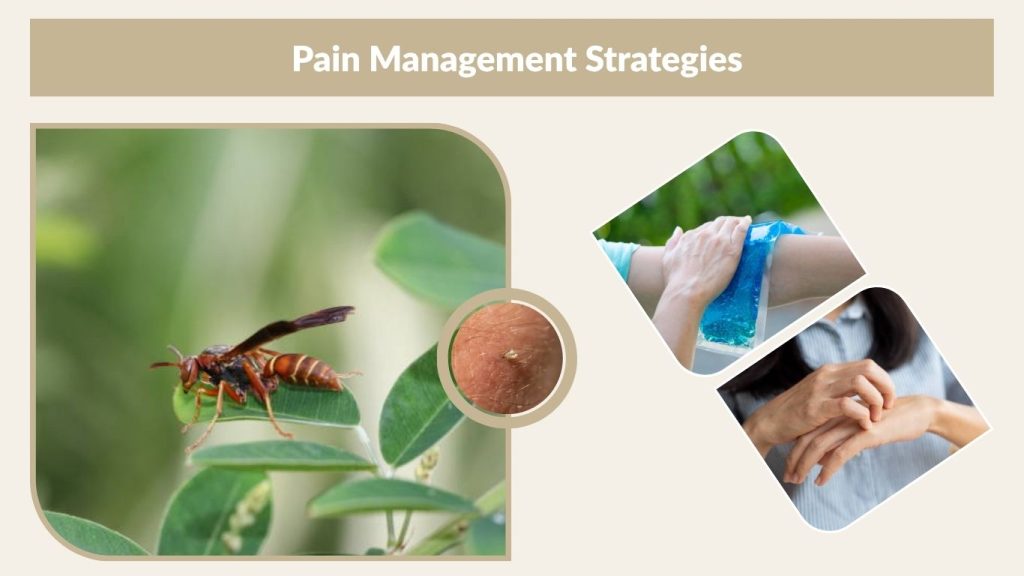
Managing pain effectively improves comfort and prevents secondary issues like infection or scarring.
Red Paper Wasp Pain Relief
- Cold compress or ice packs applied intermittently
- Oral painkillers for moderate to severe pain
- Avoid scratching or rubbing the site
Pain Index Reference
- Schmidt Pain Index rating: Moderate to high, sharp and burning sensation
- Tips: Move gently, elevate limb if swollen, keep area clean
Geographic and Seasonal Considerations
Awareness of red paper wasp activity by region and season helps in prevention.
High-Risk Areas
- Southern and eastern United States
- Suburban and rural areas with abundant nesting sites
- Places like Tennessee report frequent stings during peak season
Seasonal Behavior
- Most active late spring through summer
- Nests are busy with worker wasps protecting brood
- Fall sees reduced activity as colonies die off
Prevention Tips
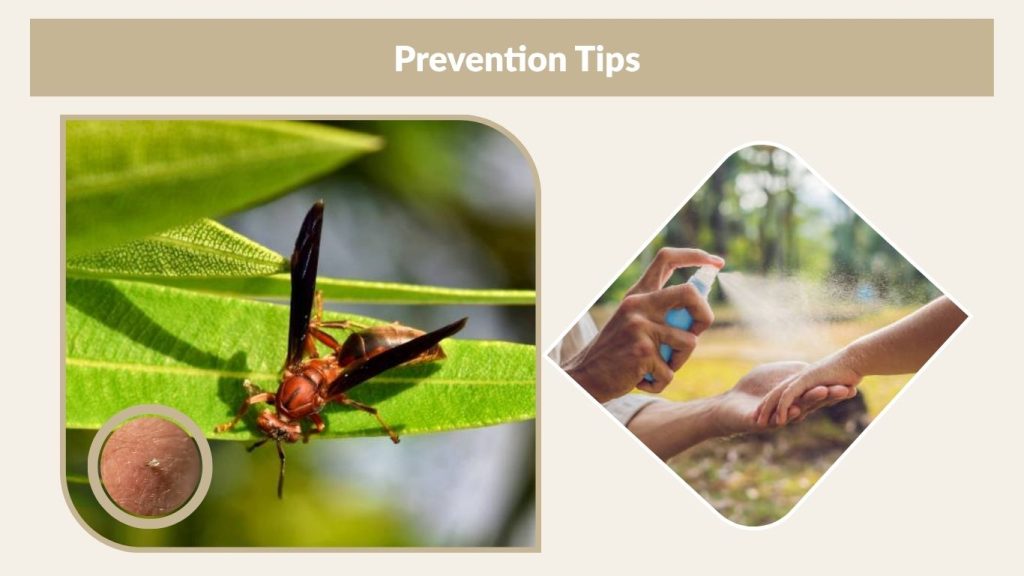
Avoiding stings is the best strategy for humans and pets. Proper precautions and awareness reduce encounters.
Avoiding Nests
- Recognize and steer clear of wasp nests
- Do not disturb nests unnecessarily
- Professional removal if nests are near living areas
Protective Measures
- Wear protective clothing during outdoor activities
- Use insect repellents to discourage wasps
- Keep food and sweet drinks covered outdoors
- Educate children and pets about wasp safety
FAQs
What does a red paper wasp sting feel like?
A sharp, burning pain followed by swelling, redness, and itching. Pain is immediate and peaks within a few minutes.
Can a red paper wasp sting be deadly?
Most stings are not life-threatening. Severe allergic reactions (anaphylaxis) are rare but require immediate medical attention.
How long does swelling last?
Swelling typically lasts a few hours to a couple of days. Minor redness and tenderness can persist for up to a week.
Can dogs get stung by red paper wasps?
Yes. Dogs may show swelling, paw licking, or discomfort. Veterinary care is advised if multiple stings occur.
Are home remedies effective?
Yes, for minor stings. Baking soda paste, aloe vera, cold compresses, and over-the-counter creams relieve pain and reduce swelling. Severe cases require medical treatment.