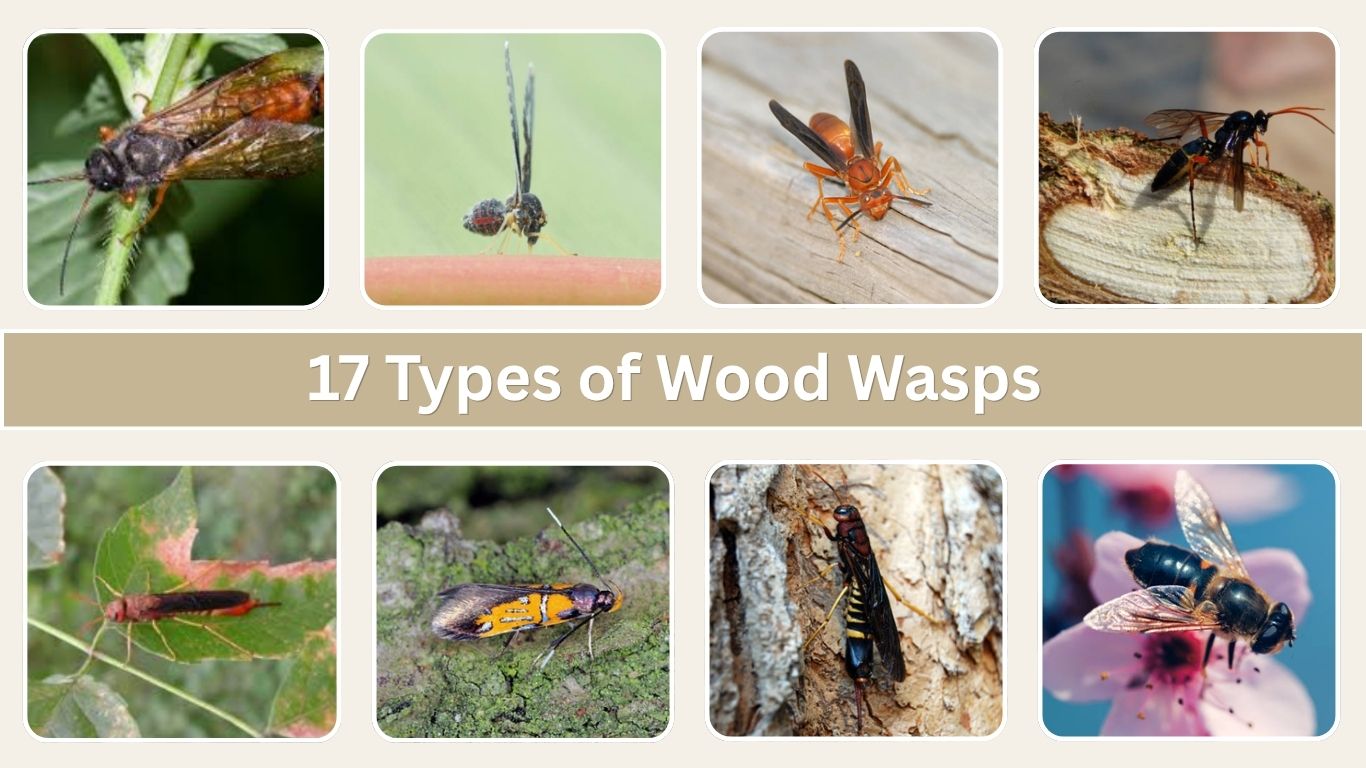
Wood wasps are fascinating insects known for their large size, cylindrical bodies, and unique relationship with trees. These insects are commonly found in forests and woodland habitats where females lay eggs inside dead or weakened wood. Although many species look intimidating because of their long ovipositors, most are completely harmless to humans. Wood wasps and horntails play an important ecological role by helping break down decaying trees and supporting nutrient recycling in forest ecosystems. In this guide, you will discover 17 common types of wood wasps, along with their identification, habitat, behavior, and lifecycle details.
1. Pigeon Horntail
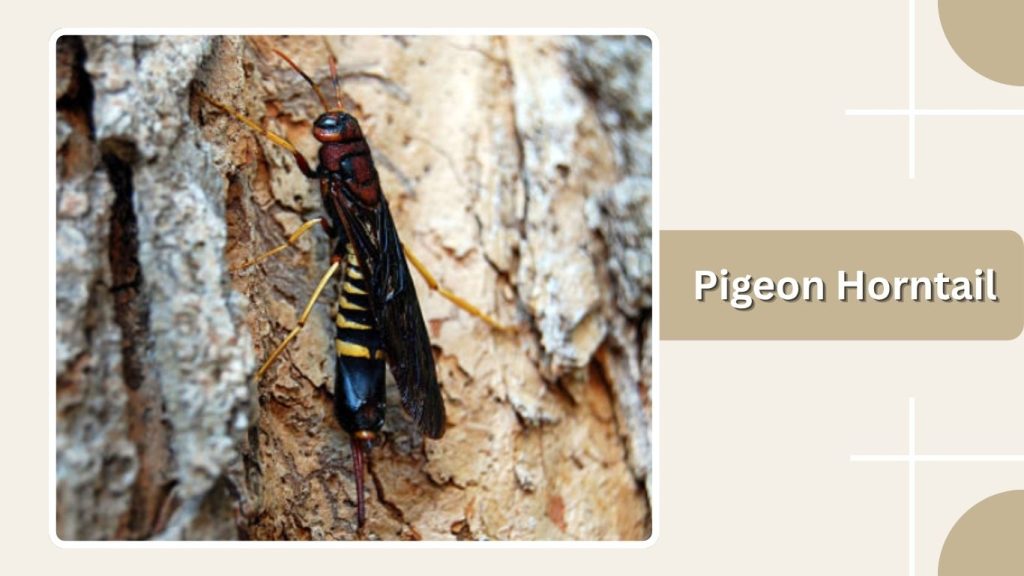
The Pigeon Horntail is one of the largest wood wasps found in North America. Despite its intimidating appearance, this insect is harmless to humans because it cannot sting. Females use a long ovipositor to lay eggs deep inside dead or dying trees, where the larvae develop while feeding on wood and fungi.
Identification
- Large body measuring 1–2 inches long
- Dark brown or black coloration
- Yellow or reddish markings on the abdomen
- Females have a long, spike-like ovipositor
- Thick cylindrical body without a narrow waist
- Transparent wings with smoky tint
- Males are usually smaller than females
Habitat and Distribution
Pigeon Horntails are commonly found across North America in forests, woodland edges, and areas with decaying hardwood trees. They prefer dead or weakened trees such as maple, oak, elm, and beech. Adults are often seen during late summer resting on tree trunks or fallen logs where females search for suitable egg-laying sites.
Behavior and Diet
Adult Pigeon Horntails do not feed heavily and spend most of their short lives reproducing. Females drill into wood using their ovipositor to deposit eggs along with fungal spores. After hatching, the larvae feed on wood softened by the fungus. These insects are not aggressive and do not pose a threat to people or pets.
Lifecycle
The lifecycle begins when females lay eggs deep inside weakened trees. Larvae tunnel through the wood while feeding and developing over several months or even years. Pupation occurs within the wood, and adults emerge by chewing perfectly round exit holes through the tree surface. Adult wood wasps usually live only a few weeks.
2. Giant Woodwasp
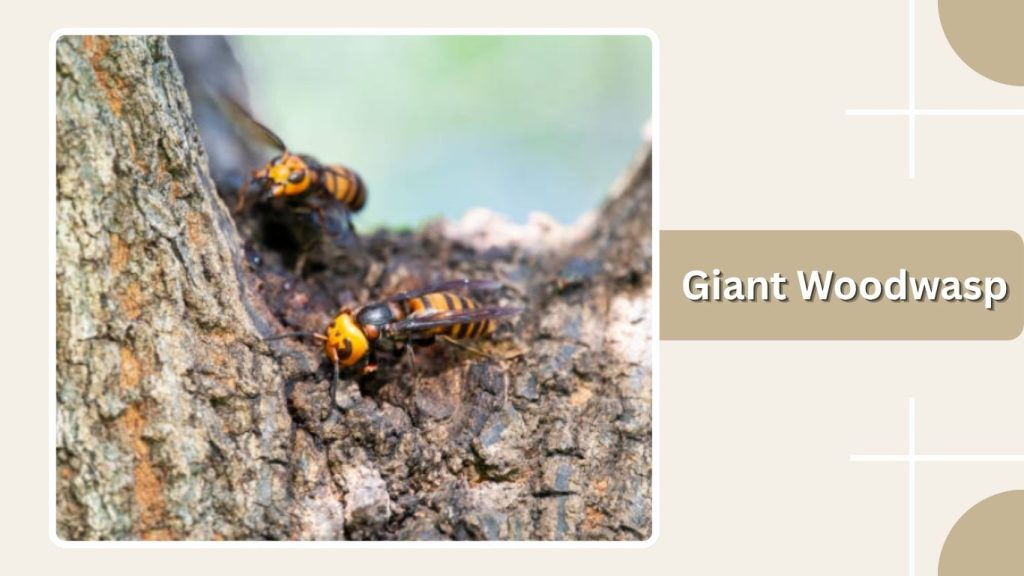
The Giant Woodwasp is a large wood-boring insect known for its impressive size and long egg-laying structure in females. Although it looks dangerous, this species is harmless to humans because it cannot sting. The larvae develop inside dead or weakened trees, helping break down decaying wood in forest ecosystems.
Identification
- Large body reaching up to 2 inches long
- Black or dark metallic blue coloration
- Yellow or orange bands on the abdomen
- Females possess a very long ovipositor
- Thick cylindrical body without a narrow waist
- Clear wings with slight smoky appearance
- Strong legs adapted for gripping tree bark
Habitat and Distribution
Giant Woodwasps are commonly found in forests, wooded parks, and areas with dead or dying trees. They occur in parts of Europe, Asia, and North America depending on the species. These insects prefer coniferous and hardwood forests where weakened trees provide suitable places for egg laying and larval development.
Behavior and Diet
Adult Giant Woodwasps spend most of their time searching for mates and suitable host trees. Females drill into wood with their ovipositor to deposit eggs along with symbiotic fungi that help soften the wood. Larvae feed on fungus-infected wood while tunneling through the tree. Adults are generally calm and non-aggressive toward humans.
Lifecycle
The lifecycle starts when females lay eggs deep inside weakened or dead wood. After hatching, larvae tunnel through the tree while feeding on wood and fungal material. Development may take one to several years depending on environmental conditions. Pupation occurs inside the wood, and adults emerge by chewing circular exit holes before beginning the reproductive cycle again.
3. European Woodwasp
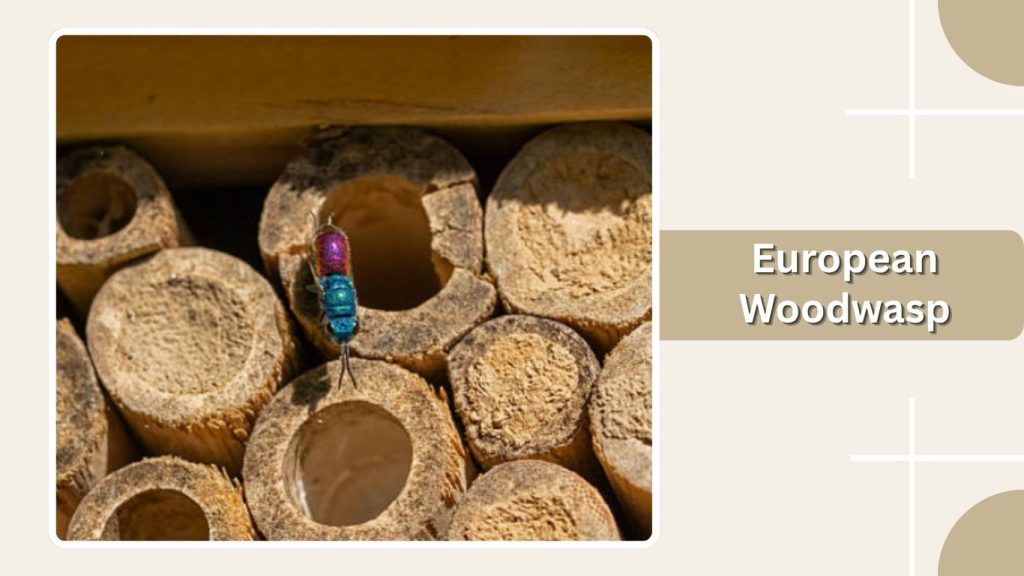
The European Woodwasp is a large wood-boring insect commonly associated with pine forests and other coniferous trees. This species is known for its strong body and long ovipositor used by females to lay eggs inside wood. Although its appearance may seem threatening, it is harmless to humans and plays a role in breaking down weakened trees.
Identification
- Large body measuring about 1–1.5 inches long
- Dark blue or black coloration
- Yellow bands or patches on the abdomen
- Females possess a long straight ovipositor
- Cylindrical body without a narrow waist
- Smoky transparent wings
- Males are usually slimmer than females
Habitat and Distribution
European Woodwasps are mainly found across Europe and parts of Asia, especially in coniferous forests. They are commonly associated with pine, spruce, and fir trees. This species prefers weakened, dying, or recently cut trees where females can safely deposit eggs for larval development.
Behavior and Diet
Adult European Woodwasps focus mainly on mating and reproduction rather than feeding. Females drill into wood using their ovipositor and deposit eggs along with a fungus that helps soften the tree tissue. Larvae tunnel through the wood while feeding on fungus-infected material. Adults are not aggressive and do not sting people.
Lifecycle
The lifecycle begins when females lay eggs inside weakened trees. Larvae hatch and bore tunnels through the wood while feeding and growing. Development inside the tree can take several months or even years. Pupation occurs within the wood, and mature adults emerge through round exit holes before starting the reproductive cycle again.
4. Blue Wood Wasp
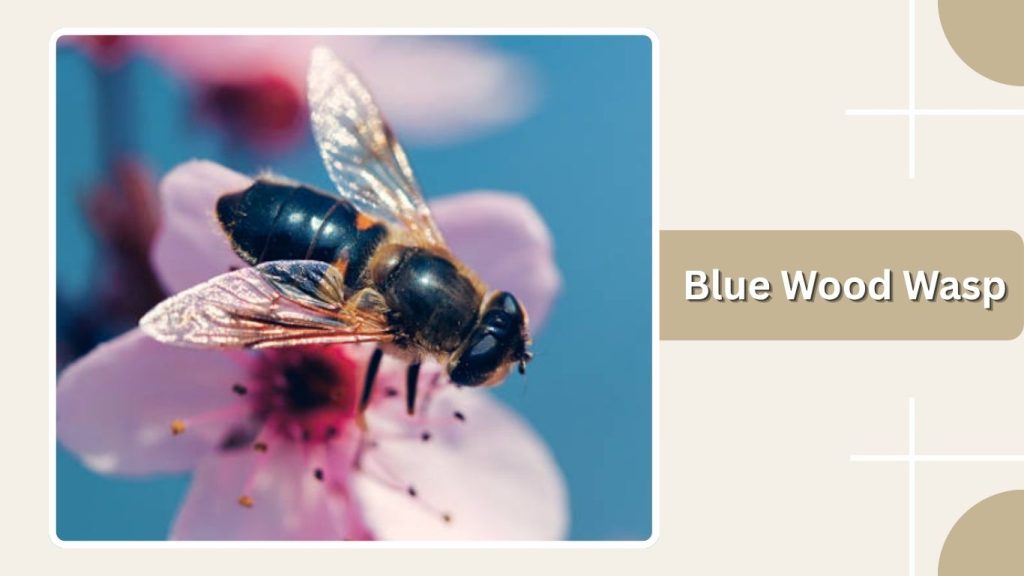
The Blue Wood Wasp is a striking wood-boring insect recognized for its dark metallic blue body and long cylindrical shape. Like other wood wasps, it is harmless to humans and spends much of its lifecycle connected to dead or weakened trees. The larvae help break down wood, contributing to natural forest decomposition.
Identification
- Metallic blue or bluish-black body coloration
- Large body measuring around 1–1.5 inches long
- Females possess a long ovipositor
- Thick cylindrical body without a narrow waist
- Transparent smoky wings
- Long antennae and sturdy legs
- Smooth and shiny body surface
Habitat and Distribution
Blue Wood Wasps are commonly found in forests, wooded areas, and regions containing dead or weakened trees. They are often associated with coniferous forests and decaying wood habitats. Depending on the species, they may occur in North America, Europe, or parts of Asia where suitable host trees are available.
Behavior and Diet
Adult Blue Wood Wasps spend most of their short lives searching for mates and egg-laying sites. Females drill into wood and deposit eggs together with fungal spores that help soften the wood for developing larvae. Larvae feed on fungus-infected wood while tunneling through tree trunks. Adults are calm insects and rarely interact with humans.
Lifecycle
The lifecycle begins when females lay eggs deep inside weakened trees. Larvae hatch and spend months or years tunneling through the wood while feeding and growing. Pupation occurs within chambers inside the tree. Mature adults eventually emerge through circular exit holes and begin searching for mates and suitable trees for reproduction.
5. Banded Horntail
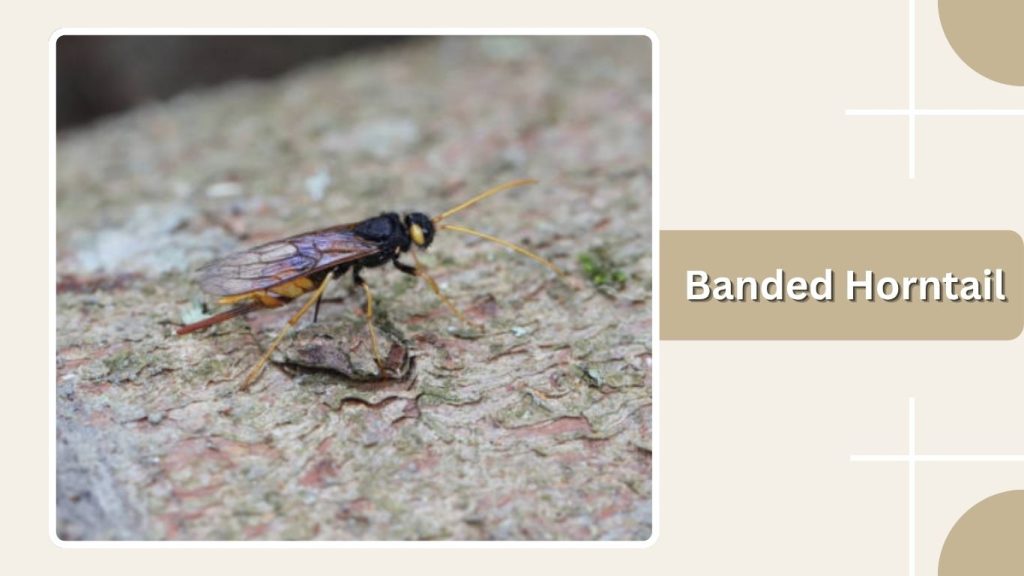
The Banded Horntail is a large wood wasp known for its banded abdomen and long egg-laying structure in females. This insect is harmless to humans despite its intimidating appearance. It is commonly associated with dead or weakened trees, where the larvae tunnel through wood and help with natural decomposition processes.
Identification
- Large cylindrical body measuring about 1–1.5 inches long
- Black or dark brown coloration
- Yellow or orange bands across the abdomen
- Females possess a long ovipositor
- Transparent wings with smoky tint
- Thick body without a narrow waist
- Long antennae and sturdy legs
Habitat and Distribution
Banded Horntails are found in forests, woodland habitats, and areas with dead hardwood or conifer trees. They are commonly seen in North America and parts of Europe depending on the species. These insects prefer weakened, fallen, or decaying trees where females can safely lay eggs for larval development.
Behavior and Diet
Adult Banded Horntails spend most of their time reproducing and searching for suitable trees. Females drill into wood using their ovipositor and deposit eggs along with symbiotic fungi that soften the wood. Larvae tunnel through the wood and feed on fungus-infected material. Adults are non-aggressive and cannot sting people.
Lifecycle
The lifecycle begins when females lay eggs deep inside weakened trees. Larvae hatch and spend months or years tunneling through wood while feeding and growing. Pupation occurs inside the tree within protected chambers. Mature adults emerge through round exit holes and live for a short period before mating and continuing the reproductive cycle.
6. Black Horntail
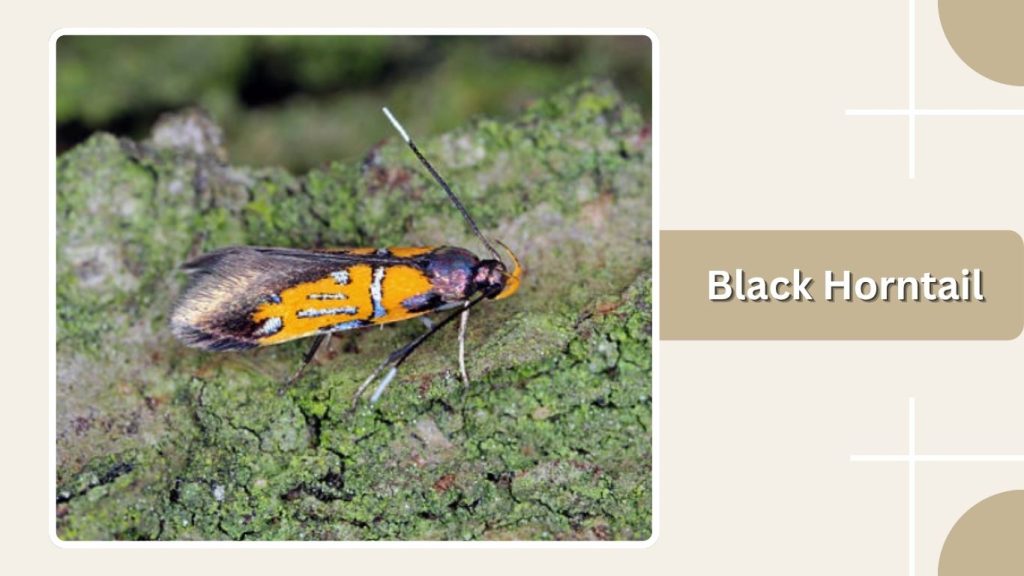
The Black Horntail is a large wood wasp recognized for its dark body and long, spike-like ovipositor in females. This insect may appear dangerous because of its size, but it is harmless to humans and does not sting. Its larvae develop inside weakened wood, helping recycle decaying trees in forest environments.
Identification
- Large body measuring around 1–1.5 inches long
- Mostly black or dark bluish-black coloration
- Cylindrical body without a narrow waist
- Females possess a long straight ovipositor
- Transparent wings with smoky appearance
- Long segmented antennae
- Thick and sturdy body structure
Habitat and Distribution
Black Horntails are commonly found in forests, woodland areas, and regions containing dead or weakened trees. They are associated with both hardwood and conifer forests depending on the species. These insects occur in parts of North America, Europe, and Asia where suitable host trees are available for larval development.
Behavior and Diet
Adult Black Horntails focus mainly on mating and egg laying rather than feeding. Females drill into weakened trees using their ovipositor and deposit eggs along with fungal spores. The larvae feed on fungus-softened wood while tunneling through the tree. Adults are slow-moving, non-aggressive insects that rarely interact with people.
Lifecycle
The lifecycle begins when females lay eggs inside dead or weakened wood. Larvae hatch and tunnel through the tree while feeding and growing over many months. After completing development, pupation occurs inside chambers within the wood. Adults emerge through round holes in the bark and live briefly before reproducing and starting the cycle again.
7. Tremex Columba
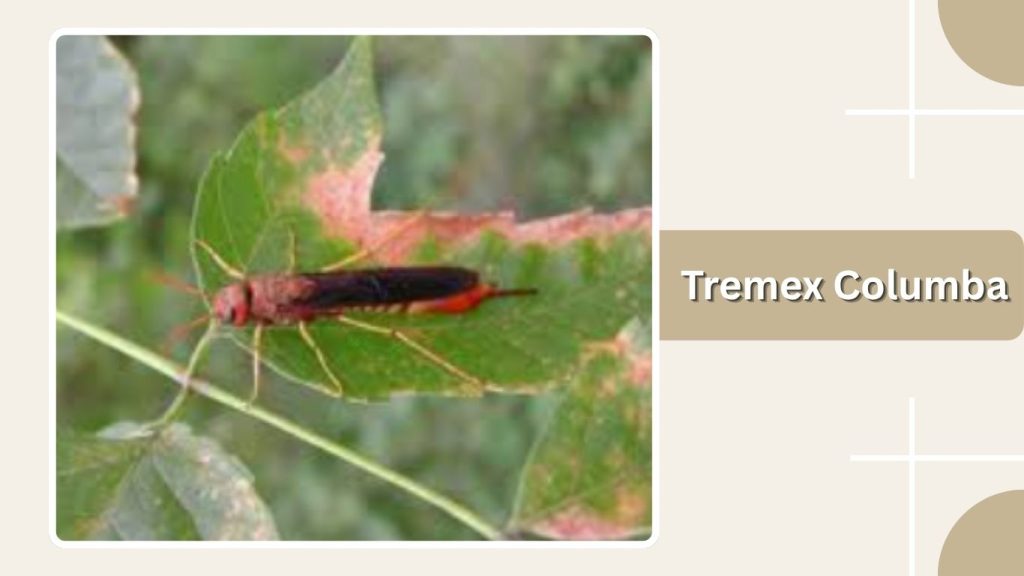
Tremex Columba, commonly called the Pigeon Tremex, is a large wood wasp native to North America. This species is known for its impressive size and long ovipositor used by females to lay eggs deep inside trees. Although it looks intimidating, it is harmless to humans and plays an important role in decomposing weakened wood.
Identification
- Large body measuring 1–2 inches long
- Reddish-brown to black coloration
- Yellow markings or bands on the abdomen
- Females possess a very long ovipositor
- Thick cylindrical body without a narrow waist
- Transparent amber-tinted wings
- Long antennae and strong legs
Habitat and Distribution
Tremex Columba is widely distributed across forests and woodland habitats in North America. It is commonly associated with dead or weakened hardwood trees such as maple, elm, oak, and beech. Adults are usually seen during warm months resting on tree trunks or fallen logs where females search for suitable egg-laying sites.
Behavior and Diet
Adult Tremex Columba wasps spend most of their short lives reproducing. Females drill into weakened trees using their ovipositor and deposit eggs together with fungal spores that soften the wood. Larvae tunnel through the wood and feed on fungus-infected material. Adults are calm insects that do not sting or attack humans.
Lifecycle
The lifecycle begins when females lay eggs deep inside weakened wood. Larvae hatch and tunnel through the tree while feeding and developing over several months or years. Pupation occurs within protected chambers inside the wood. Mature adults eventually emerge through circular exit holes before mating and continuing the reproductive cycle.
8. Siricid Woodwasp
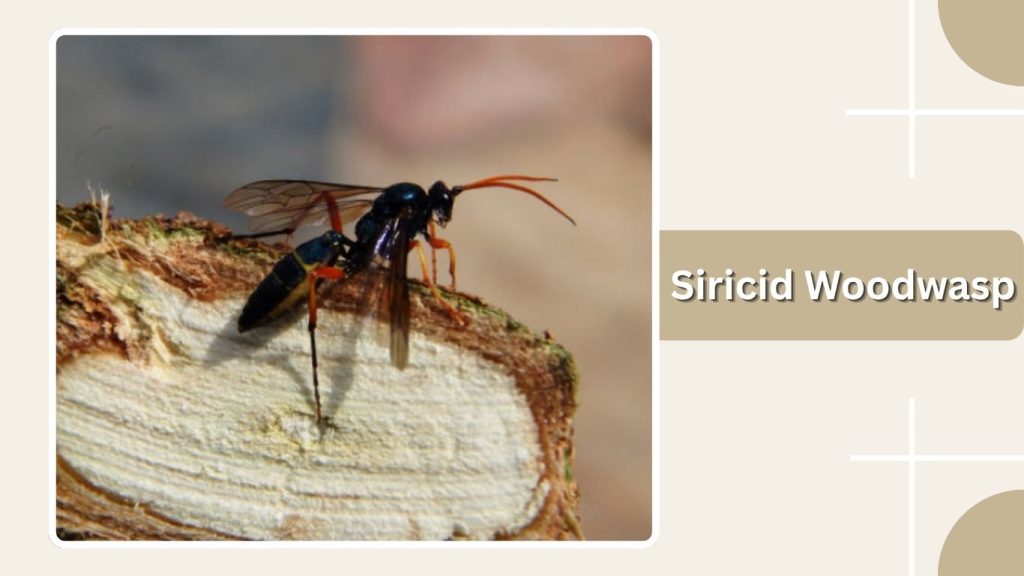
Siricid Woodwasps belong to the family Siricidae, a group of large wood-boring insects commonly found in forest habitats. These wasps are known for their cylindrical bodies and long ovipositors used by females to lay eggs in weakened trees. Although they appear intimidating, they are harmless to humans and help recycle decaying wood.
Identification
- Large body measuring about 1–2 inches long
- Black, blue, or brown coloration depending on species
- Thick cylindrical body without a narrow waist
- Females possess long ovipositors
- Transparent or smoky wings
- Long segmented antennae
- Strong legs adapted for gripping bark
Habitat and Distribution
Siricid Woodwasps are widely distributed across North America, Europe, Asia, and other forested regions. They are commonly associated with coniferous and hardwood forests containing dead, dying, or weakened trees. Pine, spruce, fir, maple, and oak trees are among their preferred hosts for egg laying and larval growth.
Behavior and Diet
Adult Siricid Woodwasps spend most of their time mating and searching for suitable trees. Females inject eggs along with fungal spores into wood, allowing larvae to feed on fungus-softened material. Larvae tunnel through the wood while developing. Adults are non-aggressive insects and cannot sting people despite the intimidating ovipositor.
Lifecycle
The lifecycle starts when females lay eggs deep inside weakened trees. Larvae hatch and bore through the wood while feeding and growing over many months or years. Pupation takes place within chambers inside the tree. Mature adults emerge through round exit holes and live only a short time before reproducing and restarting the cycle.
9. Cedar Woodwasp
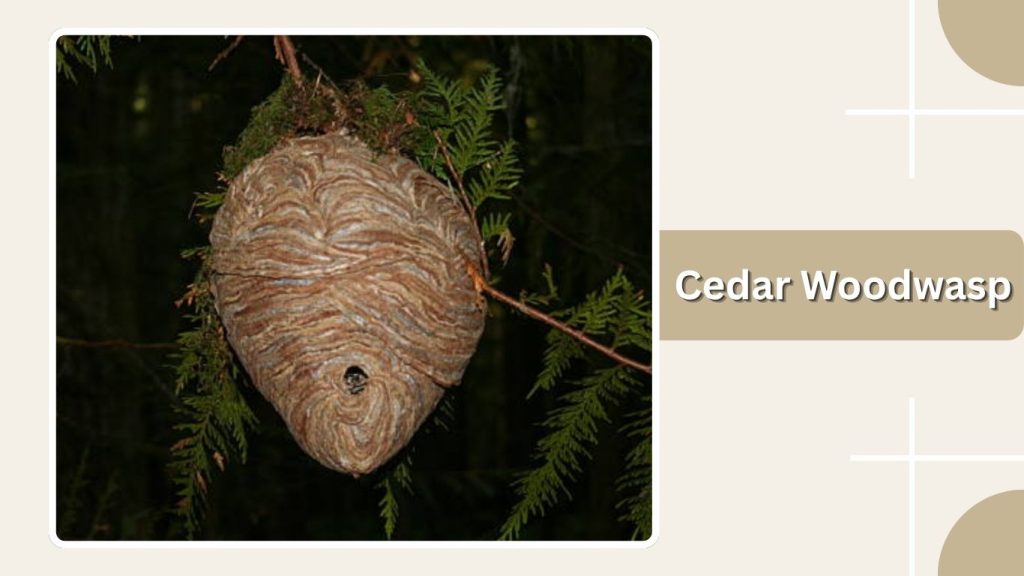
The Cedar Woodwasp is a wood-boring insect commonly associated with cedar and other conifer trees. This species is recognized for its elongated body and long ovipositor in females. Although it may appear threatening, the Cedar Woodwasp is harmless to humans and plays an important role in breaking down weakened or dead trees.
Identification
- Medium to large body measuring about 1–1.5 inches long
- Dark brown, black, or bluish coloration
- Cylindrical body without a narrow waist
- Females possess a long ovipositor
- Transparent wings with smoky tint
- Long segmented antennae
- Strong legs adapted for clinging to bark
Habitat and Distribution
Cedar Woodwasps are commonly found in forests and woodland habitats containing cedar, pine, and other conifer trees. They occur in North America and other regions with suitable coniferous forests. These insects prefer weakened, dying, or recently cut trees where larvae can safely develop within the wood.
Behavior and Diet
Adult Cedar Woodwasps spend most of their time reproducing and locating suitable host trees. Females drill into wood using the ovipositor and lay eggs together with fungal spores that soften the wood for larvae. Larvae tunnel through fungus-infected wood while feeding and growing. Adults are calm and do not sting humans.
Lifecycle
The lifecycle begins when females lay eggs inside weakened cedar or conifer trees. Larvae hatch and spend months or years tunneling through the wood while feeding. Pupation occurs inside protected chambers within the tree. Mature adults emerge through round holes in the bark and survive long enough to mate and continue the reproductive cycle.
10. Maple Horntail
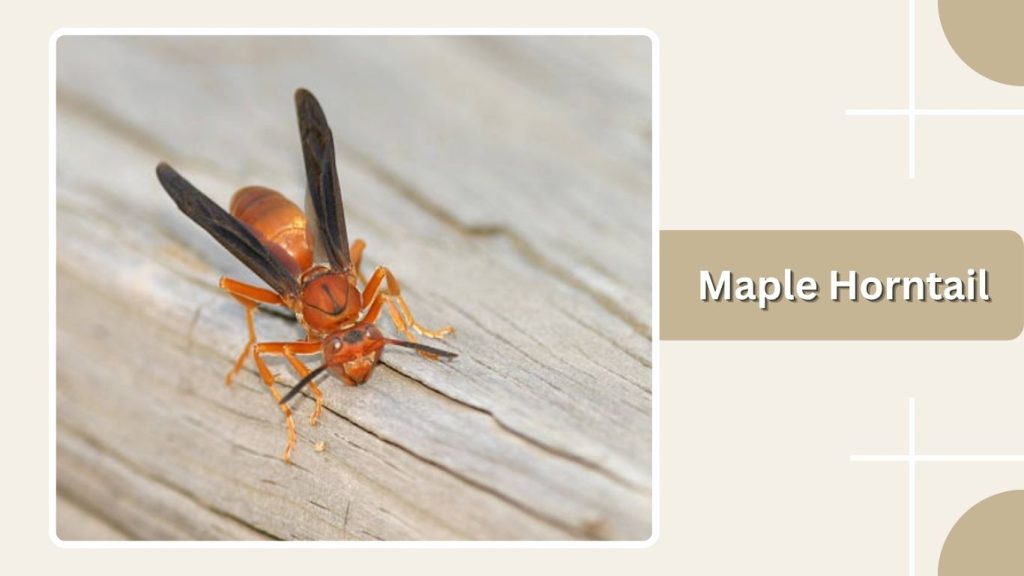
The Maple Horntail is a large wood wasp commonly associated with maple and other hardwood trees. This insect is known for its strong cylindrical body and long ovipositor used by females for egg laying. Despite its wasp-like appearance, the Maple Horntail is harmless to humans and does not possess a true stinger.
Identification
- Large body measuring around 1–1.5 inches long
- Black or dark brown coloration
- Yellow or reddish markings on the abdomen
- Females possess a long ovipositor
- Cylindrical body without a narrow waist
- Transparent smoky wings
- Long antennae and sturdy legs
Habitat and Distribution
Maple Horntails are commonly found in forests, wooded parks, and areas with mature hardwood trees. They are especially associated with maple trees but may also use oak, beech, and elm. This species occurs mainly in North America where suitable hardwood forests provide breeding habitats.
Behavior and Diet
Adult Maple Horntails spend most of their time reproducing and searching for weakened trees. Females drill into wood using their ovipositor and deposit eggs along with fungi that help soften the wood. Larvae feed on fungus-infected wood while tunneling through the tree. Adults are slow-moving and non-aggressive toward humans.
Lifecycle
The lifecycle begins when females lay eggs deep inside weakened hardwood trees. Larvae hatch and tunnel through the wood for many months while feeding and growing. Pupation occurs within chambers inside the tree. Mature adults emerge through circular exit holes and live only a short time before mating and beginning the cycle again.
11. Urocerus Gigas
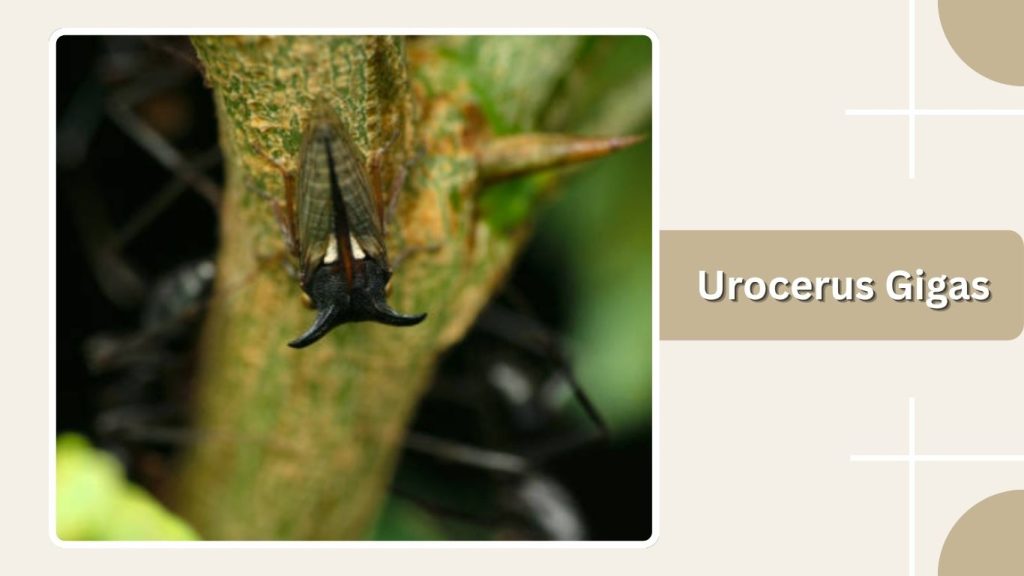
Urocerus gigas, commonly known as the Giant Woodwasp, is one of the largest wood wasps found in Europe. This impressive insect is recognized for its large size, bright markings, and long ovipositor in females. Although it looks intimidating, it is harmless to humans and mainly targets weakened or dead conifer trees.
Identification
- Large body measuring up to 2 inches long
- Black body with yellow abdominal bands
- Females possess a very long ovipositor
- Cylindrical body without a narrow waist
- Transparent amber-tinted wings
- Long black antennae
- Males are usually smaller and slimmer
Habitat and Distribution
Urocerus gigas is widely distributed across Europe, parts of Asia, and conifer-rich forest regions. It is commonly associated with pine, spruce, and fir forests where weakened or recently cut trees are available. Adults are usually active during warm summer months in woodland habitats.
Behavior and Diet
Adult Urocerus gigas wasps spend most of their lives searching for mates and suitable trees for egg laying. Females drill deep into wood and inject eggs together with fungal spores that soften the wood. Larvae tunnel through fungus-infected wood while feeding and developing. Adults are calm insects and do not sting humans.
Lifecycle
The lifecycle begins when females lay eggs inside weakened conifer trees. Larvae hatch and bore tunnels through the wood while feeding for one to several years. Pupation occurs within chambers inside the tree. Mature adults eventually emerge through round holes in the bark and begin searching for mates and breeding sites.
12. Sirex Noctilio
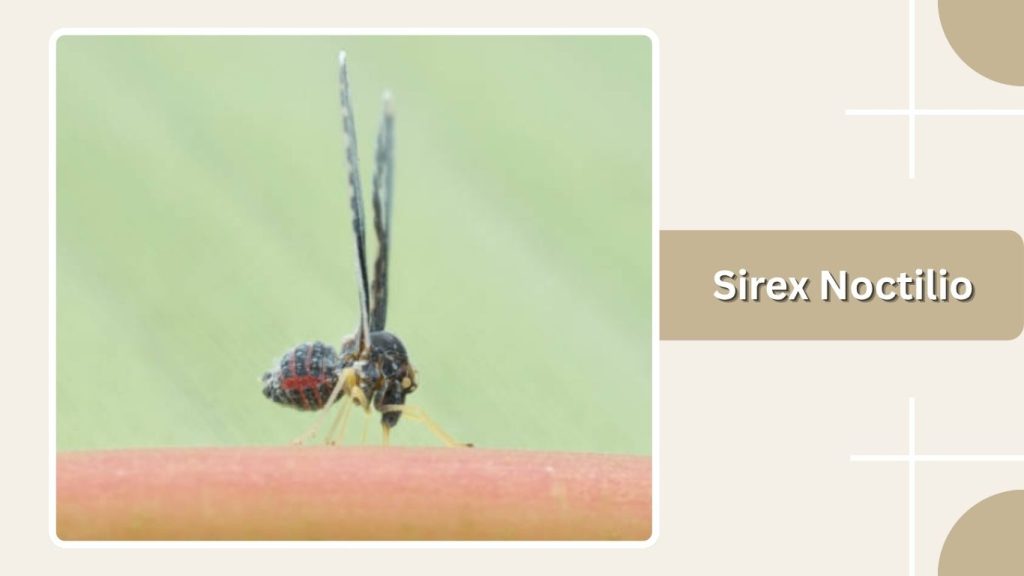
Sirex noctilio, commonly called the European Woodwasp or Sirex Woodwasp, is a destructive wood-boring insect that mainly attacks pine trees. Native to Europe and Asia, this species has spread to several other regions worldwide. It is known for damaging weakened pine forests, although adult wasps are harmless to humans.
Identification
- Large body measuring about 1–1.5 inches long
- Dark metallic blue or black coloration
- Orange or yellow legs in some individuals
- Females possess a long straight ovipositor
- Cylindrical body without a narrow waist
- Transparent smoky wings
- Males often have orange-colored abdomens
Habitat and Distribution
Sirex noctilio is commonly found in pine forests, plantations, and woodland habitats containing conifer trees. Originally native to Europe, Asia, and North Africa, it has spread to North America, South America, Australia, and South Africa. It prefers weakened or stressed pine trees for egg laying and larval development.
Behavior and Diet
Adult Sirex noctilio wasps focus mainly on reproduction and locating suitable pine trees. Females drill into wood using their ovipositor and inject eggs together with toxic mucus and fungal spores. The fungus helps weaken the tree and provides food for the developing larvae. Adults do not sting people and are generally non-aggressive.
Lifecycle
The lifecycle begins when females deposit eggs inside pine trees. Larvae hatch and tunnel through the wood while feeding on fungus-infected tissue. Development inside the tree may last one to two years depending on climate conditions. Pupation occurs within the wood, and mature adults emerge through round exit holes before beginning the reproductive cycle again.
13. Sirex Juvencus
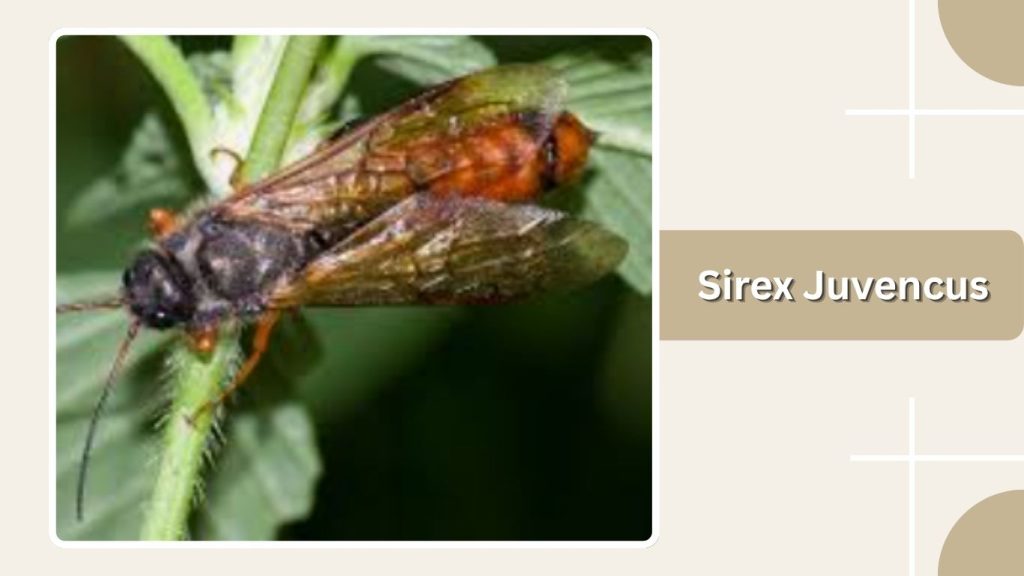
Sirex juvencus is a large wood-boring wasp commonly found in conifer forests across Europe and Asia. This species is recognized for its dark body, orange legs, and long ovipositor in females. Although it resembles a giant stinging wasp, it is harmless to humans and mainly targets weakened or dying trees.
Identification
- Large body measuring about 1–1.5 inches long
- Metallic blue or black body coloration
- Bright orange or reddish legs
- Females possess a long straight ovipositor
- Cylindrical body without a narrow waist
- Transparent smoky wings
- Long black antennae
Habitat and Distribution
Sirex juvencus is commonly found in pine, spruce, and fir forests throughout Europe and parts of Asia. It prefers coniferous woodland habitats containing weakened, dead, or recently cut trees. Adults are often seen during summer resting on tree trunks or flying around forest edges.
Behavior and Diet
Adult Sirex juvencus wasps spend most of their time reproducing and locating suitable trees for egg laying. Females drill into wood using the ovipositor and deposit eggs together with fungal spores that soften the wood for larvae. Larvae tunnel through fungus-infected wood while feeding and growing. Adults are non-aggressive and harmless to humans.
Lifecycle
The lifecycle begins when females lay eggs deep inside weakened conifer trees. Larvae hatch and tunnel through the wood for many months while feeding on fungus-softened tissue. Pupation occurs inside chambers within the tree. Mature adults eventually emerge through circular exit holes and survive briefly before reproducing and restarting the cycle.
14. Xeris Spectrum
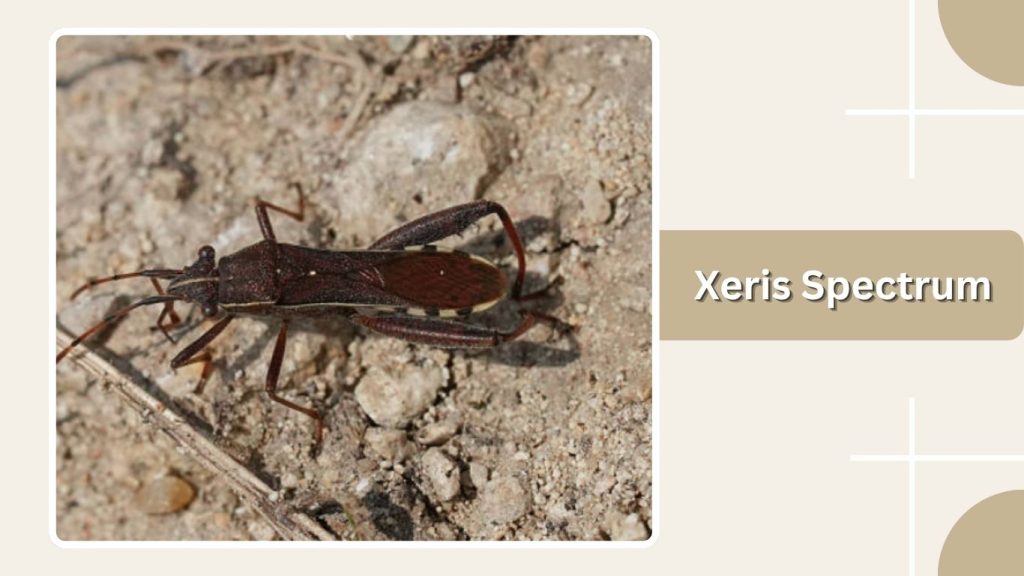
Xeris spectrum is a large wood wasp species commonly found in conifer forests across Europe and Asia. Unlike many wood wasps, this species often uses trees already infested by other wood-boring insects and fungi. It is harmless to humans and plays a role in breaking down weakened forest wood.
Identification
- Large body measuring about 1–1.5 inches long
- Black or dark brown coloration
- Yellow or reddish markings on the abdomen
- Females possess a long ovipositor
- Cylindrical body without a narrow waist
- Transparent smoky wings
- Long segmented antennae
Habitat and Distribution
Xeris spectrum is widely distributed across Europe, Asia, and northern forest regions. It is commonly found in pine, spruce, and fir forests containing weakened or dead conifer trees. Adults are usually active during warm summer months and are often seen resting on tree trunks or fallen logs.
Behavior and Diet
Adult Xeris spectrum wasps spend most of their time reproducing and searching for suitable egg-laying sites. Females drill into weakened wood and deposit eggs inside trees already softened by fungi. Larvae feed on fungus-infected wood while tunneling through the tree. Adults are calm insects that do not sting or threaten humans.
Lifecycle
The lifecycle begins when females lay eggs inside weakened or decaying conifer wood. Larvae hatch and tunnel through the wood while feeding and developing over many months. Pupation takes place within chambers inside the tree. Mature adults emerge through circular exit holes and live briefly before mating and continuing the reproductive cycle.
15. Xiphydria Camelus
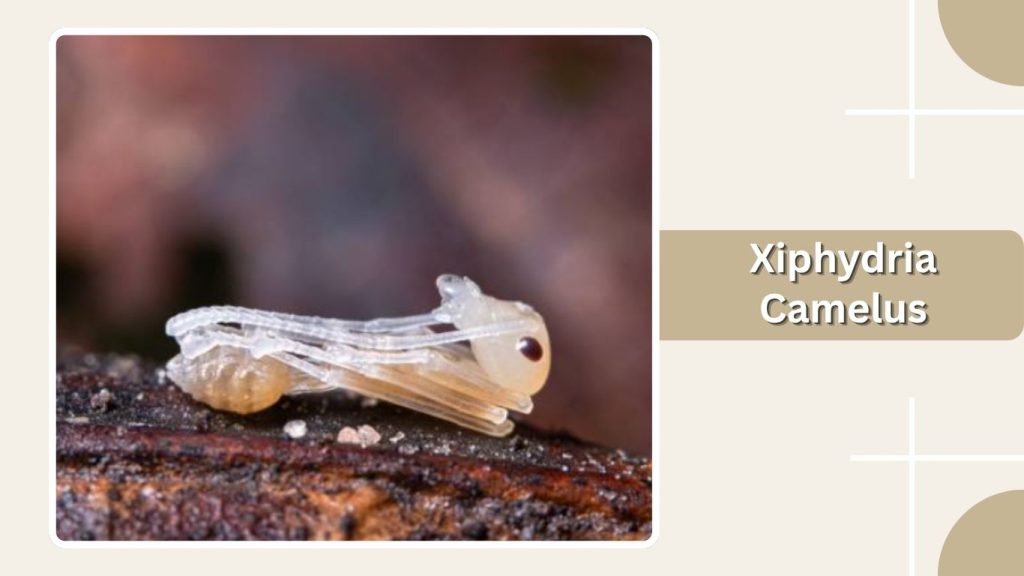
Xiphydria camelus is a slender wood-boring wasp commonly found in forests with deciduous trees. Unlike many larger horntails, this species has a more delicate body shape and is often associated with dead branches rather than large trunks. It is harmless to humans and helps recycle decaying wood in woodland ecosystems.
Identification
- Slender body measuring around 0.5–1 inch long
- Black body with yellow or white markings
- Females possess a thin ovipositor
- Long segmented antennae
- Transparent wings with slight smoky tint
- Narrow cylindrical body shape
- Long legs adapted for moving on bark
Habitat and Distribution
Xiphydria camelus is widely distributed across Europe and parts of Asia. It is commonly found in deciduous forests, woodland edges, parks, and gardens with dead or weakened hardwood trees. Birch, alder, willow, and maple are among its preferred host trees for egg laying and larval development.
Behavior and Diet
Adult Xiphydria camelus wasps spend most of their time searching for mates and suitable dead branches. Females use their ovipositor to insert eggs into weakened wood. Larvae tunnel through the wood while feeding on fungus-softened plant material. Adults are quiet, non-aggressive insects and pose no threat to humans.
Lifecycle
The lifecycle begins when females deposit eggs into dead or weakened branches. Larvae hatch and bore tunnels through the wood while feeding and growing over several months. Pupation occurs inside chambers within the branch or trunk. Mature adults emerge through small round holes and live only a short period before reproducing and continuing the cycle.
16. Red Wood Wasp
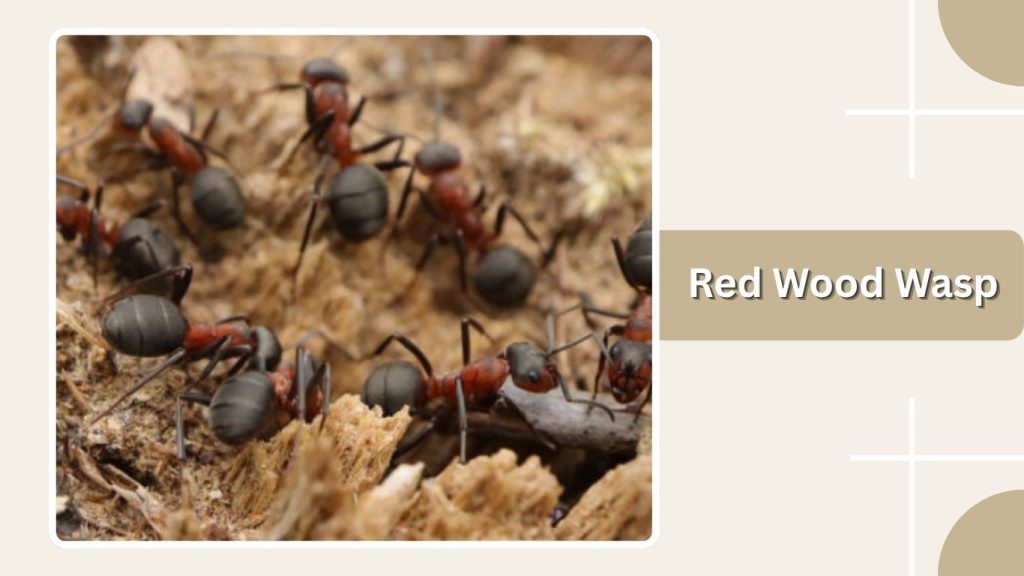
The Red Wood Wasp is a striking wood-boring insect recognized for its reddish body coloration and long ovipositor in females. Like other wood wasps, it is harmless to humans despite its intimidating appearance. The larvae develop inside weakened trees, helping break down decaying wood in forest ecosystems.
Identification
- Medium to large body measuring about 1–1.5 inches long
- Reddish-brown or orange-red coloration
- Cylindrical body without a narrow waist
- Females possess a long ovipositor
- Transparent smoky wings
- Long segmented antennae
- Strong legs adapted for gripping bark
Habitat and Distribution
Red Wood Wasps are commonly found in forests, woodland edges, and areas with dead or weakened trees. They are often associated with hardwood and conifer forests depending on the species. These insects occur in parts of Europe, Asia, and North America where suitable host trees are available.
Behavior and Diet
Adult Red Wood Wasps focus mainly on reproduction and locating suitable trees for egg laying. Females drill into weakened wood and deposit eggs together with fungal spores that soften the wood for larvae. Larvae tunnel through fungus-infected wood while feeding and growing. Adults are non-aggressive and do not sting humans.
Lifecycle
The lifecycle begins when females lay eggs deep inside weakened trees. Larvae hatch and spend months or years tunneling through the wood while feeding and developing. Pupation occurs inside chambers within the tree. Mature adults emerge through circular exit holes and survive briefly before mating and restarting the reproductive cycle.
17. Giant Ichneumon Wasp
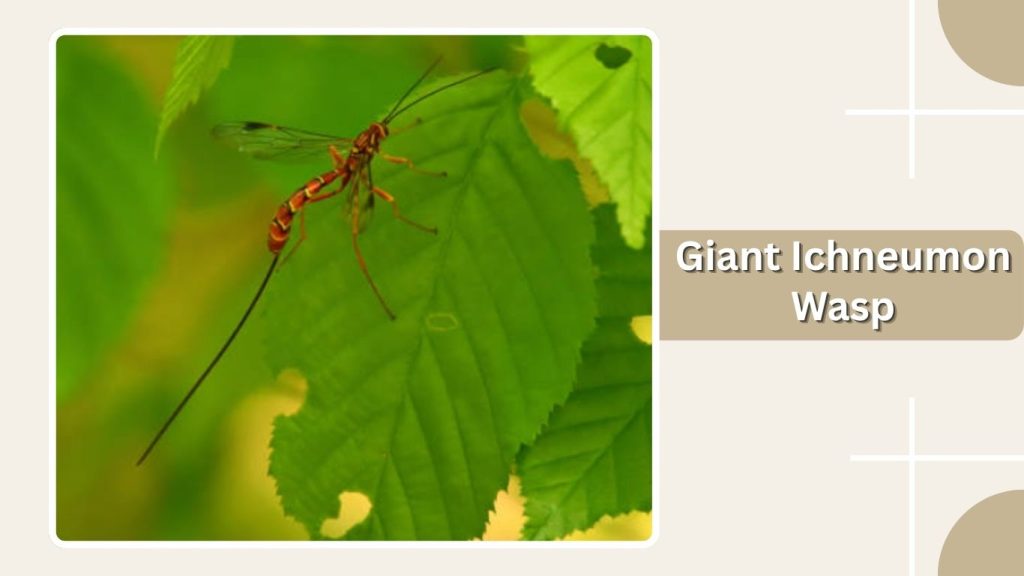
The Giant Ichneumon Wasp is a large parasitic wasp often mistaken for a wood wasp because of its long body and extremely long ovipositor. Unlike true wood wasps, this species parasitizes wood-boring larvae hidden inside trees. Despite its intimidating appearance, it is completely harmless to humans.
Identification
- Large slender body measuring about 1–2 inches long
- Black, brown, or reddish coloration
- Females possess an extremely long thread-like ovipositor
- Narrow waist unlike true wood wasps
- Transparent wings with dark markings
- Long antennae and thin legs
- Orange or yellow markings on the abdomen in some species
Habitat and Distribution
Giant Ichneumon Wasps are commonly found in forests, woodland areas, parks, and regions with dead or decaying trees. They occur across North America, Europe, and parts of Asia. These wasps are usually seen near trees infested with wood-boring insects where females search for hosts.
Behavior and Diet
Adult Giant Ichneumon Wasps feed lightly on nectar and tree sap. Females use their long ovipositor to detect and reach wood-boring larvae hidden deep inside trees. Eggs are deposited directly onto or near the host larva, which later serves as food for the developing wasp offspring. Adults are solitary and non-aggressive toward humans.
Lifecycle
The lifecycle begins when females lay eggs on wood-boring insect larvae hidden inside trees. After hatching, the wasp larva feeds on the host insect while developing. Pupation occurs within the wood near the host remains. Mature adults eventually emerge from the tree and begin searching for mates and new hosts to continue the lifecycle.
FAQs
What are wood wasps?
Wood wasps are large insects that belong to the horntail family. They are known for laying eggs inside dead or weakened trees. Their larvae tunnel through wood while feeding and developing, helping break down decaying trees in forest ecosystems.
Are wood wasps dangerous to humans?
Most wood wasps are harmless to humans. Females have long ovipositors that look like stingers, but they are mainly used for laying eggs in wood. Wood wasps are generally non-aggressive and rarely interact with people.
What do wood wasp larvae eat?
Wood wasp larvae feed on wood softened by fungi introduced by the female during egg laying. The fungus helps break down tough wood fibers, making it easier for the larvae to digest and grow inside the tree.
Where are wood wasps commonly found?
Wood wasps are commonly found in forests, woodland edges, parks, and areas with dead or weakened trees. They occur in North America, Europe, Asia, and many other forested regions around the world.
How long do wood wasps live?
The larval stage of wood wasps can last several months or even years inside wood. Adult wood wasps usually live only a few weeks, focusing mainly on mating and reproduction before dying.