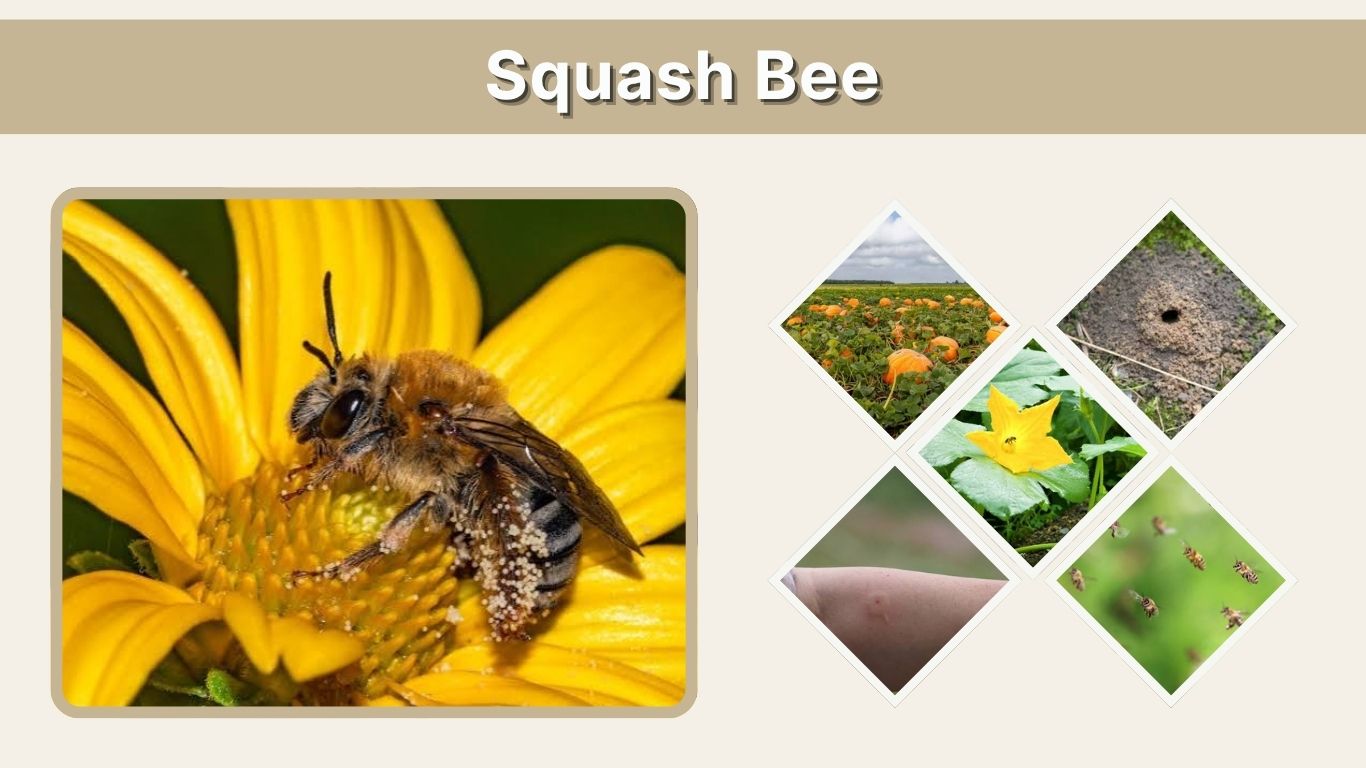
Squash bees are specialized native pollinators closely associated with squash, pumpkin, zucchini, gourds, and other plants in the genus Cucurbita. These solitary bees often begin working inside squash blossoms early in the morning, sometimes before honey bees become active. Females collect pollen for their offspring, while males frequently rest or sleep inside closed flowers. Although they can resemble honey bees, squash bees have different nesting habits, behavior, and ecological roles. They are generally gentle and extremely valuable to home gardens and commercial squash production.
What Is a Squash Bee?
Squash bees are solitary bees that specialize in collecting pollen from Cucurbita flowers. The best-known species in North America is the pruinose squash bee, commonly called the eastern squash bee. It has historically been known as Peponapis pruinosa and is now commonly classified as Eucera pruinosa.
Unlike honey bees, squash bees do not build large colonies or produce stored honey.
Squash Bee Identification
Common identification features include:
- Medium-sized body similar to a honey bee
- Brown to golden coloration
- Hairy thorax
- Pale bands across the abdomen
- Long antennae, especially in males
- Strong association with squash and pumpkin flowers
- Females carrying large amounts of yellow pollen on their hind legs
Because they frequently disappear deep inside squash blossoms, gardeners may notice them only when inspecting flowers early in the morning.
Types of Squash Bees
Several specialized squash-pollinating bees occur in the Americas. Two names frequently encountered are the pruinose squash bee and hoary squash bee.
The pruinose squash bee is among the most widespread and familiar squash specialists in North America. Other squash bees occur in warmer parts of the Americas and may differ somewhat in size, coloration, distribution, and host preference.
Squash Bee vs Honey Bee
Squash bees and honey bees can look similar at first, but their lifestyles are very different.
Squash bees evolved an especially close relationship with squash-family flowers. They are highly efficient at collecting and transferring their large, sticky pollen grains.
Honey bees are generalist pollinators that visit hundreds of plant species. Squash bees, by comparison, concentrate much of their pollen-collecting activity on Cucurbita.
Honey bees live in social colonies with a queen and thousands of workers. Female squash bees generally build and provision individual underground nests.
Squash Bee Habitat and Range
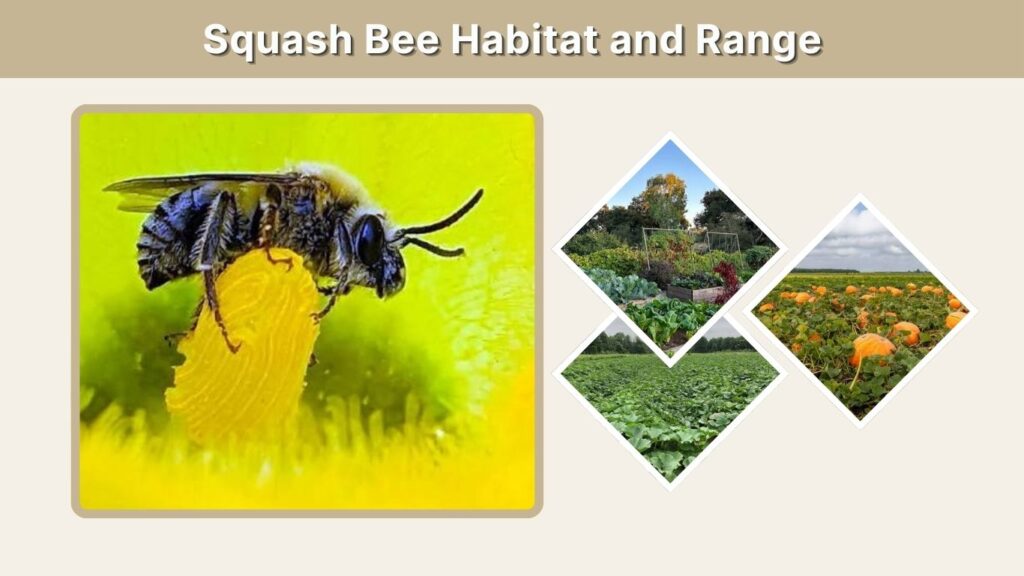
Squash bees are closely tied to places where wild or cultivated Cucurbita plants grow. Agricultural fields, vegetable gardens, community gardens, farms, and natural habitats can all support populations. Because females nest underground, successful habitat must provide both flowering squash plants and accessible soil nearby.
Where Do Squash Bees Live?
Squash bees occur across large areas of the Americas, with certain species having particularly broad distributions in North America.
They can be found in:
- Home vegetable gardens
- Pumpkin fields
- Squash farms
- Community gardens
- Agricultural field margins
- Open sunny landscapes
- Areas containing wild Cucurbita
Their distribution has expanded alongside the cultivation of squash and pumpkins.
Squash Bee Habitat
Good squash bee habitat combines abundant blossoms with relatively undisturbed ground.
Females generally favor sunny areas with exposed or lightly vegetated soil. Gardens that are completely covered with thick mulch or landscape fabric may provide fewer nesting opportunities.
The bees normally remain close enough to squash plants that they can efficiently gather pollen before the flowers close later in the day.
Can You Make a Squash Bee Habitat?
Gardeners can support squash bees by providing suitable plants and nesting conditions.
Useful practices include:
- Grow several squash or pumpkin plants.
- Leave some patches of bare soil.
- Minimize deep tilling near nests.
- Avoid landscape fabric over all garden soil.
- Limit pesticide use.
- Grow additional nectar-producing flowers nearby.
- Leave established nesting sites undisturbed when possible.
These simple changes can help maintain local populations from one growing season to the next.
Squash Bee Nesting Behavior
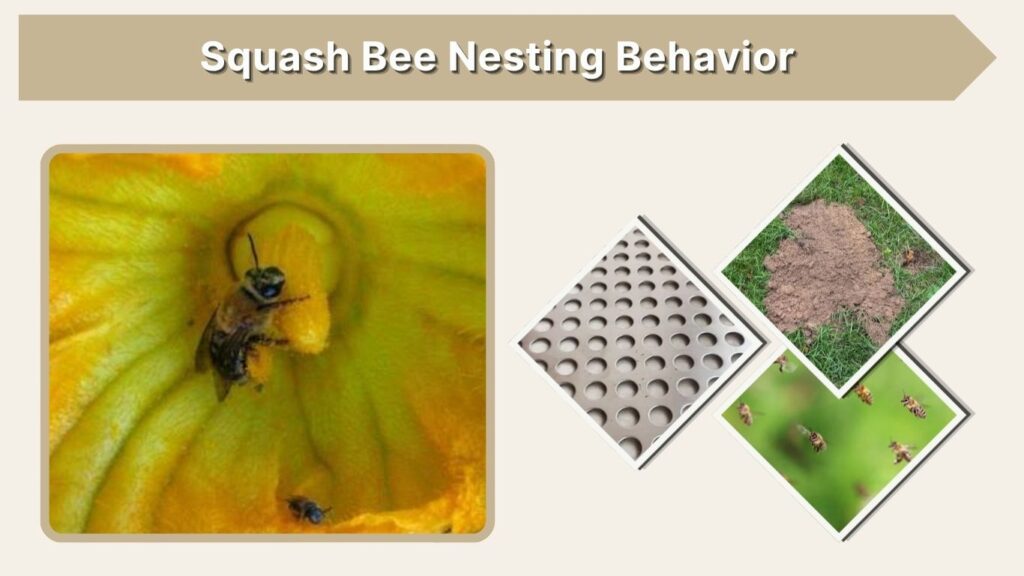
Squash bees are ground-nesting insects. Although many females may nest within the same garden or field, they are considered solitary because each female typically prepares and provisions her own nest rather than working as part of a colony.
Suitable nesting conditions are particularly important because immature bees spend much of their development underground.
What Does a Squash Bee Nest Look Like?
A female excavates a small tunnel in the soil and creates underground brood chambers.
Signs may include:
- Small round entrance holes
- Loose soil around an entrance
- Bees flying close to the ground
- Females repeatedly entering one hole
- Several nests concentrated in a sunny patch
Large nesting aggregations can sometimes occur where soil conditions are ideal.
How Female Squash Bees Build Nests
After mating, a female digs into the soil and creates individual cells within her underground nest.
She visits squash flowers to collect pollen and nectar, returning repeatedly to the nest. The pollen and nectar are placed inside a brood cell as food for a developing larva.
An egg is deposited with the food supply, and the chamber is sealed.
The female continues constructing and provisioning additional cells during her adult life.
Are Squash Bee Nests Protected From Flooding?
Ground nests face natural dangers from heavy rain and saturated soil. Nest depth and soil structure can provide some protection, but prolonged flooding may damage immature bees.
Well-drained sites are generally more suitable than locations that remain waterlogged.
This is another reason females often select particular patches of ground rather than nesting randomly throughout a garden.
Squash Bees and Pollination
Squash bees are among the most effective natural pollinators of pumpkins, zucchini, summer squash, winter squash, and related crops. Their daily activity is synchronized with squash flowers, which open very early and often begin closing before midday.
This timing gives squash bees a major advantage when moving pollen between flowers.
How Do Squash Bees Pollinate?
Male and female squash flowers occur separately on the same plant. For fruit to develop, pollen from a male flower must reach the receptive parts of a female flower.
Squash bees accomplish this as they move among blossoms.
Female bees deliberately collect pollen, while males visit flowers searching for nectar and mates. Their hairy bodies pick up pollen grains that can be transferred when they contact reproductive structures in other flowers.
Do Squash Plants Need Bees?
Squash plants require pollen transfer to produce normal fruit. Bees are among their most important natural pollinators.
Poor pollination can result in:
- Small fruits that stop developing
- Misshapen squash
- Young fruits turning yellow
- Flowers dropping without fruit development
Squash bees, bumble bees, and honey bees can all contribute to pollination.
How to Pollinate Squash Without Bees
Gardeners can hand-pollinate squash when natural pollinators are scarce.
Early in the morning, identify a freshly opened male flower and a female flower. Female flowers can usually be recognized by the small immature fruit behind the blossom.
Transfer pollen from the male flower’s anther to the central receptive structure inside the female flower using the flower itself or a small clean brush.
Hand pollination works, but supporting natural bees is usually easier for larger plantings.
Do Squash Bees Sting?
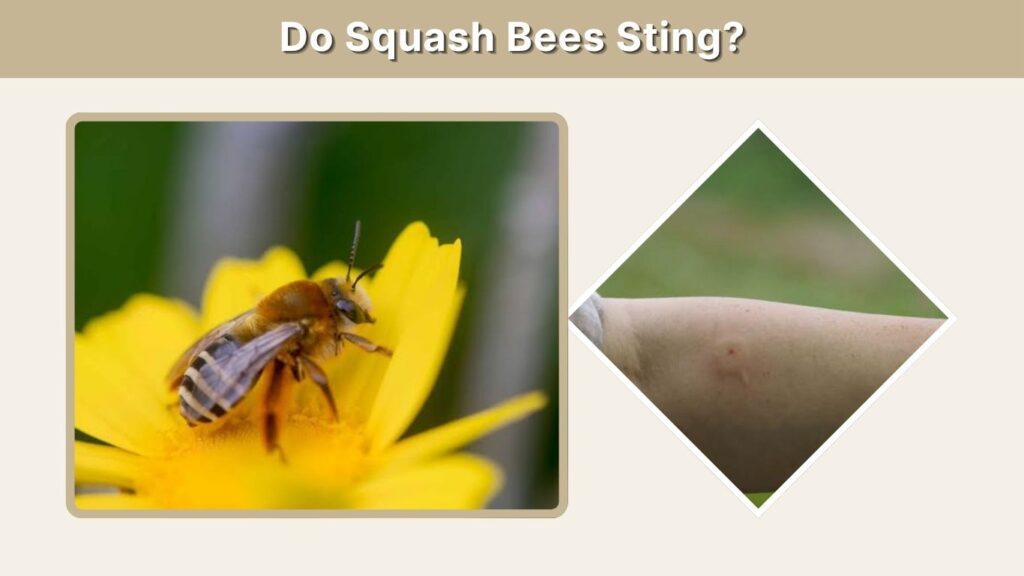
People often become concerned when they see several bees moving quickly among vegetable plants. Squash bees, however, are generally gentle insects and are not known for aggressively defending nesting areas.
Their solitary lifestyle means they do not have a large communal colony to protect.
Are Squash Bees Aggressive?
Squash bees are normally nonaggressive around people.
Males may fly rapidly around blossoms while searching for females, but males cannot sting.
Females possess stingers but usually focus on collecting pollen and nesting. A sting is unlikely unless a female is handled, trapped, or otherwise strongly threatened.
Gardeners can normally work around squash bees without difficulty.
Do Squash Bees Make Honey?
No. Squash bees do not maintain large colonies containing honey stores like honey bees.
Females collect pollen and nectar primarily to create individual food provisions for their larvae. Each developing bee receives enough food inside its underground brood chamber to complete its immature development.
Why Do Squash Bees Sleep in Flowers?
One of the most interesting squash bee behaviors is seeing males resting inside squash blossoms.
Squash flowers usually open early in the morning and close later. Male squash bees may remain inside blossoms as they close, using them as temporary sleeping or resting sites.
Male Squash Bees in Flowers
Male squash bees spend much of the morning searching blossoms for females.
After their active period, several males can sometimes be found together inside one wilted or closing flower.
They may appear trapped or dead, but often they are simply resting.
When another morning arrives, they resume searching for flowers and mates.
Why Squash Bees Are Active So Early
Squash pollen is available when the blossoms open around sunrise.
Squash bees are adapted to this schedule and can become active very early. Their ability to collect pollen during this short flowering window helps explain why they can be more effective squash pollinators than insects that begin foraging later.
How to Attract Squash Bees
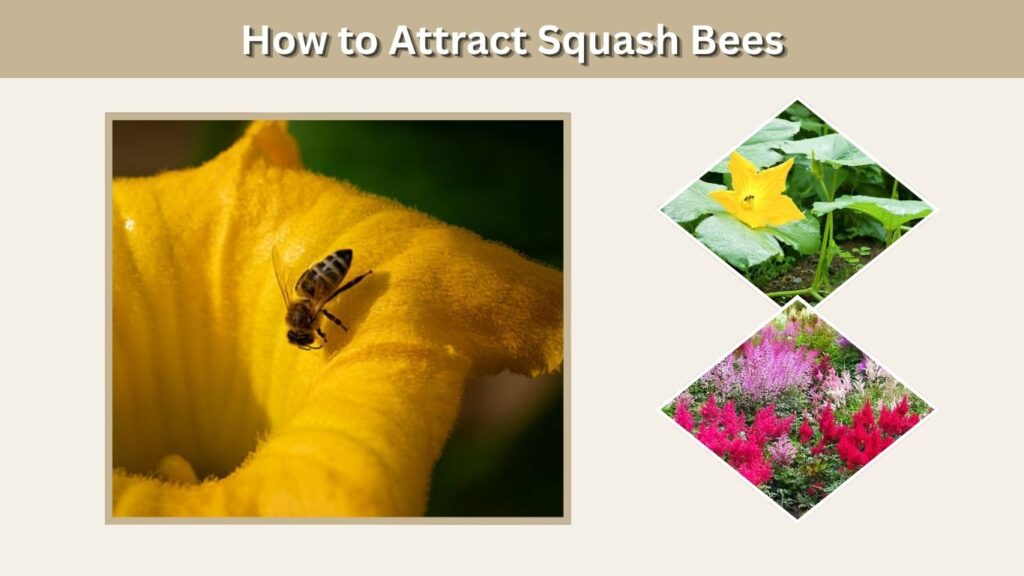
The most effective way to attract squash bees is to provide abundant squash blossoms while protecting suitable nesting habitat. Once established, populations may return year after year if gardening practices do not destroy their underground nests.
Ways to Attract Squash Bees
- Plant squash, pumpkins, zucchini, or gourds.
- Grow multiple plants to provide abundant flowers.
- Leave small areas of exposed soil.
- Avoid unnecessary tilling.
- Reduce pesticide use.
- Avoid spraying open flowers.
- Plant additional native flowering plants.
- Preserve known nesting areas.
Avoiding insecticides during flowering is particularly important because bees frequently enter squash blossoms while feeding.
Squash Bee Life Cycle
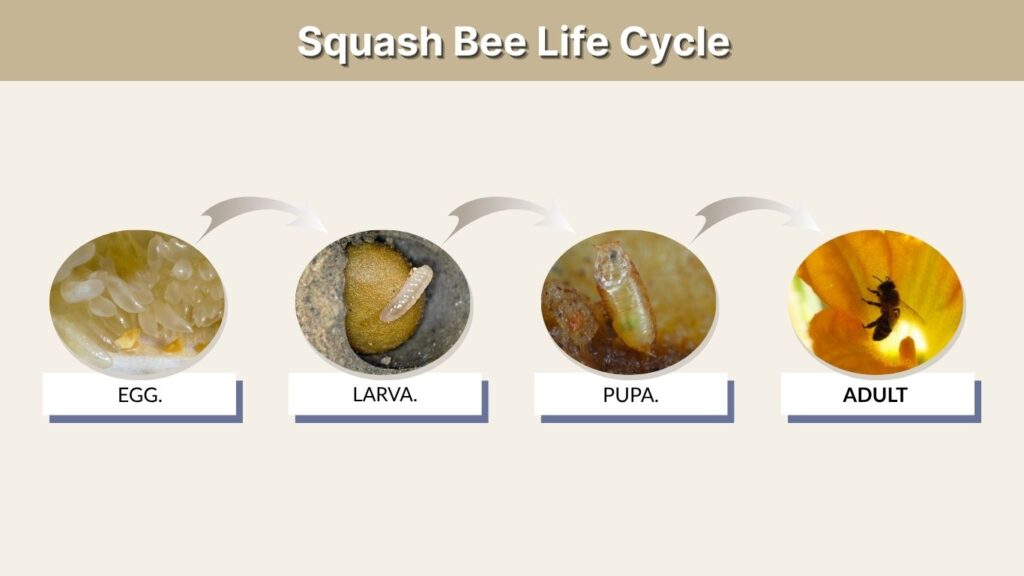
Squash bees pass through egg, larval, pupal, and adult stages. Much of their life is spent underground rather than flying around flowers. Adult emergence is closely synchronized with the period when squash and related plants begin producing blossoms.
Egg and Larval Stages
A female places an egg inside a prepared nest cell containing pollen and nectar.
After hatching, the larva consumes the stored food rather than leaving the underground chamber to search for food.
It grows and eventually enters later developmental stages within the nest.
Adult Emergence
Adults generally emerge when host plants are flowering.
Males often appear first and begin searching for females. After mating, females establish nests and spend their days traveling between flowers and underground brood chambers.
This close timing between bee emergence and squash flowering is one of the species’ most remarkable adaptations.
FAQs
What is a squash bee?
A squash bee is a solitary native bee specialized for collecting pollen from squash, pumpkin, zucchini, and other Cucurbita flowers.
What is the scientific name of the squash bee?
One of the best-known species is the pruinose squash bee, currently commonly called Eucera pruinosa and historically known as Peponapis pruinosa.
Do squash bees sting people?
Females can sting, but they are generally gentle and rarely sting unless directly handled or threatened. Male squash bees cannot sting.
Do squash bees produce honey?
No. Squash bees are solitary and do not maintain communal honey stores. Females collect pollen and nectar primarily as food for their developing larvae.
How can I attract squash bees to my garden?
Plant plenty of squash-family crops, preserve some exposed soil for nesting, avoid disturbing established nests, grow additional flowers, and minimize pesticide use around blooming plants.