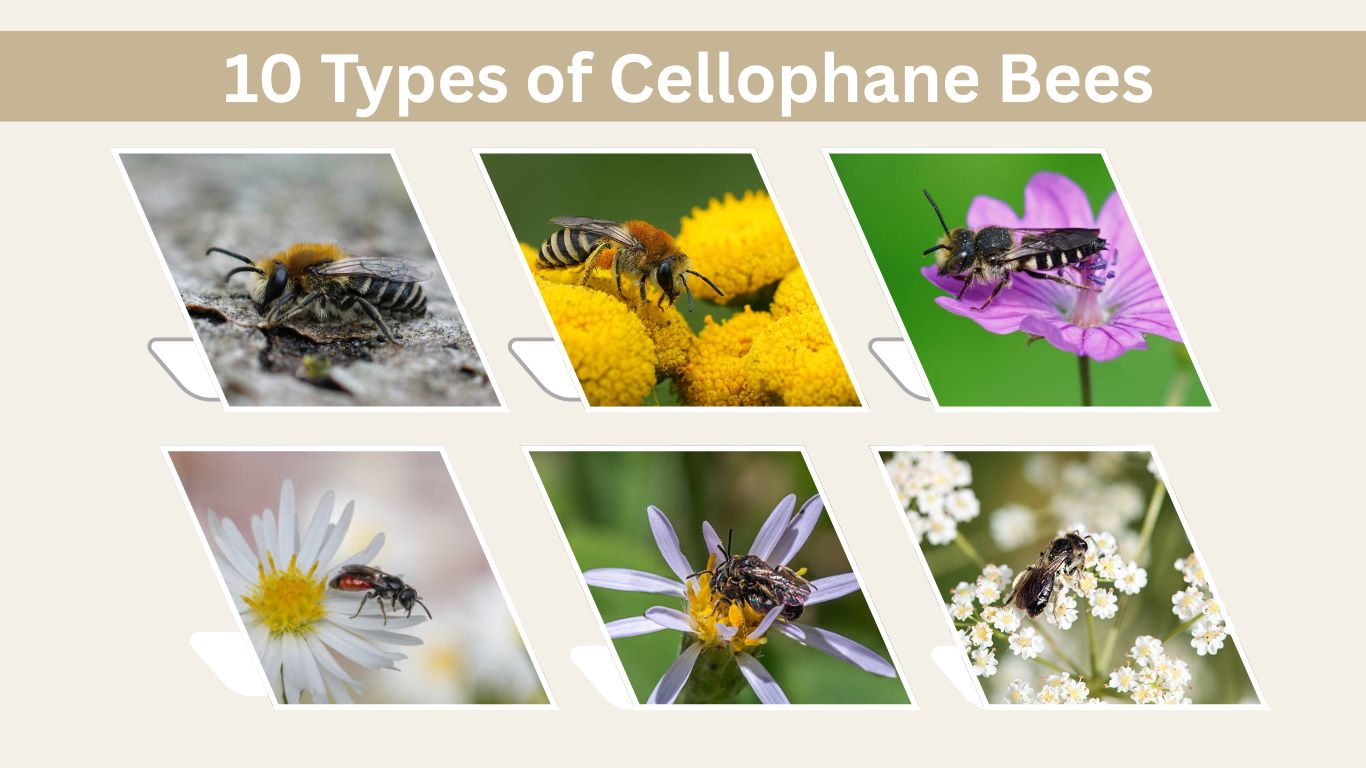
Cellophane bees are fascinating solitary bees known for their unique underground nests and shiny waterproof brood cells. Unlike honey bees, they do not live in large colonies or make honey. Each female builds her own nest in soil and lines the cells with a thin, cellophane-like coating to protect her eggs. These bees are usually gentle, early or seasonal pollinators that visit flowers for nectar and pollen. From the Unequal Cellophane Bee to the Ivy Bee and Plasterer Bee, each type has its own habitat, behavior, and role in supporting wildflowers, gardens, and natural ecosystems.
1. Unequal Cellophane Bee
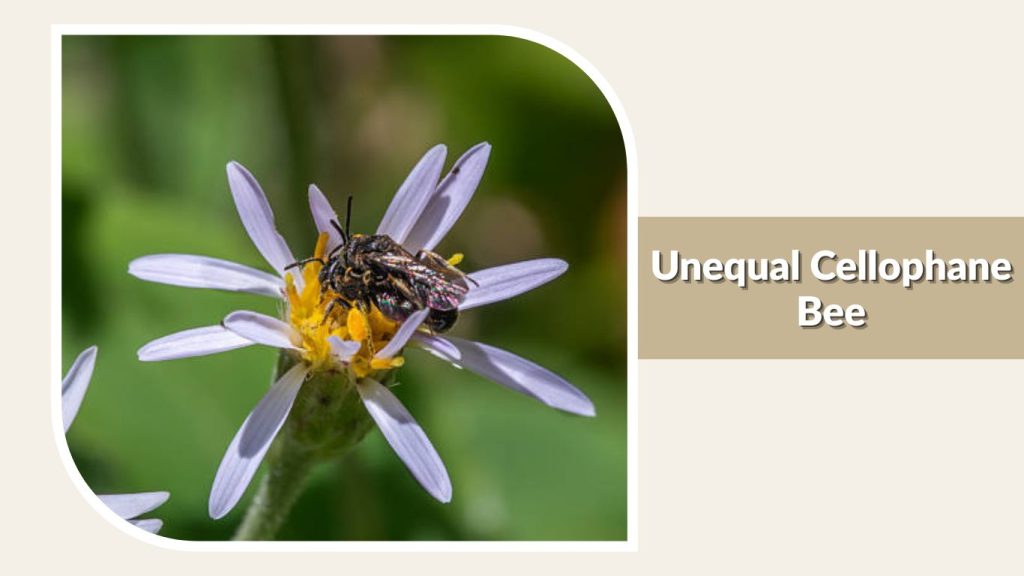
The Unequal Cellophane Bee is one of the earliest spring bees in North America. It is a solitary ground-nesting bee, but many females may nest close together in sunny soil. This bee is called a “cellophane bee” because females line their underground brood cells with a thin, waterproof, cellophane-like coating.
Identification
- Scientific name: Colletes inaequalis
- Commonly called the Unequal Cellophane Bee or plasterer bee.
- Females are about 12–13 mm long, while males are smaller, around 9–10 mm.
- The body is fuzzy, usually with pale tan or grayish hairs.
- The abdomen has clear pale bands, giving it a striped look.
- Males often have longer antennae and a noticeably hairy face.
- It can look similar to a honey bee, but it is usually more solitary and nests in the ground.
Habitat and Distribution
Unequal Cellophane Bees are mostly found in North America. Their range includes parts of Canada and the United States, from Nova Scotia to Saskatchewan and south toward Georgia, Texas, Idaho, and Washington. They prefer sunny, well-drained soil where females can dig burrows. Lawns, parks, cemeteries, paths, gardens, and open sandy areas can all become nesting places. Unlike honey bees, they do not build a hive. Each female makes her own underground nest, although many nests may appear close together in one area.
Behavior and Diet
This bee becomes active very early in spring, often before many other bees appear. Males usually emerge first and fly low over nesting areas while searching for females. Females collect pollen and nectar from early blooming plants. They are known to visit flowers such as willow, red maple, and apple blossoms. Unequal Cellophane Bees are not aggressive and usually ignore people unless handled roughly.
Life Cycle
The Unequal Cellophane Bee has one generation per year. After mating, the female digs a tunnel in the soil and creates small brood cells. She lines each cell with a waterproof secretion, adds pollen and nectar, then lays one egg inside. The larva feeds, develops underground, and remains protected until the next spring, when the new adult bee emerges.
2. Spring Cellophane Bee
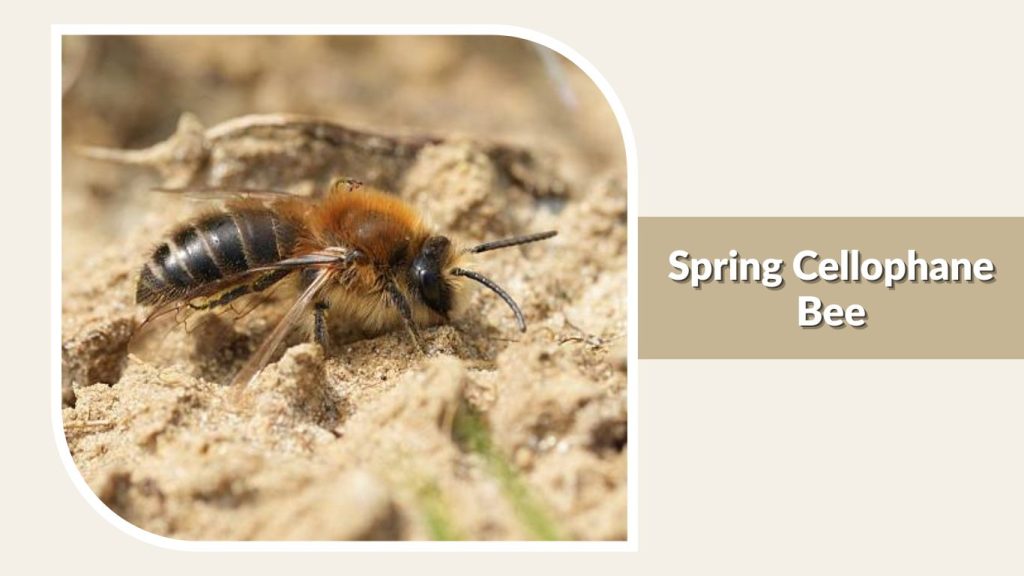
The Spring Cellophane Bee is a small solitary bee that appears during the early warm days of spring. Like other cellophane bees, it nests in the ground and protects its young inside smooth, waterproof brood cells. This bee is useful for pollinating early flowers and is generally harmless around people.
Identification
- Scientific name: Colletes cunicularius
- Commonly known as the Spring Cellophane Bee.
- Usually has a fuzzy body with pale gray, tan, or whitish hairs.
- The abdomen is dark with lighter hair bands across the segments.
- Females are usually larger and stronger-looking than males.
- Males may look slimmer and often fly actively near nesting sites.
- It may be confused with honey bees, but it does not live in a hive.
- Often seen flying close to the ground in spring.
Habitat and Distribution
Spring Cellophane Bees prefer open places with loose, sandy, or well-drained soil. They are often found in grasslands, woodland edges, gardens, sandy paths, and open countryside. These bees usually choose sunny nesting areas because warm soil helps their young develop. Although each female builds her own nest, many females may dig burrows in the same patch of ground, creating a small nesting aggregation.
Behavior and Diet
This bee is active early in the year, when many spring flowers begin to bloom. Adults visit flowers for nectar, while females collect pollen to feed their larvae. They are especially important because they fly when fewer pollinators are active. Spring Cellophane Bees are not aggressive. They may gather in noticeable numbers near nesting places, but they rarely sting and usually move away when disturbed.
Life Cycle
The life cycle begins when adults emerge in spring. Males usually appear first and search for females near nesting areas. After mating, each female digs a tunnel in the soil. She builds separate brood cells, coats them with a thin protective lining, and fills them with pollen and nectar. One egg is laid in each cell. The larva grows underground, changes into a pupa, and remains there until the next spring.
3. Broad-footed Cellophane Bee
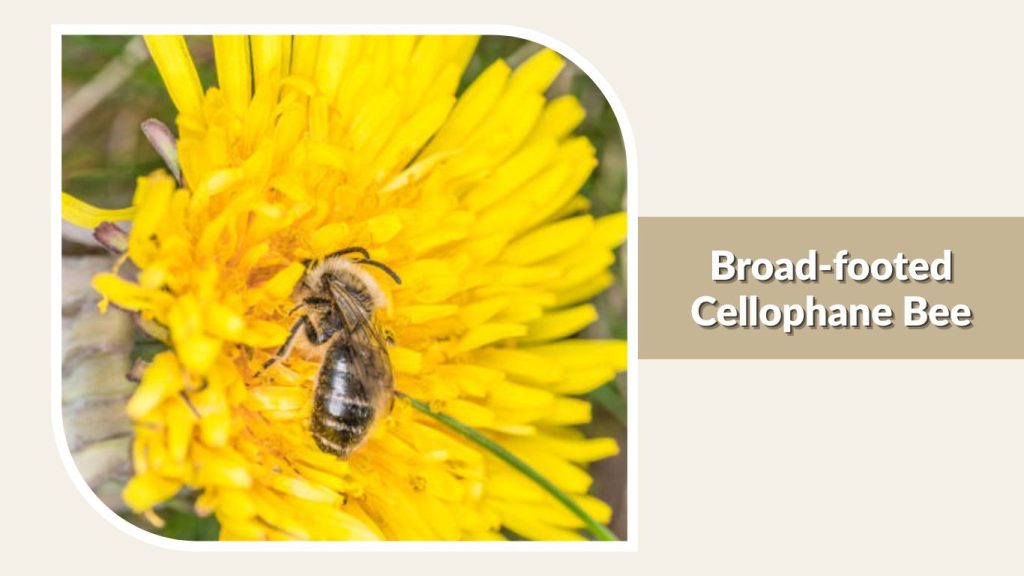
The Broad-footed Cellophane Bee is a solitary ground-nesting bee known for its early-season activity and close relationship with flowering plants. Like other cellophane bees, the female creates underground brood cells and lines them with a thin, protective coating. This helps keep the developing young safe from moisture and soil damage.
Identification
- Scientific name: Colletes latitarsis
- Commonly called the Broad-footed Cellophane Bee.
- The body is usually dark with pale hair bands on the abdomen.
- It has a fuzzy thorax, often covered with grayish or tan hairs.
- Females are generally larger and more robust than males.
- Males are slimmer and may be seen flying quickly near nesting sites.
- The “broad-footed” name refers to the wider tarsal parts of the legs.
- It can resemble other small spring bees, so close identification may require expert observation.
Habitat and Distribution
Broad-footed Cellophane Bees are usually found in open habitats where the soil is suitable for nesting. They may use sandy patches, dry grasslands, open fields, woodland edges, and sunny garden areas. These bees do not form honey bee-style colonies. Instead, each female digs her own nest in the ground. However, several females may choose the same good nesting area, so many small burrow openings can appear close together.
Behavior and Diet
This bee spends much of its adult life visiting flowers for nectar and pollen. Females collect pollen to feed their larvae, while males mainly search for mates. Broad-footed Cellophane Bees are calm and not considered dangerous to people. They are most noticeable when they fly low over the ground in warm weather. Their pollination work supports native plants and early blooming flowers.
Life Cycle
The life cycle begins when adults emerge from underground nests. Males often appear first, followed by females. After mating, the female prepares a soil tunnel with several brood cells. She coats each cell with a waterproof lining, stores pollen and nectar inside, and lays one egg. The larva feeds, grows, and develops underground before emerging as an adult in the next active season.
4. Williston’s Cellophane Bee
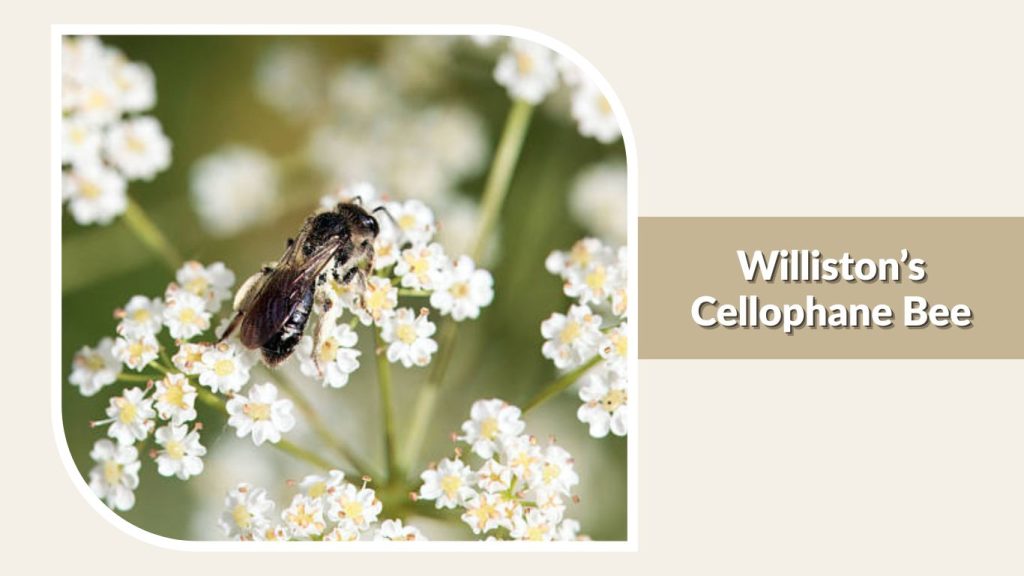
The Williston’s Cellophane Bee is a solitary bee that belongs to the plasterer bee group. It is known for nesting in soil and creating smooth, protected brood cells underground. Like other cellophane bees, it plays a helpful role in pollination, especially by visiting seasonal wildflowers and native plants during its active period.
Identification
- Scientific name: Colletes willistoni
- Commonly known as Williston’s Cellophane Bee.
- Usually has a dark body with pale or grayish body hairs.
- The thorax may look fuzzy, especially on fresh adults.
- The abdomen often shows narrow pale bands between darker segments.
- Females are usually larger and built for digging soil nests.
- Males are often smaller, slimmer, and more active around nesting sites.
- It can be difficult to identify without close examination because many Colletes bees look similar.
Habitat and Distribution
Williston’s Cellophane Bee is generally associated with open, sunny habitats where the soil is suitable for nesting. It may be found in dry fields, grasslands, sandy ground, prairie-like areas, and open woodland edges. Females choose places where they can dig underground tunnels without too much moisture. Each female makes her own nest, but several bees may use the same good nesting area if the soil conditions are right.
Behavior and Diet
This bee is not aggressive and usually avoids people. Adults spend much of their time searching for nectar and pollen from flowers. Females collect pollen to prepare food for their young, while males focus mainly on finding mates. Williston’s Cellophane Bee helps pollinate wildflowers and other blooming plants. Its activity is usually seasonal, so it is most noticeable during the time when its preferred flowers are available.
Life Cycle
After emerging as adults, males usually search for females near nesting areas. Once mating occurs, the female digs a tunnel in the soil and builds small brood cells. She lines each cell with a thin waterproof coating, places pollen and nectar inside, and lays one egg. The larva feeds inside the protected cell, develops underground, and later becomes an adult ready for the next active season.
5. Compact Cellophane Bee
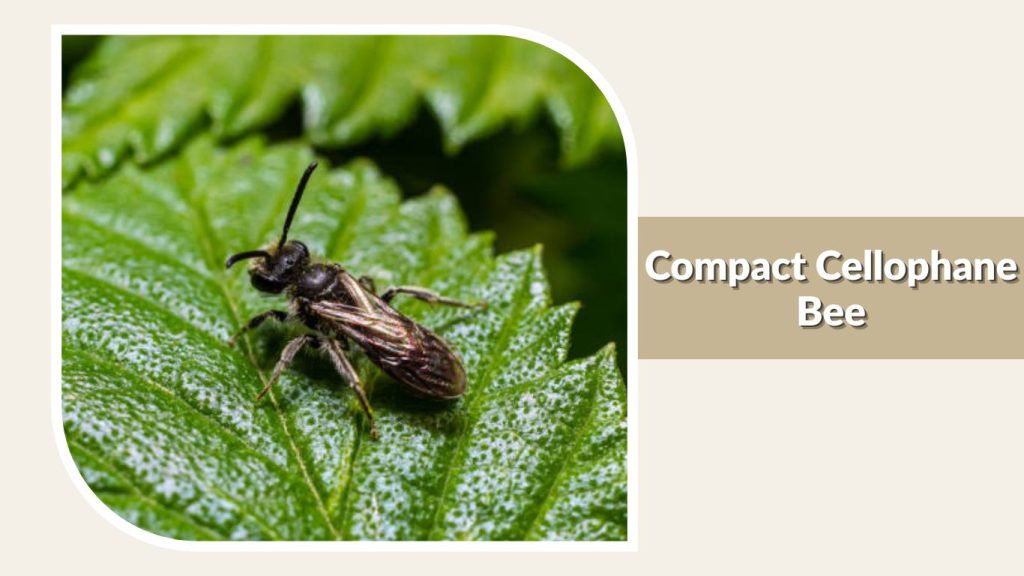
The Compact Cellophane Bee is a small solitary bee from the plasterer bee group. It is known for its ground-nesting habit and its ability to make protective, cellophane-like linings inside underground brood cells. This bee is not a hive-forming species, but it can sometimes appear in groups where many females nest in the same suitable soil patch.
Identification
- Scientific name: Colletes compactus
- Commonly called the Compact Cellophane Bee.
- Usually has a dark body with pale gray, whitish, or tan hairs.
- The thorax often looks fuzzy, especially on newly emerged adults.
- The abdomen may show light bands across the darker segments.
- Females are usually broader and stronger because they dig nests.
- Males are often smaller, slimmer, and more active in flight.
- It may look similar to other Colletes bees, so exact identification can be difficult without close study.
Habitat and Distribution
Compact Cellophane Bees are usually found in open areas with dry or well-drained soil. They may nest in fields, meadows, sandy paths, roadsides, gardens, and woodland edges. Females prefer soil that is easy to dig but not too wet. Like other cellophane bees, they do not live in large social colonies. Each female creates her own tunnel, although several nests may be close together if the location is suitable.
Behavior and Diet
This bee visits flowers for nectar and pollen. Females collect pollen as food for their young, while males mainly search for females during the breeding season. Compact Cellophane Bees are generally calm and not dangerous to people. They may fly close to the ground near nesting areas, but they usually do not bother humans or pets. Their flower visits make them useful pollinators for native plants.
Life Cycle
The life cycle starts when adult bees emerge from underground nests during their active season. After mating, the female digs a soil tunnel and builds several brood cells. She lines each cell with a thin waterproof coating, adds pollen and nectar, and lays one egg inside. The larva feeds safely underground, develops through its immature stages, and later becomes an adult for the next generation.
6. Lutz’s Cellophane Bee
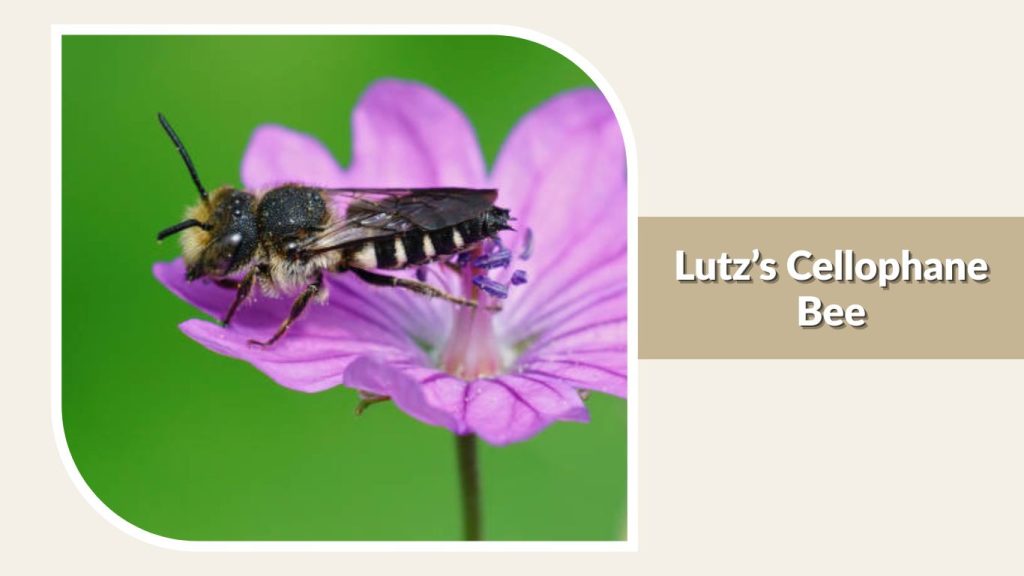
The Lutz’s Cellophane Bee is a solitary ground-nesting bee in the plasterer bee family. It is part of the Colletes group, whose females are known for lining their underground brood cells with a thin, smooth, waterproof layer. This bee is not aggressive and is mainly noticed when adults visit flowers or fly near nesting soil.
Identification
- Scientific name: Colletes lutzi
- Commonly known as Lutz’s Cellophane Bee.
- Usually has a dark body with pale hairs on the head and thorax.
- The abdomen often has narrow, light-colored bands.
- Females are generally larger and more solid because they dig nests.
- Males are usually slimmer and more active in flight.
- Fresh adults may look fuzzier than older individuals.
- It can be hard to separate from other Colletes bees without expert identification.
Habitat and Distribution
Lutz’s Cellophane Bee is usually found in open habitats where dry or well-drained soil is available. It may occur in meadows, grasslands, sandy fields, roadsides, open woodland edges, and sunny garden areas. Females need soil that is suitable for digging tunnels, so compact wet ground is not ideal. Like other cellophane bees, each female builds her own nest, but several females may nest near each other when the location is good.
Behavior and Diet
This bee feeds on nectar and collects pollen from flowers. Females gather pollen to place inside brood cells as food for their larvae. Males spend much of their time searching for females and may fly low around nesting sites. Lutz’s Cellophane Bee is considered gentle and rarely causes problems for people. Its flower visits help support pollination in natural areas, especially where native plants bloom during its active season.
Life Cycle
After adults emerge, males usually become active first and look for females. Once mating is complete, each female digs a tunnel in the ground and prepares separate brood cells. She lines every cell with a waterproof coating, stores pollen and nectar inside, and lays one egg. The larva feeds in the protected cell, develops underground, and later becomes an adult for the next season.
7. Heather Cellophane Bee
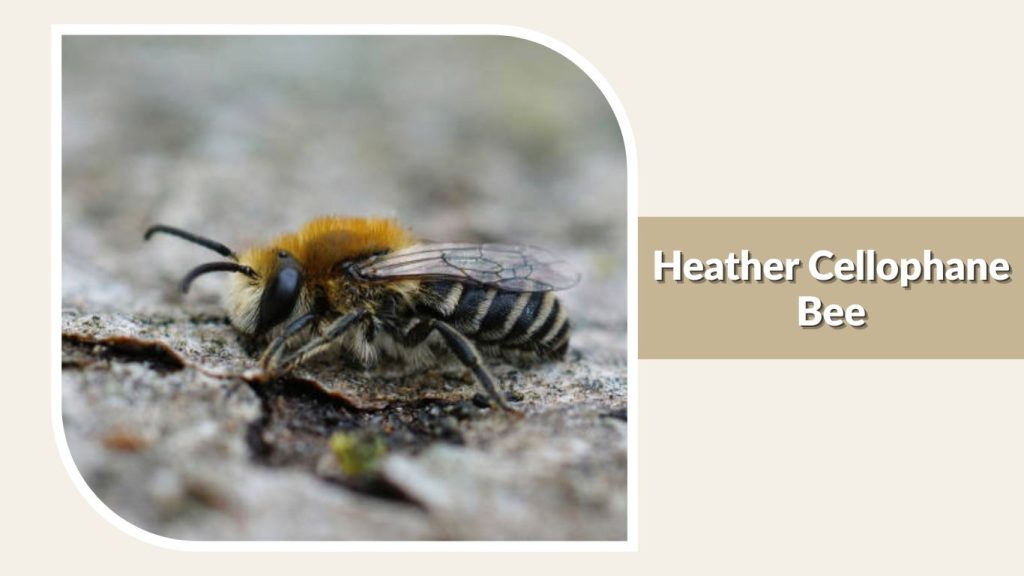
The Heather Cellophane Bee is a solitary bee often linked with heathland and open flowering habitats. Like other cellophane bees, the female nests in the ground and lines each brood cell with a smooth protective coating. This waterproof lining helps protect the egg and stored food while the young bee develops underground.
Identification
- Scientific name: Colletes succinctus
- Commonly called the Heather Cellophane Bee.
- Usually has a dark body with pale gray, yellowish, or whitish hairs.
- The thorax is often fuzzy, especially in fresh adults.
- The abdomen has clear pale bands across the dark segments.
- Females are usually larger and stronger than males.
- Males are slimmer and often fly actively around flowers and nesting areas.
- It can look similar to other Colletes bees, so careful observation is needed for exact identification.
Habitat and Distribution
Heather Cellophane Bees are commonly found in heathlands, moorlands, sandy areas, grasslands, and open countryside. They are strongly associated with places where heather and other late-season flowers grow. These bees prefer sunny, well-drained soil for nesting. Each female digs her own underground burrow, but many females may nest close together if the soil and flower supply are suitable.
Behavior and Diet
This bee visits flowers for nectar and pollen. It is especially connected with heather flowers, which provide an important food source during its active season. Females collect pollen and nectar to feed their larvae, while males spend more time searching for mates. Heather Cellophane Bees are usually peaceful and do not attack people. Even when many are nesting in one area, they are mostly focused on flowers and nest-building.
Life Cycle
The life cycle begins when adult bees emerge during the flowering season. Males usually appear first and look for females. After mating, the female digs a tunnel in the soil and creates separate brood cells. She coats each cell with a waterproof lining, adds pollen and nectar, and lays one egg. The larva feeds inside the cell, develops safely underground, and later emerges as an adult bee.
8. Ivy Bee
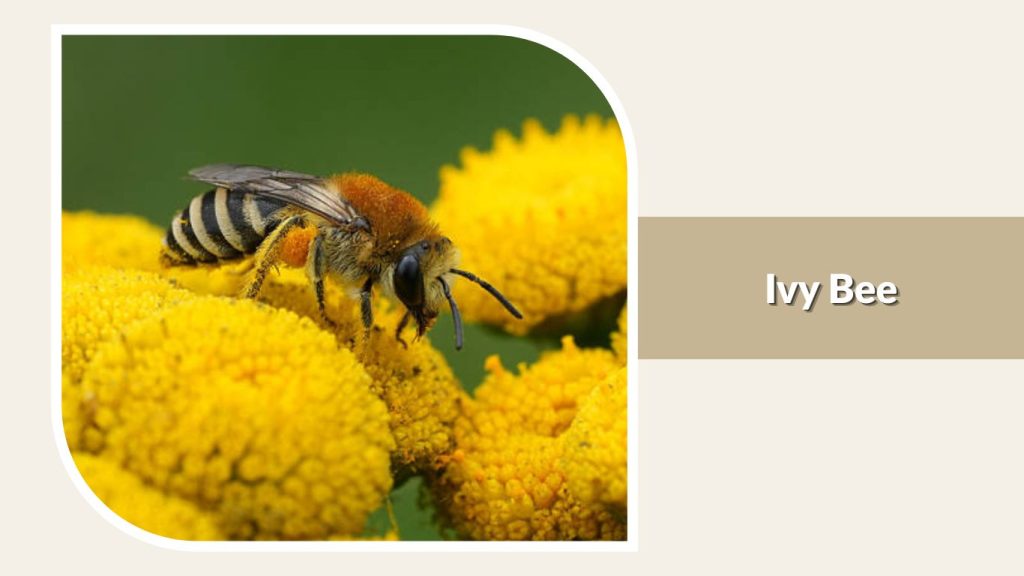
The Ivy Bee is a late-season cellophane bee known for its strong connection with flowering ivy. Unlike many bees that are most active in spring or summer, this bee appears mainly in autumn. It is a solitary ground-nesting species, but many females may nest close together in warm, sunny soil.
Identification
- Scientific name: Colletes hederae
- Commonly known as the Ivy Bee.
- Has a fuzzy orange-brown thorax.
- The abdomen is dark with clear pale or cream-colored bands.
- Females are usually larger and more robust than males.
- Males are slimmer and often fly quickly around nesting areas.
- It may look similar to a honey bee, but it is usually more strongly banded.
- Often seen visiting ivy flowers during late summer and autumn.
Habitat and Distribution
Ivy Bees are commonly found in areas where ivy grows and blooms. They prefer warm, sunny places with loose or well-drained soil for nesting. Common nesting areas include lawns, garden banks, sandy paths, parks, coastal cliffs, and open slopes. Each female digs her own underground nest, but large groups can appear in the same place when the soil is ideal. This can make the nesting site look busy, although the bees are solitary.
Behavior and Diet
The Ivy Bee mainly feeds on nectar and pollen from ivy flowers, especially during autumn when fewer other flowers are available. Females collect pollen to feed their larvae, while males search for females near nesting sites and flowers. These bees are generally calm and not aggressive. Even when many are flying in one area, they are usually focused on mating, nesting, or feeding rather than bothering people.
Life Cycle
Adult Ivy Bees emerge late in the year, often when ivy begins to flower. Males usually appear first and wait near nesting areas for females. After mating, the female digs a burrow in the ground and prepares brood cells. She lines each cell with a waterproof coating, stores pollen and nectar, and lays one egg. The larva develops underground and remains protected until it becomes an adult the following season.
9. Sea Aster Mining Bee
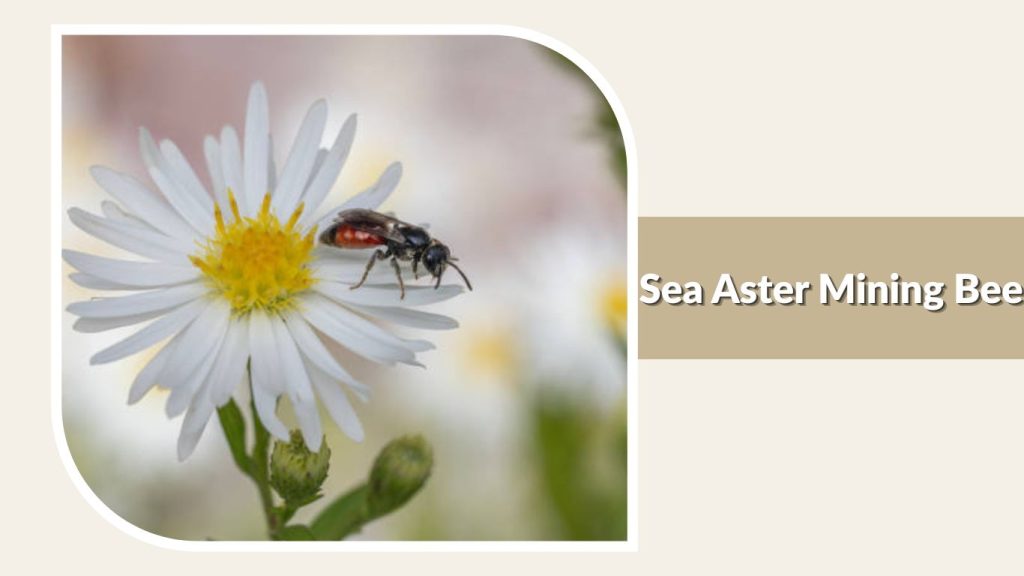
The Sea Aster Mining Bee is a solitary bee often connected with coastal wetlands and saltmarsh flowers. Although it is commonly called a mining bee, it is closely associated with habitats where sea aster grows. This bee is important because it helps pollinate late-season coastal plants and survives in places where many other bees are less common.
Identification
- Scientific name: Colletes halophilus
- Commonly called the Sea Aster Mining Bee.
- Usually has a dark body with pale gray or yellowish hairs.
- The abdomen has light bands across the dark segments.
- Females are usually larger and stronger than males.
- Males are slimmer and often fly actively around flowers.
- It may look similar to other coastal Colletes bees.
- Often seen feeding on sea aster flowers in saltmarsh areas.
Habitat and Distribution
Sea Aster Mining Bees are mainly found in coastal areas, especially saltmarshes, estuaries, and other damp seaside habitats. They prefer places where sea aster and related flowers grow in good numbers. These bees usually nest in bare or lightly covered soil, often near suitable feeding areas. Although each female makes her own nest, many females may nest close together where the ground conditions are right.
Behavior and Diet
This bee is strongly linked with sea aster flowers, which provide both nectar and pollen. Females collect pollen to feed their larvae, while males spend much of their time searching for females around flowers and nesting places. Sea Aster Mining Bees are not aggressive and rarely bother people. Their activity is usually seasonal, matching the blooming period of coastal flowers.
Life Cycle
Adult Sea Aster Mining Bees emerge when their main food plants are flowering. After mating, the female digs a nest in the soil and creates small brood cells. She lines each cell with a thin waterproof coating, places pollen and nectar inside, and lays one egg. The larva feeds inside the protected cell, develops underground, and later becomes an adult for the next generation.
10. Plasterer Bee
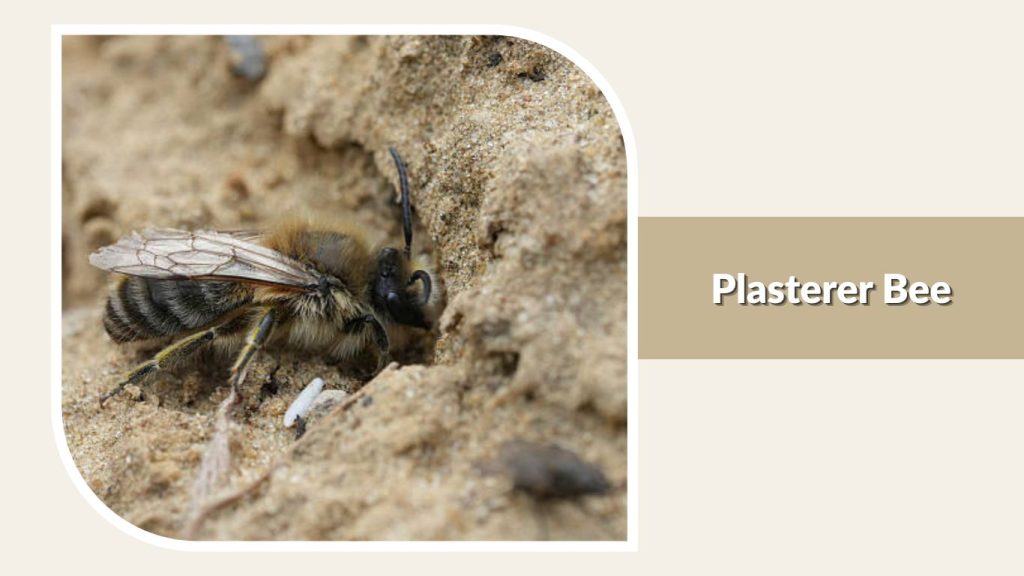
The Plasterer Bee is a common name used for bees in the Colletes group. These bees are famous for lining their underground brood cells with a smooth, waterproof material that looks like thin cellophane. They are solitary bees, but many females may nest near each other when the soil is warm, sunny, and easy to dig.
Identification
- Belongs to the genus Colletes.
- Commonly called Plasterer Bee or Cellophane Bee.
- Usually has a dark body with pale gray, tan, or whitish hairs.
- The abdomen often shows clear pale bands across the segments.
- Females are usually larger and stronger because they dig nests.
- Males are often slimmer and more active around nesting areas.
- Many species look similar, so exact identification can be difficult.
- They may be mistaken for small honey bees, but they do not live in hives.
Habitat and Distribution
Plasterer Bees are found in many open habitats, including gardens, meadows, lawns, sandy banks, woodland edges, fields, and roadsides. They usually prefer bare or lightly covered soil where females can dig underground tunnels. Some species are active in spring, while others appear in summer or autumn. Although each female creates her own nest, several females may choose the same nesting patch, making the area look like a small bee colony.
Behavior and Diet
Plasterer Bees visit flowers for nectar and pollen. Females collect pollen to feed their larvae, while males mainly search for females during the breeding season. These bees are generally gentle and rarely sting unless handled roughly. They are useful pollinators for wildflowers, garden plants, shrubs, and trees. Their activity often matches the blooming season of their preferred flowers.
Life Cycle
After mating, the female digs a tunnel in the soil and builds several brood cells. She coats each cell with a thin waterproof lining, then adds pollen and nectar as food. One egg is laid in each cell. The larva feeds safely underground, grows, and changes into a pupa. Later, it emerges as an adult bee during the next active season.
FAQs
1. Are cellophane bees dangerous?
Cellophane bees are not dangerous to most people. They are solitary bees and do not defend a hive like honey bees or wasps. Females can sting, but they rarely do unless handled or pressed against the skin. Most cellophane bees simply fly around flowers or nesting soil.
2. Why are they called cellophane bees?
They are called cellophane bees because females line their underground brood cells with a thin, shiny, waterproof material. This lining looks similar to cellophane or plastic film. It helps protect the egg, pollen food, and developing larva from moisture, fungi, and soil damage.
3. Where do cellophane bees build their nests?
Cellophane bees usually nest in the ground. They prefer sunny, well-drained soil, sandy patches, lawns, garden banks, fields, paths, and open slopes. Each female digs her own tunnel, but many females may nest close together if the soil is warm, dry, and suitable.
4. What do cellophane bees eat?
Adult cellophane bees feed on nectar from flowers. Females also collect pollen to feed their larvae. Some species visit many kinds of flowers, while others are closely linked with certain plants such as willow, heather, ivy, or sea aster. Their flower visits make them useful pollinators.
5. How long do cellophane bees live?
Adult cellophane bees are active for only a short season, often a few weeks. However, their full life cycle lasts much longer because the young develop underground. After the larva feeds and grows inside its brood cell, it remains protected until the next active season.