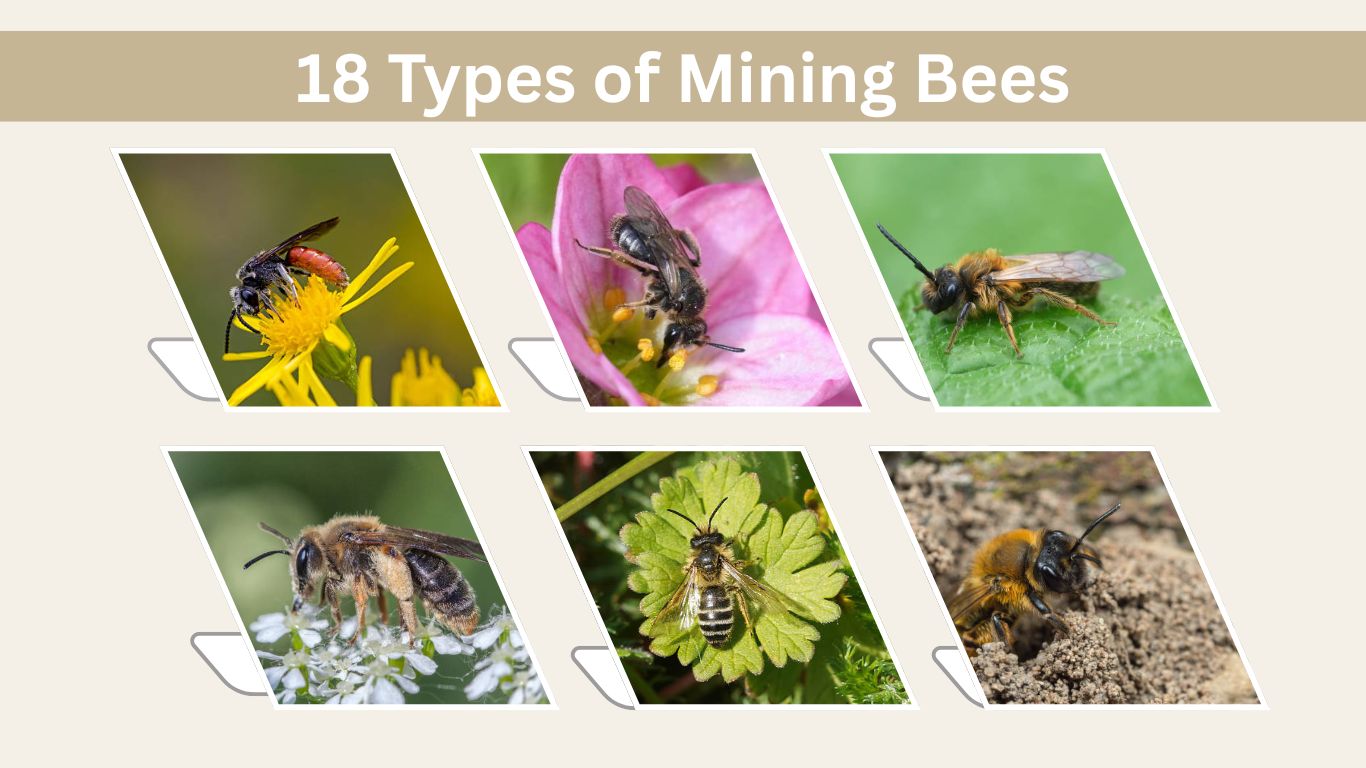
Mining bees are solitary ground-nesting bees found in gardens, meadows, woodlands, grasslands, and sandy habitats. They come in many colors, from tawny orange to black, grey, brown, and banded patterns. Although they are often mistaken for honeybees or small wasps, mining bees are gentle pollinators. Learning their key features makes identification easier.
1. Tawny Mining Bee
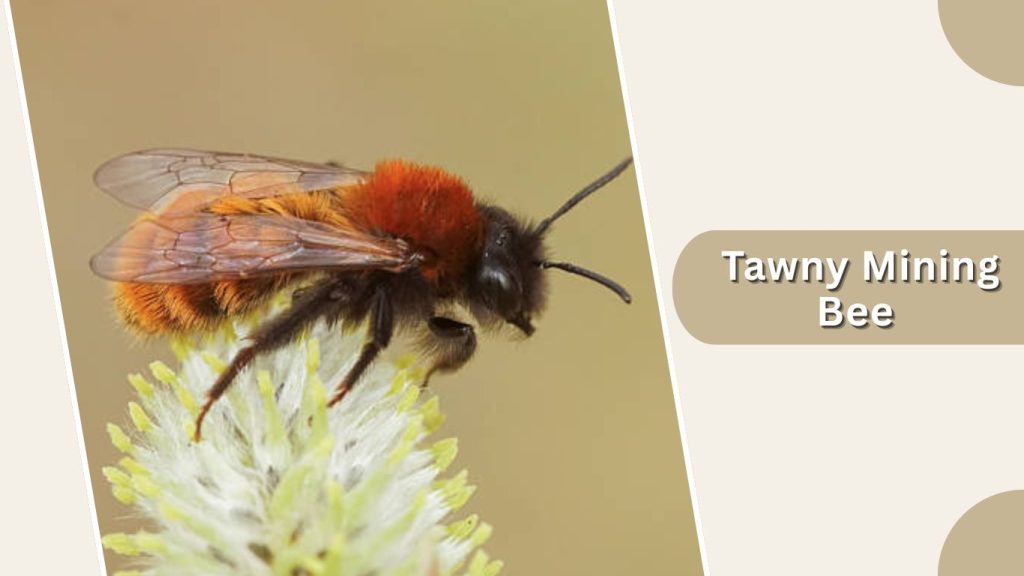
The tawny mining bee is one of the most recognizable mining bees because of its bright reddish-orange coat. It is a solitary ground-nesting bee often seen in spring. This species is commonly found in gardens, parks, lawns, and open grassy areas where females dig small burrows in the soil.
Identification
- Females have a thick reddish-orange or fox-colored body.
- Males are slimmer and usually have paler golden-brown hairs.
- The body looks furry, especially on the thorax and abdomen.
- It has dark legs and a black face.
- Females are usually more colorful and easier to identify.
- It is often seen flying low over lawns or bare soil.
Habitat
Tawny mining bees prefer sunny areas with soft, well-drained soil. They often nest in lawns, garden borders, parks, and grassy banks. Their small nest holes may appear close together, but each female builds and manages her own nest separately.
Diet
This bee feeds on nectar and pollen from spring flowers. It commonly visits fruit blossoms, dandelions, hawthorn, willow, and other early-flowering plants. The female collects pollen to store inside underground nest cells for her larvae.
Behavior
Tawny mining bees are solitary and active mainly in spring. Males usually appear first and search for females near nesting areas. Females dig tunnels in the ground and create separate chambers for their eggs. They are gentle bees and rarely sting unless handled roughly.
2. Ashy Mining Bee
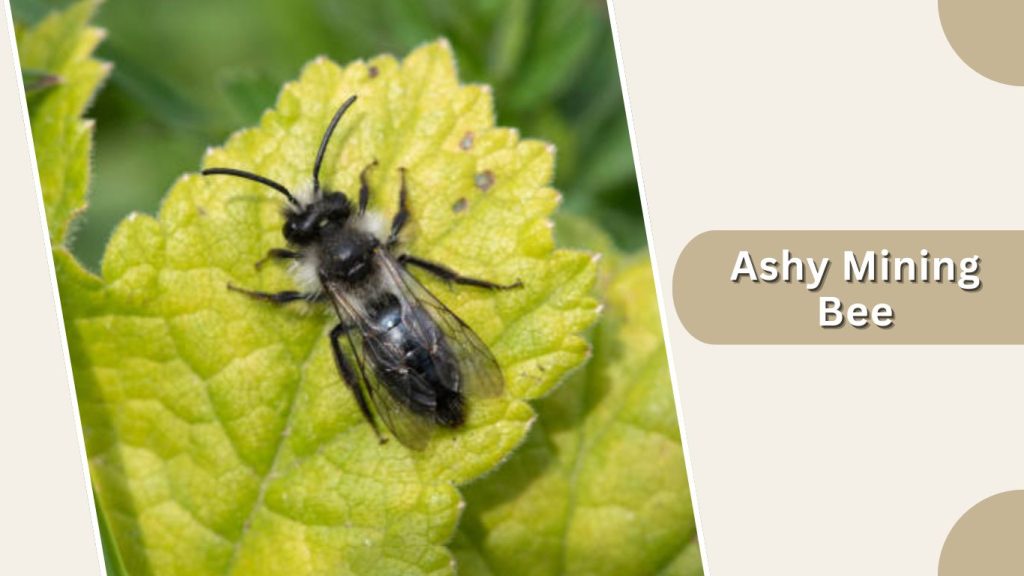
The ashy mining bee is a striking solitary bee known for its black body with pale gray or whitish hair bands. It is active in spring and often visits gardens, meadows, orchards, and open woodland edges. Its bold color pattern makes it one of the easier mining bees to recognize.
Identification
- It has a shiny black body with pale gray or white hairs.
- Females show two clear pale hair bands on the thorax.
- The abdomen is dark, smooth, and less hairy.
- Males are smaller and have more grayish hair overall.
- The legs are dark and fairly slender.
- Its black-and-gray contrast is the key identifying feature.
Habitat
Ashy mining bees live in sunny places with exposed or lightly covered soil. They are often found in gardens, paths, banks, parks, and open woodland edges. Females dig individual nest burrows in the ground, sometimes near other females of the same species.
Diet
This species feeds on nectar and pollen from a range of spring flowers. It may visit fruit trees, buttercups, dandelions, hawthorn, and other flowering plants. Pollen is collected by females and carried back to the nest for developing larvae.
Behavior
Ashy mining bees are solitary but may nest in loose groups where soil conditions are suitable. They are active during spring and early summer. Males can be seen flying quickly around nesting sites while females focus on digging, collecting pollen, and laying eggs.
3. Chocolate Mining Bee
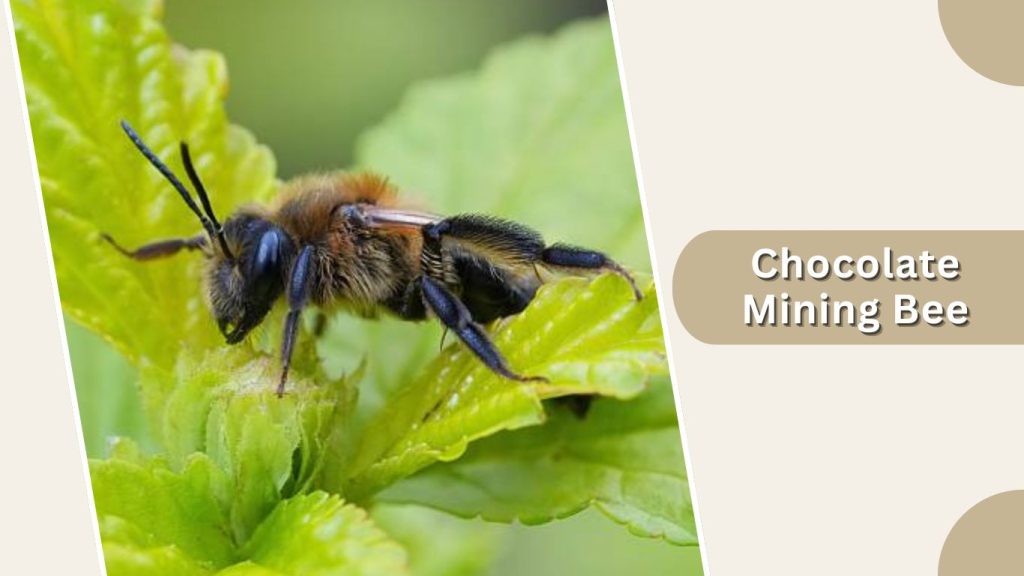
The chocolate mining bee is a dark, furry solitary bee with warm brown tones that give it its common name. It appears in spring and is often found in gardens, hedgerows, woodland edges, and grasslands. Like other mining bees, it nests underground in small soil burrows.
Identification
- It has a dark brown to chocolate-colored body.
- The thorax is usually covered with rich brown hairs.
- The abdomen looks darker and may appear slightly glossy.
- Females are usually larger and more robust than males.
- Males may have paler facial hairs.
- Its warm brown color helps separate it from gray or orange species.
Habitat
Chocolate mining bees prefer open habitats with nearby flowering plants and suitable soil for nesting. They may be found along hedgerows, garden beds, woodland paths, grassy banks, and field edges. Females create small underground nests in loose or sandy soil.
Diet
This bee visits a variety of spring flowers for nectar and pollen. It may feed from shrubs, fruit blossoms, wildflowers, and early garden plants. Females gather pollen to form food stores inside nest cells before laying eggs.
Behavior
Chocolate mining bees are solitary and do not form honeybee-like colonies. Each female builds her own nest and cares for her own brood. Males usually patrol flowers and nesting areas in search of females. They are generally calm and not aggressive around people.
4. Buffish Mining Bee
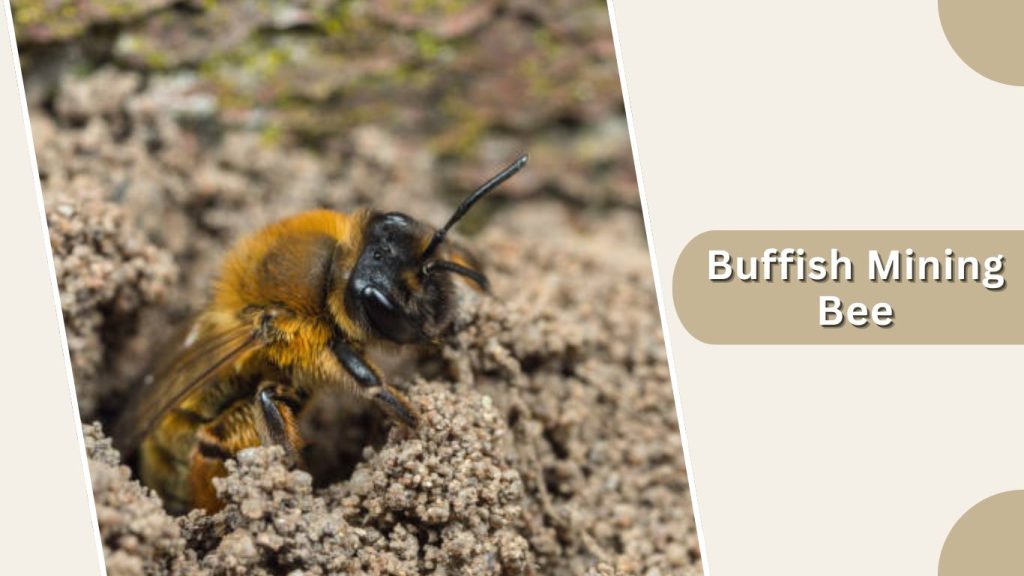
The buffish mining bee is a medium-sized solitary bee with soft buff, brown, or golden hairs. It is usually active in spring and early summer. This bee can be found in gardens, meadows, hedgerows, and woodland edges where flowers and nesting soil are available.
Identification
- It has buff or light brown hairs on the thorax.
- The abdomen is darker with fine pale hair bands.
- Females are usually broader and more strongly built.
- Males are slimmer and may look paler.
- The overall color is softer than tawny or chocolate mining bees.
- It has dark eyes, dark legs, and a short-haired face.
Habitat
Buffish mining bees live in open and semi-open areas with plenty of spring flowers. They use dry, bare, or lightly vegetated soil for nesting. Gardens, path edges, banks, meadows, and hedgerow margins can all provide suitable nesting places.
Diet
This species collects nectar and pollen from many flowering plants. It may visit dandelions, buttercups, fruit trees, hawthorn, and other seasonal blooms. The female carries pollen back to her underground nest to feed the larvae.
Behavior
Buffish mining bees are solitary ground nesters. Females dig tunnels and prepare small brood cells underground. Males often fly around flowers and nesting sites looking for mates. They are useful pollinators and are usually harmless when left undisturbed.
5. Yellow-Legged Mining Bee
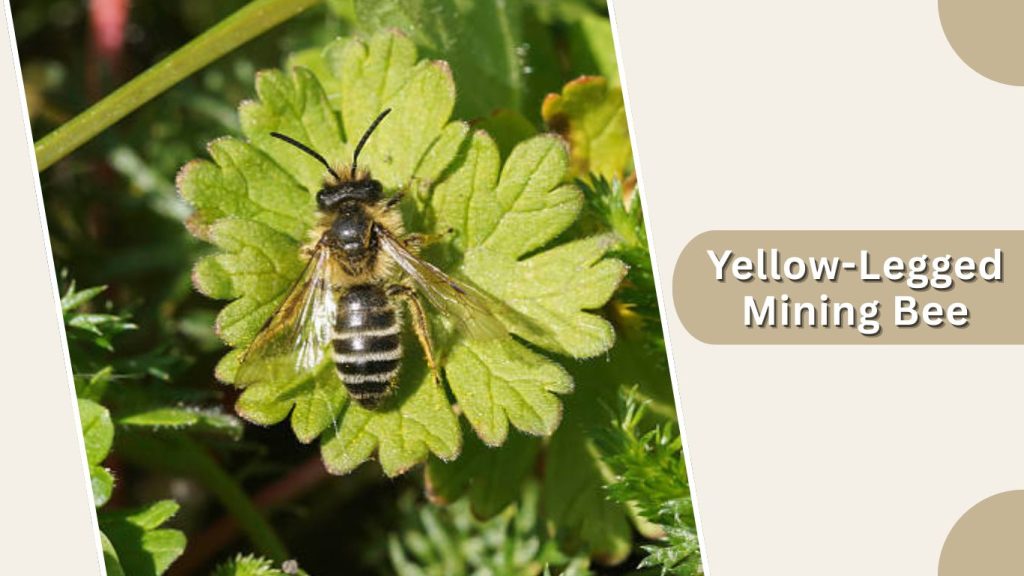
The yellow-legged mining bee is a spring-active solitary bee named for the yellowish hairs on its legs. It is often seen in gardens, orchards, meadows, and woodland edges. Its neat body shape, dark abdomen, and pale leg hairs help with identification.
Identification
- It has yellowish or golden hairs on the legs.
- The thorax is covered with brown or golden-brown hair.
- The abdomen is dark with pale hair bands.
- Females are medium-sized and fairly robust.
- Males are smaller and slimmer than females.
- The yellowish leg hair is an important identifying clue.
Habitat
Yellow-legged mining bees prefer sunny habitats with flowers and suitable nesting ground. They may nest in lawns, banks, footpaths, garden soil, and open grassy places. They are also found near orchards and hedgerows where spring blossoms are common.
Diet
This bee feeds on nectar and pollen from many early flowers. It often visits fruit trees, willow, dandelion, hawthorn, and other spring-blooming plants. Females collect pollen on their legs and carry it back to underground nest chambers.
Behavior
Yellow-legged mining bees are solitary but may nest close to others in good soil. Males emerge first and search for females near nesting areas. Females spend much of their time digging, foraging, and filling brood cells with pollen before laying eggs.
6. Early Mining Bee
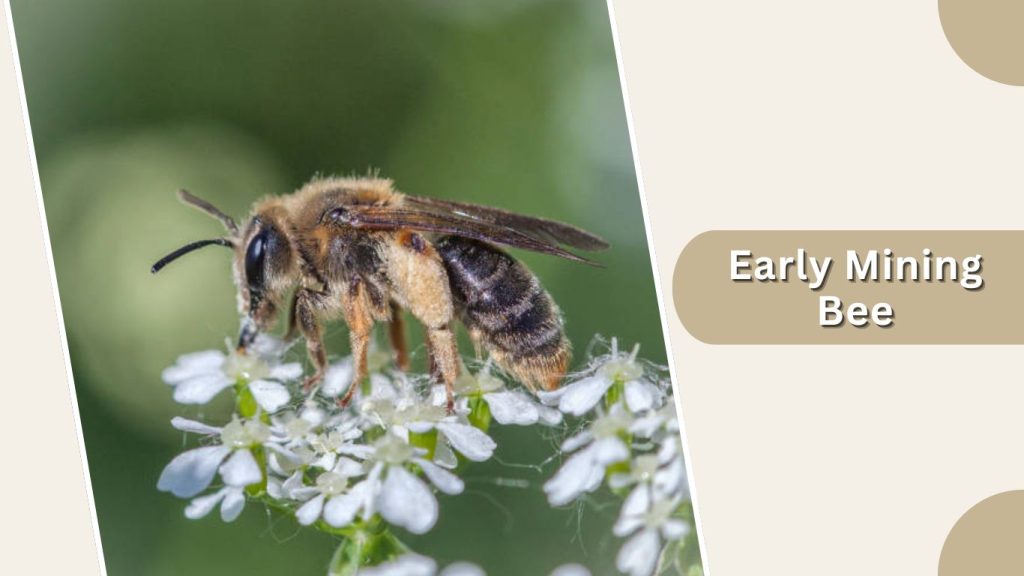
The early mining bee is one of the first mining bees to appear in spring. It is a small to medium-sized solitary bee that can be found around gardens, woodlands, hedgerows, and parks. Its early activity makes it an important pollinator for spring flowers.
Identification
- It has a dark body with brownish or reddish hair.
- Females often have reddish tones on parts of the abdomen.
- Males are slimmer and may have paler facial hair.
- The thorax is usually furry and brownish.
- It is smaller than many large spring mining bees.
- It is most often noticed early in the season.
Habitat
Early mining bees live in gardens, woodland edges, meadows, hedgerows, and open ground. They need sunny nesting areas with soft soil where females can dig burrows. They are often seen near spring flowers and flowering shrubs.
Diet
This species feeds on nectar and pollen from early-blooming plants. It may visit willow, blackthorn, dandelion, fruit blossom, and other spring flowers. Females collect pollen to provide food for larvae developing inside underground nest cells.
Behavior
Early mining bees are solitary and active mainly in spring. Males fly around flowers and nesting sites searching for females. Females dig individual nests and prepare brood cells below the soil surface. They are gentle pollinators and rarely cause problems in gardens.
7. Grey-Patched Mining Bee
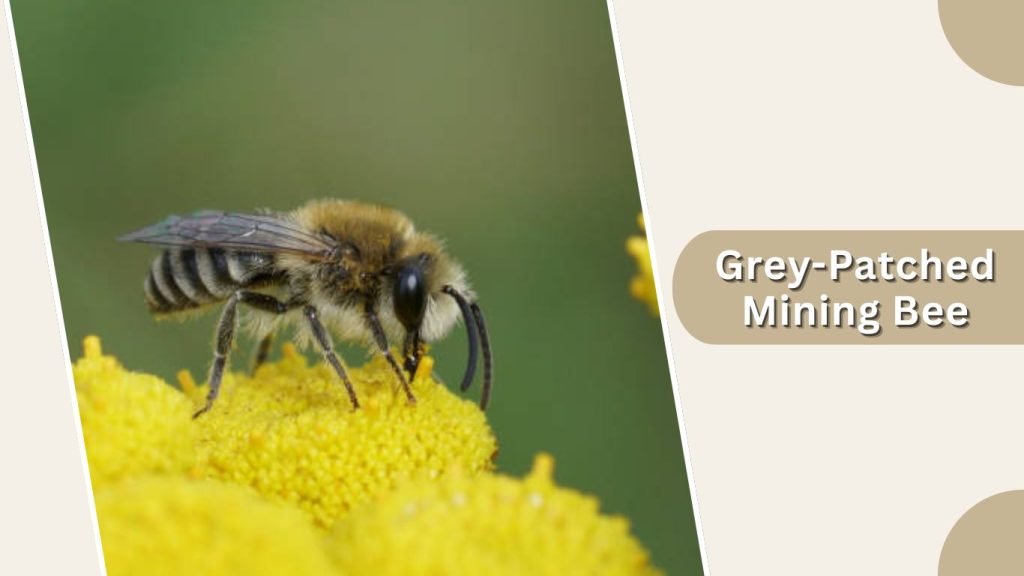
The grey-patched mining bee is a solitary ground-nesting bee known for its soft greyish hair patches and dark body. It is usually seen during spring and early summer around gardens, meadows, woodland edges, and grassy areas. Like other mining bees, it does not live in large colonies but nests alone in the soil.
Identification
- It has a dark body with pale grey or whitish hair patches.
- The thorax may look softly furry with grey-brown hairs.
- The abdomen is darker and may show faint pale bands.
- Females are usually broader and more noticeable than males.
- Males are slimmer and often have lighter facial hair.
- Its grey patches help separate it from orange or chocolate-colored mining bees.
Habitat
Grey-patched mining bees prefer sunny places with loose or lightly covered soil. They may nest in lawns, banks, paths, garden borders, meadows, and woodland edges. Suitable nesting ground is important because females dig small burrows where they raise their young.
Diet
This bee visits a variety of spring and early summer flowers for nectar and pollen. It may feed on dandelions, buttercups, fruit blossoms, hawthorn, and other wildflowers. Females collect pollen and store it inside underground nest cells for the larvae.
Behavior
Grey-patched mining bees are solitary and generally gentle. Females spend much of their time digging nests and collecting pollen. Males patrol around nesting sites and flowers looking for females. They are useful pollinators and rarely sting unless handled.
8. Clarke’s Mining Bee
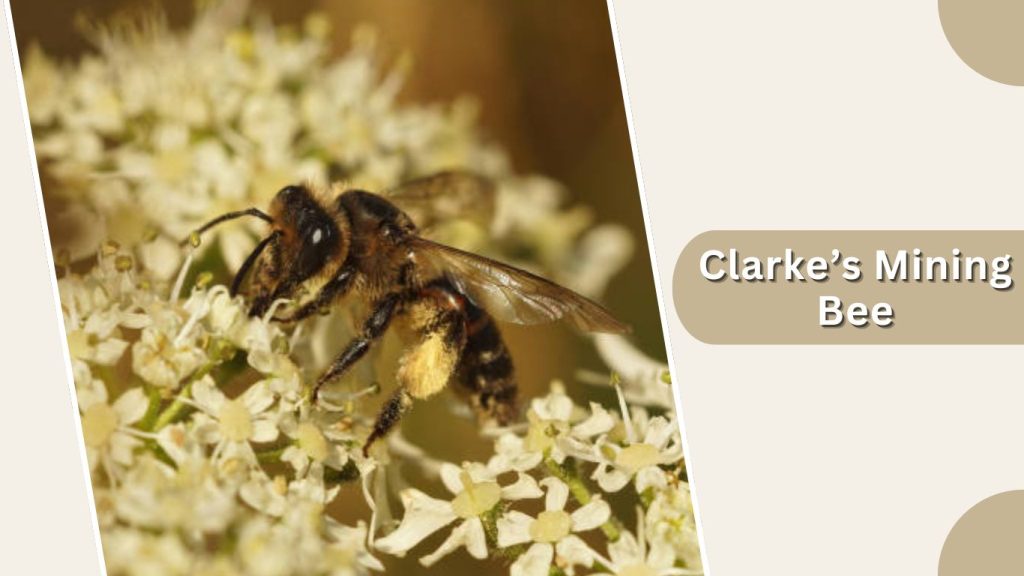
Clarke’s mining bee is a spring-active solitary bee often associated with willow flowers. It is usually found in gardens, woodland edges, hedgerows, and damp open areas where early blossoms are available. This bee has a furry body and is an important pollinator during the cooler part of the season.
Identification
- Females are fairly large and covered with brown or reddish-brown hair.
- The abdomen is dark and may appear slightly shiny.
- Males are slimmer with paler hair on the face and body.
- The thorax looks dense and furry.
- It is often seen visiting willow catkins in spring.
- Its early flight period helps with identification.
Habitat
Clarke’s mining bees live in areas with spring flowers and suitable soil for nesting. They are common near woodland edges, riverbanks, hedgerows, gardens, and open grassy places. Females dig individual nests in the ground, usually in sunny or lightly sheltered spots.
Diet
This species strongly favors willow pollen and nectar, especially early in the season. It may also visit other spring flowers when available. Females collect pollen to feed their larvae, placing it in underground brood cells before laying eggs.
Behavior
Clarke’s mining bees are solitary but may appear in groups where good nesting soil is present. Males emerge early and search for females near flowers and nesting sites. Females work alone to build nests, collect pollen, and raise their offspring underground.
9. Gwynne’s Mining Bee
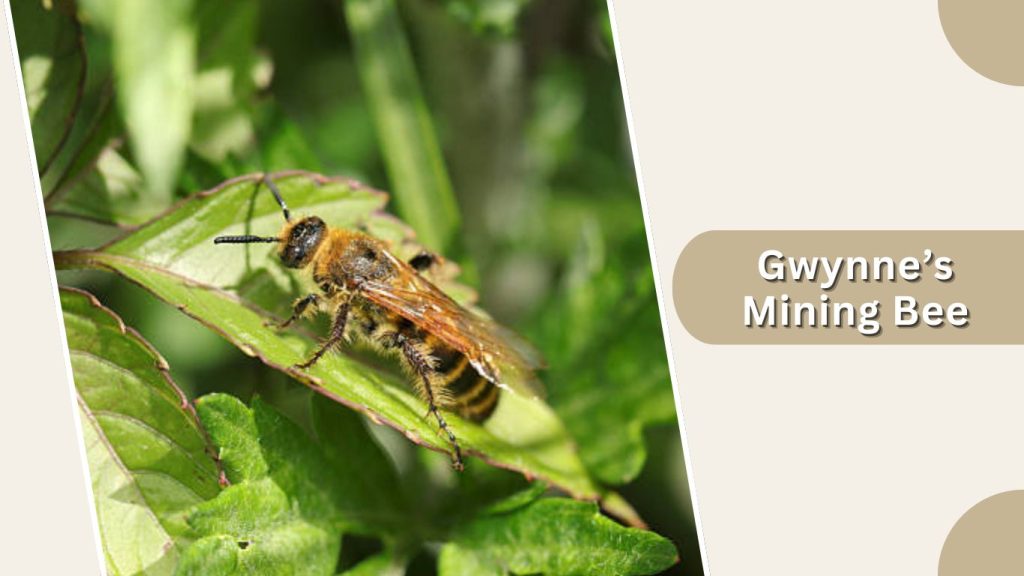
Gwynne’s mining bee is a small to medium-sized solitary bee that appears in spring. It is usually found around gardens, hedgerows, woodland paths, and grassy places. This species has a neat, dark body with pale hair markings, making it a subtle but attractive mining bee.
Identification
- It has a dark body with pale brown or greyish hairs.
- The thorax is lightly furry and may look brownish.
- The abdomen is darker with fine pale bands.
- Females are more robust than males.
- Males are smaller and may have paler facial hairs.
- Its overall appearance is less bright than tawny mining bees.
Habitat
Gwynne’s mining bees prefer open or semi-open habitats with enough spring flowers. They may nest in lawns, banks, field edges, paths, and garden soil. Females choose areas where the ground is soft enough for digging and close to reliable pollen sources.
Diet
This bee collects nectar and pollen from different spring flowers. It may visit dandelions, buttercups, fruit blossoms, hawthorn, and other wild plants. Females carry pollen back to their underground nest cells to feed developing larvae.
Behavior
Gwynne’s mining bees are solitary and active mainly during spring. Each female digs her own nest tunnel and prepares brood cells below ground. Males fly around flowers and nesting areas looking for mates. They are peaceful bees and helpful garden pollinators.
10. Orange-Tailed Mining Bee
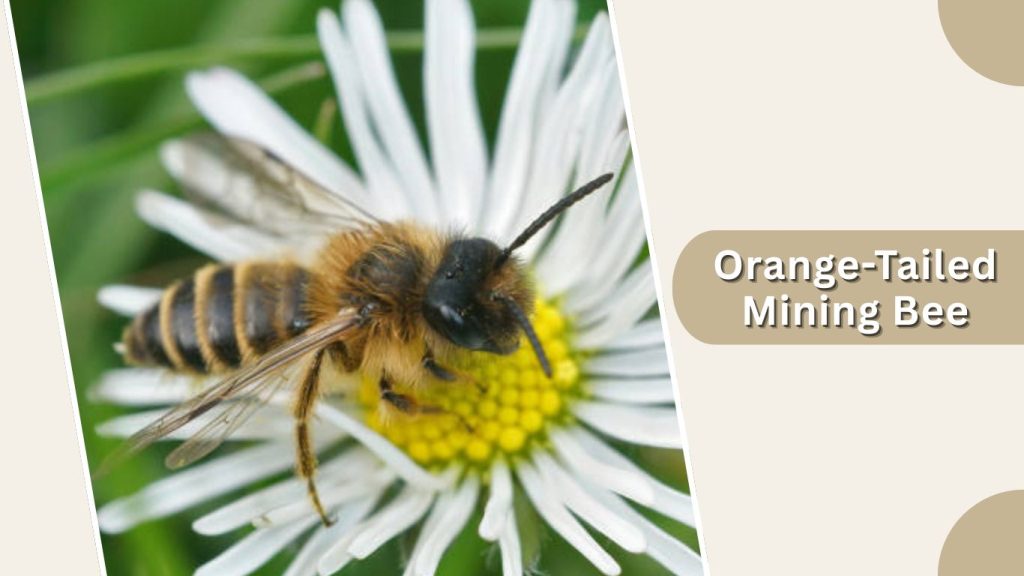
The orange-tailed mining bee is a colorful solitary bee known for the warm orange or reddish hairs near the end of its abdomen. It is often seen in spring and early summer around grasslands, gardens, woodland edges, and flower-rich areas. Its bright tail coloring helps make it easier to recognize.
Identification
- It has orange or reddish hairs near the tip of the abdomen.
- The thorax is usually covered with brownish or golden hairs.
- The body is medium-sized and fairly furry.
- Females are more strongly built than males.
- Males are slimmer and may have paler markings.
- The orange tail area is the key feature for identification.
Habitat
Orange-tailed mining bees live in sunny habitats with flowering plants and suitable nesting soil. They may be found in gardens, meadows, banks, parks, hedgerows, and woodland margins. Females dig small underground nests in dry or well-drained soil.
Diet
This species feeds on nectar and pollen from many seasonal flowers. It may visit dandelions, fruit blossoms, buttercups, hawthorn, and other wildflowers. Females collect pollen and place it in nest cells as food for their larvae.
Behavior
Orange-tailed mining bees are solitary ground nesters. Females work alone to dig tunnels, gather pollen, and lay eggs. Males are often seen flying low or patrolling near flowers. They are not aggressive and are valuable pollinators in gardens and natural habitats.
11. Hawthorn Mining Bee
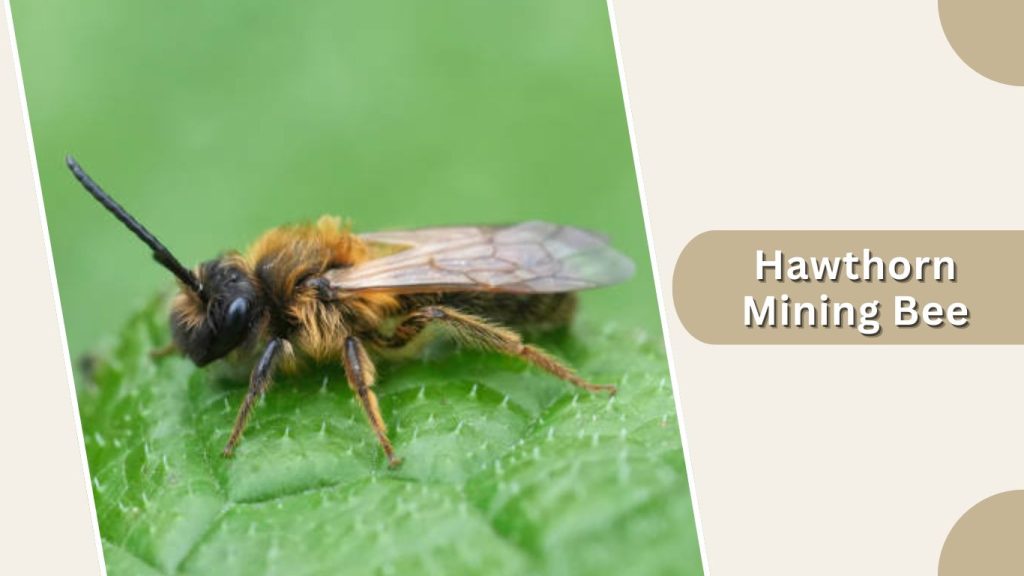
The hawthorn mining bee is a solitary spring bee often seen around flowering hawthorn bushes. It has a dark body with pale hairs and is active when many shrubs and fruit trees are blooming. This bee is an important pollinator in gardens, hedgerows, orchards, and countryside edges.
Identification
- It has a dark body with pale grey, brown, or whitish hairs.
- The thorax is usually furry and lighter than the abdomen.
- The abdomen is darker with fine pale hair bands.
- Females are medium-sized and fairly sturdy.
- Males are slimmer and may appear paler.
- It is often noticed on hawthorn flowers in spring.
Habitat
Hawthorn mining bees are found in hedgerows, gardens, orchards, meadows, woodland edges, and field margins. They prefer places where spring flowers are abundant. Females nest in the ground, choosing sunny soil patches, banks, or lightly vegetated areas.
Diet
This bee commonly feeds on hawthorn nectar and pollen, but it may also visit other spring blossoms. Fruit trees, dandelions, buttercups, and wild shrubs can also provide food. Females gather pollen to store in underground brood cells for their young.
Behavior
Hawthorn mining bees are solitary and active during the flowering season of many spring plants. Males search for females around flowers and nesting sites. Females dig individual burrows and prepare food stores for larvae. They are calm bees and beneficial for pollination.
12. Sandpit Mining Bee
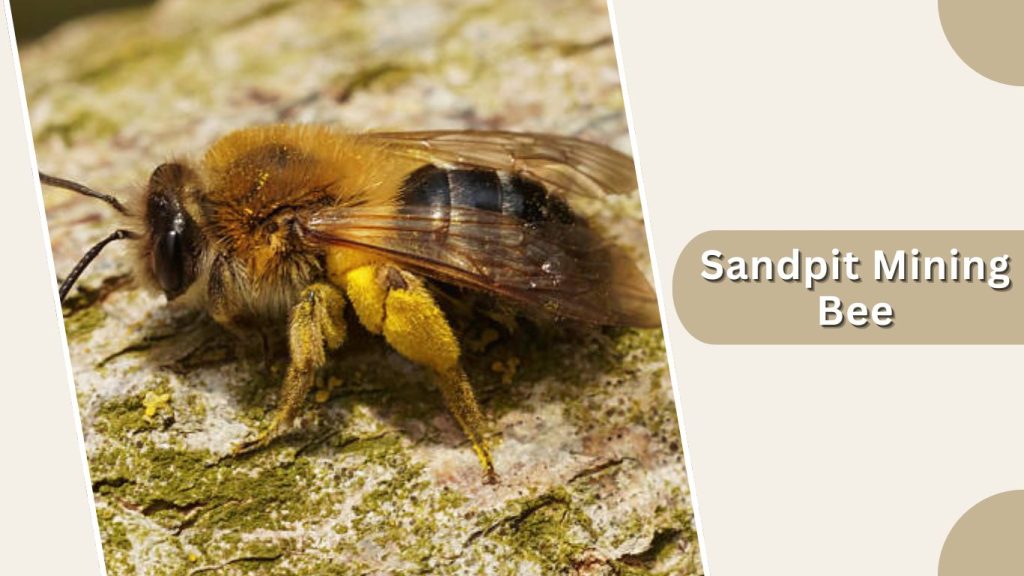
The sandpit mining bee is a ground-nesting solitary bee that prefers sandy or loose soil. It is often found in open, dry habitats such as sandy banks, heathlands, paths, dunes, and disturbed ground. Its nesting preference makes it different from many mining bees that use garden lawns or heavier soils.
Identification
- It usually has a dark body with pale brown or greyish hairs.
- The thorax may look softly furry.
- The abdomen is darker and may show light hair bands.
- Females are more robust and often seen digging in sandy soil.
- Males are slimmer and more active around nesting areas.
- Its sandy nesting habitat is an important identification clue.
Habitat
Sandpit mining bees live in sandy places with open ground and nearby flowers. They may nest in sandpits, dunes, heathlands, dry banks, paths, and bare soil patches. Females need loose soil that is easy to dig and warm enough for nesting activity.
Diet
This bee feeds on nectar and pollen from wildflowers growing near sandy habitats. It may visit dandelions, clovers, hawthorn, buttercups, and other seasonal flowers. Females collect pollen and store it underground as food for larvae.
Behavior
Sandpit mining bees are solitary, although many females may nest close together where sandy soil is suitable. Each female makes her own tunnel and brood cells. Males patrol the nesting area searching for mates. These bees are usually harmless and valuable for wildflower pollination.
13. Large Scabious Mining Bee
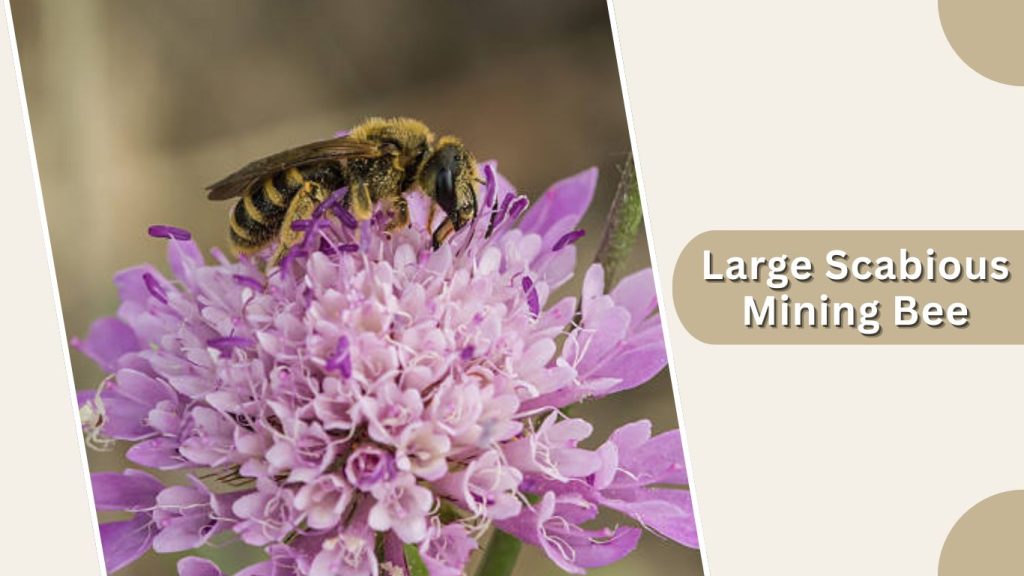
The large scabious mining bee is a solitary bee often linked with scabious flowers. It is usually found in flower-rich grasslands, meadows, chalky areas, and open countryside. This species is an important pollinator and is most noticeable when scabious plants are in bloom during the warmer months.
Identification
- It is a fairly large mining bee compared with many similar species.
- The body is dark with pale brown or greyish hairs.
- Females often have a sturdy body and visible pollen-carrying hairs.
- The abdomen may show pale hair bands.
- Males are slimmer and usually more active around flowers.
- It is often seen visiting scabious flowers, which helps with identification.
Habitat
Large scabious mining bees prefer open, flower-rich habitats. They are often found in chalk grasslands, meadows, field edges, roadside verges, and dry banks. They need suitable ground for nesting and enough nearby flowers to provide nectar and pollen.
Diet
This bee mainly feeds on nectar and pollen from scabious flowers. It may also visit other wildflowers when available, but scabious is especially important. Females collect pollen and carry it back to underground nest cells as food for their developing larvae.
Behavior
Large scabious mining bees are solitary ground nesters. Females dig their own burrows in the soil and prepare brood cells underground. Males usually patrol around flowers looking for females. They are peaceful bees and play a useful role in wildflower pollination.
14. Small Scabious Mining Bee
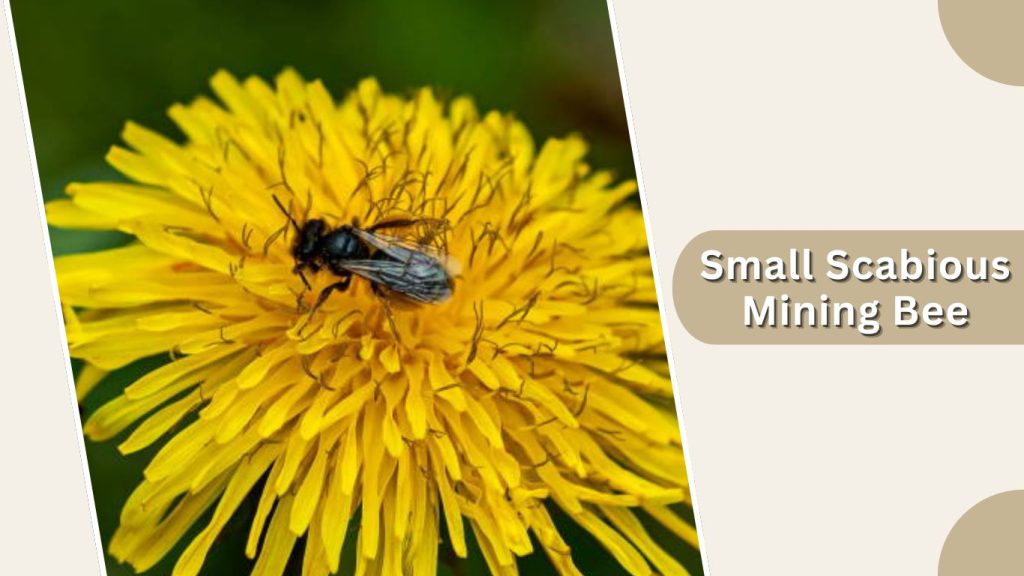
The small scabious mining bee is a smaller relative of scabious-associated mining bees. It is commonly found in open grasslands, meadows, and dry flower-rich areas where scabious plants grow. Though less noticeable than larger bees, it is an important pollinator for wildflowers.
Identification
- It is smaller and more delicate than the large scabious mining bee.
- The body is dark with pale grey or brownish hairs.
- The abdomen may show fine pale bands.
- Females are slightly broader than males.
- Males are slimmer and quicker in flight.
- It is often seen feeding on scabious flowers.
Habitat
Small scabious mining bees prefer sunny areas with short grass, bare soil patches, and plenty of wildflowers. They may live in meadows, chalk grasslands, dry banks, field margins, and roadside verges. Suitable nesting soil close to scabious flowers is especially valuable.
Diet
This bee relies strongly on scabious flowers for nectar and pollen. It may occasionally visit other flowers, but scabious is the main food source in many areas. Females collect pollen to store in underground nest chambers for their young.
Behavior
Small scabious mining bees are solitary and nest in the ground. Females dig small tunnels and create brood cells below the surface. Males fly around flowering patches in search of mates. Their activity is closely linked to the blooming season of scabious plants.
15. Ivy Mining Bee
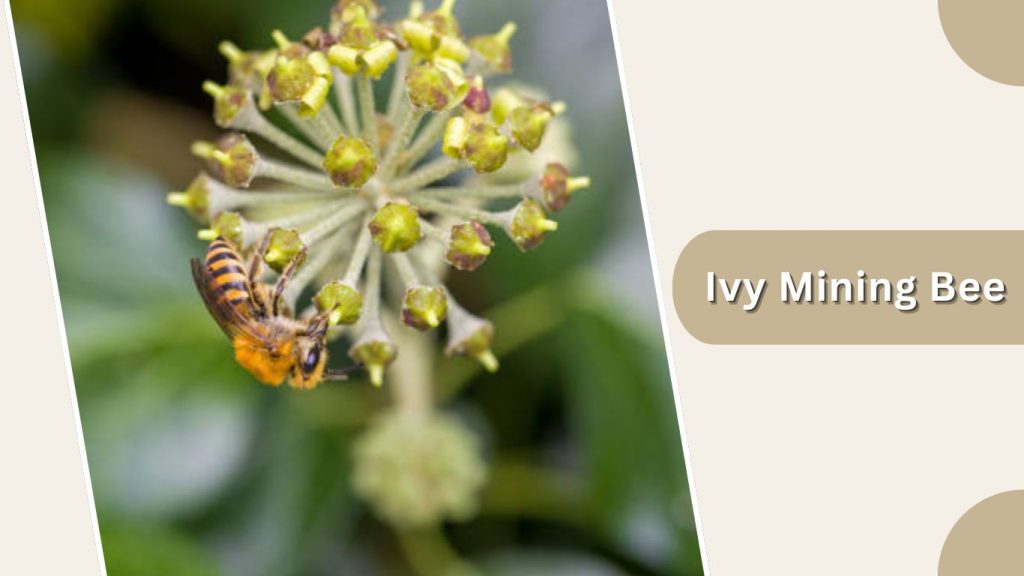
The ivy mining bee is a late-season solitary bee often seen when ivy flowers bloom. Unlike many mining bees that appear in spring, this species is active in late summer and autumn. It is commonly found in gardens, hedgerows, parks, coastal areas, and places where ivy is abundant.
Identification
- It has a ginger-brown thorax and a dark abdomen.
- The abdomen often shows clear pale or buff-colored bands.
- Females are medium-sized and fairly robust.
- Males are slimmer and may have longer antennae.
- It is often seen feeding on ivy flowers.
- Its late-season activity helps separate it from many other mining bees.
Habitat
Ivy mining bees live in gardens, parks, hedgerows, cliffs, banks, and open areas with suitable nesting soil. They often nest in large groups in dry, bare, or sandy ground. Nearby ivy flowers are important because they provide a rich food source late in the year.
Diet
This bee feeds mainly on ivy nectar and pollen. Ivy flowers are especially valuable because they bloom when fewer other plants are available. Females collect ivy pollen and carry it to underground nest cells to feed their larvae.
Behavior
Ivy mining bees are solitary, but many females may nest close together in large nesting groups. Males often appear around ivy flowers and nesting sites before females. They are gentle bees and rarely cause problems, even when many nests are present in one area.
16. Red-Girdled Mining Bee
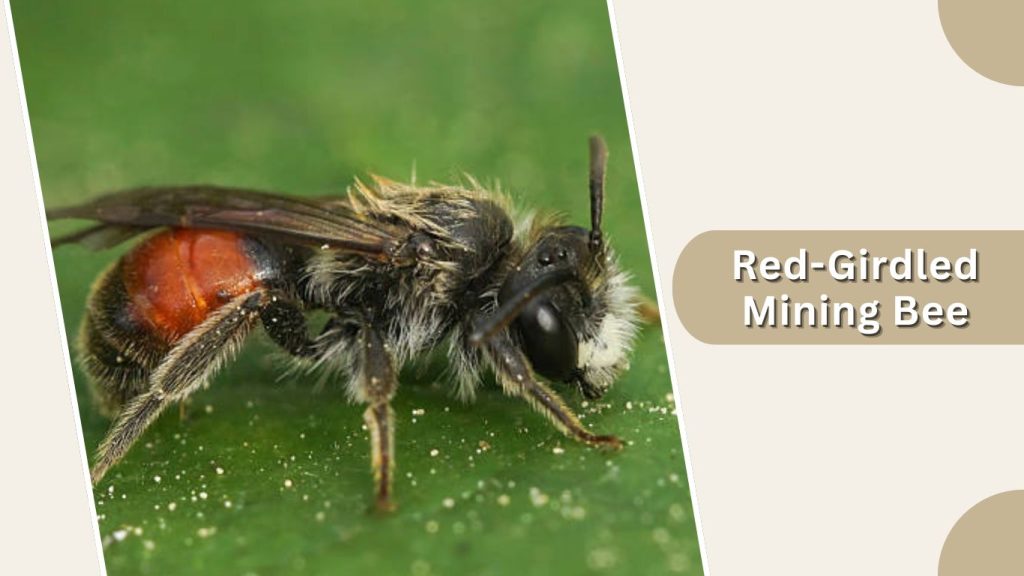
The red-girdled mining bee is a small to medium-sized solitary bee known for reddish markings or bands on the abdomen. It is active in spring and early summer and can be found in gardens, grasslands, hedgerows, woodland edges, and other flower-rich habitats.
Identification
- It has reddish or orange-brown bands on parts of the abdomen.
- The thorax is usually covered with brownish or greyish hairs.
- The body is dark beneath the colored markings.
- Females are sturdier and more rounded than males.
- Males are slimmer and may look paler.
- The reddish abdominal band is the main identifying feature.
Habitat
Red-girdled mining bees prefer sunny habitats with flowers and soft soil for nesting. They may live in lawns, banks, paths, meadows, orchards, gardens, and woodland edges. Females choose nesting sites where the soil is easy to dig and close to pollen sources.
Diet
This bee feeds on nectar and pollen from a range of spring flowers. It may visit dandelions, fruit blossoms, hawthorn, buttercups, willow, and other wild plants. Females gather pollen and store it underground for their larvae.
Behavior
Red-girdled mining bees are solitary ground nesters. Each female digs her own burrow and prepares separate brood cells. Males patrol flowers and nesting areas looking for females. They are calm pollinators and are usually harmless unless handled.
17. Spring Beauty Miner Bee
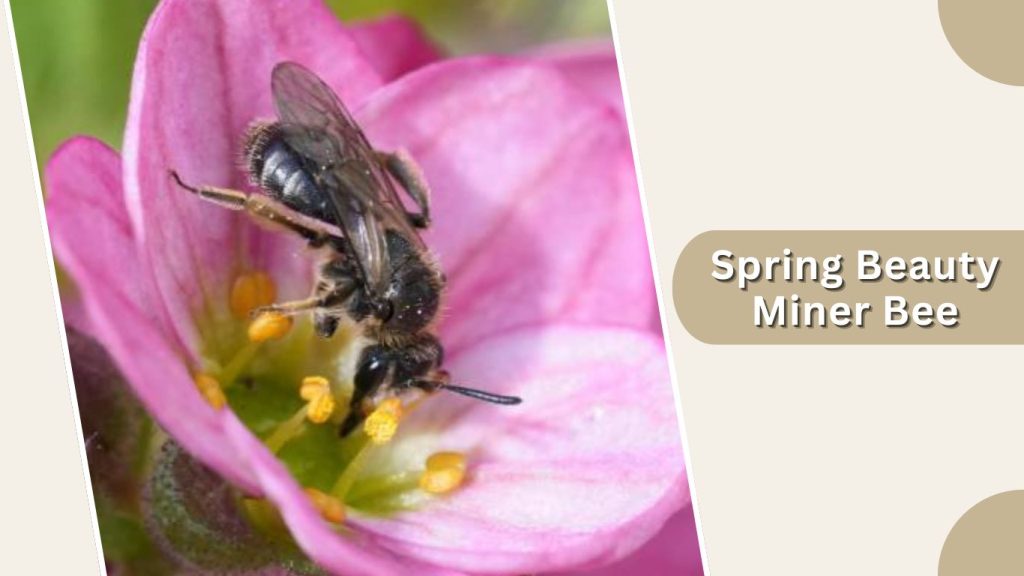
The spring beauty miner bee is a solitary ground-nesting bee named for its close connection with spring beauty flowers. It is most often noticed in early spring when these flowers bloom. This bee is small, active, and important for pollinating native spring wildflowers.
Identification
- It is a small mining bee with a dark body.
- The body may have pale grey, brown, or whitish hairs.
- Females carry pollen on their legs while visiting flowers.
- Males are slimmer and may fly quickly around blooms.
- It is often found on spring beauty flowers.
- Its early spring activity is a helpful identification clue.
Habitat
Spring beauty miner bees live in woodlands, open forests, meadows, and areas where spring beauty flowers grow. They need loose or bare soil for nesting and nearby flowers for feeding. Natural areas with early-blooming wildflowers are especially important for this species.
Diet
This bee is strongly associated with spring beauty flowers. It collects nectar and pollen from these blooms during its short active season. Females use the pollen to prepare food inside underground nest cells before laying eggs.
Behavior
Spring beauty miner bees are solitary and active for a short time in spring. Their life cycle matches the blooming period of spring beauty flowers. Females dig small nests in the ground, while males search for mates near flowers. They are gentle and valuable native pollinators.
18. Painted Mining Bee
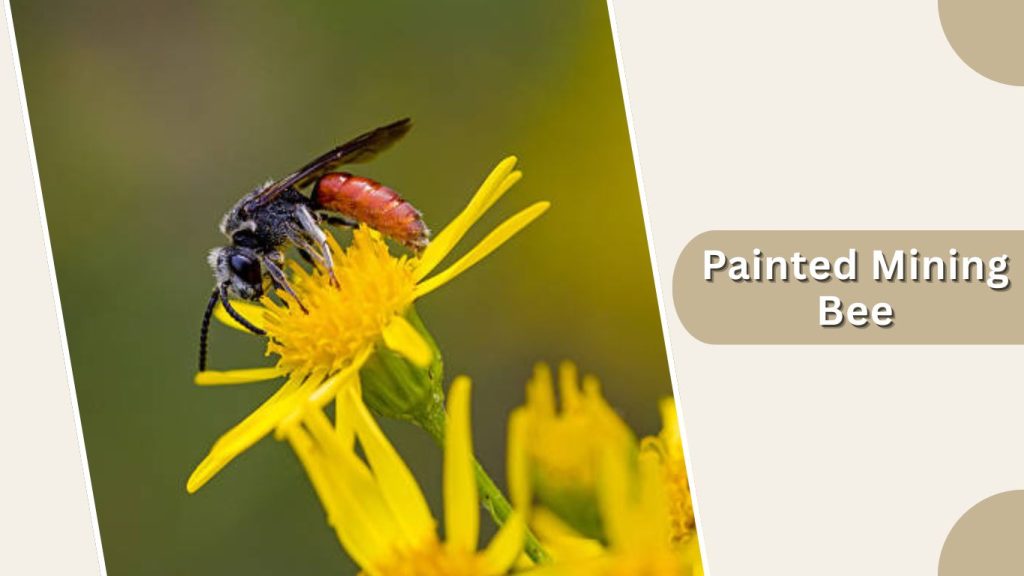
The painted mining bee is a colorful solitary bee with attractive markings that make it stand out from many plain dark mining bees. It is usually found in flower-rich habitats such as gardens, meadows, woodland edges, and open countryside. Like other mining bees, it nests in the ground.
Identification
- It has a dark body with pale, reddish, or yellowish markings.
- The thorax is usually covered with fine hairs.
- The abdomen may show colorful bands or patches.
- Females are stronger-bodied and carry pollen on their legs.
- Males are slimmer and often more active in flight.
- Its patterned appearance gives it the name “painted” mining bee.
Habitat
Painted mining bees prefer sunny places with plenty of flowers and suitable nesting soil. They may be found in meadows, gardens, banks, open woodland edges, and wildflower patches. Females dig small underground nests in bare or lightly covered soil.
Diet
This bee feeds on nectar and pollen from different seasonal flowers. It may visit wildflowers, garden plants, flowering shrubs, and meadow blooms. Females collect pollen and place it in underground brood cells as food for their larvae.
Behavior
Painted mining bees are solitary and do not form large colonies. Females build their own nests and care for their own young. Males fly around flowers and nesting areas looking for females. They are useful pollinators and are usually peaceful around people.