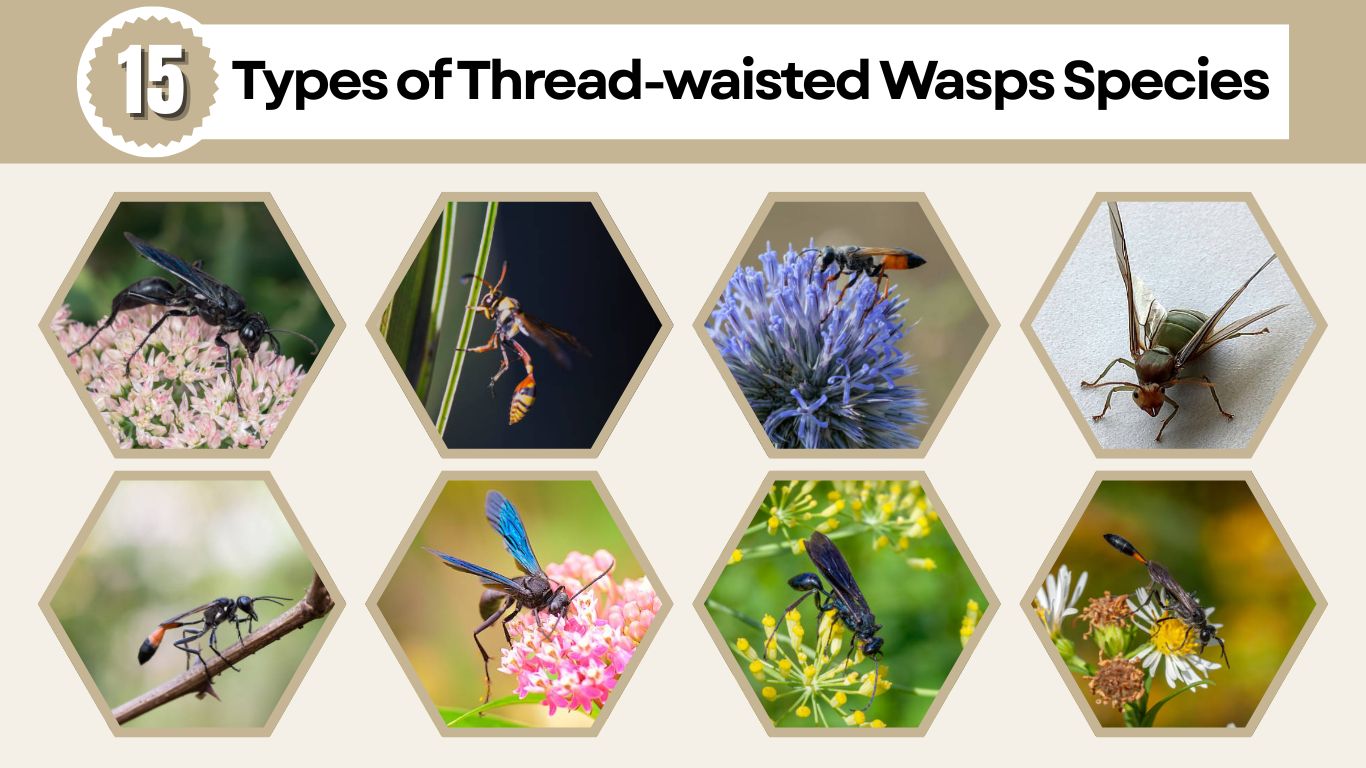
Thread-waisted wasps are slender solitary insects known for their extremely narrow waists and active hunting behavior. These fascinating wasps are found in gardens, forests, grasslands, deserts, and sandy habitats across many regions of the world. Most species help control populations of spiders, caterpillars, crickets, and other insects naturally. Despite their intimidating appearance, thread-waisted wasps are usually peaceful and rarely sting humans unless disturbed. Their unique nesting habits, colorful bodies, and ecological importance make them some of the most interesting and beneficial wasps found in natural and residential outdoor environments.
1. Blue Mud Dauber
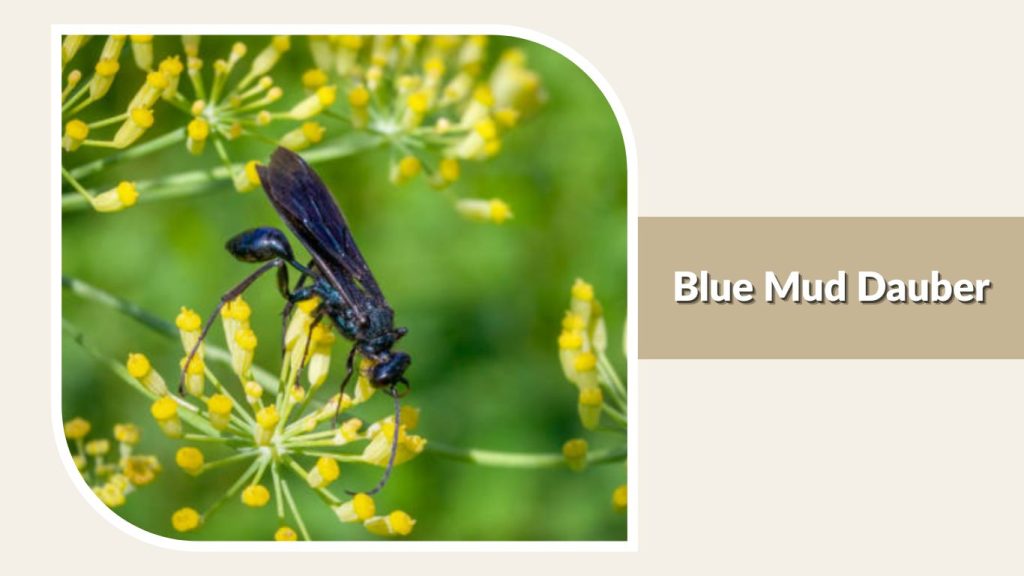
Blue Mud Daubers are solitary thread-waisted wasps recognized for their metallic blue-black bodies and slender shape. They are commonly found around homes, gardens, barns, and wooded areas where mud and spiders are available. These wasps are calm, rarely aggressive, and highly beneficial because they help control spider populations naturally while also contributing to pollination activities.
Identification
- Metallic blue-black body
- Thin thread-like waist
- Long narrow wings
- Smooth shiny appearance
- About 0.8 to 1 inch long
Habitat
Blue Mud Daubers prefer warm and temperate regions with access to mud and sheltered nesting areas. They commonly live around buildings, garages, sheds, and wooded environments. Their nests are often attached beneath roofs, inside cracks, or on protected walls where they remain safe from harsh weather and predators.
Behavior
These wasps are solitary insects that do not form colonies like social wasps. Females spend most of their time hunting spiders, especially black widows, for their developing larvae. Blue Mud Daubers are usually peaceful around humans and sting only when directly threatened, handled, or trapped in confined spaces accidentally.
Diet
Adult Blue Mud Daubers mainly consume nectar, honeydew, and other sugary liquids gathered from flowering plants. Their larvae feed entirely on paralyzed spiders stored inside mud nest chambers. Female wasps carefully collect enough prey to support larval growth until development is complete and the adult eventually emerges.
Nesting
Female Blue Mud Daubers build nests from wet mud, forming tube-shaped chambers attached to sheltered surfaces. Each chamber contains several captured spiders and a single egg. After stocking the nest with food, the female seals the opening with mud to protect the developing offspring from danger.
Importance in the Ecosystem
Blue Mud Daubers play an important ecological role by naturally reducing spider populations, including venomous species such as black widows. They also assist with pollination while feeding on flowers. Their presence benefits gardens and outdoor spaces by supporting ecological balance without causing significant problems for humans.
2. Black and Yellow Mud Dauber
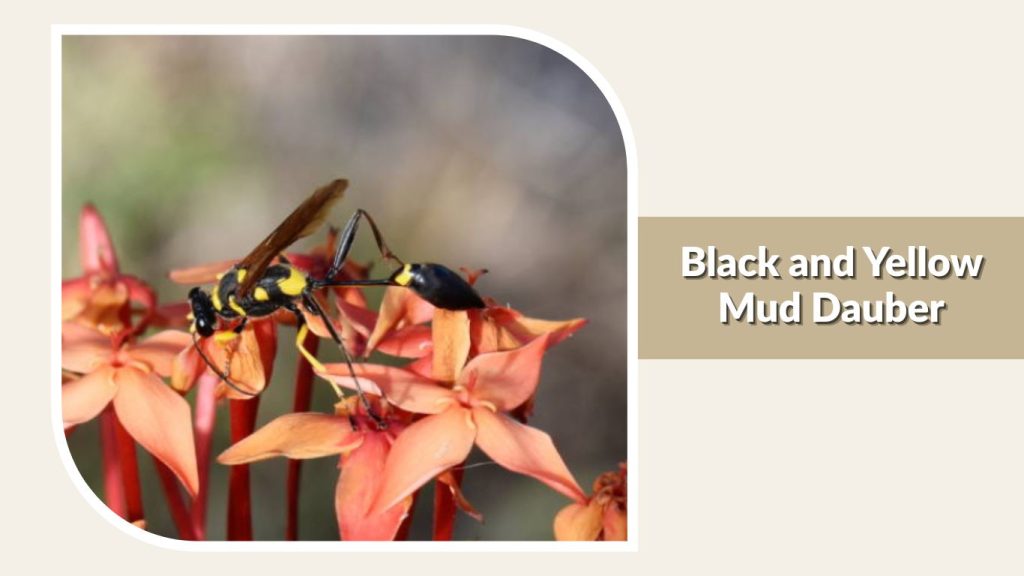
Black and Yellow Mud Daubers are slender thread-waisted wasps known for their bright yellow markings and long narrow bodies. These solitary wasps are widespread across North America and often build mud nests on walls, ceilings, and sheltered structures. They are non-aggressive insects that help control spider populations and are commonly seen around gardens, homes, barns, and outdoor buildings.
Identification
- Black body with bright yellow markings
- Extremely thin thread-like waist
- Long dangling legs during flight
- Narrow transparent wings
- About 0.7 to 1 inch long
Habitat
Black and Yellow Mud Daubers prefer warm environments with access to mud and sheltered nesting locations. They are commonly found around homes, garages, barns, bridges, and porches. These wasps also inhabit gardens, forests, and open fields where spiders are abundant and suitable nesting surfaces are available nearby.
Behavior
These wasps are solitary and do not form colonies or defend nests aggressively like social wasps. Females spend their time gathering mud and hunting spiders for their young. Black and Yellow Mud Daubers are usually calm around humans and rarely sting unless directly disturbed or accidentally trapped.
Diet
Adult Black and Yellow Mud Daubers feed mainly on flower nectar, plant juices, and sweet liquids. Their larvae survive on paralyzed spiders stored inside mud nest chambers. Female wasps carefully hunt and place enough spiders within each chamber to provide complete nourishment during larval development stages.
Nesting
Female Black and Yellow Mud Daubers build mud nests consisting of cylindrical chambers attached to sheltered surfaces. Each chamber contains several paralyzed spiders and one egg. After preparing the nest, the female seals it with mud, protecting the developing larva until it emerges as an adult wasp.
Importance in the Ecosystem
Black and Yellow Mud Daubers are valuable predators that naturally reduce spider populations around homes and gardens. They also contribute to pollination while feeding on flowers. Their peaceful nature and ecological benefits make them useful insects that support balanced outdoor ecosystems without creating serious risks for people.
3. Organ Pipe Mud Dauber
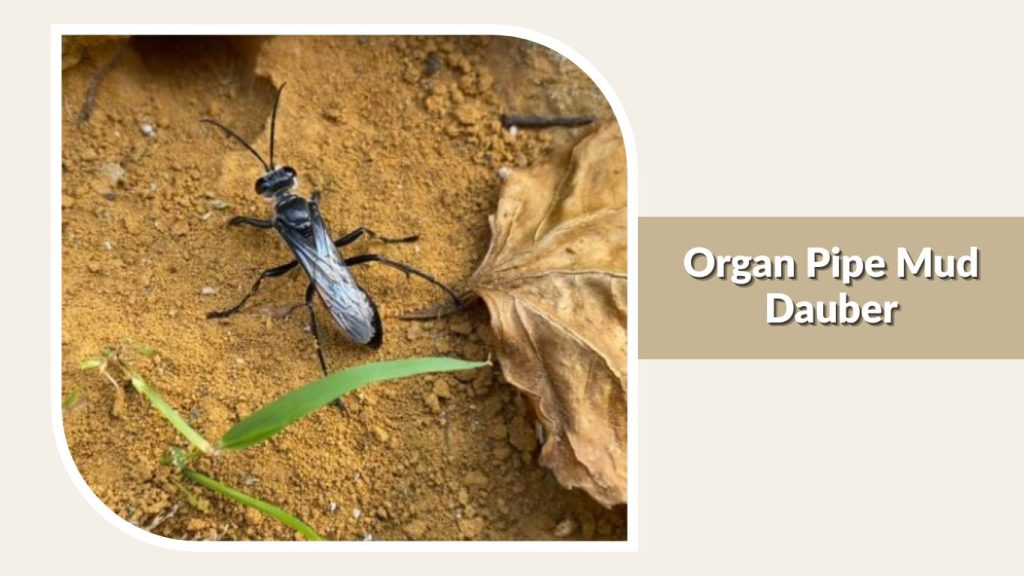
Organ Pipe Mud Daubers are unique thread-waisted wasps named for their long mud nests that resemble the pipes of an organ. These solitary wasps are commonly found in warm regions where they build clustered nests on walls, rocks, and buildings. They are generally peaceful insects that hunt spiders and play an important role in maintaining ecological balance outdoors.
Identification
- Black or dark metallic body
- Very thin thread-like waist
- Long narrow legs
- Dark smoky wings
- About 0.8 to 1.2 inches long
Habitat
Organ Pipe Mud Daubers thrive in warm and dry environments with access to mud and sheltered nesting surfaces. They commonly inhabit deserts, forests, gardens, barns, and rocky structures. Their nests are often attached to walls, ceilings, cliffs, and bridges where protection from rain and predators is available.
Behavior
These wasps are solitary and spend most of their lives building nests and hunting spiders. Females carefully collect mud and prey without assistance from other wasps. Organ Pipe Mud Daubers are not aggressive toward humans and rarely sting unless directly threatened, making them relatively harmless outdoor insects overall.
Diet
Adult Organ Pipe Mud Daubers mainly consume nectar and sugary plant fluids gathered from flowers. Their larvae feed entirely on paralyzed spiders stored inside nest chambers. Female wasps hunt and place enough spiders into each tube to provide food until the developing larva reaches adulthood successfully.
Nesting
Female Organ Pipe Mud Daubers construct long cylindrical mud tubes that resemble organ pipes placed side by side. Each tube serves as a chamber containing spiders and a single egg. After stocking the nest with prey, the female seals the opening using additional layers of wet mud.
Importance in the Ecosystem
Organ Pipe Mud Daubers help control spider populations naturally, reducing numbers of potentially harmful species in outdoor areas. They also assist with pollination while feeding on flowers. Their ecological contributions support healthier environments and biodiversity, making these solitary wasps beneficial insects despite their intimidating appearance to some people.
4. Great Golden Digger Wasp
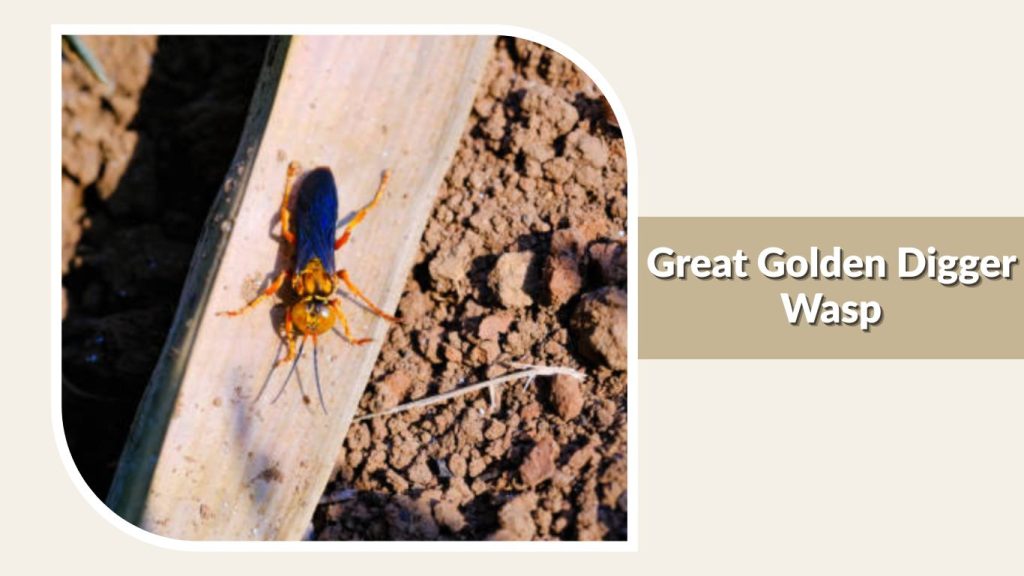
Great Golden Digger Wasps are large thread-waisted wasps recognized for their golden-orange hairs and slender black bodies. These solitary insects are commonly found in gardens, meadows, and open fields during summer months. They are beneficial predators that hunt grasshoppers and crickets for their larvae while also helping pollinate flowers through regular nectar feeding activities outdoors.
Identification
- Black body with golden-orange hairs
- Long slender thread-like waist
- Reddish or orange-tinted legs
- Dark transparent wings
- About 1 to 1.5 inches long
Habitat
Great Golden Digger Wasps prefer open sunny habitats such as gardens, fields, prairies, and forest edges. They often nest in sandy or loose soil where digging is easier. These wasps are commonly seen around flowering plants that provide nectar and areas populated with grasshoppers or crickets.
Behavior
These wasps are solitary hunters that spend much of their time digging burrows and searching for prey. Females paralyze grasshoppers and crickets to feed their young. Great Golden Digger Wasps are generally non-aggressive toward humans and rarely sting unless directly touched, trapped, or threatened unexpectedly.
Diet
Adult Great Golden Digger Wasps mainly feed on nectar from flowers and other sweet plant liquids. Their larvae depend on paralyzed grasshoppers, katydids, and crickets stored within underground chambers. Female wasps carefully provide enough prey to support larval growth until adulthood is reached successfully underground.
Nesting
Female Great Golden Digger Wasps dig underground burrows in loose or sandy soil. Each chamber contains several paralyzed insects along with one egg. After completing the nest, the female seals the entrance to protect the developing larva from predators, weather conditions, and other environmental threats nearby.
Importance in the Ecosystem
Great Golden Digger Wasps help naturally control populations of grasshoppers, crickets, and similar insects that may damage plants. They also contribute to pollination while feeding on flowers. Their presence benefits gardens, farms, and natural ecosystems by supporting biodiversity and reducing harmful insect populations naturally.
5. Thread-waisted Sand Wasp
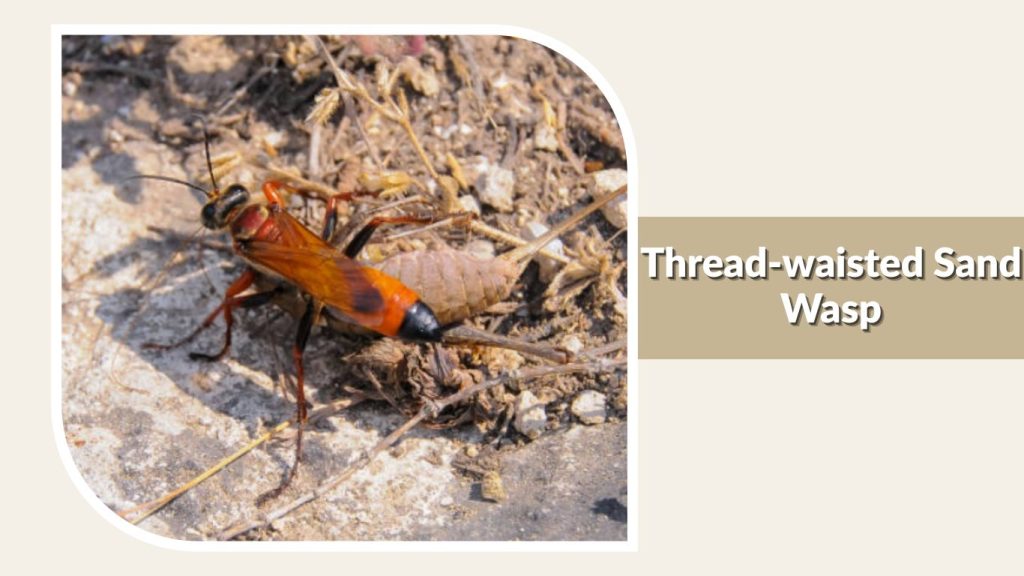
Thread-waisted Sand Wasps are slender solitary wasps known for their extremely narrow waists and active hunting behavior. These insects are commonly found in sandy habitats where they dig nests and capture insects for their larvae. They are fast-moving, non-aggressive wasps that contribute to natural pest control while also supporting pollination through regular flower visits during feeding activities.
Identification
- Slender black or dark-colored body
- Extremely thin thread-like waist
- Long narrow legs
- Transparent smoky wings
- About 0.5 to 1 inch long
Habitat
Thread-waisted Sand Wasps commonly inhabit sandy soils, dunes, grasslands, open woodlands, and dry fields. They prefer warm sunny environments where digging nests is easier. These wasps are often seen flying close to the ground or visiting flowers in gardens and natural habitats during warm seasons.
Behavior
These wasps are solitary hunters that spend most of their time searching for prey and constructing nests. Females actively capture caterpillars and other insects for their developing larvae. Thread-waisted Sand Wasps are generally peaceful around humans and rarely sting unless accidentally disturbed or directly threatened nearby.
Diet
Adult Thread-waisted Sand Wasps mainly feed on nectar and sweet liquids collected from flowers. Their larvae consume paralyzed insects placed inside underground nest chambers. Female wasps carefully gather enough prey to sustain larval development until the young wasp matures and emerges from the protected burrow successfully.
Nesting
Female Thread-waisted Sand Wasps dig burrows in sandy or loose soil to create protected nesting chambers. Each chamber contains paralyzed prey and one egg. After preparing the nest, the female seals the entrance with soil to protect the developing larva from predators and environmental dangers underground.
Importance in the Ecosystem
Thread-waisted Sand Wasps help maintain ecological balance by naturally controlling caterpillars and other insect populations. They also assist with pollination while feeding on flowers. Their activities benefit gardens, farms, and natural ecosystems by reducing pest numbers and supporting healthy plant reproduction throughout their habitats.
6. Steel-blue Cricket Hunter
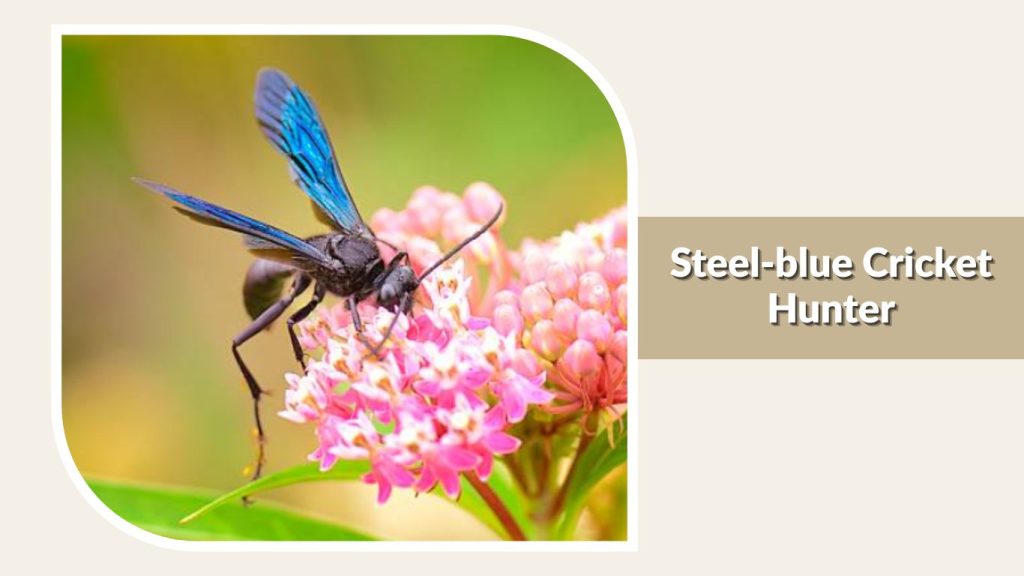
Steel-blue Cricket Hunters are striking thread-waisted wasps recognized for their metallic blue bodies and active hunting behavior. These solitary wasps are commonly found in gardens, fields, and wooded areas where crickets are abundant. They are beneficial insects that help control pest populations naturally while remaining mostly harmless and non-aggressive toward humans in outdoor environments.
Identification
- Metallic steel-blue body
- Thin thread-like waist
- Long black legs
- Dark transparent wings
- About 0.5 to 1 inch long
Habitat
Steel-blue Cricket Hunters prefer warm habitats such as gardens, grasslands, forests, and open fields. They are commonly found near loose soil or sheltered areas suitable for nesting. These wasps are often observed around flowers, lawns, and outdoor structures where crickets and other prey insects are available.
Behavior
These solitary wasps spend much of their time hunting crickets and searching for nesting sites. Females paralyze prey before carrying it back to underground burrows for their larvae. Steel-blue Cricket Hunters are generally peaceful insects and rarely sting humans unless directly threatened or accidentally handled closely.
Diet
Adult Steel-blue Cricket Hunters feed mainly on nectar and sugary liquids collected from flowers and plants. Their larvae survive on paralyzed crickets stored inside underground nest chambers. Female wasps carefully provide enough prey to support larval growth until the young adult eventually emerges from the burrow.
Nesting
Female Steel-blue Cricket Hunters dig nests in loose soil or sandy ground. Each burrow contains chambers stocked with paralyzed crickets and a single egg. After completing the nest, the female seals the entrance with soil to protect the developing larva from predators and harsh environmental conditions.
Importance in the Ecosystem
Steel-blue Cricket Hunters help reduce cricket populations naturally, supporting healthier gardens and ecosystems. They also assist with pollination while feeding on flowers. Their role as predators and pollinators makes them beneficial insects that contribute to ecological balance without causing major problems for humans or pets.
7. Ammophila Procera
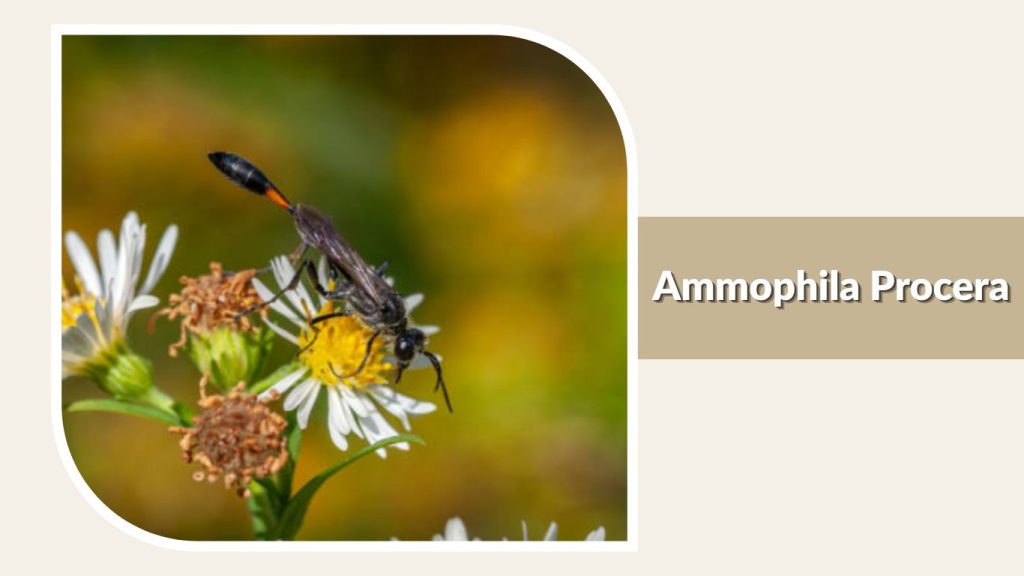
Ammophila procera is a slender thread-waisted wasp known for its elongated body, narrow waist, and active hunting behavior. This solitary species is commonly found in open habitats where sandy soil and caterpillars are plentiful. It is considered beneficial because it helps control pest insects naturally while also supporting pollination through regular visits to flowering plants.
Identification
- Slender black body with orange abdomen
- Extremely thin thread-like waist
- Long dangling legs
- Narrow smoky wings
- About 1 to 1.5 inches long
Habitat
Ammophila procera prefers open sunny habitats such as grasslands, gardens, forest edges, sandy fields, and meadows. It commonly nests in loose soil where digging is easier. These wasps are often seen near flowering plants and areas with abundant caterpillars that provide food for developing larvae underground.
Behavior
These wasps are solitary hunters that spend most of their time digging burrows and searching for prey. Females capture and paralyze caterpillars before placing them inside nests for their offspring. Ammophila procera is generally calm around humans and rarely stings unless directly threatened or accidentally disturbed.
Diet
Adult Ammophila procera wasps mainly consume nectar and sweet plant fluids gathered from flowers. Their larvae feed entirely on paralyzed caterpillars stored inside underground chambers. Female wasps carefully provide enough prey to sustain larval development until the young adult wasp emerges successfully from the nest.
Nesting
Female Ammophila procera wasps dig underground burrows in sandy or loose soil. Each chamber contains one egg along with several paralyzed caterpillars for food. After stocking the nest, the female seals the entrance with soil and debris to protect the developing larva from predators and weather.
Importance in the Ecosystem
Ammophila procera helps naturally reduce caterpillar populations that may damage plants and crops. These wasps also contribute to pollination while feeding on flowers throughout their habitat. Their combined role as predators and pollinators supports ecological balance and benefits gardens, farms, and natural outdoor environments alike.
8. Grass-carrying Wasp
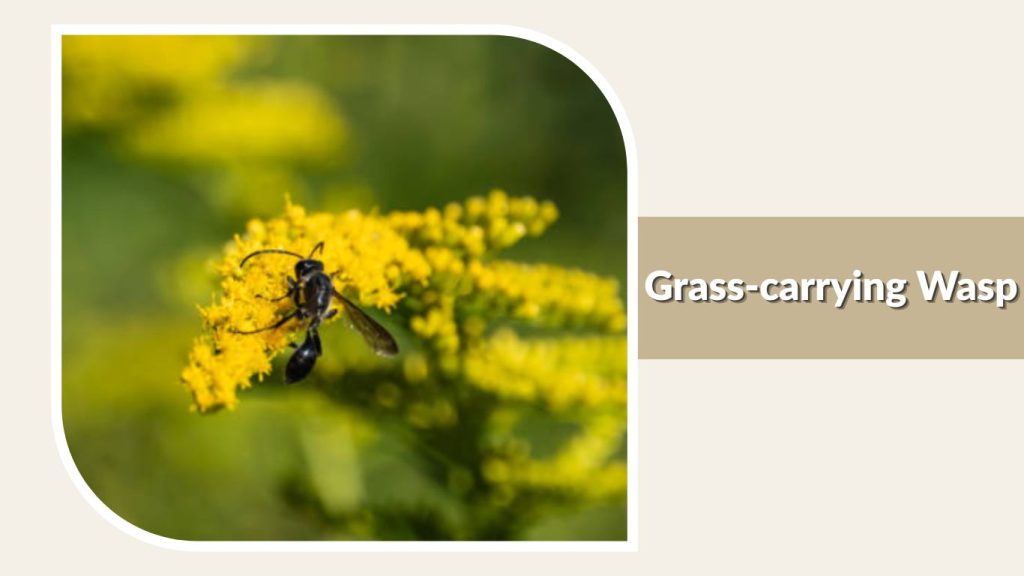
Grass-carrying Wasps are unusual thread-waisted wasps known for transporting blades of grass into their nests. These solitary insects are commonly found in gardens, fields, and wooded habitats where hollow spaces for nesting are available. They are peaceful wasps that hunt tree crickets for their larvae and help support natural ecological balance through predation and pollination activities.
Identification
- Slender black body with yellow markings
- Thin thread-like waist
- Long legs and narrow wings
- Carries grass pieces during nesting
- About 0.5 to 1 inch long
Habitat
Grass-carrying Wasps prefer warm habitats such as gardens, grasslands, forests, and areas near shrubs or flowering plants. They commonly nest inside hollow stems, wood holes, or abandoned insect tunnels. These wasps are usually found in locations where tree crickets and suitable nesting materials are easily available.
Behavior
These solitary wasps are active hunters that search for tree crickets to feed their developing larvae. Females gather grass blades to line and protect nest chambers. Grass-carrying Wasps are generally calm insects that rarely sting humans unless directly threatened, handled, or accidentally disturbed near their nests.
Diet
Adult Grass-carrying Wasps mainly feed on nectar and sweet plant liquids gathered from flowers. Their larvae depend on paralyzed tree crickets stored inside nesting chambers. Female wasps carefully collect enough prey to support larval growth until the young adult wasp emerges successfully from the protected nest space.
Nesting
Female Grass-carrying Wasps use hollow stems, wood cavities, or existing tunnels as nesting sites. They divide chambers using grass pieces and place paralyzed crickets inside with one egg. After completing the nest, the female seals the entrance to protect the developing offspring from predators and weather.
Importance in the Ecosystem
Grass-carrying Wasps help control tree cricket populations naturally, reducing damage to plants and vegetation. They also contribute to pollination while feeding on flowers throughout their habitat. Their ecological role supports biodiversity and healthy outdoor ecosystems without posing significant danger to humans or domestic animals nearby.
9. Red-banded Sand Wasp
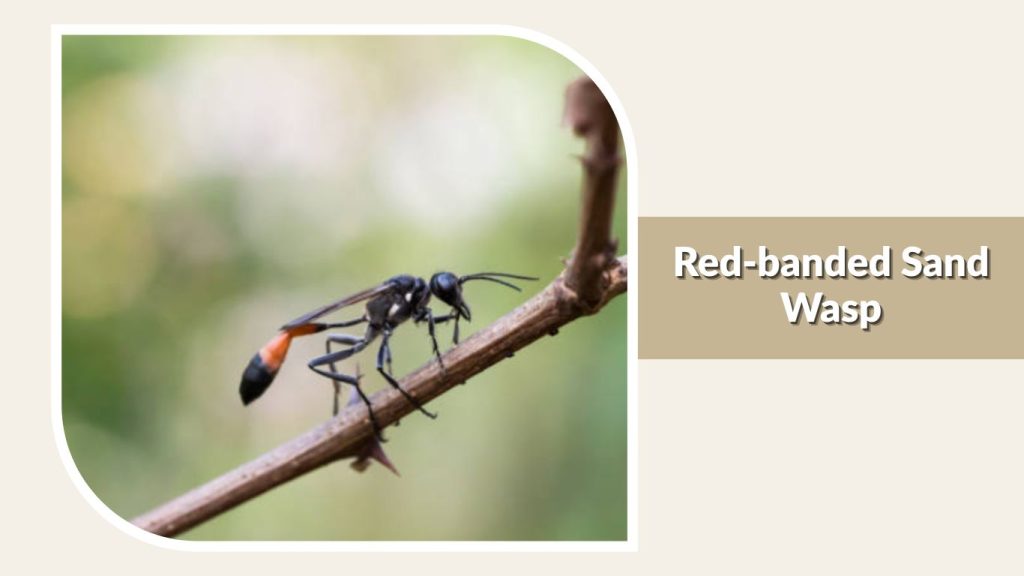
Red-banded Sand Wasps are colorful thread-waisted wasps recognized for the reddish bands on their dark bodies and their fast hunting behavior. These solitary insects are commonly found in sandy habitats where they dig burrows and capture prey for their larvae. They are beneficial predators that help control insect populations while also visiting flowers for nectar and pollination.
Identification
- Dark body with reddish abdominal bands
- Thin thread-like waist
- Long slender legs
- Transparent smoky wings
- About 0.5 to 1 inch long
Habitat
Red-banded Sand Wasps prefer sandy habitats such as dunes, grasslands, open forests, and dry fields. They commonly nest in loose soil exposed to sunlight. These wasps are often seen near flowers and open ground where suitable prey insects and safe nesting conditions are available throughout warmer months.
Behavior
These solitary wasps spend much of their time hunting insects and digging nests. Females paralyze prey before carrying it into underground burrows for developing larvae. Red-banded Sand Wasps are generally peaceful toward humans and rarely sting unless directly threatened, trapped, or accidentally disturbed near their nesting sites.
Diet
Adult Red-banded Sand Wasps feed mainly on flower nectar and sugary plant liquids. Their larvae survive on paralyzed insects stored inside underground chambers. Female wasps carefully gather enough prey to provide nutrition throughout larval development until the young adult eventually emerges from the secure nest successfully.
Nesting
Female Red-banded Sand Wasps dig burrows in sandy or loose soil to create nesting chambers. Each chamber contains prey insects and a single egg. After stocking the nest with food, the female seals the entrance using soil to protect the developing larva from predators and environmental dangers.
Importance in the Ecosystem
Red-banded Sand Wasps help maintain ecological balance by reducing populations of harmful insects naturally. They also contribute to pollination while feeding on flowers in their habitat. Their activities support biodiversity and healthier ecosystems, making these solitary wasps valuable insects within gardens, grasslands, and natural outdoor environments.
10. Pipe-organ Wasp
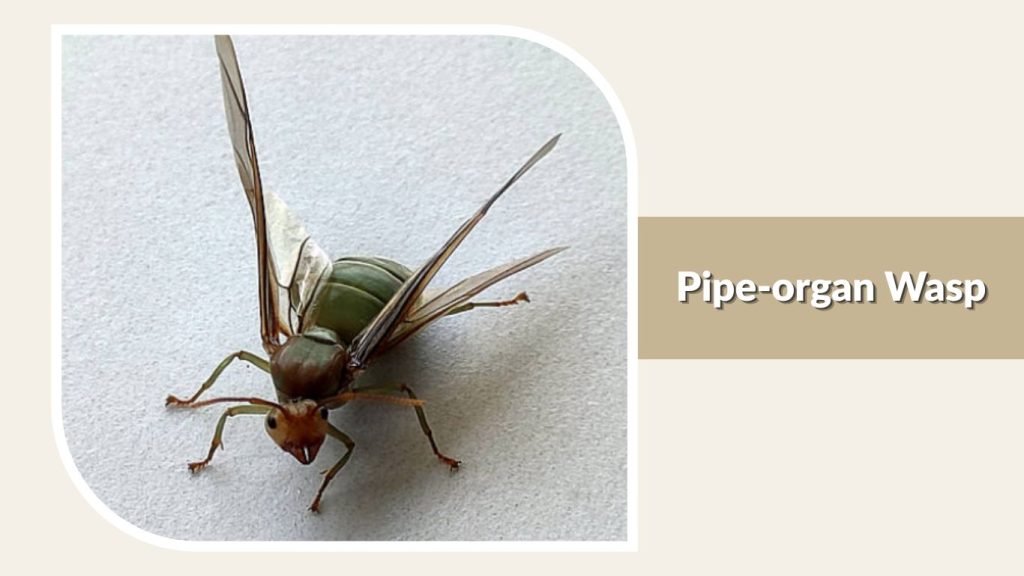
Pipe-organ Wasps are distinctive thread-waisted wasps named for their long tube-shaped mud nests that resemble organ pipes. These solitary insects are commonly found in warm regions where mud and sheltered nesting sites are available. They are beneficial predators that hunt spiders for their larvae and help maintain ecological balance while remaining mostly harmless to humans outdoors.
Identification
- Dark black or metallic body
- Extremely thin thread-like waist
- Long narrow legs
- Smoky transparent wings
- About 0.8 to 1.2 inches long
Habitat
Pipe-organ Wasps prefer warm environments such as deserts, gardens, forests, and rocky areas with access to mud. They commonly build nests on walls, cliffs, bridges, barns, and sheltered structures. These wasps thrive in places where spiders are abundant and nesting surfaces remain protected from heavy rainfall.
Behavior
These solitary wasps spend most of their lives constructing mud nests and hunting spiders. Females work independently without forming colonies or sharing responsibilities with other wasps. Pipe-organ Wasps are generally non-aggressive toward humans and rarely sting unless directly threatened, handled, or accidentally disturbed near their nests.
Diet
Adult Pipe-organ Wasps mainly consume nectar and sugary plant fluids collected from flowers. Their larvae feed entirely on paralyzed spiders stored inside mud nest chambers. Female wasps carefully provide enough prey to sustain larval development until the young adult wasp successfully emerges from the sealed nest.
Nesting
Female Pipe-organ Wasps build long mud tubes placed side by side, creating structures that resemble organ pipes. Each tube contains spiders and a single egg. After preparing the chamber with food, the female seals the opening using additional mud to protect the developing larva inside safely.
Importance in the Ecosystem
Pipe-organ Wasps help naturally control spider populations, including species that may become pests around homes and outdoor structures. They also contribute to pollination while feeding on flowers. Their ecological role supports biodiversity and healthier environments without causing significant danger to humans or domestic animals nearby.
11. Katydid Hunter Wasp
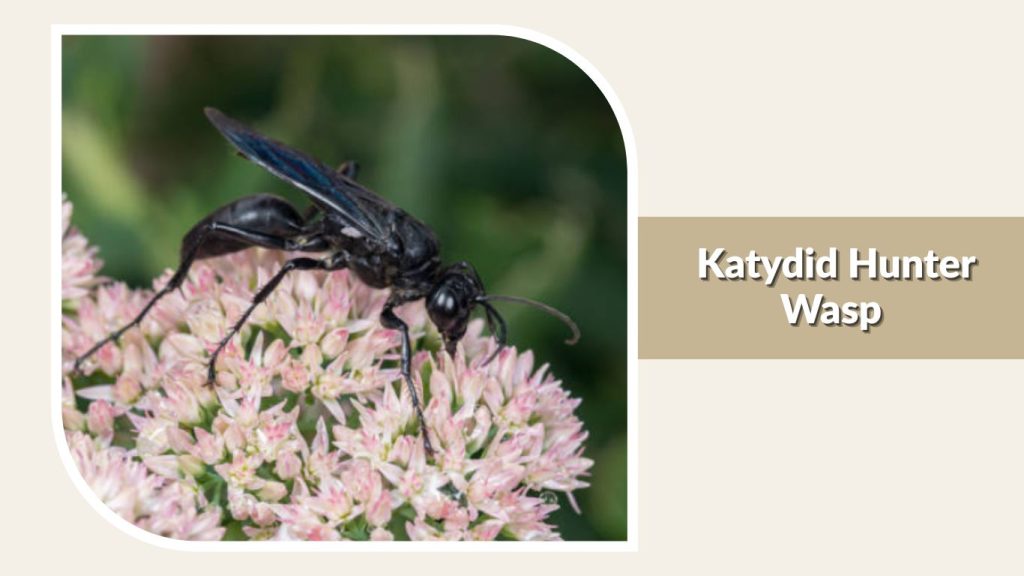
Katydid Hunter Wasps are large thread-waisted wasps known for hunting katydids and other large insects for their larvae. These solitary wasps are commonly found in gardens, grasslands, and wooded areas during warmer months. They are beneficial predators that help manage insect populations naturally while also supporting pollination through regular visits to flowering plants.
Identification
- Large black or dark-colored body
- Thin elongated thread-like waist
- Long powerful legs
- Dark transparent wings
- About 1 to 1.5 inches long
Habitat
Katydid Hunter Wasps prefer warm habitats such as meadows, gardens, grasslands, and forest edges where katydids are abundant. They commonly nest in loose or sandy soil suitable for digging. These wasps are often seen around flowering plants and open sunny areas during the active summer season.
Behavior
These solitary wasps actively hunt katydids and similar insects to feed their developing larvae. Females paralyze prey before dragging it into underground burrows. Katydid Hunter Wasps are generally peaceful toward humans and rarely sting unless directly threatened, accidentally trapped, or disturbed while nesting or hunting nearby.
Diet
Adult Katydid Hunter Wasps mainly consume nectar and sugary liquids gathered from flowers and plants. Their larvae depend entirely on paralyzed katydids stored inside underground chambers. Female wasps carefully provide enough prey to sustain larval growth until the young adult wasp emerges from the nest successfully.
Nesting
Female Katydid Hunter Wasps dig underground burrows in sandy or loose soil. Each nesting chamber contains one egg along with several paralyzed katydids for food. After preparing the nest, the female seals the entrance with soil to protect the developing larva from predators and environmental threats.
Importance in the Ecosystem
Katydid Hunter Wasps help naturally control populations of katydids and other large insects that may damage plants. They also assist with pollination while feeding on flowers. Their ecological role supports healthier gardens and natural ecosystems by maintaining balanced insect populations without causing major harm to humans.
12. Four-toothed Mason Wasp
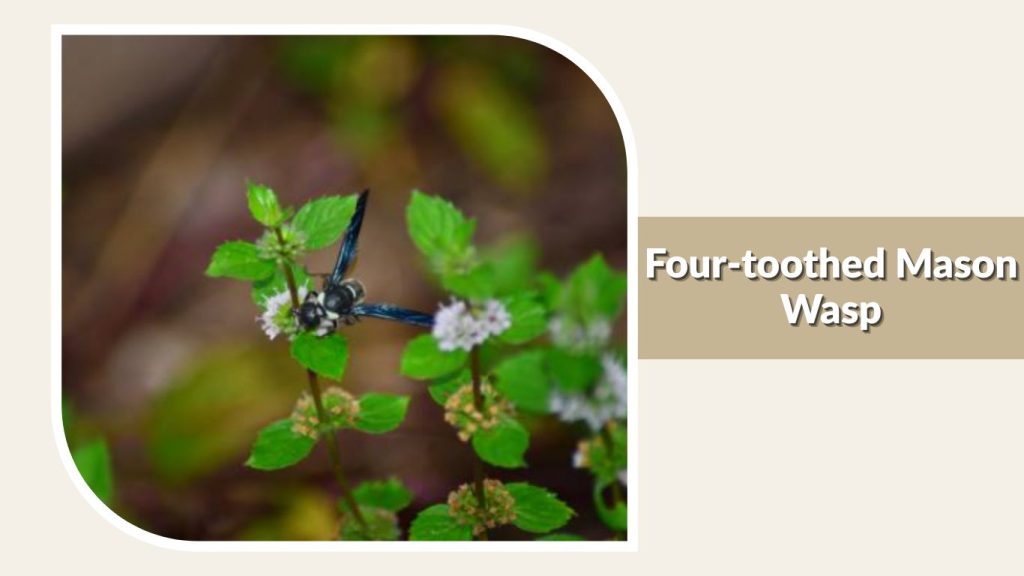
Four-toothed Mason Wasps are small solitary thread-waisted wasps known for their black bodies with yellow markings and their skillful mud nest construction. These wasps are commonly found in gardens, forests, and near wooden structures. They are beneficial insects that help control caterpillar populations naturally while also assisting with pollination through frequent flower visits during feeding.
Identification
- Black body with yellow markings
- Narrow thread-like waist
- Compact sturdy appearance
- Dark transparent wings
- About 0.4 to 0.7 inches long
Habitat
Four-toothed Mason Wasps prefer habitats such as gardens, forests, meadows, and wooded residential areas. They commonly nest in hollow stems, wood cavities, cracks, and sheltered structures. These wasps are often found near flowering plants and locations where caterpillars are abundant for feeding developing larvae inside nests.
Behavior
These solitary wasps spend much of their time gathering mud and hunting caterpillars for their young. Females independently construct nests without forming colonies. Four-toothed Mason Wasps are usually calm around humans and rarely sting unless directly threatened, handled, or accidentally disturbed near their nesting locations.
Diet
Adult Four-toothed Mason Wasps mainly feed on nectar and sweet plant fluids gathered from flowers. Their larvae depend on paralyzed caterpillars stored within nesting chambers. Female wasps carefully collect enough prey to support larval development until the young adult wasp successfully emerges from the protected nest structure.
Nesting
Female Four-toothed Mason Wasps build nests using mud inside hollow cavities or sheltered openings. Each chamber contains one egg and several paralyzed caterpillars for food. After stocking the nest, the female seals each section with mud to protect the developing larva from predators and harsh conditions.
Importance in the Ecosystem
Four-toothed Mason Wasps help naturally reduce caterpillar populations that may damage plants and crops. They also support pollination while feeding on flowers throughout their habitat. Their ecological contributions benefit gardens, forests, and natural ecosystems by promoting biodiversity and maintaining balanced insect populations in outdoor environments.
13. Mexican Grass-carrying Wasp
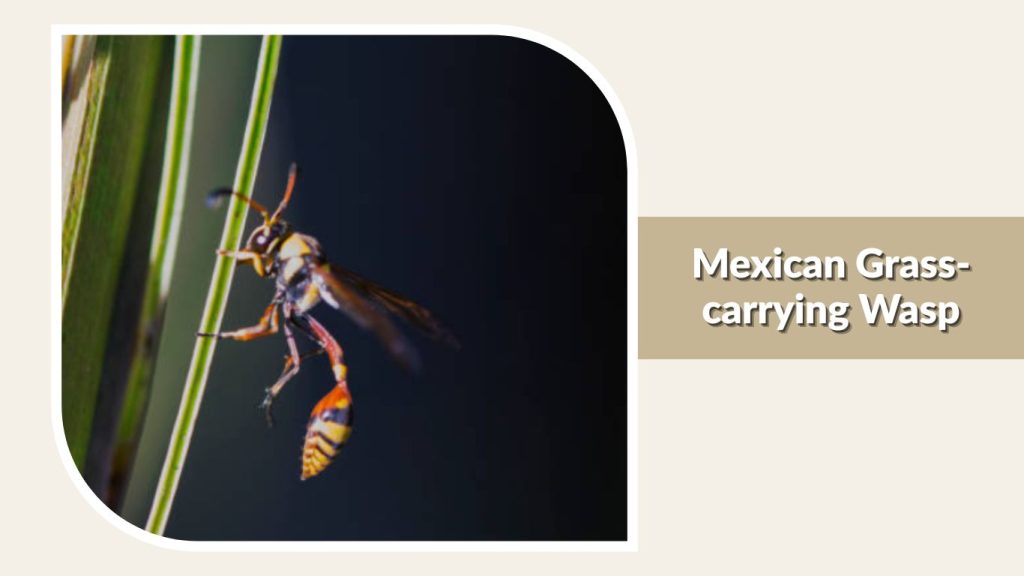
Mexican Grass-carrying Wasps are slender thread-waisted wasps known for carrying blades of grass into their nests. These solitary insects are commonly found in warm regions with abundant vegetation and hollow nesting spaces. They are peaceful predators that hunt tree crickets for their larvae while also supporting pollination through nectar feeding on flowers in gardens and natural habitats.
Identification
- Slender black body with pale markings
- Thin thread-like waist
- Long narrow legs
- Transparent smoky wings
- About 0.5 to 1 inch long
Habitat
Mexican Grass-carrying Wasps prefer warm habitats such as grasslands, gardens, forests, and shrub-filled environments. They commonly nest in hollow stems, wood cavities, or abandoned insect tunnels. These wasps are often found near flowering plants and areas where tree crickets and nesting materials are readily available.
Behavior
These solitary wasps actively hunt tree crickets and transport grass pieces into their nests for protection and structure. Females work independently without forming colonies. Mexican Grass-carrying Wasps are generally calm around humans and rarely sting unless directly threatened, trapped, or accidentally disturbed near nesting sites.
Diet
Adult Mexican Grass-carrying Wasps feed mainly on nectar and sweet plant fluids gathered from flowers. Their larvae consume paralyzed tree crickets stored inside nesting chambers. Female wasps carefully provide enough prey to support larval development until the young adult wasp emerges successfully from the protected nest cavity.
Nesting
Female Mexican Grass-carrying Wasps build nests inside hollow spaces such as stems, wood holes, and tunnels. They use grass blades to separate nesting chambers and protect larvae. Each chamber contains one egg and several paralyzed crickets before the female seals the nest entrance securely.
Importance in the Ecosystem
Mexican Grass-carrying Wasps help naturally control tree cricket populations, reducing potential damage to plants and vegetation. They also assist with pollination while feeding on flowers. Their ecological role supports biodiversity and healthier outdoor ecosystems without posing significant threats to humans, pets, or beneficial garden wildlife.
14. Thread-waisted Spider Wasp
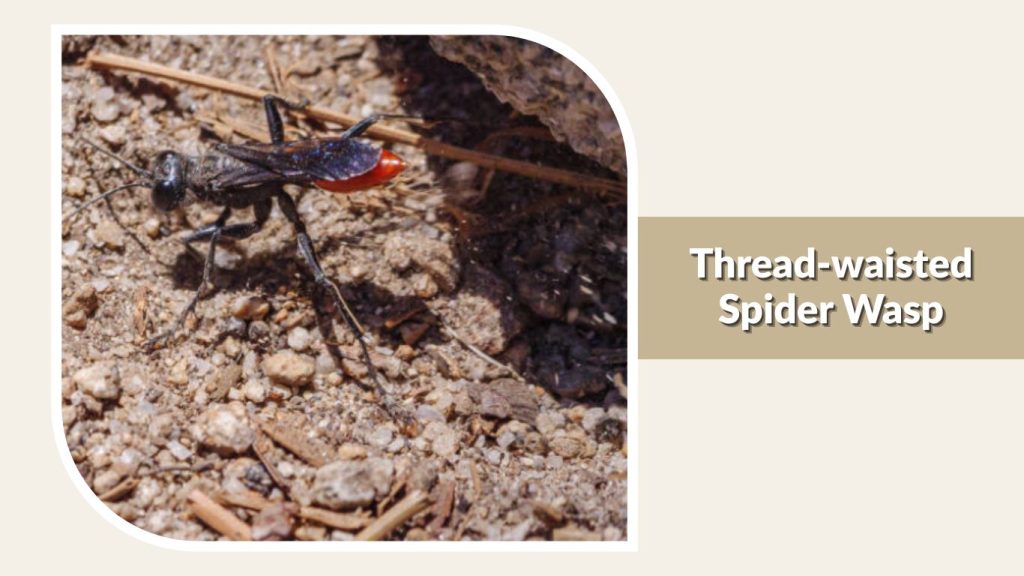
Thread-waisted Spider Wasps are slender solitary wasps known for hunting spiders and their extremely narrow waists. These active insects are commonly found in gardens, forests, grasslands, and sandy habitats where spiders are plentiful. They are beneficial predators that help regulate spider populations naturally while also contributing to pollination through regular visits to flowering plants outdoors.
Identification
- Slender dark-colored body
- Extremely thin thread-like waist
- Long spiny legs
- Smoky transparent wings
- About 0.5 to 1.2 inches long
Habitat
Thread-waisted Spider Wasps prefer warm habitats such as forests, grasslands, gardens, sandy fields, and woodland edges. They are commonly found in areas with abundant spiders and suitable nesting sites. These wasps often remain close to soil, vegetation, or sheltered spaces where prey and nesting conditions are favorable.
Behavior
These solitary wasps actively hunt spiders to feed their developing larvae. Females paralyze prey before carrying it to nests or underground burrows. Thread-waisted Spider Wasps are generally non-aggressive toward humans and sting only when directly threatened, handled, or accidentally disturbed during hunting or nesting activities nearby.
Diet
Adult Thread-waisted Spider Wasps mainly consume nectar and sweet plant liquids gathered from flowers. Their larvae feed entirely on paralyzed spiders stored within nesting chambers. Female wasps carefully provide enough prey to sustain larval growth until the young adult eventually develops and emerges from the nest successfully.
Nesting
Female Thread-waisted Spider Wasps create nests in soil, hollow cavities, or sheltered spaces depending on the species. Each chamber contains one egg along with a paralyzed spider for food. After preparing the nest, the female seals the entrance to protect the developing larva from environmental dangers.
Importance in the Ecosystem
Thread-waisted Spider Wasps help naturally control spider populations and support ecological balance in outdoor habitats. They also assist with pollination while feeding on flowers throughout their range. Their activities benefit gardens and natural ecosystems by reducing pest numbers and encouraging biodiversity without creating major risks for humans.
15. Golden Thread-waisted Wasp
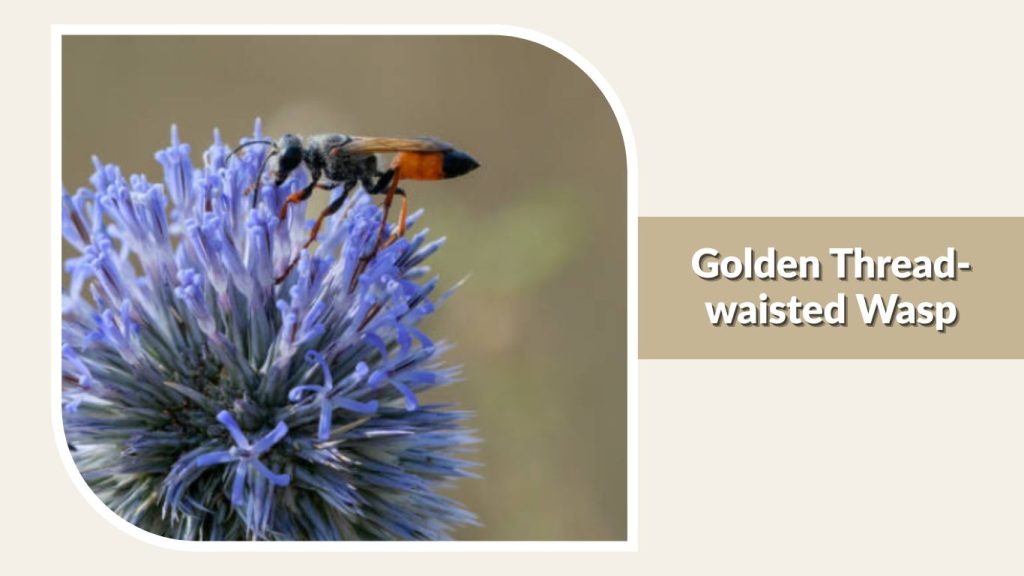
Golden Thread-waisted Wasps are elegant solitary wasps recognized for their golden markings, slender bodies, and extremely narrow waists. These active insects are commonly found in warm habitats where they hunt caterpillars and other insects for their larvae. They are beneficial predators that also contribute to pollination while feeding on nectar from flowering plants in outdoor environments.
Identification
- Black body with golden or yellow markings
- Very thin thread-like waist
- Long slender legs
- Narrow transparent wings
- About 0.7 to 1.2 inches long
Habitat
Golden Thread-waisted Wasps prefer warm habitats such as gardens, meadows, grasslands, forest edges, and open woodlands. They commonly nest in loose soil or sheltered cavities. These wasps are often seen near flowering plants and sunny areas where prey insects and nesting materials are easily available.
Behavior
These solitary wasps spend most of their time hunting insects and building nests for their offspring. Females paralyze prey before placing it inside nesting chambers. Golden Thread-waisted Wasps are generally peaceful around humans and rarely sting unless directly threatened, handled, or accidentally disturbed near their nests.
Diet
Adult Golden Thread-waisted Wasps mainly feed on nectar and sweet plant fluids gathered from flowers. Their larvae survive on paralyzed insects stored within nests by the female. Carefully collected prey provides enough nourishment for larval development until the young adult wasp eventually emerges successfully from the nest.
Nesting
Female Golden Thread-waisted Wasps build nests in soil, cavities, or sheltered spaces depending on the environment. Each chamber contains one egg and several paralyzed insects for food. After completing the nest, the female seals the entrance to protect the developing larva from predators and environmental conditions.
Importance in the Ecosystem
Golden Thread-waisted Wasps help naturally reduce populations of caterpillars and other insects that may damage vegetation. They also assist with pollination while feeding on flowers. Their ecological role supports biodiversity, healthier gardens, and balanced ecosystems without posing significant threats to humans or domestic animals nearby.
FAQs
Are thread-waisted wasps dangerous to humans?
Thread-waisted wasps are generally not dangerous to humans. Most species are solitary and non-aggressive, meaning they rarely sting unless directly threatened or handled. They usually focus on hunting insects or spiders rather than interacting with people, making them beneficial insects commonly found in gardens and natural outdoor habitats.
What do thread-waisted wasps eat?
Adult thread-waisted wasps mainly feed on nectar, honeydew, and other sugary plant fluids. Their larvae consume paralyzed prey such as spiders, caterpillars, crickets, or grasshoppers stored inside nests by the female wasp. Different species target different prey depending on their hunting behavior and habitat preferences.
Where do thread-waisted wasps build nests?
Thread-waisted wasps build nests in various locations depending on the species. Some create mud nests on walls or structures, while others dig underground burrows in sandy soil. Certain species also use hollow stems, wood cavities, or abandoned insect tunnels as protected nesting spaces for their offspring.
Why are thread-waisted wasps important?
These wasps play an important ecological role by naturally controlling insect and spider populations. Many species help reduce pests that damage plants and crops. They also contribute to pollination while feeding on flowers, supporting biodiversity and maintaining healthier ecosystems in gardens, forests, and grasslands.
How can you identify a thread-waisted wasp?
Thread-waisted wasps are usually identified by their extremely narrow waist connecting the thorax and abdomen. Most species also have slender bodies, long legs, and narrow wings. Their colors vary from black and metallic blue to yellow or golden markings depending on the specific species.