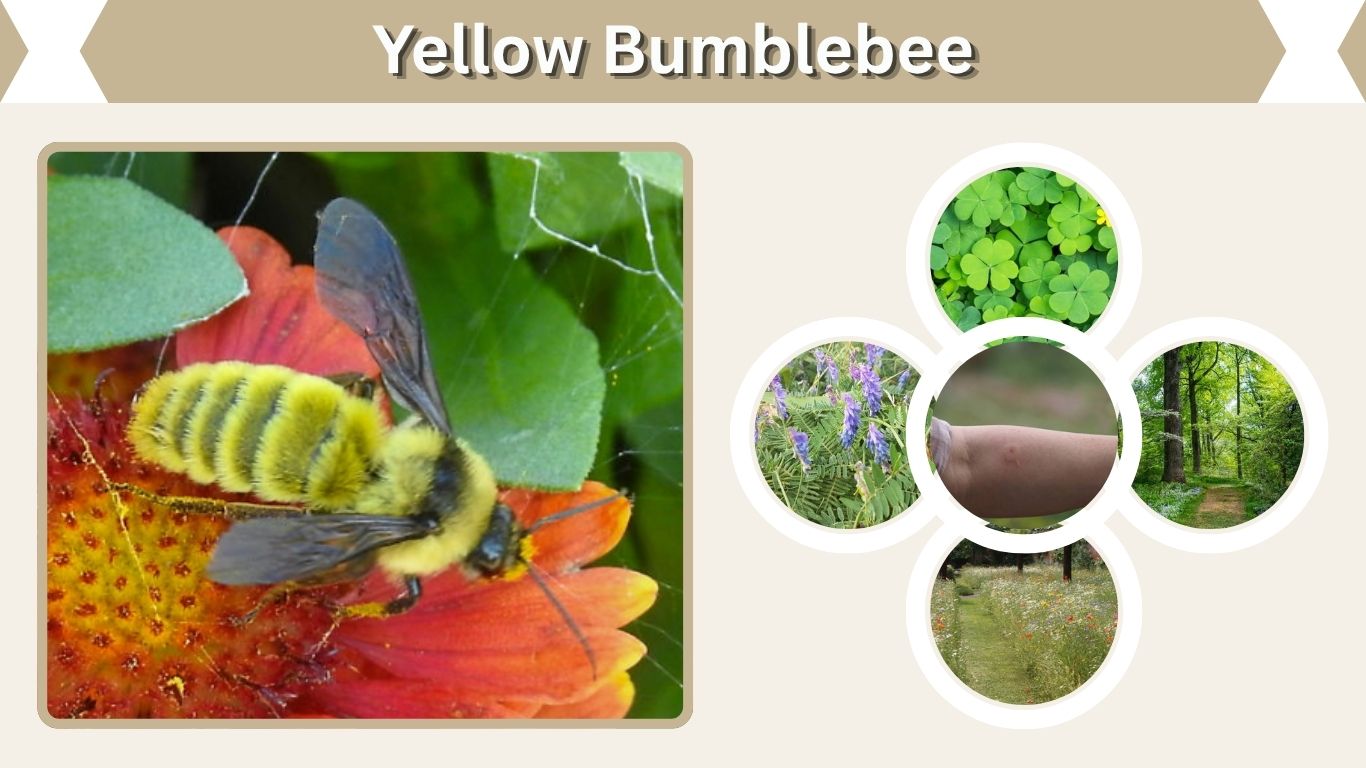
A yellow bumblebee is generally a large, fuzzy bee with noticeable yellow hair on its head, thorax, or abdomen. However, the name can cause confusion because several bumblebee species have strong yellow markings. In North America, “yellow bumble bee” often refers specifically to Bombus fervidus, while yellow-faced and yellow-banded bumblebees are separate species. Examining the face, abdominal bands, location, and overall hair pattern is essential for correct identification.
Yellow Bumblebee Fact File
| Feature | Information |
| Common name | Yellow bumble bee |
| Scientific name | Bombus fervidus |
| Family | Apidae |
| Order | Hymenoptera |
| Body type | Large, rounded, and densely hairy |
| Main colors | Yellow and black |
| Diet | Nectar and pollen |
| Nest type | Social colony |
| Main habitat | Meadows, gardens, farms, and open grasslands |
| Similar insects | Yellow-faced bumblebee, yellow-banded bumblebee, yellow jacket |
The yellow bumble bee is not the only predominantly yellow species. Yellow hair occurs in many members of the genus Bombus, and the exact pattern is usually more useful than the total amount of yellow when identifying a bee.
How to Identify a Yellow Bumblebee
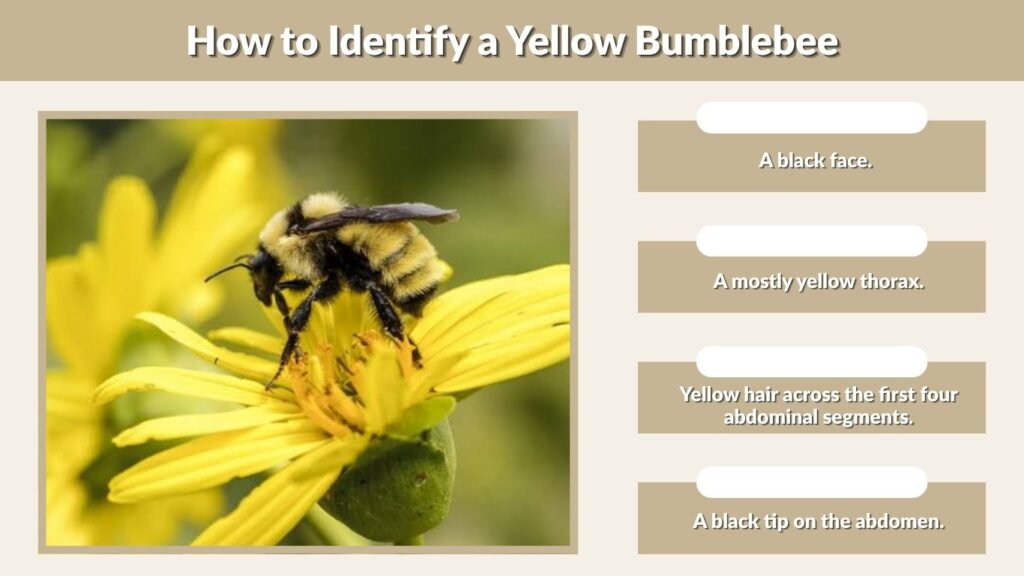
The North American yellow bumble bee, Bombus fervidus, has an elongated body compared with some rounder bumblebees. Its face is black, its wings are relatively dark, and much of its abdomen is covered with yellow hair.
Main Identification Features
Look for the following characteristics:
- A black face
- A mostly yellow thorax
- Yellow hair across the first four abdominal segments
- A black tip on the abdomen
- Dark or smoky wings
- A relatively long face
- A thick, hairy body
- Pollen baskets on the hind legs of females
Color can vary between individuals, regions, sexes, and castes. Photographs showing the head, thorax, abdomen, and hind legs provide a better identification than a single side view.
Types of Yellow Bumblebees
“Yellow bumblebee” may describe several different species. Location is particularly important because some species occur in western North America, others are northern or eastern, and the great yellow bumblebee is primarily associated with parts of Europe.
Yellow Bumble Bee
The yellow bumble bee, Bombus fervidus, has a black face, a mostly yellow body, and a black abdominal tip. It occurs across much of North America and can be locally common, although Bumble Bee Watch notes that it may be declining.
Yellow-Faced Bumblebee
The yellow-faced bumblebee, Bombus vosnesenskii, is a common western North American species. It has yellow hair on the face and front of the thorax, a mostly black central body, and a yellow band near the rear of the abdomen.
Its typical pattern includes:
- Yellow face
- Yellow front of the thorax
- Black central thorax
- Black first through third abdominal segments
- Yellow fourth abdominal segment
- Black abdominal tip
This species is especially widespread in western areas and may be seen visiting gardens, farms, grasslands, shrublands, and urban flowers.
Yellow-Banded Bumblebee
The yellow-banded bumblebee, Bombus terricola, has a black face, yellow hair at the front of the thorax, and a broad yellow band across the middle of its abdomen. The first abdominal segment is black, while the second and third are yellow.
It was historically widespread across Canada and the eastern and midwestern United States. It has declined substantially in parts of southern and central Canada and is considered rare throughout much of its range.
Great Yellow Bumblebee
The great yellow bumblebee, Bombus distinguendus, is a rare European species. It has two bright-yellow thoracic bands separated by a black band and a predominantly yellow abdomen without a clearly contrasting tail.
In the United Kingdom, it is now restricted mainly to the far north and west of Scotland, including Orkney and parts of the Hebrides. It favors flower-rich grasslands, wildflower meadows, machair, and suitable roadside habitats.
Yellow Bumblebee vs. Yellow Jacket
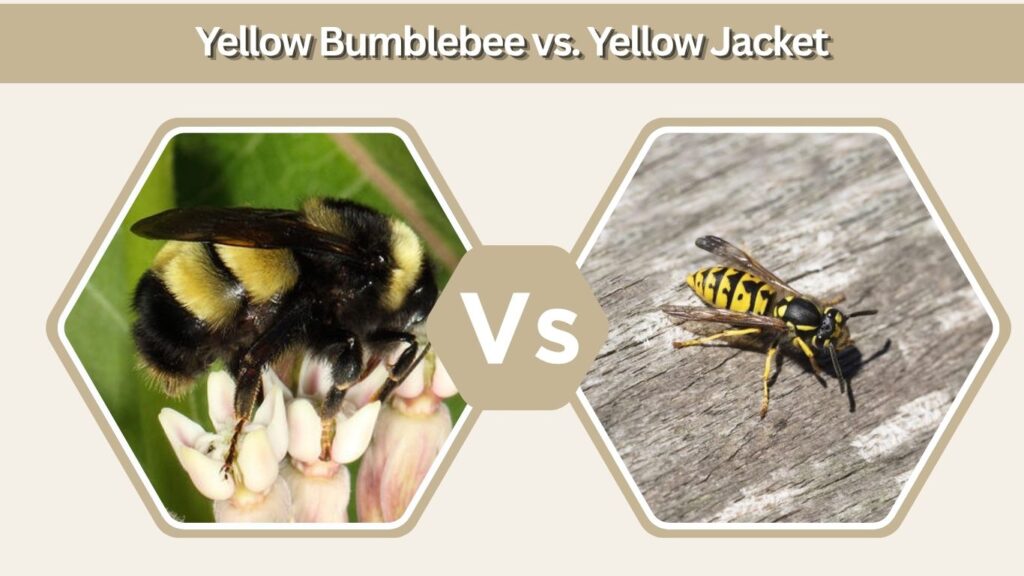
Yellow bumblebees and yellow jackets may share black-and-yellow coloration, but they are very different insects.
| Feature | Yellow bumblebee | Yellow jacket |
| Body covering | Thick, fuzzy hair | Smooth and shiny |
| Shape | Broad and rounded | Narrower with a defined waist |
| Color pattern | Hairy yellow bands | Bright, sharply defined markings |
| Main food | Nectar and pollen | Insects, sugary liquids, and human food |
| Behavior near food | Usually visits flowers | Often scavenges around drinks and meals |
| Pollen baskets | Present on female workers | Absent |
| Nest defense | Defends nest when disturbed | Can defend nest aggressively |
| Ecological role | Important pollinator | Predator and scavenger |
Bumblebees are generally broad and hairy, while yellow jackets have smoother bodies and brighter, sharply separated markings. Yellow jackets also commonly gather around outdoor food and sugary drinks, whereas bumblebees spend most of their foraging time on flowers.
Habitat and Range
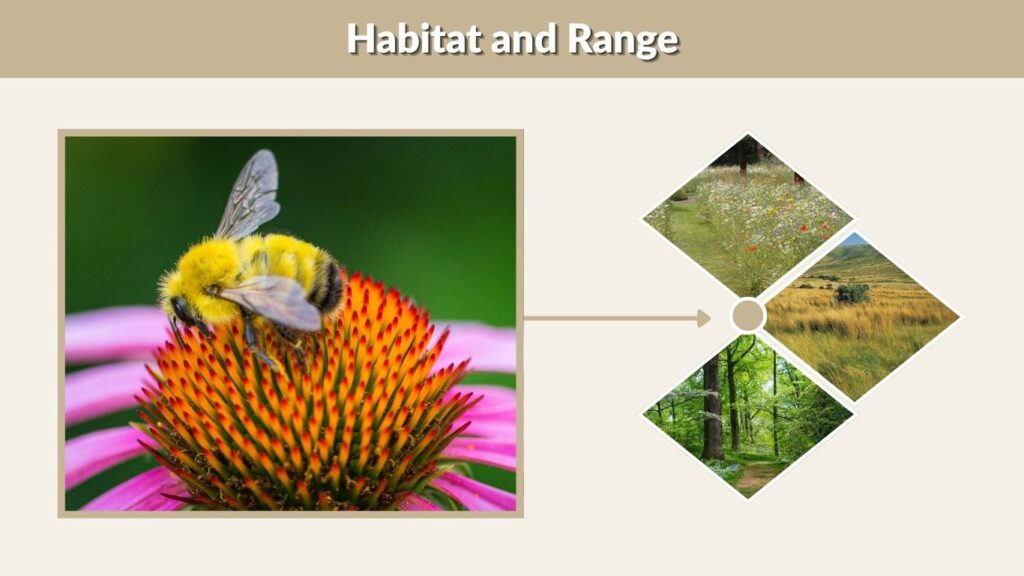
Yellow-colored bumblebee species occupy a wide variety of habitats, including:
- Wildflower meadows
- Prairies and grasslands
- Farms and orchards
- Woodland edges
- Roadsides
- Parks
- Residential gardens
- Mountain meadows
- Coastal grasslands
Suitable habitat needs flowers throughout the active season, protected nesting locations, and places where new queens can overwinter. Different species have different ranges, so a bee’s location can eliminate several possible identifications.
What Do Yellow Bumblebees Eat?
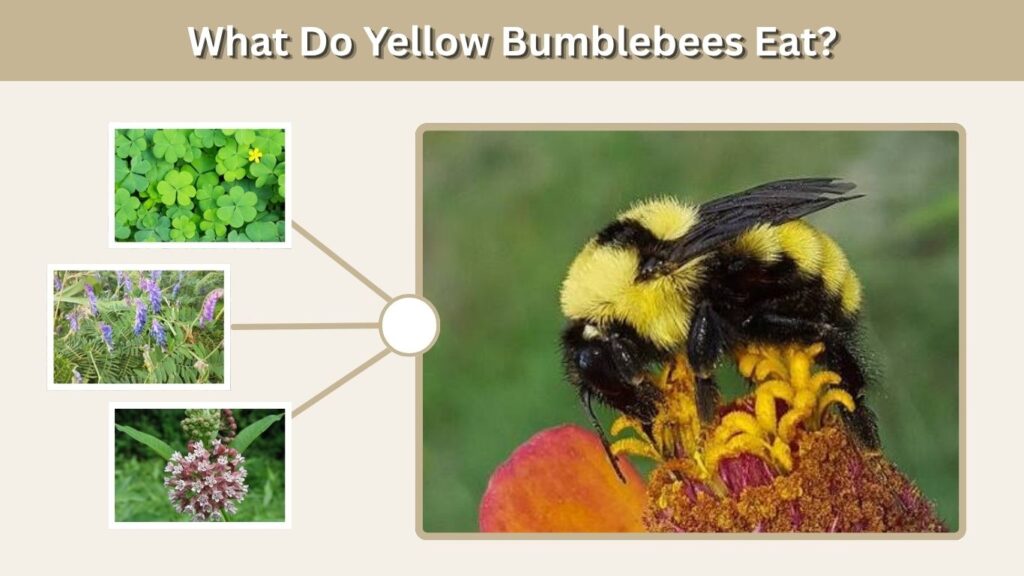
Adult bumblebees drink nectar for energy and collect pollen as a source of protein and other nutrients. Workers carry pollen back to the colony in smooth pollen baskets on their hind legs.
They visit many kinds of flowers, including:
- Clovers
- Vetches
- Milkweeds
- Thistles
- Goldenrods
- Asters
- Sunflowers
- Bee balm
- Lupines
- Native fruit blossoms
Different species have short, medium, or long tongues, which affects the flowers they can use efficiently. The great yellow bumblebee, for example, has a long tongue and frequently visits vetches and bird’s-foot trefoil.
Nesting and Life Cycle
Most true bumblebees form annual social colonies. A fertilized queen survives winter and emerges in spring to feed, search for a nest, and lay her first eggs.
Colony Development
The first offspring are female workers. They collect pollen and nectar, maintain the nest, and care for later broods. As the colony grows, the queen concentrates mainly on egg production.
Toward the end of the season, the colony produces males and new queens. They leave, mate, and disperse. Workers, males, and the original queen normally die as cold weather arrives, while newly mated queens overwinter and begin new colonies the following year.
Where Do They Nest?
Many species use abandoned rodent burrows or other underground cavities. Some may occupy spaces beneath grass, inside tree cavities, under sheds, or in abandoned bird nests.
A bumblebee repeatedly entering the same hole may indicate an active nest. Avoid blocking the entrance or disturbing the surrounding ground.
Do Yellow Bumblebees Sting?
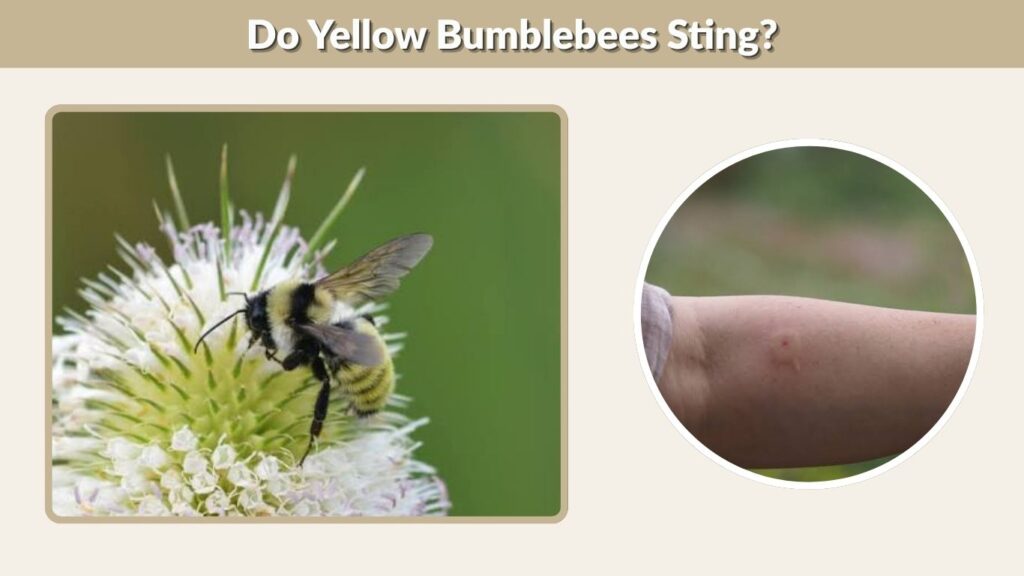
Female workers and queens can sting, but males cannot. Bumblebees generally concentrate on gathering food and are unlikely to sting unless they are squeezed, stepped on, handled, or defending their nest.
Unlike honey bees, a bumblebee’s stinger is not strongly barbed, so it may sting more than once. Keep a comfortable distance from active nests and avoid swatting bees that are simply visiting flowers.
Emergency medical care is necessary after a sting that causes trouble breathing, throat or tongue swelling, widespread hives, severe dizziness, or fainting.
How to Attract Yellow Bumblebees to a Garden
Plant groups of pesticide-free flowers that bloom at different times from early spring through fall. Native plants are especially useful because local bumblebees are adapted to their flowering periods and structures.
Helpful gardening practices include:
- Grow several flower species in clusters.
- Include spring, summer, and fall blooms.
- Avoid spraying flowering plants with insecticides.
- Leave some undisturbed ground and leaf litter.
- Preserve abandoned rodent holes when safe.
- Mow portions of the lawn less frequently.
- Provide shallow, pesticide-free water.
- Avoid removing every stem and leaf in autumn.
A continuous supply of flowers helps queens establish nests, supports worker production, and allows new queens to build energy reserves before winter.
FAQs
Is a yellow bumblebee a specific species?
Yes, Bombus fervidus is commonly called the yellow bumble bee in North America. However, people also use the phrase for any bumblebee with extensive yellow coloring, including yellow-faced, yellow-banded, northern amber, and great yellow bumblebees.
How can I identify a yellow-faced bumblebee?
Look for yellow hair on the face and front of the thorax, a mostly black central body, and a yellow band on the fourth abdominal segment. The species is primarily associated with western North America.
What is the difference between a bumblebee and a yellow jacket?
Bumblebees are broad, densely hairy pollinators that commonly visit flowers. Yellow jackets are smoother, have sharply defined black-and-yellow markings, and often scavenge around meat, sweets, garbage, and outdoor meals.
Are yellow-banded bumblebees endangered?
Their legal status differs by location. In Canada, the yellow-banded bumblebee is federally listed as a species of Special Concern, while some provinces give it additional protection. It has experienced serious declines in parts of its historical range.
What should I do when I find a yellow bumblebee?
Observe it without touching it and take clear photographs of its face, back, abdomen, and hind legs. The photographs can be submitted to a bee-recording platform for identification, especially when the species may be uncommon or declining.