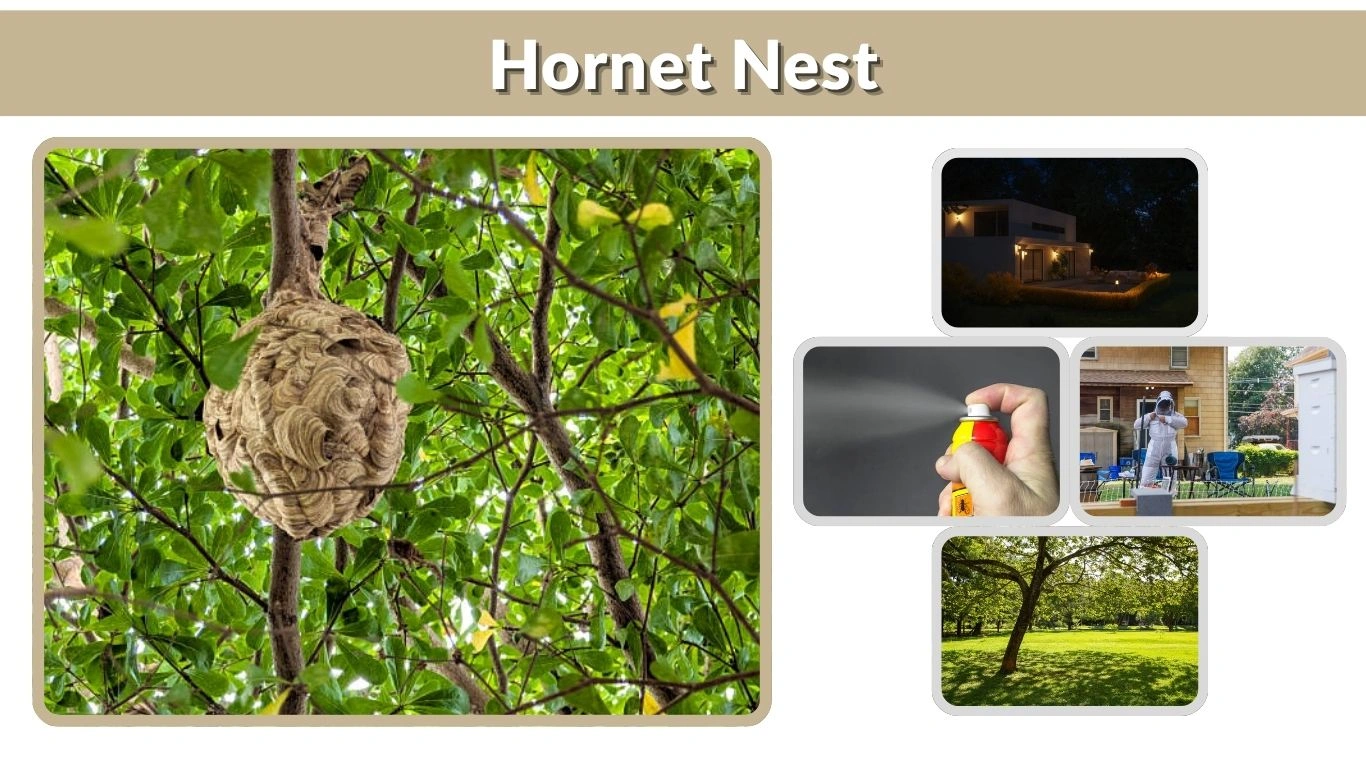
A hornet nest can be alarming to discover, especially when it appears near your home or garden. These structures are home to colonies of hornets that can become aggressive if disturbed. Understanding what a hornet nest looks like, where it is commonly found, and how dangerous it can be is essential for staying safe. In this guide, you’ll learn how to identify hornet nests, recognize warning signs, and understand the risks they may pose.
What Is a Hornet Nest?
A hornet nest is a paper-like structure built by hornets using chewed wood fibers mixed with saliva. These nests serve as colonies where hornets live, reproduce, and protect their queen. They can vary in size and are often found in trees, walls, or underground spaces.
How Hornets Build Nests
Hornets create their nests by chewing wood and plant material into a pulp. This pulp is then mixed with saliva to form a paper-like substance. Over time, they shape this material into layered structures that provide protection and insulation.
Worker hornets are responsible for building and maintaining the nest. As the colony grows, the nest expands to accommodate more members. This process continues throughout the warmer months when hornet activity is at its peak.
The nest contains multiple compartments where larvae develop. It also includes space for the queen and worker hornets, all protected within the outer shell.
Types of Hornet Nests
Hornet nests can be found in different forms depending on the species and environment.
Aerial nests are the most visible type. These are often built in trees, bushes, or under roof edges. They hang freely and are usually round or oval in shape.
Wall nests are hidden inside structures such as walls, attics, or ceilings. These nests are harder to detect because they are not visible from the outside.
Ground nests are built underground or in sheltered areas close to the ground. They may be located in abandoned burrows or hollow spaces, making them difficult to notice until activity increases.
What Does a Hornet Nest Look Like?
Hornet nests have a distinctive appearance that makes them easier to identify. Recognizing their structure can help you determine whether you are dealing with hornets or another type of insect.
Key Identification Features
A hornet nest typically has a gray or brown color with a paper-like texture. The outer surface often looks layered or slightly wavy due to the way it is constructed.
The shape is usually round or oval, although it can become irregular as it grows. Most nests have a single visible entrance hole where hornets enter and exit.
Unlike open honeycomb structures, hornet nests are enclosed. This outer shell provides protection from weather and predators.
Size and Growth
Hornet nests start small in early spring, often no larger than a golf ball. As the season progresses, the colony grows rapidly, and the nest can become much larger.
By late summer, some nests can reach the size of a basketball or even larger, depending on the number of hornets inside. The size of the nest is directly related to the strength and age of the colony.
Larger nests are more likely to contain hundreds of hornets, which increases the potential risk if the nest is disturbed.
Where Do Hornets Build Nests?
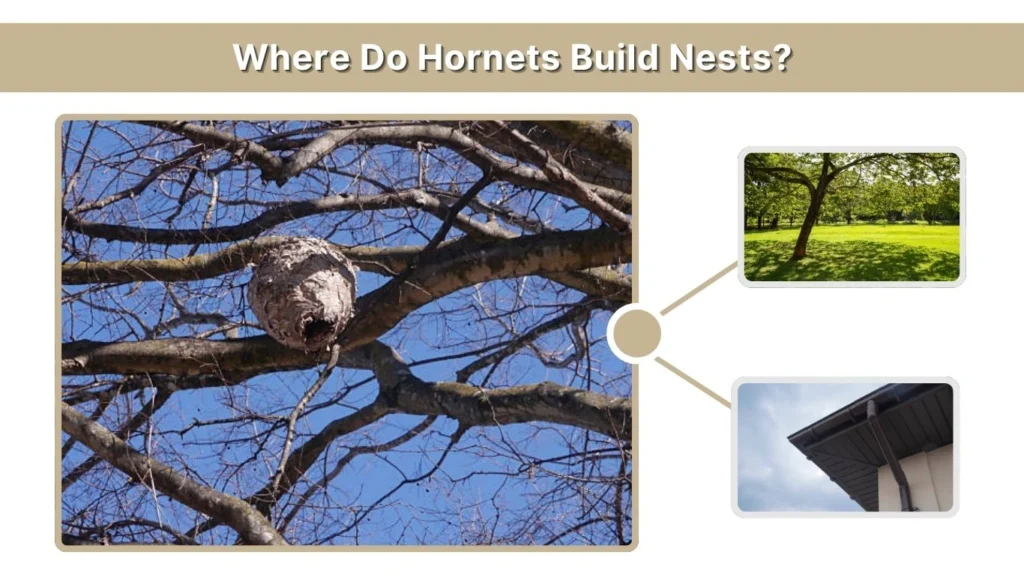
Hornets choose locations that provide shelter and protection for their colony. Knowing where they typically build nests can help you identify potential problem areas around your home.
Common Locations
Hornets often build nests in trees and bushes, where the structure can hang freely and remain hidden among leaves. This provides natural protection from predators and weather.
They also build nests under roof eaves, in sheds, and inside garages. These areas offer shelter and are often undisturbed, making them ideal for colony growth.
In some cases, hornets may choose to build nests inside walls or attics. These locations provide warmth and protection but can be difficult to detect until the nest becomes large.
Indoor vs Outdoor Nests
Outdoor nests are easier to spot because they are often visible on trees or structures. These nests can usually be identified early if you regularly inspect your surroundings.
Indoor nests, however, are more hidden. Hornets may enter through small openings and build nests inside walls or ceilings. Signs of indoor nests include buzzing sounds or hornets frequently entering and exiting a specific area.
Ground nests are another possibility. These are often hidden in soil, under bushes, or in abandoned burrows. They can be dangerous because they are harder to see and easier to accidentally disturb.
Are Hornet Nests Dangerous?
Hornet nests can pose a significant risk, especially if disturbed. Hornets are highly protective of their colony and may become aggressive when they sense a threat.
Risk Overview
| Factor | Risk Level |
| Aggression | High when disturbed |
| Sting pain | Severe |
| Multiple stings | Possible |
| Allergy risk | Serious |
Hornets are capable of stinging multiple times, unlike some other insects. When a nest is threatened, several hornets may attack at once, increasing the danger.
Why Hornets Attack
Hornets primarily attack to defend their nest. Any sudden movement, loud noise, or vibration near the nest can trigger a defensive response.
They may also react to perceived threats, even if no direct contact is made. For example, getting too close to the nest or attempting to remove it without proper precautions can lead to aggressive behavior.
Understanding these triggers can help you avoid dangerous situations and reduce the risk of being stung.
Signs You Have a Hornet Nest
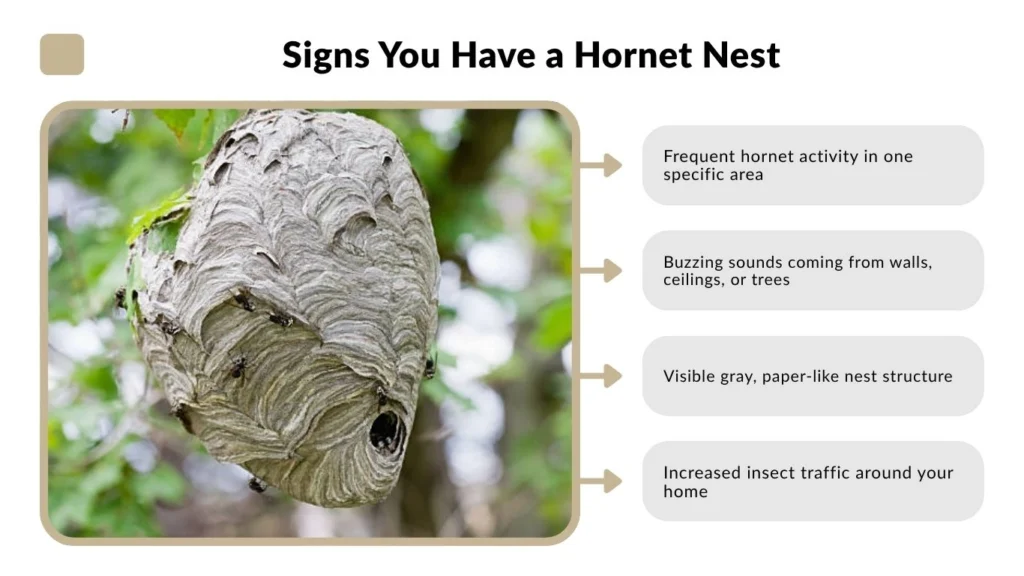
Recognizing early warning signs can help you identify a hornet nest before it becomes a serious safety issue. In many cases, the nest may not be immediately visible, so observing hornet activity is key.
- Frequent hornet activity in one specific area
- Buzzing sounds coming from walls, ceilings, or trees
- Visible gray, paper-like nest structure
- Increased insect traffic around your home
- Hornets entering and exiting small openings
One of the most common signs is repeated hornet movement in the same location. If you notice hornets flying in and out of a hole or a specific spot, there is likely a nest nearby.
Buzzing sounds can also indicate a hidden nest, especially inside walls or attics. These sounds may become louder as the colony grows.
Visible nests are easier to identify, but even small nests should be taken seriously, as they can expand quickly during the season.
How to Remove a Hornet Nest Safely
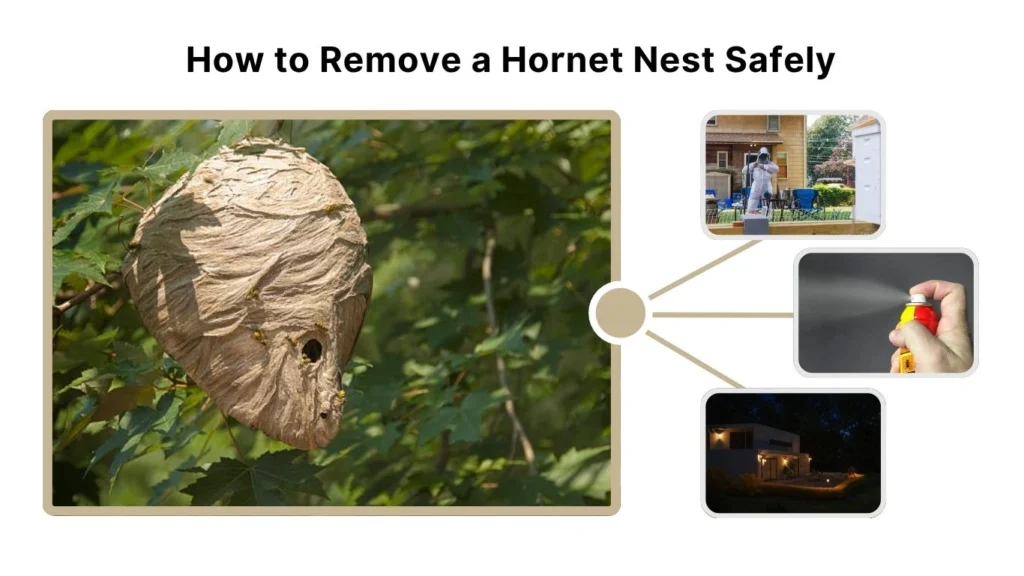
Removing a hornet nest can be dangerous and should be done with caution. In many cases, it is safer to leave the nest alone or contact a professional.
- Avoid disturbing the nest during the day
- Wear protective clothing if attempting removal
- Use proper insecticide sprays designed for hornets
- Remove nests at night when hornets are less active
- Keep a safe distance at all times
Nighttime is the safest time to approach a nest because most hornets are inside and less active. This reduces the chance of being attacked.
Protective clothing is essential if you attempt removal yourself. Even a small mistake can provoke a defensive response from the colony.
For larger nests or difficult locations, professional pest control services are strongly recommended. They have the tools and experience to handle the situation safely.
When to Call a Professional
Some situations require expert help to avoid injury or property damage. Knowing when to step back is important for your safety.
- Large nests with heavy hornet activity
- Nests located inside walls or ceilings
- Aggressive hornet behavior
- History of allergic reactions to stings
- Lack of proper equipment or experience
Professional removal is especially important when the nest is hidden inside a structure. Attempting to remove it yourself can cause damage and increase risk.
If you or someone in your household is allergic to stings, it is always best to avoid any direct contact and call experts immediately.
How to Prevent Hornet Nests
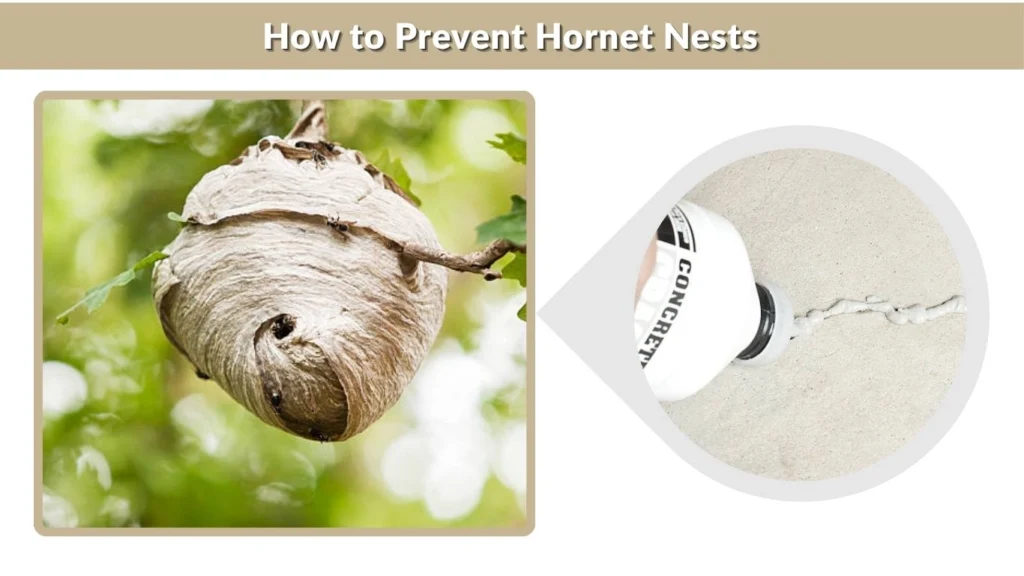
Prevention is the most effective way to avoid dealing with hornet nests. Simple steps can reduce the chances of hornets choosing your home as a nesting site.
- Seal cracks and openings in walls and roofs
- Keep outdoor areas clean and free of food waste
- Cover garbage bins tightly
- Install decoy nests to discourage hornets
- Regularly inspect your property
Hornets are attracted to areas where they can find shelter and food. Removing these attractants makes your home less appealing.
Regular inspections, especially during spring, can help you detect early nest formation. Small nests are easier and safer to handle than large ones.
What Happens to Hornet Nests in Winter?
Hornet nests do not last forever. Their lifecycle is closely tied to seasonal changes, and winter has a major impact on the colony.
Seasonal Behavior
As temperatures drop, the hornet colony begins to decline. Worker hornets and males eventually die off, leaving only the fertilized queens to survive.
These queens leave the nest and find sheltered places to overwinter. They will start new colonies when the weather becomes warm again.
Can Old Nests Be Reused?
Hornets do not reuse old nests. Each year, a new nest is built by a queen starting a fresh colony.
Old nests remain empty and may gradually break down over time. While they may look concerning, abandoned nests are not active and do not pose a threat.
FAQs
What does a hornet nest look like?
Hornet nests are gray or brown paper-like structures with a rounded or oval shape. They are made from chewed wood fibers and usually have a single entrance hole.
Are hornet nests dangerous?
Yes, especially if disturbed. Hornets are protective and can sting multiple times. Large nests increase the risk because they contain more hornets.
Can I remove a hornet nest myself?
Small nests may be removed with caution, but it is safer to call professionals for larger or hidden nests to avoid injury.
Where do hornets usually build nests?
They build nests in trees, under roof eaves, inside walls, and sometimes underground, depending on the species.
Do hornets reuse old nests?
No, hornets do not reuse old nests. Each year, new nests are built by queens, and old ones are abandoned.