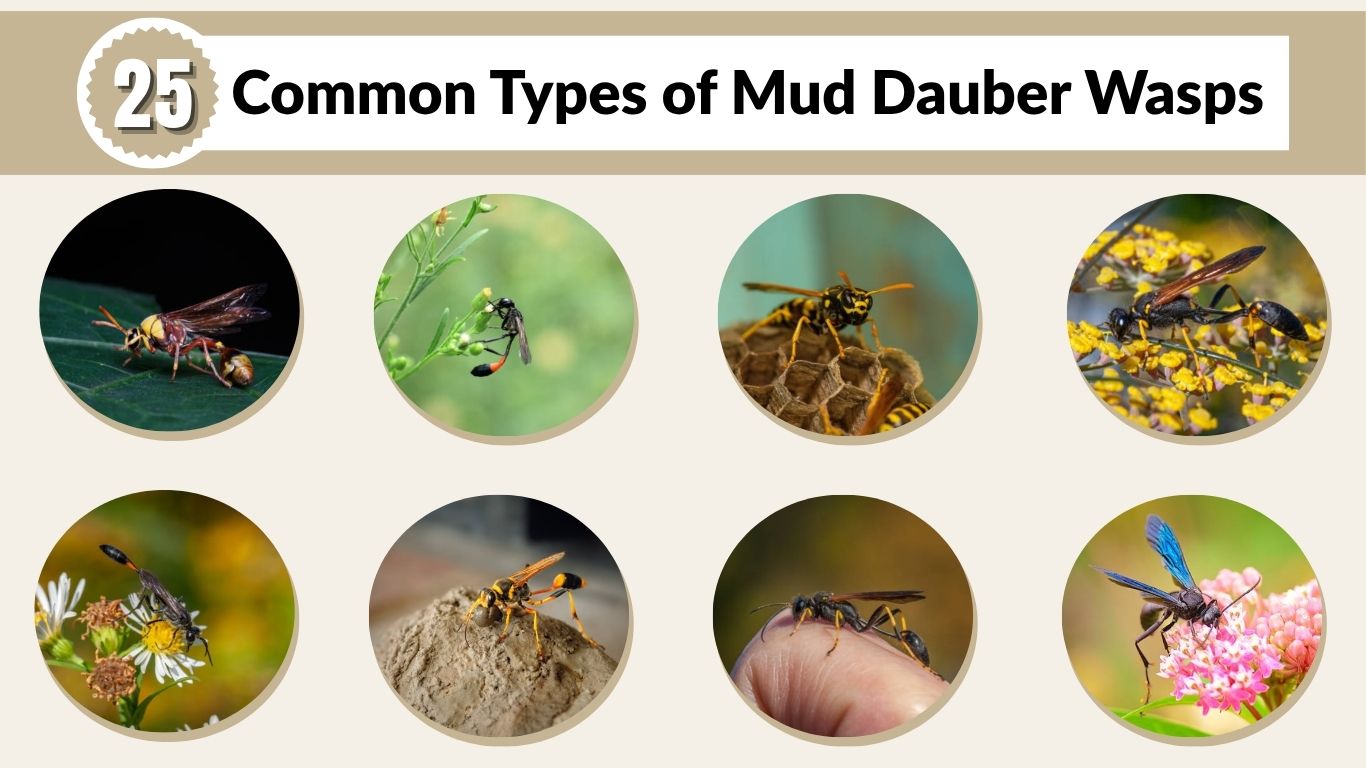
Mud dauber wasps are solitary insects known for their unique mud nests and slender body shapes. Unlike aggressive social wasps, these insects are usually calm and beneficial because they help control spider and insect populations. Mud daubers can be found in gardens, forests, barns, garages, and other sheltered environments across many parts of the world. Different species vary in color, size, nesting habits, and preferred habitats. This guide explores 25 common types of mud dauber wasps, including their identification features, habitats, behavior, diet, and lifecycle characteristics.
1. Black and Yellow Mud Dauber
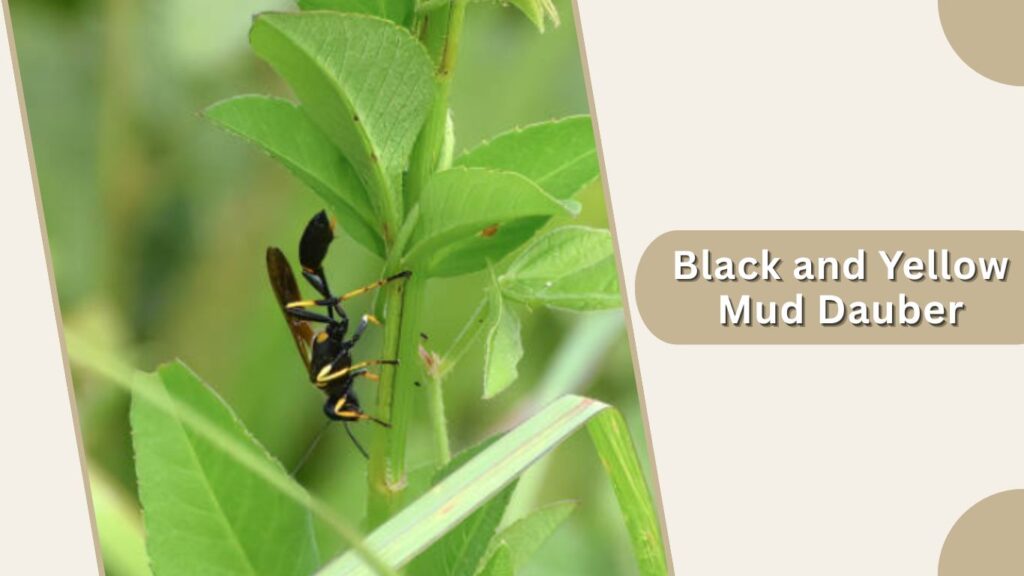
Black and Yellow Mud Daubers are slender solitary wasps known for their narrow waists and distinctive yellow markings. They are commonly found around homes, gardens, barns, and wooded areas where they build mud nests. Unlike aggressive social wasps, these insects are generally calm and rarely sting humans.
Identification
- Scientific name: Sceliphron caementarium
- Body color is black with bright yellow markings
- Long and thin thread-like waist
- Legs are long and yellowish in color
- Wings appear dark and transparent
- Adults usually grow between 0.75 and 1 inch long
- Females build tube-shaped mud nests attached to walls or ceilings
Habitat and Distribution
Black and Yellow Mud Daubers are widely distributed throughout North America and can also be found in parts of Central America. They prefer warm environments with access to mud, water, and sheltered nesting spaces. Common nesting sites include garages, sheds, attics, bridges, barns, and porch ceilings.
Behavior and Diet
These wasps are solitary hunters that mainly prey on spiders. Females paralyze spiders and place them inside mud chambers as food for developing larvae. Adults commonly feed on flower nectar and water. They are non-aggressive and usually avoid contact with people unless directly handled.
Lifecycle
The lifecycle begins when the female builds a mud nest and fills each chamber with paralyzed spiders before laying an egg inside. The larva feeds on the stored prey and later forms a pupa within the nest. Adult wasps emerge after completing metamorphosis, usually during warm seasons.
2. Blue Mud Dauber
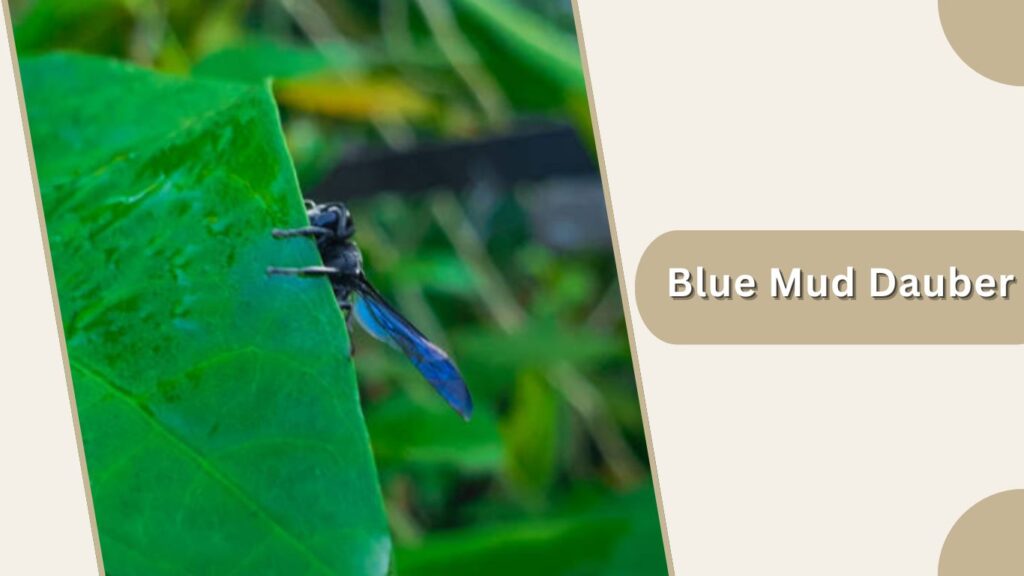
Blue Mud Daubers are metallic blue-black wasps recognized for their glossy appearance and slender bodies. They are solitary insects that often reuse the abandoned nests of other mud daubers. These wasps are beneficial because they help control spider populations around homes and gardens.
Identification
- Scientific name: Chalybion californicum
- Metallic dark blue or blue-black body coloration
- Smooth and shiny appearance
- Long narrow waist connecting the thorax and abdomen
- Wings are dark with a bluish sheen
- Adults usually measure about 0.5 to 1 inch long
- Commonly seen flying around buildings and gardens during warm months
Habitat and Distribution
Blue Mud Daubers are widely found across North America, especially in warm and temperate regions. They prefer habitats near human structures, gardens, forests, and open woodlands. These wasps commonly nest in sheltered places such as barns, garages, attics, and under roof overhangs.
Behavior and Diet
These wasps primarily hunt spiders, especially black widow spiders, which makes them useful around homes. Females often clean out and reuse old mud nests instead of constructing entirely new ones. Adult wasps feed on nectar and are generally peaceful toward humans.
Lifecycle
The female places paralyzed spiders inside a mud chamber and lays an egg on the prey. After hatching, the larva feeds on the stored spiders before pupating inside the nest. Adult wasps emerge after metamorphosis and continue the cycle during warmer seasons.
3. Organ Pipe Mud Dauber
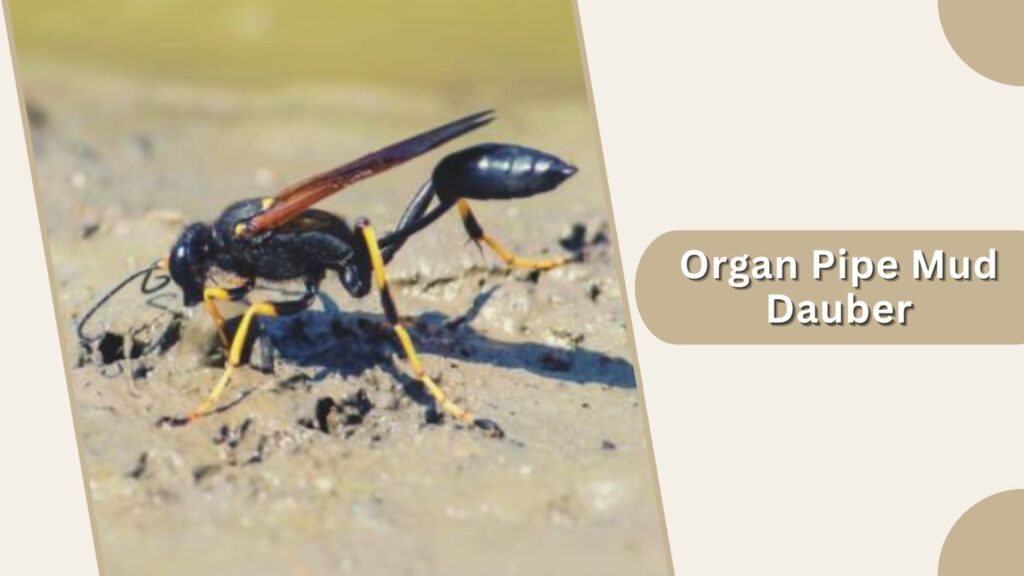
Organ Pipe Mud Daubers are large solitary wasps named after their distinctive nests, which resemble the pipes of an organ. They are known for constructing long vertical mud tubes attached side by side. These wasps are usually non-aggressive and are commonly seen in warm regions.
Identification
- Scientific name: Trypoxylon politum
- Black body with long slender shape
- Legs are often yellow or orange-tinted
- Very narrow thread-like waist
- Wings appear dark and smoky
- Adults typically grow between 0.75 and 1.25 inches long
- Builds clustered tube-shaped mud nests that resemble organ pipes
Habitat and Distribution
Organ Pipe Mud Daubers are mainly found in the southern and eastern United States. They prefer warm climates with access to mud and sheltered nesting areas. Common nesting locations include bridges, barns, porch ceilings, garages, and rock surfaces.
Behavior and Diet
These wasps mainly hunt spiders to feed their larvae. Females collect mud to build long tubular nests and stock each chamber with paralyzed spiders. Adult wasps feed on nectar from flowers and are generally calm around humans unless disturbed directly.
Lifecycle
The female constructs mud tubes and places several paralyzed spiders inside each chamber before laying an egg. The larva feeds on the stored prey and develops inside the sealed nest chamber. After pupation, the adult wasp emerges and begins the reproductive cycle again during warm seasons.
4. Four-Toothed Mason Wasp
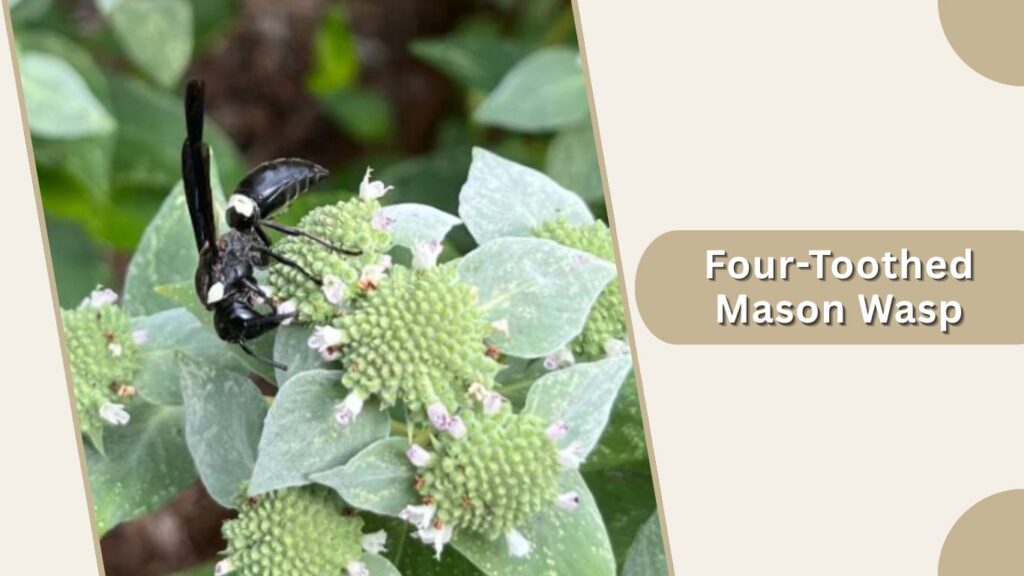
The Four-Toothed Mason Wasp is a solitary wasp species known for building nests in small cavities using mud. It is commonly found in gardens, forests, and around wooden structures. These wasps are beneficial insects because they help control caterpillar and beetle populations.
Identification
- Scientific name: Monobia quadridens
- Mostly black body with ivory or white markings
- Thick-bodied appearance compared to many mud daubers
- Females have four noticeable tooth-like projections on the clypeus
- Wings are dark and slightly smoky
- Adults usually range from 0.5 to 0.75 inches long
- Often nests in hollow stems, wood holes, or abandoned insect tunnels
Habitat and Distribution
Four-Toothed Mason Wasps are commonly distributed throughout eastern North America. They prefer wooded habitats, gardens, orchards, and areas with natural nesting cavities. These wasps are often seen near fences, dead wood, sheds, and outdoor structures.
Behavior and Diet
Females hunt caterpillars and beetle larvae to feed their young. They create mud partitions inside narrow cavities and store prey within each chamber. Adult wasps feed mainly on nectar and are generally non-aggressive toward humans.
Lifecycle
The female prepares a nesting cavity and divides it into chambers using mud walls. An egg is laid in each section alongside paralyzed prey for the developing larva. After feeding and pupating inside the nest, the adult wasp emerges during the warmer months.
5. Metallic Blue Mud Dauber
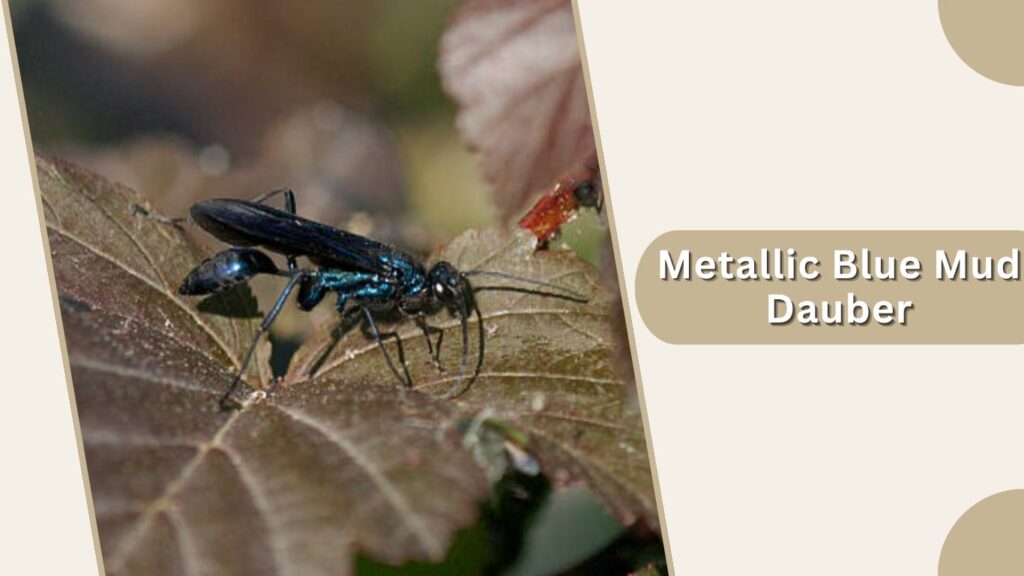
The Metallic Blue Mud Dauber is a shiny solitary wasp admired for its deep metallic blue coloration. It is commonly found around gardens, wooded areas, and buildings where it searches for spiders and nesting sites. This species is considered beneficial because it helps reduce spider populations naturally.
Identification
- Scientific name: Chalybion californicum
- Metallic blue or blue-black body
- Smooth and glossy appearance
- Long slender waist connecting the abdomen and thorax
- Dark wings with a bluish reflection
- Adults typically measure between 0.5 and 1 inch long
- Often seen around old mud nests and sheltered structures
Habitat and Distribution
Metallic Blue Mud Daubers are widely distributed throughout North America and parts of Central America. They thrive in warm climates and are commonly found near human structures, gardens, forests, and open fields. Typical nesting areas include sheds, garages, attics, and under roof eaves.
Behavior and Diet
These wasps are solitary hunters that primarily prey on spiders. Females frequently reuse abandoned mud nests created by other wasp species instead of building completely new nests. Adults feed on flower nectar and are generally calm and non-aggressive around humans.
Lifecycle
The female fills nesting chambers with paralyzed spiders before laying an egg inside. The larva consumes the stored prey as it develops and later forms a pupa within the nest. Adult wasps emerge after metamorphosis and continue the cycle during warm weather conditions.
6. Yellow-Legged Mud Dauber
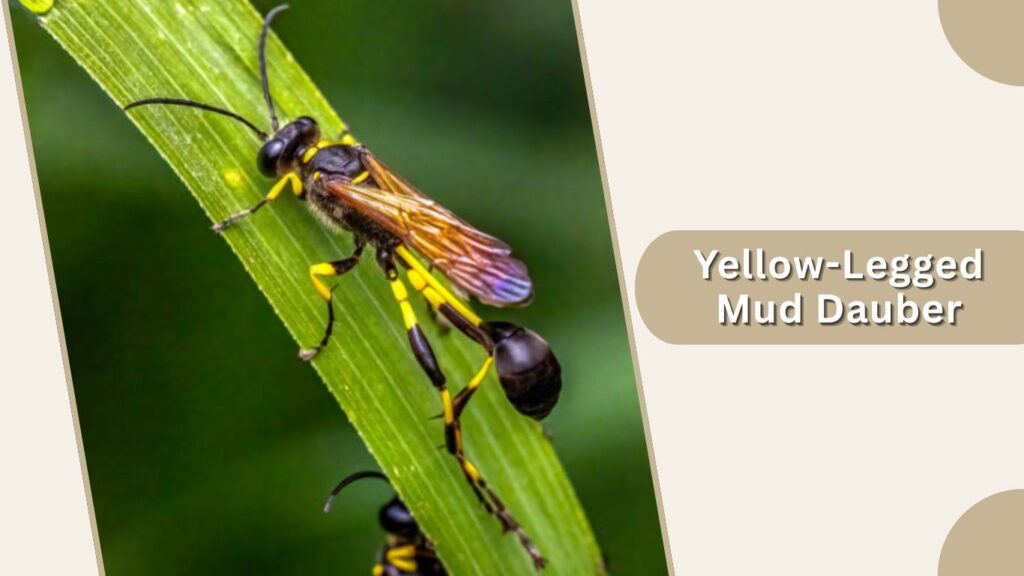
The Yellow-Legged Mud Dauber is a slender solitary wasp recognized for its long yellow legs and narrow waist. It is commonly seen around buildings, gardens, and wooded areas where it builds mud nests. This species is generally harmless to humans and plays an important role in controlling spider populations.
Identification
- Scientific name: Sceliphron madraspatanum
- Black body with yellow markings
- Distinctively long yellow legs
- Thin thread-like waist
- Wings are dark and semi-transparent
- Adults usually grow between 0.75 and 1 inch long
- Builds mud nests attached to walls, ceilings, and sheltered surfaces
Habitat and Distribution
Yellow-Legged Mud Daubers are commonly found in tropical and subtropical regions across Asia, Africa, and parts of the Pacific. They prefer warm habitats near water sources and areas with soft mud. Common nesting sites include homes, barns, bridges, and outdoor structures.
Behavior and Diet
These wasps are solitary hunters that mainly capture spiders for their larvae. Females gather mud to construct nests made of multiple chambers. Adult wasps feed mostly on nectar and are usually peaceful unless directly threatened.
Lifecycle
The female creates mud cells and stocks each chamber with paralyzed spiders before laying an egg. The larva feeds on the stored prey and develops inside the sealed nest chamber. After pupation, the adult wasp emerges and begins searching for mates and nesting locations.
7. Pipe Organ Wasp
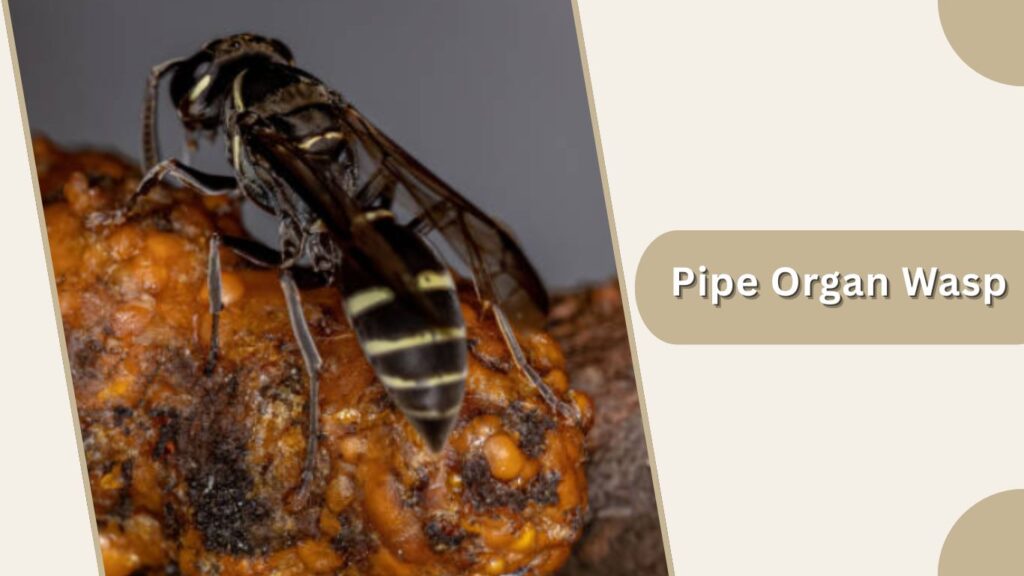
The Pipe Organ Wasp is a solitary mud-building wasp famous for creating long cylindrical nests that resemble organ pipes. These wasps are usually calm and spend much of their time collecting mud and hunting spiders. They are considered beneficial insects because they help control spider populations naturally.
Identification
- Scientific name: Trypoxylon politum
- Slender black body with a very narrow waist
- Legs often appear yellowish or orange
- Dark smoky wings
- Smooth body with shiny texture
- Adults commonly measure between 0.75 and 1.25 inches long
- Builds long parallel mud tubes attached to walls and structures
Habitat and Distribution
Pipe Organ Wasps are commonly found in the southeastern and eastern United States. They prefer warm habitats with easy access to mud, water, and sheltered nesting areas. Typical nesting sites include barns, bridges, garages, porch ceilings, and rocky surfaces.
Behavior and Diet
These wasps primarily hunt spiders, which are stored inside nest chambers for developing larvae. Females carefully build mud tubes and seal each section after placing prey and eggs inside. Adult wasps feed mainly on flower nectar and rarely show aggressive behavior toward humans.
Lifecycle
The lifecycle begins when the female constructs tubular mud nests and fills each chamber with paralyzed spiders. Eggs hatch into larvae that feed on the stored prey before pupating inside the nest. Adult wasps emerge during warm seasons and continue the reproductive cycle.
8. Steel-Blue Cricket Hunter
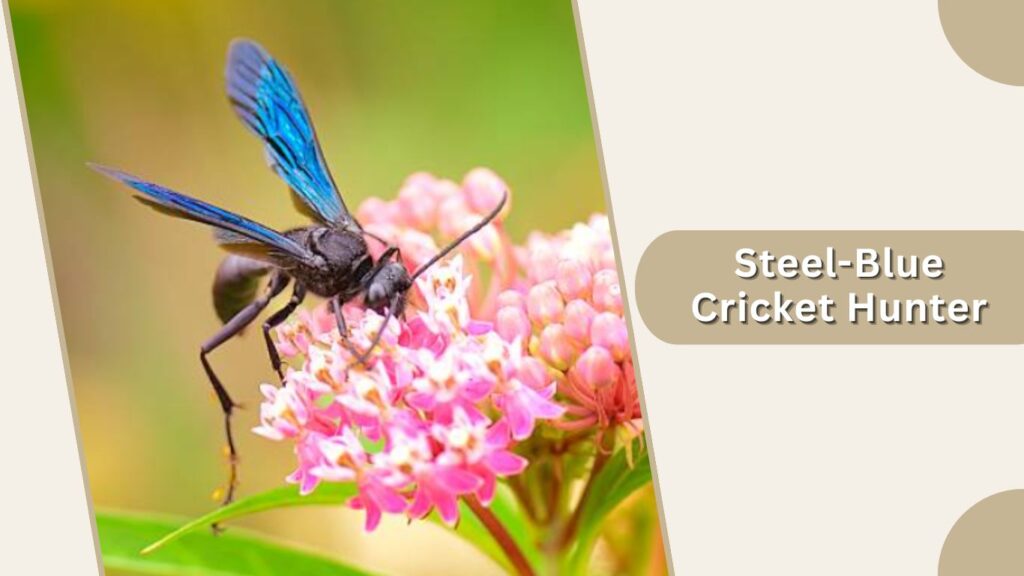
The Steel-Blue Cricket Hunter is a solitary wasp known for its metallic blue coloration and hunting behavior. Unlike many mud daubers that primarily hunt spiders, this species often captures crickets and similar insects. It is commonly found in warm outdoor environments and around human structures.
Identification
- Scientific name: Isodontia mexicana
- Metallic steel-blue or dark blue body
- Slender elongated shape
- Narrow waist between the thorax and abdomen
- Wings are dark and glossy
- Adults usually measure between 0.5 and 1 inch long
- Often nests in hollow stems, wall crevices, and small cavities
Habitat and Distribution
Steel-Blue Cricket Hunters are widely distributed across North America and are especially common in warm regions. They prefer gardens, meadows, forests, and suburban areas with access to nesting cavities. These wasps frequently use cracks, vents, hollow plant stems, and abandoned insect tunnels for nesting.
Behavior and Diet
Females hunt crickets, katydids, and grasshoppers to feed their developing larvae. Unlike true mud daubers, they often use grass and plant material within their nests. Adult wasps feed mainly on nectar and are generally non-aggressive toward humans.
Lifecycle
The female prepares a nesting cavity and fills it with paralyzed insects before laying an egg inside. The larva feeds on the stored prey and develops safely within the nest chamber. After pupation, the adult wasp emerges and begins the cycle again during warm seasons.
next one
Show moreShow less
9. Red Mud Dauber
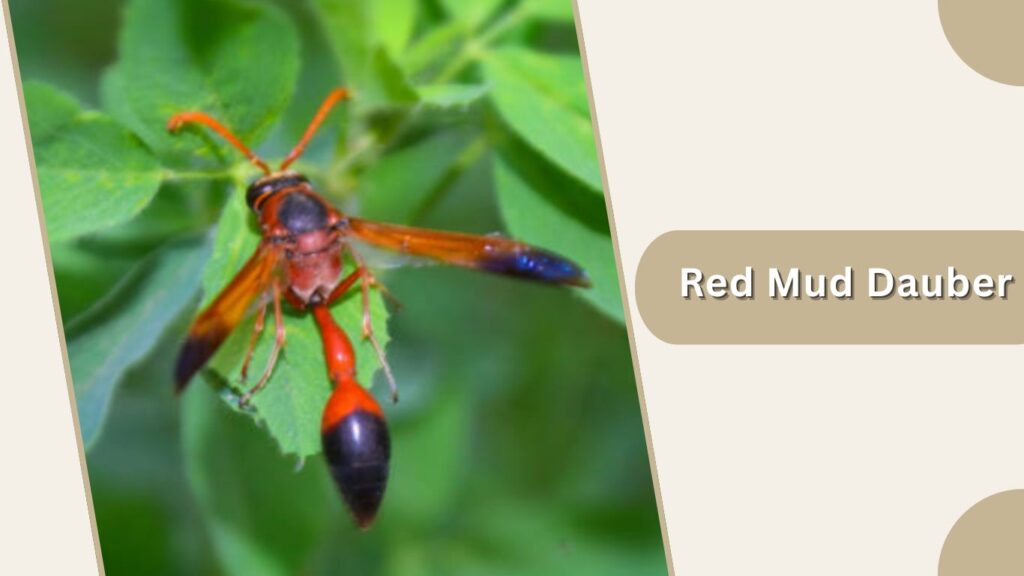
The Red Mud Dauber is a solitary wasp species recognized for its reddish body coloration and mud-building behavior. These wasps are commonly seen in warm regions where they construct nests on sheltered surfaces. They are beneficial predators that help reduce spider populations in natural and residential environments.
Identification
- Scientific name: Tachytes species commonly associated with red mud daubers
- Reddish-brown or rust-colored body
- Slender body with a narrow waist
- Long legs adapted for hunting and carrying prey
- Wings are smoky or dark transparent
- Adults generally range from 0.5 to 1 inch long
- Builds mud nests attached to walls, rocks, and structures
Habitat and Distribution
Red Mud Daubers are mainly found in warm and tropical regions, including parts of North America, Central America, and South America. They prefer habitats with available mud sources, open spaces, and sheltered nesting locations. Common nesting areas include barns, sheds, bridges, and under roof overhangs.
Behavior and Diet
These wasps are solitary hunters that mainly prey on spiders and other small insects. Females gather mud to build nests divided into several chambers for their offspring. Adult wasps feed on nectar from flowers and are usually peaceful around humans.
Lifecycle
The female constructs a mud nest and fills each chamber with paralyzed prey before laying an egg. The larva feeds on the stored food supply and develops inside the sealed chamber. After pupation, the adult wasp emerges and begins searching for food, mates, and nesting sites.
10. Asian Mud Dauber
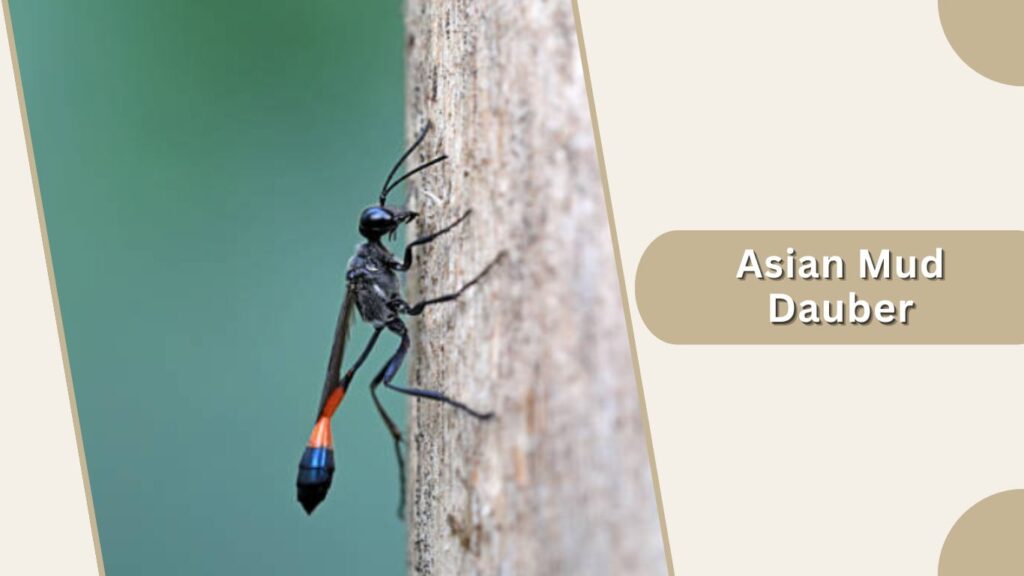
The Asian Mud Dauber is a solitary wasp species known for building mud nests in sheltered areas. It is commonly found in tropical and subtropical regions where warm temperatures and moisture support nesting activity. These wasps are beneficial predators that help control spider and insect populations.
Identification
- Scientific name: Sceliphron curvatum
- Black body with yellow markings on the legs and abdomen
- Long slender waist connecting the thorax and abdomen
- Wings are dark and slightly transparent
- Legs are elongated and yellowish in color
- Adults typically measure between 0.6 and 1 inch long
- Builds mud nests consisting of several connected chambers
Habitat and Distribution
Asian Mud Daubers are native to Asia but have spread into parts of Europe and other regions. They prefer warm environments near water and mud sources. Common nesting sites include walls, ceilings, garages, barns, bridges, and abandoned buildings.
Behavior and Diet
These wasps are solitary and mainly hunt spiders to provide food for their larvae. Females collect mud to construct protective nest chambers in sheltered places. Adult wasps feed primarily on nectar and are generally non-aggressive unless disturbed directly.
Lifecycle
The female creates mud chambers and fills each one with paralyzed spiders before laying an egg inside. The larva feeds on the stored prey and develops safely within the sealed nest. After pupation, the adult wasp emerges and begins the reproductive cycle during warm seasons.
11. Tropical Mud Dauber
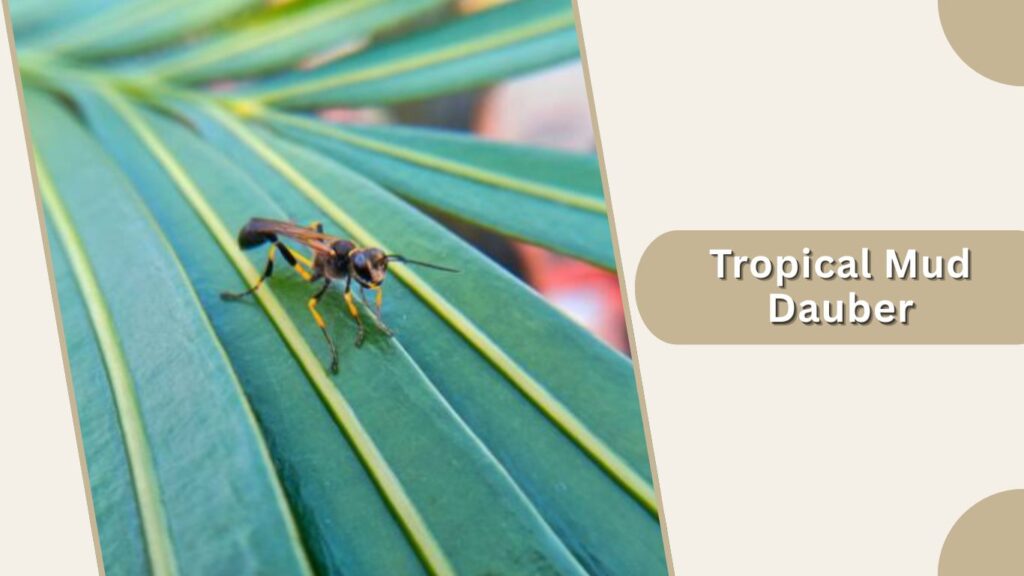
The Tropical Mud Dauber is a solitary wasp commonly found in warm and humid climates. It is known for building mud nests on walls, ceilings, and sheltered outdoor structures. These wasps are beneficial because they prey on spiders and other small insects that may become pests.
Identification
- Scientific name: Sceliphron fistularium
- Slender black body with yellow markings
- Very narrow thread-like waist
- Long yellowish legs
- Dark translucent wings
- Adults usually measure between 0.75 and 1 inch long
- Creates tube-shaped mud nests attached to protected surfaces
Habitat and Distribution
Tropical Mud Daubers are widely distributed across tropical and subtropical regions, including parts of Central America, South America, Asia, and the Caribbean. They prefer warm habitats near water and mud sources. Common nesting locations include barns, porches, garages, bridges, and abandoned structures.
Behavior and Diet
These wasps are solitary hunters that mainly capture spiders to feed their larvae. Females gather wet mud to construct nests made of multiple chambers. Adult wasps feed mostly on flower nectar and are generally calm around humans.
Lifecycle
The female builds mud nest chambers and fills them with paralyzed spiders before laying eggs inside. The larvae consume the stored prey as they grow and later pupate within the sealed nest. Adult wasps emerge after metamorphosis and continue the cycle during favorable weather conditions.
12. Common Thread-Waisted Wasp
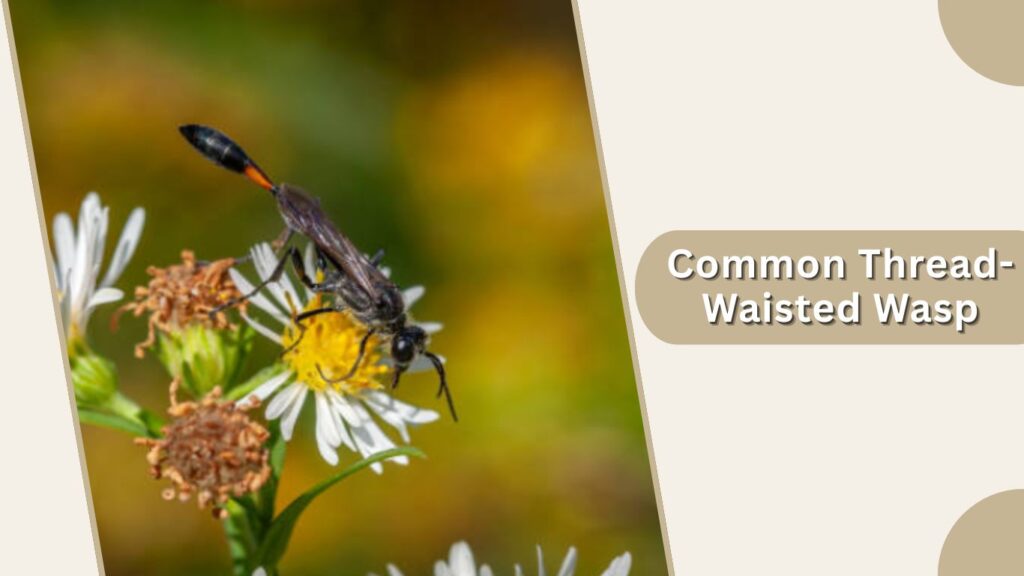
The Common Thread-Waisted Wasp is a slender solitary wasp recognized for its extremely narrow waist and active hunting behavior. It is commonly found in gardens, open woodlands, and around buildings where it searches for prey and nesting sites. These wasps are beneficial insects that help control caterpillars and spiders.
Identification
- Scientific name: Ammophila procera
- Black body with a long thread-like waist
- Abdomen often shows reddish or orange coloration
- Long legs adapted for digging and hunting
- Wings are smoky and transparent
- Adults usually measure between 0.75 and 1.5 inches long
- Frequently seen flying low near soil or vegetation
Habitat and Distribution
Common Thread-Waisted Wasps are widely distributed across North America and other temperate regions. They prefer sandy soils, gardens, meadows, forests, and open fields where nesting is easier. These wasps often build nests in loose soil or use sheltered natural cavities.
Behavior and Diet
Females hunt caterpillars and spiders to feed their developing larvae. They are solitary insects and do not form colonies like social wasps. Adult wasps feed mainly on nectar and are generally peaceful unless directly threatened.
Lifecycle
The female digs a nest or prepares a cavity before placing paralyzed prey inside for the larva. An egg is laid on the stored food source, and the larva feeds until it is ready to pupate. Adult wasps emerge after metamorphosis and continue the cycle during warm seasons.
13. Mexican Mud Dauber
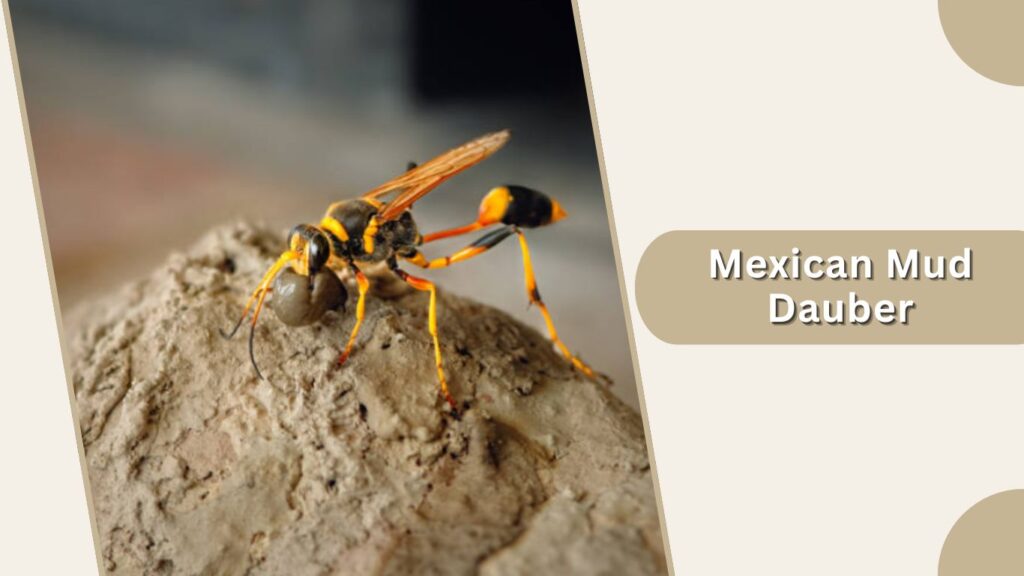
The Mexican Mud Dauber is a solitary wasp species commonly found in warm climates where mud and sheltered nesting sites are available. It is known for its slender body and skillful mud nest construction. These wasps are beneficial predators that help reduce spider populations in natural and residential areas.
Identification
- Scientific name: Sceliphron mexicanum
- Black body with yellow markings on the legs and abdomen
- Long narrow waist connecting the body sections
- Legs are elongated and often yellowish
- Wings appear dark and semi-transparent
- Adults usually measure between 0.75 and 1 inch long
- Builds tube-like mud nests attached to walls and ceilings
Habitat and Distribution
Mexican Mud Daubers are commonly found in Mexico, Central America, and parts of the southern United States. They prefer warm habitats with access to water, mud, and sheltered nesting areas. Common nesting sites include barns, garages, bridges, porches, and abandoned buildings.
Behavior and Diet
These wasps are solitary hunters that mainly prey on spiders for their developing larvae. Females gather mud to create multi-chambered nests in protected locations. Adult wasps feed mostly on nectar and are usually calm and non-aggressive toward humans.
Lifecycle
The female constructs mud nest chambers and fills each section with paralyzed spiders before laying an egg. The larva feeds on the stored prey and develops inside the sealed chamber. After pupation, the adult wasp emerges and begins searching for food, mates, and nesting locations.
14. Golden Mud Dauber
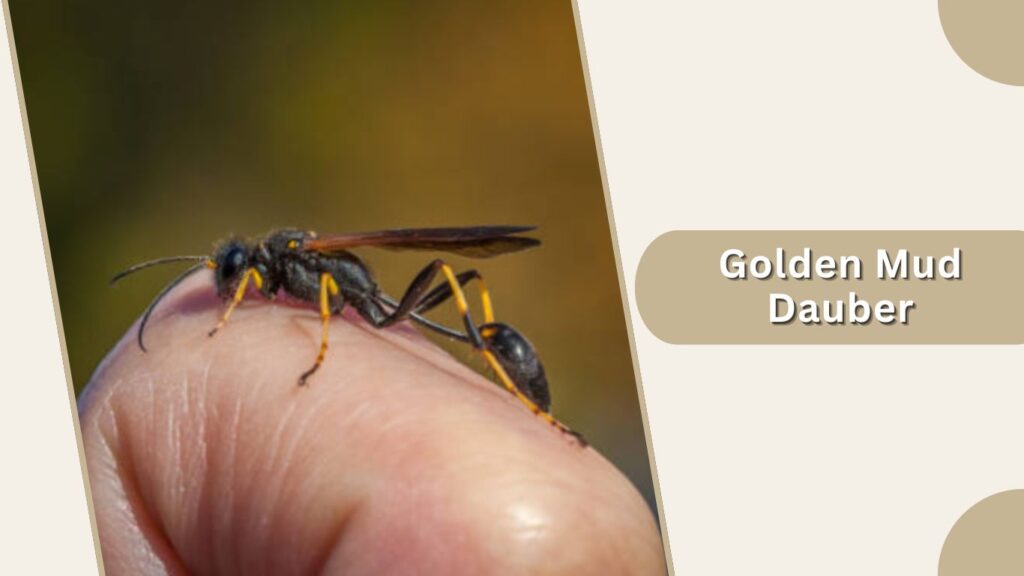
The Golden Mud Dauber is a solitary wasp admired for its golden-yellow markings and slender appearance. It is commonly found in warm environments where it builds mud nests in protected locations. Like many mud daubers, this species is beneficial because it helps control spider populations naturally.
Identification
- Scientific name: Sceliphron species
- Black body with golden-yellow markings
- Long thin thread-like waist
- Legs are elongated and yellowish
- Wings are dark with a slight amber tint
- Adults usually grow between 0.75 and 1 inch long
- Builds mud nests made of several connected chambers
Habitat and Distribution
Golden Mud Daubers are typically found in tropical and subtropical regions with warm temperatures and access to wet soil. They prefer gardens, forests, barns, garages, bridges, and sheltered outdoor structures. These wasps often choose quiet locations protected from rain and strong wind.
Behavior and Diet
These wasps are solitary hunters that mainly capture spiders to feed their larvae. Females gather moist mud to construct nests and carefully stock each chamber with prey. Adult wasps feed mostly on nectar and are generally non-aggressive around humans.
Lifecycle
The female creates mud chambers and places paralyzed spiders inside before laying an egg. The larva feeds on the stored prey while developing safely within the sealed nest. After pupation, the adult wasp emerges and continues the reproductive cycle during warm seasons.
15. Dark Blue Mud Dauber
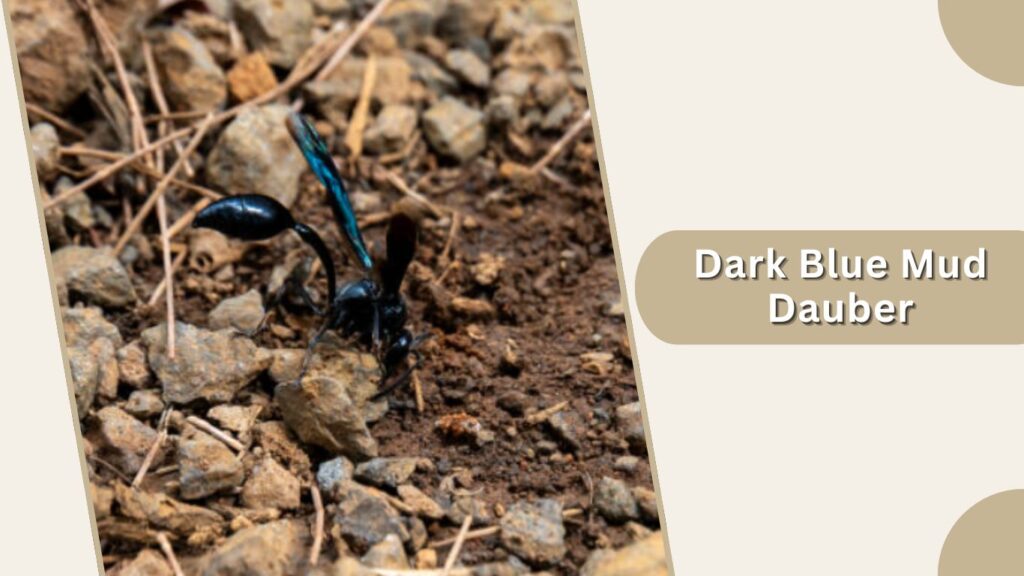
The Dark Blue Mud Dauber is a solitary wasp species recognized for its deep metallic blue coloration and slender body shape. It is commonly found near buildings, gardens, and wooded areas where it searches for spiders and nesting locations. These wasps are beneficial insects that help naturally control spider populations.
Identification
- Scientific name: Chalybion species
- Dark metallic blue or blue-black body
- Smooth and glossy appearance
- Long narrow waist connecting the abdomen and thorax
- Wings are dark with a bluish shine
- Adults usually measure between 0.5 and 1 inch long
- Often seen around abandoned mud nests and sheltered structures
Habitat and Distribution
Dark Blue Mud Daubers are commonly distributed across warm and temperate regions of North America and nearby tropical areas. They prefer habitats with available nesting sites such as barns, sheds, attics, garages, and porch ceilings. These wasps are also frequently found in gardens and forest edges.
Behavior and Diet
These wasps mainly hunt spiders, which are used as food for developing larvae. Females often reuse old mud nests built by other mud dauber species instead of creating completely new ones. Adult wasps feed primarily on nectar and are generally peaceful around humans.
Lifecycle
The female places paralyzed spiders into nesting chambers before laying an egg inside. The larva feeds on the stored prey and develops safely within the sealed nest chamber. After pupation, the adult wasp emerges and continues the reproductive cycle during warm weather conditions.
16. Long-Waisted Mud Dauber
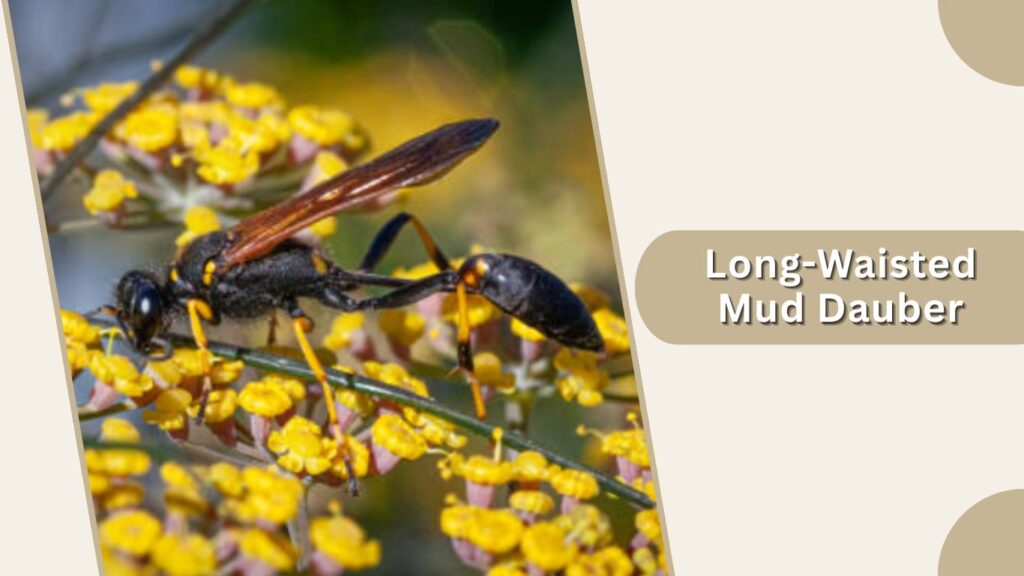
The Long-Waisted Mud Dauber is a slender solitary wasp known for its extremely elongated waist and graceful appearance. It is commonly seen around gardens, forests, and buildings where it constructs mud nests in sheltered areas. These wasps are beneficial predators that help control spider populations naturally.
Identification
- Scientific name: Sceliphron species
- Black body with yellow or orange markings
- Extremely long and thin thread-like waist
- Long dangling legs during flight
- Wings are dark and semi-transparent
- Adults generally range from 0.75 to 1.25 inches long
- Builds mud nests attached to walls, ceilings, and rock surfaces
Habitat and Distribution
Long-Waisted Mud Daubers are found in warm and temperate regions across North America, Asia, and tropical environments. They prefer habitats with access to water, mud, and protected nesting sites. Common nesting locations include barns, bridges, garages, attics, and porch roofs.
Behavior and Diet
These wasps are solitary hunters that mainly prey on spiders for their developing larvae. Females gather wet mud to construct multi-chambered nests in sheltered places. Adult wasps feed mostly on nectar and are usually calm and non-aggressive toward humans.
Lifecycle
The female builds mud chambers and fills each one with paralyzed spiders before laying an egg inside. The larva feeds on the stored prey while developing safely within the sealed nest. After pupation, the adult wasp emerges and continues the reproductive cycle during warm seasons.
17. Brown Mud Dauber
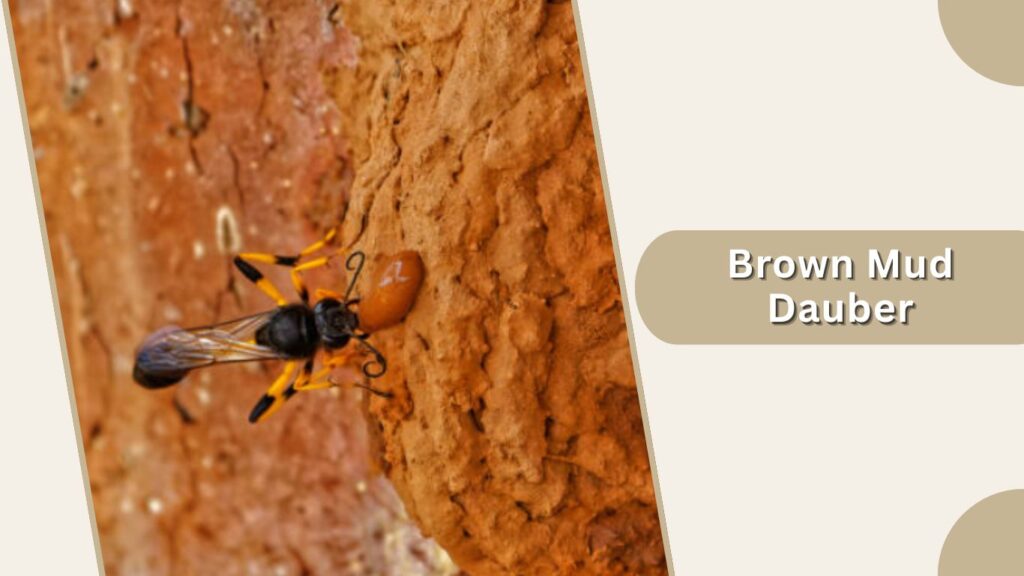
The Brown Mud Dauber is a solitary wasp species recognized for its brownish body coloration and mud nest construction. It is commonly found in warm environments where sheltered nesting spaces and soft mud are available. These wasps are beneficial predators that help reduce spider populations in natural and residential areas.
Identification
- Scientific name: Sceliphron species
- Brown or reddish-brown body coloration
- Slender body with a narrow thread-like waist
- Long legs adapted for carrying mud and prey
- Wings are smoky and transparent
- Adults usually measure between 0.75 and 1 inch long
- Builds tube-shaped mud nests on protected surfaces
Habitat and Distribution
Brown Mud Daubers are commonly found in tropical and subtropical regions across parts of North America, Central America, and Asia. They prefer habitats near water sources, gardens, forests, and human structures. Common nesting sites include barns, garages, bridges, sheds, and porch ceilings.
Behavior and Diet
These wasps are solitary hunters that mainly prey on spiders for their larvae. Females gather mud to construct nests made of several chambers in sheltered locations. Adult wasps feed mostly on nectar and are generally calm around humans unless disturbed.
Lifecycle
The female builds mud chambers and stores paralyzed spiders inside before laying an egg in each section. The larva feeds on the stored prey and develops safely within the sealed chamber. After pupation, the adult wasp emerges and continues the reproductive cycle during warm weather.
18. Giant Mud Dauber
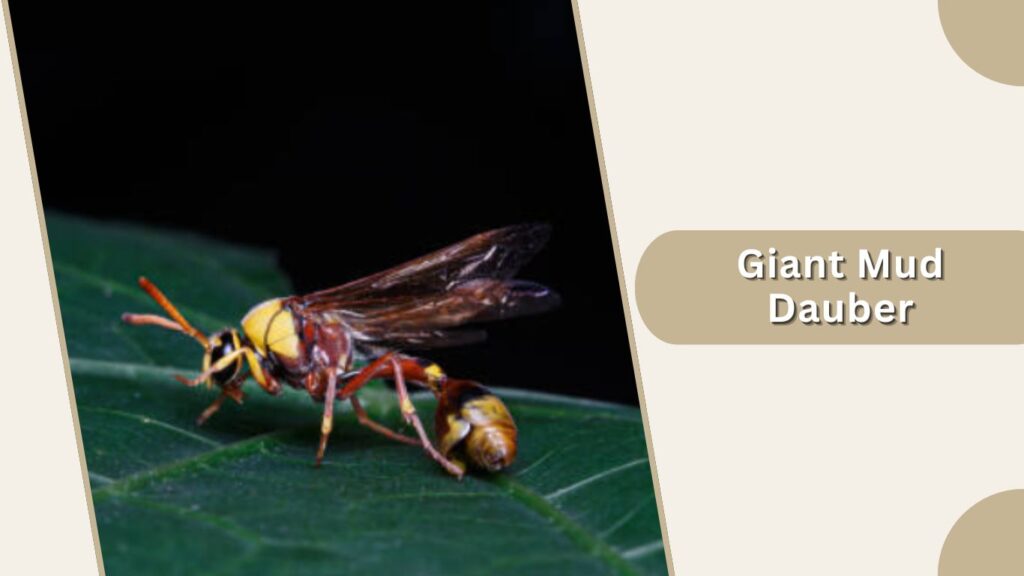
The Giant Mud Dauber is a large solitary wasp known for its impressive size and elongated body shape. It is commonly found in warm regions where it builds mud nests in protected locations. Despite its intimidating appearance, this wasp is generally non-aggressive and beneficial for controlling spiders and other insects.
Identification
- Scientific name: Sphex pensylvanicus and related large mud-dauber-like species
- Large black or dark metallic body
- Long narrow thread-like waist
- Wings are dark blue or smoky black
- Legs are long and sturdy
- Adults usually measure between 1 and 1.5 inches long
- Often seen flying slowly around gardens and buildings
Habitat and Distribution
Giant Mud Daubers are widely distributed across North America and other warm temperate regions. They prefer open habitats such as gardens, meadows, forests, and areas near buildings. Common nesting sites include barns, walls, wood piles, garages, and sheltered outdoor structures.
Behavior and Diet
These wasps are solitary hunters that prey on spiders, crickets, katydids, and other large insects to feed their larvae. Females build nests in cavities or sheltered spaces and stock them with paralyzed prey. Adult wasps feed mainly on nectar and are usually peaceful around humans.
Lifecycle
The female prepares a nesting chamber and places several paralyzed insects inside before laying an egg. The larva feeds on the stored prey while developing within the protected nest. After pupation, the adult wasp emerges and begins searching for mates and nesting sites during warm seasons.
19. Stripe-Waisted Mud Dauber
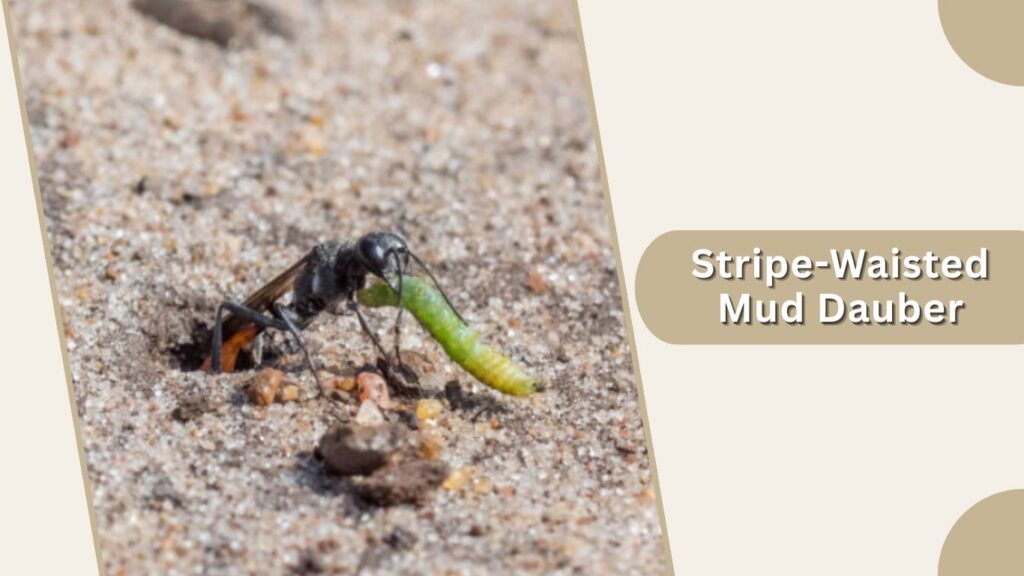
The Stripe-Waisted Mud Dauber is a solitary wasp recognized for the striped patterns on its abdomen and its narrow waist. It is commonly found in warm habitats where it builds mud nests in sheltered areas. These wasps are beneficial predators that help control spider populations around homes and gardens.
Identification
- Scientific name: Sceliphron species
- Black body with yellow or pale striped markings
- Very thin thread-like waist
- Long yellowish legs
- Wings are dark and semi-transparent
- Adults usually grow between 0.75 and 1 inch long
- Builds mud nests made of several connected chambers
Habitat and Distribution
Stripe-Waisted Mud Daubers are commonly found in tropical and subtropical regions across North America, Asia, and Central America. They prefer areas with access to mud, water, and protected nesting surfaces. Common nesting locations include garages, barns, bridges, porch ceilings, and abandoned buildings.
Behavior and Diet
These wasps are solitary hunters that mainly capture spiders for their developing larvae. Females gather wet mud to create nests and carefully seal each chamber after placing prey inside. Adult wasps feed primarily on nectar and are generally calm and non-aggressive toward humans.
Lifecycle
The female constructs mud chambers and fills each one with paralyzed spiders before laying an egg inside. The larva feeds on the stored prey and develops safely within the sealed nest chamber. After pupation, the adult wasp emerges and continues the reproductive cycle during warm weather conditions.
20. Black Thread-Waisted Wasp
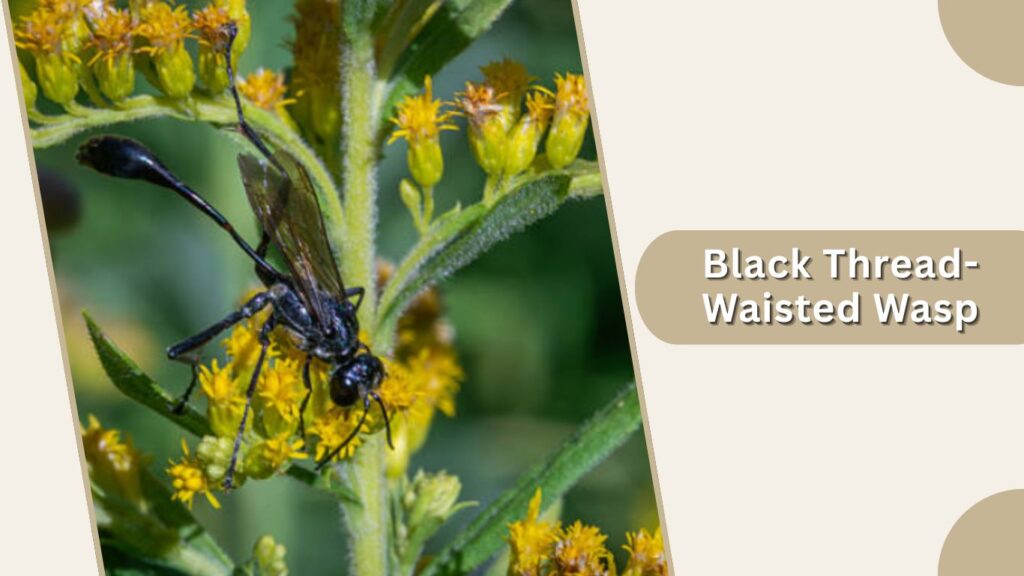
The Black Thread-Waisted Wasp is a slender solitary wasp known for its long narrow waist and glossy black body. It is commonly seen in gardens, sandy areas, and open woodlands where it hunts insects and builds nests. These wasps are beneficial predators that help control caterpillar and insect populations.
Identification
- Scientific name: Ammophila nigricans and related species
- Entire body is glossy black
- Extremely thin thread-like waist
- Long legs adapted for digging and hunting
- Wings are dark and slightly smoky
- Adults usually measure between 0.75 and 1.5 inches long
- Often seen flying close to the ground while searching for prey
Habitat and Distribution
Black Thread-Waisted Wasps are widely distributed across North America and other temperate regions. They prefer sandy soils, gardens, open forests, meadows, and grasslands where nesting is easier. These wasps commonly create nests in loose soil or sheltered natural cavities.
Behavior and Diet
Females hunt caterpillars and other soft-bodied insects to feed their larvae. They are solitary wasps and do not form colonies like social wasps. Adult wasps feed mainly on nectar from flowers and are generally calm around humans unless directly threatened.
Lifecycle
The female digs a nest in the ground and places paralyzed prey inside before laying an egg. The larva feeds on the stored food supply while developing safely within the nest chamber. After pupation, the adult wasp emerges and continues the reproductive cycle during warm seasons.
21. Slender Mud Dauber
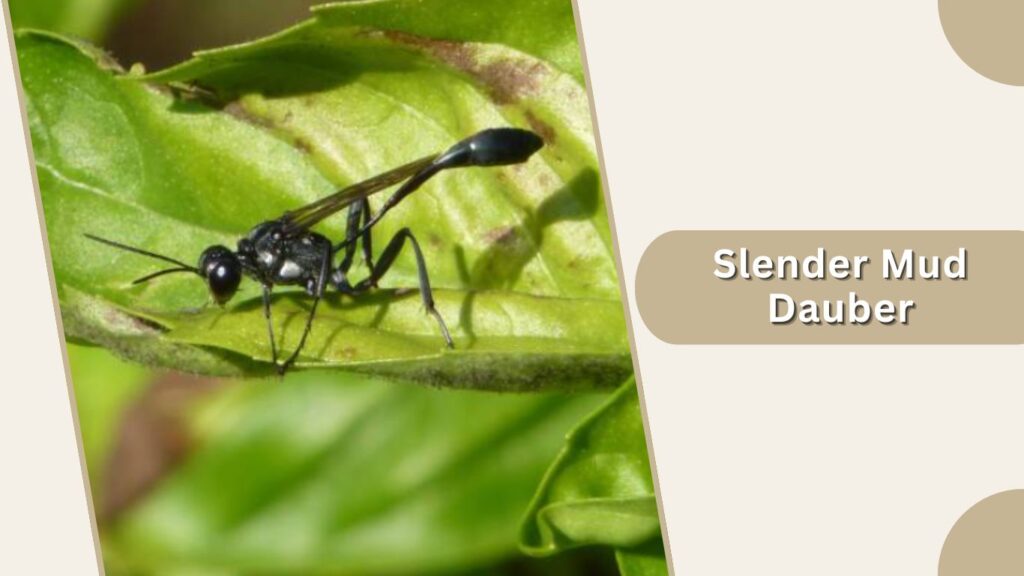
The Slender Mud Dauber is a graceful solitary wasp recognized for its thin body and elongated waist. It is commonly found around gardens, forests, and buildings where it builds mud nests in sheltered locations. These wasps are beneficial insects because they help control spider populations naturally.
Identification
- Scientific name: Sceliphron species
- Very slender black body with yellow markings
- Long thread-like waist connecting the abdomen and thorax
- Legs are long and often yellowish
- Wings are dark and semi-transparent
- Adults usually range from 0.75 to 1 inch long
- Builds mud nests attached to walls, ceilings, and rocky surfaces
Habitat and Distribution
Slender Mud Daubers are widely distributed across tropical, subtropical, and temperate regions. They prefer habitats with access to water, mud, and protected nesting sites. Common nesting areas include barns, garages, bridges, porch roofs, and abandoned buildings.
Behavior and Diet
These wasps are solitary hunters that mainly prey on spiders for their developing larvae. Females collect wet mud to create nests divided into several chambers. Adult wasps feed primarily on nectar and are usually peaceful around humans unless directly disturbed.
Lifecycle
The female constructs mud chambers and fills each one with paralyzed spiders before laying an egg inside. The larva feeds on the stored prey and develops safely within the sealed nest chamber. After pupation, the adult wasp emerges and continues the reproductive cycle during warm seasons.
22. Scarlet Mud Dauber
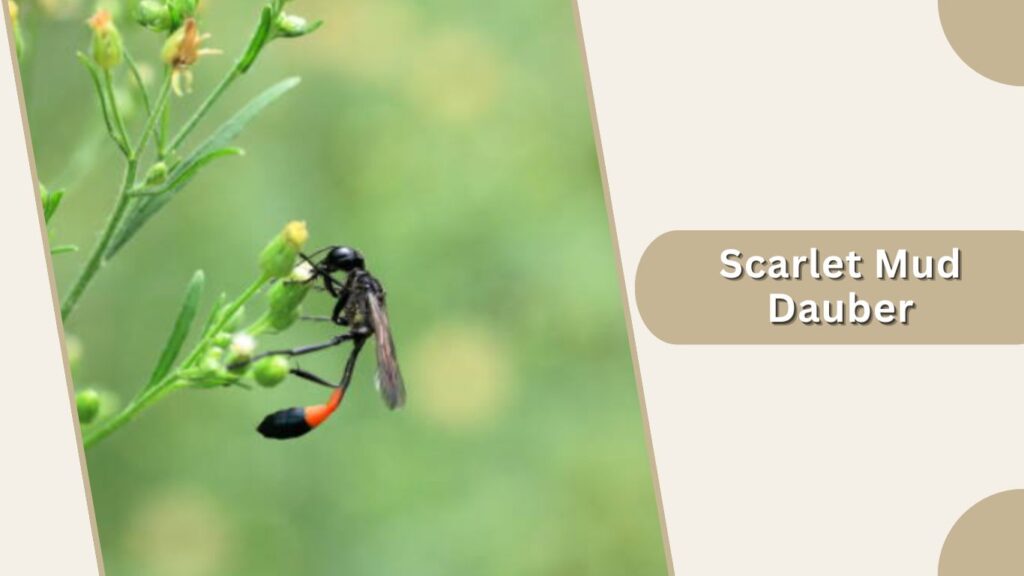
The Scarlet Mud Dauber is a striking solitary wasp known for its reddish body coloration and slender build. It is commonly found in warm regions where it constructs mud nests on protected surfaces. These wasps are beneficial predators that help reduce spider populations in gardens and around buildings.
Identification
- Scientific name: Sceliphron species associated with red-bodied forms
- Bright reddish or scarlet-colored body
- Long narrow thread-like waist
- Legs are elongated and adapted for carrying mud
- Wings are smoky and slightly transparent
- Adults usually measure between 0.75 and 1 inch long
- Builds tube-shaped mud nests in sheltered areas
Habitat and Distribution
Scarlet Mud Daubers are commonly found in tropical and subtropical regions with warm temperatures and high humidity. They prefer habitats near water sources, forests, gardens, barns, and human structures. Common nesting sites include walls, ceilings, bridges, sheds, and porch roofs.
Behavior and Diet
These wasps are solitary hunters that mainly capture spiders for their developing larvae. Females gather wet mud to create nests divided into several chambers. Adult wasps feed mostly on nectar and are generally calm and non-aggressive toward humans.
Lifecycle
The female builds mud chambers and fills them with paralyzed spiders before laying an egg inside each section. The larva feeds on the stored prey while developing safely within the sealed nest. After pupation, the adult wasp emerges and continues the reproductive cycle during warm weather conditions.
23. Sand Mud Dauber
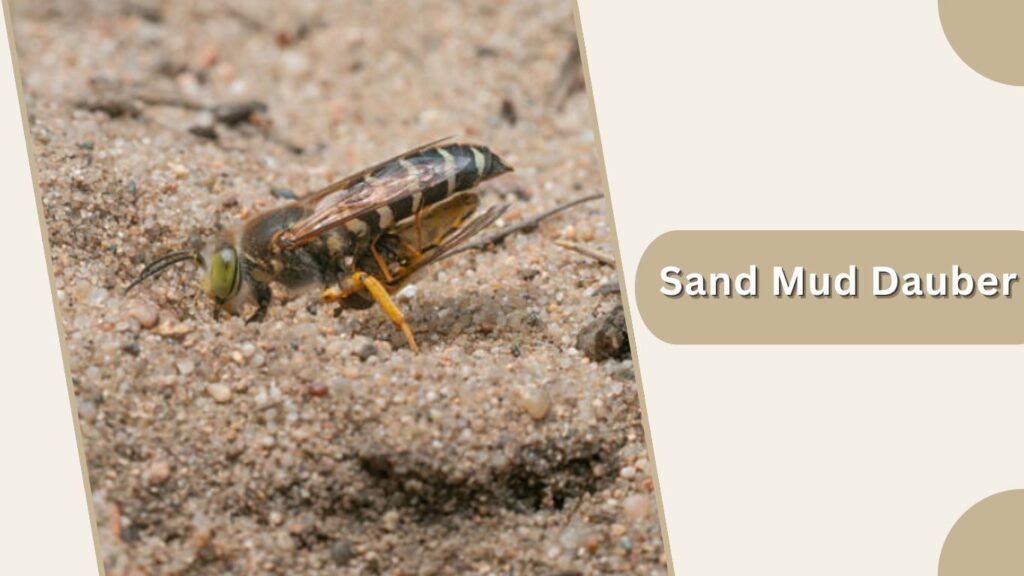
The Sand Mud Dauber is a solitary wasp species commonly found in dry and sandy habitats. It is known for building mud nests in protected locations and hunting spiders for its larvae. These wasps are beneficial insects that help naturally control spider and small insect populations.
Identification
- Scientific name: Sceliphron species found in sandy environments
- Slender black or dark brown body
- Narrow thread-like waist
- Long legs adapted for carrying mud and prey
- Wings are smoky and semi-transparent
- Adults usually measure between 0.75 and 1 inch long
- Builds mud nests attached to rocks, walls, and sheltered structures
Habitat and Distribution
Sand Mud Daubers are commonly found in warm regions with sandy soil, deserts, coastal areas, and open woodlands. They prefer habitats near water and mud sources where nesting materials are easily available. Common nesting sites include sheds, barns, bridges, garages, and rocky surfaces.
Behavior and Diet
These wasps are solitary hunters that mainly prey on spiders to feed their developing larvae. Females gather wet mud and construct nests made of several chambers in sheltered places. Adult wasps feed mostly on nectar and are generally calm around humans.
Lifecycle
The female creates mud chambers and places paralyzed spiders inside before laying an egg in each section. The larva feeds on the stored prey while developing within the sealed nest chamber. After pupation, the adult wasp emerges and begins the reproductive cycle during warm seasons.
24. Forest Mud Dauber
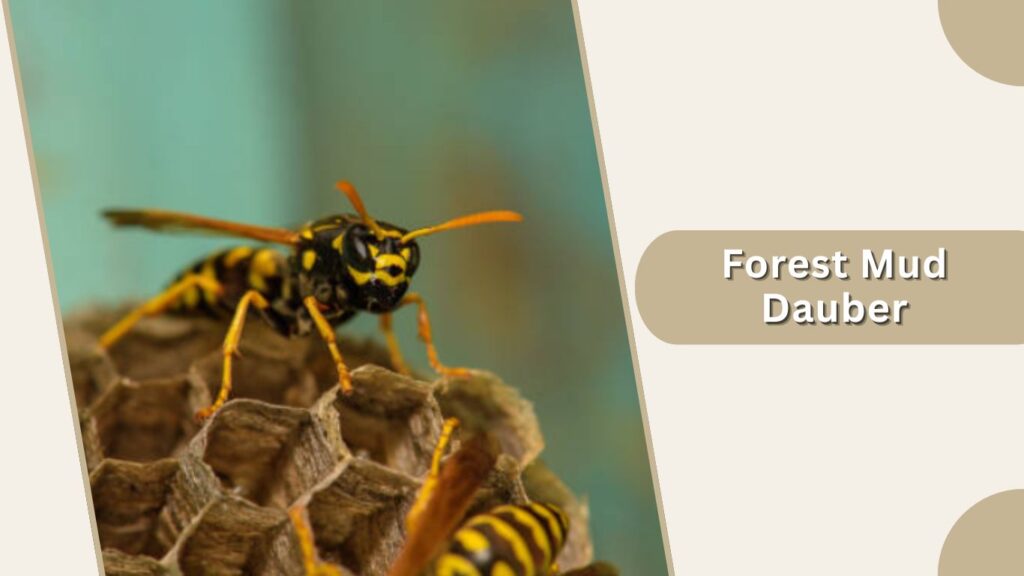
The Forest Mud Dauber is a solitary wasp species commonly associated with wooded habitats and natural landscapes. It is known for building mud nests in sheltered areas and hunting spiders for its developing larvae. These wasps are beneficial predators that help maintain ecological balance in forest environments.
Identification
- Scientific name: Sceliphron species commonly found in forest habitats
- Slender black body with yellow or brown markings
- Long thread-like waist
- Legs are elongated and often yellowish
- Wings are dark and semi-transparent
- Adults usually measure between 0.75 and 1 inch long
- Builds mud nests attached to tree bark, rocks, and structures
Habitat and Distribution
Forest Mud Daubers are commonly found in wooded areas, forests, gardens, and rural landscapes across warm and temperate regions. They prefer habitats with nearby water and mud sources for nest construction. Common nesting sites include hollow trees, cabins, barns, sheds, and rocky surfaces.
Behavior and Diet
These wasps are solitary hunters that mainly capture spiders to feed their larvae. Females collect mud to construct multi-chambered nests in protected locations. Adult wasps feed mostly on nectar and are generally calm and non-aggressive toward humans.
Lifecycle
The female builds mud chambers and stocks each section with paralyzed spiders before laying an egg inside. The larva feeds on the stored prey and develops safely within the sealed chamber. After pupation, the adult wasp emerges and continues the reproductive cycle during favorable weather conditions.
25. Desert Mud Dauber
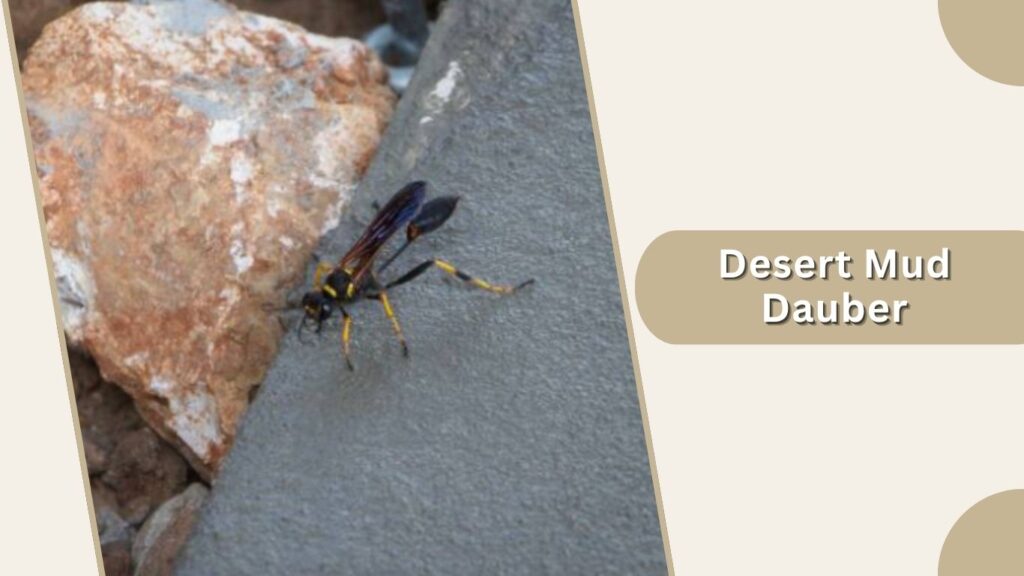
The Desert Mud Dauber is a solitary wasp adapted to hot and dry environments where it builds mud nests in sheltered places. It is commonly found in desert regions, rocky landscapes, and arid habitats. These wasps are beneficial predators that help control spider populations in harsh environments.
Identification
- Scientific name: Sceliphron species adapted to desert habitats
- Slender black or dark brown body
- Long narrow thread-like waist
- Legs are elongated and often pale yellow or orange
- Wings are smoky and semi-transparent
- Adults usually range from 0.75 to 1 inch long
- Builds mud nests on rocks, walls, and shaded structures
Habitat and Distribution
Desert Mud Daubers are commonly found in arid and semi-arid regions across North America, the Middle East, and other warm desert climates. They prefer habitats with access to small water sources and protected nesting sites. Common nesting locations include cliffs, abandoned buildings, barns, bridges, and rocky crevices.
Behavior and Diet
These wasps are solitary hunters that mainly prey on spiders for their developing larvae. Females gather moist mud from limited water sources to build durable nests in sheltered areas. Adult wasps feed mostly on nectar and are generally peaceful around humans unless disturbed.
Lifecycle
The female creates mud nest chambers and fills them with paralyzed spiders before laying an egg inside each section. The larva feeds on the stored prey and develops within the sealed chamber. After pupation, the adult wasp emerges and continues the reproductive cycle during warm desert seasons.
FAQs
Are mud dauber wasps dangerous to humans?
Mud dauber wasps are generally not dangerous and are considered non-aggressive insects. They rarely sting unless they are directly handled or threatened. Unlike social wasps, they do not defend colonies aggressively, making them much less likely to attack people.
What do mud dauber wasps eat?
Adult mud daubers mainly feed on nectar from flowers and water. Their larvae feed on paralyzed spiders or insects placed inside the nest chambers by the female wasp. Different species may target spiders, caterpillars, crickets, or other small insects.
Where do mud dauber wasps build their nests?
Mud daubers usually build nests in sheltered and protected locations. Common nesting sites include garages, barns, bridges, porch ceilings, attics, sheds, walls, and rocky surfaces. They prefer areas close to mud and water sources.
Why are mud daubers considered beneficial?
Mud daubers help naturally control spider and insect populations by hunting them for food. Some species even prey on dangerous spiders such as black widows. Because of this behavior, they are often considered beneficial insects in gardens and around homes.
How can you prevent mud dauber nests around your home?
You can reduce mud dauber nesting by sealing cracks, repairing screens, and removing old nests regularly. Keeping garages, sheds, and porches clean and limiting access to mud sources may also discourage these wasps from building nests near your home.