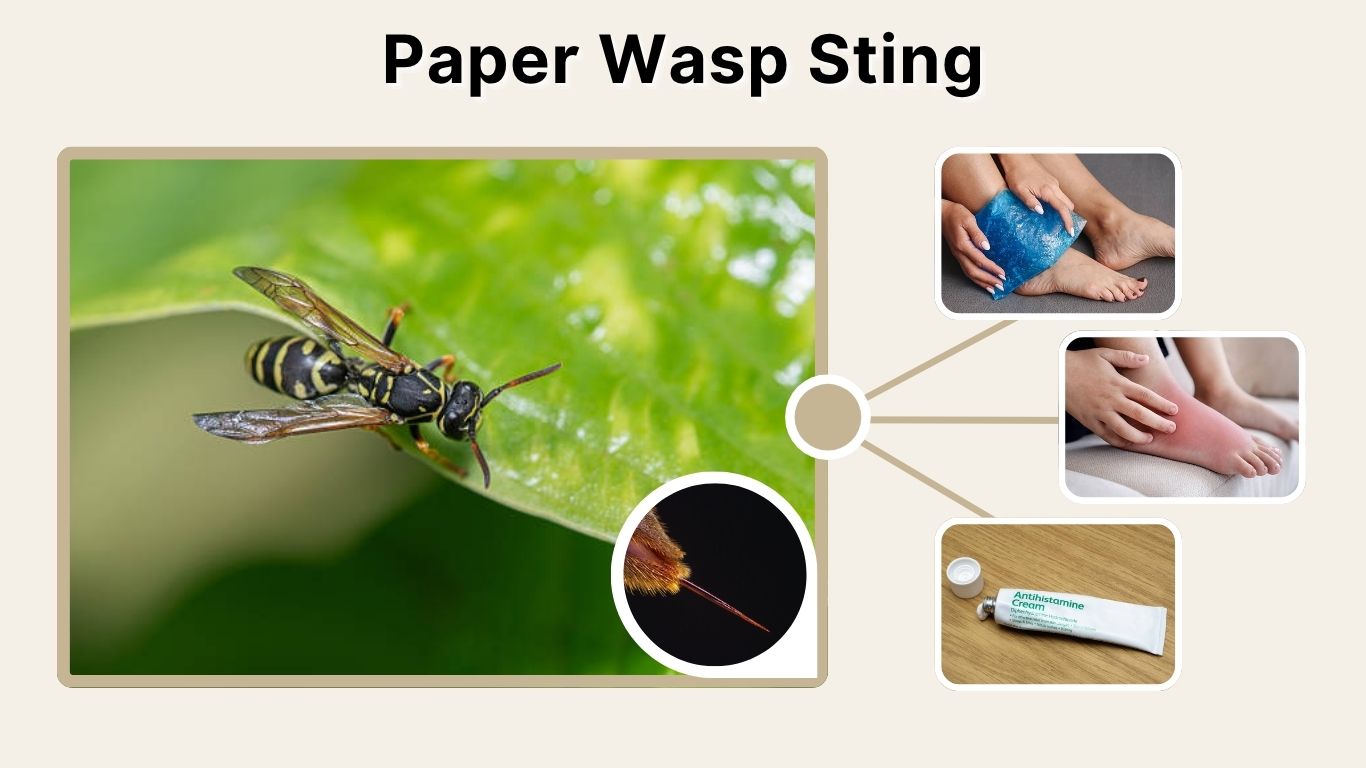
A paper wasp sting is painful, sudden, and often alarming, especially for people who accidentally disturb a nest. Paper wasps are common around homes, gardens, sheds, and roof eaves, where they build their paper-like nests. Although these wasps are generally less aggressive than yellow jackets, they will sting to defend themselves or protect their colony when threatened.
Many people search for information about paper wasp stings because they want to understand how painful the sting is, what symptoms to expect, and how to treat the reaction properly. In most cases, the sting causes temporary redness, swelling, and burning pain, but allergic reactions can sometimes occur. Understanding the symptoms and differences between paper wasp stings and other insect stings can help reduce panic and improve treatment decisions.
What Is a Paper Wasp?
Paper wasps are social wasps recognized by their slender bodies, narrow waists, and long dangling legs. They are named for the paper-like material they use to build their nests.
What Do Paper Wasps Look Like?
Paper wasps are thinner and longer than yellow jackets. Their legs often hang below their body while flying, making them easier to identify.
Depending on the species, they may appear:
- Yellow and black
- Red and brown
- Dark brown or black
Their body shape is more elongated compared to stockier wasps like yellow jackets. They also have smoother bodies and narrower waists.
Some species, such as red paper wasps, are especially recognizable because of their reddish-orange coloring and larger size.
Where Paper Wasps Live
Paper wasps prefer sheltered outdoor locations where they can safely build nests. Common nesting areas include:
- Roof overhangs
- Garages and sheds
- Porch ceilings
- Trees and shrubs
- Window frames and fences
Their nests are open and umbrella-shaped with visible hexagonal cells. Unlike yellow jacket nests, paper wasp nests usually do not have an outer covering.
Paper wasps are especially active during warmer months when colonies are growing and food sources are abundant.
Do Paper Wasps Sting?
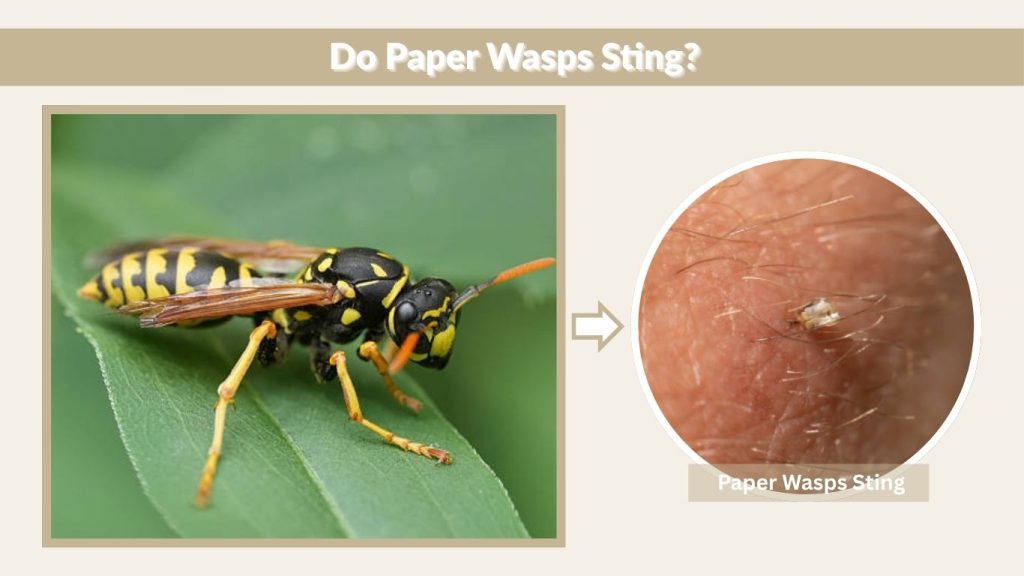
Paper wasps can sting humans when they feel threatened or when their nest is disturbed. While they are generally not aggressive without reason, they become defensive around their colony.
Why Paper Wasps Sting
Paper wasps sting primarily as a defense mechanism. Situations that commonly trigger stings include:
- Accidentally touching the nest
- Swatting at the wasp
- Standing too close to the colony
- Sudden fast movements nearby
Unlike honey bees, paper wasps do not die after stinging. This allows them to sting multiple times if they continue feeling threatened.
Most stings happen because the wasp believes its nest is in danger rather than because it is actively hunting humans.
Do Paper Wasps Bite or Sting?
Paper wasps mainly sting rather than bite. Their stinger injects venom that causes pain and swelling.
Although they have jaws for chewing materials and handling prey, the sting is their primary defense against threats. In some cases, a paper wasp may grab the skin with its jaws while stinging, which can make the encounter feel worse. The stinger itself is smooth, allowing the wasp to sting repeatedly without losing it.
What Does a Paper Wasp Sting Feel Like?
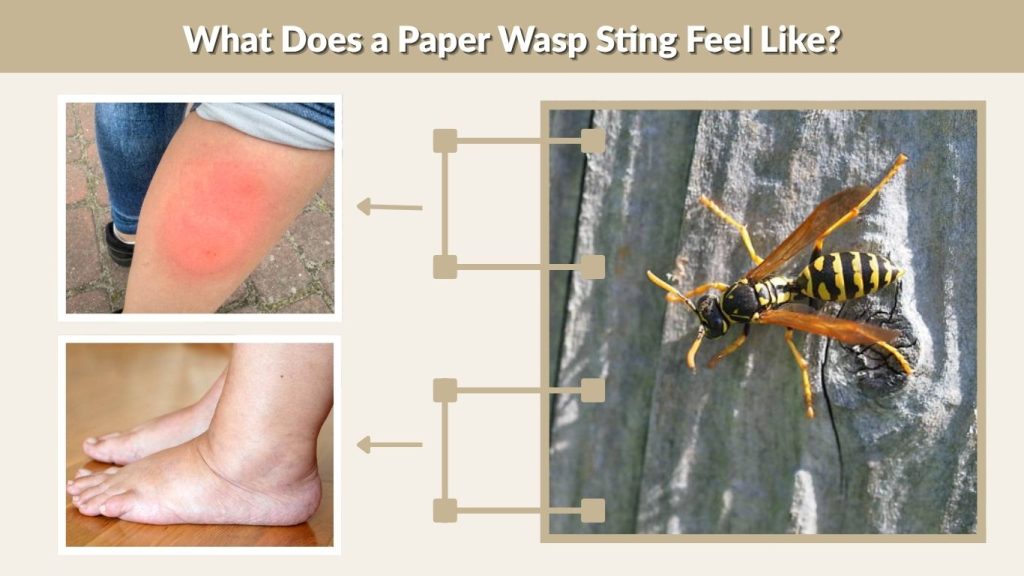
A paper wasp sting is commonly described as a sudden sharp burning sensation. Pain intensity varies depending on the species, sting location, and individual sensitivity.
Immediate Pain Symptoms
The sting usually causes immediate symptoms such as:
- Sharp stabbing pain
- Burning sensation
- Redness around the sting
- Swelling and tenderness
For many people, the burning pain is the most noticeable symptom during the first few minutes after the sting occurs.
The affected area may remain sore and sensitive for several hours afterward.
Pain Level and Schmidt Sting Pain Index
Paper wasp stings are considered moderately painful on the Schmidt Sting Pain Index, a scale used to compare insect sting pain.
The sting is often described as:
- Sharp and burning
- More painful than a bee sting for some people
- Less severe than hornet stings in most cases
Red paper wasps are especially known for producing painful stings. Their venom can create a stronger burning sensation that lasts longer than some other paper wasp species.
Despite the pain, most stings remain manageable and improve gradually over time.
Paper Wasp Sting Symptoms
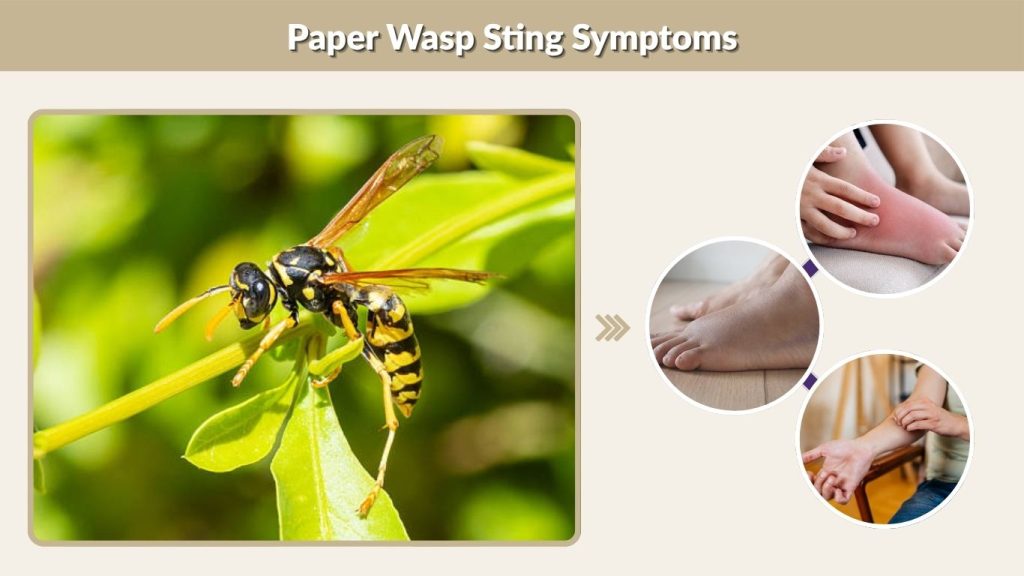
Most paper wasp sting symptoms are mild and temporary, although reactions vary from person to person.
- Redness around the sting site
- Swelling and inflammation
- Burning or stinging pain
- Itching during healing
- Tenderness when touched
The symptoms often appear immediately after the sting and may become more noticeable during the first several hours.
Swelling can range from minor irritation to larger localized reactions, especially when the sting occurs on sensitive areas such as the hands, face, or feet. Some individuals experience stronger swelling because of increased sensitivity to wasp venom.
Paper Wasp Sting Reaction
Reactions to paper wasp stings can range from mild irritation to severe allergic responses. Most people experience only localized symptoms that improve within a short time.
Mild Reaction
A mild reaction is the most common outcome after a paper wasp sting. Symptoms may include:
- Small swollen bump
- Temporary redness
- Burning pain
- Mild itching
These reactions generally improve within hours or a few days with basic care.
Pain usually decreases steadily, although itching may continue briefly during healing.
Allergic Reaction
Some people experience allergic reactions to paper wasp venom. Severe allergic reactions may include:
- Difficulty breathing
- Swelling of the face or throat
- Dizziness or fainting
- Hives across the body
- Rapid heartbeat
These symptoms may indicate anaphylaxis, which is a medical emergency requiring immediate treatment.
People who know they are allergic to wasp stings should carry emergency medication if prescribed by a doctor.
Paper Wasp Sting vs Yellow Jacket Sting
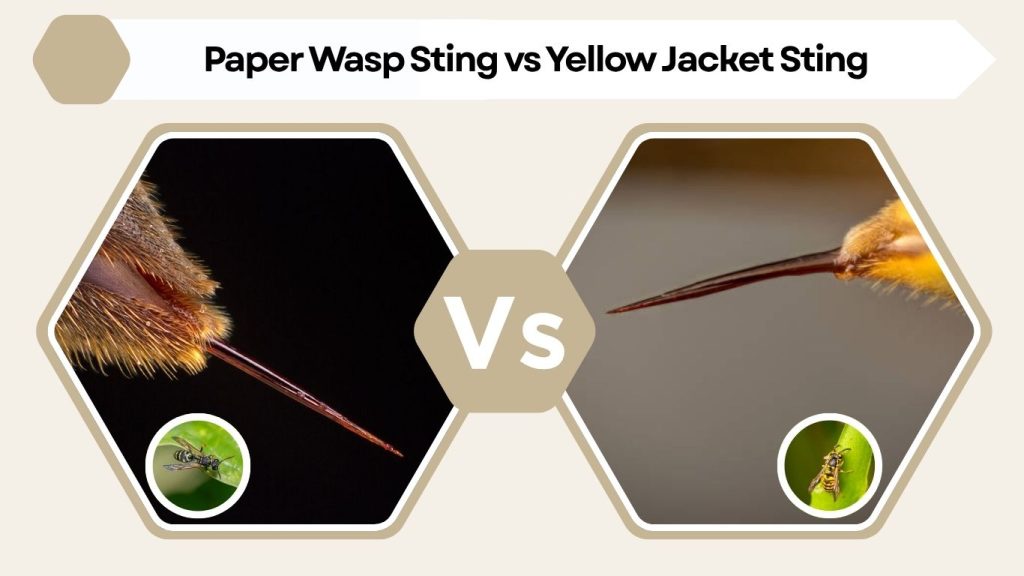
Paper wasps and yellow jackets both sting, but there are important differences in aggression, pain level, and behavior.
| Feature | Paper Wasp Sting | Yellow Jacket Sting |
| Aggression | Moderate | Highly aggressive |
| Pain Level | Burning moderate pain | Sharper intense pain |
| Nest Type | Open paper nest | Enclosed hidden nest |
| Multiple Stings | Yes | Yes |
| Swelling | Mild to moderate | Often more severe |
Yellow jackets are generally more aggressive and more likely to attack in groups when disturbed. Paper wasps are usually calmer and less likely to sting unless directly threatened.
The pain from yellow jacket stings is often described as more intense initially, while paper wasp stings tend to produce a longer-lasting burning sensation.
Red Paper Wasp Sting
Red paper wasps are among the most feared paper wasp species because their stings are often considered especially painful.
Why Red Paper Wasp Stings Hurt More
Several factors may contribute to the stronger pain associated with red paper wasps:
- More noticeable venom reaction
- Strong burning sensation
- Increased swelling in some people
Many people describe the pain as immediate and intense, followed by lingering soreness and irritation.
The level of pain still varies greatly depending on individual sensitivity and sting location.
Common Symptoms of a Red Paper Wasp Sting
Although reactions vary from person to person, red paper wasp stings often produce symptoms such as:
- Intense burning pain
- Redness around the sting area
- Swelling and tenderness
- Itching during healing
- Warm skin near the sting site
The pain is usually strongest during the first several minutes after the sting occurs. Swelling may continue increasing for a few hours before gradually improving.
Most red paper wasp stings heal without major complications, although the soreness can last longer than some other wasp stings.
European and Northern Paper Wasp Stings
Different species of paper wasps may produce slightly different sting reactions, although most symptoms remain similar overall.
European Paper Wasp Sting
European paper wasps are commonly found around homes and urban areas. They are defensive when their nests are disturbed but are usually less aggressive than yellow jackets.
Their sting often causes:
- Moderate burning pain
- Localized swelling
- Temporary redness
- Mild tenderness
Most reactions improve within a few days unless an allergic reaction occurs.
Northern Paper Wasp Sting
Northern paper wasps are commonly found in North America and are generally considered less aggressive than some other wasp species.
Their sting usually causes:
- Mild to moderate pain
- Small swollen bump
- Temporary itching
- Redness around the sting site
Although painful, northern paper wasp stings are rarely medically serious for healthy adults.
Can Paper Wasps Sting More Than Once?
Unlike honey bees, paper wasps can sting multiple times because they do not lose their stinger after attacking.
Why They Can Sting Repeatedly
Paper wasps have a smooth stinger that allows them to pull it back out after stinging. This means they can continue stinging if they still feel threatened.
Multiple stings are more likely when:
- A nest is disturbed
- The person swats at the wasp
- Several wasps become defensive at once
Repeated stings increase the amount of venom injected and may worsen pain and swelling.
Do Paper Wasps Leave a Stinger?
Paper wasps usually do not leave their stinger behind after stinging. This is different from honey bees, which lose their stinger and die shortly afterward.
Because the stinger remains attached to the wasp, paper wasps survive after stinging and can attack again if necessary.
Paper Wasp Sting Treatment
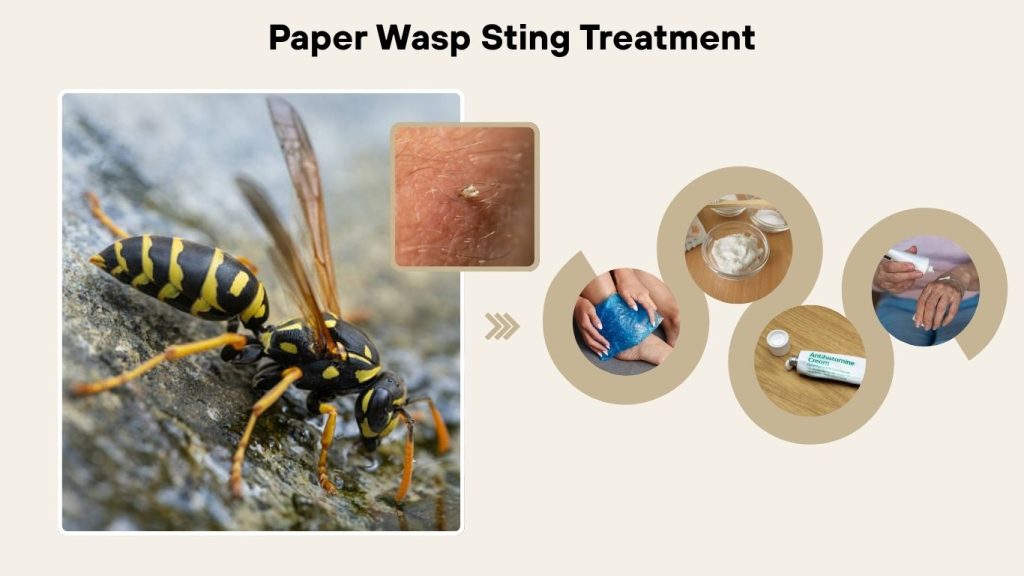
Most paper wasp stings can be treated at home using basic first aid methods that reduce pain and swelling.
Immediate First Aid
The first step is cleaning the sting area gently with soap and water. This helps prevent infection and removes any dirt or venom residue from the skin.
Other important first-aid steps include:
- Applying a cold compress
- Elevating swollen areas
- Resting the affected body part
- Removing nearby jewelry if swelling increases
Cold compresses are especially helpful because they reduce inflammation and numb some of the pain.
Home Remedies
Many people use simple home remedies to relieve symptoms from paper wasp stings.
Common remedies include:
- Baking soda paste
- Antihistamines for itching
- Over-the-counter pain relievers
- Hydrocortisone cream for irritation
These treatments often help reduce swelling, itching, and discomfort during healing.
How Long Does a Paper Wasp Sting Last?
The duration of symptoms depends on the severity of the sting and the individual’s sensitivity to venom.
Mild Reactions
For most people, the sharp pain improves within a few hours. Mild swelling and redness may remain for one to three days before fading completely.
Itching sometimes continues briefly during the healing process.
Severe Reactions
Larger local reactions may last much longer and involve:
- Increased swelling
- Greater tenderness
- Extended redness
- More noticeable itching
In allergic individuals, symptoms can become severe very quickly and require immediate medical treatment.
Are Paper Wasp Stings Dangerous?
Most paper wasp stings are not dangerous and heal without serious complications. However, certain situations can become medically serious.
When a Sting Becomes Dangerous
A paper wasp sting may become dangerous if symptoms suggest a severe allergic reaction or if multiple stings occur at once.
Warning signs include:
- Difficulty breathing
- Swelling near the throat or face
- Rapid heartbeat
- Severe dizziness
- Widespread hives
These symptoms may indicate anaphylaxis, which requires emergency medical care immediately.
High-Risk Individuals
Certain people face a higher risk of complications after wasp stings, including:
- Individuals with venom allergies
- Young children
- Elderly adults
- People with breathing problems
These groups should monitor symptoms carefully and seek medical help if reactions worsen.
How to Prevent Paper Wasp Stings
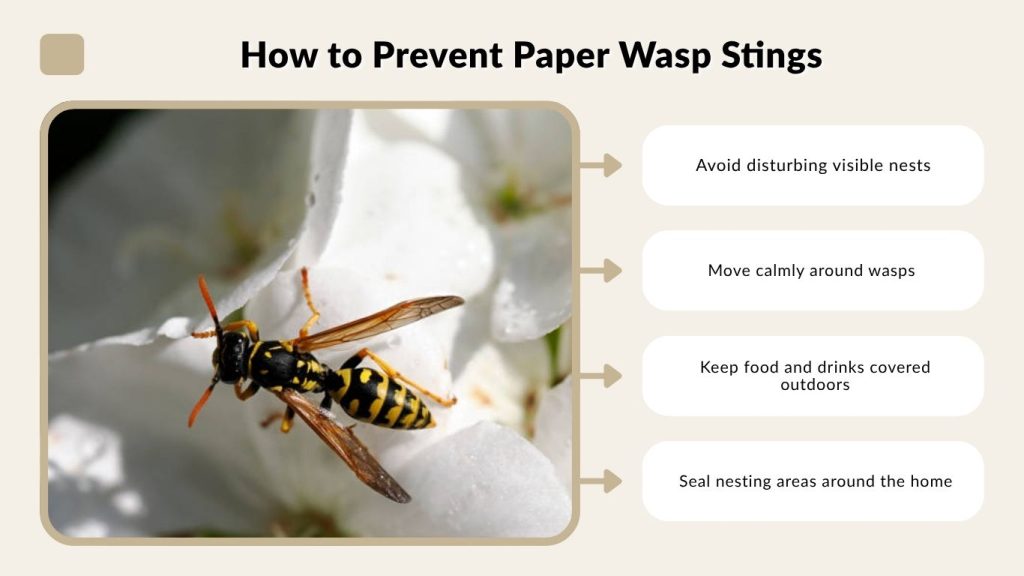
Preventing stings often involves avoiding nests and reducing situations that make wasps feel threatened.
- Avoid disturbing visible nests
- Move calmly around wasps
- Keep food and drinks covered outdoors
- Seal nesting areas around the home
- Wear shoes when outside
Paper wasps are usually defensive rather than aggressive, so calm behavior often reduces the chance of being stung.
Regularly checking roof eaves, sheds, and outdoor furniture for nests can also help prevent accidental encounters.
Common Myths About Paper Wasp Stings
Many myths about paper wasps lead to confusion and unnecessary fear.
- Paper wasps do not sting without reason
- Most stings are not dangerous
- Paper wasps can sting multiple times
- They are usually less aggressive than yellow jackets
- Not every swelling reaction is an allergy
One common misconception is that paper wasps attack humans aggressively for no reason. In reality, most stings occur because the nest is disturbed or the wasp feels threatened.
Another myth is that paper wasps leave their stinger behind like honey bees. Unlike bees, paper wasps usually keep their stinger and survive after stinging.
FAQs
Do paper wasps sting humans?
Yes, paper wasps can sting humans when defending themselves or protecting their nest.
How painful is a paper wasp sting?
A paper wasp sting is usually described as sharp and burning with moderate pain that may last several hours.
Can paper wasps sting multiple times?
Yes, paper wasps can sting repeatedly because they do not lose their stinger after attacking.
How do you treat a paper wasp sting?
Treatment usually includes cleaning the area, applying a cold compress, and using antihistamines or pain relievers if needed.
Are paper wasp stings dangerous?
Most stings are mild, but allergic reactions can become serious and require emergency medical attention.