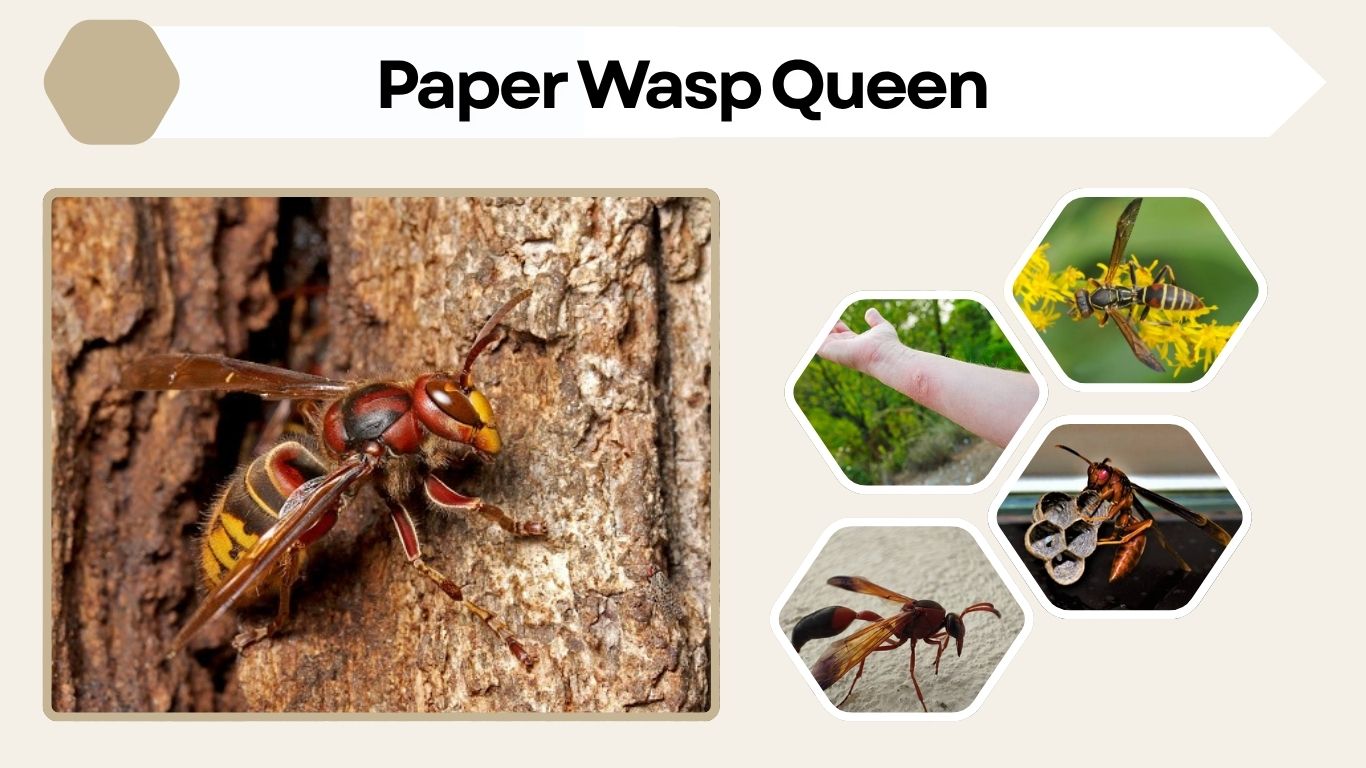
The paper wasp queen is the central figure in a paper wasp colony, responsible for laying all the eggs that develop into workers, drones, and new queens. Unlike the workers, who build nests and forage, the queen’s primary job is reproduction. Understanding the paper wasp queen’s appearance, behavior, and role within the colony helps in distinguishing her from workers and avoiding potential stings. In this article, we’ll explore the queen’s identification, size, role, lifespan, and more.
What Is a Paper Wasp Queen?
The paper wasp queen is a reproductive female that forms the core of a colony. As the sole egg layer, she is responsible for producing all new workers and potential future queens. In contrast to the workers, her role is strictly reproductive, and her size, shape, and behavior are all geared toward maximizing reproduction. She plays a crucial role in the colony’s survival and growth, ensuring the colony can continue year after year.
What Does a Paper Wasp Queen Look Like?
The appearance of a paper wasp queen can help easily identify her within a colony. The queen is larger and more robust than the workers, with an elongated abdomen and larger wings. Typically, a paper wasp queen will have yellow, red, or brown markings on her body, although these can vary slightly depending on the species. Queens also tend to have larger eyes and a more prominent thorax compared to workers, emphasizing their role in egg-laying.
Do Paper Wasps Have a Queen?
Yes, every paper wasp colony has a queen. She is the central figure in the colony’s reproduction. The queen is the only female wasp in the colony that mates with drones and lays eggs that hatch into the colony’s new members—workers, drones, and in some cases, new queens. The workers, in turn, assist her by building and protecting the nest, foraging for food, and defending the colony from predators.
Paper Wasp Queen vs Worker
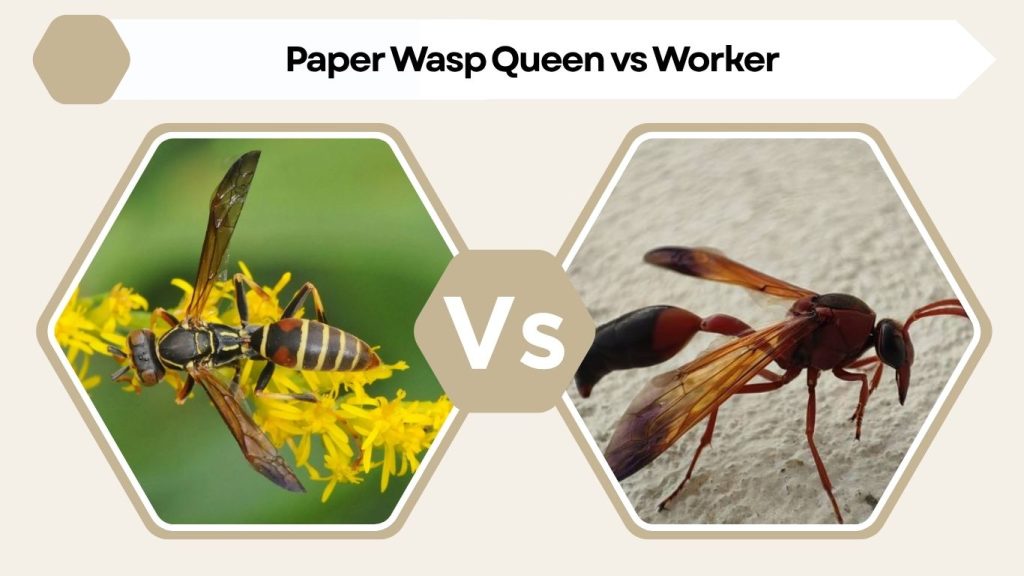
One of the most common questions about paper wasps is how to distinguish the queen from the workers. While both are female wasps, there are several noticeable differences that make it easy to identify the queen.
Size and Physical Characteristics
The most obvious difference between the queen and workers is size. Paper wasp queens are generally larger, typically ranging from 22 to 30 mm in body length, while workers are usually smaller, averaging around 16 to 20 mm. The queen’s abdomen is also more elongated and rounded, giving her a more robust appearance compared to the workers, whose bodies are more slender and agile for foraging and defending.
The queen’s wings are also longer and more pronounced compared to the workers. This adaptation is vital for mating flights and for establishing a new colony.
Role in the Colony
While both queens and workers are female, their roles are distinctly different. The queen’s sole purpose is reproduction. She will mate with the drones in the colony and start laying eggs soon after. These eggs develop into workers or drones, and in late summer, the queen produces eggs that hatch into new queens. These new queens will leave the nest to mate and start new colonies.
Workers, on the other hand, do not reproduce. Their main role in the colony is to maintain the nest, forage for food, defend the colony, and care for the larvae. Workers are crucial to the queen’s survival as they enable her to continue laying eggs throughout the colony’s life cycle.
Queen Paper Wasp vs Worker: Pictures
In photographs, distinguishing between the queen and workers is relatively easy due to their size difference. The queen will appear larger with a more rounded abdomen and larger wings. In comparison, the workers will have slimmer bodies with more narrow wings and shorter abdomens. Their behavior is also a clue: the queen is often seen resting within the nest, while workers are more active outside, foraging and defending.
Paper Wasp Queen, Nest, and Colony
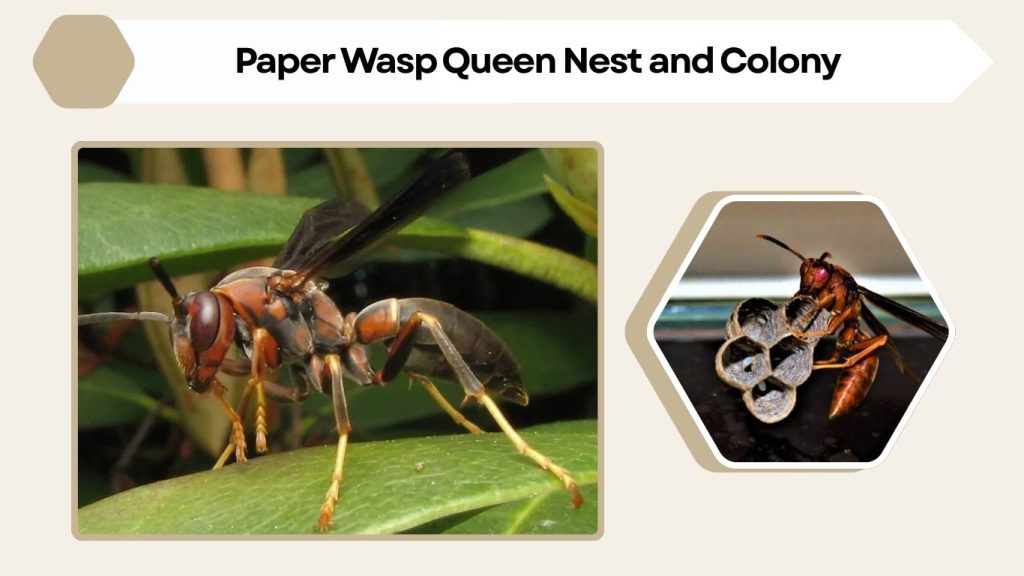
The paper wasp queen plays a pivotal role in establishing and maintaining the colony. She is the first wasp to arrive when the colony begins, and she is responsible for building the initial nest and laying the first set of eggs. As the colony grows, the workers take over many of the nest-building duties, but the queen remains focused on reproduction.
Paper Wasp Nest Queen
When the queen begins a new colony, she starts by building a small, simple nest, often located in a sheltered area like under eaves, in shrubs, or on tree branches. The nest is made from chewed wood fibers, which the queen mixes with saliva to create a papery substance. She lays the first batch of eggs in the nest, which soon hatch into larvae and later mature into workers.
The workers that emerge assist the queen by expanding the nest and foraging for food, which supports the growing larvae. As the colony develops, the queen focuses on laying more eggs, including those that will become future queens and drones.
Paper Wasp Queen in House
While paper wasps typically build their nests outdoors, there are instances where they may build nests inside structures like attics or garages. During late summer or early fall, the queen may also be found seeking shelter as the colony prepares for winter. This is usually when the colony begins to decline, with workers and drones dying off, and only the new queens surviving until spring.
Paper Wasp Queen Nest Location
Paper wasps prefer building their nests in sheltered areas, where the queen and her workers are protected from the elements. These nests are often found under roof eaves, in attics, or among dense vegetation such as trees, shrubs, and tall grasses. The nests are typically suspended from the surface, allowing the wasps to build and expand vertically as needed. These nests consist of several hexagonal cells, where eggs are laid, larvae grow, and pupae develop.
Paper Wasp Queen Behavior and Role in the Colony
The queen’s behavior is focused primarily on reproduction. She establishes and manages the colony’s reproductive cycle, ensuring that new workers, drones, and queens are produced in time to sustain the colony.
How Long Does a Paper Wasp Queen Live?
The lifespan of a paper wasp queen is relatively short compared to that of other insects. On average, a queen will live for one year, with the colony beginning in the spring and dying off in late fall. During the fall, the queen will stop laying eggs for workers and will produce eggs for the next generation of queens. These new queens leave the colony to mate, and after mating, they hibernate through the winter, waiting to start a new colony in the spring.
Paper Wasp Queen Lifespan
The queen’s lifespan is limited to one year. Her role is central to the colony’s survival, and once her egg-laying cycle ends, she dies. The new queens take over the role of reproduction in the coming year, beginning the cycle anew. The workers and drones, on the other hand, live only through the season, typically dying off with the approach of winter.
Paper Wasp Queen Sting: Can She Sting? How Dangerous Is It?
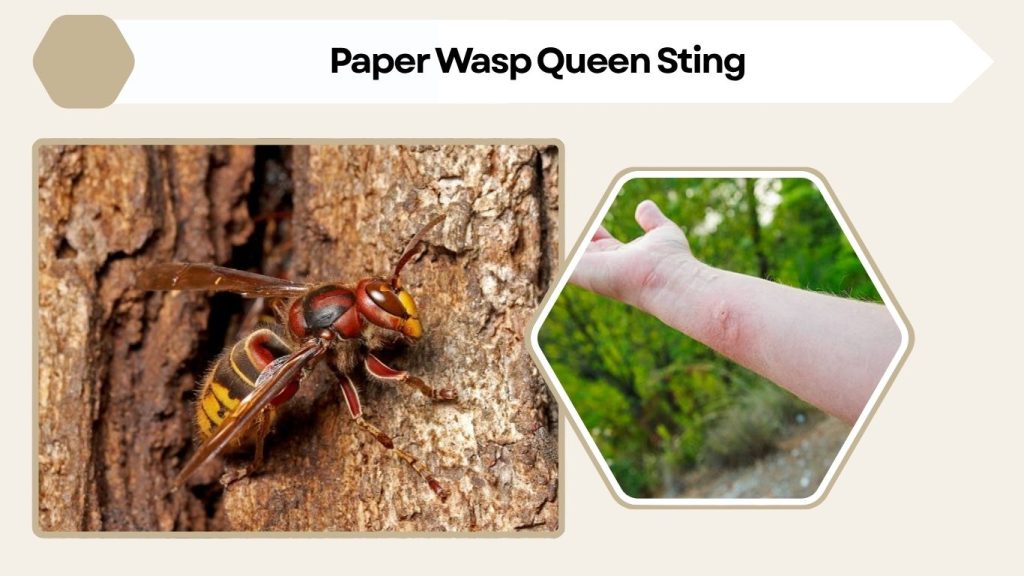
While paper wasp queens are not typically aggressive unless provoked, they can sting if they feel the nest is threatened. A sting from a queen paper wasp can be painful and dangerous for those who are allergic to wasp venom.
Do Paper Wasp Queens Sting?
Yes, paper wasp queens can sting, though it is relatively rare unless the nest is in danger. Unlike worker wasps, the queen does not participate in defending the nest unless it is absolutely necessary. However, if the nest is disturbed, she will defend her colony and may sting in self-defense. The sting can be sharp and painful, causing swelling, redness, and in some cases, allergic reactions.
What Happens If a Queen Paper Wasp Stings You?
If a queen paper wasp stings you, the pain will typically be sharp and intense, similar to a bee sting. The area will likely become red, swollen, and itchy. For most people, these symptoms are temporary and can be managed with basic first aid like applying a cold compress or using over-the-counter anti-inflammatory creams. However, for individuals with allergies to insect stings, more severe reactions can occur, including difficulty breathing, swelling beyond the sting site, and anaphylaxis, which requires immediate medical attention.
Paper Wasp Queen Identification
Being able to identify a paper wasp queen is essential for anyone looking to avoid disturbing the colony. The queen has several distinct features that set her apart from worker wasps and other members of the colony.
Paper Wasp Queen Identification
The queen is typically larger than the workers and drones, and her abdomen is more elongated. She also has larger wings and distinctive markings, which vary between species. For example, a red paper wasp queen may have more pronounced red markings on her body, while the European paper wasp queen may display a more yellow and black appearance. One key feature to remember is that the queen’s body shape is usually more robust compared to the workers, which are designed to be more agile and active in foraging and nest-building tasks.
Red Paper Wasp Queen Identification
The red paper wasp queen can be easily identified by her distinct red color on her thorax and abdomen. Her larger size and robust body also distinguish her from the workers. Unlike other paper wasps, the red paper wasp queen has a more intense red hue, making her standout in the colony.
European Paper Wasp Queen Identification
The European paper wasp queen is characterized by yellow and black markings across her body. The queen is larger and more robust than the worker wasps, which are typically smaller and more slender. Her elongated abdomen and distinct body markings make her easy to differentiate from other wasps.
Paper Wasp Queen Nesting Habits and Activity
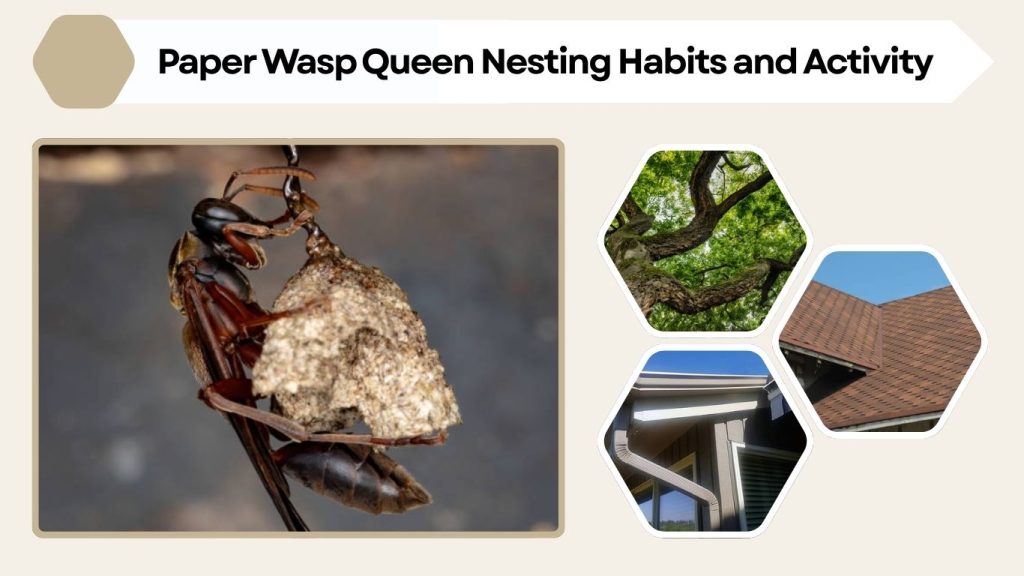
The paper wasp queen plays an essential role in the creation and maintenance of the colony’s nest. Her nesting habits and activities directly affect the colony’s survival and reproduction.
Paper Wasp Queen Building a New Nest
When a new colony is started, the queen will build the first few cells of the nest. She typically constructs the nest alone, using wood fibers and saliva to create a paper-like substance. The nest is built in a sheltered location such as the underside of tree branches, attic corners, or eaves of buildings. Once the nest is established, the queen lays her first eggs, which hatch into workers who continue expanding the nest and care for the eggs.
Queen Paper Wasp in Winter
As fall approaches, the queen paper wasp prepares for the cold months ahead. She stops laying worker eggs and begins producing new queens. These new queens will mate and then hibernate during the winter months, typically hidden in sheltered areas, such as tree bark, under eaves, or in abandoned nests. The workers and drones, on the other hand, die off, marking the end of the colony’s active life cycle. In spring, the new queens emerge from hibernation to start the next generation of colonies.
FAQs
What Is a Paper Wasp Queen?
A paper wasp queen is a larger, reproductive female responsible for laying eggs in the colony. She is the central figure in the colony’s reproduction process, ensuring the survival of future workers and queens.
How Long Does a Paper Wasp Queen Live?
A paper wasp queen typically lives for one year, during which time she lays eggs that hatch into workers and drones. In late fall, she produces new queens that will hibernate until spring, starting the cycle anew.
Do Paper Wasps Have a Queen?
Yes, paper wasps always have a queen. She is the only female in the colony responsible for laying eggs, while workers are tasked with building the nest, foraging, and protecting the colony.
How to Identify a Queen Paper Wasp?
To identify a queen paper wasp, look for larger size, elongated abdomen, and distinctive color patterns that vary depending on the species (e.g., red or yellow). Queens are usually larger and more robust than the workers.
Do Paper Wasp Queens Sting?
Yes, paper wasp queens can sting, but only when the colony or nest is threatened. While they are not naturally aggressive, they will defend their nest if provoked.