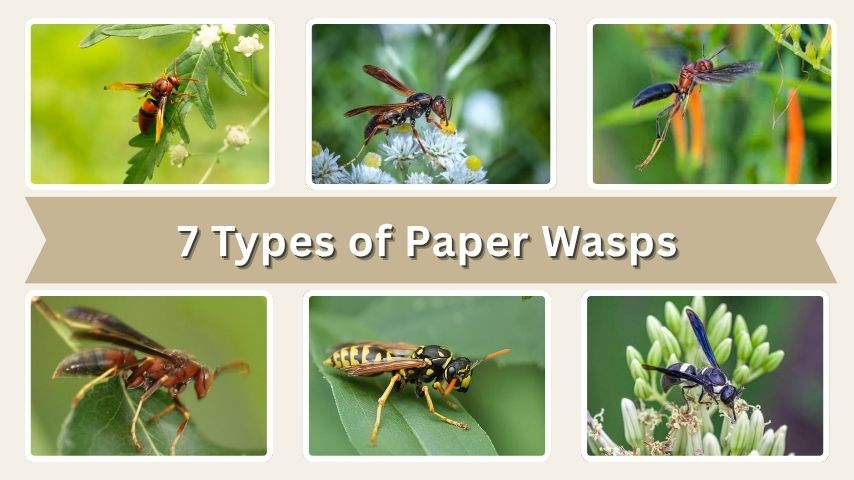
Paper wasps are common insects throughout Florida and are often seen building umbrella-shaped nests around homes, gardens, and wooded areas. These wasps play an important role in controlling caterpillars and other garden pests, making them beneficial to the environment despite their painful sting. Florida is home to several paper wasp species, each with unique colors, behaviors, and nesting habits. Some are calm and non-aggressive, while others quickly defend their colonies when disturbed. This guide explores seven types of paper wasps commonly found in Florida, including their identification, habitat, behavior, and nesting patterns.
1. Northern Paper Wasp
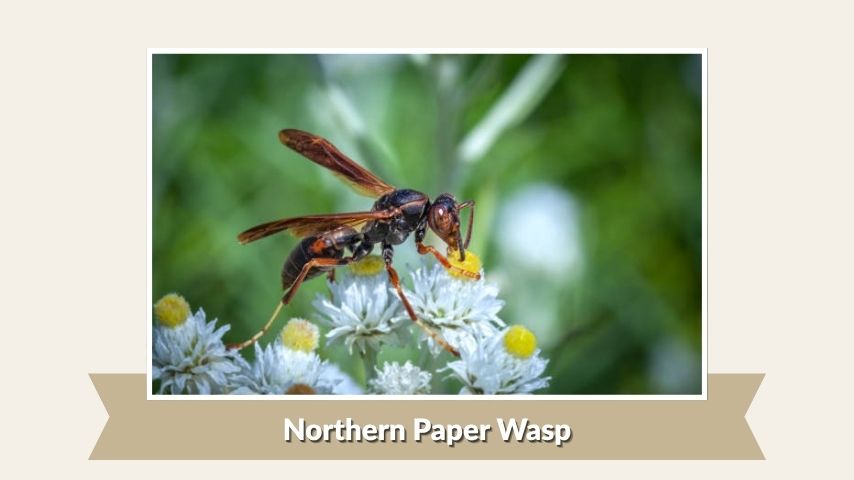
The Northern Paper Wasp is one of the most common paper wasp species found in Florida. These social wasps are known for their slender bodies, dangling legs during flight, and umbrella-shaped nests. They often build nests around homes, porches, garages, and tree branches. Although they can sting when threatened, Northern Paper Wasps are generally less aggressive than yellowjackets and play an important role in controlling garden pests.
Identification
- Usually dark brown or black with yellow markings
- Long legs that hang while flying
- Narrow waist and slender body shape
- Adults grow about 0.75 to 1 inch long
- Wings appear smoky or reddish-brown
- Builds open comb paper nests
Habitat and Distribution
Northern Paper Wasps are commonly found throughout Florida in urban, suburban, and woodland areas. They prefer warm environments and often nest under roof eaves, attic spaces, fences, sheds, and outdoor furniture. Their nests are usually attached to protected surfaces that stay dry during rainstorms. In natural habitats, they may also build nests on tree branches or inside hollow spaces.
Behavior and Diet
These wasps are social insects that live in colonies led by a queen. Worker wasps spend much of their time searching for food and building nests from chewed wood fibers mixed with saliva. Northern Paper Wasps feed on nectar, sugary liquids, and small insects. They help reduce populations of caterpillars and other garden pests, making them beneficial to the environment despite their painful sting.
Nesting and Life Cycle
The colony begins in spring when a fertilized queen starts building a small paper nest. She lays eggs inside individual cells, and the first workers soon take over nest expansion duties. Colonies grow throughout summer and may contain dozens of wasps by late season. As temperatures cool in fall, the colony dies off except for newly fertilized queens that survive winter in sheltered hiding places.
2. Guinea Paper Wasp
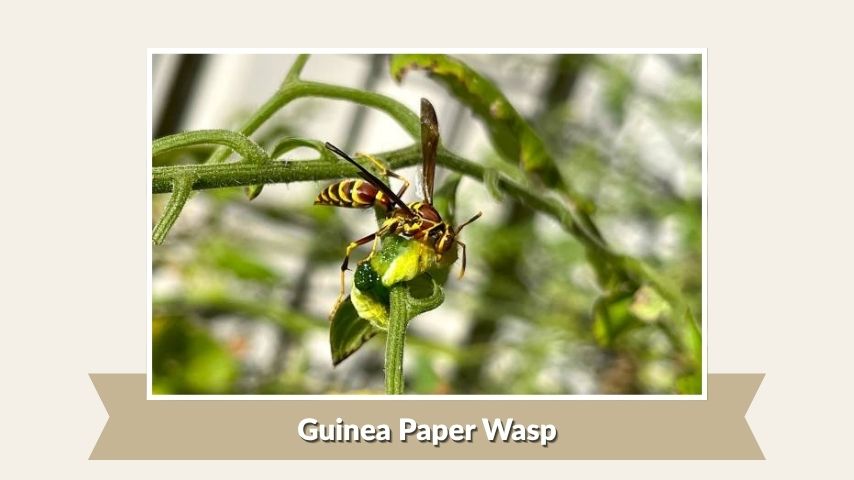
The Guinea Paper Wasp is a large and colorful wasp species commonly seen in Florida’s warm and humid regions. These wasps are recognizable for their reddish-brown bodies and bright yellow markings. They are social insects that live in colonies and build open paper nests in sheltered locations. Guinea Paper Wasps are active hunters that help control many garden pests, although they can become defensive if their nest is disturbed.
Identification
- Reddish-brown body with yellow or orange markings
- Long dangling legs during flight
- Slender body with a narrow waist
- Adults usually grow around 1 inch long
- Wings appear amber or smoky brown
- Builds umbrella-shaped paper nests
Habitat and Distribution
Guinea Paper Wasps are widely distributed across Florida, especially in gardens, forests, parks, and residential neighborhoods. They prefer warm climates and often build nests beneath roof overhangs, tree branches, porch ceilings, and outdoor structures. Their nests are usually attached to protected surfaces where rain and wind exposure remain limited.
Behavior and Diet
These wasps are social and cooperative insects that work together to expand and protect their colony. Worker wasps hunt caterpillars, flies, and other soft-bodied insects to feed developing larvae. Adult wasps mainly consume nectar and sugary liquids for energy. Guinea Paper Wasps are usually calm while foraging but may aggressively defend their nest if they sense danger nearby.
Nesting and Life Cycle
A single queen begins the colony during spring by constructing a small paper nest from chewed wood fibers. She lays eggs in the nest cells, and the first generation of workers quickly takes over nest maintenance and food collection. Colonies grow larger through summer and may contain many active workers. By late fall, most colony members die, while fertilized queens seek safe winter shelter until the next breeding season.
3. Red Paper Wasp
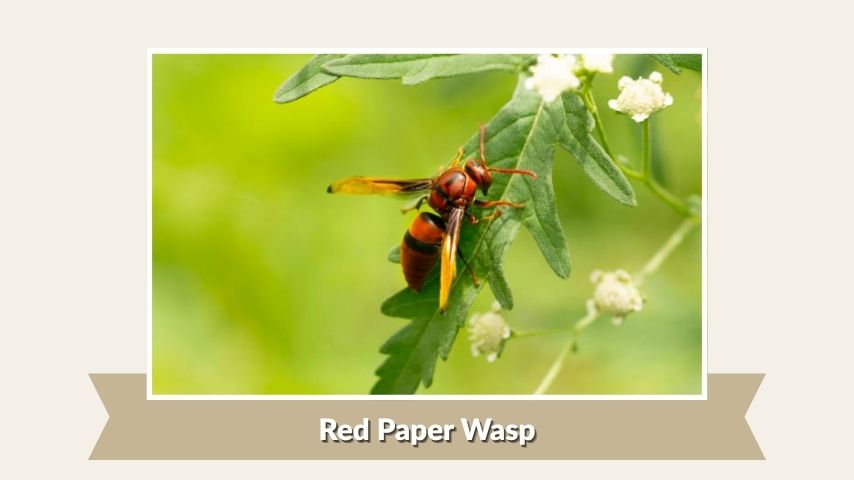
The Red Paper Wasp is one of the largest and most noticeable paper wasps found in Florida. Its reddish-orange body makes it easy to identify compared to darker wasp species. These wasps are common in gardens, wooded areas, and residential neighborhoods where they build hanging paper nests. Red Paper Wasps help control insect populations by hunting caterpillars and other soft-bodied pests, though they can deliver painful stings if disturbed.
Identification
- Bright reddish-orange or rusty red body
- Long legs that hang beneath the body during flight
- Narrow waist and elongated body shape
- Adults typically grow about 1 to 1.25 inches long
- Wings appear dark amber or smoky brown
- Builds exposed paper nests with open cells
Habitat and Distribution
Red Paper Wasps are widespread throughout Florida and thrive in warm, humid environments. They commonly build nests under roof eaves, decks, porch ceilings, tree branches, and abandoned structures. In natural settings, they may also nest in hollow logs or protected vegetation. These wasps prefer areas that provide shelter from heavy rain and direct sunlight.
Behavior and Diet
Red Paper Wasps are social insects that live in colonies organized around a queen. Workers gather wood fibers to build nests and hunt insects to feed developing larvae. Adult wasps mainly consume nectar, fruit juices, and sugary substances. Although they are usually non-aggressive while foraging, they become highly defensive when someone approaches their nest too closely.
Nesting and Life Cycle
The colony cycle begins in spring when a fertilized queen starts constructing a small paper nest. After laying eggs, she cares for the first brood until worker wasps emerge. Workers then expand the nest and care for larvae throughout summer. Colonies continue growing during warm months before dying off in late fall, leaving only newly fertilized queens to survive winter and begin new colonies the following year.
4. Metric Paper Wasp
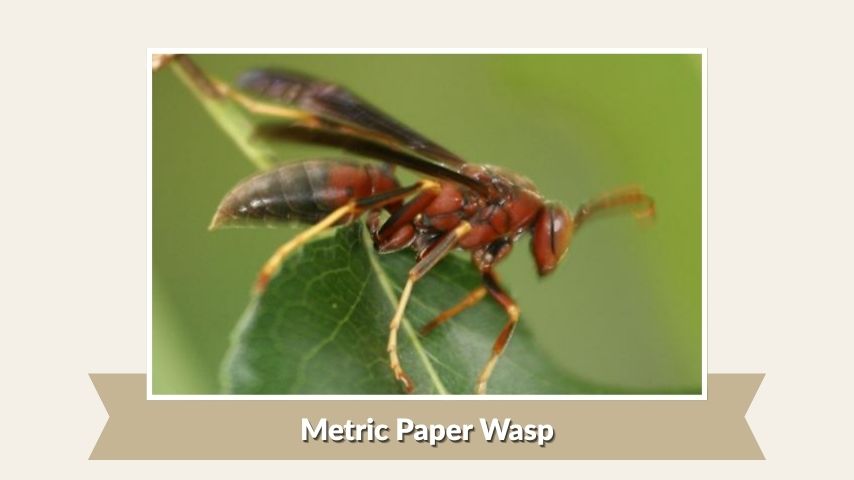
The Metric Paper Wasp is a slender and highly adaptable wasp species commonly found in Florida. It is known for its dark body coloration combined with yellow or orange markings. These wasps are social insects that build exposed paper nests in sheltered places around homes and natural habitats. Metric Paper Wasps are beneficial predators because they hunt many insects that damage gardens and plants, helping maintain ecological balance in outdoor environments.
Identification
- Dark brown or black body with yellow markings
- Slender shape with a narrow waist
- Long legs visible during flight
- Adults usually measure about 0.75 to 1 inch long
- Wings are smoky brown in color
- Builds open comb paper nests attached by a stalk
Habitat and Distribution
Metric Paper Wasps are widely distributed throughout Florida and are especially common in suburban neighborhoods and woodland edges. They prefer protected nesting locations such as roof eaves, porch ceilings, garages, fences, and tree branches. In natural areas, they may also build nests beneath rocks or inside hollow spaces that provide protection from weather and predators.
Behavior and Diet
These wasps are social colony builders that work together to gather food and maintain the nest. Worker wasps hunt caterpillars, flies, and other insects to feed developing larvae. Adult Metric Paper Wasps mainly consume nectar and sugary liquids. They are generally calm when away from the nest but quickly become defensive if they feel their colony is threatened.
Nesting and Life Cycle
A fertilized queen starts the colony during spring by creating a small paper nest using chewed wood fibers mixed with saliva. She lays eggs inside the nest cells, and the first workers emerge after several weeks. These workers take over food collection, nest construction, and larval care. Colonies expand through summer and decline in fall, while new queens survive winter in sheltered locations before starting new nests the next year.
5. Ringed Paper Wasp
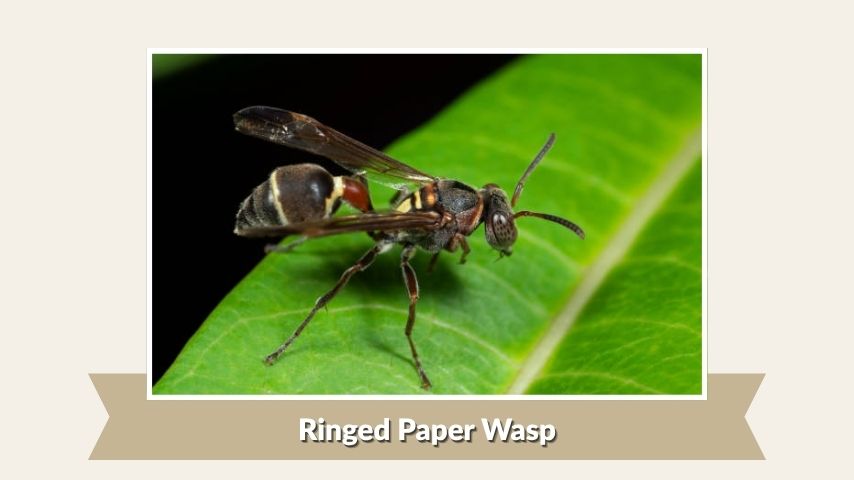
The Ringed Paper Wasp is a striking wasp species found in parts of Florida, especially in warmer southern regions. It is recognized by its dark body and bright yellow banding that creates a ringed appearance across the abdomen. Like other paper wasps, this species builds open paper nests and lives in social colonies. Ringed Paper Wasps are beneficial predators that help reduce populations of harmful insects in gardens and natural habitats.
Identification
- Black or dark brown body with yellow abdominal bands
- Slender shape with a narrow waist
- Long legs that dangle during flight
- Adults grow around 0.75 to 1 inch long
- Wings are smoky or brownish in color
- Builds exposed umbrella-shaped paper nests
Habitat and Distribution
Ringed Paper Wasps are commonly found in Florida’s warm and humid environments, including gardens, parks, forests, and residential areas. They prefer protected nesting sites such as roof overhangs, sheds, tree branches, and porch ceilings. In natural settings, they may nest in dense vegetation or sheltered cavities that provide protection from predators and heavy rain.
Behavior and Diet
These wasps live in organized colonies led by a queen and supported by worker wasps. Workers gather wood fibers for nest building and hunt insects like caterpillars and flies to feed developing larvae. Adult wasps mainly consume nectar and sugary liquids. Ringed Paper Wasps are usually not aggressive while searching for food, but they defend their nests aggressively if disturbed.
Nesting and Life Cycle
The colony begins each spring when a fertilized queen creates a small paper nest attached to a surface by a thin stalk. She lays eggs in the open cells and cares for the first generation of workers. Once workers emerge, they take over nest expansion and food gathering duties. Colonies reach peak size during summer before dying out in cooler months, leaving only fertilized queens to survive winter and establish new colonies the following season.
6. Four-Toothed Mason Wasp
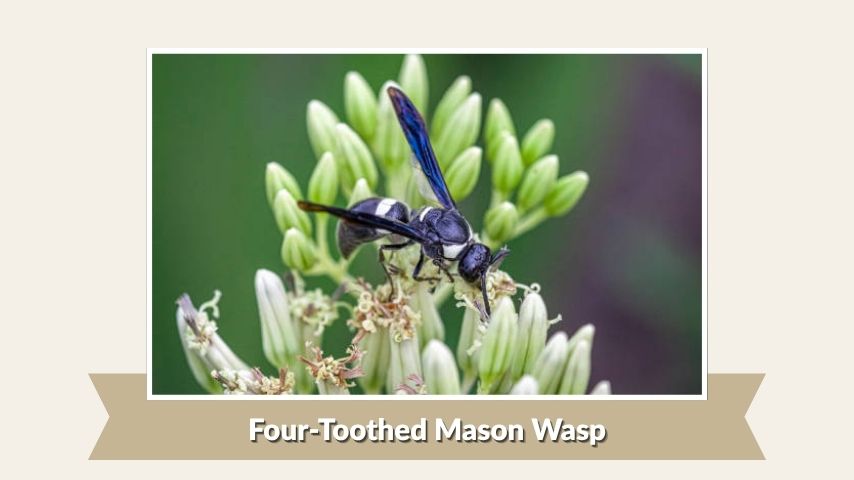
The Four-Toothed Mason Wasp is a solitary wasp species occasionally found in Florida gardens, forests, and residential areas. Unlike social paper wasps, this species does not live in large colonies or build hanging paper nests. Instead, it creates small mud chambers for its young. These wasps are considered beneficial because they hunt caterpillars and other insects that can damage plants and crops.
Identification
- Black body with yellow or white markings
- Compact body with a narrow waist
- Adults usually measure around 0.5 to 0.75 inches long
- Wings appear dark or smoky
- Females have distinctive tooth-like structures near the mandibles
- Often seen carrying mud or prey insects
Habitat and Distribution
Four-Toothed Mason Wasps are distributed throughout Florida in warm environments with access to soil and nesting spaces. They are commonly found near gardens, wooded areas, fences, walls, and outdoor buildings. These wasps prefer locations where they can easily gather mud to construct nesting chambers for their offspring.
Behavior and Diet
Unlike paper wasps, Four-Toothed Mason Wasps are solitary and do not form colonies. Females hunt caterpillars and paralyzed insects to place inside mud nests as food for developing larvae. Adult wasps mainly feed on flower nectar. They are generally non-aggressive and rarely sting unless directly handled or threatened.
Nesting and Life Cycle
Females build small mud nests inside cracks, hollow stems, or sheltered crevices. Each chamber contains a paralyzed insect and a single egg. After hatching, the larva feeds on the stored prey before pupating inside the nest. Adult wasps emerge later and begin the cycle again during warm seasons. Unlike social wasps, there is no queen or worker caste in this species.
7. European Paper Wasp
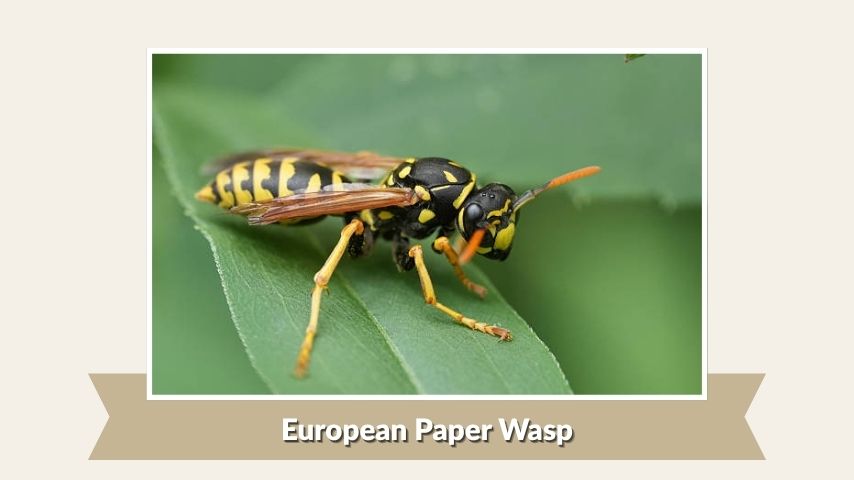
The European Paper Wasp is an introduced species that has become common in many parts of Florida. It closely resembles yellowjackets in color but has the slender body and long legs typical of paper wasps. These wasps are highly adaptable and often build nests around homes and buildings. Although they can sting repeatedly when threatened, European Paper Wasps are also helpful predators that feed on many insects considered garden pests.
Identification
- Bright yellow and black striped body
- Slender shape with a narrow waist
- Orange antenna tips are often visible
- Adults grow about 0.75 to 1 inch long
- Legs hang down noticeably during flight
- Builds exposed paper nests with open hexagonal cells
Habitat and Distribution
European Paper Wasps are widely distributed across Florida and are especially common in urban and suburban areas. They prefer nesting in sheltered locations such as roof eaves, window frames, attics, mailboxes, sheds, and porch ceilings. In natural environments, they may also nest on tree branches or inside hollow spaces protected from rain and predators.
Behavior and Diet
These wasps are social insects that live in colonies with queens and worker wasps. Workers hunt caterpillars, flies, and other insects to feed larvae inside the nest. Adult wasps mainly consume nectar and sugary foods. European Paper Wasps are often more tolerant of human activity than some native wasps, but they will aggressively defend their nest if disturbed.
Nesting and Life Cycle
A fertilized queen begins building a small paper nest in spring using wood fibers mixed with saliva. She lays eggs inside the open cells and raises the first group of workers. Once workers emerge, they expand the nest and gather food for developing larvae. Colonies grow rapidly through summer before declining in fall, while newly fertilized queens survive winter in protected hiding places until the next nesting season.
FAQs
What is the most common paper wasp in Florida?
The Northern Paper Wasp and the European Paper Wasp are among the most common paper wasp species found in Florida. They are frequently seen around homes, gardens, porches, and wooded areas where they build exposed paper nests.
Are paper wasps dangerous to humans?
Paper wasps can sting if they feel threatened, especially near their nests. Their sting is painful but usually not dangerous unless a person is allergic. Most paper wasps are less aggressive than yellowjackets when left undisturbed.
How can you identify a paper wasp nest?
Paper wasp nests are umbrella-shaped with open hexagonal cells visible from below. They are usually attached to surfaces by a thin stalk and are commonly found under roof eaves, tree branches, and porch ceilings.
Do paper wasps help gardens?
Yes, paper wasps are beneficial insects because they hunt caterpillars, flies, and other pests that damage plants. They play an important role in natural pest control and help maintain garden ecosystems.
What should you do if paper wasps build a nest near your home?
If the nest is small and located away from human activity, it is often best to leave it alone. For nests near doors, windows, or high-traffic areas, contacting a professional pest control service is usually the safest option.