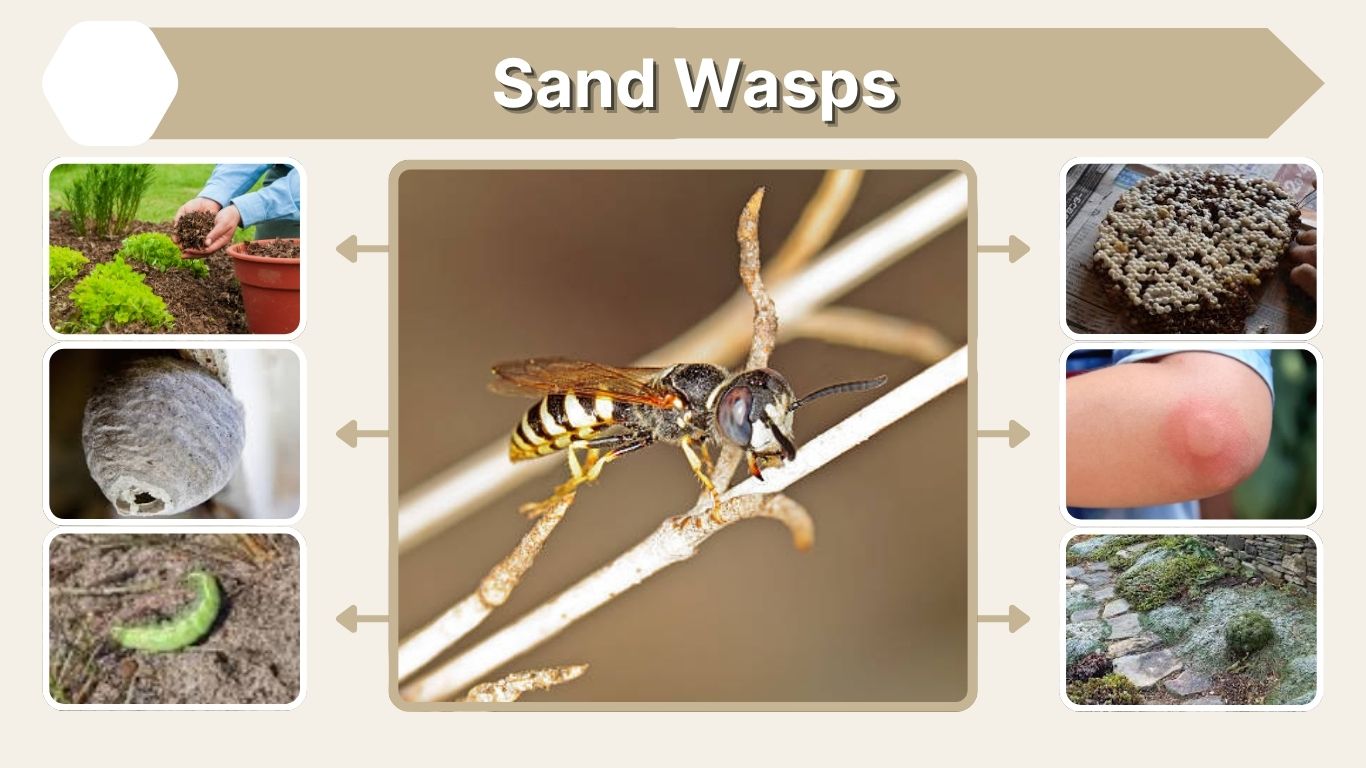
Sand wasps are often seen flying low over sandy soil, lawns, beaches, gardens, and sandboxes. Many people worry when they notice wasps digging holes in sand, but most sand wasps are solitary insects and are usually less aggressive than yellow jackets. Still, they can sting if handled, stepped on, or disturbed near their nest. This guide explains what sand wasps are, what their nests look like, whether they are dangerous, and when removal may be necessary.
What Are Sand Wasps?
Sand wasps are ground-nesting wasps that dig burrows in sandy or loose soil. The name “sand wasp” can describe several types of wasps, including Bembix sand wasps, American sand wasps, and other sand digger wasps. Many of them are solitary, which means each female usually builds and cares for her own nest instead of living in a large colony.
Sand Wasp Meaning
A sand wasp is not one single species. It is a common name used for wasps that prefer sandy ground for nesting. These wasps may appear around beaches, playgrounds, dry lawns, garden beds, and bare soil. Some are called sand digger wasps because they dig small tunnels in the ground.
Are Sand Wasps Solitary?
Most sand wasps are solitary rather than social. This means they do not usually form large colonies like yellow jackets or hornets. However, several females may nest in the same sandy area if the soil is suitable. Because of this, a yard or sandbox may look like it has a colony even when each wasp is using a separate burrow.
Why Do Sand Wasps Dig in Sand?
Female sand wasps dig holes to create nests for their eggs. Inside the burrow, the female places food for the larvae. Depending on the type of sand wasp, this food may include flies or other small insects. The sandy soil makes digging easier and provides a suitable place for the young wasps to develop.
What Does a Sand Wasp Look Like?
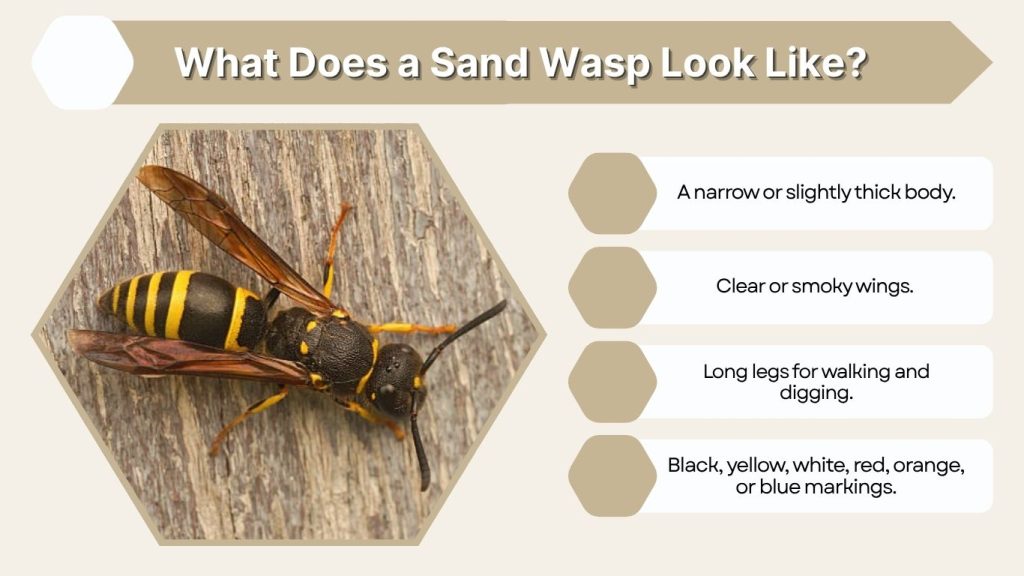
Sand wasps can vary in size, shape, and color, but many have narrow bodies, strong wings, and fast movement near the ground. Some look black and white, while others may have yellow, orange, red, blue, or metallic markings. Because several wasp species nest in sandy soil, appearance can differ from one location to another.
Common Sand Wasp Features
Sand wasps may have:
- A narrow or slightly thick body
- Clear or smoky wings
- Long legs for walking and digging
- Black, yellow, white, red, orange, or blue markings
- Quick flying behavior close to the ground
- A habit of entering small holes in sand or loose soil
Sand Wasp Size
The size of a sand wasp depends on the species. Some are small to medium-sized, while others are large enough to be mistaken for hornets or cicada killers. A large sand wasp may look alarming, but size alone does not mean it is aggressive. Identification should be based on nesting behavior, color pattern, and body shape.
Common Types of Sand Wasps
Several insects may be called sand wasps or sand digger wasps. These names are often used by homeowners when they see wasps burrowing in sand.
Common examples include:
- American sand wasp
- Bembix sand wasp
- Eastern sand wasp
- Western sand wasp
- Golden sand digger wasp
- Great golden sand digger wasp
- Thread-waisted sand wasp
- Red-banded sand wasp
- Black and white sand wasp
Sand Wasp Nest: What It Looks Like
A sand wasp nest usually looks like a small hole in sandy or loose soil. You may notice loose grains of sand around the entrance, especially if the wasp has recently been digging. Unlike paper wasp nests or hornet nests, sand wasp nests are underground and may be easy to miss unless you see wasps entering or leaving the holes.
Sand Wasp Hole
A sand wasp hole is often a small round opening in the ground. It may appear in dry sand, bare soil, or loose dirt. Sometimes there is a small mound or fan of sand around the entrance. If you watch carefully, you may see a wasp fly in, crawl out, or hover close to the opening.
Wasp Nest in Sand
A wasp nest in sand can be confusing because different insects nest underground. Sand wasps often make individual burrows, while yellow jackets may use underground cavities and defend them aggressively. If there are many wasps rushing in and out of one main opening, it may not be a sand wasp nest and should be handled carefully.
Sand Wasps in Sandbox
Sandboxes can attract sand wasps because the sand is loose, dry, and easy to dig. This is a concern when children play nearby. If you see wasps entering holes in a sandbox, keep children away until the area is checked.
To reduce sand wasps in a sandbox:
- Cover the sandbox when not in use
- Rake the sand regularly to disturb early burrows
- Replace old sand if activity continues
- Keep food, drinks, and trash away from the area
- Contact pest control if wasps are active around children
Do Sand Wasps Sting or Bite?
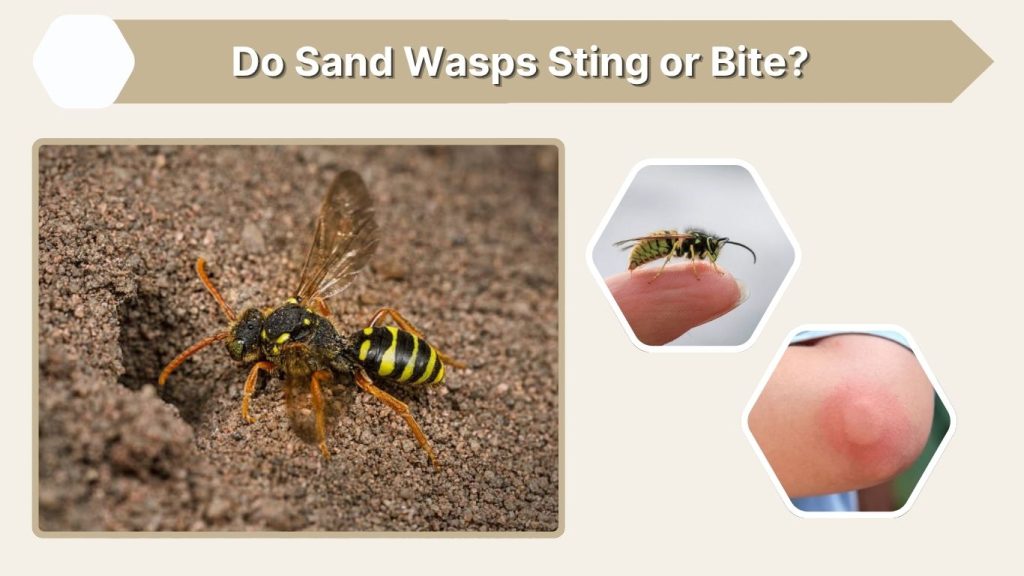
Sand wasps can sting, but they are not usually aggressive toward people. Most stings happen when someone steps on a wasp, grabs it, traps it in clothing, or disturbs an active nest. People often call it a sand wasp bite, but the painful reaction usually comes from a sting rather than an actual bite.
Do Sand Wasps Sting Humans?
Yes, female sand wasps can sting humans. Male wasps do not sting, but it is difficult to tell the difference quickly. A sting may cause sharp pain, redness, swelling, itching, or tenderness around the area. For most people, the reaction is mild, but anyone with a wasp allergy should take it seriously.
Do Sand Wasps Bite?
Sand wasps have mouthparts and may be able to bite, but biting is not their main defense. When people search for “sand wasp bite,” they are usually describing a sting. The stinger is what causes the painful reaction.
Are Sand Wasps Dangerous?
Sand wasps are usually not dangerous if left alone. They are less defensive than yellow jackets and often focus on digging, hunting insects, or returning to their nest. However, they may become a problem in sandboxes, playgrounds, patios, walkways, or yards where people walk barefoot.
Sand Wasp Sting Reaction and Treatment
A sand wasp sting can cause pain, redness, swelling, and itching around the sting area. Most mild reactions improve with basic home care, but allergic reactions can be serious. If someone has trouble breathing, swelling of the face or throat, dizziness, chest tightness, or widespread hives, seek emergency medical help immediately.
Sand Wasp Sting Pain
The pain from a sand wasp sting is usually sharp at first, then may turn into soreness or itching. The area may look red and slightly swollen for a short time. Avoid scratching because this can irritate the skin and increase the chance of infection.
Sand Wasp Sting Treatment
For a mild sand wasp sting:
- Move away from the nesting area
- Wash the sting with soap and water
- Apply a cold pack for swelling
- Use an antihistamine for itching if suitable
- Use pain relief medicine if needed
- Watch for signs of an allergic reaction
When a Sting Needs Medical Help
A sting needs urgent medical attention if symptoms spread beyond the sting site or affect breathing. People with known wasp allergies should follow their allergy action plan. Children, older adults, and people stung multiple times should also be monitored carefully.
What Do Sand Wasps Eat?
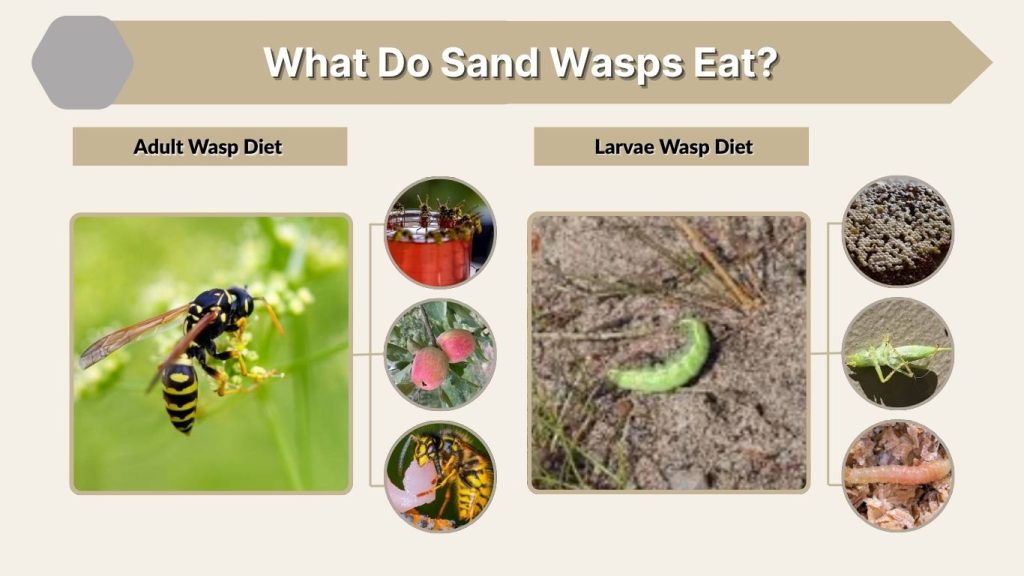
Sand wasps are often beneficial because they help control other insects. Adult sand wasps may feed on nectar from flowers, while females hunt insects to feed their larvae. Many sand wasps are not interested in human food the way yellow jackets can be, which is one reason they are usually less troublesome around picnics and trash cans.
Adult Sand Wasp Diet
Adult sand wasps commonly visit flowers for nectar. This gives them energy for flying, digging, mating, and hunting. Because they may visit blooms, they can sometimes be seen in gardens. Their flower activity does not usually mean they are attacking plants.
Sand Wasp Larvae Diet
Sand wasp larvae do not usually feed on nectar. The female wasp catches prey, often flies or other small insects, and places it inside the nest chamber. After the egg hatches, the larva feeds on the stored prey until it is ready to develop into the next stage.
Are Sand Wasps Beneficial?
Sand wasps can be helpful in the yard because they hunt insects. They may reduce fly activity and support the natural balance of a garden. If their nests are away from people, pets, and play areas, leaving them alone is often the best choice.
Sand Wasp Life Cycle
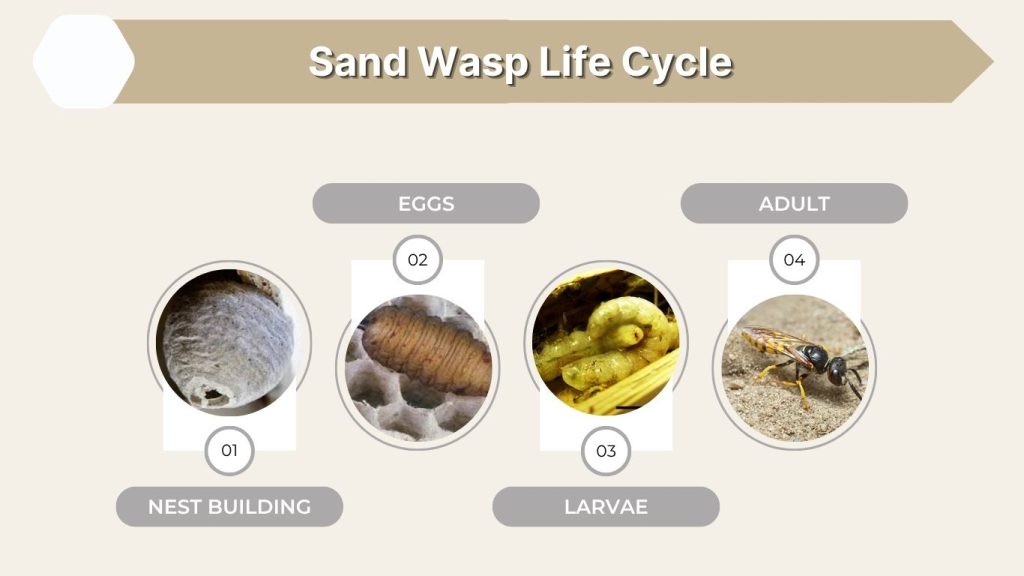
The sand wasp life cycle includes egg, larva, pupa, and adult stages. The female chooses a sandy nesting site, digs a burrow, lays an egg, and provides food for the larva. The young wasp develops underground before emerging as an adult. Activity is often seasonal and may increase during warm months.
Nest Building
The female sand wasp digs a tunnel in loose soil or sand. Some burrows are simple, while others may have small chambers. The nest entrance may remain visible as a small hole with loose sand around it.
Eggs and Larvae
After preparing the nest, the female lays an egg and provides insect prey for the larva. The larva feeds inside the protected burrow. This hidden development is why people may only notice adult wasps flying over the ground.
Adult Sand Wasps
Adult sand wasps emerge when conditions are suitable. They mate, feed, and continue the nesting cycle. Many are active during warm weather. The exact lifespan depends on the species, climate, and season.
Sand Wasp vs Yellow Jacket vs Cicada Killer
Sand wasps are often confused with other ground-nesting wasps. This matters because some species are more defensive than others. Yellow jackets can become aggressive around their underground nests, while many sand wasps and cicada killers are solitary. Correct identification helps you decide whether to leave them alone or arrange removal.
Sand Wasp vs Yellow Jacket
Yellow jackets are social wasps that may live in large underground colonies. They are usually more defensive than sand wasps and may sting repeatedly when their nest is disturbed. Sand wasps are more often solitary and less likely to chase people.
Sand Wasp vs Cicada Killer
Cicada killers are large ground-nesting wasps that hunt cicadas. Their size can frighten homeowners, but they are usually not aggressive unless handled. Sand wasps may be smaller and often hunt flies or other insects instead.
Quick Comparison Table
| Feature | Sand Wasp | Yellow Jacket | Cicada Killer |
| Nest location | Sandy or loose soil | Ground cavities or hidden spaces | Ground burrows |
| Behavior | Usually solitary | Social colony | Usually solitary |
| Aggression | Usually low | Often defensive | Usually low |
| Sting risk | Possible | Higher near nest | Possible but uncommon |
| Main concern | Sandboxes and bare soil | Colony defense | Large burrows |
| Removal need | If near people | Often needed near people | If high-risk area |
How to Get Rid of Sand Wasps Safely
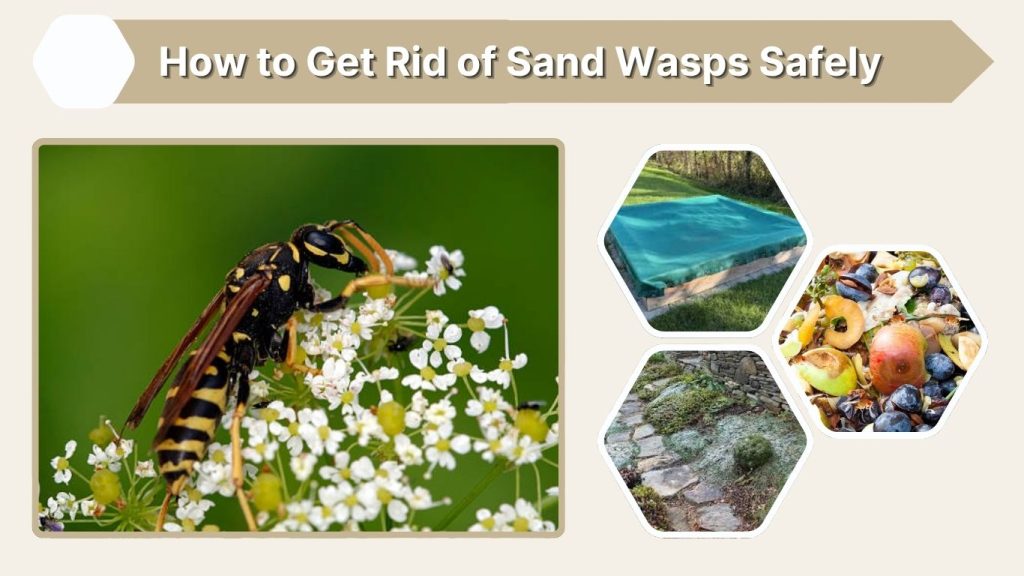
Sand wasp removal is not always needed. If the wasps are nesting in a quiet area and no one is at risk, they can often be left alone. Control becomes more important when nests appear in sandboxes, playgrounds, patios, walkways, or areas where people or pets may step on them.
Natural Ways to Discourage Sand Wasps
You can make the area less attractive by changing the nesting conditions. Sand wasps prefer loose, open soil, so covering or stabilizing the ground can reduce activity.
Try these prevention steps:
- Cover sandboxes after use
- Rake sandbox sand regularly
- Plant grass or groundcover on bare soil
- Add mulch or gravel where suitable
- Keep outdoor trash sealed
- Remove food waste that attracts flies
- Avoid leaving dry loose sand undisturbed
How to Get Rid of a Sand Wasp Nest
If a nest is in a risky location, keep people and pets away first. Do not dig into an active nest during the day. If you are unsure whether the insects are sand wasps or yellow jackets, do not treat the nest yourself. Yellow jackets can respond aggressively.
Sand Wasp Insecticide and Spray
Labeled wasp sprays or insecticide dust may be used for some ground-nesting wasps, but always follow the product label. Avoid using chemicals in children’s sandboxes unless the product is specifically labeled as safe for that use. In many cases, replacing sandbox sand and using a tight cover is safer.
When to Call Pest Control
Call a pest control professional if:
- Wasps are active in a sandbox or playground
- Someone nearby has a sting allergy
- There are many holes in one area
- The nest is near a door, patio, or walkway
- You cannot identify the wasp
- You suspect yellow jackets instead of sand wasps
Sand Wasps by Location
Sand wasps and similar ground-nesting wasps can appear in many regions where sandy or loose soil is available. They may be noticed in coastal areas, dry lawns, gardens, playgrounds, and open soil. Local species can vary by state or country, but their nesting behavior is often similar.
Sand Wasps in Florida, Texas, and California
Warm regions with sandy soil can support many ground-nesting wasps. Searches for Florida sand wasp, sand wasp Texas, and sand wasp California often come from homeowners who find holes in dry soil, beaches, or landscaped areas.
Sand Wasps in Michigan, Minnesota, Ohio, and Indiana
Sand wasps can also appear in northern and Midwestern states during warm months. They may nest in lawns, sandy garden beds, playgrounds, or bare patches of soil.
Sand Wasps in Washington, Colorado, Utah, and Ontario
In western and northern regions, sand wasps may use dry, open soil when conditions are suitable. They are usually seasonal and may disappear when weather changes or the nesting cycle ends.
How to Prevent Sand Wasps
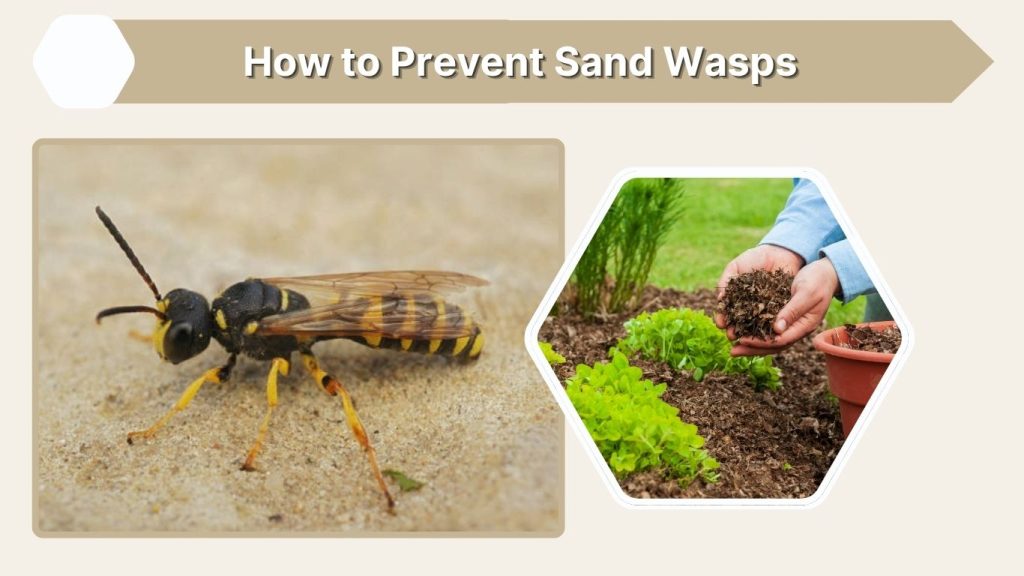
Preventing sand wasps is easier than removing active nests. The goal is to reduce loose, dry, bare ground near people. This is especially important around sandboxes, patios, walkways, and play areas where accidental stings are more likely.
Prevention Tips
- Cover sandboxes with a tight lid
- Keep lawns thick and healthy
- Fill inactive holes after wasps leave
- Use mulch or plants on bare soil
- Reduce flies by sealing trash
- Check sandy areas before children play
- Wear shoes near active ground nests
FAQs
What are sand wasps?
Sand wasps are ground-nesting wasps that dig burrows in sandy or loose soil. Many are solitary and use their nests to raise larvae.
Do sand wasps sting?
Yes, female sand wasps can sting. However, they are usually not aggressive unless handled, stepped on, trapped, or disturbed.
Are sand wasps dangerous?
They are usually not dangerous to most people, but they can be a concern near children, pets, walkways, or people with wasp allergies.
How do you get rid of sand wasps?
Reduce loose sandy nesting areas, cover sandboxes, grow grass or groundcover, and call pest control for nests in risky places.
What kills sand wasps?
Labeled wasp sprays or insecticide dust may kill sand wasps, but they should be used carefully and only according to the product label.