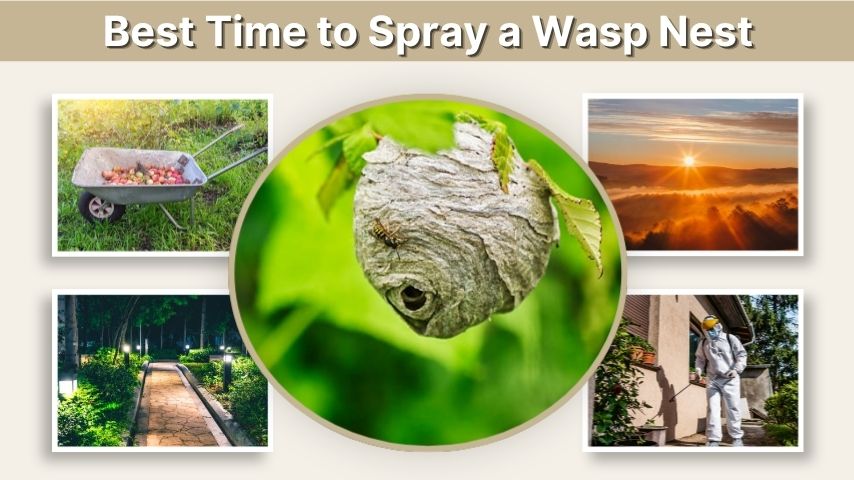
The best time to spray a wasp nest is usually at night or very early in the morning when wasps are less active and most are inside the nest. Timing matters because spraying during peak activity can make wasps aggressive and increase the risk of stings. With the right timing, safety steps, and product choice, nest treatment becomes more controlled and effective.
Why Timing Matters When Spraying a Wasp Nest
Spraying a wasp nest is not just about using the right product. The time of day, weather, season, and nest location all affect how safe and successful the treatment will be. Wasps are protective insects, and when they feel threatened, they can attack quickly.
Most wasps become more active as the day warms up. They leave the nest to search for food, gather materials, and defend their colony. If you spray during this busy period, many wasps may be outside the nest and return later. That means the nest may remain active even after treatment.
Wasp Activity Changes Throughout the Day
Wasps are most active during daylight hours, especially late morning through afternoon. Warm temperatures give them more energy, and sunlight helps them navigate. During this time, the nest may have a steady flow of wasps entering and leaving.
At night, their activity drops. Most wasps return to the nest, making treatment more effective. Because they are slower in cooler, darker conditions, the chance of being swarmed is lower.
Treating the Whole Colony
A wasp spray works best when it reaches the colony inside the nest. If many wasps are away foraging, the spray may kill only part of the colony. Returning wasps may continue using the nest or become aggressive around the area.
This is why timing is so important. Spraying when most wasps are inside gives the product a better chance of working fully.
Best Time of Day to Spray a Wasp Nest

The safest and most effective time to spray a wasp nest is after sunset, at night, or just before sunrise. These are the times when wasps are least active and most likely to be inside the nest.
Night Is Usually the Best Choice
Nighttime is often the best time to spray because wasps have returned to the nest and are resting. Cooler temperatures also make them slower. This gives you more control and reduces the chance of immediate attack.
However, spraying at night requires caution. You need enough light to see, but bright lights can disturb the wasps. A flashlight with a red filter or a light aimed away from the nest can help you see without attracting too much attention.
Early Morning Can Also Work
Very early morning, before the sun warms the nest, is another good option. Wasps are still sluggish from the cooler night temperatures, and most are usually still inside. This can be a practical option if nighttime treatment feels unsafe.
The key is to spray before the colony becomes active. Once the day heats up, wasps begin moving, and treatment becomes riskier.
Avoid Spraying During Midday
Midday is usually the worst time to spray a wasp nest. This is when wasps are most active, alert, and defensive. Many may be outside the nest, so the treatment may not reach the full colony.
Spraying during the day can also trigger fast defensive behavior. If you disturb the nest when wasps are active, they may swarm and chase the source of the threat.
| Time | Wasp Activity | Spray Effectiveness | Safety Level |
|---|---|---|---|
| Night | Low | High | Safer if done carefully |
| Early morning | Low to moderate | High | Usually safer |
| Midday | High | Lower | Riskier |
| Late afternoon | Moderate to high | Medium | Not ideal |
| Cold weather | Low | Often good | Safer, depending on nest location |
Best Weather Conditions for Spraying
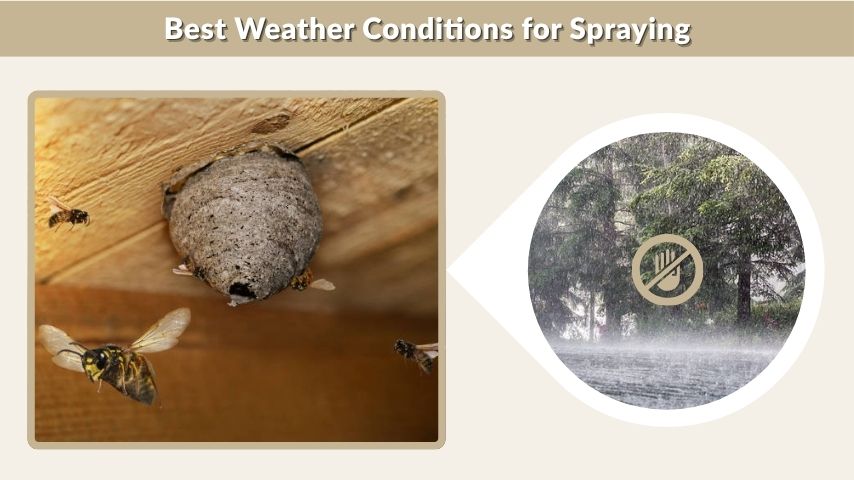
Weather plays a major role in wasp behavior. Even if you choose the right time of day, poor weather conditions can make spraying unsafe or ineffective.
Choose Calm Weather
Spray a wasp nest when the air is calm. Wind can blow the spray away from the nest or back toward you. This reduces the product’s effectiveness and may expose you to chemicals.
Calm conditions help the spray reach the nest entrance and surrounding surface. This is especially important when using aerosol wasp sprays designed to shoot from a distance.
Avoid Rainy Conditions
Rain can wash away spray before it works properly. Wet surfaces may also prevent the product from sticking to the nest. If heavy rain is expected soon, it is better to wait for a dry period.
A dry night or early morning is ideal. The spray can remain in place long enough to affect the colony.
Cooler Temperatures Are Better
Wasps move more slowly in cooler temperatures. That is one reason night and early morning treatments are safer. If the weather is hot, even evening wasps may remain active longer.
A cool, dry, still evening often creates the best conditions for treatment.
Best Season to Spray a Wasp Nest
The season can also affect how easy or difficult it is to treat a wasp nest. Wasp colonies grow over time, so a nest found early in the season is usually easier to manage than one discovered later.
Spring Nests Are Easier to Treat
In spring, wasp colonies are smaller. A queen begins building the nest and raising the first workers. At this stage, the nest may contain fewer wasps, making treatment simpler and less risky.
If you notice early nest-building activity, addressing it quickly can prevent a larger colony from forming later.
Summer Nests Are More Active
By summer, the colony may be much larger. More workers are present, and the nest is more actively defended. Spraying a summer nest requires extra caution because there may be many wasps inside and around it.
This is also when people are more likely to notice wasp problems near patios, gardens, sheds, rooflines, and outdoor eating areas.
Late Summer and Fall Can Be Riskier
Wasps may become more aggressive in late summer and early fall. Food sources change, colonies are larger, and wasps may be more attracted to sugary foods and drinks.
Treating a nest during this period can still be effective, but safety becomes even more important. Large nests, hidden nests, or nests near living areas may need professional help.
How to Prepare Before Spraying
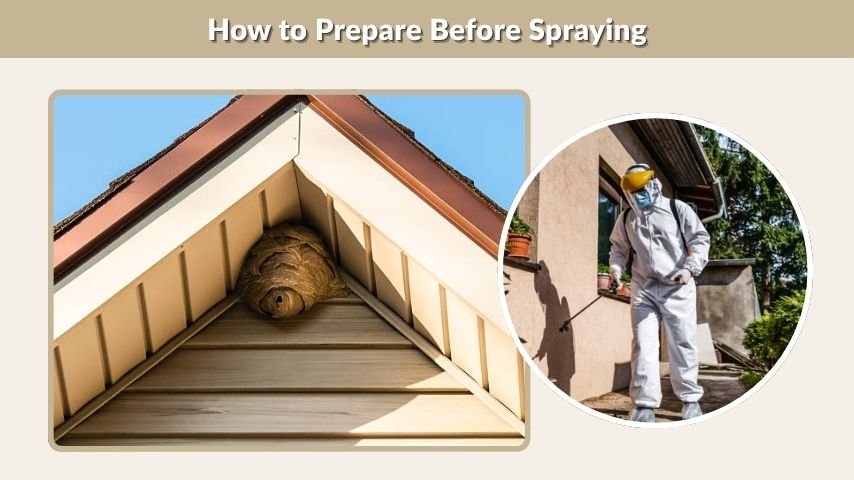
Good preparation can reduce the risk of stings and improve the chance of success. Never approach a wasp nest casually, even if it looks small.
Wear Protective Clothing
Before spraying, cover as much skin as possible. Wasps can sting through thin fabric, so thicker clothing is better.
Useful protective clothing includes:
- Long sleeves and long pants
- Closed shoes or boots
- Gloves
- Eye protection
- A hat or hood
- Clothing with tight cuffs
Avoid loose openings where wasps could crawl inside. Do not wear strong perfume, scented lotions, or bright floral patterns because these may attract insects.
Plan an Escape Route
Before spraying, decide where you will go if wasps become active. Move obstacles out of the way and avoid standing on unstable surfaces.
A safe escape route should be:
- Clear of tools, hoses, and furniture
- Away from the nest entrance
- Easy to reach quickly
- Not blocked by doors or gates
- Far from children and pets
Do not spray from a ladder if you can avoid it. A sudden wasp reaction can cause falls, which may be more dangerous than the stings themselves.
Keep People and Pets Away
Make sure children, pets, and other people are indoors before treatment. Wasps may fly away from the nest after spraying, and treated areas may contain pesticide residue.
Close nearby windows and doors, especially if the nest is near the house.
How to Spray a Wasp Nest Safely
Spraying a wasp nest should be done carefully and only when the nest is accessible. If the nest is inside a wall, high on a building, underground, or near electrical fixtures, professional help is usually safer.
Read the Product Label First
Always read and follow the instructions on the wasp spray label. Different products have different distances, application methods, and safety warnings.
The label will tell you:
- How far the spray can reach
- Where the product can be used
- How much to apply
- How long to stay away
- Whether repeat treatment is needed
Never mix pesticide products or use more than the label recommends.
Spray the Nest Entrance
The entrance is the most important target because wasps move in and out through that opening. Stand at the recommended distance and spray directly into the entrance first.
After treating the entrance, spray the rest of the nest surface if the label allows it. Leave the area immediately after spraying.
Do Not Knock the Nest Down Right Away
After spraying, do not remove the nest immediately. Some wasps may still be alive inside. Wait at least 24 hours, or follow the product label’s recommended waiting period.
Check the nest from a safe distance the next day. If there is still activity, another treatment may be needed, or a pest control professional may be the safer option.
When You Should Not Spray a Wasp Nest Yourself
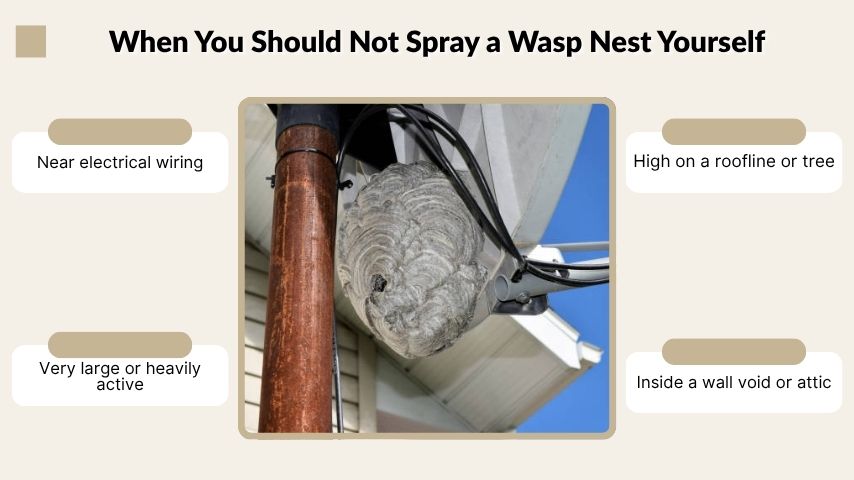
Not every wasp nest is safe for DIY treatment. Some situations are too risky and should be handled by trained professionals.
Avoid DIY Treatment for Dangerous Nest Locations
Some nests are difficult to reach or easy to disturb accidentally. These situations increase the risk of stings, falls, or spreading wasps into living spaces.
Avoid spraying the nest yourself if it is:
- High on a roofline or tree
- Inside a wall void or attic
- Near electrical wiring
- Underground with heavy wasp traffic
- Close to a doorway or busy walkway
- Very large or heavily active
Hidden nests are especially difficult because you may not know where the full colony is located. Spraying the outside opening may drive wasps deeper into the structure.
Be Extra Careful With Allergies
If you or someone nearby is allergic to wasp stings, do not attempt treatment. Wasp stings can cause serious allergic reactions in some people. In that situation, hiring a professional is the safest choice.
Even people without known allergies can react badly to multiple stings. Safety should always come before saving money.
What to Do After Spraying
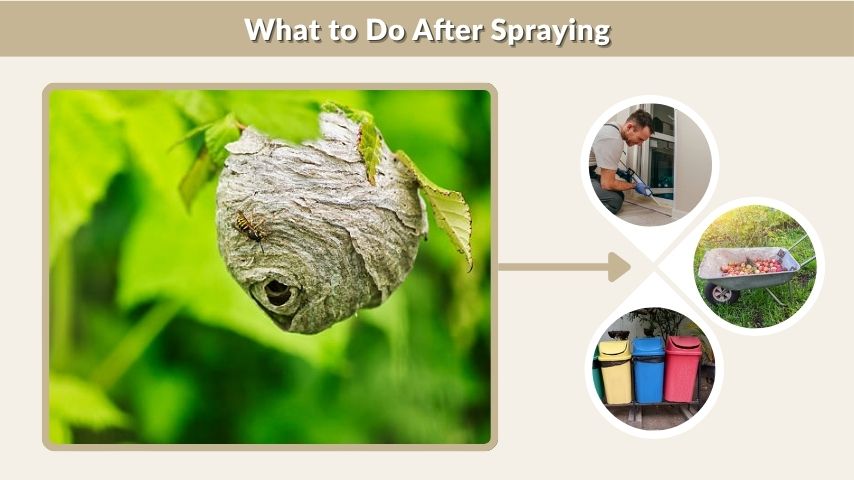
After treatment, give the spray time to work. Do not touch the nest, seal openings, or clean the area too quickly.
Watch for Continued Activity
The next day, observe the nest from a safe distance. A successful treatment usually results in little or no wasp movement. If wasps are still entering and leaving, the colony may still be active.
In that case, you may need a second treatment according to the label instructions. If activity continues after repeated treatment, call a professional.
Remove the Nest Carefully
Once there is no activity, the nest can usually be removed. Wear protective clothing and use a long tool if needed. Place the nest in a sealed bag and dispose of it according to local rules.
For nests inside walls or attics, removal may require extra care. Dead insects and abandoned nest material can attract other pests.
Prevent Future Nests
After the nest is gone, inspect the area for conditions that attract wasps. Preventing future nests is often easier than treating active ones.
Helpful prevention steps include:
- Seal cracks and gaps around the home
- Keep trash bins tightly closed
- Remove fallen fruit from yards
- Cover outdoor food and drinks
- Check sheds, eaves, and porch ceilings in spring
Regular inspection in spring can help you catch small nests before they grow.
Common Mistakes to Avoid
Many wasp spray problems happen because people act too quickly or choose the wrong time. Avoiding common mistakes can make treatment much safer.
Spraying During the Day
Spraying during the day is one of the biggest mistakes. Wasps are active, alert, and more likely to defend the nest. Many are also away from the nest, so the colony may survive.
Standing Too Close
Most wasp sprays are designed to work from a distance. Standing too close increases the risk of stings and chemical exposure. Use the distance recommended on the label.
Blocking the Nest Entrance Too Soon
Some people try to seal a nest entrance immediately after spraying. This can trap live wasps inside walls or force them into indoor spaces. Wait until activity has stopped before sealing entry points.
Using Fire or Water
Never use fire, gasoline, or boiling water to remove a wasp nest. These methods are dangerous and can cause burns, property damage, or uncontrolled wasp attacks.
FAQs
What is the best time to spray a wasp nest?
The best time to spray a wasp nest is at night or very early in the morning. Wasps are less active during these times, and most are inside the nest. This makes treatment more effective and reduces the chance of being stung.
Can I spray a wasp nest during the day?
It is not recommended to spray a wasp nest during the day. Wasps are more active, aggressive, and alert in daylight. Many may also be away from the nest, which means the spray may not reach the full colony.
How long should I wait after spraying a wasp nest?
Wait at least 24 hours before approaching or removing the nest, unless the product label gives different instructions. Watch from a safe distance to make sure there is no more activity. If wasps are still present, another treatment or professional help may be needed.
Is it better to spray wasps at night or morning?
Night is usually best because wasps are resting and most are inside the nest. Early morning can also work if temperatures are still cool and activity is low. Avoid waiting until the sun warms the nest, as wasps become active quickly.
When should I call a professional for a wasp nest?
Call a professional if the nest is large, high, hidden inside a wall, underground, or near electrical areas. You should also avoid DIY treatment if anyone nearby is allergic to stings. Professional treatment is safer for difficult or high-risk nests.