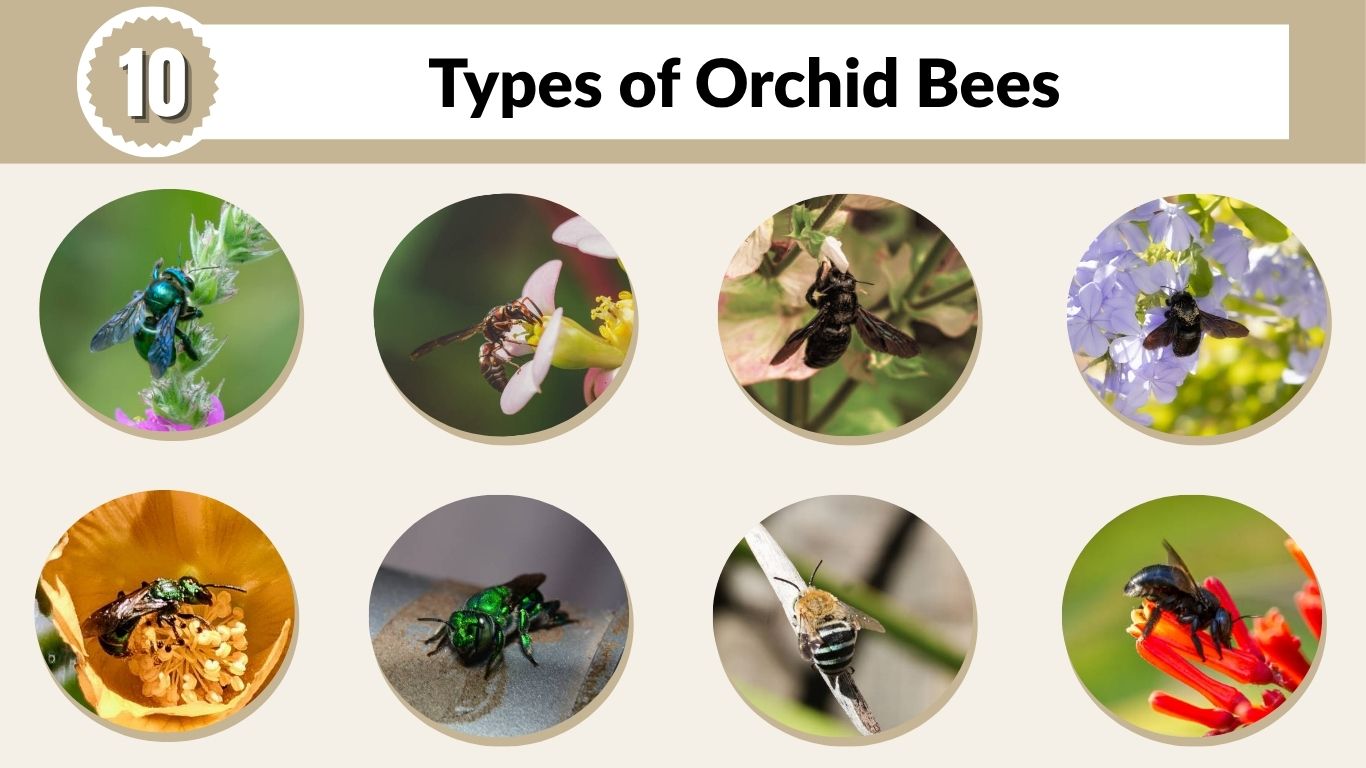
Orchid bees are colorful tropical bees known for their shiny bodies, fast flight, and close relationship with fragrant flowers. Many species have metallic green, blue, or dark bodies that make them stand out in pictures. Male orchid bees are especially interesting because they collect scents from orchids and other plants, helping with pollination while searching for fragrances.
1. Florida Green Orchid Bee
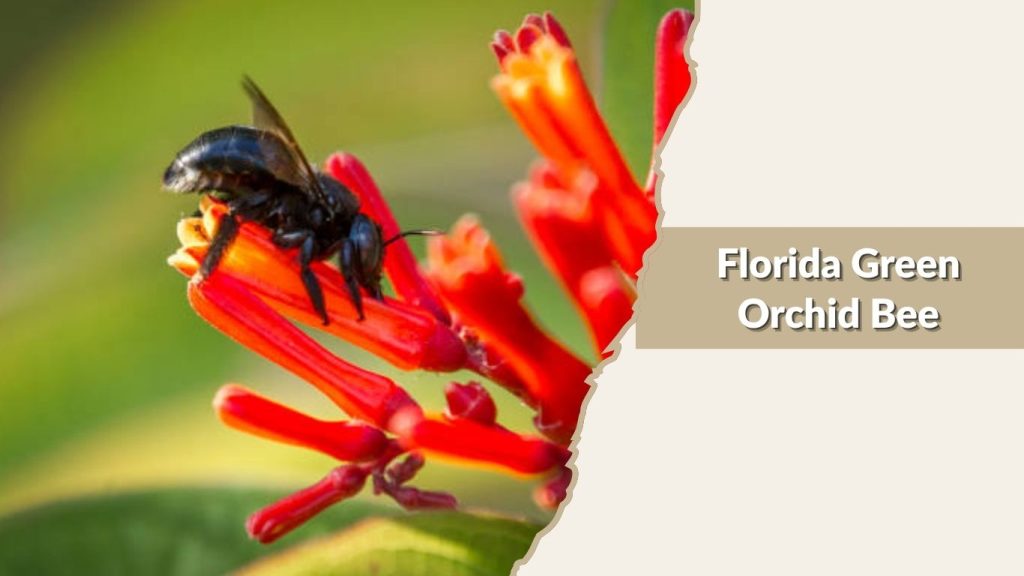
The Florida green orchid bee is a bright metallic bee often noticed because of its shiny green body. It is one of the orchid bees found in Florida and is closely related to other green orchid bees. Its colorful body, fast flight, and flower-visiting habit make it easier to recognize.
Identification
This bee has a brilliant metallic green body that may shine blue-green under sunlight. Its body is slender, smooth, and reflective. The wings are usually clear to slightly smoky. Males are often seen visiting flowers and collecting scented compounds.
Characteristics
- Bright metallic green body
- Slender and shiny appearance
- Fast and active flight
- Often visits flowers for nectar
- Males collect fragrances from plants
- Commonly seen in warm areas
Habitat
Florida green orchid bees are usually found in gardens, parks, forests, and areas with flowering plants. They prefer warm environments where nectar sources and fragrant flowers are available. In Florida, they may also appear around ornamental plants and backyard gardens.
Picture Guide
In pictures, look for a small bee with a smooth, jewel-like green body. The shiny metallic color is the most helpful feature. It may look similar to other green orchid bees, so body shape, location, and markings can help with identification.
2. Green Orchid Bee
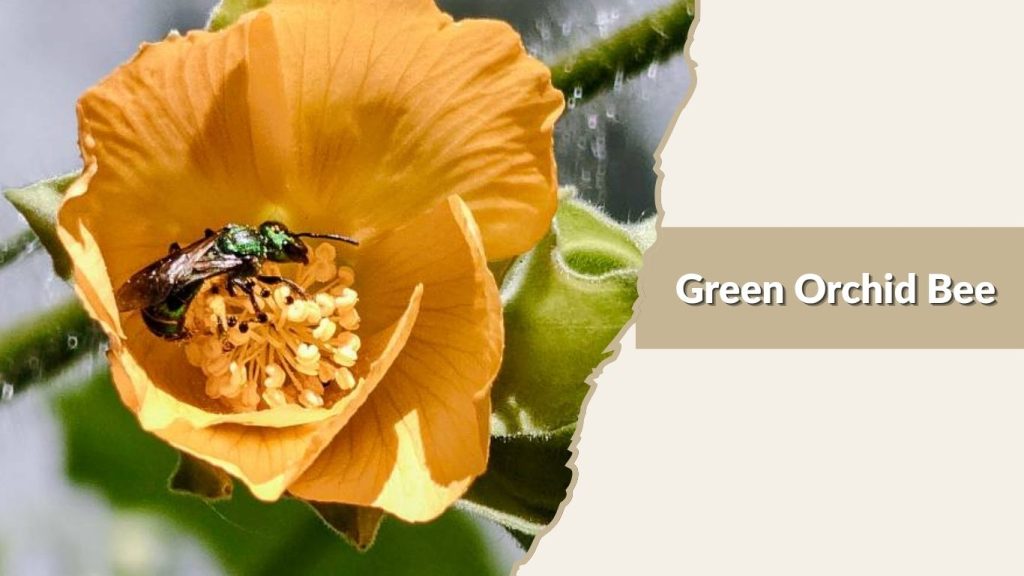
The green orchid bee is known for its beautiful metallic green color and active movement around flowers. It belongs to a group of bees that are important pollinators in tropical and subtropical regions. Its shining body often makes it stand out from ordinary bees.
Identification
This bee usually has a bright green body with a smooth, reflective surface. Some individuals may show blue or golden tones depending on the light. It has a narrow body, long legs, and clear wings. Its large eyes and fast flight also help identify it.
Characteristics
- Metallic green body color
- Smooth and reflective surface
- Long legs and narrow body
- Strong flying ability
- Visits flowers for nectar and fragrance
- Important pollinator for some plants
Habitat
Green orchid bees are commonly found in forests, gardens, and tropical plant areas. They prefer places with many flowers and strong plant scents. These bees are often active in warm, sunny conditions and may travel long distances while searching for food.
Picture Guide
In photos, the green orchid bee usually appears shiny and jewel-like. Its metallic green body is the main feature to notice. Pictures may show it feeding from flowers, resting on leaves, or flying quickly between plants.
3. Imperial Orchid Bee
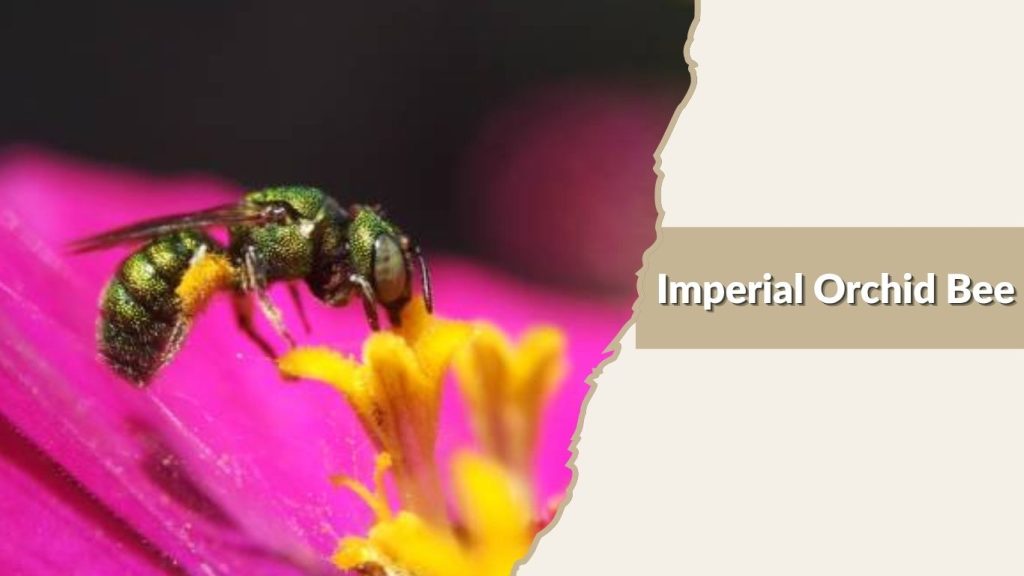
The imperial orchid bee is a large and impressive orchid bee known for its strong body and attractive color. It is often found in tropical forests where flowering plants are abundant. Its size and shining appearance make it one of the more noticeable orchid bees.
Identification
The imperial orchid bee usually has a metallic green or blue-green body with a sturdy shape. It may appear larger than many other orchid bees. Its wings can look slightly dark or smoky. The body surface is smooth and glossy, giving it a polished look.
Characteristics
- Large body compared to many orchid bees
- Metallic green or blue-green color
- Smooth and shiny body surface
- Strong and fast flight
- Often found around tropical flowers
- Males collect plant fragrances
Habitat
Imperial orchid bees are mostly associated with tropical forests and flower-rich areas. They may visit orchids, forest flowers, and fragrant plants. These bees prefer warm, humid environments where nectar and scent sources are common throughout the year.
Picture Guide
In pictures, look for a larger orchid bee with a glossy metallic body. The green or bluish shine, strong build, and dark-looking wings can help separate it from smaller green orchid bees.
4. Metallic Green Orchid Bee
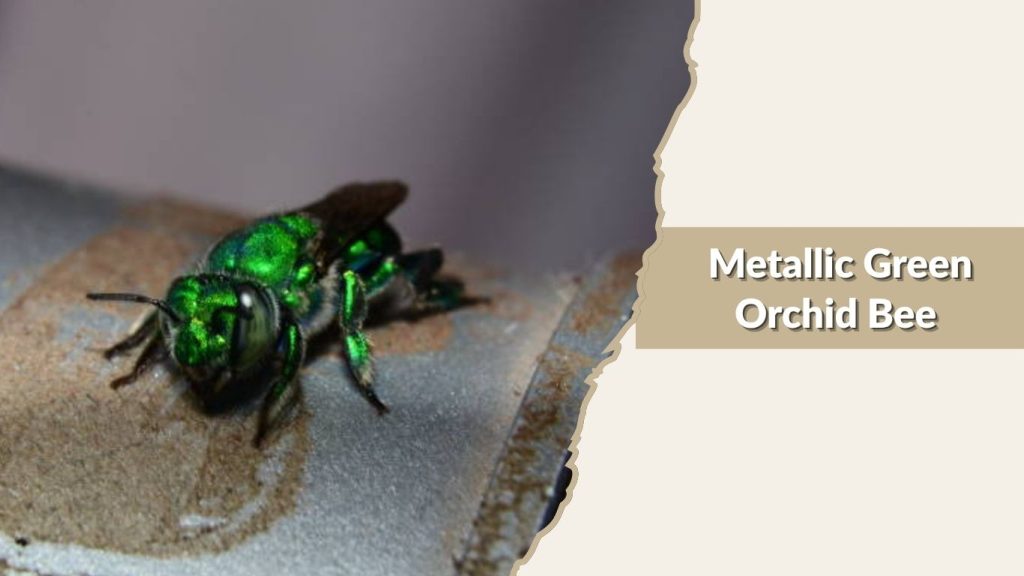
The metallic green orchid bee is admired for its bright, reflective body color. Its shiny green appearance can make it look almost jewel-like when seen in sunlight. Like other orchid bees, it is an active pollinator and often visits flowers for nectar and scent.
Identification
This bee has a metallic green body that may reflect blue, gold, or emerald tones. The body is smooth, slim, and highly shiny. Its wings are usually transparent or lightly tinted. The legs are dark and slender, helping it move quickly around flowers.
Characteristics
- Bright metallic green body
- Jewel-like shine in sunlight
- Slim and smooth body shape
- Quick movement around flowers
- Clear or slightly tinted wings
- Helps pollinate flowering plants
Habitat
Metallic green orchid bees are commonly found in warm forests, gardens, and tropical plant habitats. They prefer areas with plenty of blooming flowers. They may also appear near orchids, fruiting plants, and other scented vegetation.
Picture Guide
In pictures, focus on the bee’s shiny green body. It may look like a small green jewel on a flower. The smooth body, narrow shape, and bright metallic reflection are the easiest features to recognize.
5. Bazinga Orchid Bee
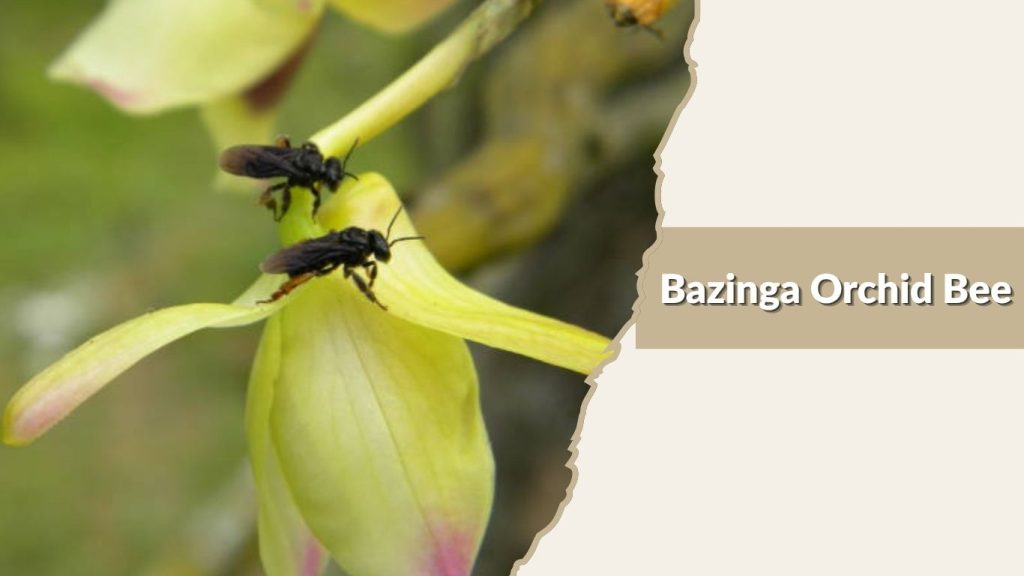
The Bazinga orchid bee is a uniquely named orchid bee known for its metallic green appearance. Its name became popular because it was inspired by the word “Bazinga.” This bee is closely related to other green orchid bees and may look similar at first glance.
Identification
The Bazinga orchid bee has a shiny green body with a smooth metallic surface. It is small to medium in size and may show blue-green reflections in strong light. Because it resembles other green orchid bees, careful identification may require close attention to body details.
Characteristics
- Metallic green body
- Smooth and reflective appearance
- Similar to other green orchid bees
- Active around flowers
- Males collect fragrant compounds
- Found in warm natural habitats
Habitat
Bazinga orchid bees are associated with warm forested areas and flower-rich habitats. They may visit flowering plants for nectar and fragrance. Like many orchid bees, they are linked to tropical environments where orchids and scented plants are common.
Picture Guide
In pictures, the Bazinga orchid bee looks like a bright green metallic bee. Since it can resemble other green orchid bees, photos should show the body clearly from different angles for better identification.
6. Giant Orchid Bee
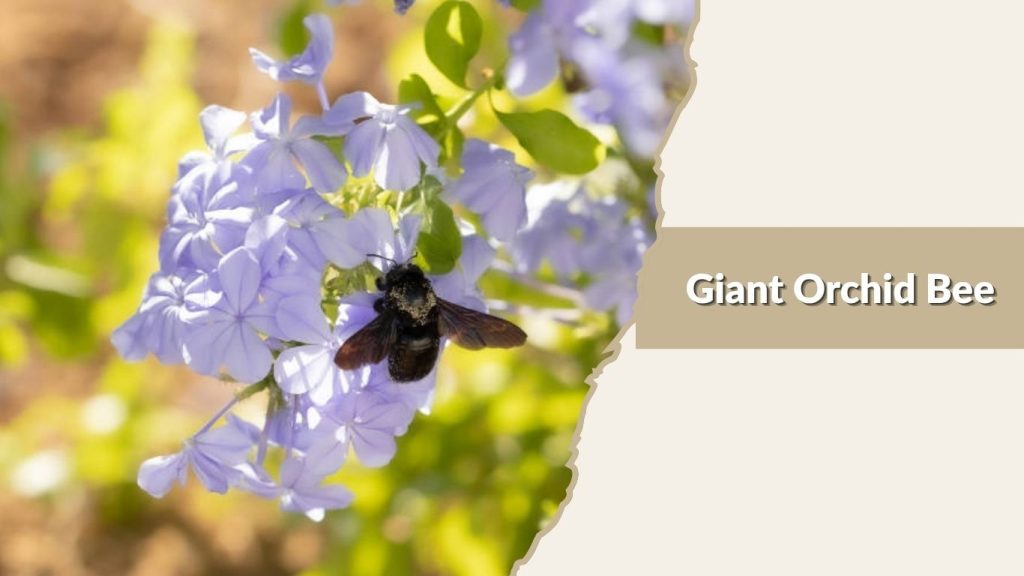
The giant orchid bee is a large and noticeable orchid bee known for its strong body and active flight. It is often found in tropical areas where flowers, orchids, and fragrant plants are common. Because of its size and bold appearance, it is easier to recognize than many smaller orchid bees.
Identification
This bee usually has a large, sturdy body with dark coloring and lighter markings. Some individuals may show yellowish bands or pale hairs on the body. Its wings can appear smoky or dark. The strong build and large size help separate it from smaller metallic green orchid bees.
Characteristics
- Large and strong body
- Dark body with lighter markings
- Smoky or dark-looking wings
- Fast and powerful flight
- Visits flowers for nectar
- Males collect plant fragrances
Habitat
Giant orchid bees are commonly found in tropical forests, forest edges, gardens, and flower-rich areas. They prefer warm, humid places where nectar and fragrant plants are available. These bees may visit orchids and other scented flowers while searching for food and fragrance sources.
Picture Guide
In pictures, look for a large orchid bee with a strong body and dark wings. Its size, darker color, and sturdy appearance make it different from the smaller shiny green orchid bees.
7. Banded Orchid Bee
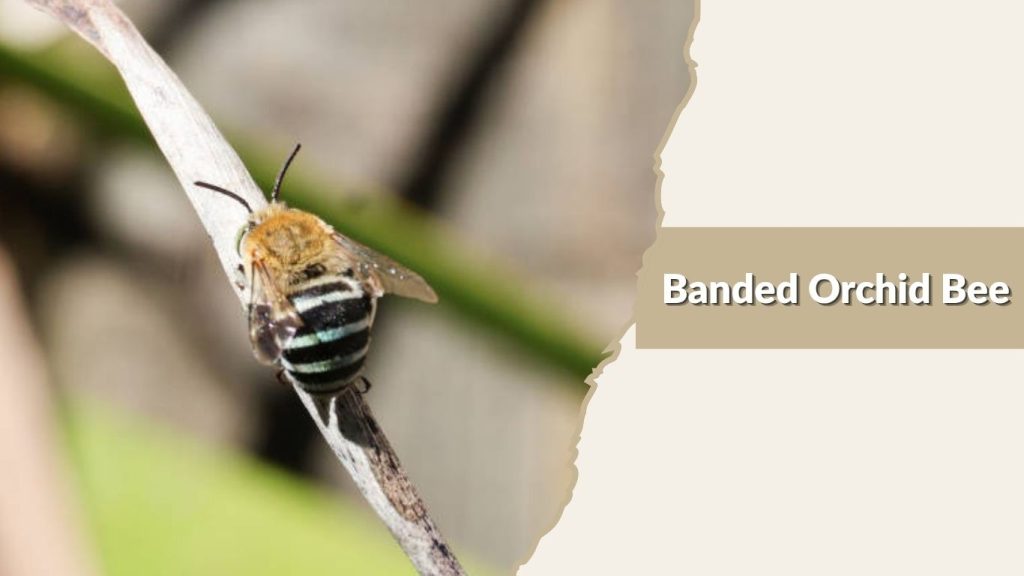
The banded orchid bee is recognized by the bands or stripes that appear across its body. It is an active flower visitor and belongs to the colorful group of orchid bees. Its patterned body makes it easier to identify in pictures compared with plain metallic green species.
Identification
This bee often has a dark body with pale or yellowish bands, especially across the abdomen. Its body may look hairy, and the wings can appear slightly smoky. The banded pattern is the most useful feature for identification. It may look larger and heavier than some green orchid bees.
Characteristics
- Noticeable body bands or stripes
- Dark body with pale markings
- Hairy appearance
- Strong flying ability
- Visits flowers for nectar
- Often active in warm habitats
Habitat
Banded orchid bees usually live in tropical forests, gardens, and areas with many flowering plants. They prefer warm environments where nectar, pollen, and plant fragrances are easy to find. They may also be seen around forest edges and natural clearings.
Picture Guide
In photos, focus on the pale bands across the darker body. The striped look, hairy body, and smoky wings can help identify this bee. It may appear on flowers, leaves, or flying near scented plants.
8. Black Orchid Bee
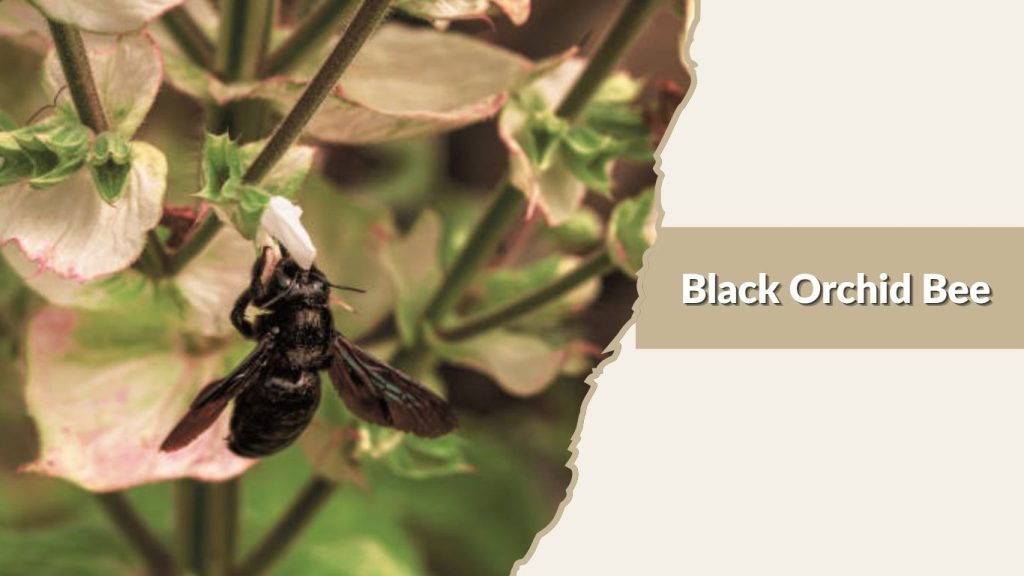
The black orchid bee is a dark-colored orchid bee with a bold and heavy appearance. Unlike the shiny green orchid bees, this type is usually darker and less metallic. It is commonly found in warm regions where flowering plants and forest habitats provide food and shelter.
Identification
This bee usually has a black or very dark body with a strong, hairy build. Some individuals may show faint lighter hairs or markings. Its wings may look smoky brown or dark. The deep body color and sturdy shape are key features for recognizing it.
Characteristics
- Black or very dark body
- Strong and hairy appearance
- Smoky or dark wings
- Active flower visitor
- Fast and steady flight
- Males collect fragrant compounds
Habitat
Black orchid bees are often found in tropical forests, gardens, forest edges, and warm plant-rich areas. They visit flowers for nectar and may search for plant scents. Their darker body helps them stand out from bright metallic orchid bees in identification guides.
Picture Guide
In pictures, look for a dark, sturdy bee with a hairy body and smoky wings. The black color is the main clue. It may be photographed feeding on flowers or resting near forest plants.
9. Suriname Orchid Bee
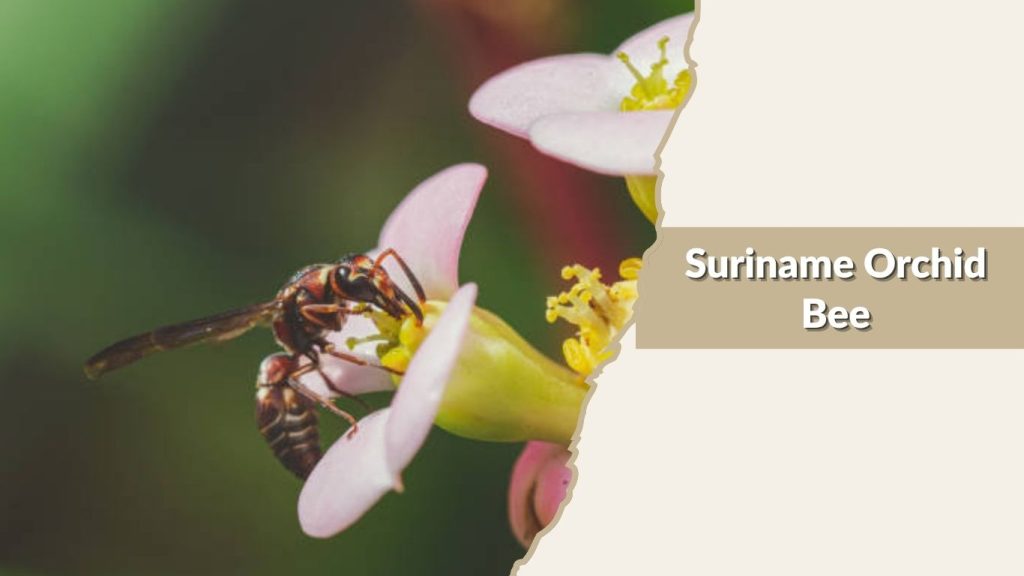
The Suriname orchid bee is a colorful orchid bee associated with tropical regions and flower-rich habitats. It is known for its attractive body color and active movement around plants. Like other orchid bees, it plays a role in pollination and is often connected with fragrant flowers.
Identification
This bee may show metallic green, blue-green, or yellowish tones depending on the species and lighting. Its body is usually smooth, shiny, and compact. The wings may appear clear or lightly tinted. Its bright color and orchid-bee body shape help with recognition.
Characteristics
- Shiny metallic body
- Green or blue-green color tones
- Compact and active form
- Visits tropical flowers
- Strong flying ability
- Important pollinator in warm habitats
Habitat
Suriname orchid bees are usually found in tropical forests, gardens, and areas with many flowering plants. They prefer warm, humid environments where nectar and fragrances are available. These bees may visit orchids, forest flowers, and other scented plants.
Picture Guide
In photos, look for a bright metallic orchid bee with a smooth body. The green or blue-green shine, clear wings, and flower-visiting behavior can help identify it. Location may also help because this bee is linked with tropical regions.
10. Emerald Cuckoo Orchid Bee
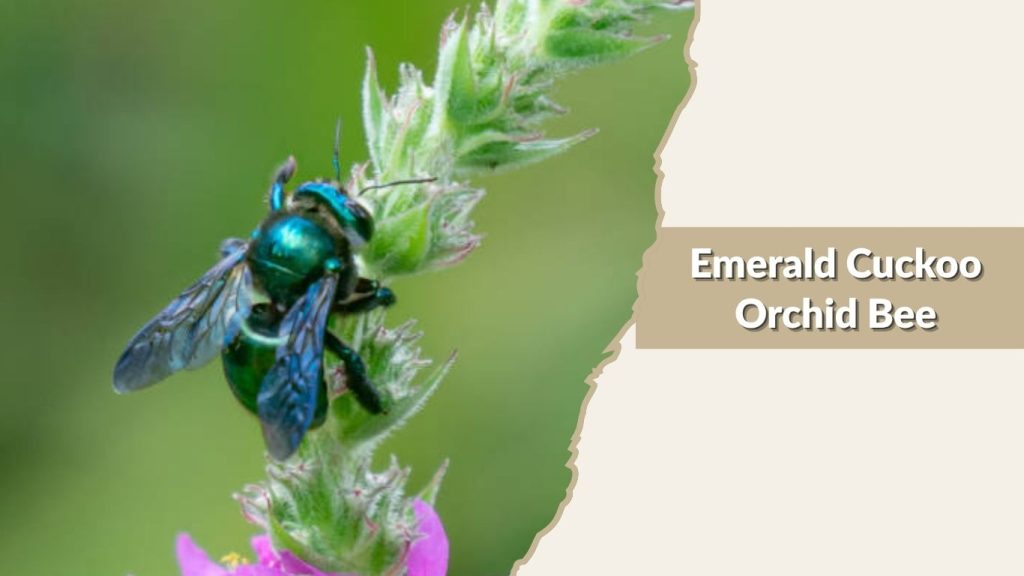
The emerald cuckoo orchid bee is a striking orchid bee with a bright green metallic body. It is called a cuckoo orchid bee because it is linked to parasitic behavior, using the nests of other bees instead of building its own. Its shiny emerald color makes it especially attractive in pictures.
Identification
This bee usually has a brilliant emerald-green body with a smooth, reflective surface. It may appear blue-green in certain light. The body is compact and polished, with clear or slightly smoky wings. Its jewel-like color is the most noticeable identification feature.
Characteristics
- Bright emerald-green metallic body
- Smooth and shiny surface
- Cuckoo-like nesting behavior
- Clear or lightly smoky wings
- Fast movement around flowers
- Often associated with other orchid bees
Habitat
Emerald cuckoo orchid bees are found in warm tropical habitats, especially forests and flower-rich areas. They may visit flowers for nectar while also searching for host bee nests. Their environment often includes many orchid bees and other pollinating insects.
Picture Guide
In pictures, look for a shining emerald-green bee with a smooth body. Its jewel-like color can look similar to green orchid bees, but its cuckoo orchid bee identity is linked to its behavior and body details.
FAQs
What are orchid bees?
Orchid bees are colorful bees best known for their shiny metallic bodies and connection with fragrant flowers. Many species live in tropical regions and visit orchids, forest flowers, and other scented plants. Male orchid bees collect fragrances, which makes them especially unique among bees.
Are orchid bees dangerous?
Orchid bees are not usually dangerous to humans. They are active and fast-moving but are not aggressive unless handled or threatened. Like many bees, females may sting if disturbed, but they normally focus on flowers, nesting, and searching for food.
Why are orchid bees so colorful?
Many orchid bees have metallic green, blue, bronze, or dark shiny bodies because of the way their body surface reflects light. This bright appearance makes them easy to notice in pictures and helps separate them from many common garden bees.
What do orchid bees eat?
Orchid bees feed mainly on nectar from flowers. They may also collect pollen, resin, and fragrant compounds from plants. Male orchid bees are famous for gathering scents from orchids and other flowers, which may help them attract mates.
Where are orchid bees found?
Orchid bees are mostly found in tropical and subtropical regions, especially in Central and South America. Some species also occur in parts of North America, including Florida. They usually live in forests, gardens, and flower-rich habitats.