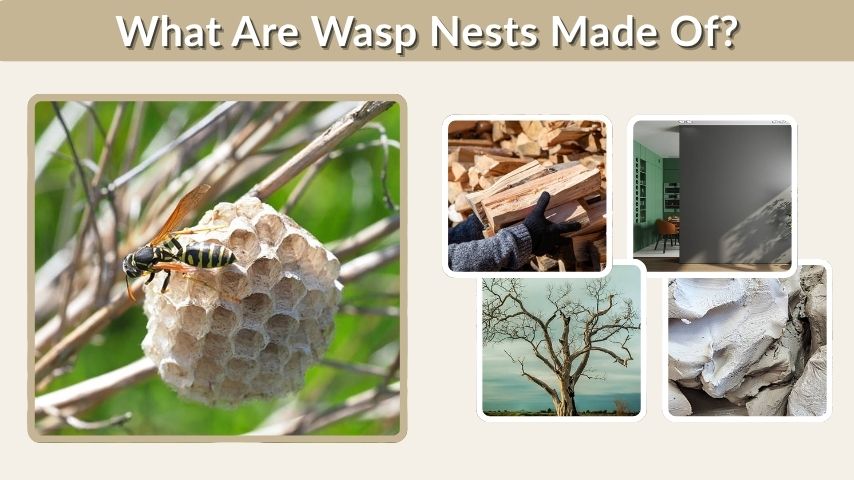
Wasp nests are made from natural materials that wasps collect, chew, and shape into a strong paper-like structure. Most familiar wasp nests are built from wood fibers mixed with wasp saliva, but the exact material can depend on the wasp species. Some nests look like gray paper, while others are made from mud or plant fibers.
What Are Wasp Nests Made Of?
Wasp nests are usually made from chewed wood fibers and saliva. Wasps scrape tiny pieces of wood from fences, trees, logs, sheds, or old boards. Then they mix the fibers with saliva, creating a soft pulp that dries into a paper-like material.
The Main Material
The most common wasp nest material is a natural paper pulp. It is not the same as human-made paper, but it is very similar in texture because both come from plant fiber.
Common nest materials include:
- Chewed wood fibers
- Wasp saliva
- Plant stems
- Bark fibers
- Weathered wooden surfaces
- Mud in some species
- Plant resin in rare cases
Once the pulp dries, it becomes light, strong, and protective. This helps the nest hold its shape while keeping developing wasp larvae safe inside.
Why Wasp Nests Look Like Paper
Many wasp nests look like gray paper because the insects collect old wood and mix it into a pulp. Weathered wood often has a gray color, which gives the nest its papery gray or brown appearance.
The thin layers in the nest are built one at a time. Wasps spread the pulp with their jaws, let it dry, and continue adding more layers as the colony grows.
Are All Wasp Nests Made of the Same Thing?
No, not all wasp nests are made of the same material. Paper wasps, yellowjackets, and hornets usually use wood pulp. Mud daubers use mud. Some solitary wasps may use plant stems, soil, or existing holes instead of building large paper nests.
How Do Wasps Make Their Nests?
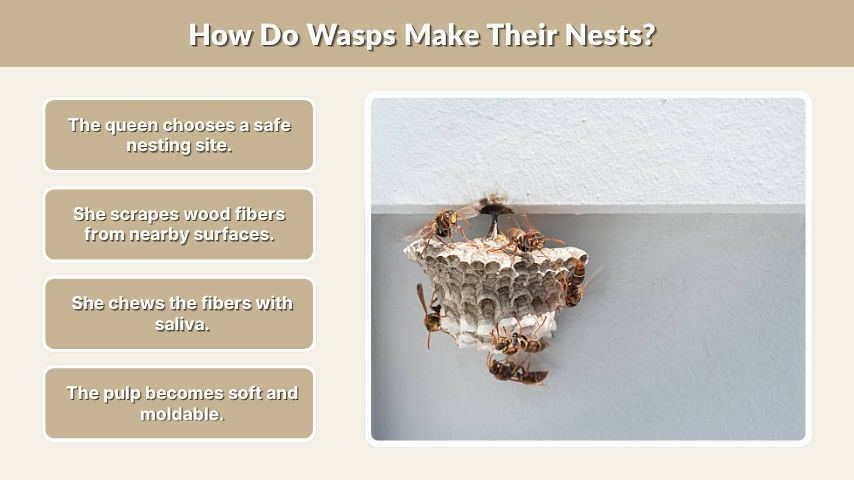
Wasps build nests by collecting raw materials, chewing them into pulp, and shaping them into cells and outer layers. The process is simple but very organized. Each worker helps expand, repair, and protect the nest during the active season.
Step-by-Step Nest Building
The nest-building process usually begins with a queen in spring. She finds a protected place and starts a small nest. Later, worker wasps take over most construction work.
Basic steps include:
- The queen chooses a safe nesting site.
- She scrapes wood fibers from nearby surfaces.
- She chews the fibers with saliva.
- The pulp becomes soft and moldable.
- She shapes the pulp into hexagonal cells.
- Eggs are laid inside the cells.
- Workers later expand the nest.
- Outer layers are added for protection.
This process continues as long as the colony is active and growing.
Why Wasp Saliva Is Important
Wasp saliva works like natural glue. Without saliva, the wood fibers would not stick together properly. The saliva helps soften the fibers, bind them, and form a strong structure after drying.
This is why wasp nests can be lightweight but surprisingly durable. They are not waterproof forever, but many can resist normal outdoor weather for a season.
Who Builds the Nest?
In social wasp colonies, the queen starts the nest. Once the first workers mature, they collect food, care for larvae, defend the nest, and continue building.
In solitary wasps, one female usually builds or prepares her own nest. She may use mud, plant stems, soil holes, or other small spaces depending on the species.
Different Types of Wasp Nest Materials
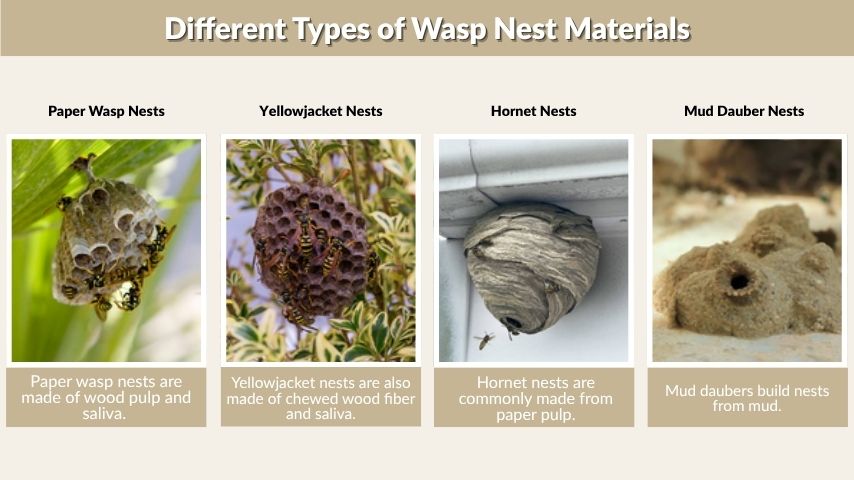
Different wasps use different materials based on their biology and habitat. The most common nests around homes are paper-like nests, but some species build mud tubes, underground nests, or small open combs.
Paper Wasp Nests
Paper wasp nests are made of wood pulp and saliva. They usually have open combs where the hexagonal cells are visible. These nests often hang from eaves, porch ceilings, branches, fences, or outdoor furniture.
Paper wasp nests usually look like small umbrellas. They may not have a thick outer covering like hornet nests. The open design helps adults access the cells easily.
Yellowjacket Nests
Yellowjacket nests are also made of chewed wood fiber and saliva. However, they are often enclosed in a paper-like outer shell. Some yellowjackets build nests underground, while others use wall voids, tree holes, or attic spaces.
Their nests can become large by late summer. Because yellowjackets are defensive around their colony, nests near homes should be handled carefully.
Hornet Nests
Hornet nests are commonly made from paper pulp. They often look like large gray balls or teardrops with layered outer coverings. The entrance hole is usually near the lower part of the nest.
Hornet nests are usually built in trees, shrubs, roof edges, sheds, or other protected places. Their layered paper walls help protect the inner comb from weather and predators.
Mud Dauber Nests
Mud daubers do not make paper nests. They build nests from mud. These nests often look like narrow tubes, small clay pots, or muddy clusters attached to walls, ceilings, bridges, or sheltered surfaces.
Mud daubers are solitary wasps. They usually do not defend nests as aggressively as social wasps, but they can still sting if handled.
Wasp Nest Structure
A wasp nest is more than a simple shelter. It is a nursery, colony center, food area, and defense zone. Its structure is designed to protect eggs, larvae, pupae, the queen, and workers.
Hexagonal Cells
Inside many wasp nests, you will find hexagonal cells. These six-sided cells are efficient because they save space and material. Each cell can hold an egg, larva, or developing pupa.
The queen lays eggs in these cells. Workers later feed the larvae until they are ready to pupate and become adult wasps.
Outer Covering
Some wasp nests have a paper-like outer covering. This covering protects the inner comb from rain, wind, sun, and predators. It also helps regulate temperature inside the nest.
Nests with outer shells may appear round, oval, or football-shaped. The outer wall is built in layers, giving it a striped or swirled texture.
Nest Petiole
Some hanging nests have a small stalk called a petiole. This is the short attachment point that connects the nest to a branch, ceiling, or roof surface. Paper wasps commonly use this type of attachment.
The petiole is made from the same chewed pulp material. It must be strong enough to hold the weight of the growing nest.
Wasp Nest Materials by Species
Wasp nest material changes depending on the species. Some species use dry wood fibers, while others use mud or existing cavities. Understanding these differences can help identify what type of wasp nest you are seeing.
| Wasp Type | Nest Material | Common Nest Shape |
| Paper wasp | Wood pulp and saliva | Open umbrella-shaped comb |
| Yellowjacket | Wood pulp and saliva | Enclosed paper nest or underground nest |
| Hornet | Wood pulp and saliva | Large covered paper nest |
| Mud dauber | Mud | Tubes or clay-like cells |
| Potter wasp | Mud | Small pot-shaped cells |
| Solitary wasp | Soil, stems, cavities | Small hidden nest |
Paper-Based Nests
Paper-based nests are the most common nests people notice around homes. These are usually made by paper wasps, hornets, or yellowjackets. The material is light, layered, and often gray or brown.
These nests may be attached to buildings, trees, shrubs, attics, garages, or wall voids.
Mud-Based Nests
Mud-based nests are made by mud daubers and potter wasps. The female collects wet mud, carries it to the nesting site, and shapes it into cells. She may place insects or spiders inside as food for her larvae.
These nests become hard when dry and may remain attached to walls long after the wasps are gone.
Hidden Cavity Nests
Some wasps do not build visible hanging nests. They use hidden spaces such as soil holes, hollow stems, old beetle tunnels, wall voids, or tree cavities. These nests can be harder to find because only the entrance may be visible.
Where Do Wasps Get Nest Materials?
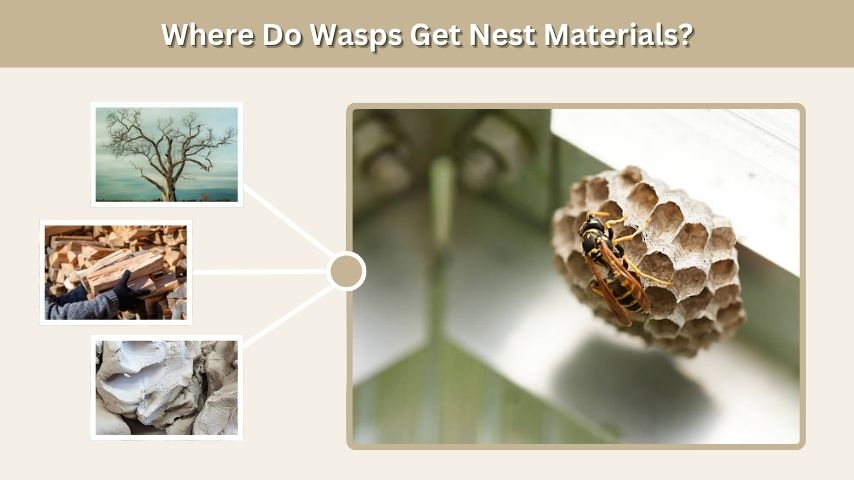
Wasps collect nest materials from the environment around them. For paper nests, they scrape wood fibers from dry surfaces. For mud nests, they gather wet soil or clay. They use what is available near the nesting site.
Common Wood Sources
Paper-building wasps often choose old, dry, weathered wood because it is easier to scrape into fibers.
They may collect fibers from:
- Dead trees
- Wooden fences
- Deck rails
- Old sheds
- Firewood
- Bark
- Dry plant stems
- Wooden outdoor furniture
If you see wasps repeatedly visiting a wooden fence or deck, they may be collecting nest material.
Mud and Soil Sources
Mud daubers and potter wasps collect damp soil, clay, or mud near water sources. They shape it into cells and allow it to dry. This creates a hard, protective structure for their young.
These nests are often found under eaves, in garages, on walls, or inside sheds.
Why Weathered Wood Is Useful
Weathered wood is softer than fresh wood. Sun, rain, and age break down the surface, making it easier for wasps to scrape. This is why old fences, sheds, and untreated wood surfaces can attract paper-making wasps.
Are Wasp Nests Strong?
Wasp nests are strong for their weight, but they are not permanent structures. Most paper nests are built for one season. They protect the colony during spring, summer, and early fall, but weather eventually breaks them down.
Strength of Paper Nests
Paper nests are lightweight but layered. The structure can hold many cells and many wasps while staying attached to a branch or building surface.
The nest is strong because:
- Fibers are tightly packed
- Saliva acts like glue
- Layers add support
- Hexagonal cells save material
- Outer coverings protect the inner comb
However, heavy rain, wind, or winter weather can damage abandoned nests.
Do Wasps Reuse Old Nests?
Most social wasps do not reuse old nests. A colony usually dies out in cold weather, and new queens start new nests the next spring. However, old nests may remain visible for months.
Even if the old nest is empty, the area may still attract new queens if it offers shelter.
Can a Wasp Nest Fall Apart?
Yes, a wasp nest can fall apart after the colony is gone. Paper nests become weak when exposed to moisture and weather. Mud nests may last longer, but they can crack or break over time.
Should You Remove a Wasp Nest?
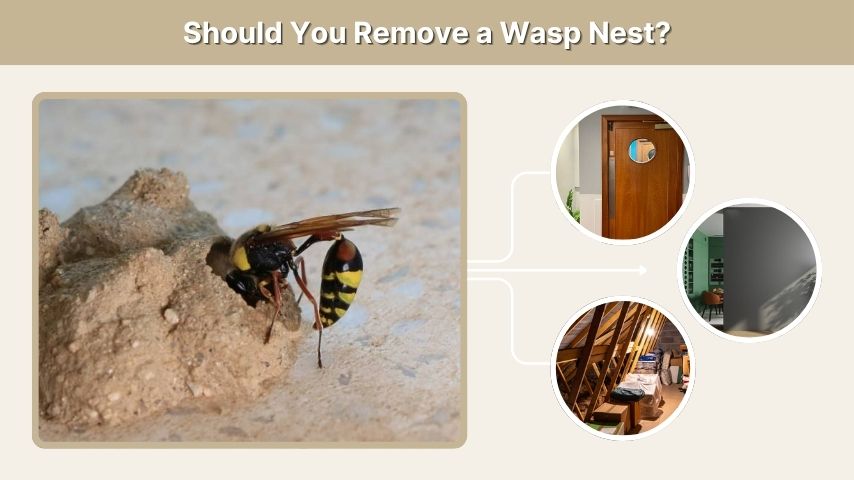
Whether you should remove a wasp nest depends on its location, species, size, and risk. A nest far from people may be left alone, but a nest near doors, windows, pets, children, or walkways can become dangerous.
When a Nest Is a Problem
A wasp nest may need attention if it is close to daily activity. Social wasps can defend their colony aggressively if they feel threatened.
Removal may be needed when the nest is:
- Near a doorway
- Inside a wall
- In an attic
- Beside a walkway
- Near children or pets
- Close to outdoor seating
- Large and active
- Causing repeated stings
When to Avoid Touching It
Do not disturb an active wasp nest without proper knowledge and protection. Spraying, hitting, burning, or flooding a nest can cause wasps to swarm and sting.
Avoid touching a nest if:
- You are allergic to stings
- The nest is large
- The nest is inside a wall
- You cannot identify the species
- Wasps are entering a hidden space
- The nest is high or hard to reach
Safe Removal Advice
For active nests near people, professional pest control is often the safest choice. If the nest is abandoned and clearly empty, it may be removed more safely after the season ends. Always check carefully before touching any nest.
Never burn a wasp nest. Fire can damage property and does not guarantee safe removal.
FAQs
What are wasp nests made of?
Most wasp nests are made of chewed wood fibers mixed with wasp saliva. This creates a paper-like pulp that dries into a light but strong nest. Some wasps, such as mud daubers, use mud instead of paper pulp.
What are paper wasp nests made of?
Paper wasp nests are made of wood fibers and saliva. The wasps scrape fibers from fences, trees, logs, or old wood, then chew them into pulp. The dried material forms an open, umbrella-shaped comb with visible cells.
Are hornet and wasp nests made of the same material?
Many hornet and social wasp nests are made from similar paper-like pulp created from wood fibers and saliva. The main difference is often the shape. Hornet nests are usually larger and enclosed, while paper wasp nests often have open combs.
Do wasps use mud to build nests?
Some wasps use mud, but not all. Mud daubers and potter wasps build mud nests. Paper wasps, hornets, and yellowjackets usually make nests from chewed wood pulp instead. Nest material depends on the species.
Do wasps reuse old nests?
Most social wasps do not reuse old nests. A new queen usually builds a new nest in spring. Old paper nests may stay attached for months, but they are usually abandoned after the colony dies in cold weather.