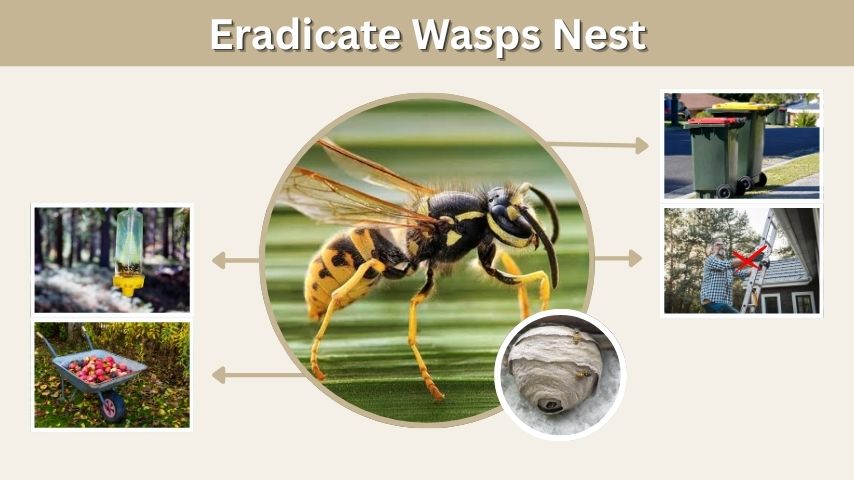
Finding a wasp nest near your home can be stressful, especially when wasps become aggressive around doors, gardens, roof spaces, sheds, or play areas. The safest way to eradicate a wasp nest depends on its location, size, and species. Some small exposed nests may be managed carefully, but ground nests, attic nests, and large colonies often need professional help to avoid painful stings and repeated infestations.
What Does Wasp Nest Eradication Mean?
Wasp nest eradication means removing or destroying the active colony so wasps no longer live, breed, or defend that nesting site. It is different from simply knocking down an empty nest. A live wasp nest contains workers, larvae, and often a queen, so disturbing it without planning can trigger a defensive swarm.
Most wasp colonies grow quickly during warm months. Early in the season, a nest may be small and easier to handle. By late summer or early fall, the same nest can contain hundreds or even thousands of wasps. That is why correct timing, safety gear, and location checks matter before any removal attempt.
Common Signs of an Active Wasp Nest
- Wasps flying in and out of the same hole, crack, tree, roofline, or wall gap
- A papery gray or brown nest hanging under eaves, branches, or porch ceilings
- Increased wasp activity near garbage bins, fruit trees, outdoor food, or pet bowls
- Buzzing sounds inside walls, attic spaces, sheds, or ceiling voids
- Wasps entering the ground through a small opening in the lawn or garden bed
- Aggressive behavior when people walk near a specific area
If you see repeated flight activity in one spot, do not block the entrance immediately. Trapped wasps may find another way inside your home.
Is It Safe to Eradicate a Wasp Nest Yourself?
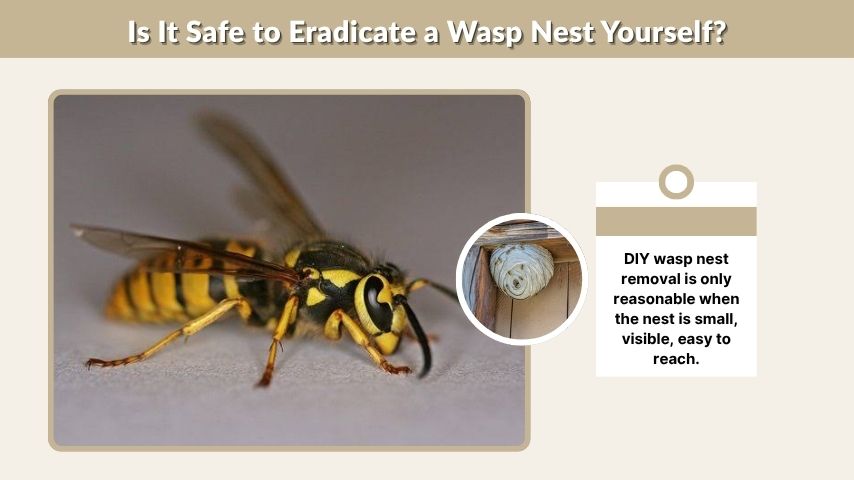
DIY wasp nest removal is only reasonable when the nest is small, visible, easy to reach, and away from people, pets, and indoor spaces. Even then, there is risk. Wasps can sting multiple times, and some people may have severe allergic reactions. Large nests, hidden nests, and nests in difficult locations should be handled by pest control professionals.
Before taking action, check whether anyone in the home is allergic to stings. Also consider the nest height, your escape route, nearby children or pets, and whether the nest is inside a wall, attic, or underground. If the wasps are already aggressive, professional eradication is the safer choice.
When You Should Not Try DIY Removal
- The nest is inside a wall, ceiling, chimney, or attic
- The nest is underground or in a hard-to-see area
- The nest is large or has heavy wasp traffic
- You need a ladder to reach it
- Anyone nearby has a known sting allergy
- Wasps are entering living areas of the home
- The nest is close to pets, children, doors, or windows
- You are unsure whether they are wasps, hornets, or bees
Bees should not be treated like wasps. If the insects are honey bees, contact a local beekeeper or bee removal expert instead of using insecticide.
Best Time to Eradicate a Wasp Nest
The best time to treat a wasp nest is usually early morning or late evening, when wasps are less active and more of the colony is inside the nest. Avoid treating nests during the hottest part of the day because many workers may be outside foraging, and returning wasps can become defensive.
Weather also matters. Choose a calm, dry day with little wind. Wind can blow spray back toward you, while rain can reduce the effectiveness of some treatments. Do not try nest eradication during storms, strong wind, or poor visibility.
| Nest Situation | Safer Action | Risk Level |
| Small visible nest under eaves | Careful treatment from a safe distance | Medium |
| Large hanging nest | Call pest control | High |
| Ground wasp nest | Professional treatment recommended | High |
| Attic or wall nest | Call pest control | Very high |
| Empty old nest | Remove after confirming no activity | Low |
Equipment Needed for Wasp Nest Eradication
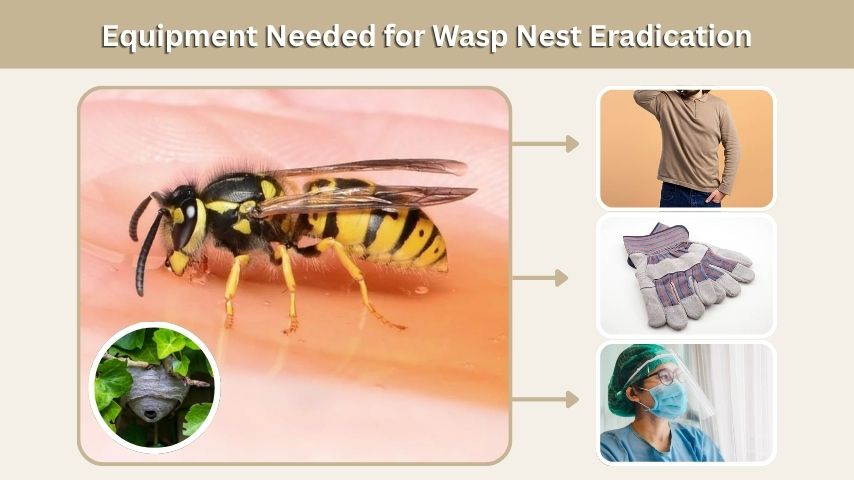
Using the right equipment reduces risk, but it does not make wasp removal completely safe. Protective clothing should cover exposed skin, and treatment products should be chosen based on where the nest is located. Never use gasoline, fire, boiling water, or unsafe homemade mixtures, especially near buildings, dry grass, or enclosed spaces.
For exposed nests, a wasp and hornet aerosol spray with a long-range stream is commonly used. For ground nests, dust treatments are often more effective because workers carry the product deeper into the colony. However, underground nests can be unpredictable, so professional help is usually better.
Basic Safety Equipment
- Long sleeves and long pants
- Closed shoes or boots
- Thick gloves
- Eye protection or face shield
- Hat or hood
- Flashlight with red covering for night work
- Long-range wasp spray for exposed nests
- Insecticidal dust for ground nests, if labeled for that use
- A clear escape path away from the nest
Always read and follow the product label. The label explains where the product can be used, how much to apply, and what safety precautions are required.
How to Eradicate a Visible Wasp Nest
A visible nest is usually found under eaves, porch ceilings, sheds, tree branches, fences, or outdoor structures. These nests are easier to inspect than hidden nests, but they can still be dangerous. The key is to avoid close contact and never stand directly under the nest while treating it.
If the nest is small and accessible from the ground, you may treat it using a long-distance wasp spray. Stand several feet away, aim at the nest entrance, and spray according to the product instructions. Leave the area immediately after treatment and avoid returning until activity has stopped.
Step-by-Step Method for Exposed Nests
- Watch the nest from a safe distance during the day to identify the entrance.
- Wait until early morning or evening when activity is lower.
- Wear protective clothing that covers your skin.
- Keep children and pets indoors.
- Stand upwind and maintain a safe distance.
- Spray the nest entrance first, then the rest of the nest if the label allows.
- Leave the area quickly without swatting at wasps.
- Check the nest the next day from a distance.
- Remove the nest only after no activity is seen for at least 24–48 hours.
Do not crush the nest immediately after spraying. Some wasps may still be alive inside, and returning workers may remain active for a short time.
How to Eradicate a Ground Wasp Nest
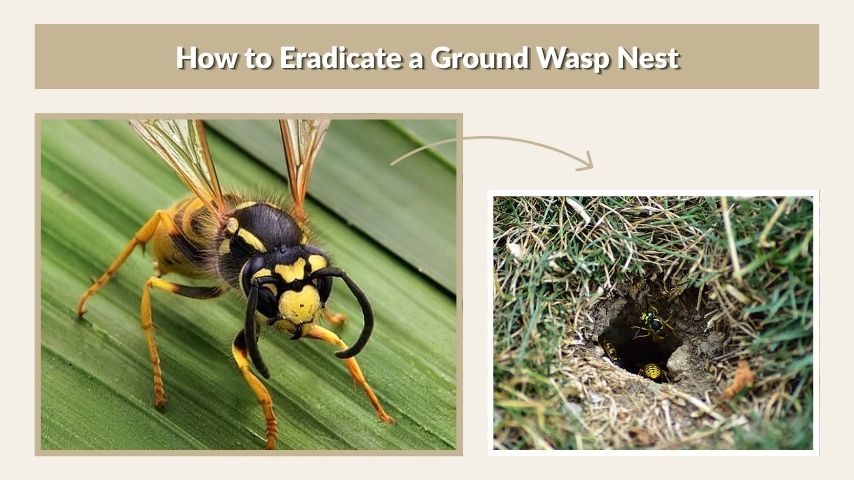
Ground wasp nests are often more dangerous than exposed nests because the colony is hidden underground. The entrance may look like a small hole in soil, lawn, mulch, or a garden bed. Yellowjackets commonly nest underground and can defend the area aggressively when disturbed.
Avoid mowing, digging, or walking near the entrance once you find it. Do not pour water, fuel, or chemicals into the hole unless the product is specifically labeled for that purpose. Ground nests often have tunnels, and unsafe liquids can damage soil, harm pets, create fire hazards, or fail to kill the colony.
Safer Approach for Ground Nests
For a small ground nest, a labeled insecticidal dust may be applied at the entrance during low-activity hours. The idea is that wasps pass through the dust and carry it inside. However, this should be done carefully and only with the correct product.
If there is heavy traffic at the entrance, if the nest is near a home entrance, or if you are not experienced, call a pest control professional. Ground nest eradication can trigger a sudden swarm, and the nest may be larger than it appears from the surface.
How to Find and Eradicate an Attic Wasp Nest
An attic wasp nest can be difficult to locate because wasps may enter through roof gaps, vents, soffits, or cracks and build inside hidden spaces. You may notice wasps near upper windows, rooflines, or ceiling lights. Buzzing sounds in the attic or walls can also be a warning sign.
Do not seal the entrance while the nest is active. If you block their outdoor access, wasps may move deeper into the house and enter rooms through light fixtures, vents, or gaps. Attic nests are best handled by professionals because treatment often requires special equipment and careful inspection.
Signs the Nest May Be in the Attic
- Wasps entering near roof vents or soffits
- Buzzing sounds above ceilings
- Wasps appearing indoors near lights or windows
- Repeated activity around upper walls
- Papery nest material visible in attic corners
- Dead wasps collecting near windows or floors
After the colony is eliminated, seal entry points to prevent future nesting. Do this only when you are sure the nest is inactive.
How to Eradicate a Wasp Nest Without Chemicals
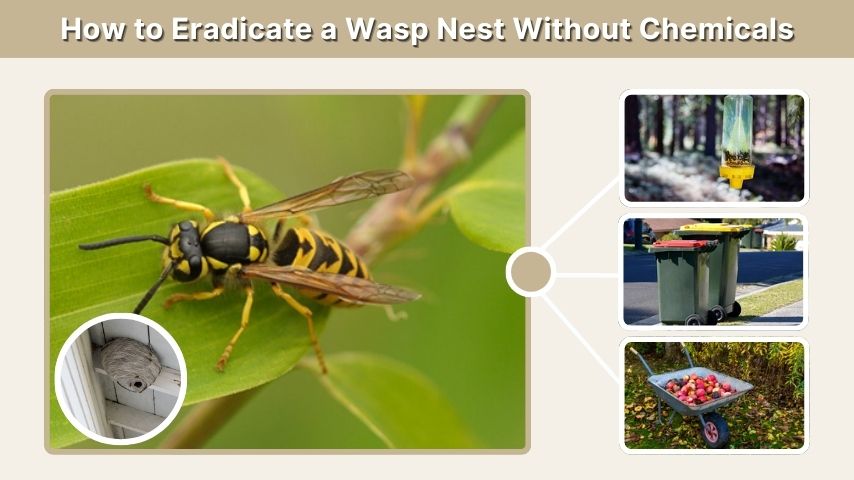
Chemical-free wasp nest removal is possible only in limited situations. If the nest is empty or abandoned, you can remove it safely after confirming there is no wasp activity. Active nests are harder to eradicate without chemicals because the queen, workers, and larvae must all be removed or destroyed.
Some people try water, smoke, traps, or homemade sprays, but these methods are often unreliable and can make wasps more aggressive. Traps may reduce foraging wasps, but they usually do not eliminate the nest. Smoke and fire are especially dangerous near homes, sheds, dry grass, or trees.
Non-Chemical Options That May Help
- Remove abandoned nests during cool weather.
- Use wasp traps away from patios to reduce activity.
- Keep garbage bins sealed.
- Pick up fallen fruit from the yard.
- Cover outdoor food and sweet drinks.
- Seal cracks after the active colony is gone.
- Install fine mesh over vents and gaps.
For active nests, the safest chemical-free option is professional removal. Some pest control companies may offer low-toxicity or targeted treatments depending on the nest location.
European Wasp Nest Eradication
European wasps can build large colonies and may nest in the ground, wall cavities, roof spaces, hollow trees, or sheds. They are attracted to meat, sugary drinks, ripe fruit, and garbage, which makes them common around outdoor dining areas and bins. Their nests can become very active and defensive.
European wasp nest eradication should be handled carefully because the colony may be hidden and larger than expected. If the nest is underground or inside a building, professional treatment is strongly recommended. Simply killing visible wasps will not solve the problem unless the nest itself is treated.
In areas such as New Zealand, Australia, and parts of Europe, European wasps can be a serious pest around homes, farms, parks, and natural areas. Local pest control rules may vary, so homeowners should follow regional guidance and avoid unsafe removal methods.
White Wasp Nest Eradication
A white or pale gray wasp nest is often made from chewed wood fibers mixed with saliva, creating a paper-like structure. The color can vary depending on the materials wasps collect. White nests may appear under eaves, in trees, inside sheds, or in sheltered outdoor corners.
The color of the nest does not determine the danger level. A small white nest may still contain active wasps, while a large nest can hold many workers. Before removal, watch from a safe distance to see whether wasps are entering or leaving.
If no activity is seen over several days, the nest may be old and abandoned. If activity is present, treat it like any other live wasp nest and avoid touching it directly.
What to Do After the Wasp Nest Is Gone
After eradication, monitor the area for several days. Some returning wasps may still fly near the old nest site. Once activity stops completely, remove the nest if it is accessible and safe. Then clean the area and seal gaps where possible.
Prevention is important because wasps may build new nests in suitable places. They often prefer sheltered areas with easy access to food and water. Regular inspection in spring can help you catch small nests before they become large colonies.
Prevention Tips
- Seal cracks in siding, rooflines, sheds, and walls.
- Cover attic vents with proper mesh.
- Keep garbage bins tightly closed.
- Remove fallen fruit from trees.
- Avoid leaving pet food outdoors.
- Check eaves, decks, and sheds in spring.
- Keep outdoor dining areas clean.
- Repair damaged screens and gaps around windows.
- Remove abandoned nests after confirming they are inactive.
Common Mistakes to Avoid
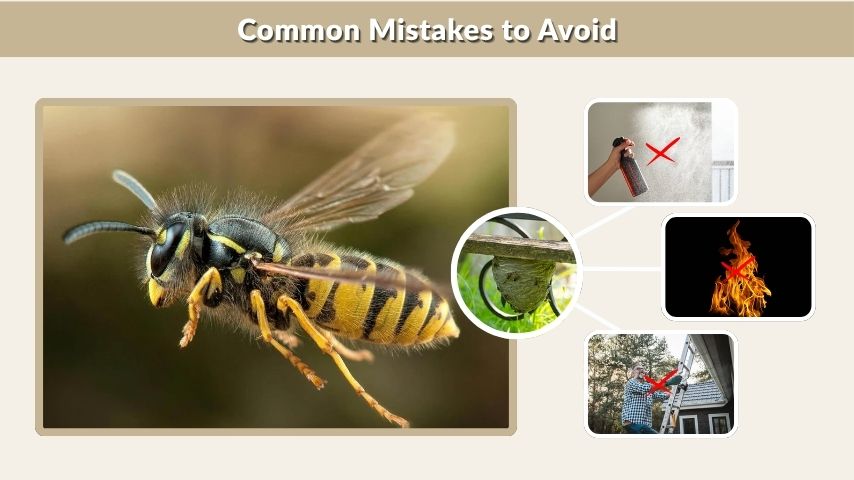
Many wasp nest problems become worse because people act too quickly. Hitting, spraying randomly, or blocking nest entrances can make wasps defensive and harder to control. A careful plan is always safer than a rushed attempt.
Dangerous Removal Mistakes
- Spraying during peak daytime activity
- Standing too close to the nest
- Using fire or gasoline
- Blocking an active entrance
- Removing a nest immediately after treatment
- Treating a hidden wall nest without inspection
- Using a ladder near an active nest
- Ignoring protective clothing
- Assuming all flying insects are wasps
- Letting pets or children near the treatment area
If the first treatment fails, do not keep disturbing the nest repeatedly. Repeated failed attempts can make the colony more defensive.
When to Call a Wasp Nest Eradicator
A professional wasp nest eradicator is the best choice for large, hidden, or high-risk nests. Professionals can identify the insect, locate the nest, choose the correct treatment, and reduce the chance of wasps entering living spaces. They also have protective equipment and experience with difficult nest sites.
Call a professional if the nest is in an attic, wall cavity, roof space, chimney, or underground. You should also get help if the wasps are near schools, rental properties, businesses, pets, or high-traffic outdoor areas.
Professional help may cost more than DIY spray, but it is often safer and more effective, especially when the nest location is uncertain.
FAQs
How do I know if a wasp nest is active?
An active wasp nest usually has workers flying in and out of the same entrance throughout the day. You may see steady movement around eaves, holes, vents, trees, or ground openings. If there is no activity for several days, the nest may be abandoned, but check carefully from a safe distance.
Can I eradicate a wasp nest at night?
Evening or early morning is usually safer than midday because wasps are less active and more likely to be inside the nest. However, nighttime removal can still be risky, especially with poor visibility. Use protective clothing, avoid bright lights near the nest, and never attempt large or hidden nests yourself.
What is the safest way to eradicate a ground wasp nest?
The safest option is to call a professional, especially if the nest has heavy traffic or is near people and pets. Ground nests can be large and aggressive. If using a product, choose one labeled for ground nests and follow the instructions exactly during low-activity hours.
Can I remove a wasp nest without killing the wasps?
Relocating an active wasp nest is difficult and risky. Unlike honey bees, wasps are usually not relocated by homeowners. If you want a low-impact option, contact a pest control professional to ask about targeted or reduced-toxicity methods. Empty nests can be removed without killing wasps.
Will wasps come back after the nest is removed?
Wasps usually do not reuse an old nest, but they may build a new one nearby if the area remains attractive. Seal gaps, remove food sources, cover bins, and inspect sheltered areas in spring. Prevention is the best way to stop repeated wasp nest problems.