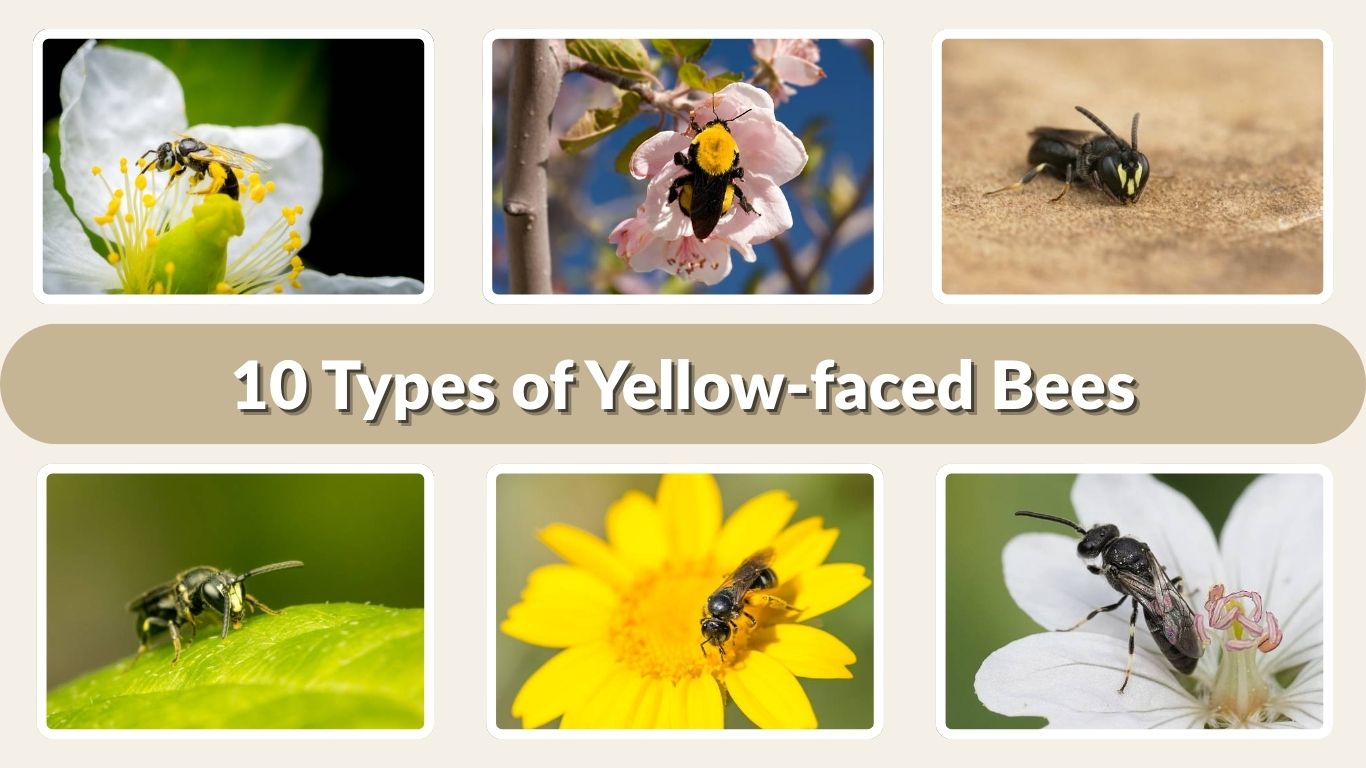
Yellow-faced bees are small, solitary bees known for their smooth dark bodies and pale facial markings. Many species belong to the genus Hylaeus and are often called masked bees because their face patterns look like tiny masks. Unlike fuzzy honey bees or bumble bees, they have very little body hair and may look similar to small wasps. These bees are gentle pollinators found in gardens, meadows, wetlands, coastal areas, and native plant habitats, where they help support wildflowers and local ecosystems.
1. Masked Bee
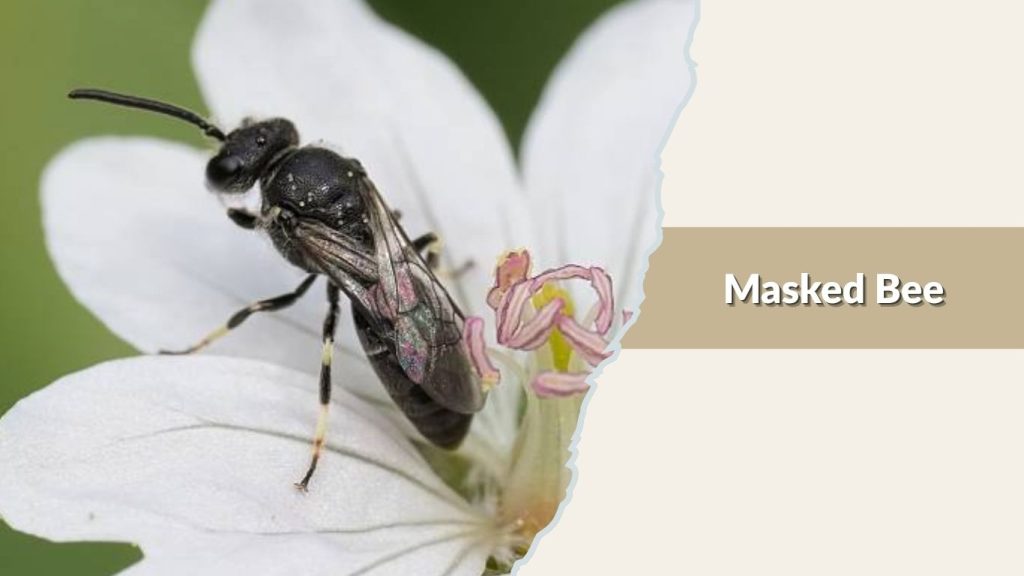
Masked bees are small, slender bees known for the pale yellow or white markings on their faces. These markings often look like a tiny mask, which is where the common name comes from. They belong to the genus Hylaeus and are usually less hairy than many other bees. Although they are small, they play an important role in pollinating wildflowers, garden plants, and native vegetation.
Identification
- Small bees, usually about 4–8 mm long.
- The body is mostly black and smooth, with very little visible hair.
- The face has pale yellow or white markings that look like a mask.
- Slender body shape compared with many fuzzy bees.
- Wings are clear or lightly smoky.
- Males usually have more obvious facial markings than females.
- Often mistaken for tiny wasps because of their smooth body.
Habitat and Distribution
Masked bees can be found in many habitats, including gardens, meadows, woodland edges, grasslands, coastal areas, and urban green spaces. They are widely distributed in different parts of the world, especially in temperate regions. Many species nest in hollow plant stems, old beetle tunnels, small holes in wood, or natural cavities. Because of their small size, they can use tiny nesting spaces that larger bees cannot.
Behavior and Diet
Masked bees are solitary bees, meaning each female usually builds and cares for her own nest. They do not form large colonies like honey bees. Adults visit flowers for nectar and pollen, helping with pollination as they move from bloom to bloom. Unlike many bees that carry pollen on hairy legs, masked bees often carry pollen internally in a special stomach-like structure.
Lifecycle
The lifecycle of a masked bee begins when the female prepares a small nest cavity. She lines the nest cells with a thin, waterproof secretion that looks like clear plastic. After placing pollen and nectar inside each cell, she lays an egg. The larva hatches, feeds on the stored food, and later pupates. Adult bees emerge when conditions are warm and flowers are available.
2. Hawaiian Yellow-faced Bee
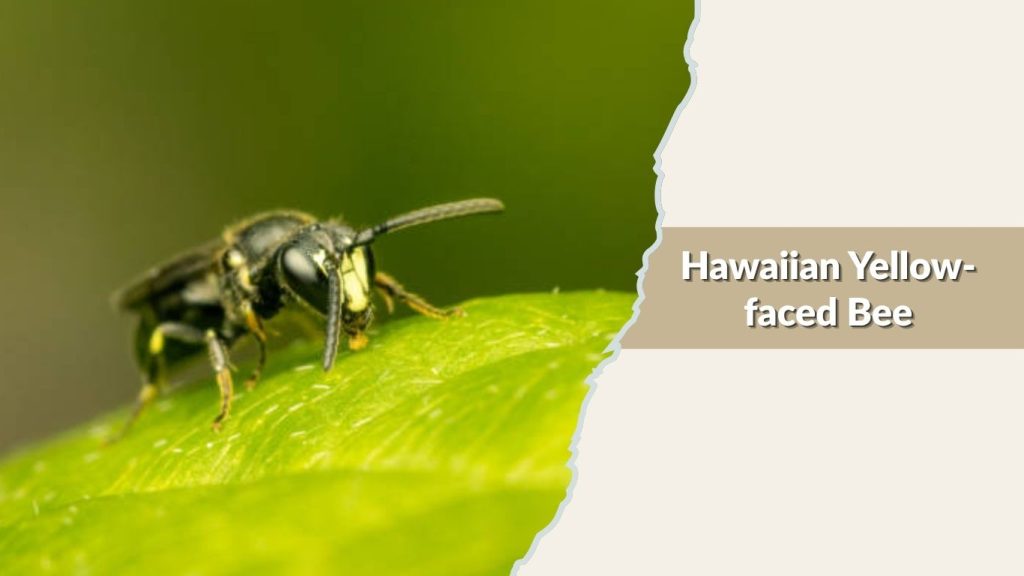
Hawaiian yellow-faced bees are native bees from Hawaii and are among the most important pollinators in the islands. They belong to the genus Hylaeus and are known for their smooth bodies and pale yellow facial markings. Unlike honey bees, they are solitary and do not live in large colonies. Many Hawaiian yellow-faced bee species are rare, and some are federally protected because of habitat loss and population decline.
Identification
- Small, slender bee with a mostly black body.
- Pale yellow markings appear on the face, especially in males.
- The body looks smooth and shiny, with very little hair.
- Often resembles a tiny wasp because it is not fuzzy.
- Wings are clear or slightly smoky.
- Females usually have smaller facial markings than males.
- Some species may also show pale markings on the legs or thorax.
Habitat and Distribution
Hawaiian yellow-faced bees are found only in Hawaii, making them unique island bees. They live in coastal shrublands, dry forests, lava fields, native plant areas, and sometimes higher-elevation habitats. Many species depend on native Hawaiian plants for food and nesting support. Some nest in hollow stems, rock crevices, coral rubble, or small natural cavities. Their distribution can be very limited, with some species found only on certain islands or in specific habitat zones.
Behavior and Diet
These bees are solitary and peaceful. Each female builds her own nest and provides food for her young. Hawaiian yellow-faced bees visit flowers for nectar and pollen, especially native Hawaiian plants. They are important pollinators because many island plants evolved with native insects. Instead of carrying pollen on hairy legs like many bees, they usually carry it inside their crop and later regurgitate it into the nest cell.
Lifecycle
The female prepares a small nesting cavity and lines it with a thin waterproof material. She adds a mixture of pollen and nectar, then lays one egg in each cell. The larva feeds on the stored food, grows, and pupates inside the nest. When development is complete, the adult bee emerges during a suitable season with warm weather and available flowers.
3. Coastal Yellow-faced Bee
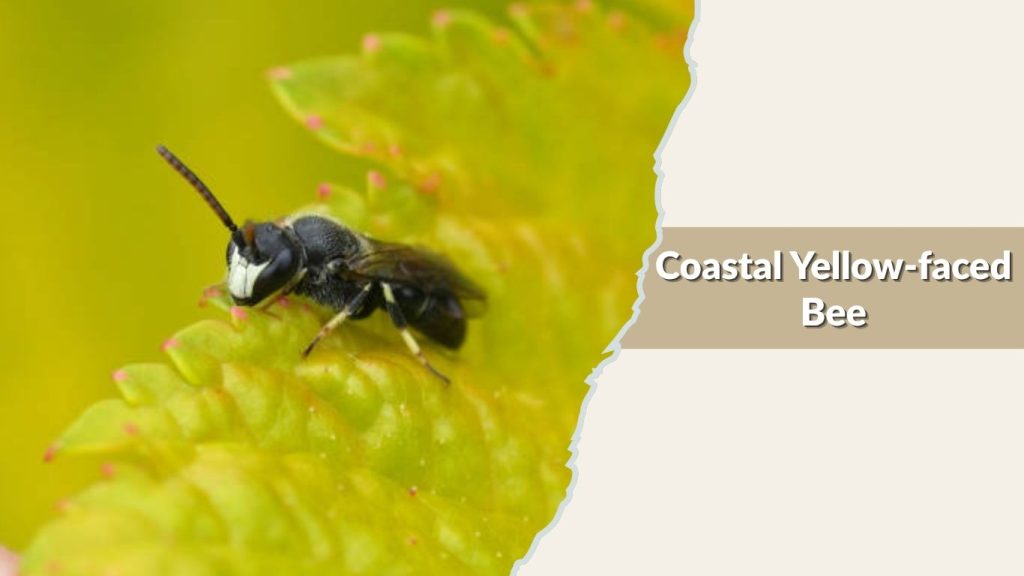
Coastal yellow-faced bees are small solitary bees often associated with sandy, rocky, or plant-rich coastal habitats. Like other yellow-faced bees in the genus Hylaeus, they have smooth dark bodies and pale markings on the face. These bees may look more like tiny wasps than typical fuzzy bees, but they are true bees and help pollinate coastal wildflowers and native plants.
Identification
- Small bee with a slim, dark body.
- Face usually has yellow or pale cream markings.
- Body surface appears smooth and shiny, not very hairy.
- Males often show larger facial markings than females.
- Wings are clear or lightly tinted.
- Legs are thin and usually dark, sometimes with pale markings.
- Often confused with small wasps because of its narrow body shape.
Habitat and Distribution
Coastal yellow-faced bees are usually found near shorelines, dunes, coastal scrub, sandy grasslands, and rocky seaside areas. They prefer places where native flowering plants grow close to suitable nesting cavities. Some may nest in hollow stems, small holes in driftwood, cracks in rocks, or abandoned insect tunnels. Their range depends on the species, but many coastal Hylaeus bees are closely tied to specific coastal plant communities.
Behavior and Diet
These bees are solitary, so they do not build large colonies or make honey. A female chooses a small cavity, prepares nest cells, and gathers food for her larvae. Adults feed on nectar and collect pollen from coastal flowers. They are generally calm and rarely noticed unless someone looks closely at small blooms. Their pollination work supports wildflowers that stabilize dunes and provide food for other insects.
Lifecycle
The lifecycle begins when a female finds a safe cavity for nesting. She lines each cell with a thin protective secretion, then adds a pollen and nectar mixture. After laying an egg, she seals the cell and repeats the process. The larva feeds inside the nest, grows, and changes into a pupa. A new adult emerges when weather and flowers are suitable.
4. Common Yellow-faced Bee
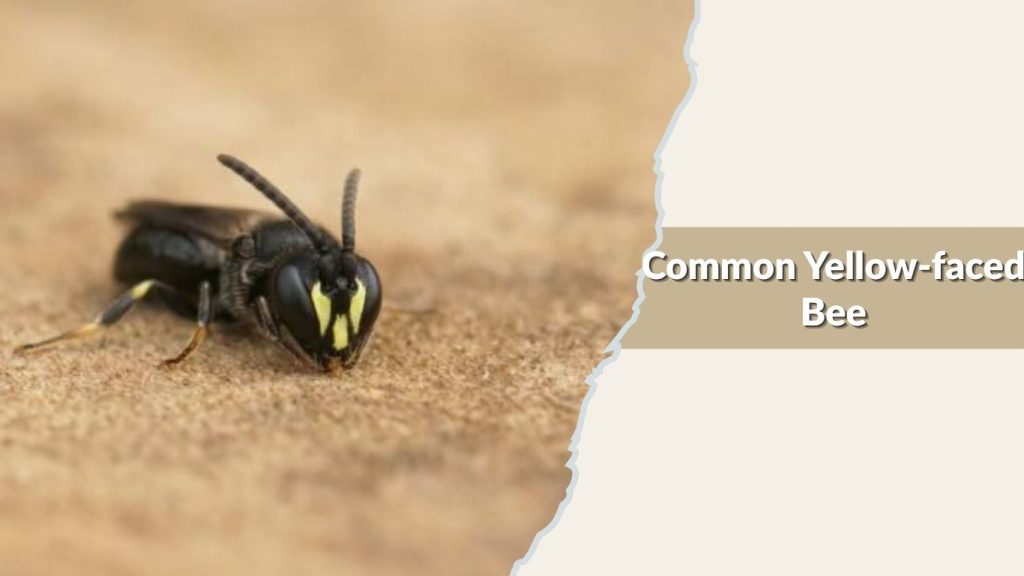
Common yellow-faced bees are small solitary bees recognized by their dark, smooth bodies and pale yellow facial markings. They belong to the genus Hylaeus, a group often called masked bees or yellow-faced bees. Because they have very little body hair, they may look like tiny wasps at first glance. However, they are useful pollinators that visit wildflowers, garden blooms, herbs, and native plants.
Identification
- Small bee, usually only a few millimeters long.
- Body is mostly black, smooth, and slightly shiny.
- Yellow or cream-colored markings appear on the face.
- Males usually have larger and brighter facial markings than females.
- Body has very little hair compared with bumble bees or mining bees.
- Wings are clear or lightly smoky.
- Slender shape can make it look similar to a small wasp.
Habitat and Distribution
Common yellow-faced bees can live in gardens, meadows, open woodlands, hedgerows, parks, grasslands, and other flower-rich areas. They are often seen where small flowering plants grow close to natural nesting sites. Females may use hollow stems, tiny holes in wood, old beetle tunnels, or other small cavities. Their ability to nest in narrow spaces helps them survive in both natural and human-made landscapes.
Behavior and Diet
These bees are solitary, so each female builds and manages her own nest. They do not make honey or form large colonies. Adults drink nectar for energy and collect pollen to feed their larvae. Unlike many bees that carry pollen on hairy legs, yellow-faced bees usually carry pollen inside the body and later place it in the nest. They are calm insects and rarely cause problems around people.
Lifecycle
A female common yellow-faced bee begins by selecting a small cavity for her nest. She creates separate brood cells and lines them with a thin waterproof layer. Then she adds a mixture of nectar and pollen before laying one egg in each cell. The larva hatches, eats the stored food, and develops into a pupa. When conditions are warm and flowers are available, the adult bee emerges.
5. Reed Yellow-faced Bee
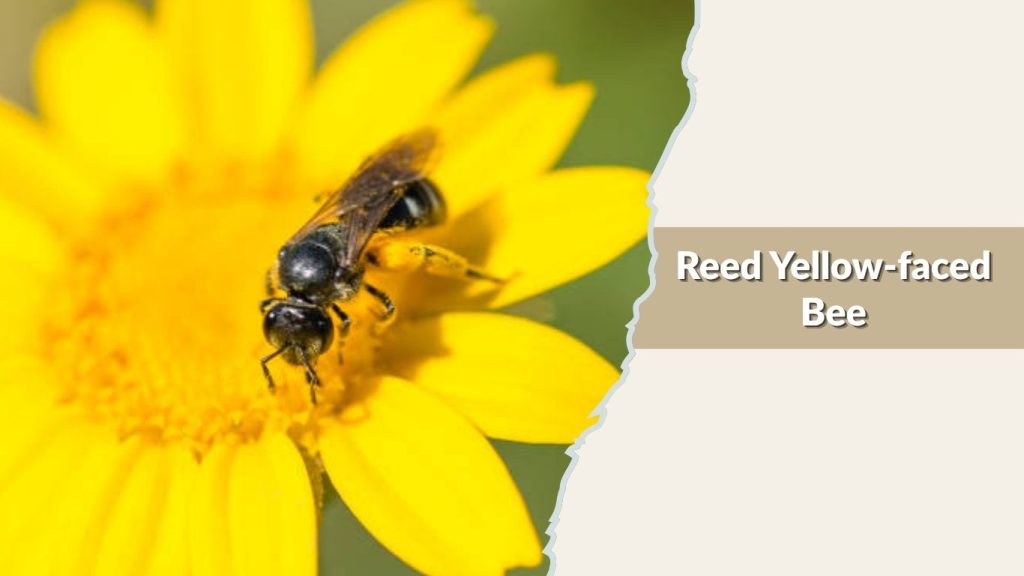
Reed yellow-faced bees are small solitary bees often linked with wetlands, reed beds, marsh edges, and other plant-rich areas near water. Like other Hylaeus bees, they have smooth dark bodies with pale yellow markings on the face. They are not as hairy as many other bees, but they still help pollinate small wildflowers and native plants growing around damp habitats.
Identification
- Small, slender bee with a mostly black body.
- Face has pale yellow or cream-colored markings.
- Body looks smooth and shiny, with very little hair.
- Males usually have stronger facial markings than females.
- Wings are clear or slightly smoky.
- Narrow body shape may look similar to a tiny wasp.
- Often seen around flowers near reeds, rushes, or wetland plants.
Habitat and Distribution
Reed yellow-faced bees are usually found in damp habitats where reeds, rushes, grasses, and flowering plants grow together. They may live near marshes, ponds, riverbanks, wet meadows, ditches, and lake edges. Females often use hollow stems or small plant cavities for nesting, making reed-filled areas useful for shelter. Their distribution depends on the exact species, but they are most common where wetland plants provide both food and nesting spaces.
Behavior and Diet
These bees are solitary and do not form colonies. A female chooses a narrow cavity, prepares it, and gathers food for her young. Adults feed on nectar from small flowers and collect pollen for their larvae. They are usually gentle and easy to overlook because of their tiny size. Reed yellow-faced bees can be important pollinators in wetland edges, especially where native flowers depend on small insects.
Lifecycle
The lifecycle begins when a female finds a hollow stem or another small cavity. She lines each brood cell with a thin waterproof coating, then adds pollen and nectar. After laying one egg in each cell, she seals it for protection. The larva feeds on the stored food, grows inside the nest, and later pupates. Adult bees emerge when temperatures rise and flowers are available.
6. Clover Yellow-faced Bee
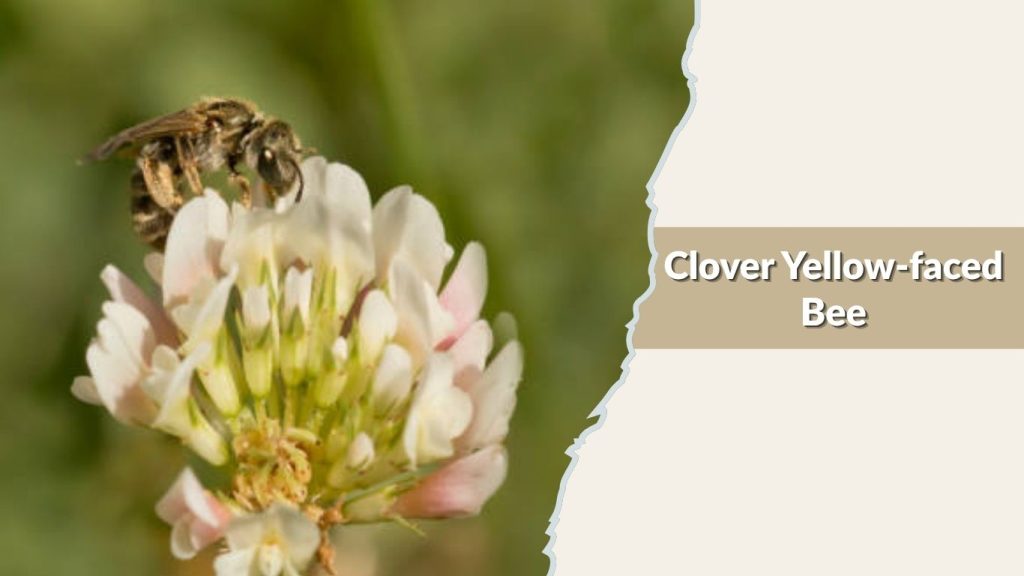
Clover yellow-faced bees are small solitary bees that may visit clover, wildflowers, and other low-growing blooms for nectar and pollen. Like other yellow-faced bees in the genus Hylaeus, they have a smooth, dark body and pale facial markings. They are easy to miss because of their tiny size, but they can support pollination in meadows, lawns, field edges, and gardens.
Identification
- Small bee with a narrow, mostly black body.
- Pale yellow or cream markings are visible on the face.
- Body is smooth and shiny with very little hair.
- Males usually have brighter and larger facial markings.
- Wings are clear or slightly smoky.
- Legs are slender and usually dark.
- Often seen visiting clover, small herbs, and meadow flowers.
Habitat and Distribution
Clover yellow-faced bees are usually found in open places with plenty of small flowers. They may live in meadows, grassy fields, lawns with clover, roadside edges, gardens, pastures, and woodland openings. These bees need both flower resources and small nesting cavities nearby. Females may nest in hollow stems, plant pith, tiny holes in wood, or abandoned insect tunnels. They can survive well in mixed landscapes where flowering weeds and native plants are not removed too heavily.
Behavior and Diet
These bees are solitary, so each female works alone to build and provision her nest. Adults feed on nectar for energy and collect pollen for their larvae. Clover and other small flowers can provide useful food, especially in open sunny habitats. Because they are tiny and calm, they rarely disturb people or pets. Their pollination activity benefits wildflowers and small garden plants.
Lifecycle
A female clover yellow-faced bee begins by selecting a narrow nesting cavity. She lines the inside with a thin, protective waterproof coating. Then she places a soft mixture of pollen and nectar inside each brood cell and lays one egg. The larva feeds on the stored food, grows, and later changes into a pupa. When development is complete, the adult bee emerges during warm weather when flowers are blooming.
7. Orchard Yellow-faced Bee
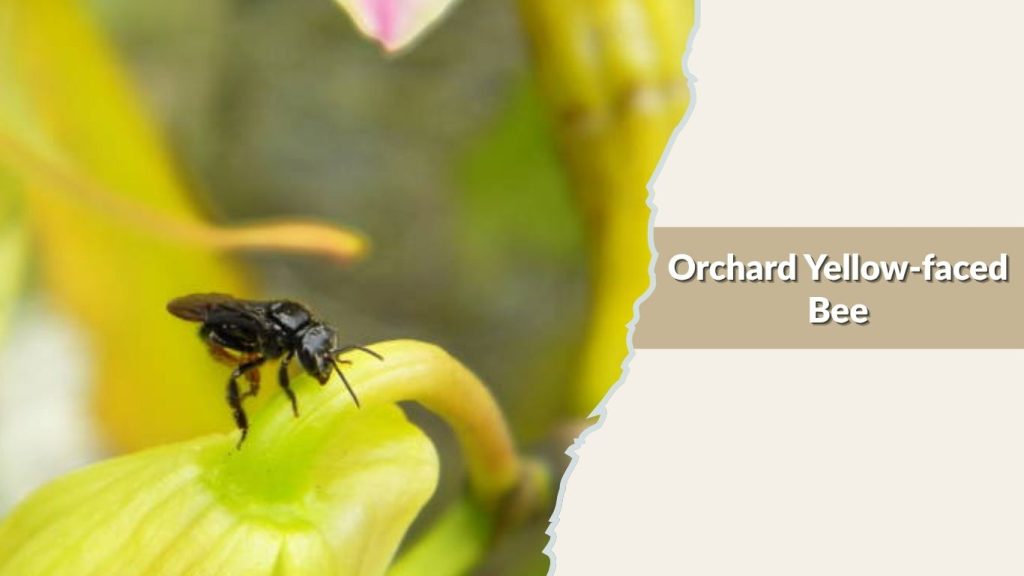
Orchard yellow-faced bees are small solitary bees that may be found around fruit trees, flowering shrubs, gardens, and mixed plantings. Like other yellow-faced bees, they have a smooth dark body with pale markings on the face. They are not large or fuzzy like honey bees, but they can still help with pollination by visiting blossoms, herbs, and small wildflowers in orchard habitats.
Identification
- Small, slender bee with a mostly black body.
- Yellow or pale cream markings appear on the face.
- Body surface is smooth and shiny with very little hair.
- Males usually have clearer facial markings than females.
- Wings are transparent or slightly smoky.
- Narrow body shape can make it look like a tiny wasp.
- Often seen on fruit blossoms, garden flowers, and flowering shrubs.
Habitat and Distribution
Orchard yellow-faced bees are usually found in places where flowering trees and small plants grow together. They may live in orchards, home gardens, hedgerows, woodland edges, parks, and farms with nearby wildflowers. These bees need both food plants and safe nesting cavities. Females may use hollow stems, tiny holes in wood, old beetle tunnels, or small cracks in plant material. Flower-rich orchard edges are especially useful because they provide food beyond the short fruit-blooming season.
Behavior and Diet
These bees are solitary, so each female creates her own nest instead of living in a colony. Adults drink nectar for energy and collect pollen to feed their young. They may visit apple, pear, plum, cherry, and other blossoms, along with herbs and native flowers. Because they are small and calm, they are rarely aggressive. Their flower visits can support pollination in gardens and small orchard systems.
Lifecycle
The female begins by choosing a narrow nesting cavity near available flowers. She lines the nest cells with a thin waterproof coating, then stores a mixture of pollen and nectar inside each cell. After laying one egg, she seals the cell and prepares the next one. The larva feeds, grows, and pupates inside the nest. A new adult emerges when temperatures are warm and flowers are available.
8. Small Yellow-faced Bee
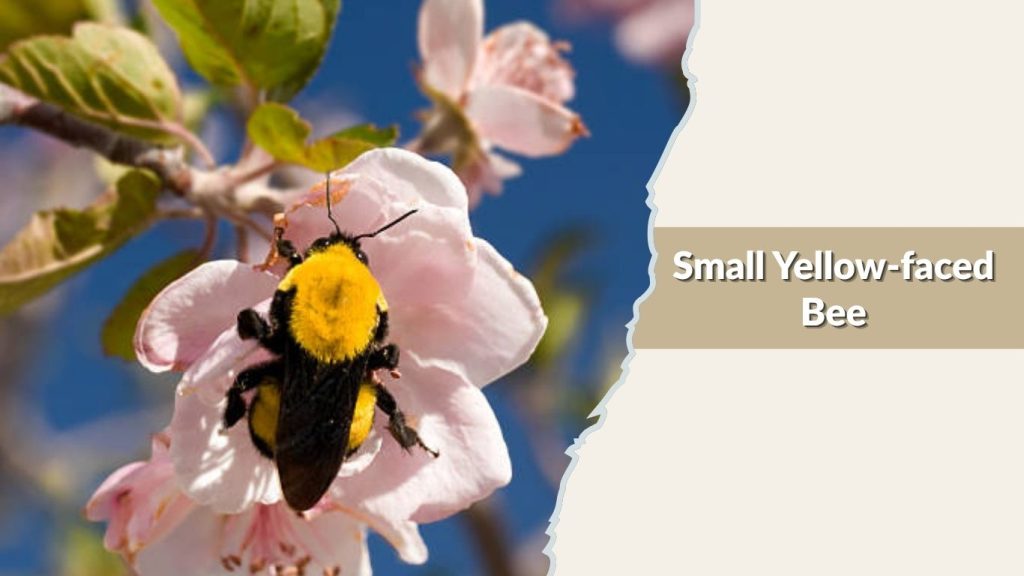
Small yellow-faced bees are tiny solitary bees known for their smooth dark bodies and pale yellow markings on the face. They belong to the same general group as masked bees and are usually much less hairy than bumble bees or honey bees. Because of their size, they are easy to overlook, but they help pollinate small flowers in gardens, meadows, field edges, and natural habitats.
Identification
- Very small bee with a slim, mostly black body.
- Pale yellow or cream-colored markings appear on the face.
- The body looks smooth and shiny, with little visible hair.
- Males often have larger facial markings than females.
- Wings are clear or lightly smoky.
- Legs are thin and usually dark.
- Often mistaken for a tiny wasp because of its narrow body and smooth surface.
Habitat and Distribution
Small yellow-faced bees can live in many flower-rich places, including gardens, meadows, grasslands, woodland edges, parks, hedgerows, and roadside habitats. They often nest in tiny cavities such as hollow stems, small holes in wood, plant pith, or abandoned insect tunnels. Their small body size allows them to use narrow nesting spaces that larger bees cannot enter. They are most active where sunny areas provide steady blooms through the warm season.
Behavior and Diet
These bees are solitary and do not form large colonies. Each female builds her own nest and gathers food for her young. Adults drink nectar for energy and collect pollen from small flowers. Unlike many fuzzy bees that carry pollen on their legs, yellow-faced bees often carry pollen internally and later place it inside the nest. They are calm insects and rarely bother humans.
Lifecycle
The lifecycle begins when a female chooses a narrow cavity for nesting. She lines each brood cell with a thin waterproof coating, then adds a mixture of pollen and nectar. After laying one egg in each cell, she seals it for protection. The larva feeds on the stored food, grows, and pupates inside the nest. Adult bees emerge when warm weather and blooming flowers return.
9. Black Yellow-faced Bee
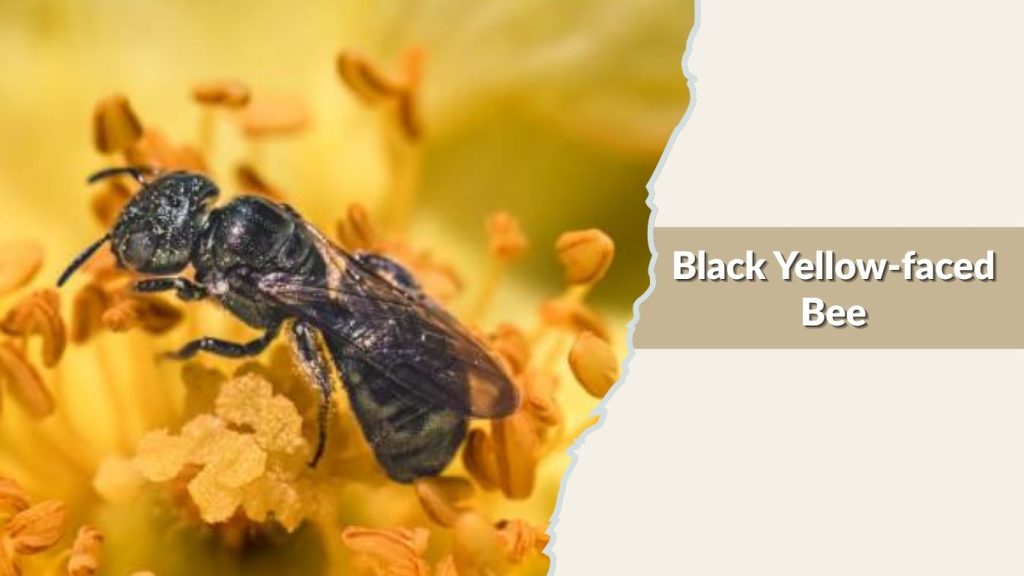
Black yellow-faced bees are small solitary bees with a mostly dark body and pale markings on the face. They belong to the yellow-faced bee group, often placed in the genus Hylaeus. Their smooth, shiny body can make them look more like tiny wasps than typical bees. Even though they are small and easy to miss, they help pollinate wildflowers, herbs, shrubs, and native plants.
Identification
- Small bee with a slender, mostly black body.
- Face has yellow, cream, or pale white markings.
- Body surface is smooth and shiny with very little hair.
- Males usually have larger and clearer facial markings.
- Females may have smaller or narrower face markings.
- Wings are clear or slightly smoky.
- Often mistaken for a small wasp because of its dark, narrow body.
Habitat and Distribution
Black yellow-faced bees can live in gardens, meadows, woodland edges, grasslands, hedgerows, parks, and other flower-rich places. They usually prefer sunny areas where small flowers bloom near suitable nesting cavities. Females may nest in hollow stems, plant pith, old beetle holes, cracks in wood, or other narrow spaces. Their exact distribution depends on the species, but many yellow-faced bees are found across temperate regions.
Behavior and Diet
These bees are solitary, so they do not live in large colonies or produce honey. Each female prepares her own nest and gathers food for her young. Adults feed on nectar and collect pollen from flowers. Instead of carrying pollen on hairy legs, many yellow-faced bees carry it inside the body and later place it in the nest. They are usually calm and rarely noticed around people.
Lifecycle
The female begins the lifecycle by choosing a small nesting cavity. She lines the inside with a thin waterproof coating, then adds a mixture of pollen and nectar to each brood cell. After laying one egg, she seals the cell for protection. The larva hatches, feeds on the stored food, grows, and pupates inside the nest. Adults emerge when temperatures are warm and flowers are available.
10. Broad-headed Yellow-faced Bee
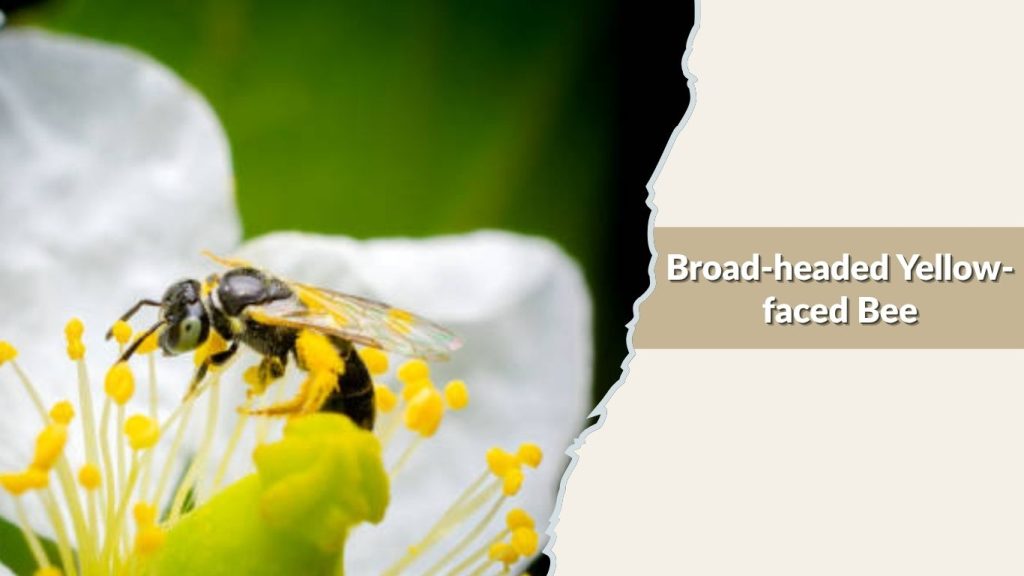
Broad-headed yellow-faced bees are small solitary bees recognized by their compact body shape and pale facial markings. Like other yellow-faced bees, they usually have a dark, smooth body with little visible hair. The “broad-headed” name refers to the wider-looking head shape found in some species. These bees are quiet pollinators that visit small flowers in natural habitats, gardens, grasslands, and woodland edges.
Identification
- Small bee with a dark, smooth, and shiny body.
- The head appears slightly broad compared with the narrow body.
- The face has yellow, cream, or pale white markings.
- Males often show larger and brighter facial markings.
- Females may have smaller facial patches or narrow marks.
- Wings are clear or lightly smoky.
- The body has very little hair, so it may look like a tiny wasp.
Habitat and Distribution
Broad-headed yellow-faced bees may occur in open, flower-rich habitats such as meadows, grasslands, gardens, scrubland, woodland edges, and hedgerows. They usually need sunny areas with small blooming plants and nearby nesting cavities. Females may use hollow stems, plant pith, old beetle tunnels, cracks in wood, or other narrow natural spaces. Their exact range depends on the species, but yellow-faced bees are common in many temperate regions.
Behavior and Diet
These bees are solitary and do not build large colonies. Each female prepares her own nest and gathers food for her young. Adults drink nectar for energy and collect pollen from small flowers. They often move quickly between blooms and may be overlooked because of their tiny size. Like many yellow-faced bees, they carry pollen internally instead of packing it on hairy legs.
Lifecycle
The lifecycle begins when a female selects a narrow cavity for nesting. She lines the brood cells with a thin waterproof material, then fills each cell with a pollen and nectar mixture. After laying one egg, she seals the cell and continues building more chambers. The larva feeds on the stored food, develops into a pupa, and later emerges as an adult when warm weather and flowers return.
FAQs
Are yellow-faced bees dangerous?
Yellow-faced bees are not considered dangerous to people. They are solitary bees, so they do not defend large colonies like honey bees or wasps. Most are calm and rarely sting unless directly handled or trapped. Their small size and peaceful behavior make them easy to overlook in gardens and natural areas.
Why are they called yellow-faced bees?
They are called yellow-faced bees because many species have pale yellow, cream, or white markings on the face. These markings are especially clear in males and can look like a tiny mask. That is why some yellow-faced bees are also commonly called masked bees.
Where do yellow-faced bees usually nest?
Yellow-faced bees usually nest in small cavities rather than digging large underground nests. Females may use hollow plant stems, old beetle tunnels, cracks in wood, reed stems, or tiny holes in natural materials. Each female builds and provisions her own nest without help from a colony.
What do yellow-faced bees eat?
Adult yellow-faced bees feed mainly on nectar for energy. Females also collect pollen to feed their larvae. Unlike many fuzzy bees that carry pollen on their legs, yellow-faced bees often carry pollen inside the body and later place it into the nest cells with nectar.
How can I attract yellow-faced bees to a garden?
Grow small native flowers, herbs, and flowering shrubs that bloom through the warm season. Leave some hollow stems, dead plant stalks, or bee hotels with narrow holes for nesting. Avoid heavy pesticide use, because these tiny bees are sensitive to chemicals and need safe flowers for feeding.